
INTERVIEW: Quinn DeVeaux

Quinn DeVeaux
The Photo Ladies Interview
Nashville-based artist Quinn DeVeaux spent his early years with his grandmother, a former jazz singer, in Gary, IN cultivating a love of music that would help him go on to discover his signature sound. Combining gospel, blues, soul and R&B, DeVeaux has created a sound that he has been dubbed "blue beat soul", that encompasses sounds of the past with his own modern touches. As a teen, he headed west with his guitar, landing in San Francisco where he became a founding member of local group Blue Roots. Following his time in Blue Roots, DeVeaux went on to form Quinn DeVeaux & The Blue Beat Review, releasing several acclaimed albums and performing raucous live shows that showed his fans a boisterous good time. Now performing simply as Quinn DeVeaux, he recently released his new album Book Of Soul via QDV Records, an album that harkens back to the era of the iconic Sun Studios in Memphis. DeVeaux wrote and produced the entire album himself and recorded the album in Nashville, TN at The Bomb Shelter, with the versatile sounds focusing on showcasing his deep love for storytelling. With sounds reminiscent to artists such as Nathaniel Rateliff, Leon Bridges, Anderson Paak, Al Green and Bill Withers, DeVeaux blends the sounds from all of his influences and elevates them through his timeless sounds. “I love this record and feel that I am at the beginning of a new era in my creative life,” says DeVeaux. “I want as many people to hear this record as possible and looking back I'm not sure I ever felt that way. This record has more of my soul in it than anything I've done.” You can follow Quinn DeVeaux and stay up-to-date with all upcoming music and news, as well as stream and purchase his music, via the following links:
Website | Facebook | Instagram | Twitter | Spotify | SoundCloud | iTunes/Apple Music | YouTube | Google Play | Bandcamp
You spent your early childhood in Gary, IN living with your grandmother, who was a former jazz singer. What kind of influence did she have on you as an artist and your love of music in general?
I think she instilled my love of music in me. She would always have me and my sister singing in the back seat of the car, on the way to church or the store or wherever. She would help us with our harmonies. We would be singing, like, commercials or some song that we heard on the radio. She was a great singer, in and out of the church. She got me piano lessons, which of course I didn't keep doing, because it was piano or Nintendo and at that age Nintendo sounds a lot more fun [laughs]. Of course now I wish I had kept doing it, but she got me those first piano lessons. She really instilled in me a joy and a love of music.
You were brought up with two religious faiths- Jehovah's Witness and Baptist. How did that shape your views on the world and on your faith growing up? There are some pretty distinct differences between the two religions!
Yeah, you know it was interesting. It was very existential for me growing up because I was really...I mean, I think that religion is supposed to do a lot of things perhaps, but certainly one of them is to make sure you know what is going to happen to you when you die, or at least give you some faith. The two faiths are pretty diametrically opposed (laughs)! In the Baptist church, it's more traditional where you die and you either go to heaven or hell. But with Jehovah's Witness, it's a bit different. If you die, and you are not a Jehovah's Witness, you're just dead. You're just dirt. You're just nothing. If you die and you are a Jehovah's Witness, you come back with Jesus and you get to stay on earth and live forever with Jesus. So going from believing that there's a chance you'll go to heaven or some sort of afterlife to the prospect of just being nothing really still scares me to this day (laughs)! It doesn't scare me as much as it used to. I've definitely done a lot of work around death and myself, just reading books and what not. There's a great book...aw man, I wish I could remember the title. It just talks about a bunch of near death experiences people have had. By in-large, people describe the sort of...you know there is the light. People talk about this beautiful light that happens and this tremendous sense of peace and comfort and feeling like everything they've ever worried about is just gone. It sounds quite lovely. Of course, there's a lot of dopamine and chemicals that our bodies put out when we're dying and all of these things can somewhat be explained by science. At the same time, that whole line between science and the chemicals in our bodies and what we're actually feeling and everything....so anyways, this is all just my general journey with religion (laughs). But yeah, they are very much opposed which was hard for me growing up. One does more research as an adult and hopefully comes to some kind of peace with everything.
You grew up going to church and gospel music was a big influence for you. What can you tell me about developing your sound, that combines those gospel influences with soul and R&B, as well?
All of the great music that I love is all of these things coming together. I definitely have a gospel base and then was turned onto the blues and Muddy Waters and then was turned onto soul and Sam Cook and Ray Charles. Everything that you love, you want to bring it together. That's basically what I've been trying to do. I definitely accomplished the beginning of that with Book Of Soul. It really came out largely how I wanted it to and I am hoping to combine all of these things. I also love country music and folk music, that's more story based...more than soul. The next step for me now is to try to incorporate that into the gospel and soul and R&B.
You have said that you feel that you are the beginning of a new era in your creative life and the songs on this album have more soul than anything else you have done in the past. What inspired this new era of creativity for you and what can you tell me about the process of making the album and why it is so special for you?
It's special I think because I was feeling very stagnant and needed something to just jump me out of the feeling I was in, that I was never going to create anything new or interesting. I think we all get stagnant sometimes, like "Aw man, I've been doing the same thing. Is this still what I want to do?". The answer came back to me that it just wasn't. I moved to Nashville, which at the time felt crazy. As much as I love country music, I was not necessarily wanting to move to the country music capital. But man, when I got there it wasn't at all what I thought it would be. The musicians there are so open and welcoming and they play everything. I mean, sure, they are known for country music, but man these guys can play anything. That's been my experience. And even more than that, the songwriting is such a central part of living there. So moving to Nashville, it was a few things converging. Moving to Nashville and really wanting to say something with my music that I hadn't said before and didn't know was possible. So writing all of the songs on Book Of Soul really was like "Oh, ok" and then the way that the album turned out and the sounds that we got just really opened my eyes. I was like "Man, ok. Let's do this. Let's go in this direction".
How has your songwriting evolved over the years? Would you say your inspirations when writing lyrics have changed?
Oh absolutely! I actually do keep a tally of my favorite artists lyrically and my top 5 now includes Bill Withers and John Prine. Even those two, who are probably my number 1's, or right up there, man...if I could just bring the kind of storytelling and honest delivery of John Prine and equally honest delivery of Bill Withers, with the soul and the vibe and the groove that doesn't let go. That's really the goal, because for me I find that with a lot of soul music, you can write about love and a lot of things, but there's a bit of a limit so far that I'm kind of trying to break through. I'm not even exactly sure what's on the other side, but I really want to be able to talk about just my life. I really want to talk about things that are, I don't know if I'd say complicated, but things you don't normally hear about in a soul song.
You have said that sometimes you have to reinvent yourself in order to move forward. Do you feel that is kind of the process you are going through right now?
Absolutely, yeah. Book Of Soul is kind of the beginning of that and I'm still going through it right now. I actually have most of the next record written already, but I'm really trying to move in a particular direction. I think that before Book Of Soul, I was just writing. I would write something and would put out albums of my favorite songs that I had written, whereas now I am actually trying to move in an artistic direction. That's the best way I can say it.
Your music pays homage to the blues, R&B and soul that came before but has your own modern twist. How have you gone about combining the sounds of the past but putting your own spin on it?
Yeah, I think that happens pretty naturally. I listen to a lot of music. I do sometimes have to force myself to listen to more modern music (laughs). There's just so many great records...Bill Withers, Al Green...just so many great records. There's also some great modern stuff, so I put it all in the pot and try to listen to as much as I can. I'm an avid lyrics reader, as well. And then, I, you know, live life and hear stories from friends about their lives and try to make it into something that captures a moment. For me, that's what a song should be. You should capture a moment or a feeling or a story. That's what I'm trying to do.
As a teenager, you moved to San Francisco with just your guitar and became a founding member of the group Blue Roots. What can you tell me about your early years of playing music and how that shaped you into the musician you are today?
Even before I moved to the west coast, or before I moved to the bay area, I went to Evergreen State College up north and I was in a cover band. This is one night I will always remember. I was in a cover band and we played a show and it was just when all of the Freshman had arrived. It was the beginning of the school year. It was great night. I played with a band, but then afterwards I played my songs solo. That just blew my mind because everyone just sat down and they were quiet and they were just listening to my songs. I felt the impact of the words and like people understood the story I was trying to tell. I was like "Oh, ok. This is what I love!". I didn't care if it was with electric guitars or acoustic guitars, a big band or small band, I just wanted to write words that people could feel and understand and put a story across. That's what I love, when I can watch a performer and they really take me somewhere. I leave myself and I'm in their world for a while. That was definitely an important moment for me, when I realized that if I did it right, that I could do that. That I could take people somewhere.
With this album, you completely wrote and produced it. Is that something you had done with previous albums or was this the first time you had done everything yourself?
This was the first time. I gotta say, I worked really closely with Andrija at The Bomb Shelter in Nashville. The tones that you hear on Book Of Soul...he's just a master at it. I'm really proud of what we did. But yeah, it was the first time I had produced something and it gave me the freedom that I wanted and I took some chances. Thankfully I really liked the record and it worked out.
What has it been like for you to promote an album during the shutdowns and quarantine. How has it altered the plans you had for the album, such as touring?
Totally. My booker is just going crazy! Every time they extend things in California or elsewhere, he's like "Ok. I got us booked for July 1st." He takes us right up to the date and then the next day we're on the road (laughs). So yeah, we'll see what happens. But yeah, it's definitely been a challenge. I send the link out. I send the Book Of Souls Spotify out, or Pandora or whatever because I want people to hear it. Nothing can replace watching a band or a performer live. I certainly hope to get back on the road. Promoting the record has definitely been tough, but I also think that once we do get going, I think that people who like the record will still like the record 3, 4 or 5 months from now. Once I can get it out there, that will be great.
Do you feel that artists and people will come out of this pandemic with more of an appreciation for the arts? That's definitely what a lot of people turn to, music and different forms of art, during these times. What do you think the state of the industry/music will be once this is all over?
I think that people will flock to shows. I think that, for many reasons, that watching music is a great place to have an experience with your friends and get together and lose yourself in show. I think that people will definitely flock to shows after this is over. It's interesting because people are...I'm in California...but people are already going to bars and stuff. There's definitely different levels of the re-openings. I think once bigger tours...we had a three week tour planned and another two and a half week tour planned, and that was just at the beginning of the summer...so I think that once some of these bigger tours get going, I think the excitement of music very well could emerge. It's like meeting an old lover and being like "Aw man, I forgot how this felt!" (laughs)! I think that people will have that experience. And me too. I look forward to, as much as I miss playing live, I think once I actually start doing it again, it's like you realize what you've been missing in a new way.
You have talked about what a big influence Bill Withers has had on you and your music and recently took part in an online "Lean On Me' Tribute. What was that like for you, to pay tribute to an artist that had such an influence on you?
Man, he's one of those guys where every time I dig back into his catalog...because you know I'll go away for a while and then come back...the deeper I go, the better it gets. It was amazing to be a part of that project and see so many people from around the world who his music has touched and wanted to also pay tribute to him and be a part of it. It makes you feel connected. That's what I'm talking about man! If you can tell a good story and get that feeling across to people, then you bring them together. It doesn't matter where you are from or what you look like. That's really what it's about. That's what people like Bill Withers do. If you sit down and listen to "Lean On Me", it's like, everyone believes that.
What's next for you? What do you have coming up?
Well, I have my solo project Flamingo Dores, which is kind of just me and a guitar. I have a new record of that. I also have a new Quinn DeVeaux solo record. They are pretty much ready to go. In a way, I'm holding the train at the station because obviously I can't go and record right now, so I'm trying to wait. Everything is like 90% done right now. I wanna hit the studio, so that's kind of what's next. Once everything opens up, I'm going to get on the road with the band and promote Book Of Soul and then I'm going to get in the studio with the Nashville band and record the next Quinn DeVeaux record and the next Flamingo Dores record.
INTERVIEW: Annie O'Malley
Annie O'Malley
The Photo Ladies Interview
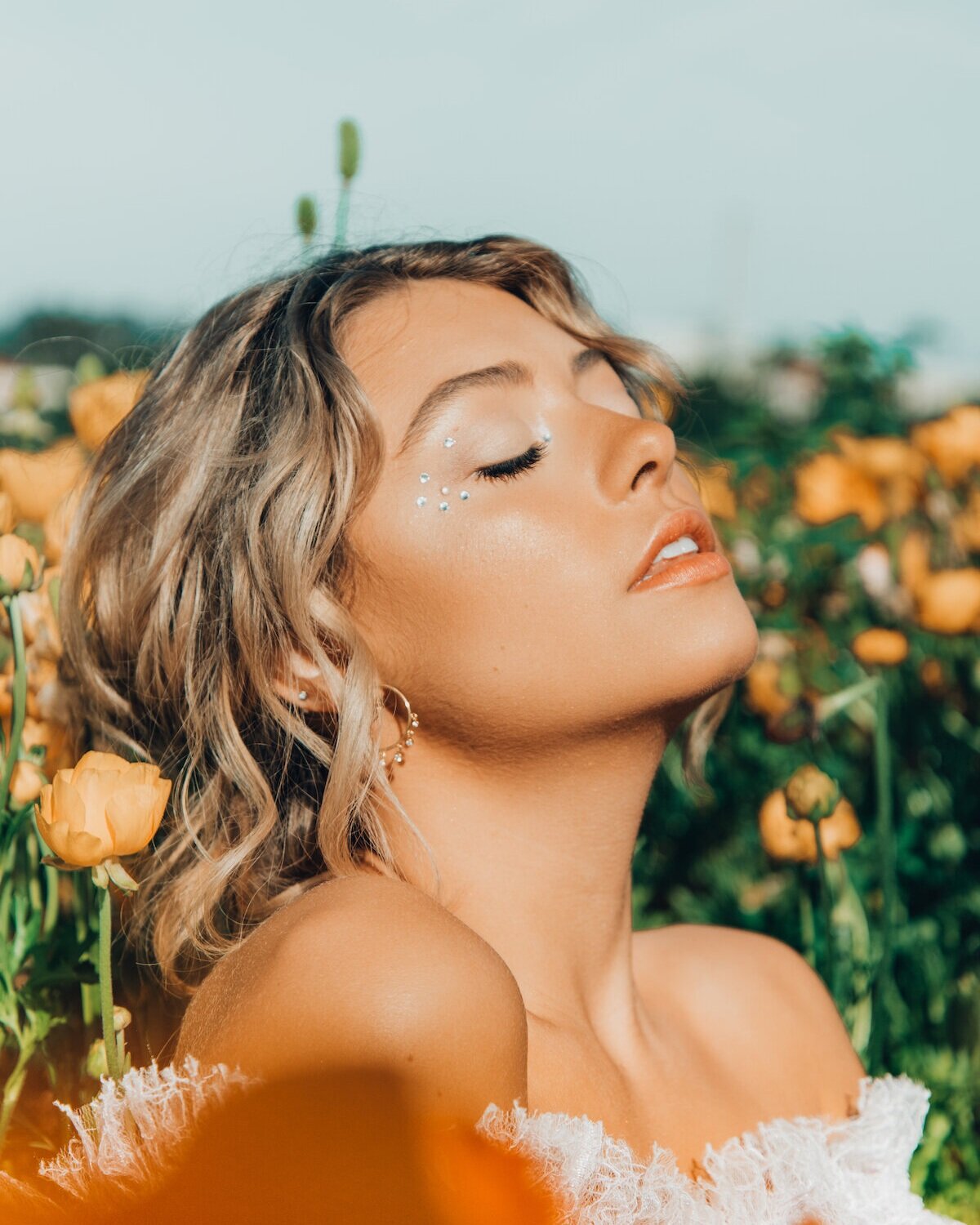
19 year old singer, songwriter and multi-instrumentalist Annie O'Malley is unlike most teenagers. When she was a senior in high school, she sent a demo to rock band Chicago's manager that led to her opening for the band at Riverbend Music Center in Cincinnati with 3 days notice. To kickstart a music career in front of 20,000 people was an experience most musicians rarely experience. She then joined Chicago for 16 dates on that tour, which taught her a lot about touring and performing live. Having had a lifelong love of music, O'Malley has always had a love of performing and started songwriting at a young age, a skill that has evolved over the years. With influences that range from Taylor Swift, alt-J, U2 and Flume, she derives her inspiration from many different sounds to create her indie-pop tracks. Growing up in Chicago, her parents always encouraged an open dialogue in their house and were adamant that everyone talk about their feelings, which has led to an open, honest and raw approach to her lyrics when songwriting. She believes in having a transparency to her lyrics, with a desire to make music for those going through similar changes and growth as her. Annie first garnered attention last year with her independently released single "Chase Me Down," which has organically collected over 200,000 streams on Spotify and caught the attention of producer of Johnny K (Plain White T's). She has since released several tracks such as "Planet Golden", "Island", "You're The Drug", "Golden Doves", and most recently "Mrs Nice", songs that aim to reflect her own life events and some that have a message of empowerment, each showcasing her journey towards being a more confident artist. O'Malley released her debut EP Golden on April 29th, produced by Johnny K, which addresses topics such as love, self-empowerment, loneliness, and heartache. With her goal to be a positive influence for her generation, she is well on her way to achieving that goal! You can follow Annie O'Malley and stay up-to-date on all upcoming music and artist news, as well as stream and purchase her music, via the following links.
Website | Facebook | Instagram | Spotify | SoundCloud | iTunes/Apple Music | YouTube | Deezer
You released your new EP Golden today! What can you tell me about the process of writing and recording the EP and the message you hope people take away from it? What has it been like to release an EP during a shutdown, when you might normally be preparing to tour?
This EP has songs on it that I have written in the last 6 years. They have been some of the staple songs of me starting this career and were the first couple songs I saw people had responded well to! The most important thing for me is that people know that every melody and every word came from my head and my heart and was seen through my eyes. These are my experiences that I have learned and written about and I hope people can get a glimpse into my mind.
You have said that you have a new mindset for 2020 and that this is the year for big things. In what ways have the COVID-19 shutdowns affected your goals for this year?
When I said that I have a new mindset for 2020, the biggest things are being okay to make mistakes, understanding my feelings and dealing with the ones I really don't want to, making sure I have a good balance in my life and staying healthy and not pushing so hard for me to do everything. To learn and pay attention to the things that make me happy and incorporate more of that into my life. To understand that I do not know where I will end up or the end results or to stress about what I cannot control, and to learn to not avoid obstacles and to face things head on. These are things I have always struggled with like most 19 years do and so I have been very verbal about dealing with it all:) I had a lot of fun planned that COVID had to put on pause but I really believe everything happens for a reason. Sitting and waiting for this all to pass has made me realize how much more I want to go out and get what I want and to not take for granted being able to plan what my next week or month will look like.
You’ve mentioned that one of the hardest parts of being a musician is dealing with the music industry being a roller coaster! What are some of the biggest challenges you have faced in the industry and what lessons have you learned over the years?
I would say some of the big challenges would be taking advice but not letting it make things unnatural, trying to focus on your path and don’t look at others and think you are doing things wrong. To know that everything you encounter makes you stronger and better, people will not like you or your music and won’t have a reason why and you have to have peace with it, and learning to enjoy the journey and not think so much about the outcome.
When you first started out, you have said that you did what your idols did and sang their songs and copied them. What has your journey been like, as you’ve grown and evolved over the years, in creating your own sound and vision as an artist? What has it been like to develop and gain the confidence to be yourself?
I definitely looked up to many people, I wouldn’t say I copied them, but I studied how they were and took bits and pieces. I always watch live performances of people for hours and see how they interact with the crowd and how they perform. So that has been a big part in where I am today. My journey has been long and detailed and really cool. I have tons of things pop up that didn’t work and some things that have, I really honestly have no complaints. I will be where i am meant to be in my own time. Confidence is a hard thing to find sometimes but I was born with a very big personality, I always wanted the attention, I always wanted to perform, I always wanted people to watch what I did and that really paid off because I was never afraid. As you get older it’s much harder to live so fearlessly because for a very long time I put what others thought of me before anything else but I’m getting a lot better with that.
A lot of artists in the industry often find it hard to be the kind of artist they want to be. Have you felt those pressures as an artist, to pursue a musical path that didn’t feel right to you?
I have totally felt those pressures because people around you will tell you that you are doing the wrong thing and you will have a million opinions if you ask enough people. But that’s something I had to learn by experience. You don't want to be difficult but you want to be heard so it’s very important to do what feels right to you. Whenever I post something that is very raw verses more practiced or finetuned people know and they react very differently.
You had the opportunity to kickstart your music career by opening for the band Chicago and playing in front of 20,000 people, ultimately joining them on tour! What did you learn from that experience about touring and performing an artist?
I learned a lot, they were so incredibly welcoming and kind to me even though I was so young and new. They actually watched parts of my performance and gave me tips and even compliments. I saw what it was like for them to perform for 2 and a half hours a night and do meet and greets and I wanted nothing less. It was just more proof that it was exactly what I wanted, and it was what I needed in my life.
You have talked about how your music is documenting this transitional time in your life. What has that been like for you? Do you feel that you have learned things about yourself through your music?
When you find a song you love, and you listen to it on repeat you get to imagine that song as the soundtrack to your life. And sometimes there are songs that are so moving and so special to you that you get like 2 seconds of relief, just 2 seconds of "I could do anything" or "I’m gonna be okay" or "I’m not alone" and that’s an incredible feeling. I get to live my life and write my own soundtrack and then people get to hear it. Regardless of what the numbers are or how many people like it, if I have reached one person like that, then I did exactly what I wanted to. When I sleep, I think of lyrics, when I get hurt, when I laugh, when I read, when I watch, all the time, I imagine things in a song and it’s so fun I love it so so much.
Why do you feel that time spent outdoors fuels your creativity more than anything else?
Being outdoors lets you listen to yourself and in our crazy world sometimes it’s good to just listen for a second.
You are also very hands on with your music videos, designing the storyboards and recording them yourself more recently on your camera. Having mentioned how conscious you are about the way visuals can impact an auditory experience, what do you hope your videos say about your songs?
I want my videos to portray the vision I have when writing the song, but I also want them to feel like I had a very big part in them, because it makes it more of a conversation between me and the listener rather than me and a hundred other people and the listener. With that said, I have also worked with some amazing people and I couldn't do it all alone.
People turn to the arts in times of uncertainty and anxiety, which we are certainly facing now. How has making music helped you during this time?
I strongly believe in doing what makes you happy and what keeps you calm, and music does do that for me, so I have been playing and writing a lot. It’s a hard time and it’s important to look at the facts and not get caught up in a lot of the false reporting because it will drive you mad.
What kinds of things do you like to do when you aren’t playing music? Do you have any fun hobbies outside of music?
Really anything artistic is good for me, I like listening to people talk through problems and helping them coming up with solutions and keeping on track with them about their life, and I love to journal. I journal all the time, I love to be with people who make me laugh, to run on the treadmill while singing my songs. Things like that.
You just released your new single "Mrs Nice"! What can you tell me about the song? Are you planning to do a music video for the song?
“Mrs. Nice” is a song I wrote about what would happen if I did the wrong thing for a second. If I didn't do exactly what I was supposed to and I made mistakes. Would that be the worst thing in the world? This has been something I’ve been thinking about a lot recently because I am at an age where I am expected to be mature, but I don't wanna grow up too fast because I won't learn enough from my failures. I am hoping to do a music video, I have lots of ideas!
What’s next for you?
What’s next is just keep living my life and paying attention to all the detail and putting it into my music :)

INTERVIEW: Janet Devlin

Janet Devlin
The Photo Ladies Interview
25-year old Northern Irish songstress Janet Devlin has persevered through a tumultuous period of her life, facing her inner demons and addictions, to re-emerge a more mature and confident artist. Inspired early in life by bands such as Foo Fighters and Red Hot Chili Peppers, she taught herself to play instruments by ear and started writing her own songs. She joined YouTube in 2006, at the age of 12, to get her music out into the world, quickly gaining a devoted fanbase. Devlin was only 16 years old when she auditioned for UK X Factor, quickly becoming a fan favorite and making it to 6th place before her exit. Having been bullied as a child, she had already been fighting an ongoing battle with depression, weight issues and body dysmorphia, alcoholism, cutting and drug addiction also emerging as inner struggles. Releasing her debut album Running With Scissors in 2014, Devlin will be releasing her new album Confessional on June 5th, along with her autobiography entitled 'My Confessional' that will dive into to the meaning behind the lyrics of each song. Five years in the making, the album and book lay bare Devlin's demons and fight to overcome them. Since 2019, Devlin has released 3 singles, ""Honest Men", "Saint Of The Sinners" and "Confessional", each of which became fan favorites and gave her the confidence to tell her story to the world. In telling her story, she has also told the story of countless others who can relate to the struggles she has endured and survived, with countless fans sharing their own stories with her and offering her their love and support.
“Writing the songs for Confessional at the same time as my autobiography has been one of the most challenging things I’ve ever done,” Devlin reveals. “There have been many times when I felt I would never be able to finish either of them. So, now that they’re both finished and no longer just ideas that reside in my broken mind, I stare back in wonder. Even I can’t believe what I’ve endured. Whatever compelled me to write the story of the last ten years of my life was also the same power that gave me the confidence to start believing I deserved this second chance. Through everything, I can genuinely say I owe my life to music. And now it’s time to set it free.”
Produced by Jonathan Quarmby and written in collaboration with Lauren Aquilina, Fiona Bevan and Paul Statham, all hand-picked by Devlin, Confessional was recorded over two years at RAK Studios in London and Westland Studios in Dublin as a way to involve her friends and bandmates and to ensure the Irish roots that are central to her identity were present on the album. With plans to take the album and book on tour as soon as possible, Devlin, who is a staunch advocate for mental health, is eager to hopefully empower her fans who are also be struggling with her story of hope and survival. "That’s what this whole idea of ‘confession’ has been about," says Devlin. "To show people that no matter how dark your life can get, there is always a light to aim for.” You can follow Janet Devlin and stay up-to-date on all upcoming music and artist news, as well as stream and purchase her music, via the following links. You can pre-order the new album HERE. You can watch her discuss the book and album HERE.
Website | Patreon | Facebook | Instagram | Twitter | Spotify | SoundCloud | YouTube | iTunes/Apple Music | Deezer | Google Play | Bandcamp
You've been writing songs and poems since you were 7. What drew you to songwriting and poetry at such a young age and were there certain poets and songwriters that were especially inspiring for you?
I got lucky I think. I went to a school that promoted creativity from a young age. I don't know. I just remember school projects, where they'd make you sit down and write a poem. It always felt like it was kind-of part of the curriculum and I just really loved it and had a really good, fun time with it from a really young age. I don't really remember reading much poetry until I reached my teenage years and then I just couldn't get enough of it. I didn't care who wrote it. I would even go on Tumblr and just sit and read other people's poems and little thought spiels. I've always been amazed at how language can evoke feelings. I think I must have been around 16 when I discovered spoken word poetry, and the beauty of no rules and no laws and the aim of the game being to just speak your feelings in a way that just evokes feelings in other people. That got me so excited. I always just knew that poetry would be lyrics at the end of the day. I'd be like "That's good to have". I have...well I don't have them with me now because I rush moved...but I have loads of these leather bound journals that I keep my poems and things in. If I ever get stuck in a session, they are so handy if I'm like "Oh, what do I want to write about?". Or if something that somebody is playing reminds me of a certain memory, I'm like "I know which book that's in!" and I'll go find it. So yeah, it's always just been a part of my life. Maybe it's an Irish thing, where you're just encouraged to just always write.
I know storytelling is a big part of Irish culture!
Absolutely! I remember being in a pub as a kid and having an old man reciting a poem once and was like "WOW"! But the fact was that everybody in the pub stopped and listened and I thought "Oh, this is cool".
You have said that Chris Stapleton is a big influence for you with regards to his attitude towards life, music and the balance in between. How have you gone about trying to find that balance for yourself between your music and personal life?
I still have a very blurry line! I won't lie. I feel like I look up to him because it's like that man can be successful, on top of his game and an incredible artist and have millions of fans, but he doesn't really give anything away about himself. I always just like to look up to him in the hope that...I don't know. I feel like we are on very different paths. I personally don't feel like I...I don't mind oversharing! It's kind-of just me as a person. People in my personal life know that I overshare. I remember at the start of dating a guy, him just being like "You really don't mind about telling everybody about everything do you?" and I was like "No! I really don't!" (laughs)! It's always like, especially if I'm dating someone, "I'm just giving you all of the disclaimers up front about what goes on up here in my head so that you can't in six months say I'm a crazy woman and why didn't I tell you? I told you from the start!" (laughs)! I honestly don't mind. I believe in emotional honesty and all that kind of stuff. The most fun conversations, and even in writing sessions and things, are ones I have with people when they let their guard down and actually talk about what's really going on and what really happened in their life and all of that kind of stuff. That always really inspires me to write, because my life is my inspiration and things like that, so I like to keep a good emotional dialogue. But when it comes to Chris Stapleton, I love how we're very different. Like, I love the lyrical simplicity and the way that he writes and the way he carries himself, because we are so different. It reminds me that you can be your own person in this industry and still do well!
You were on The X Factor at 16 and have said that the only downside to your appearance on the show was that you were so young and that in later years people looked at you and asked "What happened to Janet?". Have you found it difficult to grow and change as a person and an artist in the industry over the years and evolving past how people saw you on the show?
I literally just went on a massive rant the other day on Instagram. I'd hit my final straw with dudes. It's always a dude! It's always a dude, middle aged or above who is very annoyed that I'm not 16 years old anymore, which I find questionable. I'm not going to lie. So I just had a massive rant the other day about it, because I have invested 1) a lot of money and 2) a lot of time into learning how to love me and be wholeheartedly myself and be comfortable and confident. And I couldn't be happier for it. But for some reason, that scares people but that's not my problem. That's not my cross to bear. That's some internal reflection that that person has to do and that's none of my business. But they don't know that it's noe of my business and they tell me constantly "You're not 16" and I'm just done with it. I don't even engage in any of it anymore. The nice thing about investing all of this time and money into learning how to love myself is that it allows me then to be more confident in my job, in my work, and allows me to take more risks. Like, I don't know how baby Janet would have felt about a Celtic infused pop album. She would have been like "Oh, but what if nobody likes it?", and now I'm like "I don't care if anybody likes it!" (laughs)! I wanted to make it so I did. So the two things go very hand in hand. I'm so happy, in the sense that all of the changes I have made seem to be well welcomed by the people I want to be engaged in this project. I don't want close-minded people who want women to remain girls. I'm loving this new wave of followers I've been getting lately of young girls who are like...I've gotten so many message lately from young girls who are like "Thank you so much for sharing your growth of you as a person because it's really inspiring". I've been getting loads of messages from young girls who are like what I was like and that warms my heart. That's what I want! I want that, not people who are upset that I've changed. It's like "Of course I have! I paid money to, thank you! Appreciate it! Thanks for noticing" (laughs)!
It's probably nice to know that so many people look up to you and that you can help them with their struggles because a lot of people can identify with the things you've gone through, like "Oh, I can relate to this person"!
Which is so bizarre! When I was going through half of the things I went through, I was feeling so isolated and so alone and petrified of admitting even half of the things I had going on. To see so many young girls and young women owning what's going on with them and just stepping up into it and being willing to change and evolve and not be so mean to themselves, it inspires me more than I think it inspires them to be honest.
Your new album Confessional will be released on June 5th and combines the Celtic sounds of your roots with more alt-pop sounds. You have said that you feel you really found your sound with this album, so what has that process been like for you, to grow and evolve your sound as an artist?
When I started this album, it was like 5-6 years ago. My first album was folk-pop and I loved it and it was everything I needed it to be at the time. I released other stuff at that time, and everything was that timeless sound where all the instruments were real instruments and that kind of thing. When it came to this album, I was writing a book with it and realized with the book that a lot of it took place back home in Ireland when I was a kid. I remember working with Jonathan Quarmby one day and the first session didn't work out but I got good vibes, so we tried to work again together the next time and we smashed it. One of the songs we wrote is like one of my favorite songs on the record. I feel for me that he was a big key in unlocking my sound, because whenever he spoke to me, it was very clear that my home and my story plays a massive part in this record and in the stories behind it. He just kind of went away and sneakily Irished it up and I heard the demo and LOST MY STUFF! I freaked out! I was like "This is a bop! Oh my god! I've been sleeping on my roots all my life! This is insane!". I sat down and thought about it and don't think I've ever met anybody who doesn't like Irish music, because it's fun. Some of those sounds, they are weird, but they evoke a lot of joy in me and seem to evoke a lot of joy in others. It all just came together beautifully in my head and then we got to do a week in a studio in Ireland called Westland Studios and it was amazing having so many local players playing on the record. I think for the first time in my career, I really felt like I really knew what I was doing. I used to be in a ceilidh band as a kid, so Irish music is the language of music I grew up with. Some people speak classical music, some people speak jazz, and I just came into the room and was like "No, no, no you gotta do it like that, yeah that's it, cool!", whereas whenever it's with contemporary music or regular pop music I'm like "Hmmmm...no comprende! Sorry! I don't get it!" (laughs)! It was so nice and so empowering to be able to stand in the room and think "This is it. I know what I'm doing".
While your new album does have some contemporary sounds, you have said that as an independent artist, you don't have the luxury of making contemporary pop music. I thought that was an interesting perspective! Could you elaborate on that?
Yeah! The fact is, this album took almost six years to make, so if I was to make an album of the sounds of six years ago, it wouldn't be very cool right now-at all (laughs)! So the fact that I can't make contemporary pop is a blessing and a curse. It means that you have to work harder to find this identity that's not of the time. Don't get me wrong-I love contemporary pop music. I still bop around my room to it! It's just that thing where I don't have the budget to put things out as quickly as like Ariana Grande or Selena Gomez. They're able to just kind of go into the studio, write a few songs and take a month to record and put a record out a few months later, and that's sick! But that's not my story. It takes me a long time. That's why I was kind-of happy with record, because it did mean I had to dig a wee bit deeper to find that balance of like what's still like pop but like timeless pop where I could bring in these old Irish instruments and kind of tie everything together.
I know a large aspect of the new album was the photography you did to accompany the songs. What can you tell me about the idea behind the imagery in the photographs and what your goal was with the photography?
I basically realized that the whole thing is a big concept record anyway, with the concept of the album and the book. I just got to the point where I was like "Well, it is going to take forever and ever to release this album so I may as well do another thing too!" (laughs)! I loved working with the photographer on the front cover. I loved it so much! I can't remember where the idea just came from, but it just kind of happened and I just knew that I wanted a photo to go along with every single song. Every song is a concept and the book unlocks it, but I loved the idea of having a middle ground between those two worlds where I could play again on metaphors and symbolism and it was really fun. It was hard at times to be like "This is the thing that it's actually about, but I want to create an image to represent that" or to give somebody something to work out. I loved this whole idea of people unlocking this jigsaw puzzle of an album. It was just amazing! Emma-Jane Lewis took the photos, and very importantly Lou, Lovehairbylou, did my hair, which sounds ridiculous because those two people are my dream team! We know my hair is important! It's like my brand! If I don't have my big ginger hair it like "Who is this?". We just had so much fun and it was the most...I watched the behind-the-scenes video for the front cover of the album and that was over two years ago. I watched it because I was putting it out live and couldn't get over how insecure I was. The front cover is me like semi-naked but absolutely covered by my hair, showing off exactly what you'd see in a bikini...actually more covered than in a bikini...but getting that shot obviously meant that I had to, for the first time ever, strip down to having hair only covering my top half. I was petrified and incredibly insecure, but through the process of working those two women, those incredibly lovely humans that I miss a lot, they really built me up into somebody who is now so confident in front of a camera. I don't mind any situation, any circumstance, any pose or anything like that now. That was just such a fun thing to do and I'm just so glad that I did it!
Along with you album, you will also be releasing your autobiography 'My Confessional', which goes in depth with the meanings behind the lyrics for each song. You have mentioned that even you can't believe what you have endured, so what do you feel that you have learned about yourself in the process of writing the book? Do you feel that you emerged with a new perspective on things and on yourself?
It was the biggest task of soul-searching ever! I think I sent my editor over 150,000 words of just sheer inward thinking. There were a lot of moments where I just sat at my computer and was like "Am I actually typing this?", because the minute it's on that page, it is real! That is a real thing that really happened the minute I type it out. There were a few times where I was like "Is this too far?" and then I'd get an email from my editor being like "Are you sure you want to put that in the book?" (laughs)! But that's how I know it was honest, when someone is asking if I'm sure I want to include it. I learned a lot. I think there are a few summary sentences that would sum it up, but it's kind of more like "Everything works out in the end" is a big one (laughs). I think another thing I realized was that a lot of the times I'm the only thing standing in the way of me. Not all of the time. There's a few stories involving other people in the book, but most of the time it's me. I'm my own worst enemy. But ultimately, it all works out in the end, and I had to reiterate that in the first chapter because even now, reading it back in this series where I sit down and read snippets from the book, I'm like "Oh my god! This was my life". It's so funny because obviously loads of things got cut and it's even worse than what's in the book (laughs)! It's crazy! But I feel so much better for it. But I won't feel wholeheartedly content until the book is out of my hands and the first person finishes it. That's when I'm free from all of the things that used to weigh me down.
I'm guessing it wasn't that glamorous!
No (laughs)! It was not! I didn't mean to make it sound so fiery, because there were days when I was crying in the studio, over the fact that I was talking about things that I hadn't really fully dealt with yet. There's a song called "Speak" on the album that I hadn't at all really dealt with and that was maybe a month or two after I had stopped taking my medication and was balling my eyes out. So, it wasn't glamorous at all. It was hard work and took a lot of self-babysitting to not do stupid stuff, because I like to self-destruct basically. A lot. It took all of the power in me to stay in the AA fellowship and talking to people with similar issues to mine and making sure that I was looking after myself and not falling back into silly old bad habits. But I was willing...and this is the difference...I was willing to put the work in to staying well. I don't think I would have come off the medication if I was like "Ok, well I'll just jump straight back into suicidal thoughts". Because that's why I had to go on the medication. I was tired. I was so tired of thinking about killing myself and planning it out. I was like "We don't have the mental energy for this so let's protect ourself in a nice little weird cocoon bubble emotionally for a little bit". And it did work. I absolutely DO NOT recommend taking yourself off of Prozac without your doctor's recommendation. I made it harder on myself by just going cold turkey. Never do that kids! Don't do it!
I read that you moved home last year for a month to decompress and did a variety of self-care techniques and therapy. You have talked about being much better at self-care these days, so what does self care look like for you?
So it's kind of hard now because the world is shut down, but I actually went back to Ireland for 6 months. The other time, yeah...I took a month off. During the last 6 months in Ireland, my self-care was trying to fulfill this list of things that I never got to do because I did TV at 16 and moved to England. It was silly but it was everything I wanted so I saved up a lot and got a car and started doing driving lessons. I really wanted that freedom to learn how to drive. Unfortunately, I never passed my test because my test was scheduled three days after the shutdown, so I'll come back to that! But I still have my car. I got a doggie as well and I love him to pieces. That was a big self care thing, although my mom has stolen him now and I'm never getting his back so you win some, you lose some (laughs)! I know that I have an incredibly addictive brain, which is very apparent in the book. I jumped headfirst into taking up Crossfit, of all things!
I have a lot of friends who do Crossfit and love it!
Yeah. It's mental! It's for crazy people, absolutely! I got so much out of it. I didn't intentionally join Crossfit, but when I went home I wanted to join a gym but all of the gyms I was looking at were like "How to lose body fat" and "How to be skinny" and things like that. I was like "I used to have anorexia and I can't do that", because I'm really good at it. I didn't want to get involved in that. I've got the badge for losing body fat. I ended up seeing that there was a Crossfit gym and I went on their website and wasn't sure if it was for me. It seemed very Type A and I'm lazy. But I went there and their ethos was so different. All they want to do do is just make you run faster and lift heavier and ll of those kinds of things. That's what I wanted and Crossfit was a big thing for me because for a lot of years I was like "I want me a big strong man to look after me and protect me" and then I went to Crossfit and was like "Hold on a sec! I can be the big strong man I've always wanted" and I found it very empowering, especially in shutting down those particular men who want me to be 16 forever. When people see me gaining muscle, the amount of DMs I got from guys being like "Ewwww...your traps are so big that they're gross" or "Women shouldn't have abs". I was like "Go away. My thighs are bigger than your dreams dude!" (laughs)! I loved it! I'm sad now because I've lost basically most of my progress, but that's not what it is for me, the aesthetic of it. It's the fact that I was meeting personal goals and it makes you feel like a kid again when you do something and people are like "You did it!". It was a really lovely community element, and as someone who is very socially inept, it really brought me out of my shell, as well. Also, I'd never been a good sister or a good auntie or a good daughter because I moved out so young. I never really got the chance to just be with my family before for an extended period of time. I moved out at 15 to live with my grandmother to take my studies more seriously and also to starve myself...2 reasons. But I loved just being with my family and seeing them and it was amazing and everything that I needed and can highly recommend to other artists. Especially the ones who get in this weird job very young, because you do lose that whether you are aware of it or not. There's something so nice about having Sunday dinner with your family.
May is Mental Health Awareness Month and I know you are a mental health advocate. Do you have any specific things you are doing this month to help advocate for mental health?
Yes! So this is why I have started reading bits from the book. I know there a few chapters in this book that when I read a snippet of it, I can't just ignore that I dropped a massive bombshell on people. I anticipate getting a lot of questions on certain chapter readings, so I'm going to have to sit down and probably film a few more videos like the "I'm an alcoholic" video, because a lot of these things need explaining. It's going to be a hard month for me, because people already think I'm mentally screwed and I'm just dropping more ammo into their hatred gun. But the joke's on them because I'm better now. So that for me is what I'm doing . I'm really going to be putting myself out there on the frontline and talking about things that are hard to talk about, but if I've learned anything from my video about my alcoholism, it's that there are so many people going through it. So, so many people going through it. It makes me feel better to do it because I've put it out and then I see people who are like "Me too" or "I did this thing" and we realize that we are not alone . It's crazy! I'm so glad for the leaps and bounds we've made over the years, because when I think back to what I was going through a few years ago, or even longer, from the age of 12, which comes up in the book, the dialogue we have now over issues warms my heart. It genuinely does, because I didn't have that dialogue to talk about it when I was a kid going through some of the stuff I was going through. I feel like we are more open now. We're not as open as we could be, but better than we were. We are getting there. I see some young kids complaining about the state of the mental health things and all and I'm like "It will get better. I swear to god"! If we just keep pushing forward and being honest and loving each other then we'll get there.
What does it feel like to re-emerge onto the musical landscape as a changed and more confident artist and how do you feel the industry has changed for you over the years from what it was when you started out? It's definitely a quick changing industry!
It definitely is and I'm a slow moving gal! I've just kind of had to make my own rules. When I started, nobody was doing crowdfunding, so I had to break that boundry. That was a fun one because it worked! Since then, doing online shows. I've been doing online shows for 6 years, which is now cool because people want to see online shows because they are stuck at home. For me, it's always changing. It's always evolving. But I don't know. I welcome it. I definitely do. For me, my journey is never...I don't wanna say never, but I very much doubt that a major record label is going to come over here tomorrow and be like "Hey! Wanna be signed?". For me, I just have to just stay on my own path. Because of the internet and the digital age we're living in, that's a possibility. My kind of career wouldn't have been possible like 20 years ago. I feel like I'm living in a new era of the music industry. But by no means am I putting down the old ways or the ways of what were and in some cases still is. Some people get discovered and get signed and are given loads of money and became an overnight success, and congratulations. That's insane because that's like the smallest minority of people. I'm still fascinated and I love those stories, but that's not my story. My initial story of trying to make people think I was cool enough and not just someone off of TV and then trying to stay relevant for 10 years. It's almost 10 years of me doing this now and I'm just baffled everyday that I'm able to do it. But that's honestly just truly the beauty of people on the internet.
What has it been like to plan an album release during quarantine? Most artists would normally be planning to tour and all of the other things that go along with an album release!
Ummm...worst timing, because this is only my second album (laughs)! My first album was delayed and things went wrong, but then it came out and was fine. I was like "This time I've got it guys! Yes!" and the world was like "Uh, no!". But it's been cool in the sense that you just kind of make things work. I'm trying to film a music video very soon, with trying to practice social distancing and not really having a crew and filming things on a very small level. I think the hardest part is plugging, because it's like "Hey guys! I know the world's burning and everything's kind of horrible right now, but would you like to buy my book and my album?". It just feels very...you feel like a salesman who's turned up to a funeral and you're trying to sell people something on the way out, you know? It feels very inappropriate. But luckily most people understand. Some people don't see my line of work, my job or whatever, they don't see it as a real job so they don't respect it. They think "Why are you trying to sell something in the middle of a crisis?" and I'm like "Because this is my job. If I don't get paid, I don't eat!". Sometimes I am flattered by people thinking I am more successful then I am, but then they're like "Why do you even have to plug your book?" and it's like "Because I'm one gal, my guy.". There's not like a 1,000 person team here plugging this for me. I actually have to do it. But yeah, that's the hardest part, just trying to keep the tone right. Luckily the internet has been so supportive. I've gotten more followers on my Patreon because of it, and that's insane, right? That's counterintuitive to what you think would happen, and I can't thank them enough because these are really scary times to be in.
I think a lot of people are being really supportive of the arts right now, because in times like these you realize how important it is. Everyone turns to music or painting or photography or whatever, so it's important to support those things so that they are still around when all of this is over.
That's honestly true and it's amazing that people see that. It's such a small percentage of people that get cross at you for plugging. Everyone else is like "Yeah!". It's like "Thank you so much! I really appreciate the fact that you are still cheering me on in the midst of all this". Otherwise, if people were really being like "Stop", it would be so hard. It's 6 years of my life that I've put into something. It would suck a lot if people weren't allowing me to scream about it.
What's next for you?
For me, let me see....I definitely want to start working on my next album. I'm looking to do something maybe bluegrassy or country, just because I know that for me is the easiest genre to write in. I grew up on country music. I just feel like booking a studio for like a month with a bunch of dudes that I love working with and sitting down and just channeling that Chris Stapleton. Keeping it simple and just writing some stuff that just makes my soul happy and just playing around with the sound I've always wanted to use. Also get in shape again! That would be sick (laughs)!

INTERVIEW: Outsider

Outsider
The Photo Ladies Interview
Singer, songwriter and multi-instrumentalist Seán Ó Corcoráin, who performs under the name Outsider, writes lyrics that reflect Eastern mysticism and Western philosophy, wrapped up in an upbeat and vibrant new wave sound. That is the backbone of his recently released debut album Karma Of Youth (via Ok! Good Records). Having used music as a way to cope with mental health issues in his teen years, he aims to pay that back with his music in the hopes that it will help others with their struggles. Inspired by The Cure, Bauhaus, The Smiths, The Jesus & Mary Chain, Depeche Mode and The Talking Heads (to name a few). The record is described as a metaphysical roadmap for a lost soul and documents the Spiritual Awakening, or Kundalini Awakening, that he experienced last year.
“ I thought I knew what my songs were about for a long time, but it is only recently that they all make complete sense and thus create a metaphysical roadmap. I was misdiagnosed with complex post-traumatic stress disorder (CPTSD), but it turned out this was not the case. In fact, it was just a rebranding of a psycho spiritual experience that modern psychology is still too Freudian to understand and only Karl Jung truly explored.”
Although the meaning behind his lyrics may not connect with everyone, his music has universal appeal with its fun and danceable nature. Ó Corcoráin had been in bands previously, but always in a backing capacity. After the ending of a long-term relationship and band, he found the confidence to put himself out there and started his solo project Outsider, transitioning for the first time into the role of a lead vocalist and sole instrumentalist. In January of 2017, he released his debut track "Late Night Radio", which went on to be featured in the Netflix Original Series 'Shadowhunters'. He signed with Warner Music UK's W Songs and released his breakthrough EP "Míol Mór Mara". The EP has received over 2 million streams and the title track was chosen to be featured in the football simulation electronic video game FIFA 18. It was the first time the Irish language had been used in mainstream gaming and garnered a lot of positive attention and fans for Outsider. A love for the Irish language led him to take the middle ground with his lyrics, infusing his songs with a mixture of English and the Irish language. With Karma Of Youth, he has debuted a strong follow up with widespread and mainstream appeal. You can follow Outsider and stay up-to-date with all upcoming news and music, as well as stream and purchase his music, via the following links.
Facebook | Instagram | Twitter | Spotify | iTunes/Apple Music | Google Play | YouTube | Ok! Good Records
You've said that in the past you only wanted to be a bass player and a backing vocalist, but you've since learned various instruments and have become a one man show. What led you to want to start your solo project Outsider and what was it like to transition into the role of a lead vocalist?
That's a long story, actually, so I'll try to tell you the short version. When I was 17, all I wanted to do was be in a band. I heard The Stone Roses and Joy Division and I loved the bass in those bands so I picked up the bass. That's all I wanted to do initially. I had joined a band of older guys and I wanted to sing, but they destroyed my confidence and they pretty much told me I couldn't sing so to not even try. That stayed with me until I was about 28, so a long time. During those years, I learned the guitar and started to explore other instruments. I started songwriting around the age of 25 or 26, but I wouldn't sing my own songs. I would sing them when writing them, but then I would get a lead singer to sing them because my confidence was just shattered. Eventually that lead singer quit the band I was in and I plucked up the courage to just try and sing my first song which was "Late Night Radio". The song ended up getting on really well. I think it's at 300,000 hits on Spotify now and got on a soundtrack, as well. But that was it for me. I was really, really nervous actually singing that song in the studio for the first time. It was a huge journey for me to get to the point where I would be Outsider performing on my own. The reason I perform on my own is because every band I've ever worked with, the other members seemed to want to be in a band but not do the work and not work as hard. The guitarist wouldn't write the guitar lines, so I learned the guitar and would write them for him. And the keyboard player wouldn't write anything for the songs, so I'd write it. That kind-of burned me out, but in the end the band broke up and I thought I had lost everything. But in the end I realized I had gained everything because I could do it all on my own now. So all of that hard work and slog paid off because it was developing the skills and the confidence in me. So I've had a long road to get where I am now.
You have also talked about how music has helped you to deal with your struggles with mental health and that finding bands you could connect with helped you to share that feeling of isolation. How have you gone about trying to pay that back in your own music?
That's a great question. I think that it's incredibly important to write music that is as raw and real as you can possibly do, without being a miserablist. You know with your more shadow-based emotions, your darker emotions. I try to make it uplifting too and balance it. For me, when I was younger...mental health is kind-of a new thing. When I was younger, there was no talk of that and that was the worst for me, when I was a teenager. What saved me was music and listening to bands. You know, there's bands on the radio and it's usually just vacant bubblegum pop, which I like too, but it didn't make me feel like anyone out there understood me. And then I heard bands like The Jesus and Mary Chain. They're a really good example. Or even Bruce Springsteen. Springsteen has some really, really deep stuff. Hearing that, the art form then turns into a life-saving kind of experience. And that's how powerful music is for me. I will never kind-of stand back on that. I don't think it can be overblown how powerful and how important music with real depth and honesty is. I tried to, with my first EP, express that it felt like my life was falling apart so many times. I'm in a great place now, but I tried to put that in the first EP and the response was...a lot of people contacted me. I made a promise, because i was so isolated and at one stage and alone, that if anyone ever talks to me, I will make 100% sure that I get back to them. That's something I have stuck to. It could be Instagram or whatever form of social media. Even in my YouTube comments, people have shared their stories with me. One guy told me how his engagement had broken off and he was just holding on. Another guy, a French guy, got in touch with me and told me this heartbreaking story about how his childhood sweetheart had left him and broke his heart and he was really depressed and his skin was covered in a rash and he just felt a connection with my music. That's just one or two stories. Obviously there's more. A fan wrote me a letter and at the time she was Lauren and I was the first person she told that she would be Matthew from now on. That was just mind-blowing for me. I've had lots of those experiences. It happens and came to fruition, all of this stuff that was going on in my mind when I was writing the EP. I didn't even have a manager or a band. I didn't really have anything. I say that in my mind, that if anyone contacts me, I will be the one to send the last message. It came to fruition for some reason. I'd like to expand that as much as I can going forward. That will be a huge thing for me, making a listener as important as the artist or the creator. I don't know how to develop it at the moment, but it's something that's incredibly important to me. I don't know how you can do it, I suppose, if your audience grows on a huge scale, but I'm pretty sure where there's a will there's a way with this kind-of stuff. That's what I'd love to see. I'd love to feel like the love that's pushed towards the artist at a live show reflected back at the audience as much as possible. I know that sounds idealistic, but that's something I really dream about. It's not about the ego projection for me anymore. That's just dead to me. There's something just bigger in all of this that I'm experiencing.
You started songwriting around the age of 25 and I read that with your EP, your songwriting style was more subconscious and you just wrote whatever came out. With a new album being released soon, have you found that your songwriting process for the album was the same or has it changed?
It's the same process, yeah. I keep that process as much as possible. I love that process and it works for me. It also means that I don't understand my songs until maybe months after I write them. I don't really know what I'm doing, but it always works out so much better. It might be a few months later and I'll realize "Jesus! Oh my god! This is what it means. This is what this song is actually about. This is what I was trying to express". The subconscious is so vast. There's something that processes a long time before your core brain or the analytical mind. I've used that process in this and I will forever. I've found that when I started doing that is when people started to connect with me on an intense level. One guy actually was in Dublin and had flown over from England and went out of his way to meet me at a hotel. He told me his whole life story about how his dad used to be a quite violent man and beat up his mom and we just sat and had coffee and talked for a long time together. I couldn't believe it, but he was just saying how my music connected to something in him, with that suffering and those memories and just had an amazing effect on him. When I get a reaction like that, maybe it's not music for the masses just now, but connections like that are really important to me. I hope it's not always about this suffering. I hope it's not always that dark. I hope I can balance it out with more light. I think I'm going in that direction. I think there is a positive message of overcoming in my music. That's just as important and I don't wanna talk about all doom and gloom. Even with this COVID-19 right now, we're going to experience things that damn near break us and that's when you go to art and that's the cure. It doesn't have to be music, but for me it was music. That's why I do the subconscious writing. It knows so much more than I ever could. That's where creativity comes from. What are we accessing, you know? What were the great poets accessing? It's supposed to be the language of the gods or expressing something of a higher love or a higher nature, something that we only momentarily access in our lives. This stuff gets me. I love it. But yeah, that's why I write that way and am so grateful that I discovered that way of writing. It ends up being...it's not too far out there. It's not like Frank Zappa or anything. I'm not like a psychonaut taking psychedelics and exploring the depths of the subconscious. I just let it breathe as much as possible and try to let my feelings flow into a song. I've noticed, as well, that sometimes having positive core and positive energy to your music and a positive message of overcoming is going to be important right now. I have a feeling about that, you know? I think that's really important with music, as well, that that's included. Sometimes it can be seen as uncool to be kind-of positive. I don't know where that came from, but I have felt that in the past decade, that that's not as edgy. I think you have to have both the dark and the light.
What can you tell me about your new album Karma of Youth? What has it been like to release an album during lockdown, since normally a band would be planning to tour, which isn't happening right now? What has that whole process been like?
It's hard to say. You have to roll with it. I've never found anything I've done to be straightforward when it comes to music, so I don't know. I just roll with it. I'm really thankful that it's not worse and I still get to release my album. Ok, maybe everything is in disarray and I don't get to do a tour, but I don't really know what to say about it. It's just going to flow the way it flows. Whatever happens, happens. I'm not going to complain about it. It's just strange. It's odd. It's hard to know how to confront it or what to say. I hope people who hear it will connect with it and it can serve in some way during this time. I think it could be a great album to listen to, especially at this time, because it's a hell of an adverse situation. You're gonna have to face yourself. A lot of people are going to have to face things they haven't faced in a long time. You're going to spend a lot of time alone. This is a time when you can be driven towards the arts. As far as not being able to do the normal things surrounding an album release, I'm not a fan of the normal things anyways! I think I was talking to my publicist about this. You can probably tell by now that I'm quite spiritual, but it's all in the flow for me. That's what it is. I just go back to that. It's just in the flow and you can get really anxious or worried or down about these things, but that doesn't happen to me anymore. I'm just accepting that whatever happens, happens. I could see it being a positive thing for my style of music, to enter the kind-of collective consciousness to serve people in that way. It has that feeling of overcoming in a really dark time. I think it balances the dark and the light quite well and I think it has that feeling of overcoming suffering or of acknowledging and facing suffering. So yeah, that's how I'm feeling about it right now. It's all in the flow.
You have said that you weren't always spiritual and never really wanted to be but it just kind-of arrived at your door. You experienced a bit of a spiritual awakening last year, so what can you tell me about your journey into spirituality and why it's important for you to let the spirit, mind and body connect and how it all ties into your music?
We could talk for another hour on this! That's a great question. I suppose I was just a normal guy or whatever. I wasn't spiritual at all last year. To say not at all, I still had practices that were spiritual. A lot of Eastern practices now have been rebranded in Western terminology to make them more, you know, palatable or acceptable or easy to digest for Westerners. They'll be reframed in scientific terminology, like mindfulness or visualization, and it will turn out that it stemmed from Hinduism or Taoism or something ancient from the East. That's what I'm starting to see a pattern of. I was training in Muy Thai, so I had spiritual practices but didn't see them as spiritual practices. This whole thing really blew up for me when I experienced a spiritual awakening in July of last year. Most people say not to tell anyone about this, but I don't care anymore. If you're familiar with Kundalini or Kundalini yoga. It's not the same thing but they call it a Kundalini Awakening in Hinduism and Spirit of The Valley in Taoism...there's a number of different names for it. Basically it's like blockages to your chi energy. I didn't know what chi energy was. Or blockages to your chakras. Electromagnetic energy runs to your spine. It sounds out there. I wouldn't have believed it if you were telling me this, if it hadn't happened to me, but it happened to me and it's real. Anyone who knows me knows I would have been pretty straight laced and, I don't know, erred on the side of conservative science maybe. Well, conservative with science maybe, but I wasn't conservative otherwise. I was definitely a little conservative about spirituality until this happened. That was my experience, and it was so overwhelming and influenced my life. I looked back at my songs and even when "Miol Mor Mara" came out, on my first EP, my friend who made the video was like "I just love all of the Hindu references in it" and I was like "What are you talking about with Hindu references? I don't know anything about Hinduism". There was a spiritual energy to my music before I had any interest or awakening, so it was going in that direction. Even the song "Saviour" I think was a premonition of this awakening that was coming. A lot of Kundalini yoga practitioners would know what I'm talking about. Or Hindu. This is bread and butter for Hindus. I have a friend who is a journalist in Dehli and when I told her about this, she didn't bat an eyelid. She was like "Ok. You should do this, this and this" and it was so normal. If you tell someone in Ireland or the West, they'll tell you that you need to go see a doctor or a therapist. I have years of therapy done and am as happy as I've ever been in my life. Unbelievably happy. It's hard to explain, but that's the bones of it. There's lots about it online and as with any subject, there's loads of lies and misinformation about it online. It's like, if you're into it, cool and if you think it's a load of rubbish, cool. It doesn't really matter. I feel like being honest about it. I don't feel like living my life anymore where I'm keeping some secret. I'm an artist. Salvador Dali was as weird as it gets. David Bowie was out there. I look at them and feel it only takes a matter of time before people just accept you're a weirdo. Well, not a weirdo but that you're out there. I don't mean to label anybody. People are just going to have to accept that about me and hopefully they see it as a good thing. I'm not selling anything, you know, apart from my music. I'm not selling any...I'm kind-of into the anti-guru. I don't like gurus. I'm not trying to convince anyone of any one faith. I like Hinduism and Taoism. I like them all and any spirituality. I love science. I love atheism. I love listening to atheists. I'm not attached to anything and I'm not trying to attach anything to anyone else. This is just all happening to me and I'm experiencing it, and if it serves others and my music, great. I feel like it's raising my consciousness and making me happier. If I can do that through my art, which great artists have done forever and I see it in art everywhere, then great. That's the direction I want to go. I'm still working. I still have a day job as most musicians now have, who aren't mainstream. It's just a tough time at the moment. This isn't something I talk about at random, but it is important to my art and to my music and I think it's important to humanity. And it doesn't have to be called anything. You can frame it any way you want. I don't have to talk about any particular religion or spirituality. I just want to express myself and say how I feel. You definitely have to pay homage to...if you have a spiritual awakening in the West, and you tell people about it, if it's in India they're like "Awesome. I'm really proud of you", and if it's in the East, they're like "Jesus. That's great". But in the West, they tell you that you need to take medication and that happens a lot. They just don't understand it. Western psychology is absolutely fantastic, though, in processing trauma for people. It's wonderful. I'm a huge fan of Western psychology. I think Eastern mysticism or spirituality and Western psychology needs to be reconciled as much as possible. Everyone needs to open up to that a little bit. That's something I'd like to bring to the table if possible. That sounds incredibly ambitious but that's the power of art, isn't it?
You have a deep love of the Irish language which developed when your grandfather spoke it around you as a child. You have said that there are those who are staunch about speaking the language and those who have no interest. Why do you feel you connected so strongly to the language and ultimately get your degree to teach the language? Why is the Irish language so special to you?
You're bringing back so much for me. This is such a deep question. My grandfather would speak Irish when I was a kid. He wasn't a fluent Irish speaker. He would just speak some phrases so that kind of, I feel, ignited a sentimentality about the language for me. In my day job I'm a teacher. You have to teach it here in Ireland, so that kind-of went hand in hand, as well. I developed just a love for it because it is a beautiful language. It's so old and ancient and mystical. I especially loved with "Miol Mor Mara", that means 'giant beast of the sea', literally. It means whales in English, but that's not what it means in Irish. The language is really ancient and almost like reading Tolkien or something. It has beautiful poetry to it. Basically, after colonization by the English, although we now have 20,000 people speaking the language, we weren't allowed to speak our language. That was punishable. I'm pretty sure the famine...it wasn't a famine, it was a genocide...but we won't get into the politics of it. The Irish people were crushed. Their identity was crushed, but we rebelled and got most of our country back. The language was nearly crushed, so I feel like there are people who are really staunch and want to speak Irish all of the time. And then there are people who...it's a really difficult language to speak, so they are scared to try. I'm going to sound like Buddha now, but I like the middle way. I like the idea of the middle way. I love Pixies and the way they'd have some Spanish phrases in their songs. That's what I wanted to do, and you'll find Irish words peppered in my songs. Sometimes they won't be and sometimes they will be. It just depends. I have a really good song that I'm really looking forward to. I'm just finishing it up in the studio. It has a lot of Irish references. It actually references Che Gueverra and the Irish Rebellion and taking back of the free state. The song for some reason is about all of that. It runs deep in our blood. That's what I grew up with. We're only free really 100 years from colonization. I think this generation has kind-of forgotten it, but for me it wasn't forgotten at all. When I was growing up, the troubles in Northern Ireland were still happening. There were still bombs going off and people still killing each other. There was still a war between Catholics and Protestants. It was never about religion. It was about land and power and basically why the hell are you stealing our country, you know? I don't really want to get into the politics of it all because, I don't know. It's not the way forward. Love is the way forward, as cheesy as it sounds. Even my manager, who's from London, born and bred, he didn't know what the language was in my songs. He loved my music and was like "What's this language? I love it". He thought it was maybe Latin. He didn't know the Irish had a language and he's from London. That said a lot to me. English people aren't taught in school about their history of colonization. My manager Rich is one of the nicest people I've ever met in my life and I love him. He's great. It's like, how do we move forward from all of this? I'm going down a road I don't want to go down now, but it is something where I would hate to see Irish completely lost. The best way to reclaim it is through middle ground and true art. Definitely true art. We have traditional Irish music and an Irish speaking tv channel here and stuff, but it's not working. Whatever they're doing, it's not working. They need to, as Buddha would say, find the middle way here. That's what I'm trying to do with that. I'm just going to do whatever I want. I spent my life kind-of caring too much what people think. You know, you kind-of try to fit in. I just don't fit in, so I may as well accept it. I just don't care anymore. I'm going to do whatever the hell I want. The subconscious writing, it all connects. I work from how I feel and I don't care if it makes sense or not. I don't care if it suits an agenda or not. I don't care. I've never been happier since I've started to work that way and that's a message that I'd love to spread. I really hope that energy is in my music.
You also had a teacher in secondary school who you said encouraged you to develop an understanding of lyrics and poetry and you've talked about your love of lyrics. What do you love about the process of writing lyrics for your songs and what role does poetry play in your songwriting?
You're gonna make me emotional! Yeah, there was a teacher. With "Brotherhood", I think I talked about that briefly, about masculinity and this idea that, and even see it with some females, that crying is a weakness or something. For me, it's the exact same as laughter. It's the same release. For me, there's no difference anymore. You laugh, you cry-whatever. Yeah, when I was growing up I didn't feel like I was getting much encouragement or praise for anything, anywhere, that I would do. I definitely didn't believe I was good at anything. There was one teacher, Jim Minogue was his name...I don't know what I did. I think he got us to write a poem. He was kind-of a free spirit and was really out there. We liked him and you weren't supposed to like teachers. I didn't like a lot of teachers. I was in a Christian Brothers school and I didn't like it at all, actually. When I was 13, one of my friends who was 15 got stabbed in that school. There was just a bad vibe in that school. That was my memory of it anyway. Anyways, he encouraged me and just kept saying I was a poet and could write great lyrics. He just kept encouraging me to do it. He told me I should write poetry, that I could do it, that I was really poetic. Actually, it was my understanding when he would go through John Keats or Shakespere or something like that, I was just lit up. I'd never felt like that before. I was on fire. It was amazing! John Keats...I haven't read him in years. He hit me so hard. It was fucking unbelievable! It was like music had just helped me to survive or something. Ireland can be a hyper-macho society. Like Conor McGregor would be typical of an Irish kind-of guy...generally. Not all guys, but typical of where I grew up. Poetry, etc wouldn't exactly have been looked upon as a cool pastime anyways, but I stuck with it and he lit that fire in me. Just that encouragement was important, because I could have encountered it but not have had anybody encourage it and it would have just fell by the wayside. I wouldn't have believed it had any worth. I would have been ashamed of it or something, you know? He really had a good, positive energy from it. It's absolutely huge to have that. I don't think he even realized the effect he's had on my life. I remember I was listening to "Black Dog" by Led Zeppelin when I was 14 and I decided to write my own lyrics to the song. I used the melody from "Black Dog" and wrote the lyrics. I remember showing my brother and he was like "No way! You didn't write that!" and was like "Yes I wrote that man!" and he was like "That's the best fucking thing I've ever read! I didn't know you could do that". When you're 14, writing lyrics can blow someone's mind. I continued to do that and then started to write songs, but then after a long time I realized the melody should come first. If you are using a lot of poetic lyrics and consonants, it chokes your melody, unless you're going to use a lot of baritone. Now I kind of hum it and add the lyrics later. Yeah, they're always important to me, but I've become less flowery over time and more raw. I do have an affinity for trying to have a poetic turn of phrase or colorful words or language, but if it's simple and gets the message across, that works for me too. Is it enjoyable? Over time it's become a labor of love. I've learned not to be so hard on myself with lyrics. Sometimes I can really judge my own lyrics harshly. So, I do enjoy it when I feel like I've done something good, but the process can be difficult because I won't allow a lyric if it doesn't feel right to me. That can end up taking months and then they'll haunt me. There are lyrics in songs that I feel like I just put in. Like one or two. It's very minute. That would haunt me if I feel like something isn't 100%. It's something I've worked hard to let go on. The thing you love can become that thing that overwhelms you, whereas if you are just playful and let go, you'll create the best energy. I feel like you'll create the most emotionally charged and honest music. You know, I just admire some lyricists so much. Like Echo and The Bunnymen and Ian McCulloch's lyrics. I love Frank Black's lyrics. I think he was so far ahead of his time. I think he is so spiritually tuned in and doesn't know it. The stuff he was writing about back then is so important now, like climate change, like "Monkey Gone To Heaven", which has beautiful lyrics. He used numerology and was way out there with spiritual concepts. The more I read about him, the more I just admire him. I saw in a documentary that he has some mental health issues. I often wonder if he had a spiritual practice if he could be a much happier person. That song "Bird Dream of the Olympus Mons" from Trompe le Monde...the lyrics in that are as good as anybody out there. I don't care what anyone says. The concept that he has this dream and thinks he's a bird and flies over the Olympus Mons, the volcano on Mars. I don't know if you are familiar with the song, but you should listen to it. The whole concept is so melancholic and so beautiful and so astral, as well. I could talk about it forever. There's just some things that Frank Black does. He's so underrated if you really look into his lyrics. I find him astounding. I know there's Leonard Cohen and there are lyricists like Nick Cave that everyone considers the serious guys that write the real poetry. I don't always think that's true, by the way. I think there are some lyricists that go under the radar and Frank Black is definitely one of them. I think, and it took me a while to understand how much Kurt Cobain's lyrics went under the radar...I think he used to slate them himself. I'd leave it until the last minuet, you know? He probably got these subconscious flows of lyrics. When I look at them now, I can find so much meaning in them. And they seem sometimes almost a little bit throw away, but if you give them a chance, and there's some songs where if you just give them a moment and look a little bit deeper into them, there's just something so powerful about them. I think that really poetic and technical lyrics can be a little bit...at first glance you can think they are so beautiful. There's other lyricists where if you give them a little bit of time, they can potentially be much more powerful.
You have said that upon reflecting on 2019, that it's only this year that you are discovering your true self. You have also said that artists can choose certain paths, that they can idolize success as a figure of accolades or use it as a way to find their purpose. What do you feel has set you on the path to finding your purpose and what do you feel that you have learned about your true self?
That's a hell of a question! That's something you can get easily embroiled in and I've seen it everywhere in the music "industry", where you start out loving art and all of a sudden it becomes this business and ladder of success and you're counting up your achievements by your number of followers you get and all of a sudden that becomes more important than the art along the way. You may have had this purpose at the very beginning. If I really was to be honest with myself right now, this purpose I've found is definitely aligned with my awakening. It's like you're finding yourself again and that feeling of the reason you fell in love with music or a certain song or art. That feeling that just made you feel not just stimulated, but you are feeling something on a huge energy level. You are feeling something spiritual. You don't have to call it that. It doesn't matter what you call it. Take spirituality out of the equation if you'd like. But everybody knows you're feeling something that you just can't describe and it's probably changing your life. In lots of instances, it's definitely saving people's lives. For me, that's the top of the mountain. That's the ladder, to create something that affects someone like that. When I say finding myself, I suppose I spent...relating back to the story where I was told I couldn't sing, I found it very hard to find my identity because I didn't feel...I didn't grow up in an environment where you're praised or comfortable with being yourself. Maybe that's why it's a huge thing for me now. I don't care what anyone thinks and am just going to do whatever I want. I didn't feel like I was allowed to be myself. You would be heavily criticized for being in any way different. It makes it very hard to step into your own identity. It took me a long time to do that. So yeah, I didn't grow up in an environment where I could freely express myself. I just didn't. I wouldn't say I'm envious, but I can see it in other artists. Maybe it's a class thing. I grew up working class. Maybe you grow up middle class or upper class. You'd be in a more educated and understanding environment. Definitely a more secure environment. Maybe I'm wrong. I could be corrected. There would be more of a chance of you growing up and supporting your artistic endeavors. Working class environment is typically more about the bottom line. You have other concerns and priorities. You can't prioritize art. I've found that making guitar music is a very middle class endeavor. It really can be you know. For me, with my first EP, I put all of my money into that. If that didn't go well for me or there wasn't any return, that was it for me. I couldn't afford to do that again. That was it for me. I didn't have a wealthy family to fall back on. It's taken me a long time to become who I am. So yeah, I am only stepping into it this year. I'm 36 now. Sometimes I feel like...Kurt Cobain was dead at 27 and I hadn't even sung yet! But that's it. I just have to accept myself. This is who I am. Once you can accept that, then you can move forward and hopefully create something great. It's been a long road for me. It's been a really long road for me. Music is an ego projection. I did get embroiled in that like everyone else, where you want to be the most successful. I mean, of course I want to be successful. I'm not saying that I don't, but there's an ego trap in it. There's a trap in becoming attached to this person that you think you are. You also, I see it a lot where you become this star. It's an incredibly bullshit word, because everyone in that room where you are playing that music is just as important as you, in my mind. I can't really figure it out yet, but I will figure out how to level the playing field a bit. I just feel there's an energy. You can tell the artists who are worshipping their audience in return. You can always feel that, you know? They're the best gigs I've ever been to. The energy in the room is great. You know when an artist is just so thankful for every person in that room. Everybody can feel that energy and it just charges up the whole room. I've seen The National do that and I saw Joe Strummer do that before he died. I've seen The Pixies do that actually. You can feel that energy and that's something that's important to me. I don't have these huge answers yet, but I don't think I need them. You just need the intention to do things differently. That's what I see in my future. We'll see where it all goes.
What's next for you? You'll be releasing your album soon, but what are your plans going forward?
We're in lockdown! There's a lockdown coming up! They say gigs aren't going to back until 2021. I mean, they aren't going to let schools back until September it looks like. I can't imagine 80,000 people in a stadium being a good idea. So yeah, I'm going to write and hopefully get back into the studio soon, but for the foreseeable future, I'm on a 2 kilometer lockdown, so I don't really know. I think everybody is in that zone of uncertainty right now. It's just business as usual for me and whatever comes up comes up. I'll take every day as it comes. I haven't a clue what's going to go on, but I do know that I'm going to continue to write songs and write music. Hopefully the lockdown doesn't affect things too adversely. If it does, it does and that's the way it's going to go. I have nothing to plug, apart from my album, which I'm happy to be able to do! There was a suggestion on holding off on the release. I suggested that, wondering if we should hold off, but the label said they didn't see why we should, and I love that attitude. I feel like my music is really soundtrack-y and I think there may be some soundtracks coming up, so that's something. We'll see what happens with gigs. A tour of America would be awesome.

INTERVIEW: Charles Fauna

Charles Fauna
The Photo Ladies Interview
Brooklyn based songwriter, producer and performer Charles Fauna has a sound that is described as euphoric, colorful alt-pop that explores themes such as death, anxiety, loneliness and existentialism. His goal is to challenge the notions of popular music, moving past the typical romance and revelry into the realm of empathy and self-awareness. He began his solo endeavor early in 2017 and has been featured in publications such as Billboard, NYLON, Idolator, EARMILK and Noisey. Having grown up with a father who worked as a television producer, he was exposed to the entertainment industry at a young age and learned to play a variety of instruments throughout his childhood. Rather than ever being focused on the theory of music, his interest leaned more towards the art of storytelling that would allow him to reach people with a story and think about things. Since his teen years, he has been writing and recording music in his home studio. Initially from LA, he moved to NY to study sociology at NYU, ultimately moving to Brooklyn to explore his passion for music and songwriting. He released his debut EP Eulogy in 2018, which was inspired by a hit-and-run accident he witnessed in Brooklyn and explores the issues of self-esteem, mental health and why we exist. He recently released his debut full length album Yonder on April 17th via Sleep Well Records. Yonder follows a sliver of humanity selected to leave a devastated, apocalyptic Earth behind to start a new community on Mars called "Project Yonder." The 16 year old protagonist questions humanity and is appalled by her fellow travelers who refuse to reflect on the selfish excessiveness and gluttony that led to Earth's inhabitability. Rejecting "Project Yonder" and its patrons, she steals a small spaceship and sets off in search of a more forward-thinking environment. Eventually she discovers planet Neon Eden, a nirvana with pink skies, lush fields of lavender and orange and bioluminescent wildlife. Perfection? Not quite. Living in paradise without family, friends and even those she held in disdain, is not the answer. In the end she returns to civilization with a renewed appreciation for what drives humanity -- interpersonal connection, community and love. You can follow Charles Fauna and stay up-to-date with all upcoming news, as well as stream and purchase his music, via the following links:
Website | Facebook | Instagram | Twitter | Spotify | SoundCloud | iTunes/Apple Music | YouTube | Deezer | Google Play
You will be releasing your debut full-length album ‘Yonder’ on April 17th and have hope that the album, and the concepts found within, can be used to help build a community and conversation in this time of social distancing. What can you tell me about the process of making the album and what role do you feel that music currently plays in bringing people together? How did you go about deciding which songs to release as singles ahead of the album’s release?
The entire concept from the very beginning of Yonder was commonality; bringing people together over things that we mutually experience. My idea was to do this by exploring concepts that are infinitely bigger than we are as people; God, spirituality, love, death etc. I wanted the main character to be deeply yearning for something more, some greater connection. I personally am not religious in any way, but I do believe in unknowable natural forces which humans might experience as “god.” I had hoped that the protagonists journey might speak to some people who feel lost in their own lives. And that this might be the common feeling that unites listeners of this record: wanting something profound, but not necessarily knowing what that even is. Music is one of few modes of expression that can enable this sort of bond between strangers. It’s storytelling at its most purely emotional, and explicitly primal. As for the singles, we always knew that Apollo and Listen would be out first because they were finished first and, at least for me personally, showed the most promise.
The theme of your album is about a 16 year old protagonist who leaves a devastated planet earth to form a new community on Mars called Project Yonder, only to leave and discover the paradise of Neon Eden, then realizing that living without those she loves and even disdains is not the answer. How did you develop the concept for the album and how do you feel it mirrors today’s society? With an appreciation for the interpersonal connection, community, and love that drives humanity, what examples of those qualities can you see in the world currently and what do you see as our biggest challenges?
The greatest illusion in our world is separation. We are all one people, but we live as if divided. Be it the borders of nations, the doctrines of religions, or the colors of our skin, people BELIEVE themselves to be different from others. To me this is our biggest challenge, and one that I try to address on Yonder by trying to make all of our earthly concerns seem irrelevant. The earth is literally left behind in the first song of the record and the main character is forced to wrestle with the beyond, the cosmos, the infinite nothingness of the universe, and come out on the other side with some meaning. I wanted to tell a story in music that made other records seem simple and narrow-minded. I wanted to leave behind the typical subject material of popular music and delve into a more philosophical space, where the listener could experience the euphoria of uplifting, fun, colorful pop while still considering forces above and beyond their control. Early on I began toying with imagery of outer space and this eventually became the perfect place to set my story.
Why was it important for you for ‘Yonder’ to have characters and a beginning, middle, and end to tell a story that your listeners could really get lost in?
I have always been spellbound by the tradition of storytelling. I used to run around my parents back yard as a kid telling stories to myself, completely disappearing into worlds of my own design. When it came time for me to finally make a record and say something with my art, it was important to me to provide this kind of experience to other people. I did not want to simply compile my 10 best songs and release them, I wanted to go the extra mile and create a place, an environment for the listener to get absorbed in. Those were the records I loved most as a kid and so that’s the first kind of record I made when it was my turn. Whether it actually worked or not, I suppose time will tell!
What can you tell me about the artists and inspiration behind the artwork for your singles, as well as your album artwork?
I was fortunate enough to collaborate with an incredible visual artist for the look of Yonder. Kamtin Mohager of the musical project The Chain Gang of 1974 developed the visual aesthetic for the record with me. We wanted it to be ethereal, beautiful and dream-like. The idea of clouds, specifically clouds shot from a lower angle, were the way to go. It gives the impression of someone looking up, longing for something, and being small against the massive wonder of the sky.
Your 2018 debut EP ‘Eulogy’ was recorded at your Brooklyn home and mixed at various studios across the five Burroughs. Did you approach the recording of ‘Yonder’ in the same way?
Yes, both Yonder and Eulogy were recorded in similar ways in that they were each entirely recorded and produced by me. I work from home, and mostly by myself. When a song or handful of songs are done I’ll usually take them to a studio to get some fresh input from my friends and to add a few bells and whistles. Yonder made its way to a handful of studios, and saw many different track listings and mixes. The one I settled on is the result of a lot of people’s hard work and I am very grateful to them!
With regards to your song “Abandon”, you have said that it shows you don't have to stay comfortable and complacent in life and that if you abandon what you know, then all that’s left is what you don’t, which can open up a world of limitless new beginnings. What led you to abandon what you knew for the unknown and what new beginnings have you experienced?
The philosophy of ‘Abandon’ is still very present in Yonder. What inspired me to write and say those things was frustration. I felt stuck, stagnant. I was trying so hard to get what I wanted but not seeing any results. I became down on myself and on my work, and started to believe I was inherently not good enough. Abandon was me hitting a wall and then realizing “this wall doesn’t actually exist.” It was a rallying cry to myself that things didn’t have to be this way, and that just because things weren’t turning out how I envisioned didn’t mean that they wouldn’t turn out at all. That I had the power to change my own life and no one else. That idea is something I still grapple with and is all over the new record.
You studied sociology at NYU and have said that you’ve always been fascinated by people, social trends and human behavior. What do you find the most interesting about people and their behavior and what have you been most surprised by? In what ways do you feel that your studies have influenced your view of societies and your songwriting?
My degree in sociology can both positively and negatively impact my songwriting. On the one hand it gave me the tools to view human behaviors on a macro scale, observing trends from which meaningful emotional information can be gleaned. On the other hand sociologists tend to look at things in huge, broad strokes; often missing the day-to-day details that make stories so engrossing. The thing I find most interesting about us is that despite our historical tendencies towards fear and violence we also desperately need each other. We crave connection in various ways yet are loathe to admit it. We see ourselves as above the natural world yet we are very much apart of it; animals who have conquered the earth with our minds, yet who are still beholden to it.
You recently did a remix of the song “Gold” by IYVES. What can you tell me about that experience and how the opportunity came about? What do you enjoy about the process of remixing other artist’s tracks and do you have more planned for the future?
IYVES is a friend of mine in the Brooklyn music scene. I’ve always been a fan of her music and when I heard she was in need of some remixes for her new single “Gold” it was a no-brainer. My whole angle with remixes is to take the song as far in a different direction as the artist will allow. I love showing people alternate versions of their music and themselves.
You have said that when you were growing up and realized music was something you really wanted to pursue and we’re good at, that you were less interested in learning about music theory and more focused on storytelling. What inspired your love of storytelling and how how do you go about incorporating storytelling in your songwriting? In what ways has songwriting broadened your mind?
My love of storytelling comes from my love of being told a story. I love not only getting lost in stories but understanding stories: how they work, what aspects of a story make the audience feel something, how certain stories survive and are cherished more than others. Every time I sit down to watch a movie or a tv show I imagine a group of people trying to communicate an idea or feeling to me and study the ways in which they go about that. Stories ARE culture. Songs are often stories told in miniature with profuse emotional output. By writing a song you are inadvertently embodying the role of the storyteller, which to me is very much connected to our heritage as human beings. It fulfills me in the truest sense of the word.
After the release of your ‘Eulogy’ EP, you discussed working on music that was not your own for a few months in an effort to broaden your portfolio as a producer and composer. How did you become interested in producing and composing and what can you tell me about those aspects of your music career?
Composing became my job because it was a way to get paid for doing what I love. I still consider myself to be a bit of a novice when it comes to composing for film and tv, it’s an entirely different creative process than personal songwriting. I had some friends working at various media companies that were always asking me to send them unused demos. Eventually I did and a few of those connections turned into regular freelance gigs. At some point it became possible for me to do that and live off of it. Any job that lets you live off of your creative efforts is a gift, and when I realized I could do it full time I dove right in. Still working on it, but am very grateful.
What inspired the idea for your On The Spot videos, where people give you a genre and a topic and you write a song on the spot? They sound fun! How has the response been?
The On the Spot videos exist because making up songs and voices on the spot is something I do for fun anyway. My close friends will tell you that I am a relentless goofball. I am constantly making stupid voices, botched impressions or making fun of things at the piano. I decided to challenge myself and put this unseen skill to the test by trying to see how fast I could do it. The response has been really cool! More often than not it makes people laugh and that makes my whole day.
With regards to your track “Listen”, what led you to partner with local schools to ask kids ”what do you wish people knew about you?”. What did you take away from that experience?
The kids’ responses were at once heart warming and heart breaking. It makes you realize how astute most children are, how full of desire they can be. I saw myself in so many of their answers and that was the most profound thing. I was grateful for their honesty.
What’s next for you?
After Yonder there will be a second album. I’m already working out a track list for that. But until things calm down and become safer in the world I’ll continue to create for anyone who is kind enough to listen.

INTERVIEW: The Buckleys

The Buckleys
The Photo Ladies Interview
The Buckleys, a chart-topping Australian sibling trio comprised of Sarah Grace Buckley (vocals/guitar), Molly Buckley (vocals/mandolin/fiddle) and Lachlan Buckley (electric guitar/slide guitar), perform what has been dubbed "Hippie Country", an energetic blend of country, rock n roll, soul and pop. Having officially formed in 2011, a trip to the Tamworth Country Music Festival had them winning a busking competition without even knowing they had entered! The win afforded them the opportunity to perform the next day on the main stage top thousands of people. At only 20, 19 and 17 years of age, the trio have graced popular stages across Australia and The US, have won two American Songwriting Awards and collaborated with various renowned Nashville and LA based producers and songwriters. Last year, The Buckleys signed a Global recording deal with Chris Murphy's Petrol Records, as well as Universal Music Group. Only the second band to be signed to the label after INXS, they released their debut single "Daydream" soon after, a song written by Sarah and ACM Award winning songwriter Phil Barton and Kelleigh Bannen in Nashville. The single was accompanied by a music video that starred Australian actor Brenton Thwaites, whose acting credits include Pirates of The Caribbean. This year will see the release of The Buckley's debut album Breathe, an album that was produced in Nashville by two time Grammy Award winning producer and engineer Chad Carlson (Taylor Swift). With a number of Australian and US festivals under their belt and collaborations with hit songwriters, the siblings are well on their way to fulfilling their lifelong dream of writing and performing music. In the wake of tour cancellations due to the Coronavirus, CM Murphy worked with Universal Music Group and LiveNation to help the Buckleys launch a successful virtual tour of North America, reaching over 370,000 fans! They will next take their virtual tour to South America, Europe, The Middle East, Asia, Australia and New Zealand...all from their home in Byron Bay. Check out their remaining tour dates below. You can follow The Buckleys and stay up-to-date on all upcoming news, as well as stream and purchase their music, via the following links:
THURSDAY April 23 @ 6pm GMT+3
Middle East - https://www.facebook.com/LiveNationME/
FRIDAY April 24 @ 6pm GMT+8
Bangkok, Thailand - https://www.facebook.com/livenationth/
China - https://b-m.facebook.com/livenationchina/
Malaysia - https://www.facebook.com/livenationmy/
Singapore - https://www.facebook.com/livenationsg/
SATURDAY April 25 @ 6pm GMT+9
Japan - https://www.facebook.com/livenationjapan/
Korea - https://www.facebook.com/livenationkorea/
THURSDAY April 30 @ 6pm GMT+10
Australia & New Zealand - https://www.facebook.com/LiveNationOzNz/
Website | Facebook | Instagram | Spotify | iTunes/Apple Music | YouTube
Hi! How is your day so far?
Sarah- Fantastic actually! We just wrapped up the second show of our virtual tour with LiveNation!
Molly- It's Easter over here, as well!
I know you were planning to head out on tour this month, but obviously with the Coronavirus, tours are being cancelled worldwide. What can you tell me about the idea behind the virtual tour that you are currently wrapping up, and how have you gone about trying to give the audiences a personalized experience from your home?
Sarah- Totally! Well, like you said, we, like everyone else, are just restructuring what the rest of the year looks like and what we're going to do. We love playing shows...it's our favorite thing to do. We didn't want to go without playing any. I think it's important, because although we love playing them, for the people watching them, that's a massive void to me that needs to be filled. Just seeing live music, and feeling that energy and buzz...I love going to shows so it's a real bummer missing out on that.
Molly- With this concept of the virtual tour...and a massive shout out to LiveNation for making it happen...is that we are doing these personalized shows. They're going to be different each time we do them. And it's cool, because each city, as well, has a different kind-of music taste, I guess. The next shows we're doing will be in Tennessee and New Orleans, which we love, so we're going to change our set to kind of cater to that audience, as well.
Sarah- Yeah! It's as if we are going on the road, except we're just doing it online with LiveNation and Facebook pages around the world, and House of Blues, as well. So yeah...it's been really, really exciting!
You all perform music that's been described as 'hippie country'. What can you tell me about how you went about developing your sound and the message you aim to convey through your music?
Sarah- Yeah, the 'hippie country' thing kind-of came about by accident. We just love playing music and were brought up being influenced by so many different genres. Our dad is a musician, so we've had his influence, as well as our mom's, with everything from Frank Sinatra to The Eagles to Jon Bon Jovi and The Rolling Stones. We listen to everything and we love all of the different kinds of music we've been exposed to!
Molly- And as we've traveled through Australia and The US, people just randomly started saying that we had a cool, hippie country sound. We'd never heard of that term but thought it sounded cool, so we decided to just run with it.
Sarah- We just want to be authentic and not try to fit in any particular label, per say. It's just kind-of comes out. Our goal is to just write the best music we possibly can and to play the best music we can. So yeah, that just happens to be what comes out with us being our total authentic selves at this point in time!
When I think of Australia, I don't typically think of country music. What can you tell me about the country music scene in Australia and what drew you to that genre? What do you love about country music?
Sarah- Growing up, we always listened to Patsy Cline and Casey Chambers, who is a big artist over here. The industry and the genre is definitely growing over here, but it isn't as mainstream in the culture as it is in say the South or in the US. Our dad really made sure we got introduced to country music, especially when we were growing up with a lot of parties...he was like "How do I get them away from this" (laughs). He had been to Tamworth Country Music Festival quite a few times before we came into the world, so he wanted to get us to Tamworth.
Molly- And busking! We started busking when I was about...the first time we went busking, properly when we first started playing music, I think I was 11 years old and we busked on the street. Dad was in a rock and roll band in the 80s, as well, so he probably saw country music as a bit safer and wholesome with the family values (laughs)! In terms of what we listened to, they played a lot of country music around the house. They love country music. We always loved Nashville and wanted to get there. It's been fantastic just discovering new music.
You all traveled to Nashville for the first time right out of high school. You have talked about how your goal had always been to make it to Nashville since you were really young, so what was that like for you when you finally made it there, especially being so young?
Molly- Yeah, well Sarah and I always had a dream to go to Nashville ever since we were really little. The goal was to get there by the time Sarah was 16.
Sarah- Yeah, so we got there when I was 16. It was amazing! It's an amazing city and we love going there as much as we can. And just the buzz and the energy and music 24/7...that was just something that was like wow! There's literally loud music happening 7 days a week, all the time.
Molly- It's very magical, especially coming from quite a rural area in Australia. It's not like a city, like Nashville is, so you can just feel the vibe when you go to sleep. It's pretty magical.
Sarah- Discovering the songwriting community, as well, was great. Being embraced by the songwriters was really special and I love going over there to write songs. All of my friends are songwriters. Discovering that that world even exists was a really big deal, as well. We're really lucky to go there a few times a year...as much as we can really!
Sarah, you have done a lot of writing and co-writing with many amazing and renowned songwriters and artists. What has that experience been like for you and what do you feel like you have learned about songwriting over the years from working with so many people in the industry?
Sarah- Everyone has their different way of writing. When we first started writing over there, during that first trip, when we saved up to get to Nashville when I was 16 years old, a lady named Debby Throckmorton took us under her wing. She's a great songwriter and actually just won a Grammy for songwriting. She wrote Willie Nelson's song "Ride Me Back Home"). She kind-of took us under her wing and started getting us writing with these legacy songwriters. We wrote with Bruce Channel and Greg Barnhill and just a lot of really renowned songwriters. That was really an amazing experience for our first co-writes, literally with these hit songwriters. It was a little bit confronting but we learned so much and they are all so humble, as well, and the nicest people. Just learning the art of co-writing was massive in developing my style. Songwriting, for me...I've developed so much from just being in Nashville and the intensity of just writing every day. That really has developed the skills and the muscles that you need to write songs. If I go back and listen to the songs I wrote before that first trip to Nashville, it's such an improvement now. I have all of the different songwriters and mentors to thank for embracing me and writing with me. I love working with them.
Would you say that you prefer a collaborative songwriting experience or are there times when you prefer to write by yourself?
Sarah- I definitely think I need both. I would say that I enjoy writing with people, just because it's fun, but I definitely need both.
Molly- It's like a therapy in a way, I guess, as well. It's a pretty confronting thing when you write, and, what's the word...
Sarah- When I'm writing by myself, you can take more time to really go into your head and it's just more personal, I guess. When we're writing with other people, you have a certain amount of time and you're bouncing ideas off of each other. There's positives to each and I wouldn't even say negatives. They both just have their place. I just need to do both in order to get the best out of me.
You recently signed with Petrol Records and are only the second band to be signed to the label after INXS. What can you tell me about your decision to sign with them and why you feel they are a good fit for the band?
Sarah- Petrol Records and Chris Murphy, the head of the label, it was really a moment of the starts aligning. It was the perfect timing. We had come back from Nashville and had recorded "Daydream" with Chad Carlson over there, and came back and made a video with our friend Brenton Thwaites, a fantastic actor who was in Pirates of The Caribbean, he was here and he lives near us and wants to start directing. So we decided to make a music video and we made the video and we didn't really have money to do it, we just made the video because we had the song . We met Chris Murphy just after that and all of the pieces just came together so perfectly. We released the song with Petrol Records and Universal Music and it went to number 1. They are such a fantastic team to work with and so passionate on every level, from the business side to the music side. They are just fantastic people to work with.
Your new single "Money" is your first worldwide release. What do you feel is the significance of that song for you as band, being your first worldwide release, and what led you to choose that song in particular?
Sarah- I wrote that song over in Nashville with some good friends of mine. It was just kind-of this fun song to do. I was over there just for a quick trip and was there for a week, I think. It was the last day and I was talking to Phil, one of the co-writers, and asked him if he wanted to quickly do a co-write before I had to fly out. He picked me up at like 8:00 the next morning before I flew out to LA that evening. We wrote this song and it was just this fun bop and we loved it as soon as we wrote it. We then sent it over to Molly and Lachlan and they like it, as well. It's just this fun, boppy, pop song with a country and rock feel. It's our first international release, which is really special to us. Nashville is really special to us and we love going over there, so it's really awesome to get to share our music now with the whole world. Its pretty cool! This week it made the top 10 on the radio charts, which is really exciting!
Growing up with your dad being a professional musician, and growing up in the industry, how do you feel that helped to prepare you for a career in music. What did you learn that has helped you along the way?
Sarah- Yeah, it has definitely helped, just knowing how the industry works and that it's a long process. One of the most important things that he is always telling us is to just be happy now and enjoy the journey. Obviously, we have big goals and he tells us to strive and work hard for our goals, but to focus on this moment and not be like "Oh, I'll be happy when I reach that goal or reach that place". Then you are relying on this thing that's mental. So just being happy right now and enjoying the whole process and the journey is one of the most important things he has taught us, and that it's not going to come overnight, obviously. The most important thing is to just enjoy playing music. If that stops being the thing you love, then none of it's probably worth it anymore, so just staying on track with music being the priority and being a family, as well.
Molly- Yeah, and it helps when we get caught up in a situation and need advice. Dad has experience in the music industry, so he can come from an educated place. It definitely helped when we were younger in the recording studio or just in general.
Sarah- He has so many experiences we can draw from.
It sounds like things have been happening for you very quickly, from releasing "Daydream", which went to number 1, to signing with Petrol Records, and then getting your first Golden Guitar nomination in the "Best New Talent" category. Do you feel it has been a pretty smooth transition for you, having so many big things happen for you at once, or have there been challenges adjusting to everything?
Sarah- It's definitely been amazing! We've been doing this since we were really young, so it's been one big journey and we're enjoying every moment of it. There are always up and downs and enjoying the whole thing has been the most important part. We're so, so lucky to have such a fantastic label who want us to do the music we love and support us on every level. To have all of these things happen has been really mind-blowing!
Molly- With the Golden Guitar nomination...we've been going to the Golden Guitar Awards ever since we were little, and we always imagined playing on that stage or being nominated for an award. We got to both this year and it just felt like we had come full circle and it was just an amazing moment for us. It's pretty cool.
You were recently featured on Guitar World's 'Sick Riffs' Feature. How did that opportunity come about and what was the experience like for you?
Molly- That was really cool to do. We really love Guitar World and Lachlan our brother is a guitarist and watches all of the videos that they put up and studies that. It was really cool to have that opportunity and we just made the video up in my bedroom. It was pretty funny, us trying to do a tutorial and be teachers (laughs)! It was fun. I think we're going to put out more of them, as well.
What can you tell me about your 'Meet The Buckleys' documentary? What led you to want to release it in a weekly series instead of just releasing the whole thing at once?
Molly- The documentary is really, really exciting! We had all of this archival footage that Chris Murphy from our record label saw. He couldn't believe we had all of this old footage of playing our first shows and learning how to play and write songs. We've been doing music ever since we were little, so we have so much archival footage of ourselves from babies until now. It made so much sense to kind-of show people our journey from then until now. Trevor Smith, who directed it, and everyone else, created this little documentary and decided to put it...why did we decide to put it out as a series? I think it just felt right to do that. The whole documentary will be uploaded I think next week...no, the week after next. There's a lot going on (laughs)! Yeah, we have the three episodes, and then the full documentary will be out on the fourth week. It's really, really exciting and we just hope everyone is enjoying it. It's pretty amazing that we have a documentary out!
You will soon be releasing your new album Breathe. You have said that you approached the album to where every song isn't necessarily a single, but rather a journey and a body of work that captures who you are as artists. What inspired you to take that approach to making the album?
Sarah- We just have so many influences and so many people we are inspired by. All of our songs kind-of bring in a different element...some are funky ones, some are country ones, some are rock ones, some poppy ones, so it does take you on a bit of a journey and shows everyone every aspect of ourselves. The most important thing to us is to be authentic and really love what we are playing. We are really lucky to be working with a great producer who is a great friend of ours, Chad Carlson. He really helped us to tie it all in into a cohesive body of work, so it doesn't sound all over the place. It sounds like you are getting all of these different flavors but it's all one pie...I dunno! I just made that up in my head (laughs)! We were a little experimental, but it still fits into our vibe.
I read that you re-wrote half of the album a week before recording it. What led you to want to rewrite so many of the songs on the album?
Sarah- It wasn't that we necessarily felt that we had to. We had chosen 10 songs, and then I went to Nashville a week early and there was no harm in writing more until we hit the record day. I went over to Nashville and I think I wrote like 14 songs that week, or something like that, and we ended up using a lot of them.
Molly- Yeah, she sent...we had all of the songs and Lachlan and I had learned them all and perfected them all to record, and then we got this message with all of these new songs to learn to record before hopping on an international flight (laughs)! But we love, love, love all of the songs on the album.
Sarah- It kind-of broke our hearts, as well, to have to let go of some of the songs that we were planning on recording. But, it just meant that we're very passionate about every single song on the album and we can't wait for everyone to hear it. There is no filler for us. Every song earned its place. It's a really good place to be, I think, having so many songs to choose from!
What are your thoughts in general on the effect of the Coronavirus on the music industry? Are there any things that bands are doing now that you see continuing, such as the living room concerts or virtual tours, even after everything goes back to normal, so to speak? How do you see it changing the landscape of the music industry?
Sarah- Right now it's pretty devastating how many people have lost their jobs. It's not even just the artists. It's the crew, and the sound guys and the roadies and all that, so every part of the live music industry has been affected for sure. Right now, so many artists are doing these live streams and shows and we are, as well. I'm sure it will be carried through after all of this craziness ends because it's also really fun to connect with people virtually.
Molly- I think learning to connect with people online is going to be something we've all learned how to do really quickly.
Sarah- Our favorite part, personally, is playing live and playing live shows. It's definitely been fun, though. We're going to Alberta and Salt Lake City and Colorado all at the same time (laughs). It's a fun thing to do that wouldn't be possible if it wasn't virtually!
What do you have coming up? What's next for you and what are some of your goals going forward as a band?
Sarah- Yeah, so we have the 'Meet The Buckleys' documentary and the virtual tour, which is really, really exciting. We have the album coming out, which is massive! It's our first, debut album. We're just so excited for everyone to hear it.
Molly- We just really can't wait to get it out and share it with everyone. And also, once all of this is over, to just start playing again and putting on shows and touring a lot.