
Interview: V Torres
For singer, songwriter, and musician Veronica Torres, who goes by V Torres, music was a part of her life from a young age. Born and raised in the coastal suburbs of Southern California, her parents, although not musicians themselves, loved music and exposed her to a wide of array of music and musicians growing up. Influenced by artists such as Joni Mitchell, Janis Joplin, Jimi Hendrix, Steely Dan, and Hank Williams, JR, to name a few, she started playing guitar and writing songs at the age of 10. Throughout her career, she has constantly experimented with various sounds, from singer-songwriter, rock, alt-rock, grunge, and americana, continually evolving as an artist. Her life experiences, whether playing basketball in high school, working in the corporate world as an accountant, becoming a yoga instructer, or getting a divorce in 2017, have deeply influenced her perspective and outlook on her music and life in general.
Her new album Woman was released on September 1st, an album she co-produced with her longtime musician friend and collaborator Steve Aguilar. The album marks her first time producing, an experience that allowed her creative freedom over the sonic direction of the record. She also allowed herself the time to truly perfect the songs without succumbing to the pressures she might normally put on herself to always be releasing something. Woman contains 7 songs that span the last decade of Veronica's life and encompass themes of grief, loneliness, hope, and healing. Recording the album was a transformative process in which she learned a lot about herself. She released three singles ahead of the release- the title track "Woman", "Winter Solstice", and "That Night", songs which she feels showcase the dexterity and different sounds of the record. V Torres will be playing at The Mint in LA on September 9th, opening for Sue Foley, and giving fans a chance to experience the record live. You can follow and stay up-to-date on all upcoming news, music, and live shows via the following links. You can buy her new album HERE or pre-order the vinyl HERE. Photo credit: Lukas Palatinus.
You grew up in Southern California and were deeply influenced by the music your parents played growing up. What can you tell me about your childhood and, despite your parents not being musicians themselves, how their love of music inspired you to want to start playing?
Yeah, they weren't musicians, but my dad did have a very old guitar in the closet that he never really played. They were definitely lovers of music, so from a young age I think...I really think that the music you hear when you're a little kid sits in your soul and stays with you. It just has so many memories behind it. For me, when they would put a record on, like in the evening when we were cooking dinner, it was them kind of bickering about who gets to play the music they want to hear. There were a lot of singer-songwriters on my mom's side, like Joni Mitchell, James Taylor, Leon Russell, and my dad was more of the psychedelic guy, listening to a lot of Pink Floyd and Jimi Hendrix. So, it was just a cool, eclectic mix of music. I think music is healing. As a young kid, I would notice how music changes the mood and vibe of how everybody feels and just puts everyone in a better place. So, it kind-of stuck with me and I always was obsessed with it and wanted to play the guitar. That was my main thing. Guitar music really got me, so I asked my parents to get me a guitar when I was young and I got one when I was about 10 years old. I started taking lessons and really got into it and started writing songs. That was my escape and freedom and alone time and was really a beautiful thing to have as a younger person. I really do appreciate my parents for setting the tone.
What were those early days of playing like for you, playing open mic events in high school and then more popular LA venues in college? How do you think that helped to shape you as an artist and to "cut your teeth", so to speak?
I picked it up when I was young and then I kind-of put it away because I really fell into...I was an athlete and played basketball. Winning state champion in basketball was a really serious thing for me growing up. After high school I was going to continue playing in college, but I had just hit that level of burnout, even at that level, where I needed a shift. So, when I stopped playing, that's when I really started picking up the guitar again. You know, you have your life filled with this rigid day with sports and being involved with that. When that goes away, you're kind-of like "Wow. I have a lot of free time. What am I going to do with myself?" I really started getting back into the guitar and started playing a lot of open mics, and from that came offers for gigs. It kind-of put me in this rhythm of writing a lot of songs, and I think at that point it was more of exploring the idea that I'm writing songs but what is my sound and what is all this and what does my voice sound like. I think that's a journey I've been on my whole life, and it's been neat to see it finally come to a place now. But back then, it was like, I grew up in Harbor City, which is a little bit inland from the beach. Not too far-like 6 miles away. I was really heavily influenced by beach rock and some punk music, and so a lot of my songs are kind-of like this beachy rock music-me and an acoustic guitar. It soon started unraveling from there. I got bands and people playing in my band and it started becoming it's own thing. It was a neat journey to see how that grew from, like, a singer-songwriter sound to more of a rock band sound and then I started a different band that was more of, like, an alt-rock band. It's interesting to see how many different genres you can play and write for and just have that expand throughout your career.
Looking back, do you feel like the time you spent playing sports and away from music a bit helped shift your perspective on music and life in general?
Yes, I do. I think playing sports, even at that level of being in high school but still getting to that state champion level, it's so political and turns into more of a business. It teaches you a lot about life at a younger age and shows you how some things aren't fair, no matter how hard you work, and that maybe you aren't the one who's going to be playing that game because the coach's daughter is in that seat, or whatever. I think it gave me a lot of perspective of the way the world works and that is a very similar lesson in the music industry and anything you are doing like that. On the flip-side of that too, is playing on a team and being involved with a band and how much those go hand-in-hand, as well. And working with other players, in this common goal of creating something, it's more related than you think. I do think that really helped me understand a lot more about life at a younger age.
You've mentioned a bit already about how you started songwriting when you began to play guitar. In recent years you've started collaborating with other artists in songwriting and attended a songwriting retreat, so how would you say your approach to songwriting has changed as a result and how has writing with/for others influenced how you write for yourself?
That's been such a cool journey. I did go on a songwriter's retreat. It's been a while now...it was, like, 2017. Going on that retreat really expanded my...I did some songwriting in my old band with my guitar player, but I hadn't written with a lot of different people. Once I started to open that door and rip the band aid off of being scared and intimidated to do it, I feel like it really strengthens so much of your creativity. The stakes get lower, in a way, because it's not like it's your baby or like "this has to be the best song I've ever written." It's more of like "let's see what comes out of this." And being open to other people's ideas and then running with it and knowing that a song is both the melody and the lyrics and the structure, there are so many different pieces to it. In working with other people, you see how everybody's brain works so differently and take a little bit of that from everybody along the way. When you start writing the other stuff, you're like "Oh yeah. Maybe I can do this and maybe I can do that." It opens that tool box of where I think you would get stuck by yourself and just opens that up so you're like "oh I can maybe take from what we did here in this song." I think it is scary to do, but once you start doing it you're like "this is really fun and cool, to be creative." And also, to not worry about what happens to it. It's like, we're making something and if we want to use it we can and if we want to pitch it we can. It's a fun process.
You have spoken about the importance of being authentic as an artist, despite industry pressure to mold to their vision of how they want the artist to be. How do you stay true to yourself as an artist amidst all of that noise and pressure and were there times early on in your career where you didn't stay true to yourself?
I think, especially as a younger person in my early 20's, it was hard. You're not fully developed as a person or fully understanding who you are. I think it's hard sometimes to be able to take yourself and be like "this is who I am", because you are still learning so much. I was definitely influenced by the people I played with or people who were saying "you should dress like this or talk like that or maybe you shouldn't play the guitar as much and should just sing." There was a lot of that in my earlier days and I think I definitely got influenced by that. I didn't have my own boundaries at the time. As time went on, I just realized that I can't be anything other than myself. I can't pretend that I'm this Katy Perry type person on stage when I'm not, you know? It was something inside of me that that was like "I can't do it. I can't fake that stuff." I think staying authentic is so important now because people can see through all of it and you're not even liking yourself and what you're doing in those moments. Going through iterations of that and coming back to releasing music under my own name was really important because it was like "no, this is who I am and the music I'm making and what I want to portray because I believe in it and this is real." I think it can be hard, especially with the changes in the music industry. At the same time, I can't sit there and sell something that's not me. That's just who I am and I feel grateful that I feel that way. I definitely see things out there. I have friends who have done that. But you're never going to be happy on the flip side of that. Maybe you'll get some attention and fame, but the reality is that's not you.
Towards the end of college you started working as an accountant before focusing full-time on your music. Do you feel that working in the corporate world helped prepare you or shift your perspective on the corporate side and pressures of the music industry?
Yeah. absolutely. I think, when you are working in the corporate world, that it's a lot like the sports world in high school. You learn so much about life and politics and the way business works and the way relationships work in the office. I think a lot of that is a big reality check. When you're younger, you don't know all of those things and when you start to learn about them, and see the big corporations and how they work and how they rule the world, it's actually really real and fascinating. I think taking that knowledge into music and art and knowing that, for me, it's shifting my definition of success into sharing my art and creating art that I love rather than making it a monetarily huge thing, was a big pivot for me at a certain point. There was a point where I was like "I can't keep doing this if I'm not making money" and then it's like "then why are you even doing it? That's not what it's all about." I think that coming from the other side of the day-to-day corporate world, you see that people just make money. And that's just what most of the world revolves around. But, they're missing this vital piece in their life. Everybody loves art and supports art. It's inside of everybody. It kind-of shifted my perspective on how I wanted to live my life and make music and participate in this, because it's such an important part of art and everyday life. I think seeing the way that the world works and knowing the realities of things, it definitely put my mind into a different perspective on making it in music and what that means and redefining that successful part of music.
You'll be releasing your new album Woman on September 1st. What can you tell me about your decision to co-produce the album and what that experience was like, being your first time producing?
I feel like everything I have done in the past, like, everything is different. It's a matter of your time, budget, and so many different things. A lot of music that I have made I've loved and sometimes it's just come and we recorded it quickly and put it out quick. Or I've worked with producers where we worked on the songs, but I never felt like I was able to put something out that was exactly what I had in my head and hear it come to fruition before. So, I felt like this was the first time I was able to actually take that time and do it. Part of it was on me for taking the time, because normally I'm trying to put some pressure on myself to release something and get some stuff out there. But I was like "No! Just take a pause and a moment. Make this thing what you want it to be." Working with Steve Aguilar, who I've been friends with for 20 years, he really understood what I wanted and we spent a lot of time together trying to get that out of the songs. We did a lot of pre-production, which I have done in the past but not to this extent, to figure out what are these songs and where do they want to be. It was really gratifying to be able to work with a partner on it that had my back and wasn't trying to take over. I was able to be in at a place where I could be like "I don't want to move forward because this isn't it yet" and could go back and figure the song out. I think it's hard because sometimes you get that imposter syndrome and this was a real lesson of learning to trust my ears and that I don't need that other person all the time to do this. I can do this too. That was really awesome, to learn that process and fulfill that part of me and continue to use that going forward. I think it's strengthened my vision of music, because I know that I have good ears but it's hard as a woman and a younger person coming in. You always think "I need someone else to help me do it" and it was nice to put that away and kind-of put that away for good. I obviously want to still work with people, but knowing that I can do it is pretty cool.
How did you meet Steve Aguilar and come to collaborate with him? What do you feel that he brought to the album?
I met Steve, because he's a phenomenal keyboard player and organ player and started playing in my old band, like, many, many moons ago. He was our synth player and we just became buds and had a very similar taste in music, which I think is really important when you are working with a producer. We've always wanted to work on something together, but life happens. He's busy producing other artists and going on tour and working in the studio. It came down to, actually, in 2020 one of our mutual friends who is a musician, Kevin Sousa, he started making a record with Steve. They were working on this album and unbeknownst to me, Kevin actually had cancer and he was young. He was, like, 50. And I was going in and checking in on this process and the tones were sounding great and it was really inspirational. I was like "I need to go back and would love to go back to the studio and use real instruments and just churn out something of the new work I've been doing." I talked to Steve and said "let's start working on something", so we started working on my project as he was wrapping up Kevin's. And it's really sad, because Kevin ended up passing away. It was super awful. That actually happened on the first day we started recording drums for this record. It was just this weird, full circle moment of being inspired by their work and then starting our work. That's kind-of how it happened. Covid was going on, so Steve had more time. He wasn't gigging. So, they started working on something and I saw it and was just like "I want to do this too." We finally got back around to making this together. We had never really worked on songs together since we'd met. We were just in bands together, really.
What would you say was the message and inspiration behind the songs on your new album? What do you feel you learned about yourself in the making of the album?
Some of the songs were written earlier in this time period. Basically, I would say it's like the last 7 years of songs that were kind-of hand-picked for this. A lot of them came together in a way that was really reflective of this journey that I had been going on. I went through a divorce in 2017 and it was a hard time for me. I started a really big healing journey on myself at that time and actually became a yoga teacher and just went really deep into a lot of me. I think the songs really reflect a lot of that experience. That's why I called it Woman. I wrote "Woman" later and that song was just kind-of reflective of the roles women play and the grief that women hold onto a lot of times for different reasons, especially because there's more of a caretaker role naturally in a woman. It felt like this record was a little bit of the journey of the woman I have become today. I didn't know it was going to be a record. It just kind-of happened. And so, it's been interesting to see it all unfold that way. There are songs about grief, there are songs about loneliness. A lot of them, though, are about healing yourself and coming back to that hopefulness and openness to love again.
You released 3 singles ahead of the album- "Winter Solstice", "Woman", and "That Night". How did you decide which songs you wanted to release ahead of the album and do you feel that they are the songs that best represent the message/theme of the album?
I definitely wanted "Woman" to be a single, just because it's the title track and it feels like it's sitting at the apex of this journey, so I knew that was going to be one. I did a music video for it, as well, just because it kind-of sums up everything, I feel like. And then "Winter Solstice" I chose because it's more of a juxtaposition to "Woman". It sounds different. There are a lot of harmonies and a little bit of slide guitar and different feelings. I wanted people to see the dexterity of the record. And with "That Night", as well. That song is a little lighter and more fun. It's about being excited about the anticipation of maybe starting a new relationship with someone. I just thought those were good ones to show different pieces of this record.
Can you talk a bit about the music video for "Woman" and the idea behind it? How did you come to work with Dylan Pelle on the video and what was that experience like for you?
Dylan actually approached me. He said he wanted to make a music video in the desert and was like "I think your music might be great for it", so we started reflecting on the songs. Originally, I was thinking about doing the song "Slow" with him, but I knew I wanted "Woman" to be a single and have a music video. That song naturally, when it starts, it feels cinematic to me. It feels like you're watching an old western. Him and I wanted to express very cool elements of spaghetti westerns-the desert and kind-of old Hollywood visually. But also create images that make you feel like you don't know exactly what's happening with this woman, but there's definitely some reflection and loss and growing. We wanted to use fire as an element too to reflect the symbolism of burning your past and letting things go. He was really great to work with because he, too, really shared the vision with me and was very open to my ideas and was a pleasure to work with. It was honestly such a highlight of my year, shooting that video, because we were able to shoot in so many great locations and really get that feel that we wanted to get out of it. I just love the video so much. I'm driving that car in the video and that was probably the scariest part. The truck was, like, super old and really hard to drive. So that was a little sketchy (laughs)!
You've talked about different sounds and genres you have played in the past. Are there any sounds or genres you are hoping to explore going forward?
Yeah. I'm writing new things, and what's coming out now feels a lot grungier and heavier, but also has these moments of americana. I'm really excited to explore where this record goes. It feels like it's sitting in this newer space for me that feels, like...I don't know exactly what my genre is. I just put it under the indie rock umbrella. This is feeling a little heavier and the lyrics have a bit of a sarcastic feel and it just feels a little different. It's going to be fun to explore the next phase.
You were a theater and arts minor in college. Do you think you will explore acting and/or theater sometime in the future or maybe scoring music for film?
Yeah, absolutely. I love it so much and have been in a couple of short films. I love acting and it's always been something since I was a kid that I did and I made a lot of movies at home too. I do work in publishing a lot right now and write songs for tv shows and film, but would love to get more into the deeper space, like maybe scoring something in the future for an actual film. I think it's such a cool journey to go on. Even without words, just something instrumental, I'd love that and pairing the visual with the music. That would be something I'd definitely like to pursue more.
What can you tell me about your project Girl Crush, your vision to create an all-female music and art showcase for those who love music and creating art? What has been the response since it launched recently and what are your goals for it going forward?
Yeah, wow. Thanks for bringing that up. It's been a minute. That was actually a while ago...around 2017. I was doing some shows back then and had an all-girl band at the time that was actually an all-queer band too. It was super fun and we were putting on showcases. I'd recently kind-of taken that and...we have a studio in this town. I'm in Hermosa Beach. But we've been putting on songwriter showcases, and a lot of them have been women-focused and queer-focused and it's been kind-of a resurgence of what that was. It's been really, really well-received. Also, it's been really amazing to see a room of people just sit there and listen and take in music in a space that's geared for a listening room. I feel like most of the time, we're playing at venues or bars that are super loud, so it's just been a cool moment to curate something like that. I didn't end up doing a ton of them, but I feel like it's coming back now in this new songwriter showcase I've been putting together.
You have a show coming up on September 9th, giving people the chance to experience the new album live. What are you most looking forward to with the show and what else do you have coming up?
I'm excited for the show on the 9th, which is at The Mint. I'm opening up for Sue Foley, who's a blues guitar player from Canada. She's amazing and has actually written a book about women guitarists and women in music, which is cool. I'm excited to showcase the songs a little bit stripped down at that show, because it's more of an acoustic-driven showcase. Without having the whole band, it's kind-of fun to rework and re-imagine how I'll do this on my own or maybe with a little bit of an accompaniment. I'm working on more shows, especially for the rest of the year, just to get this out there more. So that's something I'm actively putting together now. Hopefully we'll have some more things on the calendar and just continue to get the band tight and show people this record.
Do we have time for a few fun questions?
Sure. Of course!
What do you enjoy doing outside of music?
I love going outdoors in nature. I love hiking and just spending time just doing something active outside. That's not that fun though (laughs). I like playing card games too and having game nights with friends. It's one of my favorite things.
What's the best concert you've ever been to?
Tough question! I've been to so many concerts. I would say Matt and Kim surprised me, because I didn't know their music that well. When I went to that show, it was probably one of the most fun shows that I've ever been to. They just brought the crowd into every little element of the show and I'm, like, jumping up and dancing without expectations that would happen.
What's your favorite place you have traveled to and where would you like to travel?
I've been to Europe a few times, but I would really love to go to Portugal. I've never been and have some friends who live there and have heard wonderful things about it. I'd also love to go to Spain, because I have some Spanish in me and have never been. I'd love to go explore.
What are you currently listening to?
I noticed your area code. You're in Kentucky? I just discovered S.G. Goodman, who I believe is from Kentucky, as well. I don't know if you know her music, but I've been listening to her record and I think it's amazing. I've also been listening to a lot of Hurray For The Riff Raff. They're one of my favorite songwriters and bands. S.G. Goodman has a cover of a Butthole Surfer's song ("Pepper"). I didn't know about her then and heard that cover and was like "who is this person?" and dug a little deeper and am really loving her stuff right now.
Who would you say is your favorite new artist or someone you feel is an artist to watch?
Gosh, so many people. I really love...I just played a show with them. It's an artist named TOMI. She's really amazing and is kind-of up-and-coming right now. Her stuff is very interesting. She has a country record but also has a new electronic thing going on. But everything ties together in a really cool way and I love the songwriting.
What's your favorite thing to do in LA?
I love getting up early and hopefully ditching traffic and going somewhere fun. I live in a suburb of LA. It's not far, but is, like, an hour away. I love doing a hike or going and getting some food downtown and just getting out of my little bubble and having a day trip in LA.
Do you have a favorite childhood memory?
That's a good question. I haven't thought about that for a while. I think one of my favorite memories is...my mom was a stay-at-home mom and was with us when we were really little, before school. So, before we were in the school system, we would go down to the beach and spend a day at the beach. That was always the best day.

Preview: Rock en Seine
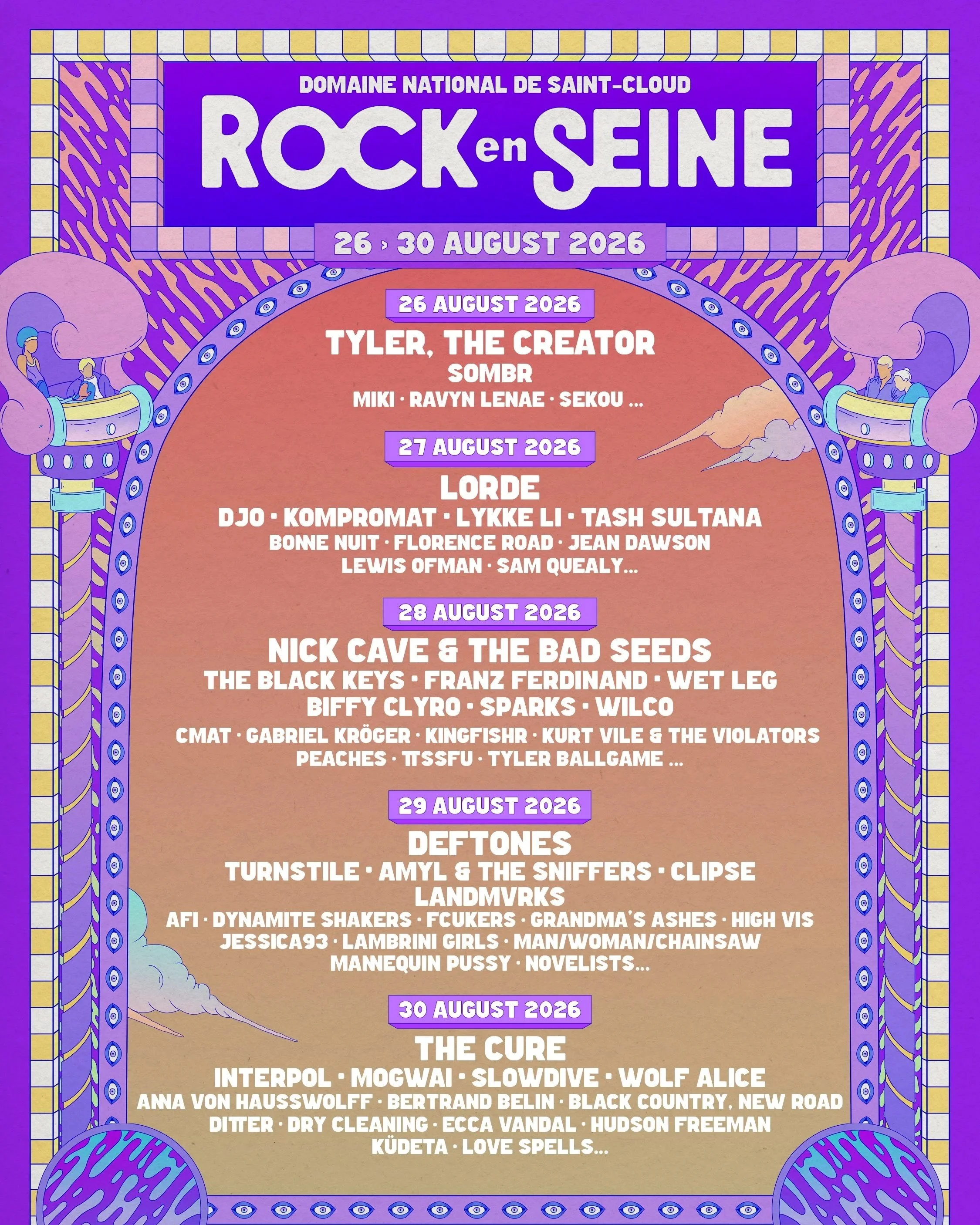
This year’s poster, designed by Sophia Babari.
Rock en Seine, one of France’s staple festivals, is coming back in August for its 2026 edition with a lineup full of promises.
For the past two decades, the festival has been drawing in thousands of people to Domaine de Saint-Cloud for five days of pop-rock shows, with some of the biggest international artists. The headliners for this year’s edition are Tyler the Creator, Deftones, as well as rock legends The Cure and Nick Cave & The Bad Seeds. With such iconic names, the 3-day and 4-day passes sold out last November, making it an unforgettable festival already.
Alongside them, the lineup is comprised of other big sensations such as DJO, Lorde, Wolf Alice, Amyl and the Sniffers, Turnstile, and Wet Leg.
Additionally, Rock en Seine prides itself as a committed festival, both for emerging talents and social issues like inclusion, diversity, and ecology.
Club Avant Seine is an initiative created in 2005, scouting emerging artists and offering them a stage and a platform over the course of the festival. There is no doubt this opportunity opens doors for people, and some of France’s big artists, such as Zaho de Sagazan or Feu! Chatterton, were once performers of Club Avant Seine.
Moreover, the festival has created a dedicated space called the ACT Area, where they host games, talks and discussions. This area is proof of their commitment toward diversity, inclusion and community, acting as a safe space to discuss social issues and to connect with people. The festival also offers different types of accessibility measures throughout its grounds, from platforms for people with mobility disabilities to vibrating vests and French Sign Language interpreters, as well as a “social chill out zone.” Rock en Seine is ensuring any and every music fan is welcome.
Finally, Rock en Seine has a space dedicated to young kids, allowing families to enjoy the festival together in a safe, quieter space for children to discover music.
All in all, Rock en Seine promises to be an unmissable and unforgettable festival, perfect to close out this summer. While Sunday tickets are sold out, the previous days are still available for purchase here.
You can find the official playlist here to get ready for the festival.

How Does A Photographer Go On Tour?
For many up-and-coming music photographers, the ultimate dream is to go on tour. It’s an incredibly special job, having the opportunity to be in close quarters with an artist, capturing the show night after night as well as the liminal moments between. Yet the process of becoming a tour photographer can seem opaque from the outside.
The Photo Ladies asked artists and touring photographers to weigh in on the matter, and to tell us about how a photographer ends up on tour. There was one clear consensus among our respondents: personality matters a lot.
Both photographers and artists highlighted the need to be flexible and personable, as well as successfully doing your job with clear communication and fast turnaround. You have to be someone that people are comfortable around, both for the benefit of your photography and the benefit of the overall tour experience. Penelope Martinez, who has toured with MUNA and Marina City, stresses that “Your job as a photographer is one of the most intimate roles in live music and you need to act like it, people need to trust you. Not just the artist, but the crew too.” Treating and seeing the artists as people first came up repeatedly across respondents as an essential. Who do you want to be on the same team as when everything goes wrong?
Creative strategist April Bredael, who has worked as a tour photographer and been responsible for hiring them, emphasises that the first tour you get will be the hardest. It’s a classic employment catch-22, that you need the job to get experience, but you need experience to get the job. As April puts it, “Being on the road is not for everyone, and the only way to find out if it’s for you is to do it. When you’re in the position of needing your tour documented, it’s a risk to hire someone who hasn’t toured, even if their work is great. They can be the best photographer in the world, but might not thrive under touring conditions.”
Heading out on tour is a serious financial strain for many musicians. Gas prices, visa expenses, and other rising prices are not helping. An artist may opt to hire local photographers at each or some of the tour stops, or simply rely on photos from press photographers or newbie photographers shooting for free. The costs of tour also mean that a lot of people you might think of as tour photographers are wearing several other hats. Many photographers are simultaneously videographers, merch managers, tour managers, and/or social media managers. Being willing to adapt and develop additional skills makes someone a more valuable potential addition to the tour.
What about the mechanics of actually getting the gig? Photographers end up on tour through inbound and outbound cold DMs and emails, through friends and connections and referrals, responding to Instagram stories, one-time gigs that turn into tour opportunities, shooting as press and impressing management with their work, applying to a posting on the app NOVA. The most common response regarding how they got on tour was photographers citing personal connections they had made in the industry, whether through bands/artists or management.
Beach Bunny’s Lili Trifilio notes that it’s been her specific request when she’s worked with photographer Athena Merry on tour. Touring musician Hoodie Allen says he mostly finds photographers through seeing their work on Instagram or recommendation from a trusted friend, either another photographer or an artist.
As you build a reputation, people hear about you—” If you are a good hang, word gets around band to band and team to team,” says tour manager and photographer Leigh Ann Rodgers, who has 14 years of experience shooting shows, touring since 2018, and doing it full-time since 2021. When you see the same handful of photographers passed between tours, that might be what’s happening.
It’s also not a matter of meeting and instantly becoming a band’s tour photographer. It can build over time. Photographer Sarah Midkiff, who has worked for labels including Warner Music Group, Sony Music Group, Interscope, RCA Records, and Republic Records, went on her first real tour with a band she’d previously interviewed for a publication. She’d shot them every time they returned to the city and developed a positive reputation with the label. Amy Russell, who tours and manages social media for Bowling For Soup, points out that strengthening relationships allows her to “get a bit more close up and get them more involved with content” when it comes to backstage and promotional photos.
There are many skilled and talented photographers out there, but touring is not a meritocratic contest, and there are myriad considerations that an artist and their team have to take into account when figuring out who’s coming on tour. It’s not an impossible dream, but pragmatism and persistence are mandatory. And, as Australia-based photographer Michelle Grace Hunder observes, “Touring seems to be the goal for so many photographers, but it's seriously not for everyone, for many reasons. I do believe it takes a particular personality type.”
by: Anson Julia Tong

Soundtrack Deep Dive: The Boroughs
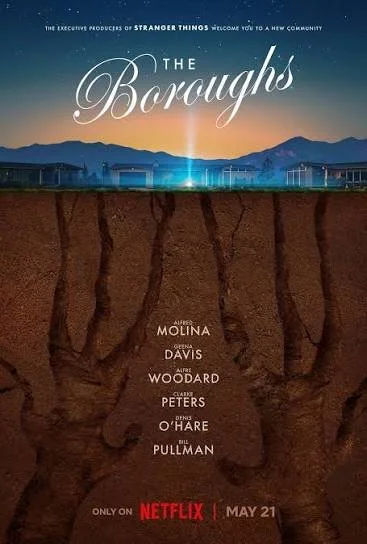
The Boroughs is Netflix’s latest sci-fi series that topped the streaming platform’s global charts, amassing over fifteen million views in ten days. The show was birthed by longtime friends Jeffrey Addiss and Will Matthews, creators of The Dark Crystal: Age of Resistance and The Lord of the Rings: The War of the Rohirrim, in partnership with wildly successful Stranger Things originators Matt and Ross Duffer, who serve as executive producers on the project.
Starring Bill Pullman, Geena Davis, Alfred Molina, Alfre Woodard, Clarke Peters, and Denis O’Hare, the series depicts a picturesque New Mexico retirement community who unearth menacing monstrous entities hunting down what retirees need most: time. Trading in teenage misfits for those of retirement age, the show is an excellent choice for those itching for a show akin to Stranger Things with a seamless soundtrack to pair.
Nora Felder, CEO of Picture Music Company, offered up her expertise for the show’s soundtrack, pulling familiar rock ‘n’ roll favorites from the ‘70s and ‘80s, including songs by Bruce Springsteen, Johnny Cash, Tina Turner, Bill Withers, Bob Seger, and other new favorites, such as Stranger Things’ alum Djo. She partnered with Legacy Recordings for this project and teamed up with composer John Paesano, composer of Maze Runner and Kingdom of the Planet of the Apes, who penned the show’s original score, catching the show’s emotional and spooky undertones.
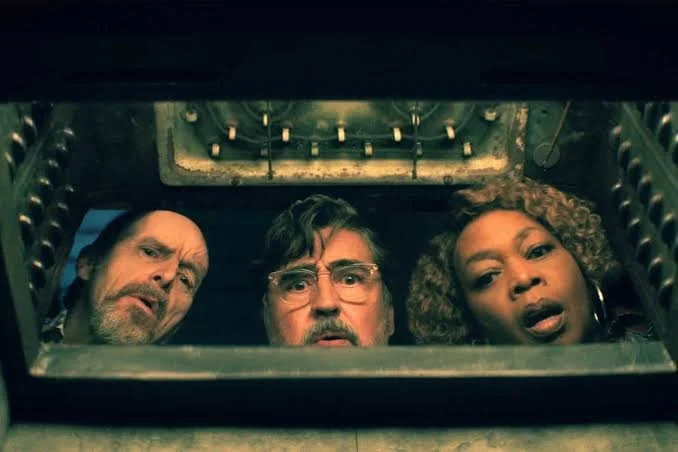
David Bowie’s syncopated “Golden Years” from the album Station to Station plays during the trailer of the show and in the opening sequence as ex-engineer Sam Cooper, played by Alfred Molina, arrives at the utopian New Mexico retirement community, invoking a sense of nostalgia while channelling a new beginning. Bowie isn’t unfamiliar to Felder, as she secured Bowie’s staple “Heroes” for the Stranger Things finale, nourishing her pre-existing relationship with the singer’s estate.
Bruce Springsteen’s “Thunder Road” makes a few appearances throughout the season, serving as a tribute to Sam and the memory of his late wife, Lilly, played by Jane Kaczmarek. Felder told Netflix that they ran through “at least 100 ideas” before officially selecting the song.
The multi-Emmy-winning and Grammy-nominated music supervisor also curated the music for Stranger Things, where she won the Creative Arts Emmy for Outstanding Music Supervision for her placement of Kate Bush’s “Running Up That Hill” in episode “Chapter Four: Dear Billy.” The usage massively reignited the 1985 song’s popularity and sent the song soaring to the No. 3 spot on the Billboard Hot 100 chart. She’s also the mastermind behind the soundtracks for Yellowjackets, Californication, Ray Donovan, and more.
All the songs in The Boroughs are below:
Episode 1 - “Welcome to the Boroughs”
David Bowie - “Golden Years”
Santana - “Oye Como Va”
Bruce Springsteen - “Thunder Road”
Bob Seger - “Night Moves”
Jacob Bright - “Easy Life”
Mike Jemison - “Spread Some Love”
Head Cut - “Straight Sound”
Earth, Wind & Fire - “Shining Star”
Netflix Recording / The Killers cover - “All These Things I’ve Done”
Episode 2 - “The Mourning After”
Ultimate Spinach - “Visions of Your Reality”
Sexbeat - “Sex Beat”
Lauryn Hill - “The Ex-Factor”
The Melophonics - “Champagne Nights”
Madeline Bell - “Love Is All”
Etta James - “Stormy Weather”
Episode 3 - “A Pyramid”
Queens of the Stone Age - “You’ve Got a Killer Scene There, Man”
Djo - “Back on You”
Dead Man’s Bones - “Lose Your Soul”
Clarke Peters singing Tina Turner - “I Can’t Stand the Rain”
Episode 4 - “Forbidden Fruit”
Tina Turner - “I Can’t Stand the Rain”
David Lawrence, Velma Valentina - “Alone”
Bill Withers - “Lovely Day”
Alan Hawkshaw - “Bluebird”
Illustration - “Upon The Earth”
Siouxsie & the Banshees - “The Passenger”
Cheryl Thompson - “Black Night”
Episode 5 - “Another Beautiful Day”
The Glasser Brothers - “Words Come Easy”
Johnny Cash - “Belshazar”
Morrie Morrison - “Goodbye Little Girl Goodbye”
Episode 6 - “The Grey Rebellion”
Engelbert Humperdinck - “Up Up and Away”
The Hues Corporation - “Rock The Boat”
The O’Jays - “Love Train”
Jim Wolfe - “Comin’ Back To You”
The Undisputed Truth - “Smiling Faces Sometimes”
Alfred Molina / Bruce Springsteen cover - “Thunder Road”
Episode 7 - “Time To Go”
Heart - “Barracuda”
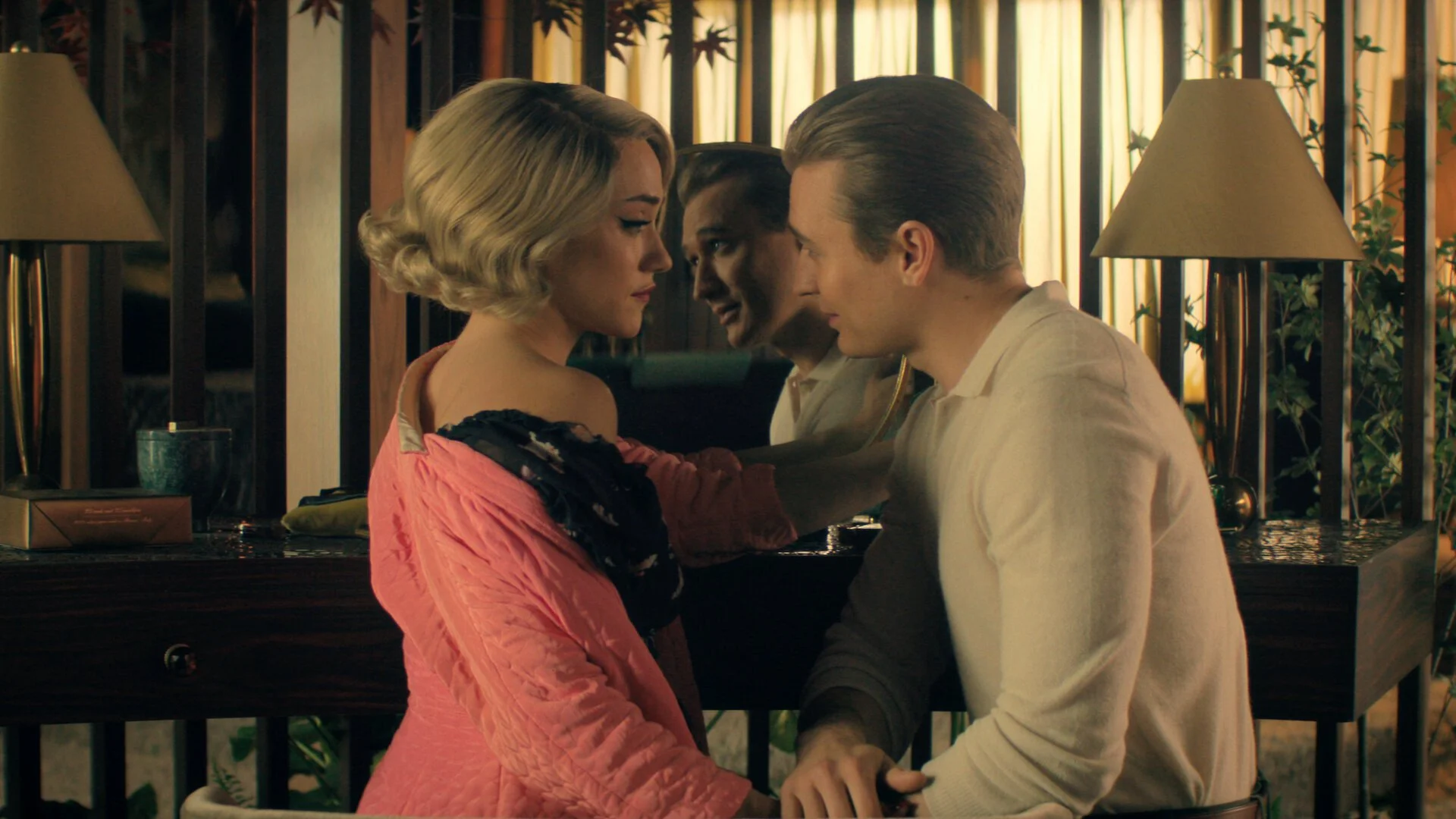
Fred Astaire - “Cheek to Cheek”
Cast / Ella Fitzgerald & Louis Armstrong - “Cheek to Cheek”
Cast / Bruce Springsteen - “Thunder Road” (Karaoke)
Cast / Andy Williams - “Promise Me, Love”
Episode 8 - “Tripe Audible”
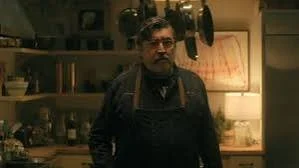
The Lovin’ Spoonful - “Do You Believe in Magic”
Santana - “Oye Como Va”
The Spiral Staircase - “More Than Yesterday”
Bruce Springsteen - “Thunder Road”
Bruce Springsteen - “Born To Run”

Interview: Azam Ali
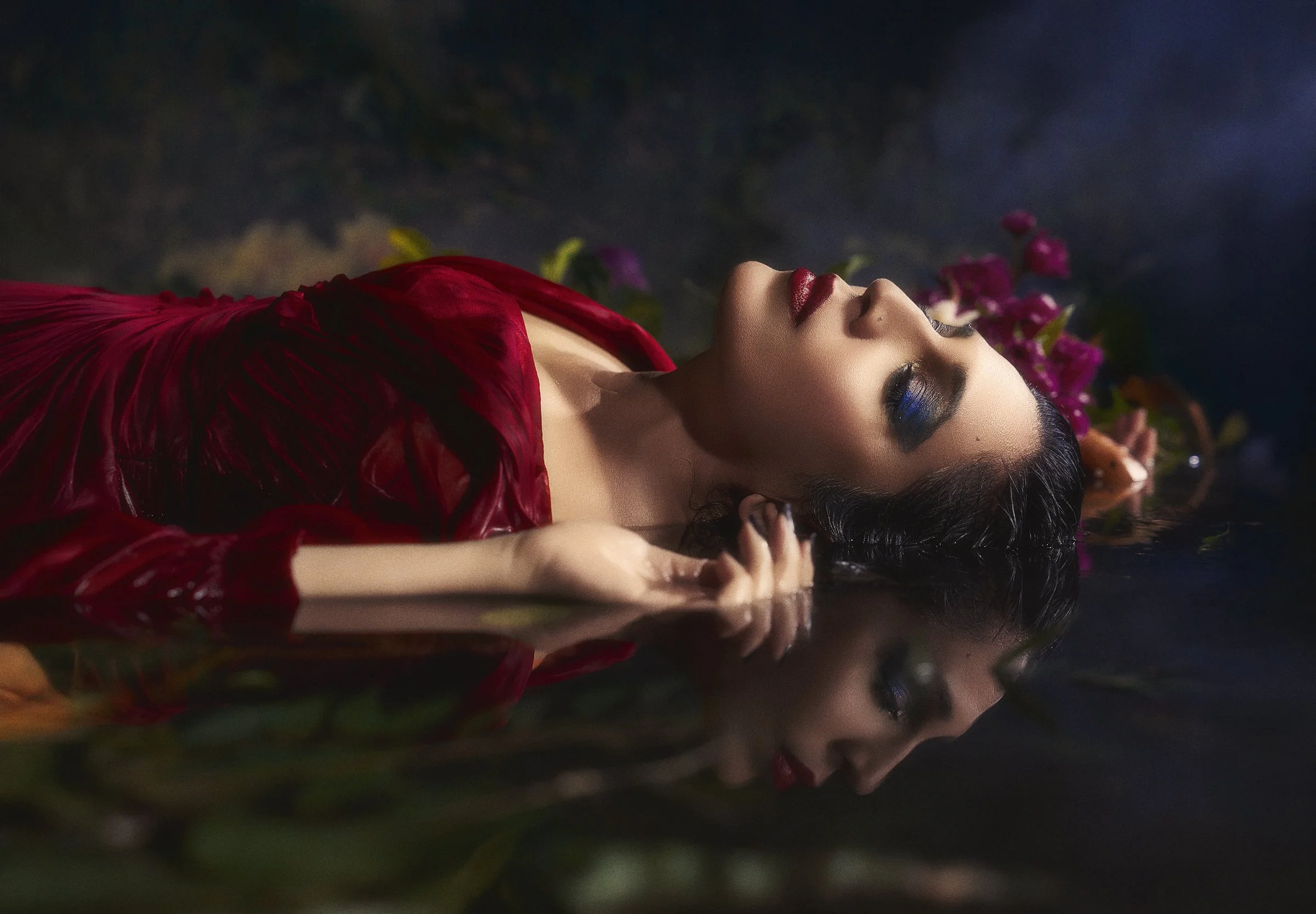
Azam Ali encapsulates many gifts as an artist. Born in Iran, schooled in India and having lived in Canada, the LA-based singer, songwriter, composer, producer and multi-instrumentalist has been named one of the most versatile and gifted singers and composers on the international stage today. Spending her formative years in India allowed Azam to absorb the country’s rich musical and cultural influences, as well as to focus on her school’s emphasis on the arts and spirituality. She moved to the United States as a teenager with her mother in 1985 and immediately began to study the Santour (Persian Hammered Dulcimer). She later realized that through singing she could fully express herself and it set her on the musical journey that has carried her to where she is now. The start of her music career began in 1996 when she founded the world music duo Vas. After releasing 4 albums, the duo parted ways in 2004. She met her husband Loga Ramin Torkian, a fellow Iranian who had immigrated to the United States following the Iranian Revolution of 1979, in 2005 and together they founded the group Niyaz. By incorporating a blend of acoustic and electronic music into their sound, Niyaz’s lyrics combine Arabian and Persian folk sounds with mystical Sufi poetry that conveys the universal struggles of the human soul and experience. She views her life’s work as creating something that transcends religion and culture and to show people that we are all the same. Niyaz has performed in multiple countries around the world and their music has been featured in film and television scores. Azam has collaborated in the studio and on stage with artists such as Serj Tankian of System of A Down, Peter Murphy of Bauhaus, The Crystal Method and Trey Gunn of King Crimson. She has worked with renowned composers such as Christopher Young, Harry Greyson-Williams, Michael Danna and Graeme Revell and her voice can he heard on film and television scores such as ‘Thor-The Dark World’, ‘Matrix-Revolutions’, ‘300’ and ‘The Fight Club’. She most recently worked with David Buckley on an episode of Season 2 of Sandman.
In 2002, Ali began a solo career outside of Niyaz and released her first solo album, Portals of Grace. She went on to produce 4 more solo albums, 2006’s Elysium for the Brave, which reached #10 that year on Billboard’s World Albums Chart, 2011’s Night to the Edge of Day, a collection of lullabies inspired by her son, 2013’s Lamentation of Swans-A Journey Towards Silence, a joint effort with her husband, and 2019’s Phantoms. Over the course of the past decade, Ali has been learning production side of music and carving out her place in the male dominated field of electronic music production. For her fifth solo album, Phantoms, she was responsible for every facet of the album—she composed every song, programmed all the instrumentation, sang every note, and produced the entire album, a rarity in the male-dominated realm of electronic music. “This album is the castle of my dreams. It has transformed me, and opened me up to a new world of self-expression,” she says. On November 14th of this year, Azam released her latest solo album Synesthesia through her new label COP International. Like Phantoms in 2019, it was was written, performed, and produced by Azam and is her second all-English album. The album is named after the sensory phenomenon of synesthesia in which a person can taste colors, feel sounds, or associate certain words or music with specific colors. She released two singles, along with accompanying videos directed by artist Tas Limur, ahead of the albums release- “Synesthesia” and “To Pieces”. She describes “To Pieces” as “a song of destruction, of fire consuming everything in its path, yet within that annihilation lies the threshold of renewal, and the promise of something new”. With regards to “Synesthesia, she says, “My music is an invitation to step beyond the confines of time, place, and the fragile vessel of flesh, into a universe without borders. I want the listener to feel carried into the vastness of the ethereal, where freedom breathes and every note reveals our part in a greater design. In this realm, we are no longer solitary beings, but shining stars drawn together into galaxies, each one a reminder that we are participants in a cosmic symphony far larger than ourselves.”
Having completed and released this latest solo album, Azam has turned her focus to the new multi-media stage production she is helping to create with her band Niyaz for their new upcoming album. You can follow Azam Ali and stay up-to-date on all music, tours, and band announcements, as well as listen to and purchase Synesthesia, via the links below:
WEBSITE | FACEBOOK | INSTAGRAM | SPOTIFY | APPLE MUSIC | YOUTUBE | SOUNDCLOUD
Your new solo album Synesthesia will be released on November 14th. I read that after Phantoms was released in 2019, and then the ensuing pandemic, you fell into a depression and didn't have plans to release another album. How did Synesthesia come about and what inspired you to decide to make another album?
Well, for me, making albums is never really a conscious decision. It is something that evolved so organically. After Phantoms...I had invested so much financially in that album and it really, in terms of what came back, it showed me that in today's world, it's virtually impossible as an artist to earn a living making records. They've basically become very expensive business cards. It just financially didn't make sense. And I'm a mother and have a son who is about to go to university. So that was kind-of depressing for me, realizing that it doesn't financially make sense anymore to make records. And then also realizing that I'm the kind of artist that I am. I felt like I didn't really belong in today's world of being an Instagram artist, a social media artist. I'm not really that kind of an artist. So, unless you are, it's hard to earn a living. That compounded with the pandemic and all of that, it really threw me into a depression. But, music is my sanctuary and I am always writing. I do it for myself. It's a form of therapy, so I just started writing songs. My friend Christian, who owns COP International, is a good friend and lives in the Bay Area. He used to come to LA for work and it became a bit of a ritual where, before he was driving up to Oakland where he lived, he'd just stop by my house in LA and have coffee with me. We would just end up talking for a couple of hours about politics, life, and everything and then on one of the visits he asked me, "Why aren't you making another record?". I said, "I've written a bunch of songs that's really a whole album in itself and kind-of a follow up to Phantoms but I don't think I'll be releasing it. I don't feel like I belong in this world anymore, my music." So, he said "Can I hear it?". I said sure, so we went upstairs and I played him what I had done and he said, "You know what? If you finish this album, I'll fund it and put it out there”. That was a hard offer not to take, so I said ok, because suddenly I had someone supporting me. Christian played a big part in me finishing the album and putting it out. Otherwise, I'm not really sure I would have. And through the course of it, when I was recording and mixing, I would send him texts late at night just crying and thanking him for pushing me to do it. Once the album really started coming together, I felt like what I had on my hands didn't just belong to me. It belonged to others, as well.
It's really such a beautiful album!
Thank you so much. Art is not meant just for the artist. We start to create it for ourselves, but at the end we ultimately create it for others.
How did you decide which songs to release as singles ahead of the album's release?
I kind-of took a poll among friends and Rey Roldan, my publicist- I trust his taste so much. He has impeccable taste, so he played a big part in helping me to choose the songs. As an artist, it's hard sometimes because you have tunnel vision and become attached to songs and it can be hard to choose. I kind-of knew that "Synsesthesia" and "To Pieces" were two magic tracks on there. But, having others reaffirm that was really the reason why those became the two main singles.
Can you talk a bit about the cover art for the album and working with artist Tas Limur on not only the cover art but the videos for "Synesthesia" and "To Pieces"? What was that experience like?
Tas worked with me on Phantoms, as well, and it was an amazing experience. I met Tas through a mutual friend who is an artist, a painter, and I needed to desperately make a video for the title track "Phantoms" on the last record. It was a very last-minute thing and I just reached out to my artist friends and asked if they knew anyone. My friend said, "Yes. This is the guy. His aesthetic and yours are identical, so you need to reach out to him." I sort-of met Tas on a blind date. I hired him and the first time I met him was on set. So that was the music video for "Phantoms", which did really, really well. It was such an easy working experience. So, when I did this album, I reached out to him and said, "Look. I want the entire aesthetic of this album to be your creation." I gave him creative freedom and he asked me what my initial visions were and I just had it constantly in my head, this painting of Ophelia. I thought it would be so amazing that instead of her dying in this painting, what if she lives. I just had this idea for the cover. I wanted everything to be very dreamy and otherworldly, going along with the theme of "Synesthesia". He captured it so perfectly. We worked so hard on that music video and we built the set. It was like old school art creation. We built it with 4 by 4's and a couple of my friends showed up and we built a 10 by 10, like a 6-inch deep pool and flooded it with warm water and hundreds of flowers and leaves. It was the hardest music video I have ever done. Going into that tank was Tas's idea and I'll tell you, I did it and am never doing it again (laughs)! It was so difficult! They make it look so easy, these artists who do these deep water videos. It's such a hard thing to do. The maximum I could float down...I could be down there for 3 seconds, so we had to do a hundred takes of me going down there for 3 seconds. But he did such a phenomenal job. I feel like, aesthetically, the album looks as it sounds and feels. That's what synesthesia is, a coming together of all of the senses.
Could you talk a bit about your own experience with synesthesia?
Mine is actually very mild. I do believe, actually, that everyone has it to a certain degree. I notice it most when people describe and talk about certain songs that mean something to them. It happens to me all of the time. They'll say, "Oh. I listened to this song of yours and I just see this forest." And that's just one example, and that fascinates me, because i feel that something sonic is triggering something visual. So, I think that everybody does have it, to a certain degree, but of course it's an actual medical condition. Some have it very extreme. I have a friend whose son, for example, sees certain numbers, and they give him very intense colors. Certain numbers, when he sees the numbers, it triggers certain colors for him. Mine has to do mostly with velvet. I have a lot of velvet in my closet. Since I was a teenager, I've become obsessed with silk velvet, and I can actually taste it when I touch it and feel it. It crosses into taste. I also have it with scents, where certain scents trigger very visceral memories. I have it more in that sense. Also, sonically, when I create music...music for me isn't just an auditory experience. It's a very spacial experience. I have it more in that sense.
You have a couple of covers on your album- Tim Buckley's "Song To The Siren" and Natalie Merchant's "This House Is On Fire". What is the significance of those particular tracks for you and what led to your decision to include them on the album?
I usually like to do covers, but I'm very careful about which ones I choose. For me, doing a cover does not come from a place of thinking I can perform the song better than the original artist. It really comes from a place of reverence and paying homage to an artist and a song that had a major impact on my own artistic journey. Tim Buckley's "Song To The Siren" has been covered so many times, so I'm not reinventing the wheel by performing it again. I was particularly influenced by Liz Frasier's version of it for This Mortal Coil. I probably, in my late teens, listened to that song maybe dozens of times on repeat. For this album, I really wanted to include a cover of that as a tribute to both Liz Frasier and Tim Buckley. As far as Natalie Merchant's song, that song of hers, when I first heard it, sonically and aesthetically it has gorgeous, gorgeous songwriting and production. She also incorporates Middle Eastern melodies so effortlessly. It's stunning, her version of it. Lyrically, I felt that what she penned, the lyrics she penned, are timeless. It was such a political statement at the time, a social and political statement. Those kinds of honest statements and that kind of truth-telling from artists, for me, are so timeless. I felt that this song of hers, given our current political and social climate, not just in America but globally, is again relevant today. I felt like deserved a new rendition out there to remind people of what I believe to be a very important song.
You have described "To Pieces" as a meditation on betrayal and the wounds we inflict on each other as human beings, as well as nature’s own betrayal and how, within that devastation, lies a threshold where annihilation yields to the promise of something new. Can you talk a bit about that perspective and the ways you feel that humanity is evolving towards something new and is trying to claw our way out of the darkness?
In the last two years, I think we..."To Pieces" was one of the songs I wrote later in the album. The last two years, for me personally, were quite devastating, with the genocide in Gaza and everything happening politically in America. The division. We kind-of, I feel, saw the worst and are still seeing the worst of humanity and the kinds of horrors and cruelty we are capable of inflicting on one another. And not only that, but also ecocide and how are destroying the planet. When I wrote that song, that's really why the video has so much red. I kept seeing red and destruction and fire, and I felt that's kind of the phase we are in. But if we examine nature, when there are wildfires, for example, just within the design of the wildfires, built into it is the design for the renewal and regrowth. That song really became about the destruction all around us, in terms of humanity and also nature, but that within this destruction is also the design for something new. I feel, in terms of politics, seeing what's happening in New York with the election of Zohran Mamdani, and how we brought people of all different religions and ethnicities and identities together, I feel like that gives me tremendous hope. I feel that's a perfect example of how, within the destruction, something new is emerging that is giving us something I think many of us have not had for two years. And that's hope.
It makes you think that maybe things will be ok!
Yes! Absolutely. It's beautiful to see all of the people who are coming together. Mamdani could not have won that election without Jewish supporters. And the fact that everybody came out means that we all recognize that the system that exists, the current system, is not sustainable. Not in terms of humanity or nature. We need to build a new system, and I think just seeing people coming together in NYC has given the entire country, and even beyond that hope. I see messages from all over the world, of people seeing what happened in NY and saying it gives them hope.
You have been very vocal on your platform about everything happening in the world, whether about Gaza, Iran, Afghanistan and beyond, and all of the suffering happening. As someone whose own life has been shaped by war and displacement, and politics, what do you see as your role as an artist in using your music and platform to voice your views and experiences, despite the pushback you have received?
When people tell me, and believe me I hear it a lot, to just shut up and sing and that they don't want to hear about my political and social views and to just "give us your music", I remind them that actually my music is an autobiography of my life. I would not make the kind of music that I am making if it wasn't for the life I have lived. War, displacement, dehumanization, those are all a part of my own lived experiences. And asking me to not talk about that is basically asking me not to express myself as an artist and the full spectrum of who I am. For me, using my platform as an artist to talk about what is happening in the world is part of the exact same truth-telling as the kind of music I write, in which I am being completely, 100% honest in terms of my emotions and the output of what I am expressing. It's the same truth-telling, and I cannot separate the two. And in terms of, especially with the genocide in Gaza, I've felt that how could I possibly just post about mundane things, like what I'm eating or just anything, when there are literally children being killed every single day. And particularly the plight of children is something that is extremely sensitive for me, because I myself was an orphan. I grew up in a boarding school since I was 4, in India. I know what it's like to suffer as a child and to be alone and afraid. So, the plight of children is particularly close to my heart, and if I would not have used my platform, despite all of the push back, I feel that I would have failed as a human being and as an artist.
Do you think that more artists are starting to find their voice, despite the pressure to remain silent, on issues like that?
You know, it's such a personal matter. I do my best not to judge artists when they don't speak out. I'll be honest though-it's hard not to, especially when it's an artist I admire and feel like they are outspoken about some issues but then suddenly become very selective about certain issues. I feel there is a kind-of intersectionality in liberational movements. You can't stand up for LGBTQ rights but then not stand up for other people being oppressed. I feel like we have to apply our morality and our humanity equally across all liberation movements. They are all interconnected. It's hard for me not to be disappointed...maybe that's a better word...in artists I admire, who I feel have a larger platform than I do. I do feel that, perhaps in the last two years, I'm seeing more and more artists speaking out. Perhaps it's because you see others do it and you do find courage in that. I do feel that you find courage. And even if there is a loss, like for me there was a huge loss in the beginning, maybe the first 6-7 months of the genocide, and then suddenly everything just shifted. I found my own people. I found people who cared about what I had to say in terms of that. I remind people, when they say, "Do you feel like it was worth the cost?", that even if you don't feel the cost of it in terms of losing work or money or relationships, there is a cost. It's a cost of the conscience and of the kind of future that we are imagining that we want to build. There is an absolute cost, even if you don't feel it immediately. You have a responsibility as an artist, especially in today's world where media is so biased. We watched an entire genocide live-streamed on social media. This is the future. This is it, you know?
It's pretty staggering for sure.
I know. And the news isn't going to give us the real information. This is how it is from now on, you know?
Blessings to the brave journalists in Gaza, because otherwise we wouldn't really know what's going on.
Exactly. Exactly.
So much of your music is infused with poetry and folktales/folklore, instrumentation, prayers, lullabies, and whatnot from many different cultures...mainly Middle Eastern cultures. Can you talk a bit about using those deep cultural references in your music and your ability to bridge the spiritual, cultural, and musical connections and struggles that you have mentioned feeling intertwined with yourself?
My music, all of it, from the world music I create to my own solo stuff with English, which is a more singer-songwriter approach, is all storytelling. It's a storytelling and an autobiography of my life. I feel, as artists, that we are in a unique position to share with people so many stories. I love the fact that the majority of my audiences are not from any of the cultures whose music I present, but they are all interested and they come. There is something very universal in the overall message, especially when it comes to folk music. I'm particularly interested in folk music of the world, because I feel like folk music is the music of the people. Even in America. When you share that, there is something, even if people don't understand the language. It resonates on a very human level. I'm interested in that and juxtapositioning it against something very modern. Which is kind-of the story of my life, coming from an ancient culture and then finding myself in America and a modern world. And then how do I reconcile these two realities?
Over the years you have done a lot of music for film, television, and video games and were recently a featured vocalist on season 2 of Sandman, having called the experience one of your favorite cues you've ever worked on. What can you tell me about that experience and how it came about, as well as working with David Buckley on the score?
A lot of my work for film and tv, it's not really my vision, and that's why I really like it. It's interesting for me to work with composers and try to capture their vision, because in that process, I feel like I'm going on to become a better artist. My own work is just about expressing myself and my own aesthetic, and sometimes I don't really get what they want, or maybe I'm not enjoying what I'm doing. But every single time I do it, I feel like I come out of it on the other side a better artist. David Buckley is an incredible composer. When he came to me, and once in a while this happens to me, he reached out and said that he had this cue that was, like, three minutes and no dialogue. He said, "I really don't know what to do here. I created this sort of bed of music, but I can't really write the vocal style that you do, and I don't know what to do. So, why don't you take this, and you'll have 100% creative freedom to just sing whatever you want? Just make it multi-layered." He gave me this freedom. He had already created an incredible bed of music, so I wasn't starting from scratch. I had something that was very inspiring already to begin with. And then, I just poured my soul into it, and he loved it, and the producers loved it. It was just one of those rare incidents that happen where you get complete creative freedom, and it becomes a true collaboration. It really was a true collaboration with David.
Can you talk a bit about the collaborative album you are doing with the artist Buckethead, Flowers For The Bees, and how that came about?
Yes. I've known Buckethead for so many years. We met in the early 2000s because we were both on different labels, and Virgin Records bought the labels that we were on. And then they created a small tour for a select group of artists whom they had acquired through their merger. Buckethead was one of them, as well as my last band, Vas. We met on that tour and had four dates in Europe. We travelled together over the course of, I think, ten days or something and immediately bonded. He's such a gentle soul and such a smart, deep-thinking human being, and we just completely bonded. I had no idea who he was before that. We just became friends and then he did a solo album that our mutual friend Serj Tankian produced. Buckethead asked me to sing on that album, so I sang, and then we kind of went our separate ways. Years passed, and then he reached out to me, and he asked if I wanted to do an album together, and I said Sure. It's kind of been evolving, and we have around four songs that are done. It's very slow because I'm very busy and he's very busy. The only way I can describe it is that it's so ethereal, this album. It's mostly just all guitar and voice. I don't think we're really going to have any other instruments. It's very bare bones, with ethereal guitar and voice. In fact, in December, he's performing at The Wiltern in Los Angeles, and he asked me to join him on stage to perform two of the songs, so I am very excited about that. Hopefully, we will finish the album this year and next year we'll get something out there for everyone to enjoy.
You did a run of European shows with Niyaz over the summer. How were the shows?
Those were really great shows. What was interesting is, you know, now we're mostly performing our multi-media project, so when we went to Europe, we went back to sort of our roots of beginning in clubs. It was not the multimedia shows. It was very interesting, after all these years, going back to performing in clubs. It was so much fun, just dancing with people and meeting with people in that very intimate setting, rather than a proper performing arts centre.
What can you tell me about your life outside of music? Are you still making jewellery and doing your fine art prints? And what’s next for you?
Yes. But you know, honestly, my fine art prints...someone just asked me about that the other day. "Why aren't you making any more?". And I thought, what I really loved about that composite work was that it was really hard and would take around ten hours to create an image, taking different photographs and putting them together to create something surreal. Now, with AI art, everything looks like that and it's so hard to...I feel like no matter what I create, it's just going to look as if I created it with AI. So, I've become a little bit jaded, honestly, in terms of visual art. With my jewellery, I'm still making it, but not as much because we are building a brand new multi-media stage production for the new (Niyaz) album. We're actually almost done with the new Niyaz album. We have one more song to record and we're working on a massive stage production, which we are launching in March. All of my energy is right now going into that. It's one of the reasons, also, that I haven't scheduled any shows for Synesthesia, because I really don't have time to tour the album. All of my focus is on this new production. I can't wait to bring that show to the stage, because what we are creating is incredible!
I can't wait to catch a show!

Interview: Felly

Felly (Christian Robert Felner), an indie artist, singer, songwriter, and record producer grew up in Connecticut and began writing music in high school. Although he grew up in a non-musical household, he was deeply impacted by the death of his father at the age of 7 and discovered music as a way to feed him. He was turned onto a variety of music by his siblings growing up, from Bob Dylan, to Dave Matthews Band, to Counting Crows, to hip hop artists, and forged his own musical path as a result. Felly’s journey as a musician evolved organically, with him starting out as a solo artist, making beats, sampling vinyl records, and arranging and producing his music. He later delved into songwriting, playing guitar, and writing, producing, and collaborating with other artists. The progression of his musical journey has allowed him to evolve as an artist, with both the sound of his music and his embracing a more collaborative and full-band approach to recording and performing. Having made music for 10+ years, he has released several studio albums, mixed tapes, EPs, and singles.
He released his latest studio album, Ambroxyde, in June of this year, with a departure from the rap/hip hop sounds of previous releases to more of an indie-rock sound. The album, produced alongside Grammy-nominated and Mercury Prize-winning producer Gianluca Buccellati (Lana Del Rey, Arlo Parks, The Marias), was recorded in several locations around the world, from Iceland to Greece to Texas, with the different settings helping to shape the sound of the album. On September 23rd, Felly embarked with his band on a 29-date US tour that will see him promote the new album while still playing some older fan favorites! And having caught the first stop on his tour in Louisville, I can honestly say everyone is in for a treat! It was a party on stage and in the crowd! You can follow Felly via the link below to keep up-to-date on all upcoming music, news, and tour dates.
WEBSITE | FACEBOOK | INSTAGRAM | YOUTUBE | SPOTIFY | APPLE MUSIC
You grew up in Connecticut and started releasing music in high school. What can you tell me about your childhood and what led you to want to make music? Did you grow up in a musical family?
Connecticut was definitely not a place that felt artistic in many ways. The goal was always sort of to get out. I saw early that a future there in music just wouldn’t give back to me too much. I think I knew one other kid who made music and no one in my family had a musical bone in their body. I think I was always just following the music and knew it wasn’t there, but had to obviously grow up first. I think my drive to make music came from my dad dying when I was 7 years old and just having a bunch of time alone - think I had to find something that fed me. And it was vinyl records at first. Those felt like a time machine and friends that I could rely on. I was the youngest of three at the time and my brother and sister had sort of…normalish lives. Though they did put me on to a ton of really good music like Bob Dylan, Counting Crows, Dave Matthews Band… hip hop stuff came later when my mom remarried and I gained two step brothers who loved Lil Wayne. There’s something in psychology about the youngest assessing what his elders do, and then carving their own route. So I think I was determined to find my own thing and found it early in music. It felt untapped and unique to me.
Could you talk a bit about your evolution as an artist, from your early days to now, and growing confidence in your abilities? What are some of the greatest lessons you learned, as well as mistakes you made and learned from?
Early on I was just working with what I had. A beat machine, some vinyl records to sample, and a usb microphone. I would make beats and knew how to arrange things and produce, but it always felt incomplete without words. Then came writing and lyrics. I think as time progressed and I leaned in more to playing guitar, writing songs with other musicians, producing, collaborating - I started to understand that music didn’t just have to feel like bed room beats. And the sounds that I would have to get from samples…I could learn to play and create my own way. I think I learned that limitations could be your best friend.
You released albums on major labels before becoming independent. What can you tell me about that transition and your experience of being both on a label and an independent artist?
I’ve been on and off labels for about 8 years. I think it just works like this: whatever makes sense for that time in your life, and whoever aligns (whether a major label or a distribution company or completely independent), you just follow that. Working with anyone has its upsides and its downsides. With major labels you could be creating music, maybe even subconsciously, for a certain reason. That loan you get can feel like - well, I gotta make something that makes that back for them. When you’re doing it independently and funding it yourself, you don’t really have anyone to appease - which is a nice feeling. I think a blend of both is great. It’s certainly hard to do everything yourself.
You now reside in LA. What prompted you to move from the east coast to the west coast? I’ve had other artists talk about the difference between the two parts of the country, that there is a lighter/sunnier and more upbeat vibe on the west coast. Have you found this to be true for you and has it changed your process for songwriting and making music?
I went to LA in 2014 when I somehow got into USC’s music school. Luckily they were in their first year of having a music industry program, so even though I didn’t know how to read music or play an instrument, I had a following within the music world and they welcomed me in. This opened me up to all the other kids who were maybe in the jazz school or pop studies - and I just sort of put together a team and helped to start a record label out of a dorm room where we would bring everyone together. Everyone was hungry for some sort of mission - and I think I was able to put together a vision for that.
You released your latest album Ambroxyde in June of this year, with it being a more personal and earnest album. Could you talk a bit about the making of the album, which took place all over the world, from Iceland to Greece to Texas? How did each location influence the songs and the making of the album as a whole?
We went all over the world pretty much just to get out of our comfort zone of making music in Los Angeles and being in home studios. I met a producer early on named Gianluca and he had a similar mindset that it might be time to branch out and see who we are and what we would come up with in different settings. So we went to Iceland, then came back to la to figure out some things, then went to this studio in Greece, and then finished it off with the band in El Paso, Texas at this studio called Sonic Ranch. I think each place contributed to the sound in some way and in on some tracks you have recordings from each place. For example, we’d like the drums and guitars from Greece and pair them with the vocals from Texas. It was a really cool sort of collage way of going about things.
This album has more of an indie and alternative sound, influenced by much of the music that you listened to growing up. You have talked about how previously it has been just you on your computer rapping beats, but now, having spent the time to become a better musician, you have been able to make the album you always wanted to make. Could you talk about that journey for you and the personal significance of this album?
Definitely- I think the process alone for this one helped me to see I could keep growing. We all want that feeling of progression and evolution in some way. It’s inherent in humans and natural for us. I think if you do the same thing too long you can stop being impressed by yourself. I learned a lot about leaning into what may feel uncomfortable - and that can sometimes achieve sounds you never thought you could make.
This album has been described as “not Felly 2.0, but Felly as he’s always been, removed from all expectations”. Did you feel pressure earlier in your career to be the artist everyone expected you to be or do you feel like this evolution in sound was a more natural and organic process for you?
I never felt like I was making things from a place of “I’m expected to make this”. I think with this record I more so had to honor the fact that I’m not 19 years old anymore and if I were to try to sound like that it wouldn’t come off authentic. So I think in some way I just allowed myself to sit deeper into who I am and be ok with it if it wasn’t what people have pinned me to be. I think this just comes from releasing records for 10 years and being ok with changing things up to align with where you are at the current moment.
You have said how you are focused on longevity and have seen the game change so many times and move around. What can you tell me about your perspective on the music industry and how it’s changed throughout your career? Do you feel like you have an easier time as an artist in being independent-that it allows you more freedom to adapt and be the kind of artist you want to be?
The music “industry” is so different now. So much more emphasis on visuals and roll out. How people consume is different today. I used to just drop on Soundcloud and things would take. Now there’s just so many more cars on the road that to make your mark you might have to be a bit more intentional. Just to lead people to the music you know. I’m not sure if in today’s age it really matters if you’re independent or not. Either way it’s up to the artist to find a way to cut through. Some of my favorite artists who I think are so talented still can’t find a way to get through the noise.
Your tour starts on September 23rd in Louisville, KY! Have you performed in Louisville before and what are you most looking forward to with this tour and performing the new album live?
I don’t think I’ve ever performed in Louisville. I think we did Lawrence many years ago. All I know about Louisville is Jack Harlow - mostly from doing a song with him a few years back. And Bryson Tiller. I’m excited to see what the people there are like. The south always has a genuine kind of love for music.
You have talked about the future of Felly as you see it, with more of a collaborative, full band approach, rather than being a solo artist. Can you talk about the future of Felly in that regard?
I definitely want to keep including my friends and the band. But I also don’t want to sleep on my own self production. I think it’s gonna be a blend of the two. I learned a lot from this past record and feel capable of more now. it’ll be interesting to see what I go with next.
Aside from your upcoming tour, what’s next for you?
I want to build an off grid studio somewhere where artists and friends can come create. Been thinking about it for a while and dreaming up what that would look like. The studio in Iceland really moved me. Something like that but in the US.

Interview: Cymarshall Law
Love and self-empowerment. That is the philosophy and religion of New Jersey rap and hip hop artist Cymar Simmons, who goes by the moniker Cymarshall Law. Born in England to Jamaican parents, his home was filled with love, family, and soulful reggae music, as his father was a Jamaican MC. When he was 9, he moved with his parents and brother to the US and settled in New Jersey. His brother’s love for rap and hip-hop music influenced his love for the genre, and he began penning his rhymes. Having grown up listening to reggae music with conscious lyrics and appreciating groups such as Wu-Tang Clan, De La Soul, and A Tribe Called Quest, to name a few, whose music has a message, he strives to do the same with his music. In 2000/2001, he and his brother started performing together as Everliven Sound and started the label Freedom Entertainment. He has also made music outside of the group, having released many albums and projects over the past 20+ years, many of which have seen him collaborate with a number of artists, and has embarked on a number of international tours. Aside from music, Simmons is also an author, recently releasing his book 52 Laws of Freedom, a book that aims to help people reconnect with their most authentic selves and achieve emotional resilience and mental clarity.
On June 13th, he released his latest album, The Peaceful Warrior 2: Raw Self-Expression. The album was produced with UK producer Slimline Mutha, with whom Simmons has been working for 20 years, and is his 2nd album with the producer. The album explores themes of duality, creativity, and authenticity and one that Simmons feels may be his best album yet. Simmons has a busy year ahead, as he plans to release a series of children’s books that will be a children’s version of 52 Laws of Freedom and will be releasing another album at the end of the year. He will be performing at Rhyme Fest LA in August, joining a line-up that includes artists such as The Alchemist, Dilated Peoples, DJ Quik, and he says will be one of his biggest shows to date. He will also be continuing his podcast, The Cymarshall Law Show, an insightful podcast that covers a variety of positive topics emphasising positivity, love, independence, motivation, knowledge, and wisdom from various guests. Make sure to keep up with Cymarshall Law and all upcoming events and music via the following links.
Website | Facebook | Instagram | Spotify | Bandcamp | YouTube
You were born in England and lived there until you were 9 years old. What can you tell me about your childhood there and then moving here and adjusting to life in the United States?
In England, I'm not sure if you knew, but they graduate high school there at 16. So even though I was 9 years old, I only had 7 more years of school to go. As soon as I moved to America, that changed immediately. As a matter of fact, my brother was 15 when we moved and thought he was about to get out of high school. When we came to America he had to go right back to school. In England, I feel like a lot of people come to each other's houses, as far as friends. I don't feel like that is something that happens over here as much. So, when I was living in England, it felt a lot more like a community thing. When I came to America, I guess because my family is spread out so much, I didn't really grow up with a lot of cousins or family around me, whereas in England I had a lot of family around me. In addition, I always like to tell people, especially my American friends, because we usually have different taste in music, that there are a lot of Jamaicans in England. My parents were both born in Kingston, Jamaica, and because of that, I grew up in England listening to a lot of soulful reggae music. My friends in America really grew up listening to jazz from their parents, so we grew up different like that. I feel like hip hop was the great connector, because when hip hop was really coming of age, that's really when I was, like, born. And then I moved about 10 years after that and then my friends that I ended up relating to in America were going through the same transition. They were going from jazz to hip hop and I was going from reggae to hip hop, so hip hop is really where we met in the middle. But, yeah, I love England and I go back as much as possible. It's just different from America in a lot of ways, but I appreciate both places.
What can you tell me about the ways in which your older brother's love for rap music influenced you and led you to start penning your own rhymes and making rap and hip hop music yourself?
Yeah. So, our father was a Jamaican reggae mc before both of us. I used to always see my brother and father have these conversations about music when I was too young to really know the ins and outs. I always looked up to my brother in a way that he had respect for my dad like that. Even more than music, I tried to copy my brother for everything. He played right wing in soccer, so I had to play right wing in soccer. He wanted to be a dancer, so I wanted to be a dancer. So, in that way I always looked up to my brother and always wanted to be like him. And then luckily, it was more than me just wanting to be like him. I actually was like him, because we came from the same parents and were taught a lot of the same things. So, when we were listening to a lot of reggae coming up in our house, there were a lot of conscious lyrics. When I went to go start writing rhymes, the first thing he told me was...because my brother taught me how to rhyme. So, the first thing he told me was "always bring yourself to the table and make sure you're not like anyone else". He said the way I could do that is just by representing our family, because there are no two families who are exactly alike. If I was able to talk about our family in a way that, as cool as we think our family is, if I was able to express that to the world, then people would gravitate towards that. And that's probably the main thing he taught me, just to be myself and to represent our family. I feel like a lot of people in hip hop, or just in any genre in the world or anything, tend to copy each other when they see something is working. But that thing that is actually working is the individual being themselves and they got so good at it that other people started wanting to copy it. That's the biggest thing I got from my brother, just understanding that everyone has a piece of greatness within them and my job is to express my family's greatness and our identity.
What can you tell me about the group Everliven that you started with your brother around 2000/2001, as well as Freedom Entertainment, the label you formed?
I'll start with the label, because that came before the group. The label is Freedom Entertainment, and we are called Freedom because my father used to own a reggae sound system in England...Jamaican Reggae Sound System, where they would go to different parts of England and sound clash versus other reggae sound systems. That sound was called freedom sound, so when we started to do our own label, we decided we wanted to bridge the gap between my father's sound clash of freedom sound and what we're doing. So, we called it Freedom Entertainment to pay homage to what our father did. And then to move on to Everliven, as in something that will never die. And the reason it's spelled like that is because in hip hop we tend to, like, change the letters or spelling of things just to make it our own, just to make it hip hop. It's pronounced Everliving, but is spelled Everliven, and Everliven comes from the fact that we are very soulful and spiritual people. We believe that the soul is something that never had a beginning and never had an ending. It's energy and energy can't die. Everliving. It's always here and is never going to die, just like people's souls and spirits. So, what's in the sound of our music, we feel like our music will live forever and never die.
How would you describe the early days of your rap/hip hop career and how do you feel you have evolved as an artist since then?
That's a fun question. When I first started rapping, I couldn't control my voice very well and I have more treble, like a higher pitched voice. So, when I used to rap, all you could hear were the highs, and when I would speak on the mic, they'd say it would sound like I was screaming. That was because I didn't also know how to hold a microphone and got taught by my father how to hold a microphone. And a lot of times when you go to shows nowadays, there are a lot of artists you may not be able to hear, and that's because their fathers may not have taught them how to hold a microphone. You are supposed to hold a microphone from the bottom, so your hand is not cuffing the microphone where you are actually supposed to be talking into it. In the beginning of my career, I didn't know anything like that. I was holding my hand over the microphone and screaming into the microphone, so everything was high pitched. And then additionally, I didn't know to count bars. I didn't know song formats. So, typically a song format would go, like, a 4 or 8 bar intro, then a 16 bar verse, then an 8 bar chorus, then another 16 bar verse, then another 8 bar chorus, and another 16 bar verse, then end the song with an 8 bar chorus or, like, a 2 bar bridge. I didn't know anything like that. So, when I was making my songs initially...like, I remember sending a demo to a record label named Fat Beats back in the day, like in the very beginning of my career. Coincidentally, they are putting out my new record physically right now. But back in the day, when they told me no, one of the reasons they told me no is because they said my songs didn't have any form. They were just me rapping and I would just stop rapping whenever I wanted. I was rapping and would stop rapping at, like, 25 bars or 27 bars or 30 bars. When I started paying attention to songs, I realized "Oh. These songs on the radio, they all have a format", like 8 bars hooks or 16 bar verses. So, I learned about music more. I learned about the structure of music more. I learned how to control my voice more. I learned, from being in England and moving to America, that when you speak on the microphone, when you rap your songs or say your lyrics to people, the things that go over in America might not go over in England, because they know different things and watch different shows and have different experiences. I could be in America saying my punchlines and they're hitting, but then when I go over to Germany or England or Slovakia or wherever I've been and saying some of these punchlines, they're not hitting. And that made me become a better mc, because then I realized I had to write my rhymes in a way were universal, so that no matter where I was on the planet, when I spoke into the microphone, everyone would know what I was talking about. That all came from experience.
How do you feel like hip hop culture has evolved as your career has evolved? Who are some of the artists you have found to be the most inspiring?
So, how it's evolved or devolved or just changed. When I was coming up, there was more of music was a message. I felt like you had to be original or else you got banished from hip hop. If you look at the beginnings of hip hop and all of the different groups, they're all super different from each other and are all actually saying something. They all had a message. As hip hop went on and on, it seems like music with a message got taken out, and nowadays if you listen to the radio...as a matter of fact, if I tell someone I do hip hop and am an mc, I have to tell them more than that, because they might just assume that my hip hop is like the hip hop on the radio. And a lot of the hip hop on the radio...I don't want to say it's all bad, because it's not, but a lot of hip hop on the radio, I don't even let my own children listen to it. Back in the day, you had groups like Public Enemy, A Tribe Called Quest, De La Soul, and these groups all had a message. They were all saying something. And I don't want to say that none of the groups and artists now don't have a message, but it's a lot less, like way less, and that's very unfortunate. At the same time, if you look at, like with every generation, if you look at the music they listen to compared to what their parents listen to, the parents are always like "Oh, we don't like the music you listen to." I often think about that. Like, am I just now in a situation where I'm older and looking at the music the younger kids are listening to and it doesn't gel well with me? I often think about that, but at the same time, there's a lot of negativity in the music now and I don't appreciate that. I don't feel like whoever are the higher-ups or radio people or whoever is in charge of getting music out there, I don't feel like they are doing a good enough job of getting a diversity or variety of what's really out there. You can have negative music but if you have negative, there's also whole other half that's positive that is not getting the same light right now. I feel like that's one of the reasons why I'm here. To kind-of bring balance to the force.
You recently released your book 52 Laws of Freedom, which aims to lead readers towards a liberating and self-fulfilling internal freedom. What can you tell me about your spiritual philosophy and how you came to write the book, as well as your journey in discovering and embodying those laws for yourself?
So my spiritual philosophy...I don't subscribe to any religion. The reason I don't subscribe to any religion is because I have studied a lot of them and the common theme I was able to find in all of them was love. So, if you are going to call my religion anything, my religion would be love. And I always wanted all of the religious leaders to get into a room and kind-of debate it out, but that has never happened. I just feel like everyone can't be right, but everyone is not wrong. The main thing in every one of those religions, whether you are talking about the Bible, the Torah, the Quran, the main thing in all of those books is love. And that was always very clear to me. My parents were Rastafarians and Rastafarians teach all about love. They aren't Rastafarians anymore. When we moved to America, they let that go, but at the same time that's where I began to learn and understand about love. That's what my parents were teaching me about. And in life, just as I was traveling around, I would come up with these very clear ideas and would start writing them down. After a while, i looked up and I had...I had more than 52. I probably had 67 of them and just narrowed them down to the clearest, most potent thoughts and these thoughts were things that helped me out in life. I know because they helped me that they can help other people, so I decided to write a book called 52 Laws of Freedom. I put each law in the book, and within the law, I say where I got the law from...what I was doing at what point in my life to make me come up with that law. I also have a rhyme that I probably wrote that is parallel to the law. So, if the law is about being your best self, the rhyme is about being your best self. And then I break down where exactly, at what point in my life, that I was able to find out why that law has to be a law.
It all stems from my religion being love and trying to not only be the best version of myself, but show other people that they can be the best version of themselves. Because I know when I look out in the world today, there are a lot of people who are anxious and depressed and there's a lot of negativity. If you ask how people are doing, a lot of times people don't have that much to say that's great. I feel like a majority of the time I'm positive, so I just want to make sure I'm giving my gift to the world to help other people be positive or help other people shine their light, so they can make more people shine their light and just for all of us to be better. It has to start somewhere. Someone has to do it, and every day when I look out in the world, there's just a lot of negativity, and I refuse to be that. That is where my vision of love comes from and where 52 Laws of Freedom comes from and where, essentially, Cymarshall Law comes from.
You will also be releasing your new album on June 13th entitled The Peaceful Warrior 2: Raw Self-Expression. Can you talk a bit about the making and recording of the album, as well as some of the people you worked with on the album? What do you hope listeners take away from it?
The album is called Peaceful Warrior because I feel like everyone has 2 sides to them- a peaceful side and a warrior side. I'm very clear about that on the album, so there are songs that are really thoughtful, but there are also songs that are more on the, I wanna say aggressive side, as far as getting my point across and telling the world who I am and not allowing the world to tell me who I am. I feel like a lot of times the warrior in people gets shut down because they let tv tell them who they are, they let their friends tell them who they are, they let their partners tell them who they are. And when that happens, your true identity and the person you are supposed to be...the coolness about you, that gets diluted. The world tries to mold you into what society wants you to be. Me being a warrior, I am fighting back and making sure I'm putting my stamp on the world and not allowing the world to shape me into anything besides who I am and what I really want to be. So that would be the warrior side, and the peaceful side would be me being more thoughtful and expressing my feelings, whether it's me being hurt or just me being reflective on how the world is. As far as who's on the album, I have Sadat X on the album from a group from back in the day called Brand Nubian, a really positive group. I have Planet Asia on the album, who is one of the West Coast legends, I would say. DJ Rhettmatic, also a West Coast legend. I have Ramson Badbonez on the album, who's from England, and I also was on his album recently that just came out. I have AthenA from Atlanta on the album. She's a female lyricist. I haven't heard her on anything before, but when I heard her on one of my friend's songs, I thought she was so amazing and wanted to put her on the album to give her some light. I have a Jamaican artist named Linton Kush on the album, whom I have worked with several times. Kafeeno is on the album. He's a singer who has done really well in the industry for himself. I have a singer named Christine Elise on the album. I did a show with her, and she's this wonderful singer who's like jazz, R&B, and all these things and is just wonderful. The album is produced by Slimeline Mutha out of Rochester in the United Kingdom. I've been working with him for about 20 years now and this is our second album together. I really think it's my best album yet.
You've released two singles ahead of the album's release, the most recent one being "Broken Dreams". How did you go about choosing those particular songs to release ahead of the album and what can you tell me about the songs?
The first song, "Blowtorch", features Planet Asia and DJ Rhettmatic. The reason I came out with "Blowtorch" first was because when I was young and didn't know how albums were supposed to be presented, I felt like any song could come out first. I realized by talking to some A&R's that they kind-of want your street record first. Your harder record. Your more aggressive record. Your record that would kind-of rile people up to say "I'm here". When I first heard that beat, it reminded me of like an old-school Wu-Tang beat and I just love Wu-Tang Clan. When I heard it, I just knew what I had to do. I needed to make a song that if the members of the Wu-Tang Clan heard it, they would respect it (laughs)! That was my goal going into that song: to make something raw and gritty and from the heart, so when people heard it, they got that old school hip hop feel of something authentic and raw. The reason I went in that direction is because, kind-of what I was telling you earlier, as far as the authentic things not necessarily being on the radio nowadays, I just wanted to go straight to the heart of hip hop. And, like, when you hear it, it's hip hop. It has hip hop written all over it and it reminds you of the earlier days, like the Wu-Tang days. Planet Asia is on the song, and he's a well-respected mc from the West Coast that I have been listening to for a long time. I feel like it's important for you to make songs with people that are at a high caliber, because a lot of people respect him. If I'm able to get on a song with him and do really well, then people would look at me and say "Oh. He can rap just as well as that legend” or something along those lines. And then DJ Rhettmatic is also a West Coast legend. Because I'm from New Jersey, my core fan base is on the East Coast, but my manager lives in California. I've been going back and forth to California a lot recently, and to build my West Coast fan base more, we felt it was a good idea to have two West Coast legends on the songs, so we got Planet Asia and DJ Rhettmatic from The Visionaries. I'm very thankful to them and am glad that song is doing really well.
I'm also doing a video game where I'm doing the voice of the main character and also make the music for it. These guys are from England and are called 4886 Studios and the video game is called SoLo. Because I'm doing the work with them, and we've been doing so much work in the studio for their video game, they said, "Is there anything we can do for you?". And these guys are awesome when it comes to making videos and anything having to do with technology. So I told them "Yeah. You can make me a video", so they made a video. They hit pause on the video game and made me a video with the tools that they had and it came out incredible. So, we have a video for "Blowtorch" and they made it and it's out now. That's how that first single came about.
The second single, "Broken Dreams", features Sadat X. The song was finished, and the song came about just from Slimline Mutha sending me beats like he does. And when I heard it...some beats, for me, they make me want to just put my heart in between the paper's lines, and that was one of the beats that made me feel like that. My feelings might have been hurt that day. I think I may have maybe gotten into it with a friend or something. When I have all of these emotions and very clear thoughts in my head, if you give me a certain type of beat, it's very easy for me to just pour my heart out on the page. I was thinking about that and then kind-of getting into it with a friend. Then I was thinking about what we were talking about earlier, about how a lot of people have broken dreams. About them wanting to be something when they were younger and then getting into their older years and being adults and having kids or getting married, divorced, their parents dying, and a lot of times people stop pursuing their dreams and passions because life starts kicking their ass. Between, like, the miscommunication I had with a friend and me looking around at other people's broken dreams, it felt right. It felt like the world also needed something real to hear. A lot of the Hip Hop on the radio is just party this, party that, and they're talking about doing drugs and "Broken Dreams" is not that. It's just real, If you listen to it, it's going to touch your heart. I had that song and then one of the times I went to California and was performing, I was doing a really good job, I suppose. And there was this guy who is a DJ. He DJs for Sadat X and he saw me. My manager calls him and his friends the "high five guys", because as I was rapping, they kept high-fiving each other. It went from that guy enjoying my set to him saying, "I want you to do a song with Sadat X". So, we sent the song to Sadat X, and he loved it and got on the song. We decided, because he's Sadat X, how could we not. As a matter of fact, let me stop. It wasn't going to be my second single, but I played it to my brother who is in England, and he was like "Cy, this has to be your second single, because people who come from where we come from are going to love it and respect it", so I was like "Alright. Let's stop and make that the second single." We shot the video on the Rocky steps in Philadelphia, at the Philadelphia Art Museum, so the video is pretty cool, as well.
You recently took a trip to Japan to present your new book and perform some songs from the new album. Can you talk a bit about the trip and the response that you received when you visited?
Oh, I LOVE Japan! I was telling someone today, like, it's one of the places that I would actually move. I didn't know that until I had been there. The reception was great! So, I didn't know who I would be performing for and was totally clueless, but I just made sure I knew my stuff. It turned out that I performed for some Japanese people and a lot of expats that were over there, which was cool, because they don't get to see Americans doing what we do all of the time, even though some of them are Americans and just decided to live there for whatever reason. But it was such a great experience, because I'm just starting this journey of presenting my books as opposed to just only performing my hip hop songs. That was one of the first presentations I did, and for it to be in Japan was huge. They really made me feel like I couldn't stop doing it. They were super recepetive and it went super well and it helped people. And my son was there, who is 18, and part of the reason I went to Japan was for his graduation present. He said to me after we left that that was his favorite part of the trip, because I speak life into him every day. All day, I teach him about everything I can. He was like, to see me do that for other people and for other people to be receptive of it, that it kind-of changed him as a person. That was the best part of the trip for me, as well, and it was great to see people first hand and look them in the eyes and just speak to them. And when you see a light bulb go off in their head and then they ask you a question and you're able to fill in the blanks for them...I love it. It made me feel very purposeful and they let me know that I couldn't stop and should charge more in that direction. I feel like it's going to be the extension of hip hop that I was kind-of looking for, because as much as I love hip hop, I'm not going to jump around on stage forever, but I can inspire people to be better and motivate people and encourage people forever and tell people about the greatness inside of them forever. So, that's what I got from Japan. Besides that, it’s a beautiful country that embodies a lot of strength on its own. And you could actually see that in the people, which I loved. A lot of Japanese people, unlike in America, they really stuck to themselves. As we were riding the train and stuff, in America if you're riding the train, you're getting on and off the train and people are kind-of, like, all in your face and looking at what you're doing. But in Japan, it seemed like everyone stuck to themselves. it's almost like they didn't care that we were there. I know they did, but they were just paying attention to themselves and what they had to do. That was refreshing.
Minding their own business!
Exactly! Exactly!
How do you stay grounded amidst the chaos and negativity that exists in the world? What gives you hope for the future?
That's a great question! For the first part, I meditate every day. And I tell people, whoever wants to listen, that I'm fighting for my life. Because, as I said, when you turn on the television or go on social media or talk to people, a lot of times people don't have the greatest things to say. So, I have to make sure I set the tone for myself. I'm definitely one of those people where as soon as I wake up, the first thing out of my mouth consistently is "Thank you". I don't even really want to talk to anyone before I get my own space, whether that's 30 minutes or an hour. The first words out of my mouth every day are "Thank you" and then I get out of my bed, pray, and creep downstairs and meditate. And then I start my day. Every time I don't do that, I can clearly see the difference in my day. It's completely necessary because there is just so much going on. As soon as your day starts, if you are able to quiet your mind and set your tone for yourself and even talk positively to yourself, which I do...like, I tell myself "I'm going to have a good day". I feel like everything is energy, so even me saying the words "I'm going to have a good day" is setting in motion the occurrences up front for me to have a good day. A lot of people, they just don't do this at all. They just don't know. It's not like it's a bad thing that they don't do it, they just don't know. The reason I know is because my parents taught me since they were Rastafarians and came from praying and meditating.
I also have a podcast, and these are the things I talk about, and I just want people to know that we do have tools out there because they don't know. There are things we are fighting every day and it could be the food we're eating having GMOs in it or the things we're watching on the news being negative, and these kinds of things. When I say I'm fighting for my life by meditating, that's what I mean. As soon as you open your front door, it could be the smog from the air or just anything trying to pull you down. You literally have to fight for your life. The way I fight for my life is by praying, and by praying I don't mean asking for anything. I feel like the greatest way to pray is to show gratitude and stay thankful. I look around at the things that I have and make sure I'm saying thank you for them, whether it's the air I breathe or being able to walk or being able to see or having a healthy and strong heart and brain. I'm saying thank you until I get tired of saying thank you. And sometimes, even more than praying and meditating, I literally write down the things that I am thankful for. I have notebooks around me right now full of thank you's from top to bottom. Just of anything I can think of. I do this because I know that everything is energy, from my thoughts to my words to my actions. And the more I put in the action, even if I'm writing it down, it's helping me set the tone for the rest of my days and rest of my life. And then when other people see me acting like this, they feel like it's ok for them to do it, as well. I've seen myself positively affect people as others have been able to positively affect me.
As far as the second part of your question, what gives me hope is that I always go with my children. My children are...I thank God for them every day. I have four great kids and you can see the light in their eyes from a distance. They give me hope. At the same time, before them I had hope because i just knew that hope existed. I really believe in the power of love. Like, I really, really believe. And sometimes people talk about love, and I don't want to downplay what anyone else thinks, but I just don't think there's anything more powerful than love. I feel like love has the power to conquer all. I've seen it through miracles and have seen it conquer all. In my household, I don't even allow my kids to say the word hate. That's the biggest curse word here, because I just know that there is power from everything from your thoughts to your words. I don't even let them say hate. It's just love. I see it in everything. I'm so thankful that I haven't allowed life to take that away from me. Some people don't even believe in love because they've had hard lives. They don't think it exists or think miracles exist. I'm here to show that it does.
You have quite a bit of stuff coming up in the year ahead. What can you tell me about what's next for you?
After the album, which comes out June 13th, I'm performing at...I don't know if this is going to be my biggest show in America yet. It might be though. But I will be performing at Rhyme Fest LA on August 16th in the LA Coliseum, which is huge. That's going to be one of my biggest shows to date. And then I have another album coming out at the end of this year called Undiluted with an artist I mentioned earlier called Ramson Badbonez from the UK. So, that's coming up. Then my podcast. I'm doing it right now, but am about to revamp it and redo it and that's coming in September. I've also written ten children's books and currently looking for an illustrator for. As soon as I'm able to get someone to illustrate these books, then they're coming out. They're ten children's books called Cyvision and the 52 Mystical Laws. It's like my book now, but I have created a children's version and have created it into a ten book series.

Interview: Ian Fisher
Singer-songwriter Ian Fisher, with his deeply personal songwriting, uses songwriting to tell stories and convey his thoughts and emotions on a wide array of topics. Born in Ste. Genevieve, Missouri, Fisher started writing songs at 13 and played his first show at 14. He became interested in politics in high school and was outspoken in his political views and studied politics in college. Disillusioned with the political landscape of the US, Fisher moved abroad to Vienna at 21, where he finished school and focused on songwriting. In 2010, he moved to Germany (Berlin), where he established himself as a singer-songwriter, and has achieved success in the German and Austrian indie-folk scenes. Over the years, Fisher has put out over a dozen albums, with his latest album, Go Gentle, being perhaps his most personal album to date.
Go Gentle is an album about grief, resilience, and a topic with which Fisher says many in today’s society aim to avoid discussing-death. After watching his mother battle cancer for 26 years, she passed away in 2023. Fisher wrote the songs that would become his latest album, both while she was battling cancer and in the aftermath as a way to process his feelings. The album is a deeply reflective snapshot of Fisher’s views on death, mortality, and being more open to having conversations around death, as well as leaving his songs open to others who may be going through the same experiences to find solace and comfort. You can connect with Ian Fisher via the following links. You can purchase his new album, as well as merch HERE. Photo credit: Talitha Lahme. Head to his website to find upcoming European tour dates.
WEBSITE | FACEBOOK | INSTAGRAM | SPOTIFY | ITUNES | YOUTUBE | BANDSINTOWN | BANDCAMP
What can you tell me about growing up in Missouri, getting into songwriting at 13, and deciding you wanted to pursue music?
I mean, it was just a series of little happenstance mistakes and dreams all mixed. Like most things in life. But yeah, when I was a kid, we always had a bass guitar in my basement. My dad used to play in the 70’s. And so we had one down there that he never played, and I always found it interesting that it was just sitting down there. I would pick it up and pick it with a penny now and then as a kid. Then, I was at some grade school dance and I asked this girl, Katie Shue, if she would be my girlfriend. I was like 12 or something. She said no and I was just heartbroken and thought to myself, “I bet she would have said yes if I was in a band” (laughs). Instead of bumming, I just went around and told all my friends that we were starting a band next week. I went out and bought a bass guitar and they were all very surprised that I did that. And so, yeah, I started playing then and luckily, my motivation to continue has become a lot more deep. Soon after that, I started writing songs and just wrote a lot. I feel like that was kind of my way of, I don’t know…yelling out into the darkness and seeing if there was kind of an echo out there. I just kept doing it and doing it and eventually, the band broke up and I did solo stuff. Then I moved to Europe and started playing more and more there.
Early on, your music was a lot more political and later veered away from being overtly political. How would you describe the evolution of your songwriting? What kinds of things inspire you with your lyrics?
Yeah. It just has a lot to do with personal experiences. It’s not only that. Sometimes I’m inspired by a book or someone else’s personal experience. But largely what I have written about, in the last 10 years or so, is about personal experiences. And a lot about, I don’t know, internal struggles. I view that as political, as well. The individual is part of society. I mean, like, I view a lot of the stuff that I sing about as still being political. Often I find that most of the interviews I do end up being about politics, as well. I studied politics. And I don’t think that being political has to be completely overt. It can also be just in the way you live and the way you think about things. Granted, I would like to see my side of the aisle become more active in different ways. It’s just unfortunate that there’s no real political representation for the left anywhere in the Western world at the moment. It just kind of feels like a big thunderstorm without a weather vane. It’s really a prequel to an authoritarian regime.
You have lived in many places throughout your career-Austria, Germany, Canada, and the US. What kind of influence do you feel that the places you have lived have had on your music and perspective on things in general?
Yeah, definitely. The first main impact that I have found, aside from the roots I already had growing up in Missouri, was that when I moved abroad, I felt liberated to embrace aspects of my American cultural identity that I once associated with a political identity that I didn’t want to be a part of. Because, at least pop country has kind of been commandeered by conservative politics, since, like, the Nixon campaign of 1968. I didn’t like that as a teenager. But once I moved abroad, I was able to view it more or less like something in a Petrie dish. I think that changed a lot. And also the introspection of being in Vienna, which is, like, the home of psychology, where everything is analyzed and everyone thinks thoughts within thoughts. It’s not so apparent as Midwestern culture. I mean, of course, people here feel and think things that are the opposite of what they say. Very often I don’t feel like, when in a conversation, people are, like…not everyone, but some…but it’s not like a cultural trait for everyone to be dissecting what someone might be implying by what they say. And in Vienna, that is the culture. Like, when you have a conversation, at least me and a lot of people I know, it’s all about reading between the lines of what’s actually being said. I don’t feel like that’s so much of a thing here. Not as much anyway. Maybe some people do, but it’s so hard for me to read people here sometimes. Because even though I’m from it, I’ve grown away from it so much.
You just released your latest album Go Gentle, about the power of grief and the resilience of the human spirit. Having written the songs while your mom was dying, as well as after her death, in what ways do you feel that making the album helped you to heal and cope with her death?
I feel like it forced me to confront it. And I think that if I hadn’t done this, then I would have kind of, like, put it in a drawer and hid it away and not have dealt with it. Because I think that’s what most people do. That’s what I would have done if I didn’t do this album and I don’t think that’s healthy. I think it’s very much an aspect of Western society. Not just American, but also Western European and many other societies. I feel like in writing these songs and recording them and now in playing them live, it’s a constant confrontation with what happened. And, I don’t know. It kind of gives her death and her suffering a purpose, in a way. Because through her suffering, and my and my family’s suffering, I feel like in putting it in art this way, it is somehow a vessel that other people could pour their emotions and their personal experiences into. Because it’s the way I wrote these songs to be intentionally structured to not be so specific that it would exclude others from being able to relate to them. I was hoping that other people would also see themselves and their experiences in these songs. And I think that with many of them, in the live performances that we’ve done, it does seem like people feel that way. And in bringing these to the stage and to the world, in recorded form, maybe it gives meaning and purpose to all of this.
How do you think your views on death have changed in going through the process of being with your mom as she was dying and processing her death?
I feel like, since I was a kid, I’ve always viewed death as something that’s not as cut and dry as we often talk about it. I mean, I don’t even necessarily believe in an afterlife or anything like that but am more just pragmatic in the sense of when you walk out that door, the memory of you and the influence of you on my life, at least however little or much that may be, it’s there, in the sense of, like, consequence. Like every action has a consequence. Every person’s existence has some type of influence on those around them and the circumstances of the world, really, in some way, shape, or form. And so, just because someone dies, it doesn’t mean that they cease to exist. It’s almost as if, when you throw a stone in a pond, just because the stone has sunk to the bottom doesn’t mean that the ripples stop. I’ve always viewed death that way, that the people that die are never fully gone. And especially in losing my mom now, I see her very much in me. And those times when I feel like something is haunted or something like that, are the times that I actually welcome wholeheartedly, because if there are ghosts and are ghosts of people that you love, then bring it on (laughs). I think that it’s beautiful. I don’t know if you believe in angels and all of that shit, but they’re ghosts too (laughs).
In what ways do you try to connect with your audience and fans through your songwriting and using music as a way of storytelling?
I don’t know. That’s a hard question. I just try to be honest and put things in a way that others can feel it. And sing it like I mean it.
Having played solo and with a band, what do you enjoy about each experience? And what can you tell me about your band?
I enjoy playing solo and also with a band. I feel like in playing solo, sometimes I don’t have anything to hide behind. So sometimes it makes for an even more vulnerable performance, which can be nice, especially with these songs. But I do find that with a band, musically it’s so much better because of the spectrum of sound that we can achieve. The lows and the highs. It’s just much more dramatic, as opposed to just guitar and voice. But what I find very different with touring with a band, as opposed to touring solo, is the personal aspect of it. It’s just a lot more fun with your friends. And I always play with slightly different bands when I go on tour. This time I’ve taken three friends, from Germany, Austria, and South Africa. They’re not making any money one’s making any money (laughs). But yeah, it’s just a 4-piece for this tour. Just big enough to fit in 2 beds and one car!
You have talked about how you feel that touring and playing shows is the best way to connect with your fans, rather than through social media. What can you tell me about your thoughts on social media, as well as creating your own fan club?
I personally despise social media. It’s really…it could potentially be a great thing. I remember when Facebook started and was less algorithmic and less pay-to-play and you would actually see posts of your friends. It had more of a community vibe. If it were like that, then sure. And if all of the money and data wasn’t going to neo-fascists, then sure. I think we have to change something in this society, and also legally and governmentally, to deal with this, because this is leading us towards autocracy. I feel like, on a financial level too, it’s centralizing so much wealth in the hands of so few. And this is how all societies end. It’s exactly how the Roman Empire fell and how so many things have fallen apart. Too much money is in the hands of too few private-sector people. And that’s what all of this digital revolution is doing. And so I feel like a hypocrite for being on any Zuckerberg-owned media platform. I don’t even stoop so low as to get involved with anything that Musk is involved in. As soon as this tour is over, I’m hoping that I can find a way to minimize my activity on any of those platforms. But it’s just so necessary now. It’s past the tipping point and such a ubiquitous thing. I think that personal connection is really important, and if it’s going to be online, then I think that things like Patreon or the Fanclub thing I do in Germany can work. And newsletters help. I don’t know what to do.
Is there anyone you are listening to right now that you are really excited about and inspired by?
Yeah. Let’s see. There’s a band from Louisville that I think is really great called Bendigo Fletcher. I mean, Adrianne Lenker’s great, but everybody knows that. There’s this artist in Nashville who’s going to be something soon called Kaelynn Hayes. She’s great. She gave us the link to the album she’s working on so hopefully we can listen to it in the car tomorrow.
I read that you were writing songs last month with some fellow artists in Nashville. Are you starting to work on a new album?
No. It was just for shits and giggles and to see what would come of it. There were a couple of good songs I was writing with this woman named Leah Marlene who was on American Idol a couple of years ago. We wrote a really good song. One I’d stand by and think will be something for her. I don’t know that I wrote any songs for me. I don’t need them (laughs).
Do you like writing songs with other people or do you prefer to write on your own?
I actually prefer to write them on my own, but I think that sometimes, especially around an album release or the lead-up to one or the immediate aftermath, I just feel so empty that it can be helpful to go to a certain room at a certain time and have the pressure to do something then and there.
What has the live response been so far to the new songs and album?
Fundamentally different from the previous albums. There’s not a night that goes by where I don’t find myself in a conversation about someone’s personal story of grief. So, that’s a very different vibe than when I was singing about heartbreak or whatever. Or even politics back in the day. It’s just such a universal thing that everyone can connect to on some level and something that we all neglect in our society when it comes to talking about it. I’m hoping that it’s been cathartic, as well, for others and not just me.
What’s next for you after this tour?I don’t know yet. This will take me to the middle of April and then I need to find out what I want to do for the rest of my life (laughs)!It seems like in 2025 everybody’s just amazed that we’re even still alive. It’s a strange time to plant the trees of tomorrow’s fruits.