
Interview: Juliana Tucker
Pop singer-songwriter Juliana Tucker grew up in a family with deep musical roots and a passion that was nurtured throughout her childhood. At the age of 16, she appeared on American Idol, where she was told “you have the IT factor” by Steven Tyler. Although she worked closely with labels and recorded a demo CD after the show, she ultimately walked away when the music she was given was not representative of the artist she wished to be. She put music aside for a few years while attending college in Boston and working in NYC, but moved back to LA right before the Covid pandemic hit. Although 2020 was a very challenging time for Juliana, quarantine helped her to tap into her creativity, as well as allowing her to be comfortable in solitude with her thoughts and be happy with herself, rather than relying on external validation and feedback from others. During this time, she also began writing songs for herself, rather than for others, and saw herself gain confidence in herself, saying “The day I started writing music for myself, rather than for other people, was the moment I finally became confident in my songwriting capabilities.”
On March 3rd, Juliana released her debut 6-song EP The Great Indoors, in which she digs deep into raw and honest emotions and what it means to know oneself through the lens of all relationships from romance to friendship. “I’ve been working on The Great Indoors for almost 2 years and to see it finally come to life is truly an out-of-body experience,” shares Juliana. “I wrote this EP at the peak of the pandemic because that’s when I felt myself growing up the most. The Great Indoors is meant to be a self-reflective body of work that explores the difficulties and joys of growing up and learning about ourselves. It shows the good and the ugly moments in my life where I endure growing pains and express true vulnerability. While it’s meant to be deeply emotional in some areas, it’s also lighthearted in others, in the hopes people are reminded to not take life too seriously. We’re always changing and evolving, and we might look back at moments in the past and cringe, but that’s the beauty of growing up. We learn the most about ourselves through every experience and relationship we encounter and that’s what I wanted to explore in this EP.”
Along with the release of her EP, March 3rd also saw the release of her latest single “Fair Warning”, along with the official music video for her new single, directed and produced by STILLVIKA. “I wrote this song about rebounding with a guy after my previous relationship and am essentially warning him to run away because I wasn’t emotionally ready for anything serious. Then guilty feelings start to sink in because I know it was wrong to use him, but I still did anyway. This song is meant to be lighthearted but powerful and remind people that women can have rebounds too! If you’ve ever heard the phrase ‘get over them by getting under someone else,’ then this song is for you.” With plans to get her EP out into the world, write new material and release new singles this year, and perform some live shows, make sure to follow and connect with Juliana Tucker via the following links to stay up-to-date on all upcoming music, news, and show dates!
WEBSITE | FACEBOOK | INSTAGRAM | TWITTER | SPOTIFY | SOUNDCLOUD | ITUNES/APPLE MUSIC | YOUTUBE | TIDAL | TIKTOK
You grew up in LA with deep musical roots. What can you tell me about your childhood and developing a love for music? Who would you consider some of your biggest musical inspirations?
Juliana: I grew up in a very musical household with my dad having been a singer, songwriter, and guitar player so I was immersed in the music culture at a young age. The household favorites were The Beatles, Stevie Wonder, Elton John, Phil Collins, Aerosmith, Michael Jackson, and The Rolling Stones, which are still some of my all-time favorite artists to this day. As I grew up, I would listen religiously to Britney Spears, Vanessa Carlton, JoJo, Spice Girls, Rihanna, and Michelle Branch. Those artists single-handedly got me through junior high/high school and helped shape the artist I am today. My dad taught me how to write songs at the age of 5, but they were awful. In fact, the first song I ever wrote was for my sister called, “You’re My Sister”…. The title says it all.
At the age of 16, you were on American Idol and received praise and great feedback from Steven Tyler, later working closely with labels and recording a demo CD. What was that experience like and being given music that wasn't representative of the artist you wanted to be? In what ways did it help you to learn the kind of artist you wanted to be and have the strength to forge your own artistic path?
Juliana: It was intimidating, to say the least. I was this young kid trying to figure out the industry but I didn’t even know what kind of artist I wanted to be. I was given songs by other songwriters to sing and that’s when it felt off for me. Songwriting is not only my favorite part of music, but it’s the best way for me to express myself in the way I want to. By pausing my career, I was able to experience life and grow up in a way that allowed me to improve my songwriting skills, which in turn, connected me to my music on a deeper level.
You put music aside for a few years while attending college in Boston and working in NYC. What inspired that decision and what were those years like for you? Do you feel like stepping away from music helped you to gain more perspective?
Juliana: I decided to take a break from music for many reasons. The main reason is fear. I had this fear of failing. I didn’t think my songwriting was good enough at the time. I was also turned off from the industry all together because I felt like I was trying to be someone I’m not. That was my age and low self-esteem coming into play. It took lots of self-work and growth to change my perspective. The other main reason I took a break from music was my health. While attending Emerson in Boston, I was constantly getting sick and was unable to sing for over a year. That in itself was extremely discouraging and I took it as a sign to slow down and take time for myself. It all worked out the way it was supposed to though because now I feel like I’m exactly where I’m supposed to be.
You moved back to LA before Covid and the ensuing shutdowns hit and started writing music in your apartment. You have talked about how during that time you started writing music for yourself instead of for others, so how do you feel that helped you to become more confident in your songwriting capabilities?
Juliana: When I was younger, I would write music I thought people wanted to hear, but as I got older I started realizing all the songs I like are songs that feel real to me. I don’t really have a specific taste in music. I enjoy songs that feel unique to each individual artist because it feels as though I’m able to connect with the artist through that song. Once I realized there’s no right or wrong way to write songs, just my way, I started to produce better pieces of work and gain more confidence in them.
You have discussed how 2020 was a very challenging time for you. How do you feel that quarantine helped you to tap into your creativity, as well as allowing you to be comfortable in solitude with your thoughts and be happy with yourself, rather than relying on external validation and feedback from others?
Juliana: As horrible as quarantine was, I do believe we all learned something from it. I can safely say I’m not the same person today as I was before quarantine started and that’s because we were all forced to look within ourselves for happiness. Before quarantine, I relied heavily on the outside world and other people to distract me from my reality, but when Covid hit, we didn’t have that luxury anymore. I live alone so I was in true solitude the entire time with my thoughts. At first, I was losing my mind, but as time progressed, I figured out ways to entertain myself through music and expression. I started finding comfort in my alone time and removing things and people in my life that no longer benefited me. I grew up.
What can you tell me about using your platform and music to instill strength and acceptance in your fans and help them to feel more empowered?
Juliana: I write music based on the experiences I’m currently going through. I know not everyone will feel what I’m feeling, but my hope is that they can connect to the overall themes of growing up and learning about themselves. I think the idea of learning about oneself is freeing and empowering in itself. At the end of the day, the most important relationship we will ever have is with ourselves, so I hope anyone who listens to my music is reminded of that.
On March 3rd, you will be releasing your first EP ‘The Great Indoors’! What can you tell me about the process of writing and recording the EP, as well as the significance for you of the name? Having described it as being all about self-reflection, how have you grown as both a person and an artist with the writing of these songs?
Juliana: I have definitely grown throughout the making of this EP. I took over a year to conceptualize it before actually going into the studio and recording anything because I wanted to make sure I was sharing the most realistic depiction of my life during that time. “The Great Indoors” title came after all my other songs were completed. I had a 5-song EP at the moment that felt unfinished, so I knew I needed one song to really tie everything together and encompass what the entire EP is supposed to mean, which was ‘The Great Indoors’. The title “The Great Indoors” is meant to express my own self work and growth over the years of creating this EP. It’s all about looking within yourself to find your happiness rather than relying on anything else.
You will be releasing the track “Fair Warning” on March 3rd, as your EP release! What can you tell me about the track, as well as the music video that will be accompanying it?
Juliana: Yes! I’m excited to release this one! This was actually one of the first songs written on the EP and will be released as the second track. It’s at the beginning of the EP because it showcases a part of me that I’m currently growing apart from. It’s about rebounding with someone after getting out of a relationship and then feeling guilty about it because you’re emotionally unavailable and not able to commit. “Fair Warning” is actually the only song on the entire EP that I have a music video for at the moment, so I’m eager to release the visual. The majority of the video is set in a room filled with mirrors, which is a direct representation of my self-reflective EP and me looking within myself to make changes and embrace my growth.
Having released a few music videos thus far, what is your creative process like when working on your videos? What do you love about combining visuals with your music? Do you feel like it helps you to convey the message of the song?
Juliana: Visuals are so important. Whether it’s a 15-second TikTok or a highly produced full-length music video, I always love visuals because it brings me one step closer to the artist. As an artist myself, I want to make sure my song is being visually represented in a way that feels true to the story I’m telling in the song. There’s no set process for me in creating a video because I always like to try new things, but that’s what I love most about it. I love doing whatever feels right for that song. I think about colors, textures, movements, and lighting. And it’s always different for each track.
What can people expect from your upcoming acoustic set at Hotel Cafe on March 2nd to kick off your EP release? What are you most excited about? What can you tell me about Writers Block Songwriters and working with them?
Juliana: I’ll be doing a 3-song acoustic set with Writers Block at Hotel Cafe on March 2nd and I’m super excited to kick off my EP alongside such talented musicians! It’ll be my 3rd time performing with Writers Block and I absolutely love working with them. They bring together such incredible artists and you can’t go wrong with the acoustics at The Hotel Cafe. They’re unbelievable. If you’re in LA, definitely come check out the show!! I’ll be singing my 3 favorite songs off my EP. Can you guess which ones?
On a fun note, you have discussed your love for travel and experiencing different cultures! Where is your favorite place to which you have traveled and where have you not yet traveled to that you would love to go? Do you prefer traveling solo or with others (or both) and what do you feel your travels have taught you about the world and yourself?
Juliana: Yes! I LOVE traveling!! That’s when I learn not only about other amazing cultures and lifestyles, but also learn a lot about myself and my desires. One of my all-time favorite places to visit is Cape Town, South Africa. My sister used to work for a nonprofit there and I would go visit her in college all the time. We bungee jumped off a bridge, went on safaris, hiked, and got to really explore nature. I also happen to have an obsession with Madrid. It’s one of my all-time favorite places to visit because everyone is so nice there and the food and music are the best. You can’t go wrong with a Croquette and Sangria. There’s also so much history there, which I love. Whenever I have the opportunity to travel, I take it, because that’s where we learn about the world and gain respect and knowledge for other cultures and lifestyles.
Aside from your EP release, what’s next for you? What are your goals going forward?
Juliana: I’ll be celebrating the release of my EP by going into the studio to write new material :). This year I will mainly focus on getting my EP out into the world, but I will also release some singles this year so get ready!! I’m excited to perform more in LA as well, so follow my socials to get updates about my new shows!

Interview: Maisy Kay
LA-based artist Maisy Kay has had a love for music since before she could speak. Born and raised in the English countryside, she wrote a musical for her primary school at the age of 10. It was featured in the local paper and as a result, a recording studio offered to work with her. It was at this moment that she realized she could make a career out of music and started to take her craft more seriously. At 14, she moved to Los Angeles to pursue her passion and was put into artist development to figure out who she wanted to be as an artist, before thinking about signing a record deal. She was set up in writing and recording sessions and feels as though being in LA, surrounded by so much creativity and great writers, helped her to learn about the industry and afforded her opportunities she would not have received back home. She has worked with industry titans such as Timbaland, Tiesto, Billy Idol, Rodney “Darkchild” Jenkins, and Max Martin protégé Lukas “LULOU” Loules, with whom she has been writing new material that he has infused with an 80s dance vibe. A huge fantasy lover, she became obsessed with and learned the Na’vi language from the James Cameron movie Avatar upon seeing it in theaters, catching the attention of Avatar director James Cameron for singing in Na’vi on the viral hit “The Storm.” Maisy was asked to write an entire album for the film’s sequel – recording 12 songs in Na’vi and 12 in English with a 92-piece orchestra at Abbey Road. Maisy is a lover of video games and has been featured on soundtracks to acclaimed video games like Lorelai and has sung in Latin, French, Spanish, Italian, and Portuguese to relate to as many people from as many different backgrounds as possible. She has also contributed spellbinding vocals and sharply poetic Japanese lyrics to pop artist Anly’s #1 Spotify viral hit “Distance.” She also loves fashion and the way it ties in with the music as a means of expression, and was on the cover of Rollacoaster Magazine’s Spring/Summer Issue.
Most recently, Maisy released her latest EP Psycho. Released just ahead of Halloween, it draws upon her love of horror movies. “Psycho is my favorite release yet, as it truly gave me the opportunity to show off my creative side,” shares Maisy on the EP. “‘Psycho’ and ‘Widowmaker’ are two songs I wrote years ago about an ex-partner, and ‘None Of Your Business’ was written at the height of COVID 2020 on a zoom session! From iPhone-recorded vocals to wedding vows and murderous scenes, this EP is an eclectic and appropriately campy record for the Halloween season.” With a few more releases coming up, Maisy is very much looking forward to the transformation her career will undergo this upcoming year! Make sure to connect with Maisy Kay via the following links! Photo credit: Shervin Lainez.
WEBSITE | FACEBOOK | INSTAGRAM | TWITTER | SPOTIFY | SOUNDCLOUD | ITUNES/APPLE MUSIC | YOUTUBE | YOUTUBE MUSIC | DEEZER | TIKTOK
You recently released Psycho, a 3-song Halloween-inspired EP that draws on your love for horror movies. What can you tell me about the making of and the songs on the EP? Would you count any particular artists or Halloween-inspired songs/albums as inspiration?
The “Psycho” and “Widowmaker” songs were actually written back in 2018. At the time, it wasn’t Halloween-inspired. It was just me venting about a particularly shitty ex. So, there weren’t necessarily any Halloween inspirations per se, but I DID come up with the initial concept of “Widowmaker” when I was riding Haunted Mansion at Disneyland, which I think is so funny.
What do you love about Halloween and horror movies and what are some of your favorite horror movies? Do you have any fun Halloween traditions? What did you do for Halloween this year?
I rarely get scared by them, but I love horror movies and Halloween mazes! With the fun costumes, the haze, and the flashing lights, I think it’s the holiday that leans into fantasy the most, which I’ve always loved. Every year, I do as many Halloween events as I can! This year it’s Universal, Knotts, Six Flags, Disney, the 17th Door, and Delusion! I’m going to need a big nap! Haha.
You were born in England and loved music from a very young age, having realized you could make a career in music after writing a musical for your primary school at the age of 10. What can you tell me about your childhood and coming to that realization?
I’d always known I wanted to sing, but I wasn’t sure what that looked like for me. After I wrote the musical, it went in my local paper, which encouraged a recording studio to offer to work with me. That was when I started seriously writing my own music for myself. Those songs are very embarrassing and cheesy to listen back to now, but they played an integral part in helping me figure out my dream for my career, so I’m grateful for that.
You grew up in the English countryside, immersed in nature, but moved to LA at the age of 14 for a record deal that didn’t end up working out. What was that transition like for you and what were those early days like for you in LA? How did you go about making connections and getting started with your music career once in LA?
We ended up deciding to put me in artist development before accepting a major label deal, so I could figure out who and what I wanted to be without somebody else telling me. We worked with a few people who had worked at Geffen Records prior, and they started setting me up in writing and recording sessions. Career-wise, it was awesome and exciting, but being 14 in Beverly Hills with no friends definitely felt alienating. I played a LOT of video games that year.
In what ways do you feel that living in LA has inspired and influenced you as an artist? Having done a few different collaborations over the years with other artists, what have you taken away from those experiences?
Before LA, I’d only ever seen two live shows, so I think being here definitely helped me get a sense of what a live show could look like for me. I also watched how other artists managed their stage presence and captivated an audience. I also love that there are so many brilliant writers in the same area. I got exposure to so many opportunities I just never would have had back home. I also learned there are many different ways to write a record. There’s no “right” way.
You signed a record deal last year with BMG! How did that opportunity come about and what can you tell me about “Mascara Tears”, your debut single with BMG, which was co-written with Billy Idol?
We’d gone around pitching my new music to a lot of different labels, and BMG offered a very fair partnership where I would still get my master’s and creative say, which was so important to me. I was thrilled to come on board! Billy Idol is also on BMG’s roster, and luckily everyone was super gracious and lovely about having him credited as a co-writer, as his own record had inspired the chorus of “Mascara Tears.”
You also released a music video for “Mascara Tears”, which you worked on with a team of mostly women! How did working with mostly women show you a different side to things? What was the concept/idea behind the video?
I loved it. Every music video I’d worked on prior was mostly male-dominated, so it was awesome to see not just women directors, but women gaffers too! I’d written a concept based on my crying throughout different eras in history, sort of to represent an everlasting loss, and learning to make your peace with it and live life despite the grief. Everyone was so lovely, and it was a wonderful environment to work in.
You are working on new music with BMG with producer Lukas “LuLou” Loules. What has it been like working and writing with him and having him infuse your songs with an 80s dance-pop vibe?
Lukas is awesome. It’s an honor to work with him, and the amount of songs we’ve written together in such a short span of time is a testament to his talent. I LOVE the 80s vibe. Granted, I wasn’t alive for it, but I’ve always had an affinity for the music, the clothing, and the energy. I really love making music that feels nostalgic but also fresh.
You collaborated last year with gaming music don The Fat Rat on “The Storm” and have had other songs featured in video games. What can you tell me about the gaming community and your love for it and having that as an outlet through which to release music?
I have always been obsessed with video games, but I’d never thought I could be featured in them until a few years ago. I auditioned for a game series I adored. I had no voice-acting experience. I just saw a public casting call and decided to try and I booked it. That was Lorelai, something that not only boosted my song “Blood Filled Tears,” which went on to be the title track, but it’s a role people still come up to me and recognize me for (which is maybe the coolest feeling ever). Since then, I’ve basically built my career by reaching out to games I’m interested in and seeing if they’re in need of music, auditions for voice acting, or scouring the internet for possible opportunities. I call it the “being annoying” tactic. Haha. It’s how I built every voice acting and music gig that’s out there right now in the video game world. I just reached out! I’m now signed to a proper agency, so I’m excited to see where that takes me, but I’ll always be proud of how I got into the gaming world professionally, as it’s something I’ve always been super passionate about.
You developed a great passion for the Na’vi language from the James Cameron movie Avatar! What drew you to the language, which you studied and learned as a child? What was it like for you to gain recognition from James Cameron himself and to be invited by him to the set of the sequel?
I’m a huge fantasy lover, so when I saw Avatar in theaters it blew my mind. And that’s putting it lightly. To this day it remains my greatest obsession. I went to online forums, and self-taught myself the language. I would actually print out worksheets in Na’vi and fill them out after my regular English homework. I picked up archery. I would sit in trees and tell everyone I was “becoming one with nature.” I mean, it was INTENSE. One day we decided to write in Na’vi for fun, and it got to James. He was gracious enough to invite me to set and ask me to write more music for him. I never get star-struck, but that day I probably almost fainted 20 times!
You’ve talked about how you are writing your own set of languages for an upcoming project. What can you tell me about the process of writing a language and about the project? What do you love about language and do you see it as a way to connect with people?
I can say it’s unbelievably difficult. I’m writing four new languages (to start with.. eek!) for a fantasy novel series. It’s like the most complex mathematical equation I’ve ever seen in my life. I’ll spend hours poring over vowels and letters and grammar. I feel like a fish out of water, and I’m definitely going to consult some linguists when I’m done to make sure what I’ve done actually works. But I will say, there’s no more rewarding of a feeling than when I figure it out. I have a record where I sing in my own said fictional language. It took me 2 hours to figure it out and translate it from English, but when I got it, I felt like the coolest girl alive. I truly love singing in other languages. It just feels like such a different energy, and I love that it can bring people to my music that might have never understood it otherwise. I’ll never forget singing in Japanese for my song “Distance” in Japan. It was just incredible.
In 2017, you made your film debut by composing and performing the title song for the Wonders Of The Sea 3D documentary. How did that opportunity arise? What was that experience like for you, as well as getting to perform the song at the UN Headquarters in NY, and do you have plans or hopes to work more with making music for film in the future?
The filmmakers had heard my music and had asked if I’d consider writing a song for them. They were very transparent about the fact that they were also considering other artists for the slot, so I took that to mean “time is of the essence.” Two hours after that meeting, I went home and I wrote the track “Heart Of The Ocean” in about 30 minutes. I called my engineer, we recorded it that same day, and sent it off mere hours after our meeting. They loved it and I booked the job. It was amazing talking to Arnold and being shot at the San Sebastián film festival. We’re both very passionate about nature conservation and the importance of the ocean, so it felt wonderful to be connected to supporting that cause. I’d love to make more music for film, and I hope it’s just a matter of time!
You were recently on the cover of Rollacoaster Magazine’s Spring/Summer issue! How would you describe your style? Have you always had a love for fashion and do you plan or hope to do more work in fashion/photo shoots going forward? How do you see the connection between fashion and music?
I would say my style is like my music in that it is diverse. Right now, I’m decked out in Halloween-themed gear for the season, but I really do vary from cottage-core spring dresses to leather jackets and trousers. I try not to put myself in a box, and I loved that we got to explore such a diverse range of fashion with Rollacoaster. I would definitely love to do more fashion work moving forward. Right now, I’m leaning into a bit more of a fantasy/elven look and I think the challenge of combining that with a modern fashion look would be really fun and unique! Fashion and music connect themselves in my opinion by letting you express yourself. There are no concrete rules to either, and it’s all about having fun and trying different things, and seeing what resonates with you.
You recently released your latest single “Emotionally Unavailable”, inspired by experiences dating in the digital world. What can you tell me about the song, as well as the music video that highlights the contrast between the light and dark aspects of the song?
I wrote “Emotionally Unavailable” in a hotel room in Florida after visiting a crocodile sanctuary, funnily enough. I guess I was inspired! I didn’t have any instruments, so I downloaded a piano app on my phone and recorded the melodies on my voice notes app. It came together super-fast, in like 20 minutes. I wanted the music video to represent what I tried to do with the production vs lyrics of the song. The production sounds upbeat and fun, but when you listen to the song, it’s actually quite a sad and bleak message. I thought that playing around with the fun vibrant colors of the sets vs a darker and more sinister storyline in the music video would greatly represent what I was doing musically with the contrast of light vs dark.
What’s next for you?
I have a few more releases coming out, both musically and visually. I’m very excited about how my career is going to transform this upcoming year. I think fans will be pleasantly surprised with where I’ve decided to take things!

Interview: Ali McGuirk
Growing up just outside Boston, McGuirk doesn’t remember a time when she didn’t want to be a singer. In her teenage years, she found inspiration from vocalists like Lauryn Hill and Aretha Franklin, eventually gravitating towards powerhouses like Sarah Vaughan and Abbey Lincoln in college. After a couple decades of absorbing ’90s r&b,’70s singer-songwriters, and classic soul and jazz of every era, McGuirk found her own aesthetic: earthy, pure, propelled by a voice capable of whispering dark truths or belting out big hooks on her originals. She became embraced by the Boston community, with The Boston Globe naming her an artist to watch, and received nominations and wins at the Boston Music Awards and New England Music Awards. She released her first album, Slow Burn, in 2017, and on September 16th of this year, she will be releasing her sophomore album, Til It’s Gone. The tracking of the album saw her travel from her adopted home of Burlington, VT to the Silver Lake neighborhood of LA, on the recommendation of producer Jonah Tolchin. The vibe she envisioned for the album was inspired by the cool fusion of styles that Little Feat achieved in the ’70s—that funky, twangy, jazzy, and thoroughly-authentic feel. She also had the opportunity to feature legendary Little Feat guitarist/mandolinist Fred Tackett on the album, along with an array of amazing session players.
The album contains nine tracks—songs that run from intimate introspection to wider meditations on oppression and justice-and has themes that touch on the layers of generational trauma that the women in your family have survived and on reconciling your feelings towards feminism, to name a few. She released the first single, “All Back”, from the upcoming album in July, and most recently, she released the track “X Boyfriends”.
With regards to “All Back”, “When this hook first came to mind for me, the theme was really open and I wasn't sure what the song would be about. As it developed, it became clear to me that I was writing a song for the end of the pandemic,” remembers McGuirk. “Surviving the pandemic as an artist required some faith and this song felt like a little prayer of hope and resilience,” says McGuirk. “We are faced with pandemics, climate chaos, ever-deepening inequality, and so much ignorance, but we learned a lot in March 2020 about our ability to adapt and I need to believe that it’s going to be alright, but we've got to do something right now.”
She says about “X Boyfriends”: “This song could be interpreted as a song of longing, but I think of it more as a song that looks back on past loves with fondness,” she says. “...appreciating the good things they brought to be and recognizing my life’s own enoughness without them.”
From a young age, it was instilled in Ali a deep desire to be a positive presence in the world and be part of the good fight when she can. Aside from writing and recording music, she also gives back and helps others through her music. In May of 2020, she partnered with artist Pamela McGuire, releasing the extended cut of your tune "What Have We Done?" alongside some of McGuire's prints for sale, with the proceeds distributed to families in Chelsea, East Boston, and adjacent towns via ZUMIX's mutual aid efforts. And last year she released "That's The Way I Feel About You", written by Bobby Womack and covered by Aretha Franklin, with 100% of the proceeds benefiting the Sweet Relief Musicians Fund. With plans for her upcoming tour and to then hibernate for the winter in VT, aside from a yet-to-be-announced gig this winter, make sure to connect with Ali McGuirk via the links below to stay up-to-date on all music and tour news. You can pre-order her new album HERE. Photo credit: Ben Collins.
Catch Ali McGuirk On Tour:
Sept. 16 - Nashville, TN - Five Spot (AMERICANAFEST)
Sept. 17 - Easthampton, MA - Arcadia Music Festival
Oct. 1 - Albany, NY - The Linda
Oct. 2 - Portsmouth, NH - The Press Room
Oct. 5 - Lancaster, PA - Tellus360
Oct. 6 - Brooklyn, NY - The Bell House
Oct. 7 - Somerville, MA - The Crystal Ballroom at the Somerville
Oct. 8 - New Haven, CT - Cafe Nine
Oct. 14 - Burlington, VT - Higher Ground Lounge
Oct. 19 - Syracuse, NY - 443 Listening Room
Oct. 22 - Rochester, NY - The Abilene
Oct. 23 - Buffalo, NY - Sportsmen’s Tavern
Oct. 29 - Portland, ME - One Longfellow Square
All tour dates and ticket information can be found at alimcguirk.com
WEBSITE | FACEBOOK | INSTAGRAM | TIDAL | TWITTER | SPOTIFY | ITUNES/APPLE MUSIC | YOUTUBE | DEEZER | BANDCAMP
When the pandemic hit in 2020, it hit the music industry hard. What was that time like for you and what did March of 2020, and the following months, teach you about your ability to adapt? What lessons did you take away from that time?
Ali: Oh man, when the gigs all went away I really suffered. My whole adult life I’ve turned to music to keep me well. Over the years, songwriting has been my therapy and performance has provided my deepest meditative flows and opportunities for catharsis. If anything was proven in the pandemic it’s that music is meant to be shared. Musicians are fed by each other and their audiences and without that, it’s like… “why?” The silver lining is that I turned to practicing my guitar in new ways and worked a lot on my poetry and writing. I took up watercolor painting. I spent a lot of introspective time by my window, at the typewriter that I share with my brother (pictured on the album cover) and I finished and planned for this album.
In May of 2020, you partnered with artist Pamela McGuire, releasing the extended cut of your tune "What Have We Done?" alongside some of McGuire's prints for sale, with the proceeds distributed to families in Chelsea, East Boston, and adjacent towns via ZUMIX's mutual aid efforts. And last year you released "That's The Way I Feel About You", written by Bobby Womack and covered by Aretha Franklin, with 100% of the proceeds benefiting the Sweet Relief Musicians Fund. Have you always had a passion for using music and your talent as a way to help people who are struggling, whether through mutual aid or different organizations?
Ali: Joni Mitchell said, “When the world becomes a massive mess with nobody at the helm, it’s time for artists to make their mark.” Sometimes I notice my thirst for applause, or likes, or whatever shallow validation a career in the arts can provide and I return to this quote to feel more grounded in my calling. Art is meant to shed light. We use it to lift up ourselves and others, “others” being the key word. I grew up in public housing with teen single parents who instilled in me a deep desire to be a positive presence in the world and be part of the good fight when I can.
You will be releasing your second full-length album, Til It's Gone, on September 16th via Signature Sounds. How did you meet producer Jonah Tolchin and what can you tell me about traveling to the Silver Lake neighborhood in LA, on his recommendation, to track much of the album? Having said that you felt like you were exactly where you were meant to be, what was that process like and what influence did that environment have on the making of the album?
Ali: Jonah and I met through music. We have some similar friends and he reached out to me to put a tour together with his band Dharmasoul. On that tour I met drummer Kevin Clifford and formed a deep friendship with both of them. They are such joyful, sweet guys and super talented and soulful musicians.
Jonah is an incredibly thoughtful and methodical dude and I knew he would be a great ally in creating the album and completing a project of this scope. He has such a special blend of talent and knowledge of the music industry that is not clouded by ego. Sheldon Gomberg has been a mentor to him throughout his career and it was a total gift to be able to go to LA and work in his studio.
Part of taking this step with Jonah was giving myself permission to take me seriously as an artist and to be bold and ambitious in a way I never allowed myself to be before. To admit the scope of my dreams and to play around with reaching higher changed a lot for me. Jonah and Sheldon helped me re-imagine my relationship to my own potential. I went from booking my own local bar gigs in Boston for years to having Sheldon Gomberg send one of my tunes to literally Bonnie Raitt.
When I was in that studio, surrounded by such dedicated and decorated artists and technicians, it was sort of surprising to me that I didn’t feel out of place. I felt confident in my voice and secure in the process. I was able to give feedback and ask for what I wanted and it was just so beautifully fulfilling. It’s like I had been on a long path to get me there and then there I was.
Can you talk a bit about the vibe of the record, which you described to Tolchin as being similar to the fusion styles that Little Feat achieved in the 70s? What was it like to have Little Feat's guitarist/mandolinist Fred Tackett lay down a few parts on the album, and what can you tell me about the other session players on the album?
Ali: I’ve always been so inspired by music from the ’60s and ’70s. Bands like Little Feat, Big Brother and the Holding Company, Sly and the Family Stone: for me, it doesn’t get any better. Bringing any piece of that history onto this record was a dream come true.
I will forever remember when Fred put his electric guitar on “Empty Vase,” right from the intro. “Empty Vase,” like a good few of my songs, came out of me sort of by accident. I remember showing it to Session Americana when I was playing with them, and they were like “this is a country song, Ali.” I was like “It is?!?!” It was funny to me because I don’t have a ton of country references to work from, but there’s a definite twang in some of my favorite music (Neil Young's “Comes a Time”, Patsy Cline, Grateful Dead, Robert Palmer’s “Sneakin Sally Through the Alley”) and I think that stuff got in there somehow. Fred heard the tune and knew exactly what to do. It was exhilarating to hear.
Everyone who came through Sheldon’s studio was an absolute superstar. The title track “Til It’s Gone” before and after Lenny Castro put his percussion on it are two completely different animals. Lenny Castro was literally playing on Toto’s “Africa” and now he’s on my record forever; that sh*t is crazy. You hear his rhythms and your body moves; it’s not a choice.
The camaraderie between everyone was palpable and it was so validating that these musicians were actually excited and invested in the tunes. Winning the favor of the singers Valerie and Carmen was a real crowning achievement. Back-up singers are the absolute queens of the vocal world; they are usually the most talented singers on stage at any given moment. At first, Valerie and Carmen were gonna be in and out really quick, but after a few takes singing together we formed that vocalist bond that was so loving and palpable, and they ended up staying the whole day to see the tunes through. They were so kind and supportive, like everyone. The whole week was electric.
How would you describe the theme of the album, which touches on layers of generational trauma that the women in your family have survived and on reconciling your feelings towards feminism, to name a few? Do you feel there is an overarching theme that ties all of the songs together? What was your process of tracking the album and were there songs that didn't make the cut?
Ali: I definitely sing and write in the tradition of the torch singers (https://en.wikipedia.org/wiki/Torch_song). It’s a funny thing to love old songs so much, but feel conflicted about the antiquated tropes they have in their lyrics. My mom went back to school when I was a kid at the all-women Wellesley College, so feminism and “girl power” was part of my early identity. But I was not free from internalizing the double standards and expectations for women around emotional labor, desirability, and compromise. Without speaking in generalities I think it's still just really hard to be a young woman in the world of love these days, with these historically unequal power dynamics still baked into our subconscious.
Abbey Lincoln says a song is like a prayer, and you get what you put out into the universe. If you sing something over and over, it will come back to you. I have certainly found that to be true in my life.
So many old songs that I love to sing romanticize the pain women have felt through the generations and it reminds me of the way old literature can glorify war. I didn’t want to do that with this album. I knew I wasn’t going to be able to avoid writing songs about relationships, heartache, and longing, but I wanted mine to be “anti-torch” songs. I would not glorify or poeticize a woman’s staying power on this record. My hope is that I was able to write something honest enough to resonate with other women and empower them to stand in their strength.
You have said that every artist has a genre identity crisis because you don't want to get pigeonholed as an artist, which can be so easy to do. What has that journey been like for you? Do you feel like you have avoided being pigeonholed into a specific genre?
Ali: Time will tell! This album speaks to a certain phase of my musical development; one when I invested deeply in my songwriting. In making this record, I found inspiration in artists across the genre spectrum, from John Prine to Smokey Robinson.
People who have followed my career so far won't be surprised by tunes like All Back or X Boyfriends, because my home base is soul, R&B, and jazz music. Songs like Empty Vase or Milk might give a few people pause. I’m not sure people were expecting mandolin from my sound–not even sure I was expecting that–but the songs come out of me for whatever reason, and it’s my job to see them through and honor them for what they are.
For the last few years, I’ve been a regular guest of the Boston band, Session Americana. We love to jam together and play each other's songs. They introduced me to a whole community of folk/americana/country musicians. It was a shock to my system to be exposed to so many amazing hip musicians who talk about things like “fiddle camp” and participate in unironic square dances. This was a scene that traded in dense harmony and extended solo sections for clever wordplay and melodic 4-bar instrumental breaks. My journey in exploring that sensibility was to find which parts of that resonated for me and my music.
To find my niche in this scene and soak in what it had to offer was extremely expansive. I expect my next project to be another departure. I want to explore electric sounds, play with hip hop, to go back to straight-ahead jazz someday; I think maybe I’m greedy, but I want to do it all.
Music is a universal language with many dialects. I’m so interested in finding the good parts of all of it and growing and changing forever.
You will be releasing Til It's Gone in Nashville during Americana Fest! Was that planned on your part and what are you most looking forward to about the release of the album and being a part of the festival?
Ali: That was such a happy coincidence! We had been planning on releasing the record in the fall of 2022 and it’s pretty cool that we will be doing it around so many musicians and music lovers. And I’ve never been to Nashville! I’ve heard a lot of good things, so I think it is going to be a great time. The band will be Allstar: Miss Tess, Mark Raudabaugh, and Sebastion Falvo. Maybe some surprise special guests too!
What do you like to do for fun outside of music and who are some artists you are excited about right now? What does self-care look like for you and in what ways do you look after your mental health?
Ali: Double espresso over ice with a splash of oat milk. Hiking and being outside. I love my therapist. I love doing nothing. Making dinner. Hanging out with my boyfriend and his cat. I work part-time at a drop-in center for homeless/ unstably housed individuals in BTV called COTS. That certainly keeps things interesting. Teaching voice and songwriting lessons to kids through ZUMIX. Mostly I like doing nothing though.
What can fans expect from your upcoming tour? Aside from the new album and tour, what else do you have coming up?
Ali: For this tour, I’m gonna be playing with some amazing musicians and we’ve got some super rad opening bands. After this release season is over, I’m gonna try to hibernate for the winter in Vermont with my boyfriend in his lakeside a-frame and do as little as possible (although I just got an incredible offer for a gig I will certainly take this winter that I can’t announce yet, but I’m really excited for). CC: the Nap Ministry/ Trisha Hersey and Bob’s Burgers.

Interview: Gerardo Maravilla & Stephanie Osuna-Hernandez on their short film Calabaza
Writer Gerardo “Gerry” Maravilla and director Stephanie Osuna-Hernandez recently released their short film Calabaza. The story follows a young Chicano rocker as a last-minute change to a pumpkin carving date sends him into a panic and unexpectedly forces him to confront his broken relationship with his alcoholic immigrant father. The synopsis of Calabaza: On the Friday before Halloween, Martin, a South LA Mexican-American rocker dude, feels like celebrating. He’s getting ready to finally move out and has plans to carve pumpkins with his new love, Lynn, a Filipina rocker girl. At the last minute, Lynn asks to change their date to his place, sending Martin into a panic. Martin is embarrassed to be living at home with his depressed alcoholic dad, Lorenzo, and the evidence of their deteriorating relationship is all around him. Martin scrambles to hide the truth about himself and Lorenzo, but when Lynn arrives, things get out of control and Martin realizes he can’t keep it all a secret anymore. He’s forced to confront his dad and his own insecurities, learning that honest, vulnerable conversations are the only way forward.

"CALABAZA was an important film to make because it is a grounded and authentic Los Angeles Latine story. I was drawn to the rawness of Gerardo's script and could relate to it on multiple levels. From the strayed relationship between an immigrant parent and a first-generation child to the way alcoholism affects our community, to the story's connection to the Los Angeles punk scene, this film is one we need on-screen to let people everywhere know that they are not alone in their personal struggles. Above all, our aim is to provide hope that things can change for the better in their own lives and their families too. This short is extra special to me because we were able to bring together so many LA Latines to make this story come to life. I'm so proud to be a part of such a genuine and thoughtful film." - Director Stephanie Osuna-Hernandez.
Stephanie and Gerry met while both being involved with Film Independent’s Project Involve for 2021, with Stephanie as a directing fellow and Gerry as a writing fellow. Stephanie really connected with the script for Calabaza and ended up helping Gerry develop the script and bringing it to the screen. Says Gerry about the inspiration for him behind Calabaza, “I think what finally got the story there for me was that sense of wanting to communicate a moment in your life when you start to see your parents as more fully-fleshed and complicated human beings and recognizing the humanities, the vulnerabilities, the flaws in the people that raised you and maybe you can take that relationship to a new place or level with a greater sense of emotional understanding.”
You can connect with the film’s IG and watch the film’s trailer HERE.
ABOUT GERARDO MARAVILLA:

Gerardo 'Gerry' Maravilla is a Mexican-American writer and filmmaker based in Los Angeles. Born and raised in the northern San Fernando Valley, he escaped his suburban, Catholic upbringing through punk rock and horror movies. He considers himself the bicultural love child of Tim Burton and Guillermo Del Toro. As a storyteller, he's drawn to the darkness that exists in our everyday life that we choose to ignore. Gerardo writes character-focused drama and horror scripts about underdogs confronting the dark truths in our powerful institutions, as well as the darkness in their most intimate relationships. THE HALLOWEEN CLUB, his horror feature, placed in multiple screenwriting contests including the top 10 horror entries in the Emerging Screenwriters Genre Competition, and his surrealist drama, "Enseñame Como Morir (Show Me How To Die)", landed in the top 25 of the Road map Shorts Competition. He's been a writing fellow in Film Independent's Project Involve and the Stowe Story Labs, as well as a member of the New York Film Festival's Artist Academy.
You can connect with Gerry Maravilla via: WEBSITE | TWITTER | @gerrymaravilla on IG.
ABOUT STEPHANIE OSUNA-HERNANDEZ:

Stephanie Osuna-Hernandez is a writer/director born and raised in Inglewood, CA. She started out in digital, working for We Are Mitú, where she directed viral videos for a Latine audience. She then became the assistant to Marvin Lemus and Linda Y. Chavez for season one of Gentefied and returned as their showrunners’ assistant for season two. She is currently a writer for Netflix's Latine vertical Con Todo. Soon she will be America Ferrera's directors assistant for the Netflix feature I Am Not Your Perfect Mexican Daughter. She wrote and directed her first short, NoAnswer, in 2019, which went viral on Tik Tok. Her second short film, Dreamer, was selected for Outfest 2021. Most recently, she was a directing Fellow for Film Independent’s Project Involve in 2021, where she directed her latest short, Calabaza. You can connect with Stephanie Osuna-Hernandez via: WEBSITE | @its_stephoh on IG.
You were both born and raised in Los Angeles county and so what can you tell me about your background and growing up in LA? What drew you to writing, directing, and filmmaking when you grew up? Did you always have that love as a child?
Gerry- I would say that I always loved storytelling. I would write short stories or make comic books. Even when playing with my action figures I wanted to make sure there was a storyline and some point to what was happening (laughs)! I didn't really consider anything in filmmaking until I actually got to college. I went to Occidental College where I studied...I initially went as a politics major but switched to film, because it just felt right. It felt like the ultimate connection to the stuff that I had been doing and the storytelling I had always been drawn to. Even though growing up in LA people assume the film industry is everywhere, and I guess now that I've worked in it more than it is kind of everywhere, when I was really little, the part of Los Angeles county that I grew up in, it might as well have been a different state or city. Things didn't really connect for me and the possibility of it really being real didn't happen until much later in life. But anytime I have written or thought of a story, it always feels like a movie is the ultimate representation or form of that story.
Stephanie- Yeah. Me too. I have a very similar connection to film making too. I did grow up in LA county, but it felt very far away. Hollywood was like a very far away land for me, even though we were so close. I didn't even think I could be a part of it like that. Like Gerry, it wasn't until I went to college that I ended up taking a Chicano studies film class where I got to see myself both in front of and behind the screen. It was like "Oh wait. I can do this too." After that, I ended up switching up all of my classes so that I could double major in film studies, like not even film production yet. Film production didn't happen until I was hired by a Latino visual media company called We Are Mitu. But before that, when I was growing up, I felt like the only way I could be a part of Hollywood was by being an actress. I didn't realize that I could also be the director, and I feel like that's also because there's a lack of women directors and Latina directors, and not understanding the idea really well of what a director was until I actually got to learn about film making. Then I was like "Oh wait. This is the role that really gravitates towards me." Like Gerry said too, I feel like I've always had a sense of...I've been a director in other forms, but never for film. It just feels so natural to be a director now. I understand now that Hollywood is everywhere in LA, but when you're not really a part of it or don't have family or friends in the industry, it just feels like an untouchable place.
What can you tell me about your experiences in the Latine community, specifically in LA, and how those experiences have shaped your approach to storytelling, writing, directing, and filmmaking in general? Was there always a story you wanted to tell about your community from a young age?
Stephanie- I guess for me, it was about feeling seen. I feel like that's why a lot of filmmakers, at least I think a lot of BIPOC filmmakers, do kind of have the approach of wanting to feel seen and have others feel seen. I feel like I, growing up, did not see myself on screen that much. I think there was, like, Brothers Garcia and things here and there. If there was one brown person, you were like "Oh my god! Is she Latina?". So you were kind of trying to see yourself on screen and I feel like I didn't do that. I wasn't able to see myself. I feel like there's a lot of negative talk about my own culture or there was self-hate a little bit, because i kind of felt like "Oh. I don't belong in this world" a bit. It's kind of sad, but it's true. I don't want other folks to ever feel like that, so my goal is to make a lot of coming-of-age stories, so that way little girls like me never feel like they are not a part of this world, like they are not the majority. There is a lot of Latinos/Latines everywhere, so let's actually show that on-screen too. I feel like we are so very behind on that representation. I just want others to not feel like they are alone because they definitely aren't. I focus on that a lot, and Calabaza is a big part of that too, our short film. It has a lot of family dynamics or a lot of things that surround the Latine community very much is what I want to tell.
Gerry- Yeah. I would say similarly to Steph, as well, that I felt a lot of not seeing myself or my family represented and always looking for that or feeling a connection to what I could in some ways. When I was little, my 2 uncles lived with us, from Mexico, and I remember kind of liking watching reruns of Full House because they had 2 uncles that lived with them. That felt close, in some way, to what my experience was, even though everything else about it was so different. It was just looking for those little pieces and fragments and just hearing the stories my family would tell me of being able to go to Mexico and spend time with family and the communities that they grew up in. We all loved movies and TV shows and summer movies were such a big part of my experience. It was very rare and seldom that you would ever see someone who was Latine/Latino in the story or being on big adventures or just feeling like a closer representation to my friends and my experience. A lot of what I try to write and communicate is to try to tell stories that feel not stereotypical, but are still culturally specific to expand that perspective of what people can see, as far as Latino/Latina in LA. Especially with Calabaza too, it was really important. I grew up loving punk music and horror movies, so that was something I really wanted to put into the main character, as well. I don't feel like I've seen that a lot, even though so many Latinos/Latinas go to see horror movies, or if you go to any swap meet and things like that in certain communities there's always a vendor selling rocker shirts, like Misfits or Black Flag.
You both recently worked on the short film Calabaza. How did you two connect and come to work together on the film?
Stephanie- Yeah. So, for Calabaza, it was a part of Film Independent's Project Involve for the year 2021, and we were a part of that program. That's kind of how we came together, but it all kind of felt meant to be either way. I was a directing fellow and Gerry was a writing fellow and writing fellows typically start developing 2 scripts at a time. I realized that Gerry had a really precious script with Calabaza. He had 2, and I feel like a lot of people were really into his other one, which I was too. But there was something full of heart and very related to the Latine community that I really loved about Calabaza, that felt so specific, that I really wanted that to be the one he moved forward with. And I felt it in Gerry, or I think he said something, where he was like "This one is really special to me." I felt like not a lot of people were really understanding the nuances or details of the script. So, I approached him, even before I was attached at all, and I was like "Gerry. I'll help you develop it and we'll make it possible and this will be a thing." And then Calabaza ended up being the script that got chosen for Gerry and I ended up pitching on it. Everyone had to pitch on 2 short films. I told all of the other directors, "Ok. I'll pitch on this other one, but just know that Calabaza's mine. I really want to do this one." I got chosen and Gerry, you know, was the writer, and I feel like our whole team just naturally came. There was also a cinematographer fellow who really wanted to do this one too, because he felt represented and seen, and our producer also felt the same. It felt like, after I was attached, all of the team just came together. So that's kind of how it came to be and we basically got other Latine's from LA to work on this, so it was really nice to have people who felt like family working on such a special short.
Gerry- What can you tell me about the inspiration behind the story for you and the message you hope the film conveys to people?
I think, as Steph mentioned, that it's a process through development and I was always so grateful for her belief in that story as I was starting to unearth it. I had specific details, like, punk music and the disconnection between an immigrant father and his first-gen son. I think what finally got the story there for me was that sense of wanting to communicate a moment in your life when you start to see your parents as more fully-fleshed and complicated human beings. Because you know, as a little kid, they can be your idols or your heroes because they're your parents and they do everything. At least for me, and I think it's true for a lot of people, that when you become a teenager, it becomes the inverse and your parents can't do anything right and they annoy you and bother you (laughs)! I've noticed this trend that even when you get older like once you're even in your early 20s or beyond that to some degree, you can lock into those adolescent dynamics and relationships again, even though you're older. So it was important to me to communicate how you break out of that, by recognizing the humanities, the vulnerabilities, the flaws in the people that raised you, and maybe you can take that relationship to a new place or level with a greater sense of emotional understanding.
Stephanie- Having said that the story spoke to your heart the moment you read it, how would you describe your directorial approach and dig deep into the father/son relationship in the film to make the story come to life?
Yeah. I feel like it was really easy to understand Martin and Lorenzo's relationship because I feel like it's a relationship that's very prevalent in the whole Latine community, especially between 2 Latino men. There's a lot of Machismo, which is like...ummm...what's that word in English, Gerry?
Gerry- Toxic masculinity.
Stephanie- Toxic Masculinity, yeah! There's a lot of that in our community, and I feel like there are a lot of men in my life that I saw in these 2 characters. And maybe not necessarily my...like I did see elements of my dad...you know, you could always relate some of your experiences to that. But in general, my father doesn't drink because his dad was an alcoholic. So, there is that kind of like second-generation approach, as to like either you are going to become your dad or you're going to stray away from wanting to be your dad. And I feel like a lot of men in my life, like a lot of my uncles, drink a lot, which is a part of the Latine community sadly, but they drink a lot to not deal with their emotions. I feel like I really saw that a lot with Lorenzo in this script. And with Martin, it's just basically, like how Gerry was saying, I feel like, and I'm not a Latino man in my community, but I feel like even as a Latina/daughter, you kind of feel a disconnect from your immigrant parents. It's like, you understand their struggle, but it's also hard to understand totally what they're going through, especially when they don't open up. So, you're like "I'm just going to feel some type of way since you're not opening up", and it's just moving back and forth between 2 generations. Even if I'm not a Latino male, I feel like I understood a lot of the relationship and nuances between both of them. Basically, I don't want this to continue. I want this cycle to break, so I was really adamant about making sure that we have a happy ending for them. I want to make sure that there is a light note and a happy note at the end, that way, hopefully, it feels like there is a light at the end of the tunnel for this and we can change our habits. I mean, not with one short film can we change machismo/toxic masculinity, but at least we can try and shine some light on it!
So for Calabaza, you guys crowdfunded the film in order to get the film made. Gerry- You have talked about how early on, and not necessarily with this film, you were told there was no money in short films or with "casts that look like yours". What was the process like in raising money in that way for this film and do you feel like it is getting easier, through crowdfunding, to get stories like this told?
Gerry- Yeah. That came from when I used to work at Seed & Spark because I used to work in crowdfunding and that was a short film I did. Back in 2015, I did hear that a lot from people. Like, "Oh. There's no money in short films or with casts that look like yours." As I mentioned before, my friends and I would go to the movies and we looked like the people I wanted to tell stories about, so clearly, there's an audience for this, because we all want to see ourselves represented. Crowdfunding became a way to really connect directly with the community that really wants to see their stories told. That's something I saw happen repeatedly as I worked as the head of crowdfunding at Seed & Spark for a few years, so I did something that I believe in. We were also fortunate to get institutional support from Film Independent, so there was a grant there that we also supplemented with crowdfunding. I think that I've come to this place of understanding that our communities are there and we're starving for these stories. We want to see ourselves represented and it is opening new doors and new pathways, but also, for us to take those extra levels and extra steps, we also need to get institutions to change and to pay attention to underrepresented communities. So I'm so grateful to Film Independent and a diversity program like Project Involve to give Steph and me an opportunity to tell these kinds of stories and have the creative freedom to hone in so culturally specific. Sometimes you can get some weird or wild notes about cultural changes that they want you to make that just come from a lack of understanding or familiarity with that culture. Crowdfunding can kind of help circumvents that too, because then if the community is telling you they want a story they are resonating with, then you have more power to not have to change it away from what it is.
You kind of touched on this a bit already, but what can you tell me about the casting process for the film, as well as working with a team/crew of predominately Los Angeles Latines?
Stephanie- For the casting process, I feel like we had very specific people in our head that we wanted to reach out to. We did have a whole casting process and a casting director, Carla Hool, who does a lot of Latine projects in Hollywood, so we were privileged to work with her. And I feel like we did see some bits of these characters in these people auditioning, but then we go back to the casting director and go "Maybe it's out of reach, but we really want this guy Gustavo Gomez", who's done The Walking Dead and Little America and some other things. But he just kind of fit the look, right? And we just put it out there and he agreed to...we were like "You don't even have to audition if you are doing it" and he said he'd audition. So, he ended up auditioning and we'd had other auditions that were great, and then we see him and he was just our ideal person. He read for us and we were like "Oh my god! He's perfect." He ended up being the guy who ended up being Martin, our lead, so it was nice to know we already had someone in our head and someone who was so willing to do this project. And we're still super grateful for him for doing this project. And also, him understood really well the scene details that we talk about and understood that relationship so well. And then for the father, for Lorenzo, we also auditioned different dads, but some of them felt too intense or aggressive and then some of them felt a little too not intense. We were trying to find a middle ground. I had worked with Manuel Uriza, when I was a show runner's assistant on Gentefied. I just DM'd him on Instagram and was like "Hey Manuel. I know you're probably busy and stuff, but are you interested in maybe being a part of this project?". He also read for us, and we didn't need him to read but he did, and he was perfect. It was just great because we already had someone in our head and those people were so willing to be a part of this project and fit the roles right when they read the lines. It was really great and all felt meant to be. That goes for the crew too. I made sure to hire a lot of Latine crew too...our production designer and our hair & make-up and all of that. And it just felt like we were having a family party for 3 days (laughs). Yes, we worked really hard...our gaffer and DP were working really hard and the rest of us crew were, like, dancing salsa and I don't know, just having a good time. It just felt like we knew each other for so many years, so it was really great to have that on-set experience. I feel like the more sets that we have where we feel at home, the more it's going to feel comfortable and like a breeze to do a project like this. So, it felt great to be represented through the script, but also to be represented through the crew.
What do you enjoy about the short film format, as opposed to a longer feature film?
Gerry- I think there's a challenge in short films that's fun to try to do as a writer. You still have to build the characters in a way that they feel fully 3-dimensional and could exist outside of the short film. But you can only really focus on one moment, and so something about the challenge of a short film makes you have to operate completely concisely, and with like almost a level of precision and focus and that you may have a little bit more liberty in a feature film. And yeah, sometimes in today's world it's difficult to get folks to sit down and watch a longer form sometimes. With a short film, you've got 15 minutes to try to build an immersive story and experience for them to have a singular moment of change. That being said, we both still love feature films, and I know from all of that work of developing the story to the relationship that Steph and I have developed...like, we're also developing the film into a feature, as well. I think we both have an attachment now to these characters!
What has it been like for you both to have Calabaza featured in Several film festivals and what have those experiences been like? What kind of feedback have you received from audiences?
Stephanie- Our first in-person premiere was for LALIFF, the Los Angeles Latino International Film Festival, so it was really nice to be there, being Latines from LA. We did a screening and I think, for me, it was more of the reactions after. I feel like every time someone either screens it virtually or this time in person, it was great to see the feedback on social media in real-time. There are a lot of Latines at this film festival, but I feel like our film is very specific to the punk rocker LA Latino. So, I feel like a lot of the people who did come up to me or post on social media were like "Oh my god. My little LA punk heart feels represented". There was someone who came up to me and we talked for, like, 10 minutes and they were like "I've never felt so seen and represented through the LA punk Latino scene as I did in your short. It felt so accurate." It's just showing that the specificity is so important, because I feel like the people who did grow up through that experience really felt represented. Now we're going to go to the Palm Springs ShortFest and I don't know how many LA punk Latinos are going to be there (laughs), but I feel like people are going to learn about that culture. And if some people who are in this culture are saying we're doing it so great, then I feel like they're going to learn the authentic and real take on our culture for that. I feel like, for me, it's a very Latine story, but there are themes and elements and all of that that I feel like non-Latine people can also relate to. That relationship between a parent and child is very complicated and I think we've all experienced it. You don't have to be Latine to experience it. I'm very excited for Palm Springs ShortFest, too, and to experience it and see their feedback and what they take away from it.
What's next for you both? What other projects do you have coming up?
Gerry- Well, as I mentioned, Steph and I have developed Calabaza as a feature, so I'm currently working on writing the script for that. I also write a lot of horror films, too, clearly from the character’s affection for horror. So, I've been working on some additional horror for feature films, and they all have a Latine element and are about Latine underdogs confronting dark truths in our institutions or their personal relationships, which I think is a theme that carries through in Calabaza. With writers, I've heard someone say when you're a writer you're signing up to always have homework, and that's kind of how I feel. There are always stories I'm working on and developing and I really just want to be able to tell longer, larger stories in the horror and drama space with Latine-led casts and teams.
Stephanie- I'm working on a feature too that I'm writing and directing that's also very Latine. I'm also very excited about the Calabaza feature and that it's going to happen and we're going to do it, so I'm very excited about that. So yeah. I'm going to be working on some other short films. And I'm very happy, because like you mentioned before with opportunity and all that, there are a lot of women of color grants and Latine grants and Latina director grants out there, so I'm very fortunate to be applying for them. I'm very happy that they exist. So, I'm applying for them and seeing what's up and if not, then I'm just going to make my feature! I'm very excited about that!

Chat In a Hat: Hastings

Photo & Interview courtesy of: Carolyn Lederach
The rules are simple...there's a hat, the hat is filled with many questions ranging from the personal to the offbeat. We pass the hat, and artists get a chance to answer the question they choose from said hat. Fun is had by all.
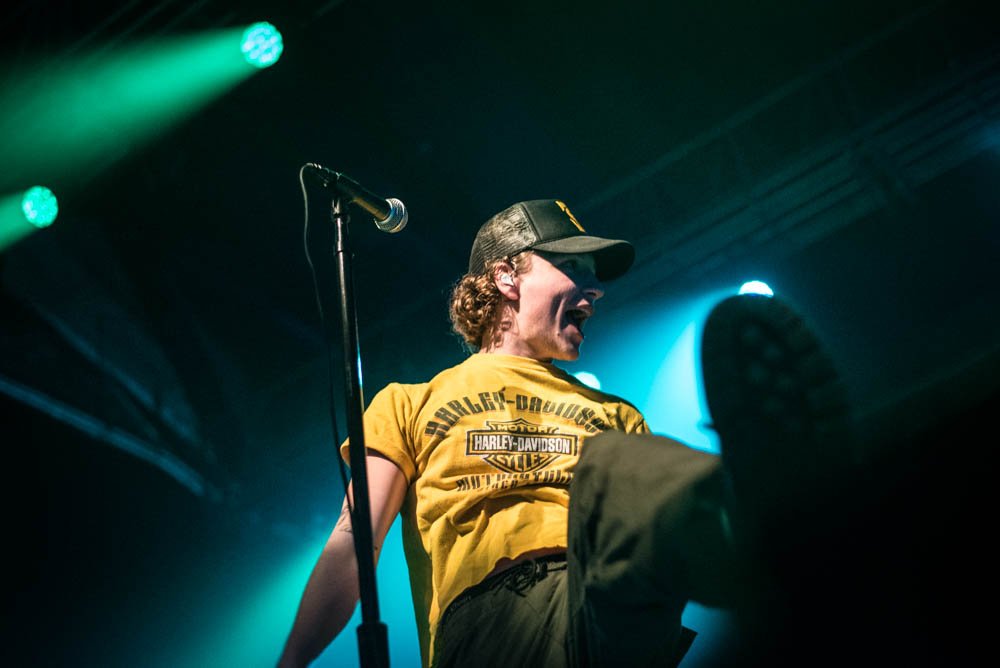
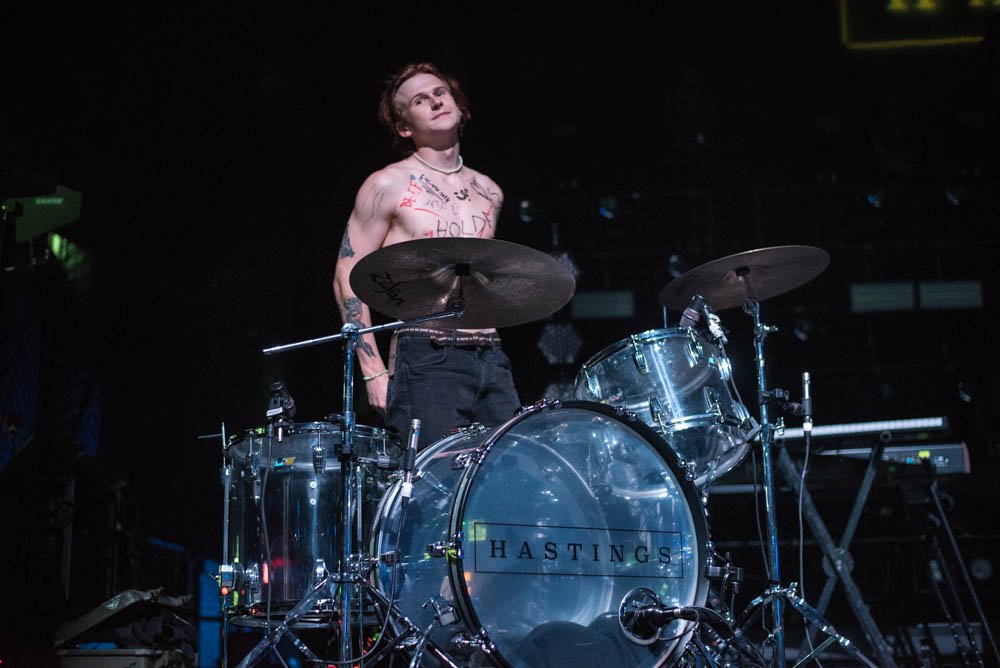
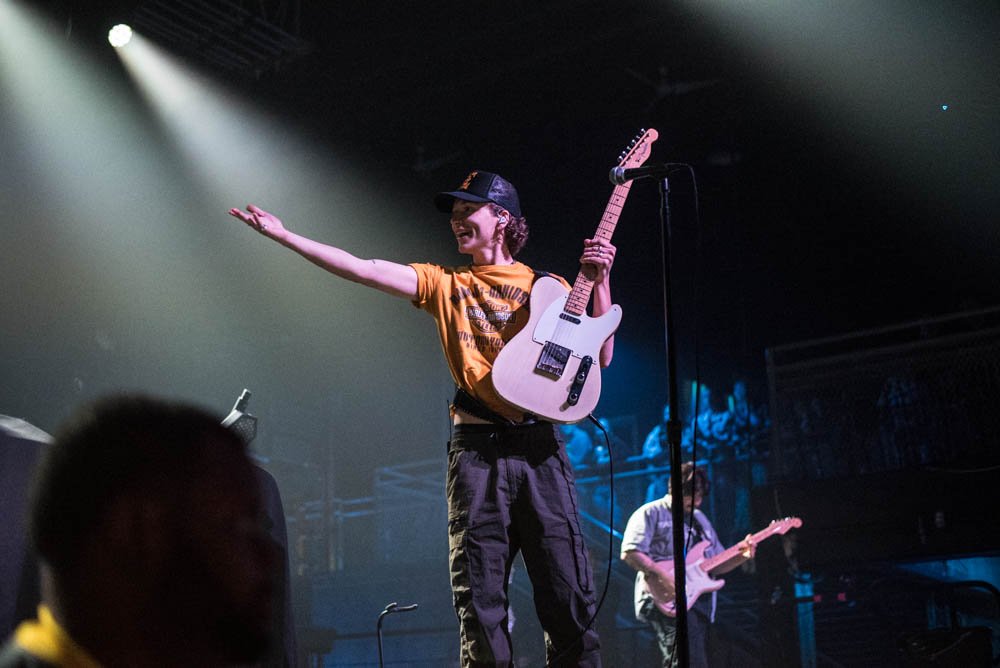
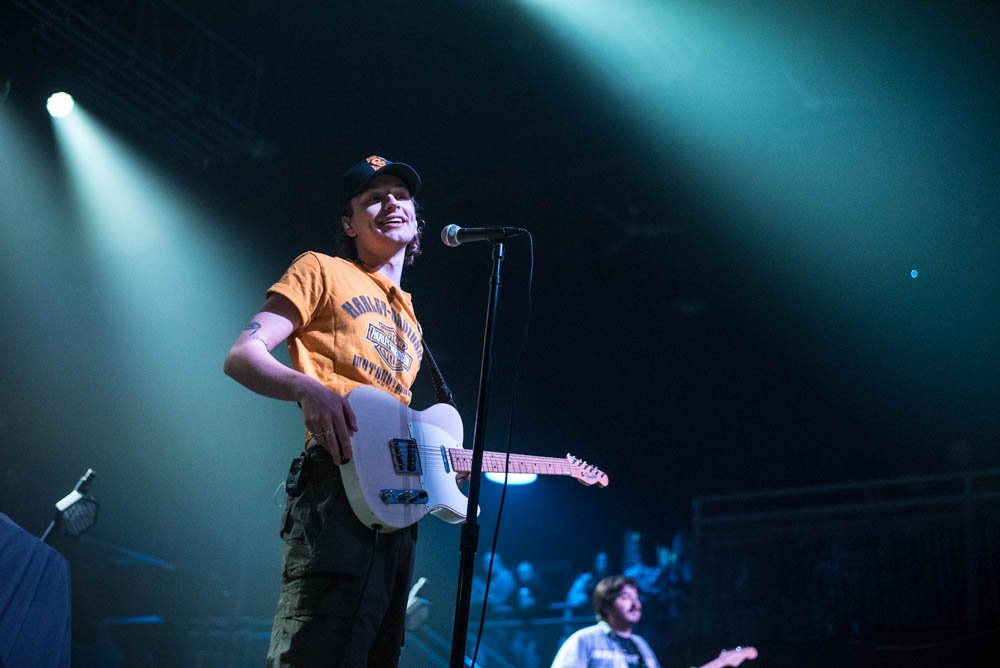
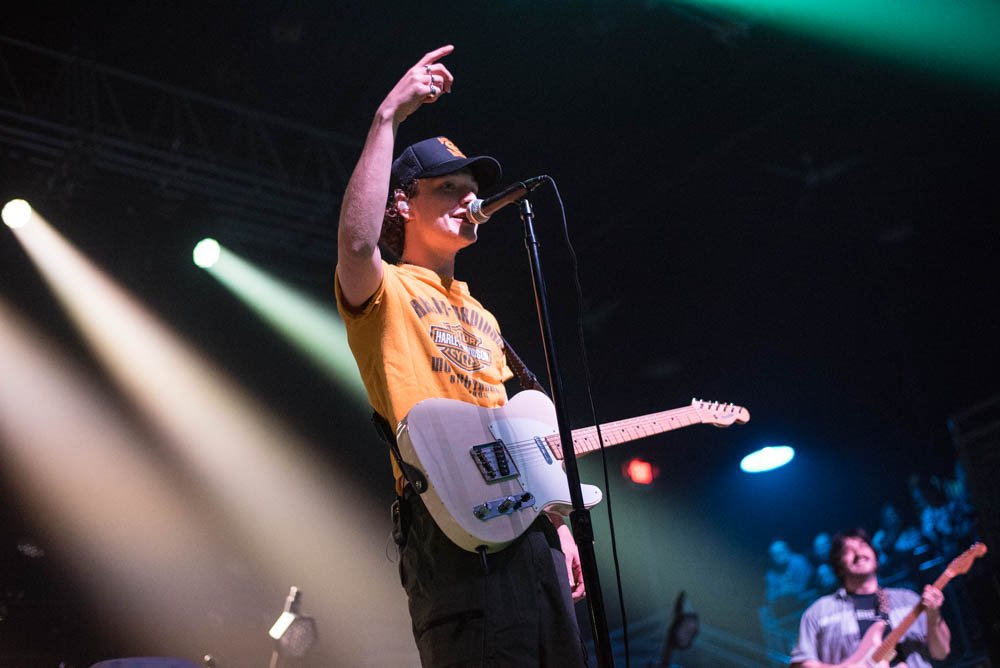
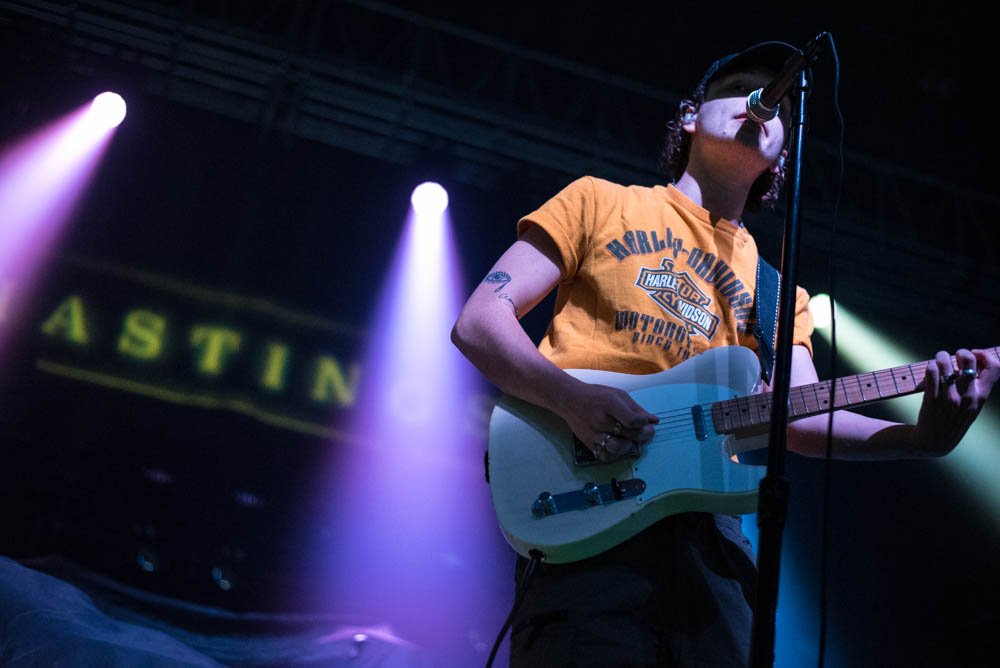
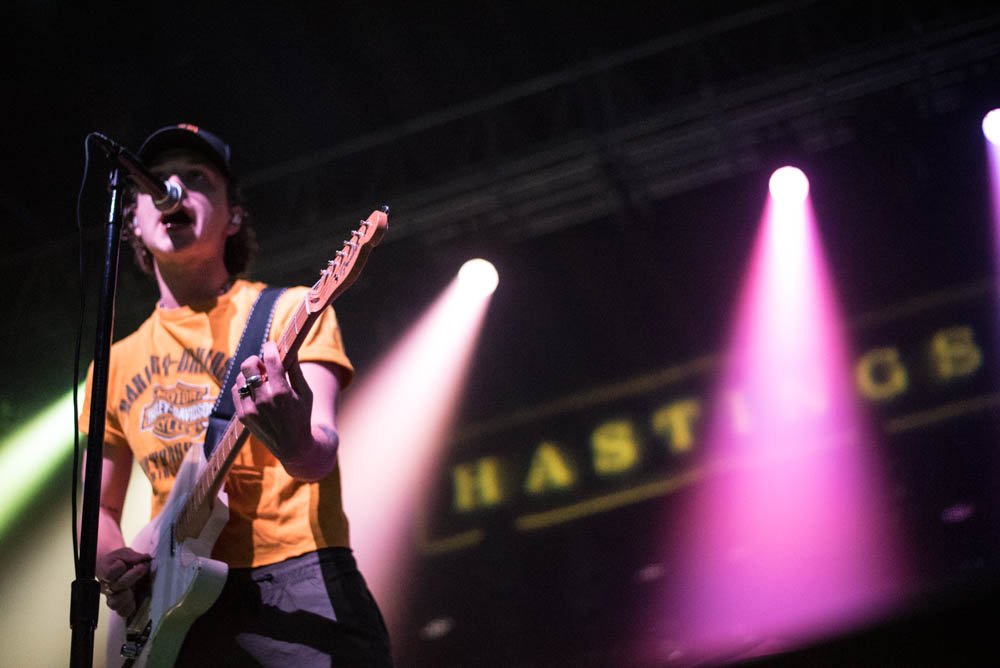
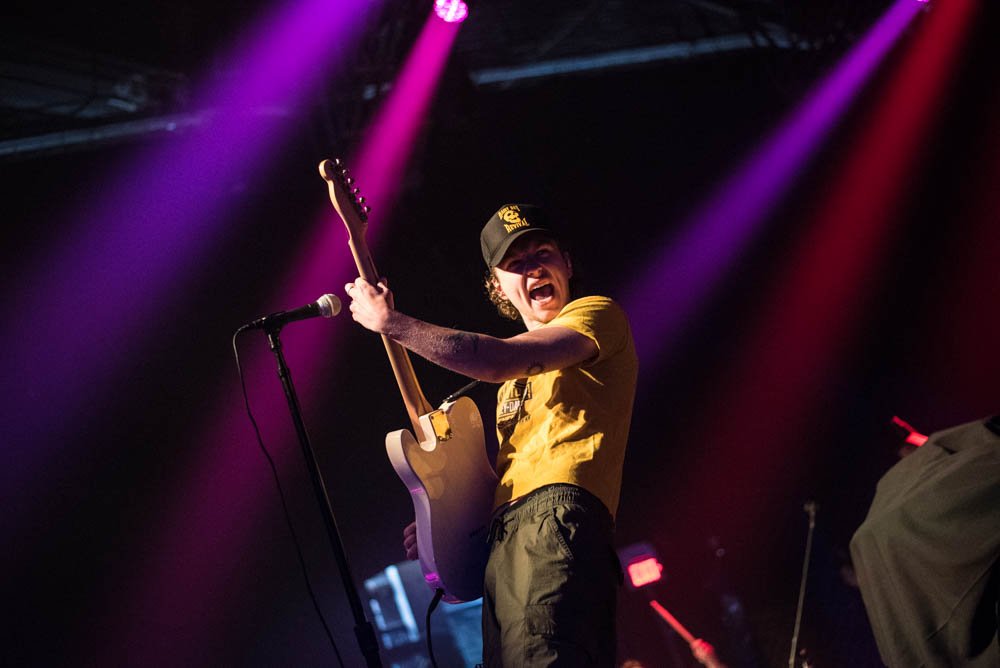
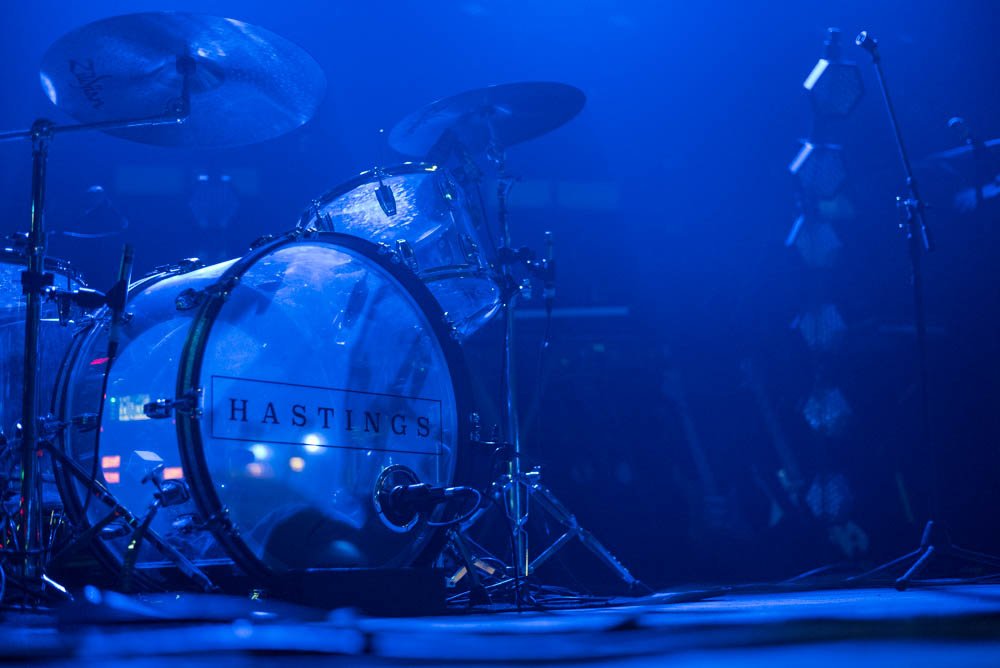
If you’ve been on the search for a new songwriter with some super addictive bops, look no further than Hastings. I’ve had “Heart’s Not In It” on repeat since my first listen last year. We sat down with Matt in Philadelphia on the last show of his first tour, opening for The Band Camino. It’s hard not to instantly enjoy his live set, which consisted of his recently released self-titled EP, Hastings. We can’t wait to see where the bright future of Hastings goes from here.
Without further ado, here's our Chat in the Hat with Hastings:
Favorite album?
Vice Verses by Switchfoot or Continuum by John Mayer.
Outside of music, do you have any hobbies?
I like to play basketball. I play basketball like twice a week. It's not competitive at all. I played in high school and quickly fell out of love with it because everybody got taller than me.
If you could create one holiday, what would it be?
You know how you always had those pajama days in school? I feel like that would be cool.
If you could be an animal for the day, what would you be?
Leopard! I would feel like I would want to run super fast or something. I've always loved those.
Do you have any tour souvenirs?
Not so many souvenirs, but I've got some tattoos. I got one in Chicago. It's a crying eye. And then this is our tour tattoo. So, everybody got that one, which is cool. Some of them got the red around them, like the sun, but I didn't really want any color.
So if the apocalypse is tomorrow, what's the last thing you would do?
Skydive. I've never done that. And I've always been afraid of heights. I feel like I just want to knock that fear out.
What is your zombie apocalypse plan?
That's a great follow-up question. I've had so many conversations about this and I would probably have like six or seven of my friends. We would just post up. I feel like during the zombie apocalypse, you just want people you trust.
Favorite, scary movie.
Midsommar
Your guilty pleasure song.
Probably something from Wiz Khalifa.
If you could eat anything right now, what would it be?
Full breakfast meal. I love breakfast. Like biscuits, gravy, bacon, the whole deal. That's my favorite type of food for sure.

Interview: The Wrecks

The Wrecks
Interview and Words by: Emily May
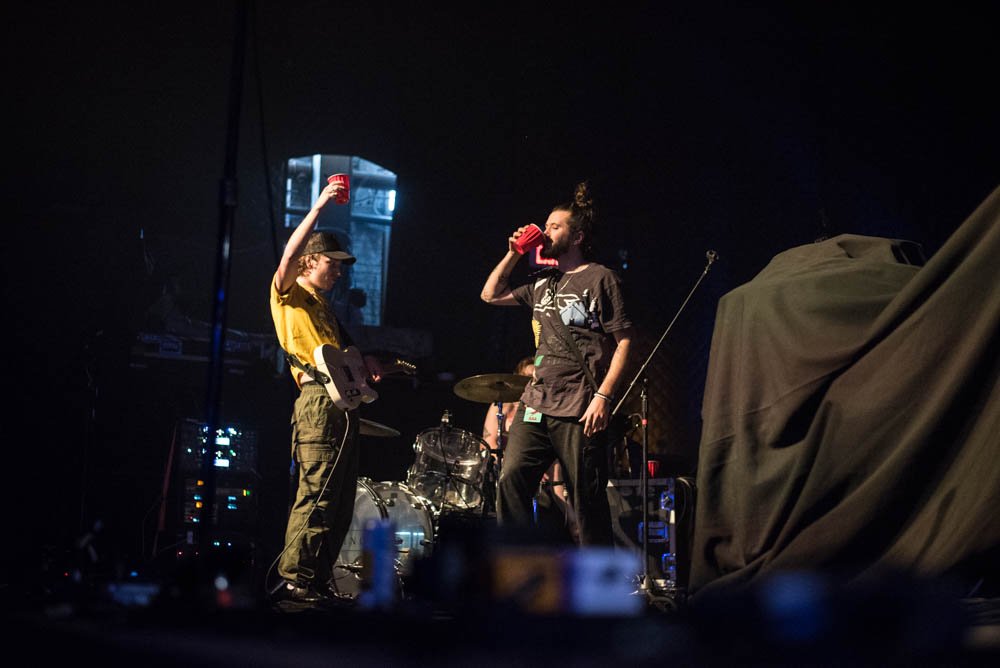
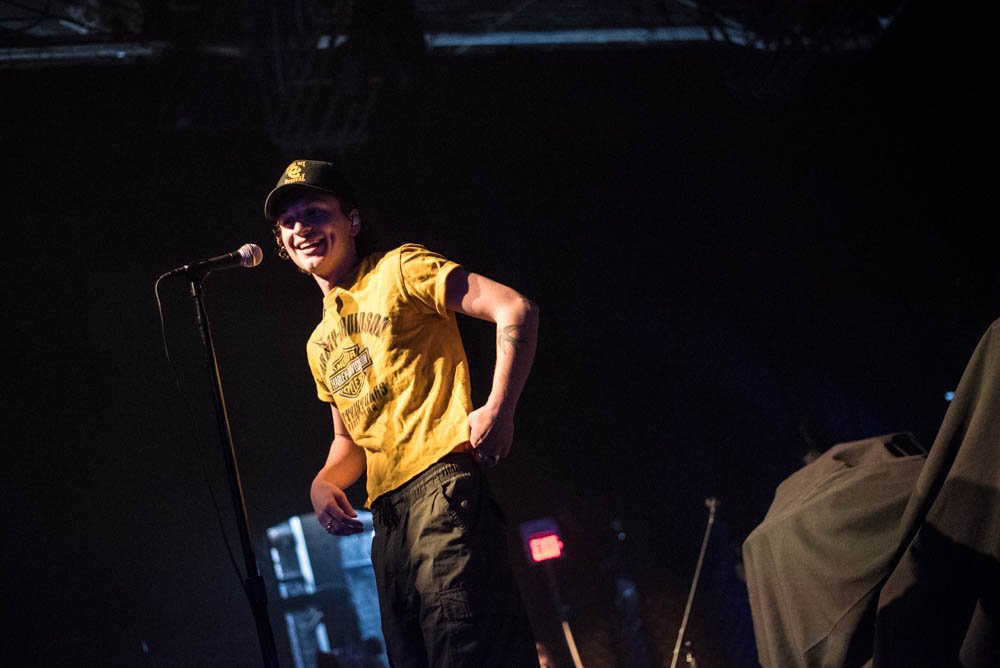
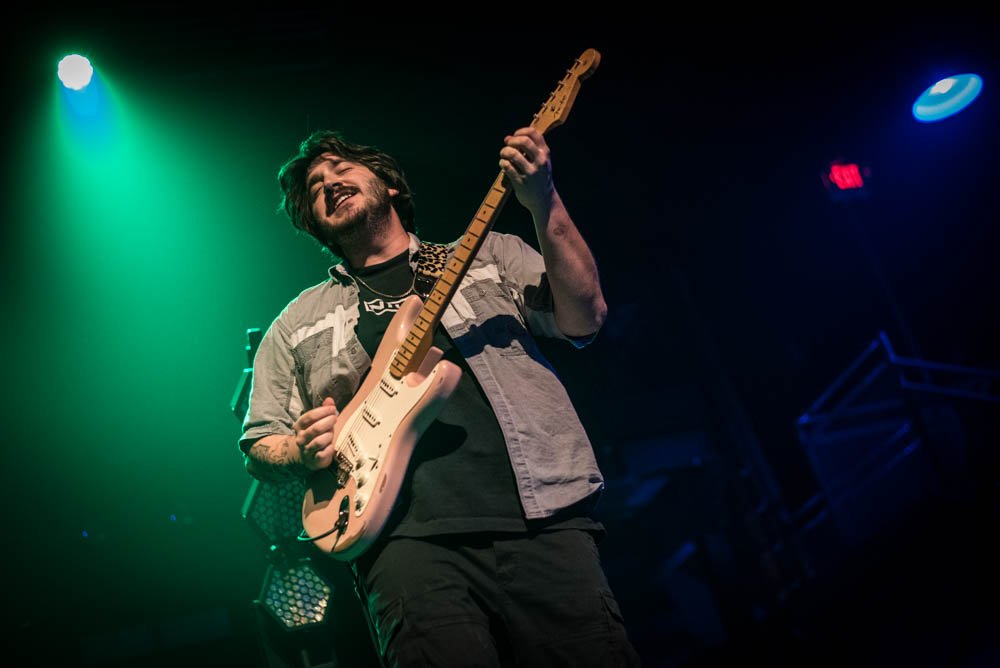
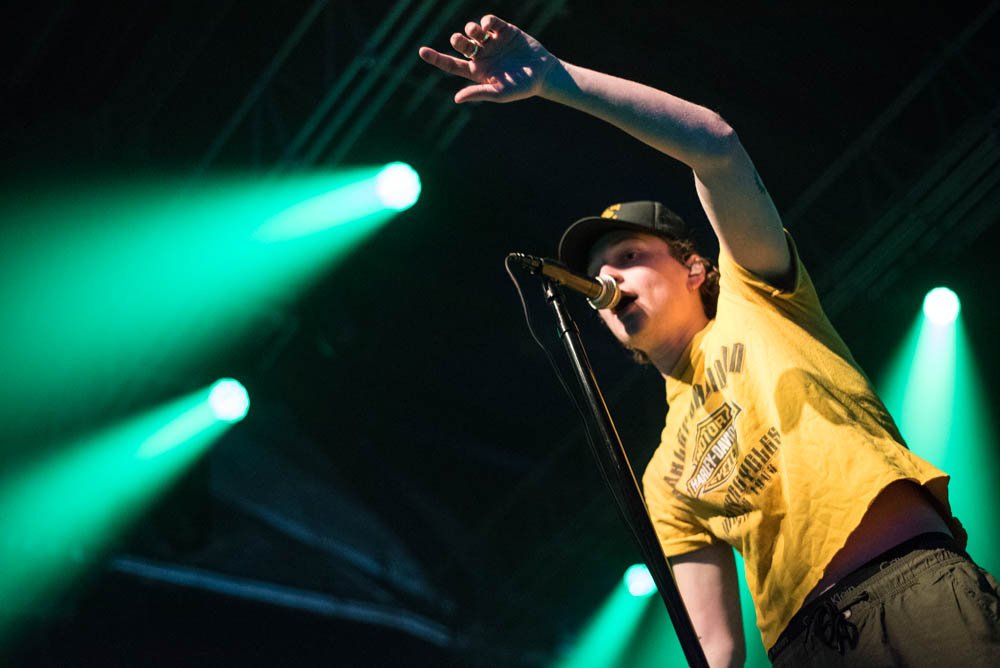
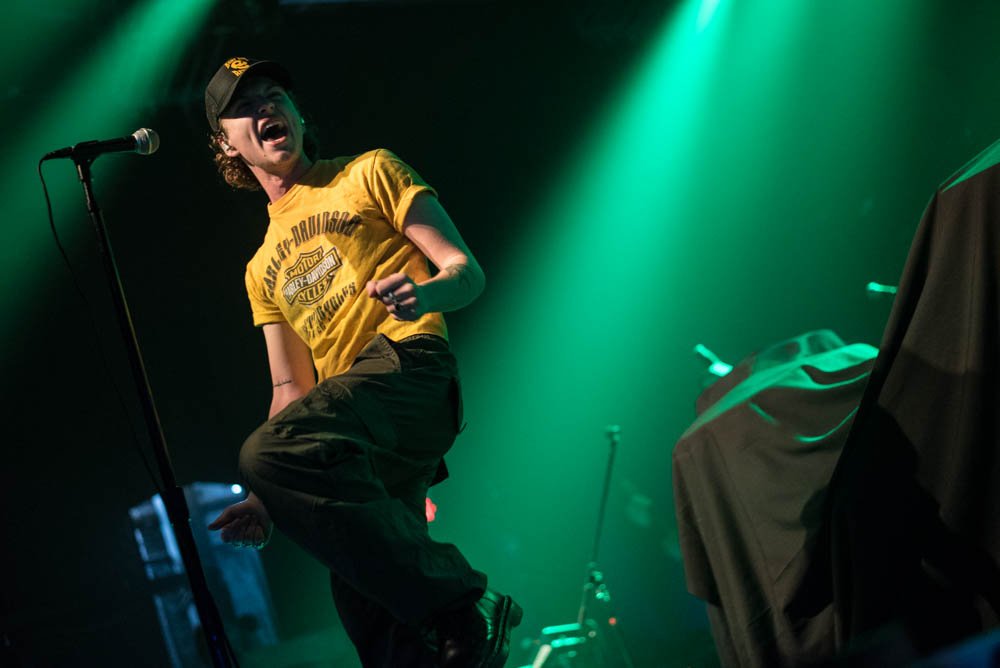
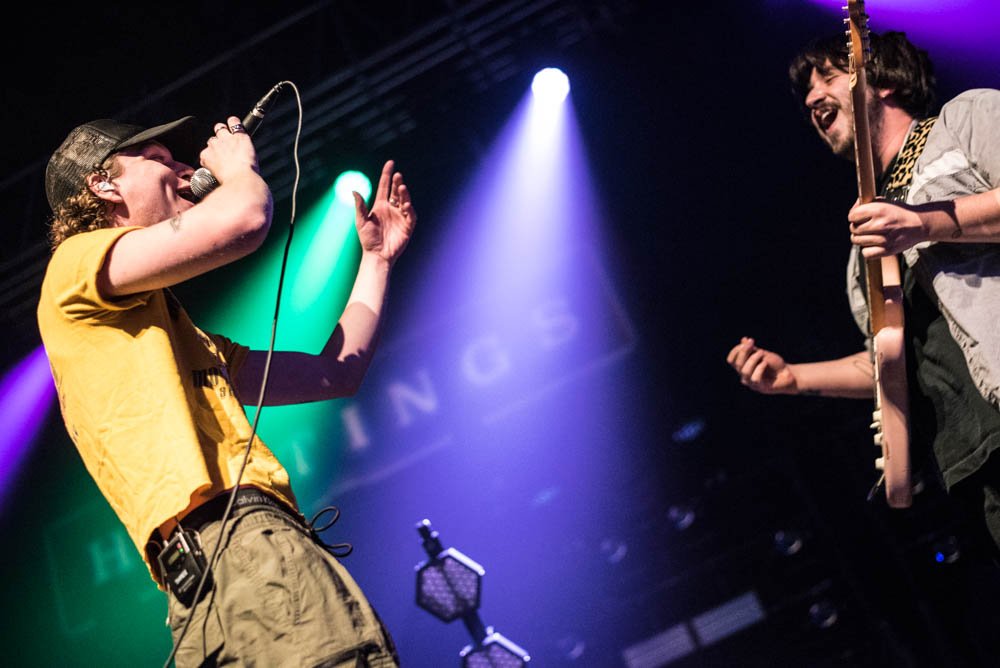
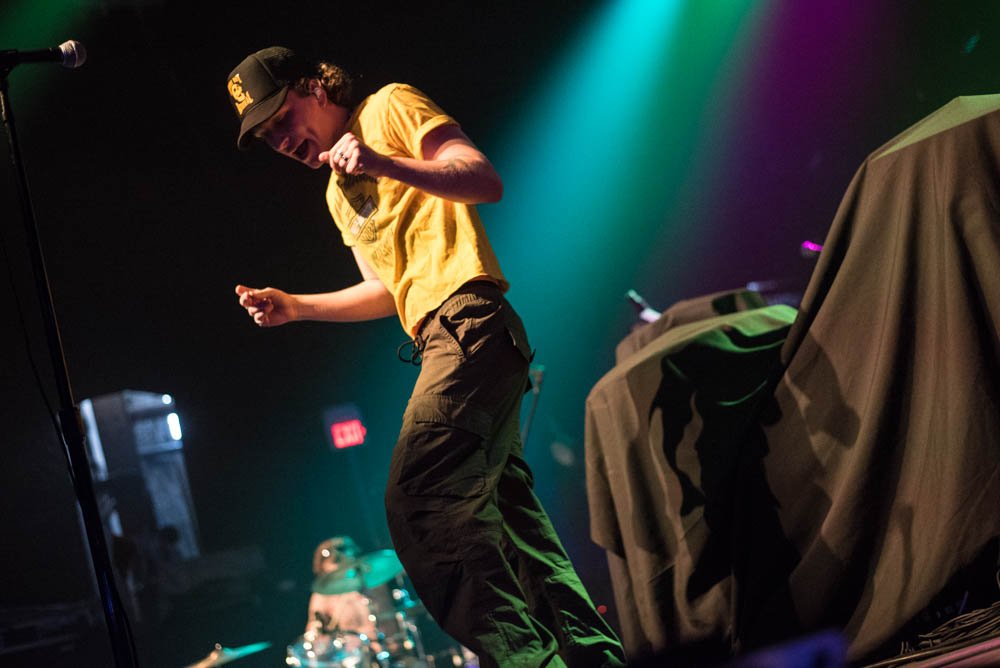
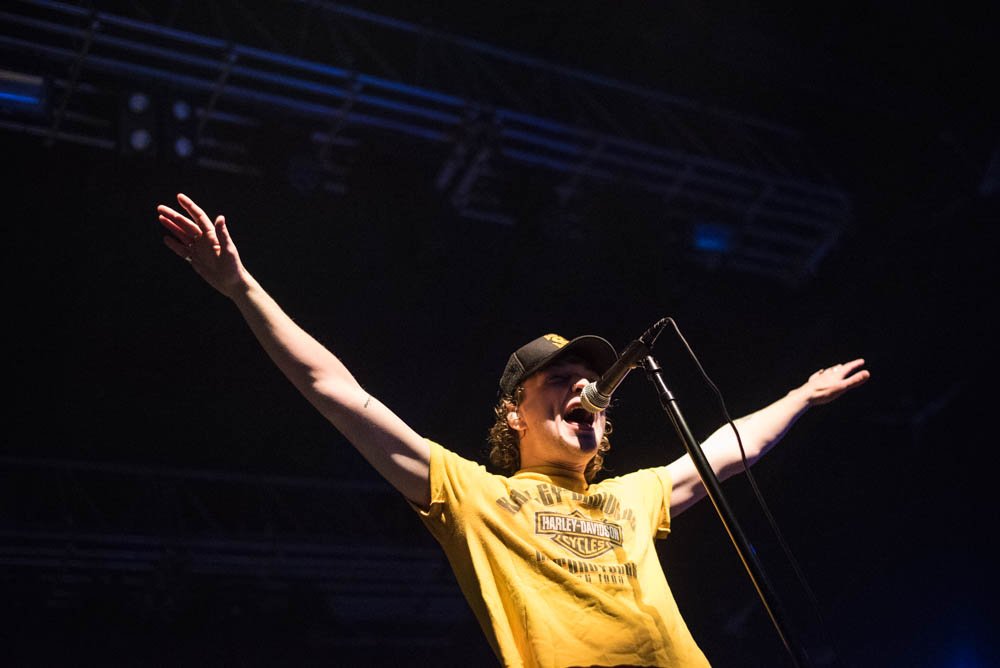
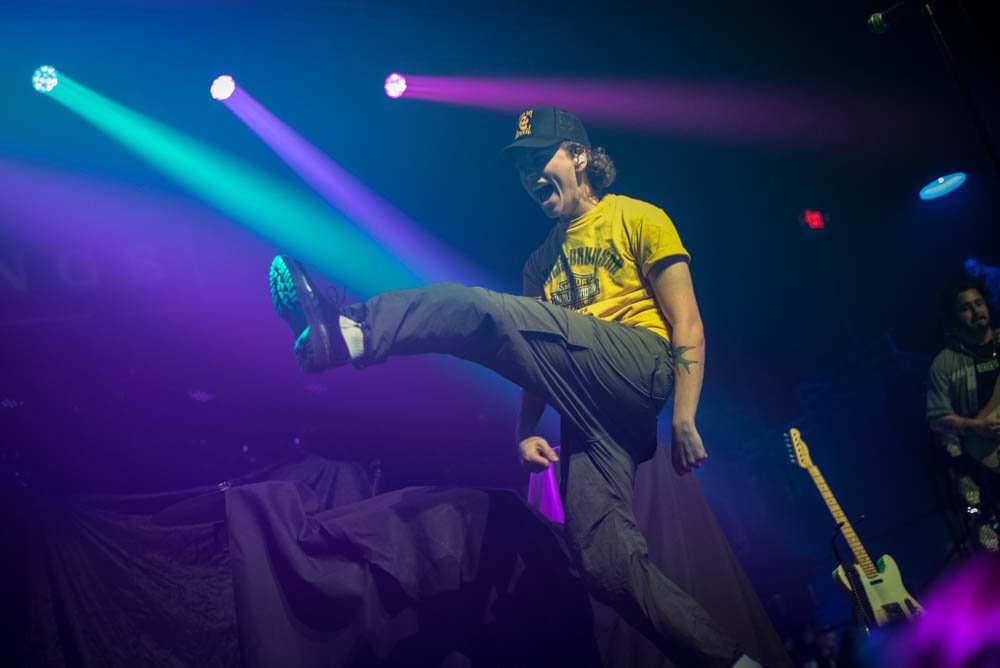
LA-based alt-rock band The Wrecks, comprised of Nick Anderson (vocalist/producer), Aaron Kelley (bass), Nick “Schmizz” Schmidt (guitar), and Billy Nally (drums), have been steadily gaining fans and releasing music since forming in 2017, with their top five singles on Spotify having over 80 MILLION listens. The band’s initial recordings were done themselves, having no prior experience, when they had the opportunity to sneak into a recording studio where a friend was housesitting. Anderson watched YouTube tutorials and the We Are The Wrecks EP was born. They quickly caught the attention of Jeff Regan at SiriusXM’s top alternative channel AltNation and their first single “Favorite Liar” was added to his playlist, resulting in the #1 spot on the Alt18 Countdown, months of charting in the countdown’s Top 5, and the band’s first Top 40 Alternative radio hit. In 2020, the band released their debut LP Infinitely Ordinary, via Big Noise, which has over 58 million streams on Spotify. The band has been working on their sophomore album, Sonder, which will be released on June 10th. The Wrecks collaborated with producers Westen Weiss (Meek Mill, Camila Cabello, Post Malone) and Dillon Deskin (Flo Rida, Will Sparks, Different Heaven, Myrne) to grow their sound. “They're both such talented producers and put their touch on this record in a very natural way,” says Anderson. “They allowed me to focus more on the songwriting rather than hyper-focusing on minute production details like usual. I also benefited from the lyrical help of Savannah Bleu, with whom I've written in the past, to keep the thematic train on the tracks per se. I think this song is a step in a very natural direction for us, and I'm excited for our fans to hear it.” The band released the album’s first single, “Lone Survivor”, in February, followed by “I Love This Part”.
Regarding “Lone Survivor”, Anderson says, “‘Lone Survivor’ is a testament to feeling empowered by your independence in the aftermath of a breakup. The energy of this song was swimming through my veins for a few days before writing it. So when the time came for me to get in the booth and write the melody and lyrics, a lot of it came out right away.” Regarding “I Love This Part”, Anderson says, “There was a fire in me while making this record that I hadn’t felt in years. I remember the night I wrote the majority of the song and recorded the vocals; I cried, I laughed, I yelled. I let all of my intrusive thoughts in. I let myself be angry, be sad, be spiteful, be free.” Like the earliest Wrecks songs, he says this song means a lot to him because it kept his “head above water and helped [him] cope during a very difficult time. Not only that, but it inspired and set the tone for the rest of the upcoming album." Anderson says the inspiration for “I Love This Part” happened when within days of returning home from tour with three fewer roommates and one less girlfriend than when he left. He had two choices: “lay in bed miserable or make this song. ’I Love This Part’ was liberating for me emotionally and musically," he says. "The chip on my shoulder was my petty co-pilot and I was able to access some repressed angst that I surely thought I abandoned in high school. I rediscovered old parts of myself, melodies and energies that I didn’t think were still at my disposal, while also pushing new boundaries sonically for our band." Excited to release their album and go on tour, make sure to follow and connect with The Wrecks via the following links to stay up-to-date on all upcoming band, album, and tour news! Photo credit: Natalie Hewitt.
WEBSITE | FACEBOOK | INSTAGRAM | TWITTER | SPOTIFY | SOUNDCLOUD | ITUNES/APPLE MUSIC | YOUTUBE | DEEZER | TIK TOK
You met Aaron when you were 15 and later met Billy and Schmitz, forming The Wrecks in 2017. What can you tell me about the early days of the band and playing together and exploring your sound as a band?
Nick: It was a really exciting time for all of us because I think collectively we knew that this band was gonna be the one that finally worked. We had all spent years and years playing in empty rooms in our own respective local bands, and each of us saw this as an opportunity to make a real push at our dreams of being in a successful band. Billy and Schmizz were graduating high school, Aaron and I were dissolving our old band, and the stars aligned for what would become The Wrecks. I can remember rehearsing in our manager's garage that first month as a band, and feeling like, "This is a real band. We're a real band, I think." We weren't very good yet, but the pieces were there.
You already had a bunch of songs you were sitting on before forming the band, which became the songs on your first EP. What was it like writing music after that moment, once you had your bandmates on board? Do you feel like you guys had a pretty good flow together from the start when it came to writing new material?
Nick: Schmizz and I started spending almost every night writing and recording demos together. During those sessions, Schmizz would introduce me to so much great alternative music I had never heard, and he influenced my taste in a major way. His approach to the guitar is so creative and exciting and was so new to me at that point. I remember watching him use a lighter as a slide to make a percussive layer and realizing that I had so much to learn from him both musically and creatively. That's when I knew we'd make great music together. He has continued to push me out of my comfort zone over the years, and I think I've done the same for him. His pursuit of unique sounds and new ways to use the guitar as a production weapon is so inspiring to me and has had a lasting effect on my writing and production even when I'm going at it alone. A lot of this new record forced me to channel my inner "Nick Schmidt" because we've been living on separate sides of the country and I was tasked with recording the majority of this album in my studio alone.
What has it been like for you guys since those early days, learning to produce everything yourself and having your own studio? Do you prefer to have more of a DIY approach with the band?
Nick: I feel like it's been the same process since day one of basically having total creative freedom and taking a DIY approach to everything with the band. It definitely used to be even more DIY than it is today, though. Back then, I was designing our merch, our light show, our artwork, and graphics, on top of running the socials and working on new music, while the other guys were busy with miscellaneous tasks like emailing colleges and venues trying to book us shows, and selling tickets at the mall to people they met on Tinder. There was something new every day for us to tackle, and we learned to almost self-manage and operate as a team while having the oversight of our actual managers to keep everything moving. It was quite a hectic and busy time. Which makes sense I guess as to why we were playing shows just weeks into starting the band and had our first single out just months later.
Since then, we've been able to grow our team and work with lots of talented and creative individuals for all of those non-music-related aspects of the band, but the DIY approach still feels very alive within the band. Currently, I write and record everything out of my home studio in LA, and spent the last 6 months working on this new record with little-to-no input from anyone - relearning to trust my instincts and make something I like.
Everything you write comes straight from your life and songwriting for you has always involved telling the truth. Can you speak a bit about the importance for you of being so honest and authentic in your songwriting? Have you ever found it challenging to be so vulnerable and open with your lyrics?
Nick: It's sort of the opposite, actually. Being honest and vulnerable when writing songs is the easiest way to do it for now. I've found that my best work comes when I'm very sure about what and/or who I'm writing about. I begin to struggle with a track when I've lost sight of its purpose or its emotional authenticity. That's why I think the best songs are written the quickest and are typically honest expressions.
You recorded your debut LP Infinitely Ordinary in May of 2020 and it was primarily recorded in an old barn-turned-studio in Western NY over a 3 month period. What can you tell me about having the luxury of time while recording, to learn and make mistakes? What do you feel you learned and in what ways did that recording experience shape your recording going forward?
Nick: That summer was instrumental in my development as a producer. But we only ended up keeping three songs from that summer in the barn - one of which was mostly re-recorded. I would say I developed more as a producer than a songwriter that summer, because I don't think I wrote my best songs during that time. I spent the majority of studio time messing with new plug-ins and fiddling with arrangements, building up these massive productions for songs that were just okay at their core.
While writing the songs for the LP, you found yourself improvising lyrics and melodies on the spot, tapping into your subconscious. What was that experience like and have you found yourself writing subconsciously since?
Nick: This only works for very specific songs, but yes, I found myself improvising the verses for "Sonder" - the title track of our new album. It wasn't done all at once, but for each line of the verse, I would hit record and hope that something good would come out. There's a broken and scratchy, but emotional, delivery to those verses because they are real thoughts and feelings, felt and heard in real-time.
You have said that you’ve struggled to write much new The Wrecks music between Infinitely Ordinary and now and felt too burnt out to create something that excited you. How did you work through that creative block? What do you guys enjoy doing outside of music to keep the creativity flowing, the burn out at bay, and to try to stay grounded?
Nick: I didn't even realize I was in a creative block until I looked back and noticed how little music I had made since the first album. I don't think I'll ever know the answer to burn out or creative blocks. I got my "mojo" back in the aftermath of a breakup in September 2021. I think it had just been so long since I had something to say and to process and to work through emotionally. I turned to the same outlet that I've been turning to since I was 14 - writing music. Suddenly, I had too many songs to choose from.
In February, you released the single “Lone Survivor” and more recently “I Love This Part”. What can you tell me about “Lone Survivor” and working with Savannah Bleu, who co-wrote the song with you? With regards to “I Love This Part”, you’ve said that the night you wrote and recorded it, you laughed, cried, and yelled and let all of your intrusive thoughts in. How do you feel that writing that song served as a cathartic experience for you?
Nick: Savannah is my favorite person to write with. We don't write together often, but when we do, something very special comes from the session every time. She has such great instincts both lyrically and structurally that perfectly compliment my approach melodically to The Wrecks songs. Sometimes when I'm too zoomed in to the specifics of a story, she'll offer a line that ties it all to her original theme of the chorus, and it feels like magic when she makes those "ah-ha" moments happen. Savannah is so brilliant, and an incredibly talented artist in her own right. This whole album was a cathartic experience. It was my device to feel and express. It was a journey toward closure.
What has it been like working/collaborating with producers Weston Weiss and Dillon Deskin and in what ways have they helped you to grow your sound as a band?
Nick: The only track the three of us worked on together was Lone Survivor. It was a really fun session, and it was refreshing to focus more on melody and lyrics than to hyperfixate on the instrumental. They started building the track based on a chorus progression and vibe that Savannah and I had started on acoustic, and once they had some chords and drums down, I was able to start pacing the room singing ideas until something stuck. That's basically how the whole song was written that night.
What can fans expect from your upcoming tour and album? What else do you have coming up this year?
Nick: I think our fans can expect the best version of The Wrecks yet. I haven't felt this optimistic and excited in years, and I just can't wait to put out this record and go on a sold out headline tour this summer.

Interview: Rose Betts

Interview: Rose Betts
Words and Photos by: Emily May
Growing up in England, singer-songwriter Rose Betts grew up immersed in music and started writing songs at the age of 11. While most of her high school classmates had plans to go to university after graduation, Rose had other plans for herself. She decided to forgo university and move to London to start her life as a musician, and although the process was a slow build, she learned a lot from the experience. She was a regular on the London music scene and frequently performed Sofar Sounds. She toured the UK in 2017 and released her debut EP, Stars Look Down, and has received major radio play on BBC 2 and BBC 6 and continues to blur the lines of conventionality through her collaborations with art, film, theatre, and virtual technology. She has done collaborative projects, such as working on Bazzi’s single “Young and Alive” which was nominated for Best Remixed Recording at the 63rd Annual Grammy Awards. She also has the opportunity last year to do a cover of "The Song To The Siren" for Zack Snyder's Justice League, which served as the leading song of Zack Snyder's Justice League (Original Motion Picture Soundtrack), created by GRAMMY-nominated multi-platinum producer, musician, composer, and educator Tom Holkenborg.
On March 25th, Rose released her debut full-length album White Orchids, which she entirely wrote and co-produced with producer Kevin White in LA. Rose sees White Orchids as representing a loss of innocence; a moment of pure youth and fragility where her heart was broken. Just as an orchid blooms once before it is usually discarded, it feels as though one can grasp on to youth for merely a fleeting moment. She says, “My album 'White Orchids' has within it every shade of who I am, from the fierce days to the low days, from the mornings I wake up happy to the ones I wake up longing for something I lost. I have not hidden from the listener this time. If someone finds something of themselves within this project that would be a magical and precious thing. I hope 'White Orchids' can be a landscape they can take a stroll through, get lost in, be surprised and elated by, and that for their brief time inside the songs they can feel, even for just a moment, free.” Having just signed a publishing deal, her plan is to make and release more music! It’s safe to say that Rose Betts is an artist we should all be following! You can connect with Rose Betts via the following links to stay up-to-date on all upcoming news, music, and live show dates.
FACEBOOK | INSTAGRAM | TWITTER | SPOTIFY | SOUNDCLOUD | ITUNES/APPLE MUSIC | YOUTUBE | DEEZER | TIK TOK
You started writing pop songs at 11 and decided that rather than going to university, you wanted to move to London to start life as a musician there. Coming from a supportive and artistic family, what can you tell me about your childhood and developing such a strong love for music at an early age? What were your early days as a musician like when you first moved to London?
Rose: Growing up immersed in music was and is a gift I feel so lucky to have received. It’s not unlike learning another language while young. You don’t think about it. It flows through and around you and is totally a part of your life. Everything our family did involved music, and it still does. Even now, we’re all grown up and music is intertwined in our love and support of each other. Moving to London was full on, and hard, but I loved it. It was a slow build, getting gigs at small London venues, finding musician friends, building a band, figuring out how to make ends meet. A lot was learned!
In writing such personal and introspective songs, in what ways have you found music/songwriting a good way for you to express what you feel in a cathartic way? Do you find it easier to express yourself through music and that music helps you to alchemize the pain or other feelings you may feel around the topics you write about?
Rose: What a wonderful question. Songwriting is totally a part of how I process my life. It acts as a filter through which i can examine my experiences and feelings, and also release them. But it is also just a fun challenge to take things I see and feel and see if they can fit into a song. I think I find it easier to be vulnerable in music than in real life for sure. I’m working on this.
You did a cover last year of "The Song To The Siren" for Zack Snyder's Justice League soundtrack. What can you tell me about that experience, as well as how you approached writing a song for film vs for an album? What was it like for you to also have the song used by Olympic Silver Medalist Alexandra Trusova in her recent Olympic run?
Rose: Well first off, I can’t take credit for writing ‘Song to the Siren’ unfortunately, it was written in the sixties by Tim Buckley and Larry Beckett. The whole experience of creating my version and then finding out it would be in Zack Snyder’s Justice League was surreal to say the least! All I knew at the time I recorded my demo version was a little outline of the scene, but with no particulars to make me guess what it was.
Working on music for a set scene/film is very different to writing for an album… everything was extremely personal in my album, however the music for the film was all about bringing to life the emotional intentions of the scene, so although I drew on my own experiences to bring authenticity to the cover it was never about my story. I loved seeing ‘Song to the Siren’ being used for Alexandra Trusova’s Olympic performance. Again, a little surreal, but I thought her beautiful skating went so beautifully with the music!
You have talked about how limitation is one of the finest tools for making art, speaking specifically about your process of making your stop motion music video for your song "Rocket". What can you tell me about making that video and how limitation has aided you, if at all, in a broader sense in your career?
Rose: Making the stop motion video for Rocket was an arduous task, and I did my back in for a few days as well! The spirit of the song asked for something full of movement, with a sort of childish naivety hiding something a bit more serious for the visual, so stop motion just felt right. Not having much in the way of budget, and loving the creative side to all this, I jumped at the chance to make something out of simple materials with only an iphone. Storytelling doesn’t have to be an expensive, expansive affair. In fact, it’s really quite simple. I like stretching myself, and dreaming big, and would love to work on all sorts of levels, but I’ve definitely discovered that limitations keep one focused on the story, on what’s being told, make you dig deeper and force you to be more creative.
With regards to your song "Rocket", you have said that the song fell into your lap fully formed but how when you wrote it, it felt like a throwaway. The response from your dad and others helped you see the song in a different light. Have you had other instances like that in your career, where you didn't like a song you wrote but an outside perspective helped you to see it differently? Do you often have songs that seem to write themselves?
Rose: I never disliked Rocket. I guess I just didn’t respect it very much immediately, but I do now! I have had a few times when songs have fallen into my lap. I heard a song in a dream once and woke up to sing it into my phone, and it ended up on the album! That is a rare occurrence though. My song “Driving Myself Home” felt similar to Rocket, in that it sort of wrote itself and felt like a throwaway. However, when I shared it on my tiktok it blew up which made me take it a bit more seriously, as clearly there was something in it that people really connected with! It’s strange when that happens. The songs I pour my soul into don’t always connect how one expects, and then something that feels too easy turns into the song that sparks.
In 2017 you self-released your debut EP The Stars Look Down and on March 25th, you will be releasing your debut album White Orchids. Having said it is a departure from your EP, what inspired and influenced the songs you wrote for the new album and how would you compare the two bodies of work? With your EP having been completely self-released, how did you meet and come to work with co-producer Kevin White on the new album and what was it like for you to work with someone else this time around?
Rose: There is a fair amount of time between these two projects… most of that time was waiting to find the right producer as I was writing songs that I had big sound ambitions for. I started working with a management label in LA and met with Kevin while out there. We immediately connected with a shared vision for the songs and working with him was really easy and creative. I worked with producer Asa Bennett on my first EP and learned so much about the process, so I knew the ins and outs of being in the room with producers. What we did differently this time was co-write on a couple of tracks and this was new and a fun challenge. I feel like it brought songs out of me that I normally wouldn’t have written. My time in London, the friendships and relationships I had all inspired the album. I feel like I experienced a brilliant moment of youthful innocence and love, and the album explores coming to terms with the loss of this moment. The themes felt big to me and led to big songs which is why this album is so much grander in its production.
What was it like for you to be so vulnerable with this album and, as you said, include every shade of who you are and not hide from the listener this time? Can you talk a bit about the significance of the album title for you and how it signifies the loss of innocence you experienced after heartbreak?
Rose: The album title ‘White Orchids’ comes from the song I wrote, which in turn came from a metaphor in The Great Gatsby. Fitzgerald uses the flower to describe Daisy and her world, symbolising her innocent beauty and youth. I thought about these themes in connection with a flower that cannot support itself, requiring a stake to stand upright, blooming once and then appearing dead for another year before the next bloom. It made so much sense to me, that innocence and youth are so brief, so vulnerable… I felt that my own moment of glorious youth shared this reality and that the songs were all part of me processing this. Being vulnerable is never easy, but weirdly I’ve become used to it… hardened to it perhaps. There is a wonderful feeling of freedom when you let those walls down.
In April of last year, you released the song "Recovery", the first single from the new album. What can you tell me about the experience it came from and how it changed you and the way you write and sing songs?
Rose: I wrote Recovery while literally in the storm following a relationship that ended painfully. For a moment the storm cleared and in that moment I wrote this song. It’s easy to feel a panic to be ‘ok’ after the world has crashed around you, to want to appear healed and unaffected as soon as possible. I realised I needed to stop, to let myself recover, sit in the moment, let it wash over me. It was the first time I’d really felt that and the first time I let myself be completely open in a song, and once you’ve gone to that place as an artist there’s no going back.
What can you tell me about the album artwork, the idea behind the photos you took, and spending time on El Matador beach?
Rose: I had a bunch of artwork ready and none of it was fitting so we took some pictures in my manager’s garden and then I was wearing this dress and it was so floaty I wanted to play in it and we took that photo. I like it because it feels powerful and present. I hadn’t listened to the album in ages and then before we submitted the final mix to mastering I listened through and was surprised by how the songs felt so sure of themselves. I wanted the artwork to reflect this. We went to El Matador to do some filming and I was amazed. I didn’t know there were rugged beaches like that here, really beautiful.
You brought your poet friend Angelique Neumann onto the new album. What can you tell me about the poetic element of the album and the songs "Cyanide Tooth" and "Park Avenue" that she wrote?
Rose: I was so thrilled to work with Angelique on this project. I’ve known her and her work for years and always felt it would compliment anything it touched so I’m so happy I managed to convince her to bring her wonderful voice to the project. Her poems give the album a moment of breath and stillness… she was present for much of the time that the songs were written and knows everyone involved so she already had such a deep understanding of the themes. I’ll leave her to describe her work but for me I find her poems and her delivery utterly enchanting, magical and they bring SO much to the album.
What has your time in LA been like? What do you love and find inspiring about the city? What are some of your favorite places to go in the city?
Rose: My time in LA has been full with new people, challenges, places, adventures… I’m finding things to love which is a little harder than in cities I’m used to but there is much to love here. There is a gorgeous bar near me like something out of the 20’s, live jazz or honky tonk piano most nights… also the public library is a gem, a temple of a place, and I walk a lot around Echo Park in the evenings, keeping an eye on the water lilies. And I love looking up. The buildings in Downtown will reward you for this.
What's next for you?
Rose: More music! I’ve just signed a publishing deal so I’m hoping to be in writing mode. Although that said I have a bunch of songs that would like to see the light of day so that’s something I’m focusing on too… but basically I want to share as much music as possible, enough of these long breaks between projects!

Interview: Kendra Erika

Interview: Kendra Erika
Interview by: Emily May
South Florida pop singer-songwriter Kendra Erika is a spicy, bold artist who has worked with a variety of Grammy-winning producers such as Charlie Midnight; Jan Fairchild (Elton John, Mary J Blige); John DeNicola (Hungry Eyes and Time of my Life from Dirty Dancing); Damon Sharpe (Ariana Grande, Jennifer Lopez); Ned Cameron (Kid Ink, Lil Wayne); Mark Mangold (Cher, Michael Bolton); Luigie "LUGO" Gonzalez (Janet Jackson, Madonna, Barbra Streisand); and Ronnie "CHICO" DiCicco (JLo, Kistine W, Rihanna, Britney Spears). Drawn to music from a young age, she was born tone-deaf. At 8 years old her parents put her in vocal lessons with vocal coach Gisbert Heuer, a former professional opera singer from Berlin, who helped her lay a foundation with which she was able to grow and tap into her capabilities. Before pursuing her music full-time and upon the insistence of her mom, Kendra attended college at Lynn University, where she graduated with a degree in communications and international business. It was this experience that she believes helped her to mature and grow as a person. Having worked with many different producers, label execs, etc while coming up in the industry, some of which wished to mold her into the kind of artist they thought she should be, she learned to develop her own vision for the kind of artist she wanted to be and navigate her way through the industry on her own terms. With her fierce desire to be as independent and true to herself as possible, she started her own record label called OysterShell Music. Kendra met and come to work with longtime LA record producer Damon Sharpe a few years backhand the two immediately clicked and have been working together in her studio since.
In recent months, Kendra has released a successful cover of Aaliyah’s “Try Again”, in celebration of what would have been the singer’s 43rd birthday, as well as a dance remake of “As Long As You’re Mine” from Wicked featuring 2x Tony Award nominee, and American Idol finalist Constantine Maroulis. Most recently she released her latest single “Rapture”, co-written by Kendra Erika and Ronnie "CHICO" DiCicco (JLo, Kristine W, Rihanna, Britney Spears) and produced by DiCicco, which sets the bar even higher for the dance-pop singer-songwriter. When asked about her new single Kendra said, “Rapture” encapsulates the very essence of who I am as not only an artist, but an individual, a woman, and a performer. The song was written out of pure research and discovery of what my sexual nature is made of. From the vocals to the production, both Chico and I wanted this one to capture and release the primal essence of who I am, and what turns me on musically. Cinematic, dynamic, intense, and spiritually brazen. As far as the eye can see, “Rapture” is the bar that has been set and the bold and lustrous taste of what is to come from me.” Today sees the release of the music video for “Rapture”, for which she tapped talented director Tolga Katas (Stevie B) as well as famed designer Armando Farfan Jr. who previously worked with artists like Lady Gaga, as well as on the Victoria Secret Fashion Show. With a goal going forward to release more music and have more experiences, make sure to follow Kendra Erika via the links below to stay up-to-date on all upcoming music, news, and live dates!
WEBSITE | FACEBOOK | INSTAGRAM | TWITTER | SPOTIFY | SOUNDCLOUD | ITUNES/APPLE MUSIC | YOUTUBE | TIK TOK
You were drawn to music from a young age but have said that you were born tone-deaf. What can you tell me about taking vocal lessons starting at the age of 8 and about your vocal coach Gisbert Heuer, a former professional opera singer from Berlin?
The saying “break you down to build you back up again” rings through with what he did. I say all of this with the true sentiment. A foundation was laid and Gisbert was able to tap into my capabilities that needed to grow and be brought to the surface and beyond. Was he strict? Did he give me a hard time out of tough love? More than enough times. But, that is how I know someone truly cares. Even that has shaped my discernment in knowing who I have around me. He was the first person to not be a “yes” person and to push me to those unchartered places in my voice and performance.
You got your start in musical theatre, performing in school plays and in community theater. What kind of foundation do you feel laid for you in pursuing a musical path? Do you see yourself doing musical theater again at all in the future?
It built my stage time credits and also my overall confidence on stage. Learning to sing and dance simultaneously early on is a skill that most current music performers had to do crash courses in order to continue on in their label support and distribution. A lot of people underestimate the level of influence and background that musical theatre brings to a performer. Even those who switch over to doing broadway or theatre, and then go back to pop, can see an improvement in their overall presence and agility. I don’t just see myself doing musical theater again in the future, I know I’ll be doing it in the future.
You have a message that you have said you try to instill in your music of believing in yourself for what you are and how with social media being such a big influence in our lives, sometimes we project images of ourselves because we want to be accepted. What role has social media played in your life and career and have you found yourself falling prey to that longing for acceptance and not believing in yourself?
To be honest, social media has been the author of both my pain and my gain throughout my life and career. I’ve endured pain, and followers I’ve gained. In order to navigate through the minefield of social media, you have to understand that it’s a matrix. A lot of what you see is fake and politically and socially driven with narratives and agendas. This is why I try to be as organic in my posts as possible so as to not be another statistic in this observation. Even I have wrought my mind about social media. I mean, the amount of Bratz doll clones and lookalikes on there has made me feel guilty about being a black swan, which is absolutely ridiculous because, in REALITY, it’s the advantage. It’s laughable that so many people preach in their captions about being ‘different’ when their faces and backsides look exactly the same to those crowding the feeds. This is why I’m avid in practicing being about it, not just talking about it. Once I understood and inner stood what and how social media is best used for, and it’s a daily process personally for me, then it’s not as bemoaning, and you can wrestle victoriously with what big tech throws at you.
You studied communication and international business at Lynn University after high school, before pursuing music full-time. What can you tell me about your time in college? Do you feel it gave you a better perspective going forward, regarding life and your goals, than you would have had otherwise?
Going to college and obtaining my education was a deal laid out by my mom and followed through by me. Upon graduating high school, she said she would still support my music aspirations if and only if I went and got my education in something other than music and performing based. That period of time allowed me to mature and grow since I was performing at local gigs and going to college at the same time. I believe this protected me from sinking into the "rabbit hole" that many young artists, unfortunately, do these days.
You worked with/met many different producers, label execs, etc while coming up in the music industry and have talked about how they sometimes wanted to mold you into the kind of artist that they thought you should be. What can you tell me about the inner strength you developed and the vision for the kind of artist you wanted to be that has helped you to navigate your own path in the music industry.
I learned some time ago that a lot of what is out there is manufactured and that most of the currents have been molded. It’s called industry standard. The standard never moves, it just remains constant. Now, there is a reason why the acts from previous decades have been able to stand the test of time, and that is they broke through the glass because they weren’t afraid of doing something different. They weren’t afraid of pissing anybody off. In today’s sensitive world, people are so fearful of that, that it literally holds them back from achieving excellence. A prime example is Eminem and Kanye. Both treat music like it’s a sport. That competitive edge has earned both of them respect, and although they aren’t anywhere near saturation (Eminem more than Kanye) when they talk, when they put something out there, people pay attention. Having the “shut up, he or she is talking” effect is timeless. I know I don’t fit industry standards. And, that independence is always the way to longevity.
How did you meet and come to work with longtime LA record producer Damon Sharpe, with whom you write songs, produce videos, and do most of what a record label would do? Why do you feel the two of you clicked so well?
My Billboard chart promoter, Jason Dauman, originally introduced us to work and collaborate. We clicked so well because we’re two empaths. He’s able to pick up on what I’m bringing into the studio, and I’m able to turn the water into wine. LOL. From the moment we wrote and recorded “Oasis”, the chemistry was inexplainable. There’s no formulaic code, just that he and I flowed creatively and stylistically so well from inception.
What can you tell me about starting your own record label, OysterShell Music, and your goal of being as independent of an artist as possible? Do you have plans to record music for other artists on your label or just your own music?
Being independent is what I savor and what needs to be steadfast throughout the majority of my career. So by having OysterShell Music, “because my music’s an aphrodisiac”, is something I revel in and believe in. No other plans yet, nothing confirmed to divulge.
How did the opportunity come about for your recent distribution deal with Symphonic distribution and what has the experience been like so far?
My marketing/management team introduced me to Symphonic distribution and I am finding them exceptionally supportive to work with.
Along with writing and recording music, you also support different charities and are passionate about helping children. What are some of your favorite charities to support? Have you always felt drawn to help others in that way?
Helping children and women, especially in the area of education and well-being is something I’m passionate about. Prevention of human trafficking and anti-pedophilia are two stronghold causes I stand behind. Operation Underground Railroad, WarChild, Unicorn Children’s Foundation, Propel, and Florence Fuller, are just some of the names I’ve been involved with. With both parents being stapled givers in the community, I grew up exercising that muscle and making sure that I made it constant to give back. You get more reward and fulfillment out of what you’re doing when you give back to communities.
As an artist who places a particular emphasis on lyrics, more so than many other dance artists, what significance do good lyrics, storytelling, and messaging in a song hold for you? What messages do you hope to convey through your music?
Music is the easiest way and method used to program people. The reason why today we see so many people in a state of confusion is because the lyrics and the messages of the current music are laden with mixed messages. It’s like they talk a big game about wanting people to be loving and equal, but then the music reflects more focus on the pain, the fear, the recklessness, and the division. And the music is what is going to wire and influence society, not the talk. Frank Sinatra is one of my biggest inspirations when it comes to this. He was clear, and he was romantic. He made you feel a part of something, a part of the experience. Invited into the piano bar, invited into that whimsical element. That’s the essence and kind of substance I like to keep thickly threaded throughout my music. Where people feel a part of something.
You recently released your latest single "Rapture". What can you tell me about the song, and in what ways does it encapsulate the very essence of who you are as an artist, individual, woman, and performer? How does it show what's to come from you as an artist? How did you meet and come to work with Ronnie "CHICO" DiCiccio?
I met Chico during Covid while performing my weekly Facebook live stream shows. Coincidentally, we had already known each other through the Billboard Dance Club chart. Chico is a Billboard reporter who supported “Self Control” when it was ascending to #1 on the charts, and he also had another record on the chart he was pushing to at that time. The energy was hot that day, my friends. We became instant friends and through talking about the industry during Covid, there was a lot of synergy and similarity between us in our careers. We took advantage of that and jumped right into the studio shortly after when Chico pitched not only a song, but a concept, and “Rapture” was born. We remain close to this very day. I think the word “Rapture” sums it up. As a female artist, it’s daringly safe to say every woman has a burning passion and fire, and sensual energy that is a part of who they are, and how you can express that through your words and music, is the ultimate.
What can you tell me about the music video for "Rapture" and working with director Tolga Katas and famed designer Armando Farfan, Jr?
We filmed it at Armando’s studio and the main stage in Las Vegas. I’ve worked with Tolga a few times before, so the experience is always a brand new continuation of the previous times. Armando is quite masterful, yet is quite confident about who he is and what he does. I took note of that because it’s how I operate when working creatively. The vision is well-prepared and then delivered in a very tactful way. Both Tolga and Armando together were great.
What's next for you?
More music, and more experiences