
INTERVIEW: The Accidentals
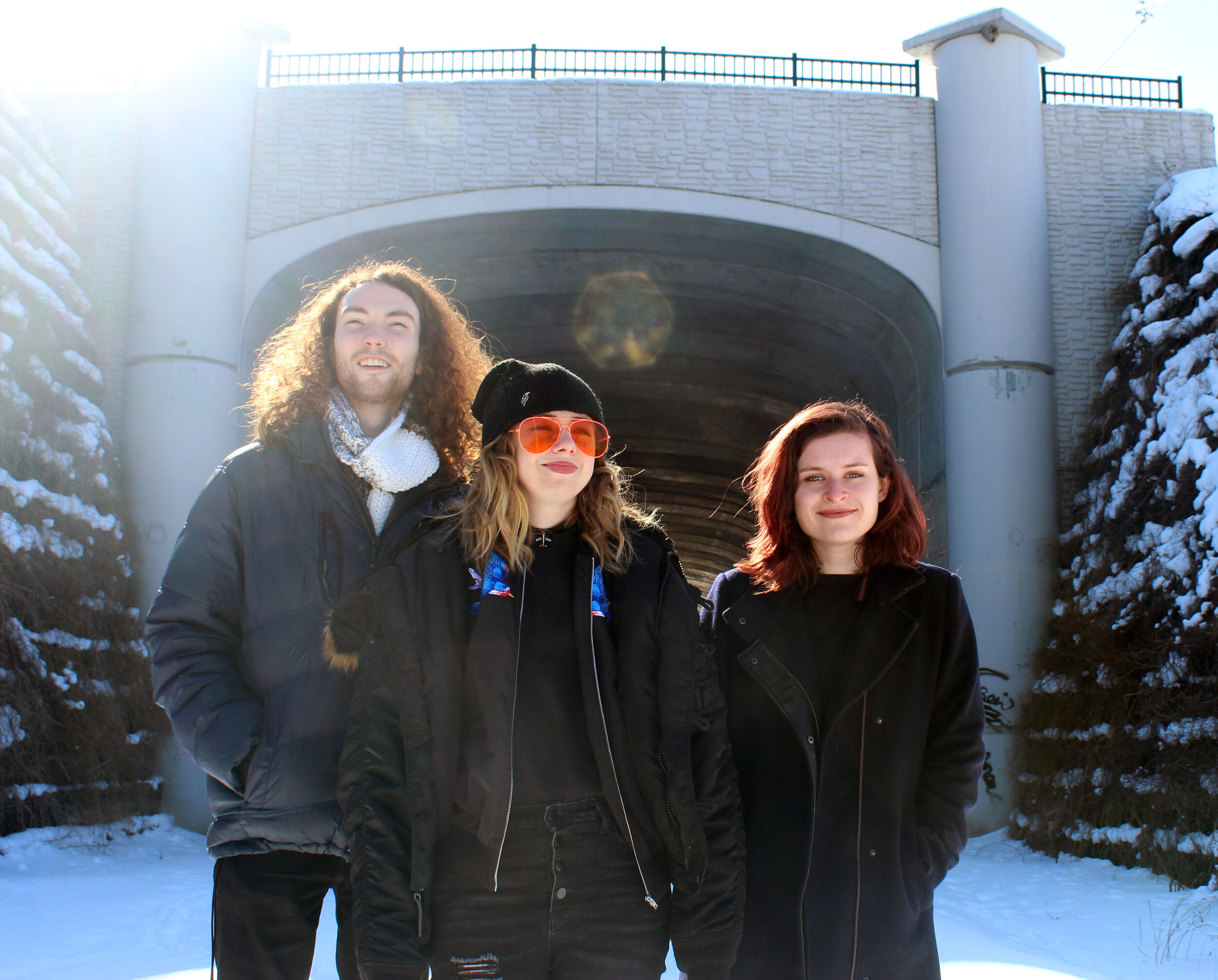
The Accidentals
The Photo Ladies Interview - by Emily May
Sometimes bands can start out in the most unexpected ways, which was the case for Michigan band The Accidentals. Formed by Savannah Buist (violin) and Katie Larson (cello) while in high school, the self-described musical soulmates live and breathe music. Writing deep and catchy songs from the very beginning, it didn't take long for them to gain a loyal and devoted fanbase, referring to their core supporters as "The FAMgrove". Releasing their first album Bittersweet in 2013, funded by a successful crowdfunding campaign, Buist and Larson met drummer/percussionist Michael Dause in 2014 and recruited him into the band, cementing their lineup. Upon finishing high school, the band toured extensively, playing 200+ shows a year that included various festivals, and shared the stage with artists such as Brandi Carlile, Andrew Bird, and The Decemberists. On the heels of their 2016 release, Parking Lot EP, the band signed a deal in 2017 with Sony Masterworks label and released Odyssey, an album they have described as a culmination of 6 years of being a band and that signaled a new chapter for the band. In 2018, they began work on their 4th full-length album Vessel. When the pandemic hit, and the music industry came to a halt, the band paused work on Vessel in lieu of their pandemic EP Time Out, which was written during quarantine over zoom with legendary writers like Tom Paxton, Kim Richey, Dar Williams, Maia Sharp, Mary Gauthier, and Jaimee Harris. With the music industry opening back up, The Accidentals will be completing Vessel, slated to be released in the fall of this year. The Accidentals also host workshops around the country in an effort to inspire other young musicians, and in 2020 they formed a non-profit called Play It Forward Again and Again, providing instruments, lessons, and mentors to aspiring musicians. With plans to release Vessel, tour the album and write new music, they have plenty of exciting things in store for their fans! You can connect with The Accidentals via the following links:
Website | Facebook | Instagram | Twitter | Spotify | SoundCloud | iTunes/Apple Music | YouTube | Deezer | Vevo | Bandcamp | TikTok
Savannah and Katie- You both met and started playing music together in high school and have talked about the tremendous support you received from your local music community. What can you tell me about the local musicians who took you under their wings when you first started out and gave you pieces of knowledge and genre that inspired you to keep exploring? What did you learn in those early days that you have carried with you over the years?
Sav: We were really lucky to grow up in such a music-and-arts-loving community. I got my start in a family band with my parents (both are professional musicians who met in Nashville, where I was born), who taught me to improvise. There’s a huge festival scene in Michigan, and at most of those festivals, you’d find me under the workshop tents, learning traditional fiddle tunes from other violinists. There was also a weekly jazz jam that I took my electric violin to jam at, and the cats there were incredibly welcoming and accepting of a young kid who wanted to learn more about the genre. There was also a strong orchestral presence at our public high school, where I met Katie in the after-school “alternative styles club” (where we would cover Led Zeppelin, Coldplay, and more on our orchestral instruments).
After we were thrown together to represent the alternative styles club for an upcoming concert, we quickly became friends and from there a duo. Katie and I swapped skill sets - she’d written original music and played multiple instruments, but hadn’t performed live or improvised as much; meanwhile, I’d grown up in a live improv scene but didn’t write original music or play multiple instruments. We inspired each other and helped each other grow.
Once we had established ourselves as The Accidentals, we played all over the place - coffee shops, breweries, wineries, bookstores, anywhere that would take us. As a result, we met a lot of local musicians in the community, who took us under their wing. They’d have us open their concerts, or connect us to local studios and engineers. Whenever we needed help, we didn’t hesitate to ask someone in the community to teach us a bass riff or lend us an instrument. We still do that to this day. It’s actually our motto - “Ask for what you need.” No one ever does anything alone. To collaborate is always more fun than to compete.
Katie- You have said that it still blows your mind how many things you and Savannah did before graduating from high school and that you both basically spent a lot of time saying "yes" to things. Was that a conscious decision on both of your parts starting out, to say "yes" to every opportunity to see where it led you? Are any of the opportunities especially memorable?
At the time we met, neither Sav nor I envisioned a career in the music industry. We were introverted overachievers with a lot of random interests. Sav was writing novels, playing travel soccer, and studying biology in her downtime. I was obsessed with documentary filmmaking, graphic design, and movie soundtracks. When we started playing music together I saw an entire new world open up. Music had the ability to introduce us to people, places, and experiences we would have never found ourselves in contact with otherwise. We ended up playing on a ferry in the middle of Lake Michigan, playing in a swimming pool, at weddings, electronic music festivals, punk clubs, onstage with the Traverse Symphony Orchestra, teaching ukulele workshops to kids, jamming on live radio with a bagpipe player, etc. We performed before a movie at the Traverse City Film Festival and the directors from an indie documentary called One Simple Question asked if we’d be interested in scoring music for the soundtrack. It’s like Tina Fey’s quote: “say yes and you’ll figure it out afterward”. One of our first gigs was at Horizon Books in Traverse City. They cautioned us they didn’t have the license for cover songs, so we’d have to fill an hour and a half with original songs. We said yes and wrote 13 songs by the end of the week, which became the material for our first album. At times it was overwhelming, but we learned something valuable every time.
What can you tell me about bringing Michael into the band and how do you feel he has helped to mature and evolve your music, as well as your desire to "just try everything"? Michael- What can you tell me about joining the band in 2014?
Katie: We started playing with percussionists and noticed it completely changed our live show. Instead of trying to cover all the rhythmic parts, we had space for the arrangements to open up and the energy to jump off the stage. At the time we were writing original songs and mashing up gypsy jazz covers with versions of Muse and The Strokes on violin and cello, so finding someone who was as weird as us and willing to come on board full time was a challenge. When we met Michael, it clicked instantly. We were able to embrace a whole new level of energy, three-part harmonies, and more dynamic arrangements.
Michael: I had met Sav and Katie at a music festival in northern Michigan during the summer of 2013. I fell in love with their newest record at the time, Bittersweet, and listened to it almost every day for a while after. We became friends over the internet while I was in my first year of college, and when the summer of 2014 came around, they said they were looking for a drummer to play with them for the month of July. They asked if I was interested, and I said yes almost immediately. I had been sitting with their music for so long, I pretty much knew the songs by heart, and after playing with them for a month, they asked if I wanted to drop out of college and come on the road with them. It was an easy yes from me.
You have long operated as an indie/DIY band, crowdfunding early tours and albums. What can you tell me about signing with Sony in 2017 and releasing your first major-label album Odyssey. You've referred to the album as a culmination of 6 years of being a band. How do you feel that the album and signing to a major label signaled a new chapter for the band?
Sav: It’s funny - it’s been a total ride. Odyssey was definitely the culmination of 6 years. It was a snapshot in time of us signing with our first major label. We were nervous, excited, and when I think about it, incredibly young. We learned so much from that time of being signed. Particularly, we learned who we were, and who we weren’t. At this point, we are back to DIY - but definitely operating at a different level than we were. We’ve been able to work with some of our favorite producers of all time (John Congleton, Tucker Martine), play insane shows, travel the country, and meet amazing people. We’ve also learned to maintain who we are as a throughline, no matter what. There are lots of hands in every musical cookie jar. It can be really difficult to know which voice to listen to as a result. The key is to know who you are first, and what your goals are - then trust your instinct.
You have talked about how the music industry can feel very intimidating, having to constantly push past your introverted tendencies. How have you learned to exist in that realm over the years while still protecting your energy and making time for yourselves? What are your self-care practices?
Sav: One of the best things Beth Nielsen Chapman ever told me was to think of your favorite color, and imagine a bubble around you in that color, whenever you need it. I still use that all the time.
We may not seem very introverted - being in this industry requires some social flexibility after a while - but all of us very much get in the van after a show and put on noise-canceling headphones and read books by booklight and don’t talk for a while. Our idea of a party is playing Settlers of Catan at the AirBnB while doing laundry.
So yeah, being in the music industry - a world of noise, networking, and constant new faces - can be overwhelming. We’ve gotten pretty good at setting personal boundaries and being open and honest about our feelings. Once everyone is clued into a person’s emotional state, we know how to protect them better. There’s a lot of looking out for each other on the road.
Savannah- You have said that you are all incredibly accident prone and found that most of the accidents you get into lead to things you didn't even know were meant to be. What can you tell me about these "happy accidents"?
I think about it best in terms of zooming out. We’ve had lots of accidents. Everything from trailer theft, car crashes, tornadoes, breakdowns, wildfires, floods...I remember one time we were telling some of these stories at a school workshop in Arkansas, and one of the kids raised their hand and said, “Why are you so unlucky?”
What I realized in that moment is that you could look at every accident in two ways. On one hand, you think, “How are we so unlucky that we keep getting caught in natural disasters and vehicular malfunctions?” On the other hand, you think to yourself, “Man, I’m lucky to be able to continue despite that.”
I remember after the trailer was stolen from a parking lot in Tucson, we lost $70,000 worth of equipment overnight. Michael and I turned to each other and, somewhat nihilistically, joked, “Well, at least we got that particular scenario out of the way.” We played a show in Phoenix that night with our remaining equipment. As we sang the line “Sometimes I will lose all I have just to see what remains” from our song Crow’s Feet, holding the instruments we had fortunately brought inside from the cold on the night of the theft, we looked out to a crowd of music lovers and gathered exactly how lucky we were. Accidents themselves aren’t always happy. You have to choose happiness. Sometimes accidents make you even more aware of the happiness you might’ve been taking for granted.
You just released your new EP Time Out this month and have said it probably would not have been written if not for this time we're in now. Having described it as being a lot like the 5 stages of grief, what can you tell me about the how the idea for EP came to be and the guest artists you co-wrote the songs with? In what ways do you feel like the process of making the EP has helped you to process what has been going on in the world over the past year?
Sav: The TIME OUT EP is the culmination of co-writes we did with Kim Richey, Dar Williams, Tom Paxton, Maia Sharp, Mary Gauthier, and Jaimee Harris. It came about really serendipitously. Katie and I had moved part-time to Nashville to do session work and co-writing in January of 2020, and our first co-write was with HOF songwriter Beth Nielsen Chapman, who showed us the ropes. When the world shut down, obviously our plans did a total 180 - instead of flying to Portland to record the rest of our album Vessel with Tucker Martine, we drove back to Michigan and tried to reconcile with the fact that our income for the rest of the year had disappeared. It didn’t take long for us to start planning how to bounce back. I started digging into live-streaming, and what started as a list of what not to do quickly became a 40-page manual on how to livestream to different platforms, notably OBS. I posted the manual to Facebook and it quickly made the rounds, picked up by Hypebot, Bandsintown, and the Recording Academy / Grammys, as well as circulating to lots of familiar venues. Club Passim in Cambridge, MA reached out and asked if I could talk to an artist about how to perform a livestream on their page - that artist ended up being Kim Richey. I was geeked. I’d been listening to Kim Richey’s music for years, and it was mindblowing to even be able to talk to her, as Katie and I had seen her sharing the stage with Brandi Carlile at Ryman Auditorium only a few months prior.
Naturally, the conversation led to the idea of a virtual show together, and then a co-write. The song Wildfire was written in two zoom sessions, before we had even met in person. Once the song was finished, we knew it needed to come out ASAP. We shelved plans for our albumVessel until we could tour it, and got to work on TIME OUT.
Other co-writes came about in different ways - Tom Paxton reached out to us after hearing us perform on our weekly zoom call with our booking agency, Fleming Artists, and now we write every Monday. We’d been writing songs with Maia Sharp back in Nashville, and those co-writes transferred seamlessly online. Dar Williams was a good friend already - we had opened and performed with her at the Birchmere as teenagers - and we were blown away when she accepted the invitation. Our friend Sharon Corbitt, who had connected us to Beth and Maia, organized the write with Mary Gauthier and Jaimee Harris, which led to us writing a song three days before Christmas called All Shall Be Well - a great sendoff for an EP all about dealing with grief and learning to heal after a turbulent year. It was therapeutic for us, since at least personally for me I was feeling creatively burnt - I was too busy compartmentalizing my feelings to fully talk about them, but something about music brings your truest thoughts to the forefront. Every co-write began with an honest, heartfelt conversation, and though the process was always different, the results were the same - we always walked away with something we were all really proud of.
The three of you basically built a studio and did everything for the EP yourselves-the engineering, production, playing and recording? What was that process like for you and how do you feel that it tested your commitment to each other and the music?
Sav: This was a new chapter for us. Michael and I both have academic backgrounds in audio technology, but this was like a final exam. We sketched out the attic space (hence the name Atticus Blue Studios) and figured out where to build. We used stacks of unsold CD boxes to build partitions. We thumbtacked blankets to the ceiling to pad the sound. We used our touring gear provided by our sponsors, Shure, Fender, Takamine, Boss / Roland, and more, to set up and record. Ultimately, we were really lucky to be able to utilize the time in a productive way, and to have the sources to make it happen.
I won’t say it was easy, though. We are all Type A personalities. We are perfectionists to a fault. Each of us carry different insecurities, and we had to learn to accept those insecurities within ourselves and each other. We also learned that we each have different strengths. As a result, we learned to rely on each other a lot more. What it eventually came down to is that we couldn’t make a record like this if any one of us had ego. The space had to be mutually respectful of each other’s thoughts and talents. The song had to be served in a way that gave it meaning. We wanted to be really intentional with this music. As a result, I feel like we’ve come away from this year as stronger people, and a stronger unit, than we came into it.
Michael: One of the silver linings of not being on the road last year was the time we had to really learn and work out how to record in the best possible way. I was able to dig into mixing more and have a really good feel for it now. We also dug into the engineering side of things in a big way. We would have whole days where we wanted, for instance, to get the best cello sound we could, so we spent a few hours moving mics, putting up blankets, taking down blankets, changing microphones, muffling the cello itself, trying every possible option to make sure we found what we were looking for. Like Sav said, we’re all perfectionists, so we had to settle on a sound eventually! It was an intense and informative time, and I think we came out of these recording sessions having learned some really useful skills.
You temporarily shelved Vessel, the full-length album you were working on, to release your Time Out EP. What can you tell me about the album and your decision to temporarily put it on hold?
Sav: We’ve been working on Vessel for a long time. Years, in fact. We recorded a portion of it with dream producers John Congleton and Tucker Martine, and we were excited to finish it out with them. COVID changed those plans. We ended up recording the rest of it ourselves. Right as we finished that project, the songs that would comprise TIME OUT started coming to fruition. Obviously we wanted Vessel out into the world - it had been a long time coming. But our gut told us to wait. The TIME OUT songs needed to come out when they did, capstoning a long year of isolation, wildfires, protests, quarantine, and loss. We hope that the EP can be used as something of a healing balm before we hit the road again in the fall to tour Vessel - an album all about perspective, and the way it influences your perception of time.
That’s also a good takeaway from the long year. Time is so fickle with this band. Sometimes it feels like we’re moving at breakneck speed; other times we feel like we inch along at a snail’s pace. More realistically, it’s more like a plane - when you’re on one, you don’t feel like you’re moving; when you see one in the sky, it crawls along; in reality, it’s moving incredibly fast. All viewpoints are true and real - it’s just a matter of where you’re standing. That’s what Vessel is all about.
You have said that pre-pandemic, you were moving through life at a break-neck speed, worried about "getting there" instead of being present for the journey. For the first time in 8 years, you didn't have anywhere to be. Having the time over the past year to reflect on your journey over the years, what have those reflections been like for you? What can you tell me about the experience of having to suddenly stop and to redirect your focus from touring to songwriting during the pandemic? What did you learn over the past year, personally and artistically, and do you feel it will change anything for you going forward?
Katie: When everything shut down last spring and we landed home, we dove straight into recording, putting together music videos and 20 female cover songs on Youtube, starting events like Book Club on our Patreon, and live-streaming. A lot of summer festivals hadn’t cancelled at that point, so it seemed like we may be back on the road within a few months. We started doing short, once a day “check-in” livestreams we called “Daily Breathers”. Our friends on the frontlines and in hospitals were putting their life on the line every day and we were starting to feel useless to society sitting in our houses. The daily livestreams were our attempt to send some comfort to those who needed it. We lit a candle, we played a song, we recommended books from our local bookstore, and we shared one thing we were grateful for every day. After living in transit for so long I was immediately grateful to be sleeping in my own bed, able to do laundry any time I wanted to, able to cook homemade meals, wave to the neighborhood kids riding their bikes, plant flowers, walk in the woods. There was gratitude, but also a deep anxiety. We were working 10+ hr days and feeling the weight of the world build up. Once we started getting opportunities to co-write over Zoom, it forced us to set aside time to write. That’s when everything started sinking in for me. We were still new to co-writing and didn’t know what to expect, but when we got on Zoom with Kim Richey and started writing “Wildfire”, memories and feelings started flooding in. Our intention wasn’t to write a song about lockdown, but our shared isolation and nostalgia informed the songwriting. Once the song was done I went through 5 hard drives of tour footage taken between 2014-2019 to edit the music video, and reflected on so many of those candid moments that flew by in our late teens and early 20’s. One of our biggest lessons for the year is that we’re not in a rush. We can sit on new lyrics, process our emotions, re-cut a song 6 times. We’ll get back on the road later this year, but as things pick up pace we’ll carry that with us.
Savannah- What can you tell me about the manual you wrote during the pandemic on using OBS and Streamyard software? Did you expect it to become as popular as it has? What were some of the main lessons you learned and mistakes you made that led you to want to help others in this way?
If a future version of me time traveled back to March of 2020 and told me I’d become a live-streaming engineer with a 40-page manual under my belt, I would’ve laughed in my face. Everyone picked up one weird skill during quarantine, and that was definitely mine. It mainly started as a way to keep everything organized for personal usage. We were testing out live-streaming to different platforms, and it was getting really hard to remember how to do everything and all the steps without writing it all down. Then once I started trying to actually write that down in a detailed manner, it went from being personal to being more instructional.
Lots of musicians were struggling to figure out how to transition to the live-streaming format at the time. It was really hard watching so many friends lose so much income and feel like they didn’t know where to start. Publicizing the manual for free made sense, especially since the program I was writing about - OBS - was, and is, free to the public. From there it got picked up by multiple publications and circulated around the scene. I did tons of zoom consultation calls with venues and musicians and even spoke on a few panels for the Recording Academy / Grammys. I remember being on one of those panels with Rick Beato and Adam Neely and almost peeing myself (huge fans of both of them).
There were lots of mistakes - lots of technical minutia. We messed up all the time at first. Getting audio to translate the way you want it to sound from one computer screen to another is really tricky. Every musician had to become a sound engineer and a lighting engineer on top of playing the music. Luckily, I also had lots of people making suggestions and edits to the document, and even some of the platforms I was writing about reached out to tell me about new improvements and fixes they’d added. It’s funny - there really is a community in almost every niche thing out there, and a lot of those communities are just endearingly collaborative and kind. I really liked getting to be a part of this one.
Having talked about how you lived and breathed music from a young age, what can you tell me about the workshops you teach in schools across the country? What inspired you to open your nonprofit Play It Forward Again and Again last year, to help kids in school and make sure that the opportunity to play music exists for all aspiring musicians?
Katie: We were incredibly lucky to have supportive music programs in our public school. A duo called The Moxie Strings taught a workshop for our high school orchestra class and inspired us to become a band. Now when we tour and stop at schools, we try to encourage students to get outside of their comfort zone. We talk about songwriting, mental health, improvisation, alternative strings, etc. One time we had an epic jam session with a tuba player who turned out to be an incredible soloist. One time we wrote a song with a class about video games. Every workshop is different. Music was extremely important for our confidence, teamwork and self expression. We meet a lot of kids who can’t afford to rent an instrument or pay for lessons. Our goal with Play It Forward Again and Again is to provide students with an opportunity not only to play an instrument, but to be paired with a local musician who can mentor and provide support.
What can you tell me about your side projects outside of the band? What else do you have going on?
Katie: Sav and I have always loved arranging and recording violin/viola/cello/bass on other people’s records. We moved to Nashville part time at the beginning of 2020 to do more session work and co-writing, and luckily we’ve been able to keep it up over this last year from our home studio in Michigan.
Michael: Right before the pandemic hit, I put out a record under my project Treeskin called “Learning”. I was hoping to be able to do more of a push behind the record, but the world had other plans, so I’m hoping to move forward and put out another record under that name in the next year or so. I have a few projects with friends as well; a sea-shanty project with my friend Ben Traverse, and a yet-to-be-named collaborative project with fellow Michigan musicians Seth Bernard and Dan Rickabus (of The Crane Wives). After really digging into mixing and engineering this last year, I’m also hoping to start heading into the studio world and get my feet wet as a producer and engineer between bouts of touring in the near future.
What's next for you? What are your goals for the year?
Katie: Now that our Time Out (Session 1) EP is out, we are getting ready to release and tour our next full length album, Vessel! We’re co-writing new songs every week and looking forward to share new music.

QUARANTINE PROFILE: CLOVER
We’ve launched a profile series to highlight how artists are spending their time during the quarantine. Several times a week we’ll highlight a new artist across the globe and see how they’re keeping busy during COVID-19 lockdowns.
A magical fav of ours over the last couple of months is CLOVER! She’s spent her quarantine on a journey from New York to California (or wherever the road takes her). More cool factors include all her eco-dyed merch and clothes, which you can check out more about on her Instagram. She recently released her latest single ”Sunman” (which you can check out the incredible video for below). CLOVER will be doing a Virtual Concert 5/27 @8pm EST (feat. New + Unreleased Songs) - Link to join: https://zoom.us/j/6476304524 **Suggested Donation $10** (venmo: @clovermusic)
CLOVER Online: Instagram | Website | Patreon | Spotify | YouTube
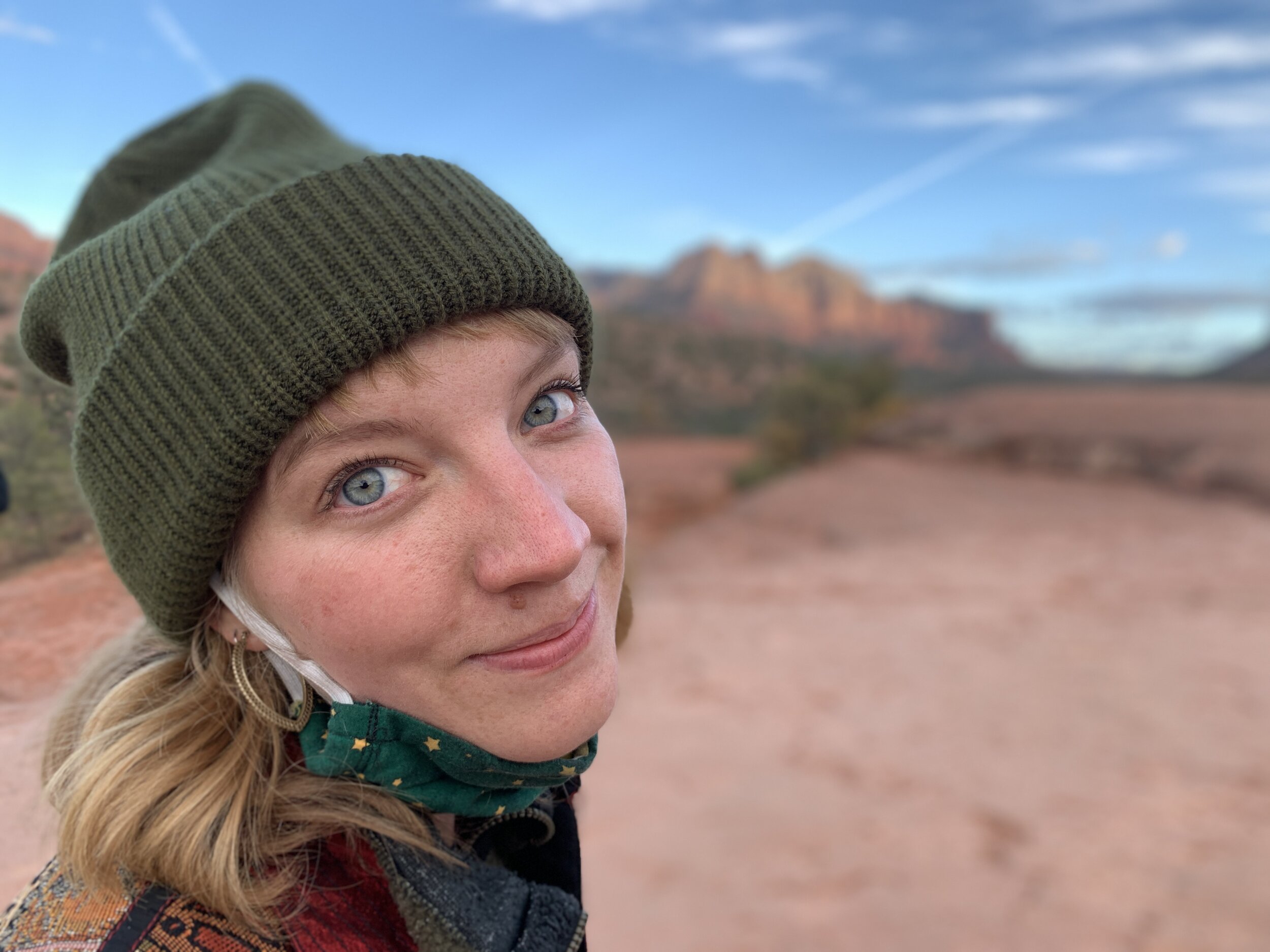
Where have you been spending your quarantine?
My quarantine story is not the norm, as I’ve had many quarantine locations. When the pandemic hit I was living in Brooklyn with my partner, Dani. Both of our jobs went remote so we decided to go live in a tent in Upstate NY on our friend’s property, using the house during the day for work and then heading back into the forest at night. Once it started getting too cold to camp, we took advantage of remote working and started a cross-country road trip. We took our time and busked along the way, bringing live music back to the people in the safest way possible. I am now quarantining in Ojai, CA, and experiencing my first warm winter ever!
How have you been staying busy during quarantine? (or not keeping busy is totally fine too)
I have started a lot of new creative projects including painting journals to sell while busking and botanically dyeing clothes with onion skins and avocado pits and skins. I’ve always felt conflicted about merch because a lot of it is not made sustainably. Painting journals and thrifting/dyeing/screen-printing my own shirts has allowed me to make merch that I feel is sustainable and valuable. The journals can be used for someone’s creative practices and the t-shirts are made without any waste - each one unique and made with so much love and care!
What’s something new you’ve cooked/baked?
Some quarantine food-related experiments have been sushi, oat milk, and microwaved chocolate lava cake.
Go to quarantine snack: Hummus, pita bread, olives, baba, labne - boom

This is a picture of the most beautiful outdoor bball court I've ever had the pleasure of playing on. This is where I spend some of my time after work in Ojai, CA. Most people are surprised when they hear this, but basketball has always been a huge part of my life and continues to be no matter where I travel.
Song (or album) you’ve had on repeat: “Hypotheticals” by Lake Street Dive. It’s on repeat on my Spotify and in my head.
What is keeping you happy?
Sunshine, my partner Dani, my many craft hobbies, baths.
What’s something you miss the most right now?
Hugging people when I meet them. I feel anxiety around meeting new people because of COVID. I feel like I can’t fully be myself or interact with them the way that I would naturally and that’s really complicated. I definitely miss the people that I know and love and haven’t seen in a while, but I also really miss interacting with strangers - especially while traveling. I’m living in a new place and I want to get to know the locals, but there are so many added layers of caution that it’s exhausting.
What do you hope we take away from this?
I hope we have all received clarity on who and what is important to us. The pandemic has provided us with the space and time to re-evaluate the way we live our lives, what we do with our time, and who we spend it with. I hope that we all come out of this with healthy new habits, new self-love practices, creative joys, and hope.
Anything new we should know about that you’re working on?
I have a new song and music video coming out in April that I am SO excited about! I wrote the song “Sunman” for my partner Dani’s birthday. He was born on the summer solstice, the longest day of the year, and also has a super sunny personality. We made the music video while I was quarantining in Upstate NY in the fall. I was lucky enough to be quarantining with a group of artists whose creativity knows no bounds so we were able to make a stunning video in the mystical woods of Hudson. I was quarantining with enough people that I was even able to have some backup dancers - you definitely don’t want to miss this one!

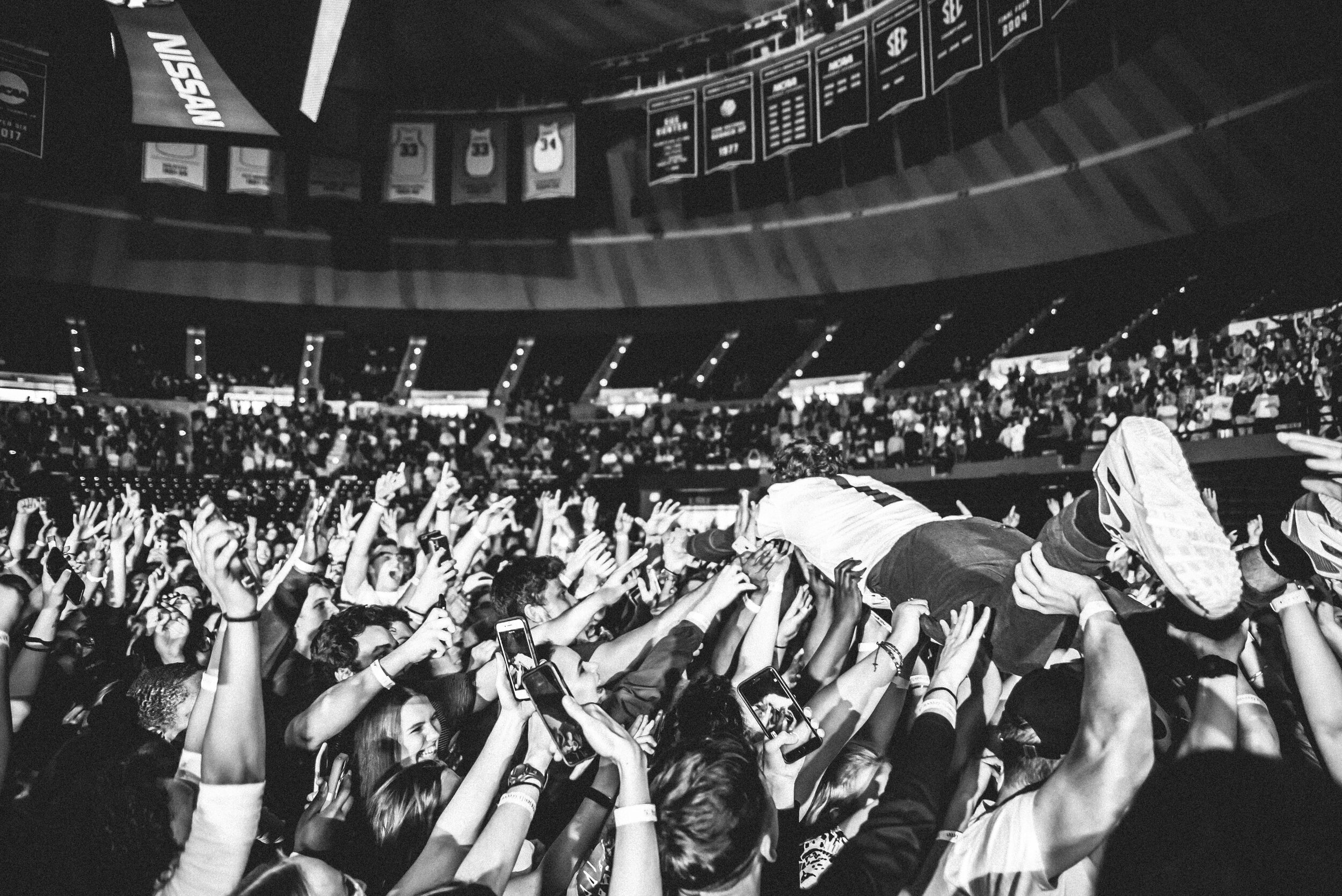
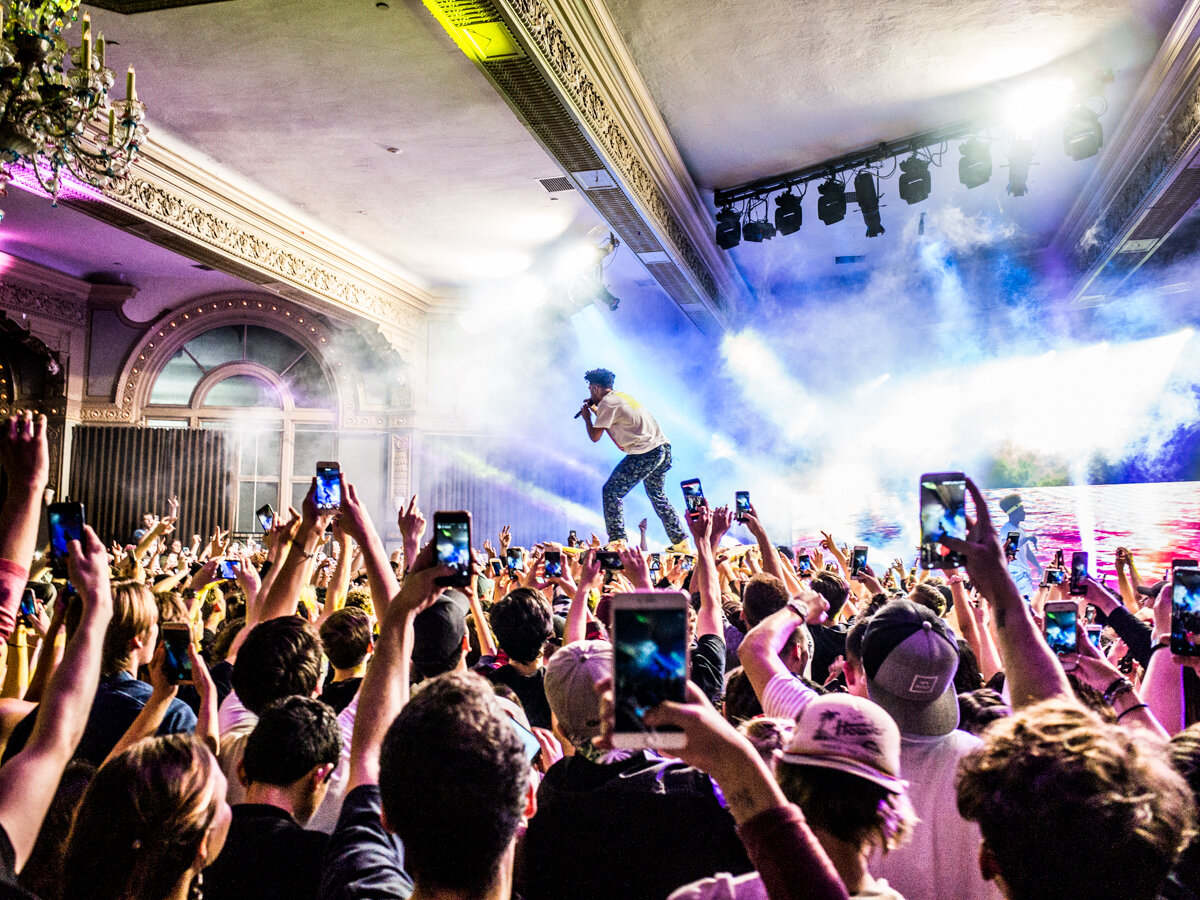
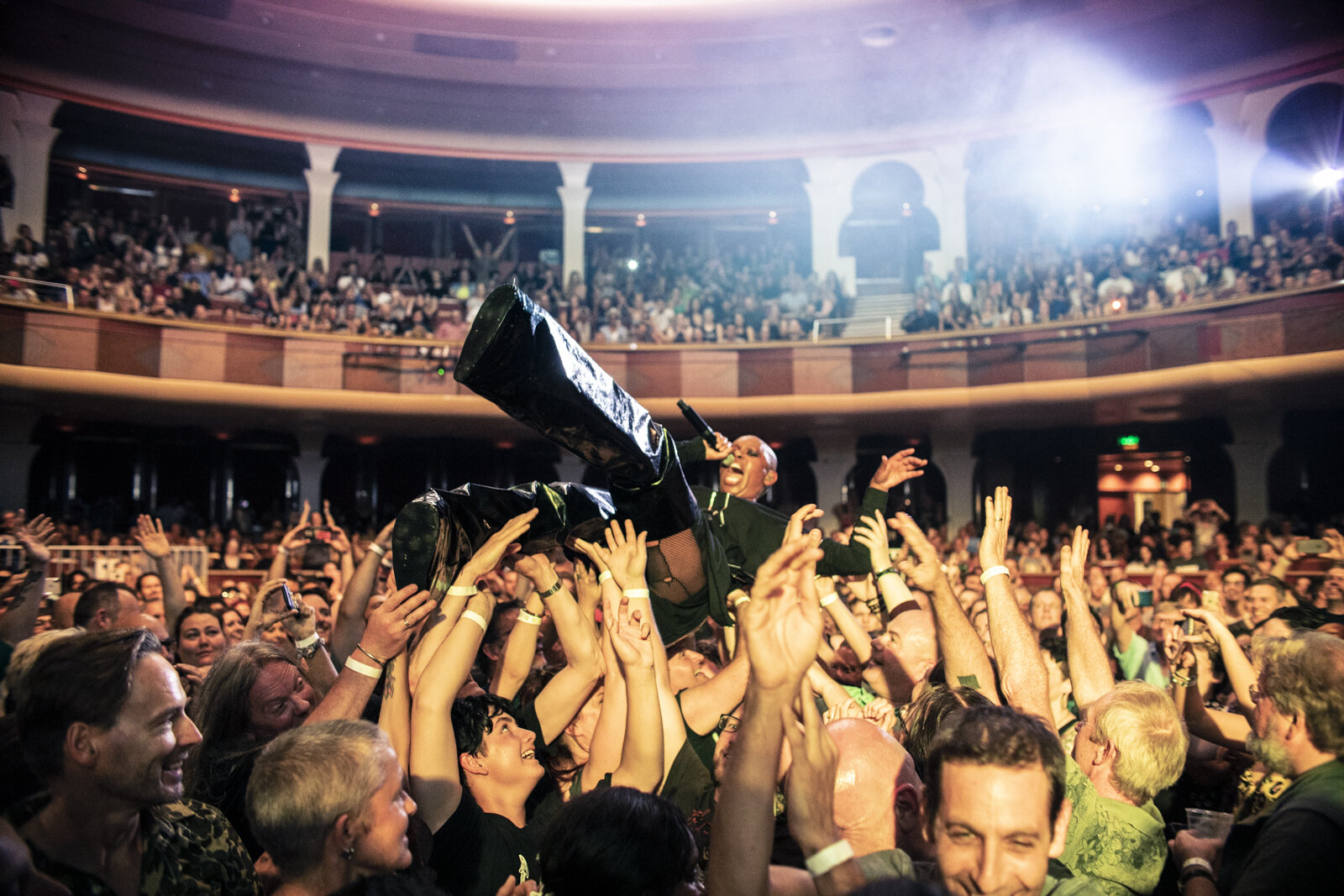
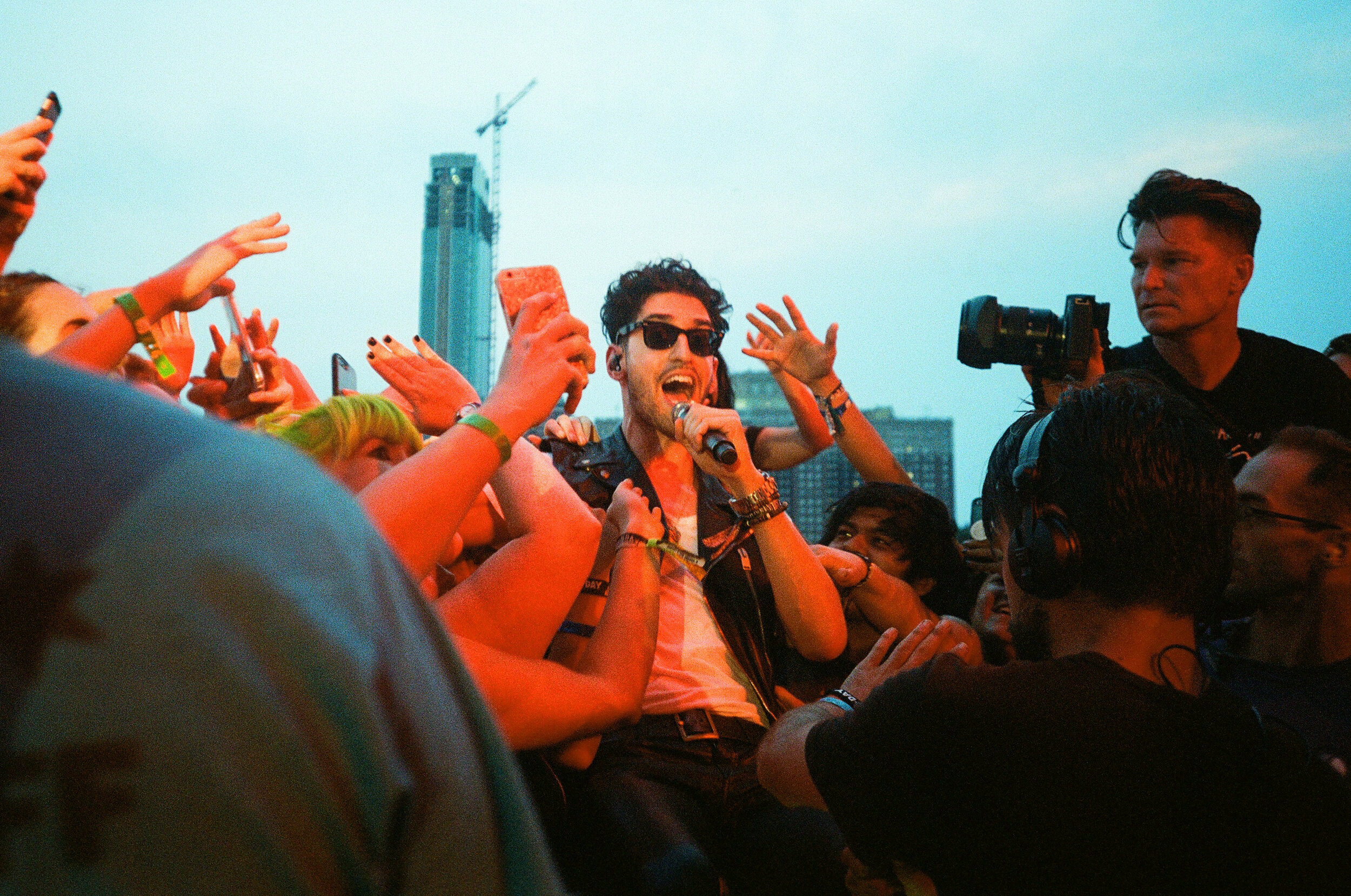
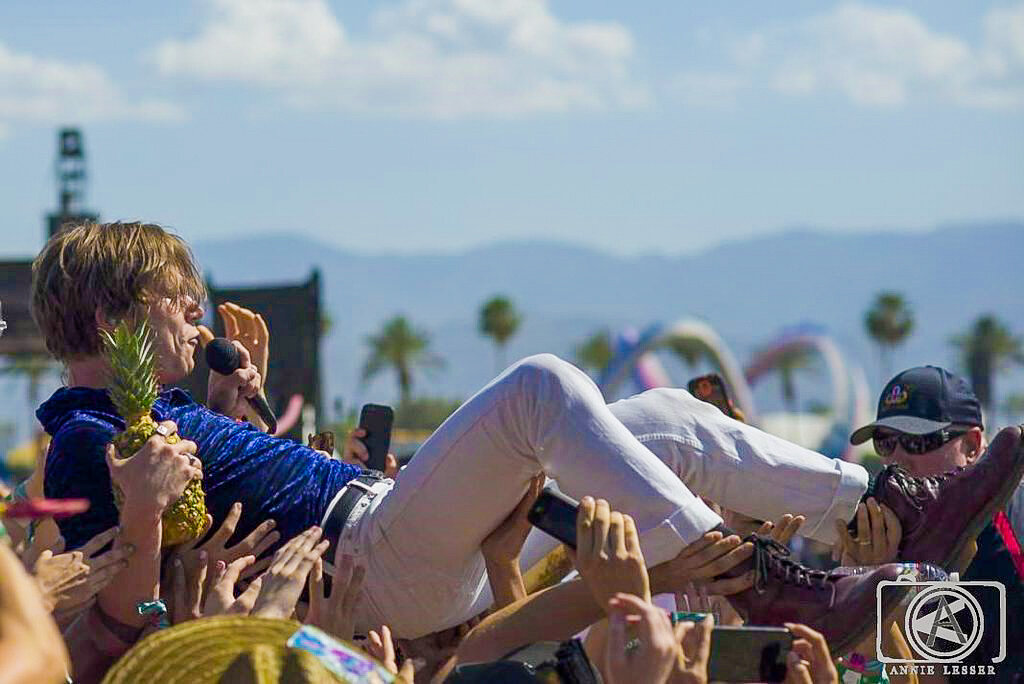
In Focus: Crowd Surfing
Cover photos by (left to right): Jenny Ramone Photo, Mallory Turner, Annie Lesser, Gili Dailes, Victoria Ford (Sneakshot Photography)
In Focus is a Photo Ladies collaborative photo series that showcases TPL members’ favorite photos, focusing on a different theme each month.
As concert photographers we always wait for an exciting moment to happen on stage so that we can capture it, but sometimes we are treated to an exciting moment off the stage. This month we are giving you our favorite Crowd Surfing photos, with the hope that we can soon return to witnessing such epic moments safely
Check out our previous In Focus galleries here: Drummers | Keyboardists | Bass Players | Jump Shots
ⓒ All photos are subject to copyrights and cannot be used without the photographer’s permission

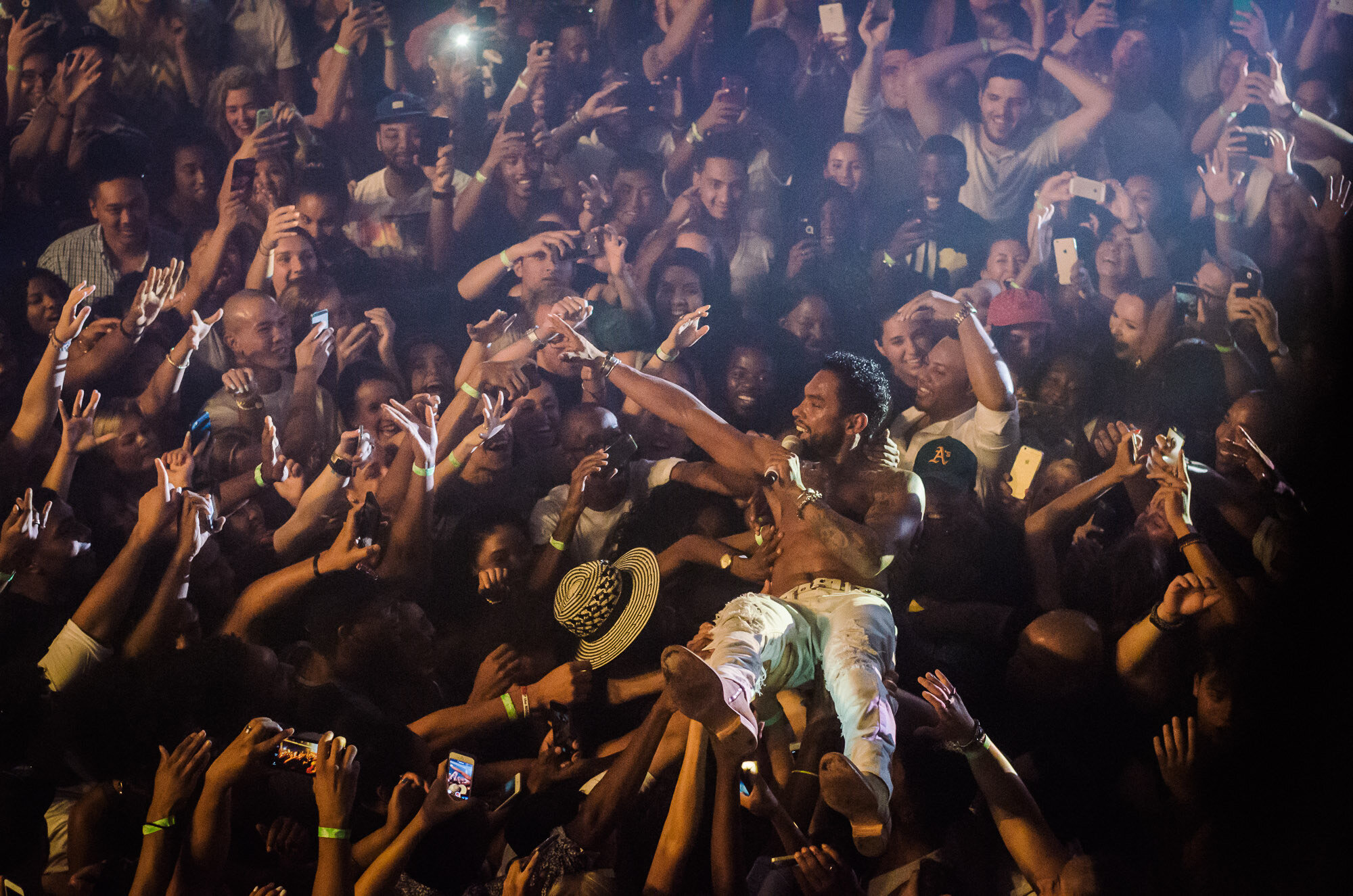
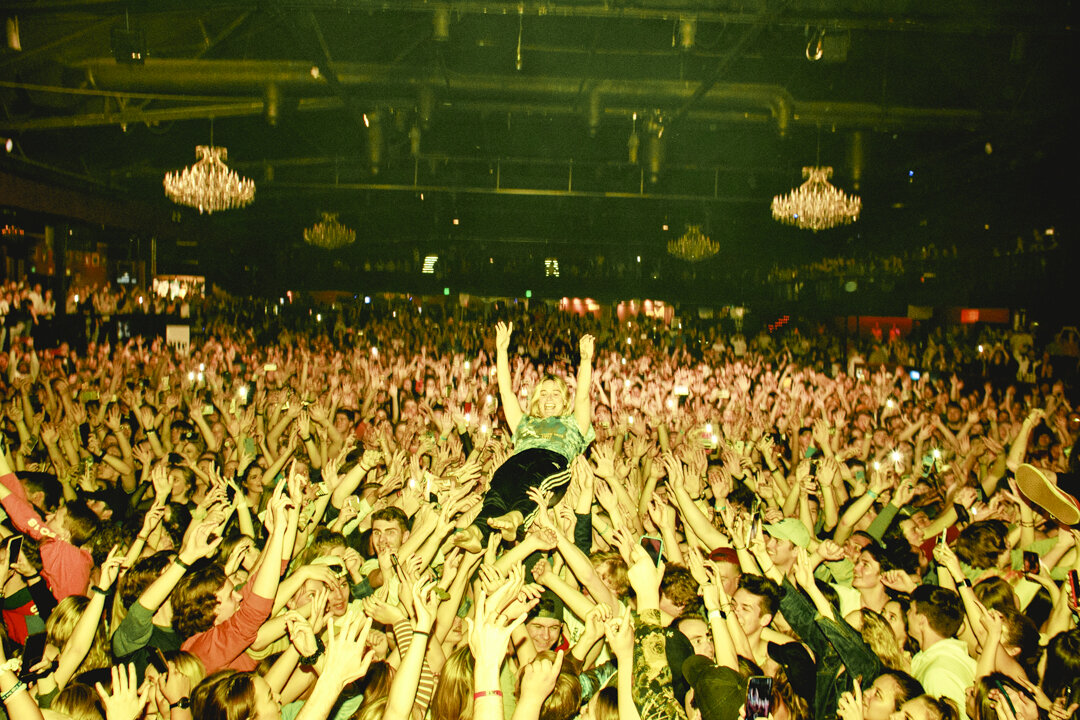
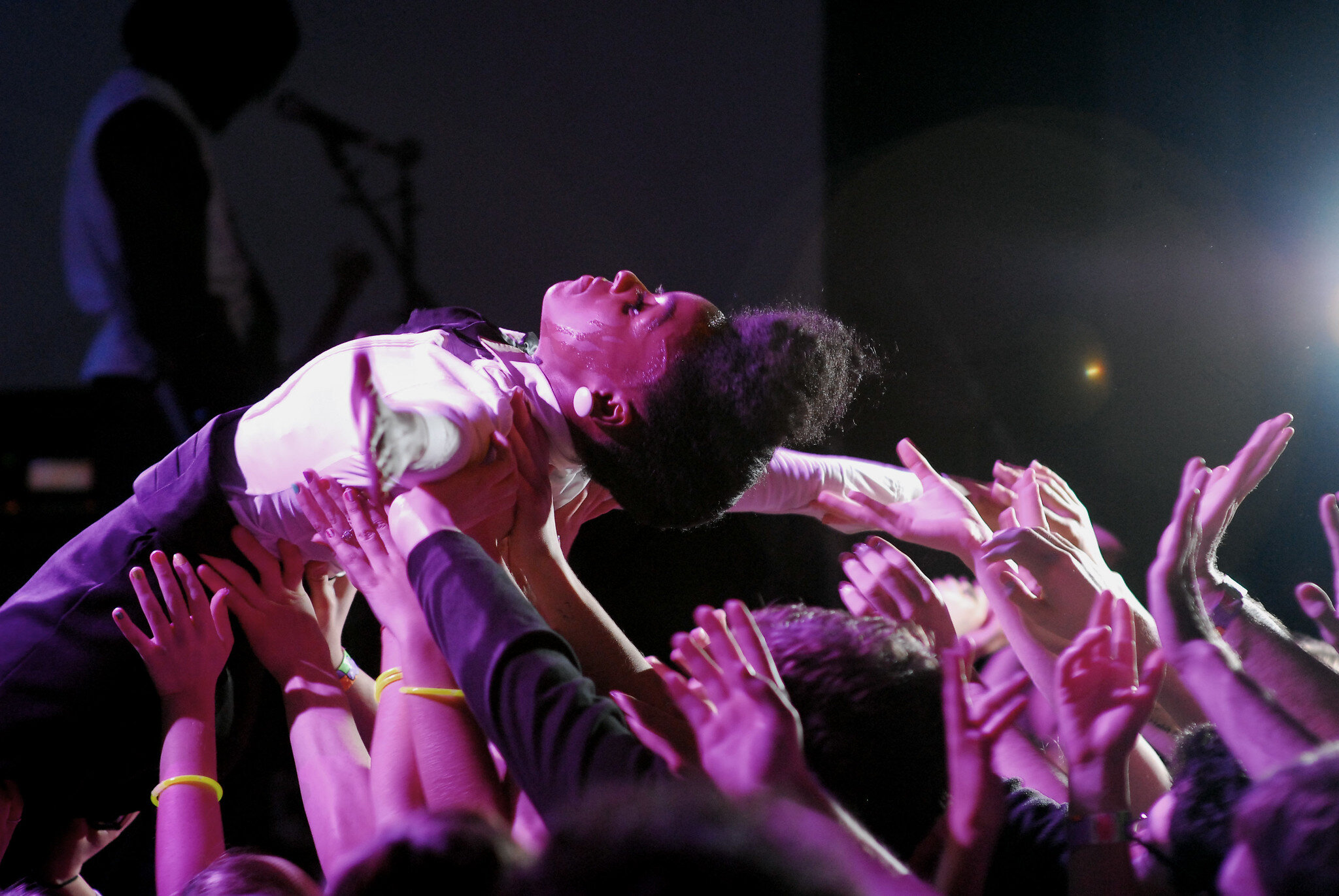

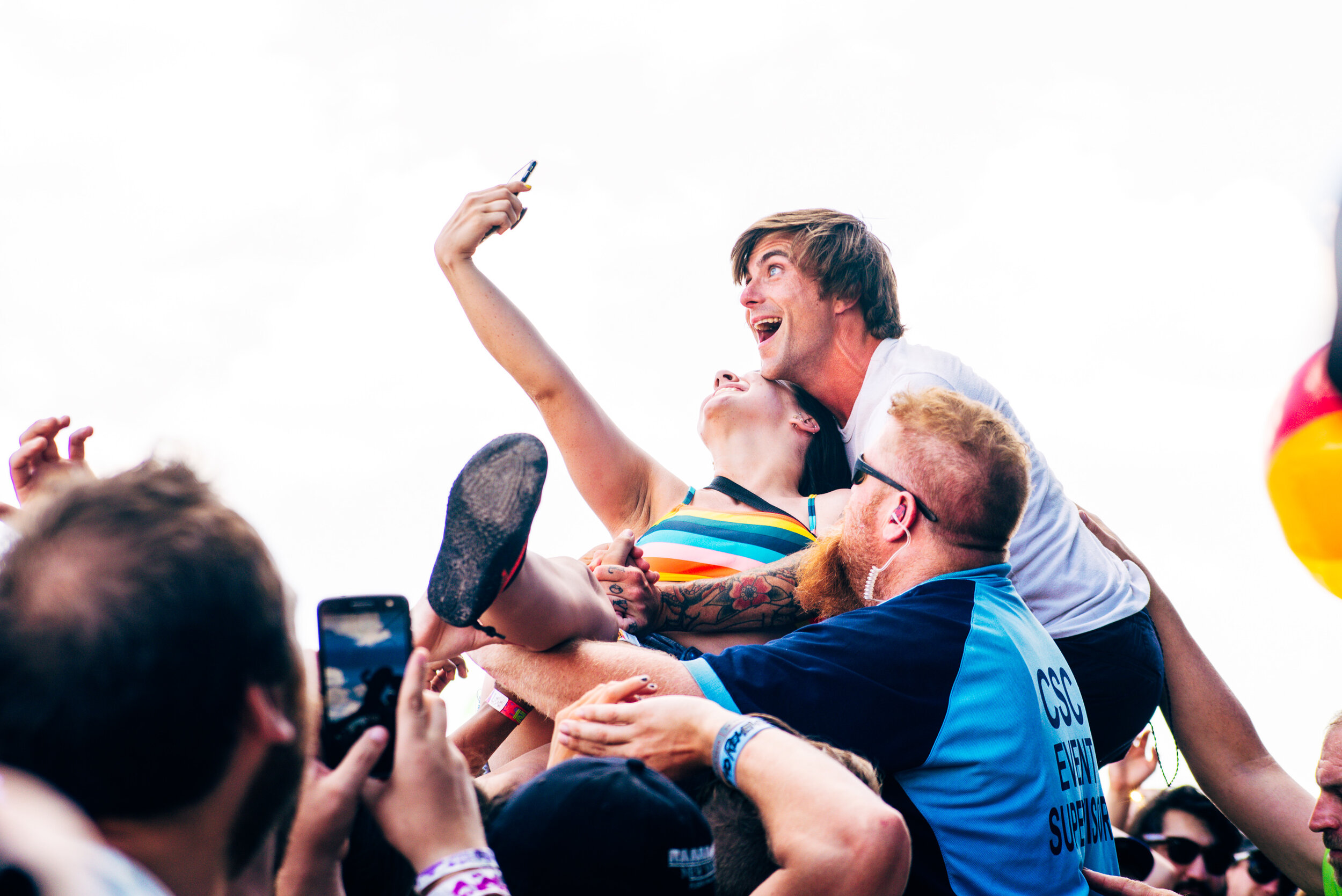
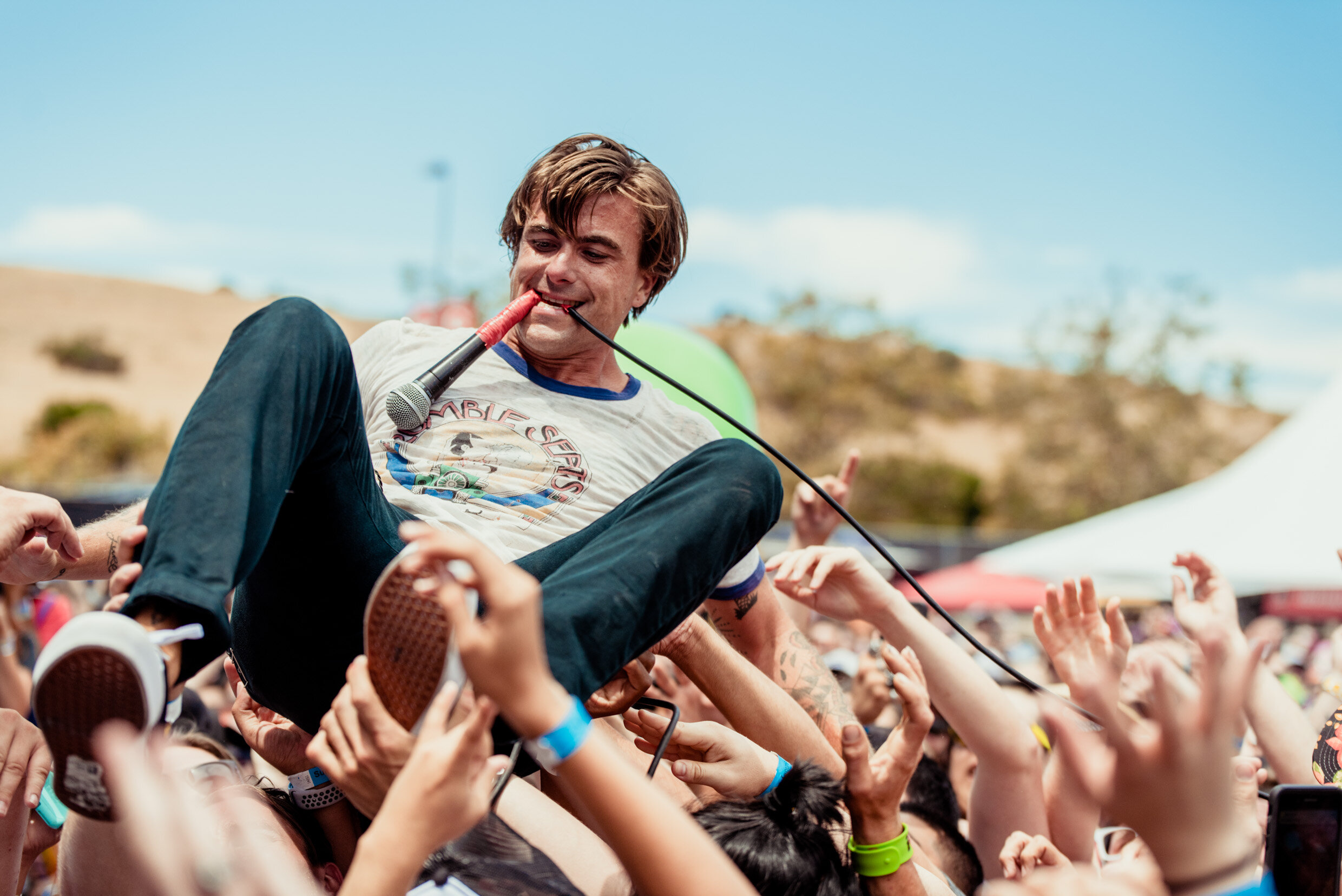
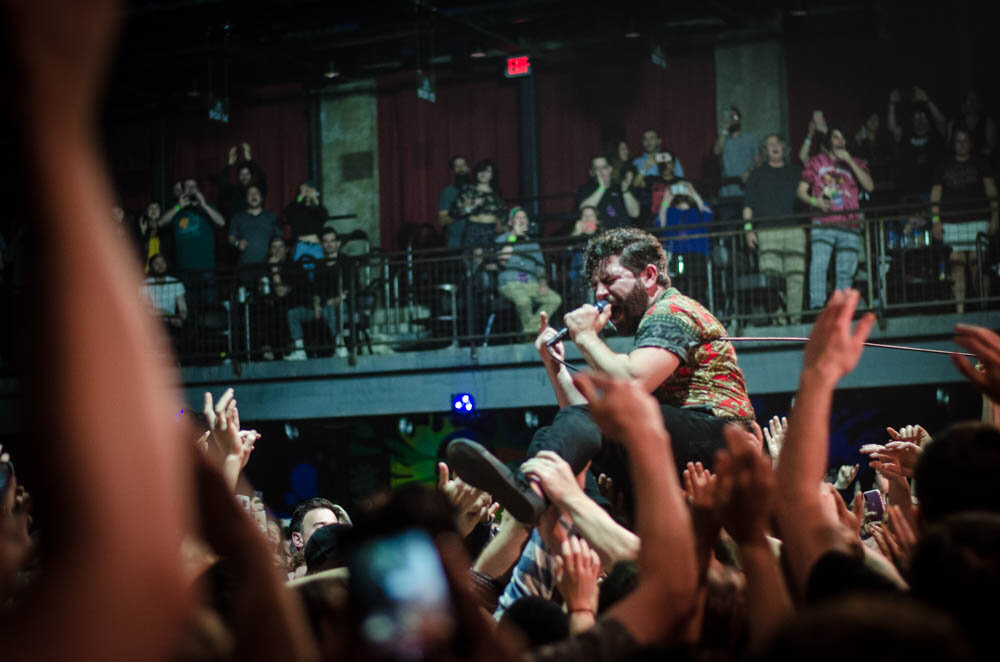
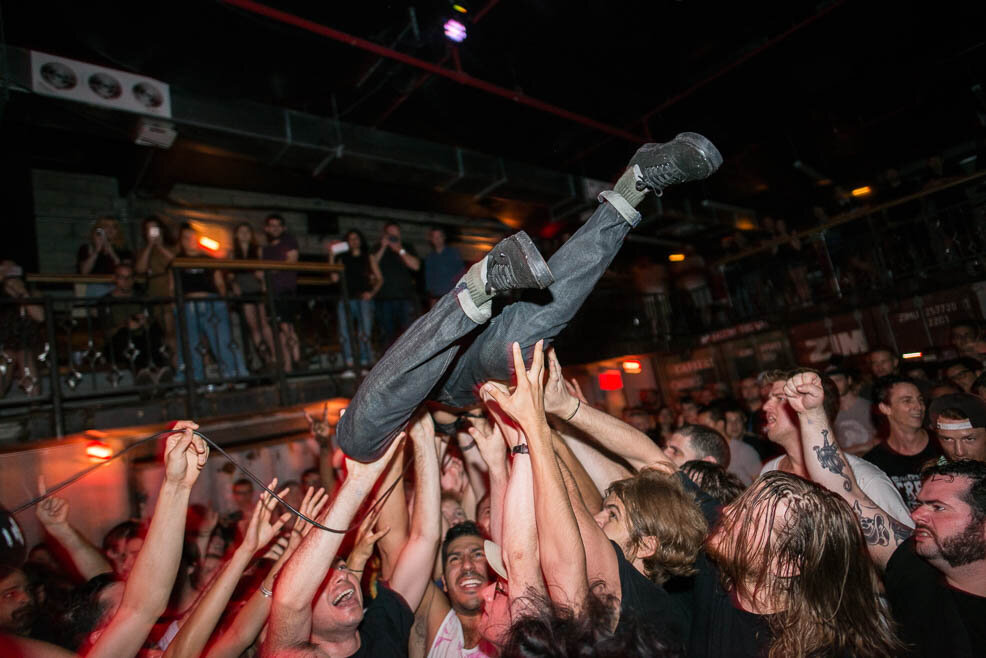
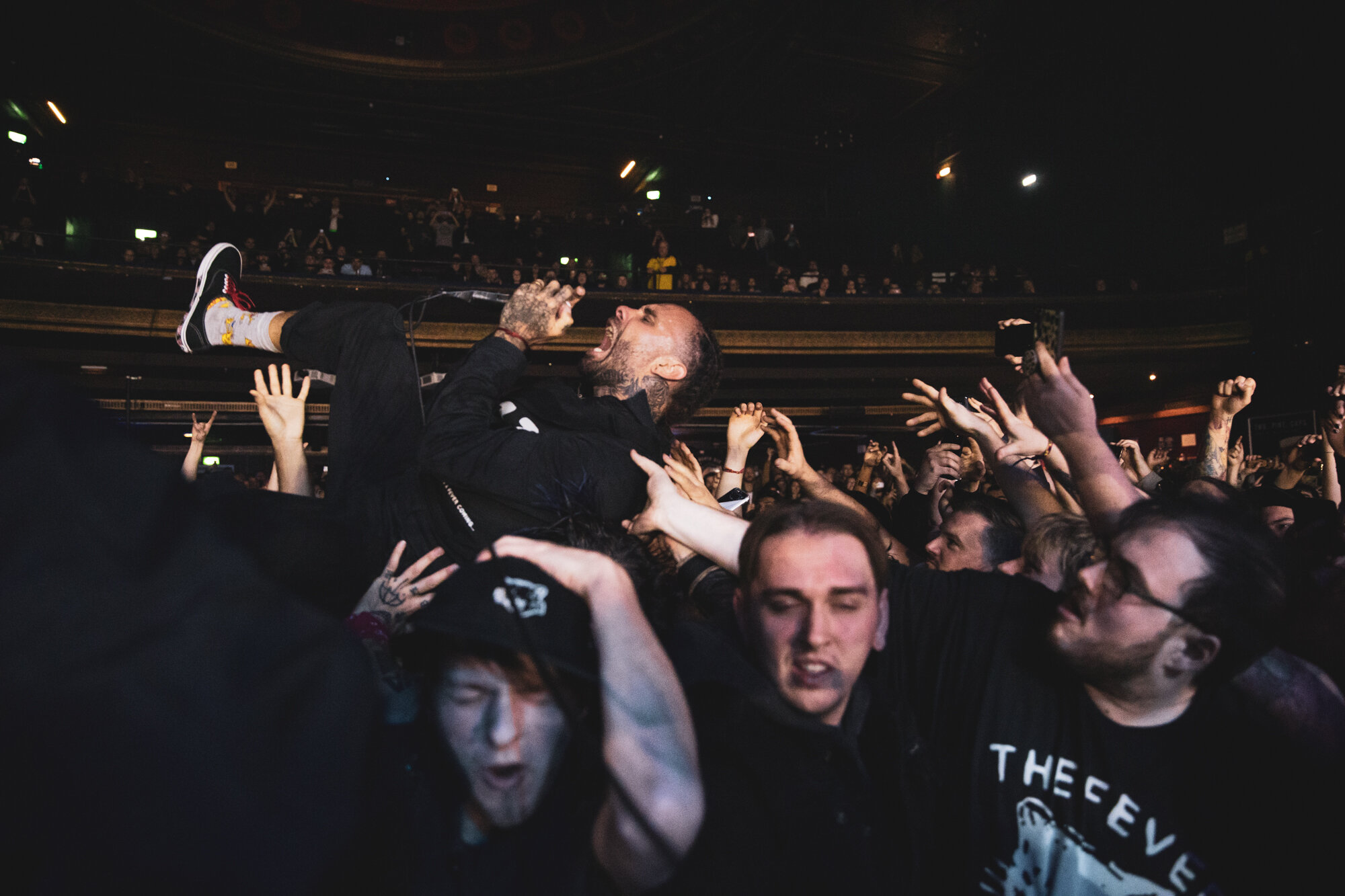
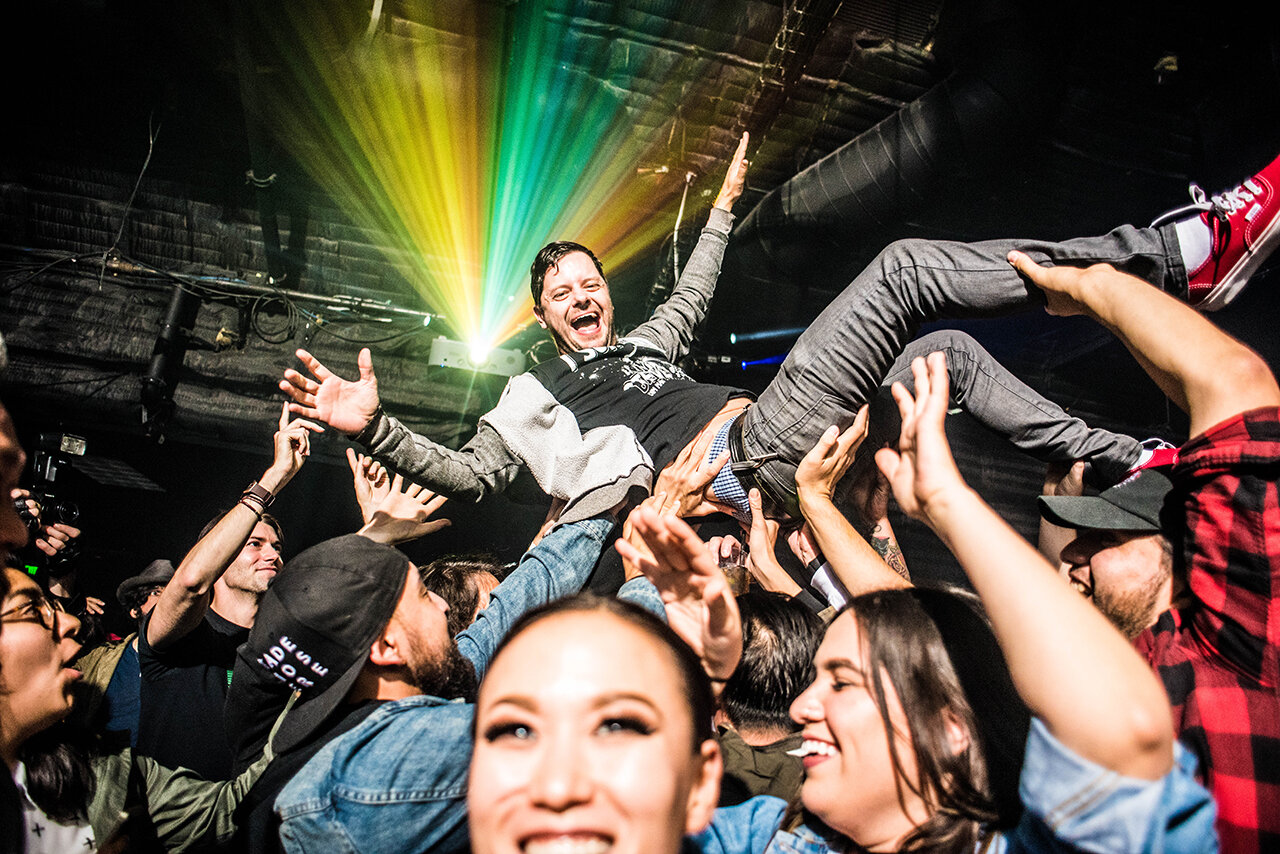
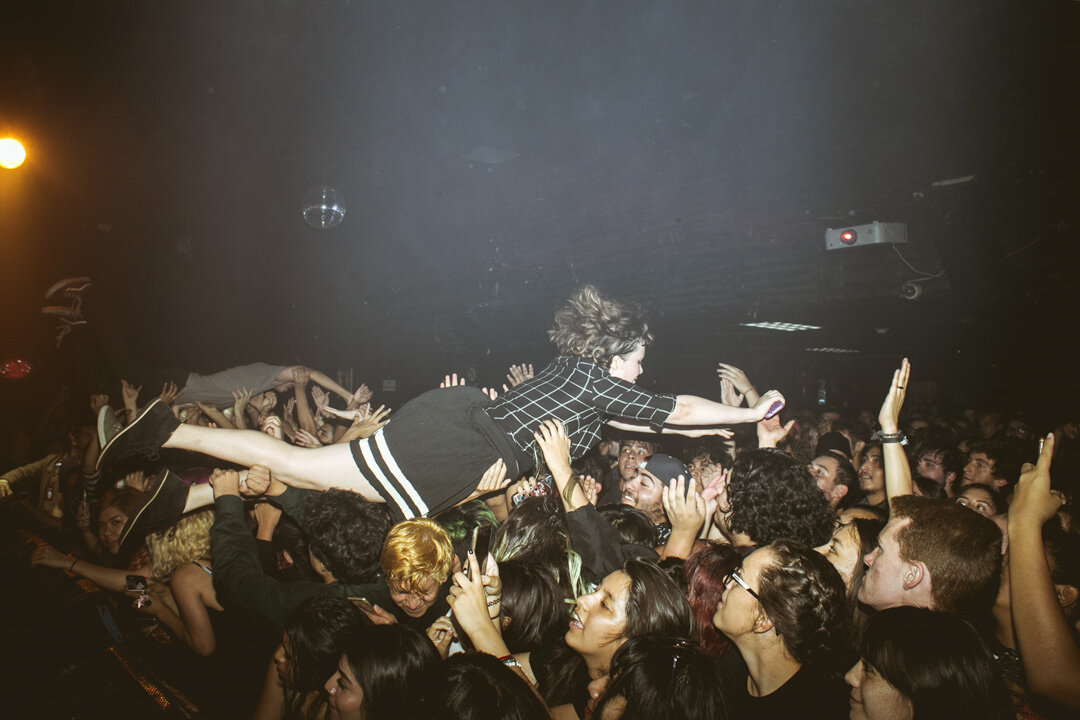

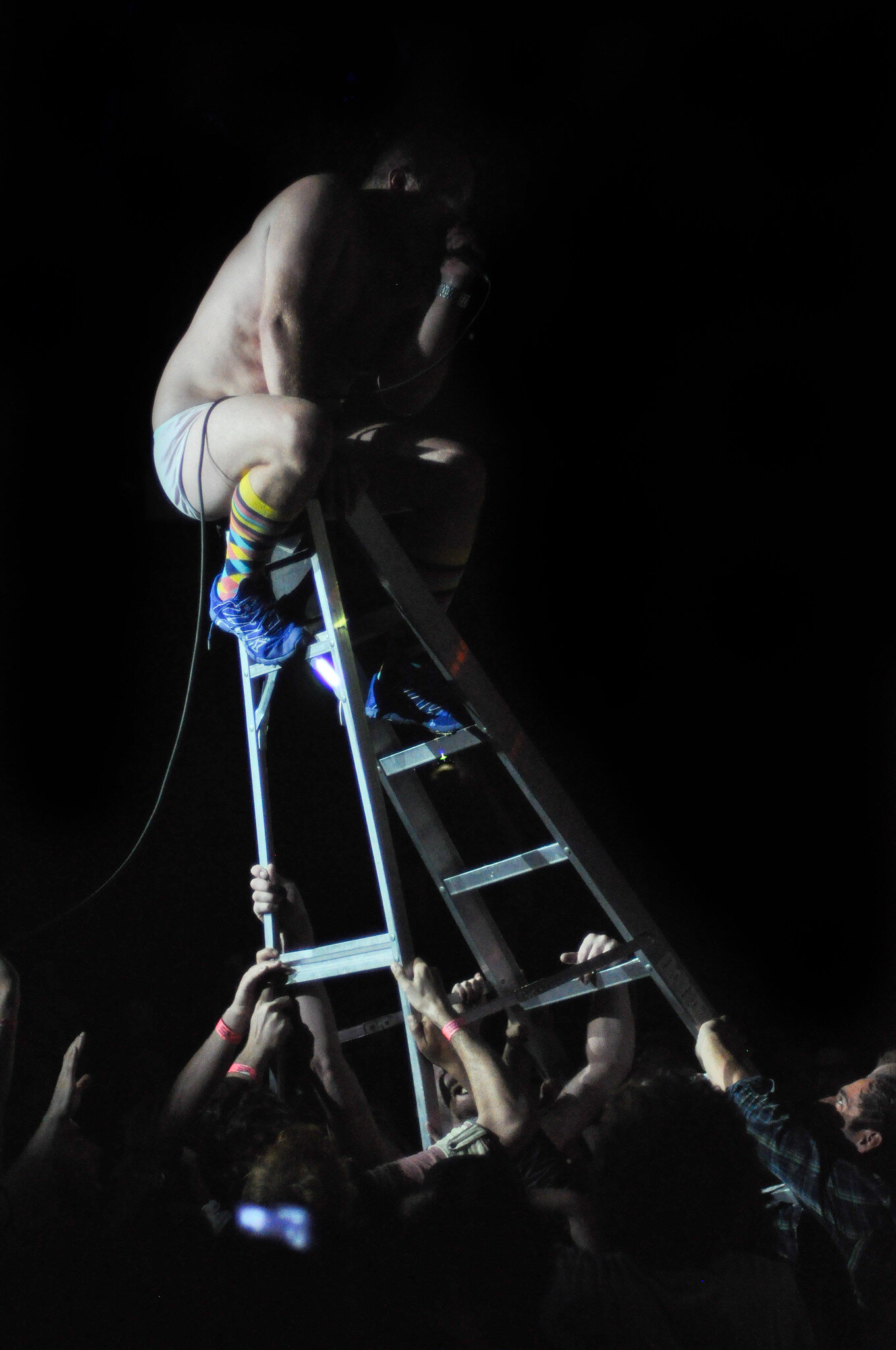

Ashe by Mallory Turner
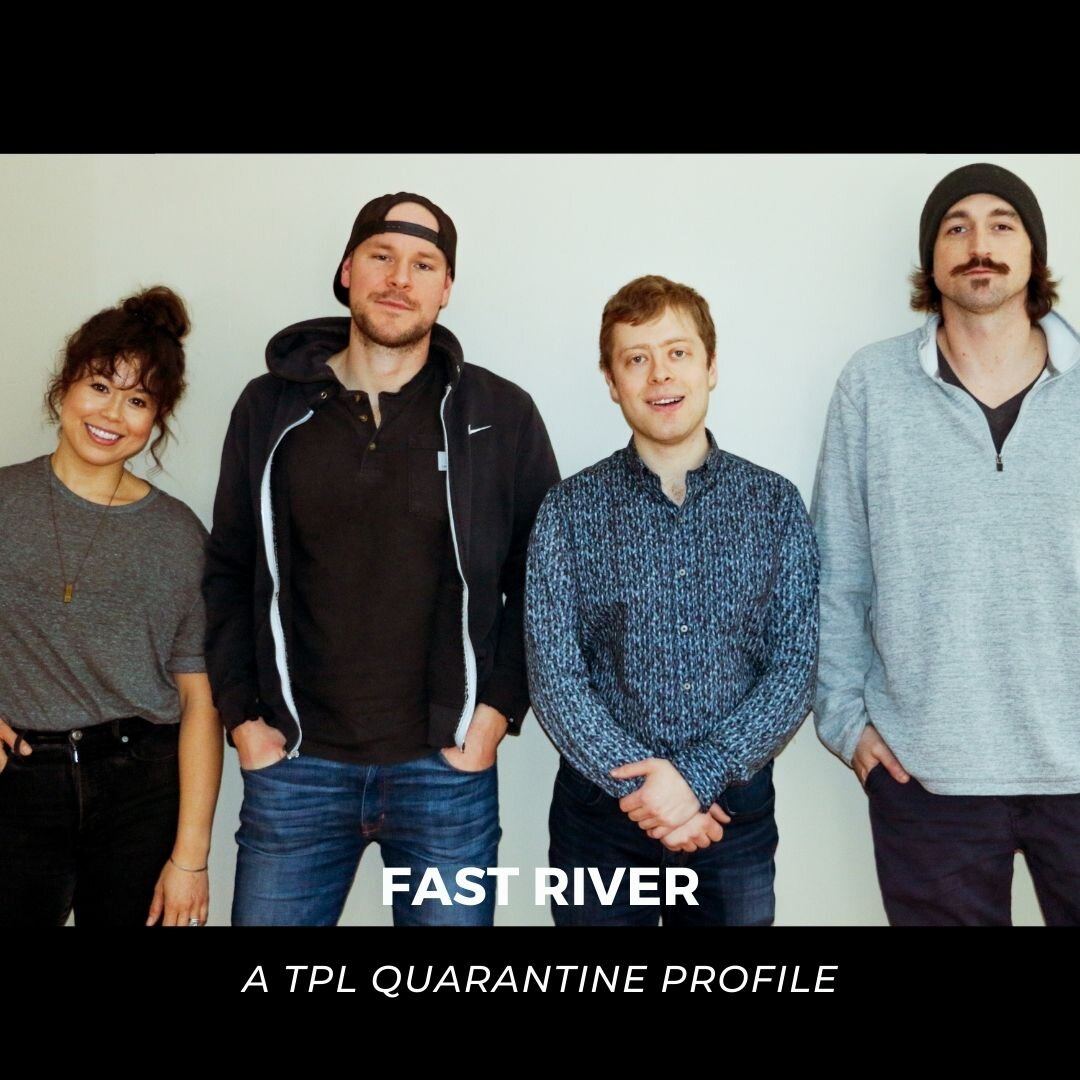
QUARANTINE PROFILE: Fast River
We’ve launched a profile series to highlight how artists are spending their time during the quarantine. Several times a week we’ll highlight a new artist across the globe and see how they’re keeping busy during COVID-19 lockdowns.
The band members are: Corey Durkin, Canyon Sharits, Dylan Cochrane, Andrew DeNicola, Daniel Caravella and Douglas Dejong.

Where have you been spending your quarantine?
Canyon: In our 900 sq ft apt!
Dylan: My fiancé and I bought our first house last April, and we have barely left since. But mostly spending my time in my temporary in-house studio, and Home Depot.
Andrew: Mostly at home, practicing/composing music, keeping in communication with my friends and family, and working part-time. Also exercising like hiking, jogging, biking, and Qi gong.
How have you been staying busy during quarantine? (or not keeping busy is totally fine too)
Canyon: I have two jobs in addition to being a musician and momma. So, aside from last March when lockdown first started, it’s been busier than ever before.
Dylan: I have a 1.5 year old son Odin who keeps me pretty busy but other than that working on music and small house projects. I built some really crappy shelves a few months ago :)
Doug: I've been practicing as much as possible and picking up a few new instruments. I've always "played" drums but now with quarantine, I figure my neighbors are more hesitant to knock on my door so I've finally been playing every day.
Dan: Playing an excessive amount of golf.
Anything new you’ve learned? / Something new you’ve done:
Doug: I started a hockey podcast - "Tougie's Take" - and spent a lot of time learning to mix and edit spoken word. There were a lot of subtleties to producing a podcast that I wasn't expecting, but roughly 100 youtube tutorials and 20 articles later, I'm pretty happy with the results I'm getting.
Dan: Learning how layer 1 through layer 3 networking works and how to consistently hit a cut or a draw on the golf course. Andrew: How to make different types of espresso drinks, recording my own music, and getting a personal trainer to learn new workout exercises.
Corey: I learned the difference between a leaf blower and a chainsaw.

Go-to quarantine snack:
Dylan: Double Stuff Oreos and milk all day every day.
Doug: String Cheese. I'm up to a 2-stick-a-day habit that I might need to kick when I finally go outside again.
Dan: Black forest ham/American cheese rollup with some dijon for dipping
Andrew: Knokkerbread crispbread crackers with hummus
Corey: Sourdough toast with butter wherein the toast is really just a vehicle for the butter.
Canyon: I went through a SERIOUS trail mix obsession in the beginning... like... serious. I was buying tons of different mixes (when I could find them from the bare-shelved store) and got to the point where I was combining different varieties (think dill pickle & cherry/chocolate). It got weird.
If you could only watch one film or TV show for the rest of time what would it be?
Canyon: Dateline!
Dylan: That 70’s Show
Doug: The Simpsons
Corey: West Wing
Andrew: The rest of Stanley Kubrick’s movies.
Dan: Lord of the Rings
What’s the best advice you’ve received during this time?
Dylan: Never leave your guitar pedals on the ground when you have a child. You will never find that "one" sound ever again.
Canyon: Do the opposite of what your brain tells you that it wants to do. If I’m ever scared/intimidated/overwhelmed by the idea of doing something... I force myself to do it so that my “fear brain” doesn’t win. I’d rather LIVE life than sit it out but man, it’s a CHOICE!
Doug: If you learn from your mistakes, they were investments.
Dan: When golfing, for every 10mph of wind in your face assume a 10% loss of club distance…for every 10mph of wind at your back, assume 5% increase in that clubs distance. Invaluable advice.
Andrew: To take your time with what you're doing, sharpen the tools that you already possess, and keep reaching out to people even if it feels difficult.
Corey: Dan told me to focus on details like 'picking a chord progression and tuning your guitars.' He wasn't wrong.
What’s something you miss the most right now?
Canyon: hugging people!
Dylan: Going to concerts and baseball games! I would give a lot to pay 12$ for a hotdog at a ballpark right about now.
Doug: It sounds like such a small thing, but I really miss those ridiculously oversized club sandwiches that pubs serve. Why are their sandwiches so much larger than other places? I don't know but I sure would love to eat one. Right now, even.
Corey: Watching my friends play shows.
Dan: I miss my friends the most, not seeing them all for months at a time is very new (in the grand scheme of things) and has certainly left a massive gap in my life.
Andrew: Performing live shows.
INTERVIEW: Lizzie & The Makers

Lizzie & The Makers
The Photo Ladies Interview - by Emily May
New York musician Lizzie Edwards grew up surrounded by music. With a grandfather who was an opera singer, a grandmother who was a classical harpsichordist, and a father who was a sideman for artists such as Chuck Berry and was in a band himself, it seemed inevitable that a career in music would find Edwards. Going to concerts with her father from a young age exposed her to many different kinds of music, but the genre that made the biggest impact on her was jazz, with its ability to allow one to get lost in the music and allow it to take them over. Edwards studied music theory and classical piano at The New School in NYC, as well as music and English at Dartmouth College, and upon graduating from college she worked at The Jazz Foundation of America. During that time, amongst other things, she worked as a caretaker for two blues and jazz singers, Abbey Lincoln and Sweet Georgia Brown, who inspired her to develop a love and appreciation for the blues, later incorporating those sounds into her music. Later, she worked as a sound engineer at the legendary Brooklyn venue Pete's Candy Store, and organized Bourbon Fest, a day fest that she was supposed to play with a band she was in at the time. When her band broke up a week before the fest, she received offers from some of the venue's regular musicians to form a new band to perform, and thus Lizzie & The Makers were born. Although parts of the line up have changed over the years, The Maker's have solidified their line up over the years and currently consist of guitarist and songwriting partner Greg McMullen (who has been with Lizzie from the start), Brett Bass (Gregg Allman, Bernie Worrell) on bass, Steve Williams (Sadé, Digable Planets) on drums and Rob Clores on keys. Having sung with bands in the past, many of which heard her powerful vocals and labeled her a rock or power singer and tried to make her a certain type of artist that didn't fit who she truly was as an artist, caused her to struggle over the years to find her voice and stay true to her authentic self. Since that time, she has been finding her voice as an artist and has found a group of musicians with which she can shine as her true self. Lizzie & The Makers have been working in recent years with legendary producers Reeves Gabrels (David Bowie, Tin Machine) and Mario J. McNulty (David Bowie, Prince). Most recently, the band released "Mermaid", the first single from their soon-to-be-released new album. “It was right after Mardi Gras and there was still glitter, beads, and pieces of costumes in the streets, littering the wet, black pavement,” says Edwards. “I was nursing a broken heart and just started journaling as I was walking around. Pete’s Candy Store is like my home away from home, so I went there for solace, old friendships, and just started writing what I saw around me to try to process why my relationship with this person had suddenly shifted from close to distant.” The band also released a music video for the track that was mostly filmed at Art Factory Studios in Paterson, NJ and reflects the somber yet powerful sentiments behind the track, “emerging from a dark cave and going toward the light,” Edwards says. Recorded at Mission Sound Recording in Williamsburg, Brooklyn, the new music threads shoegazey, psychedelic layers throughout its core. “I think we’ve been on this kind of ethereal tear,” mulled Edwards. “It’s almost like when we wrote these songs they went through a David Lynch portal, they and came out a little bizarre.” Infusing elements of art-rock, dream-pop, and a celestial atmosphere Lizzie & The Makers have spawned something entirely their own. The band is focused on their album release, with plans to also create some online live stream events and do some interviews that will also see them perform a bit. With plenty for their fans to look forward to, make sure to follow Lizzie & The Makers to stay up-to-date with all upcoming album and live performance news! You can connect with Lizzie & The Makers via the following links:
Website | Facebook | Instagram | Twitter | Spotify | iTunes/Apple Music | YouTube | Bandcamp
Your grandfather was an opera singer, your grandmother was a classical harpsichordist and your father was a sideman for artists such as Chuck Berry and was in a band himself. Growing up in such a musical family, what kind of influence do you feel that had on you as an artist and your love for music? Did you know from an early age that you wanted a career in music?
I think from an early age I knew that I loved music and it was in my blood a little bit and came naturally. It wasn't until later that I really wanted to pursue it as a career. I think it was something I just loved doing and it was therapeutic. As an angsty teenager, I loved playing Chopin and Rachmaninoff, and that was kind of how I would channel my mood swings (laughs). I think it wasn't until around then, at 12 or 13, where I thought "You know, I really want to sing and pursue this professionally."
You frequently went to shows with your father from a young age and have said that you developed a particular love for jazz. What was it that drew you to jazz in particular? Do you have any favorite memories from that time?
I think, growing up in New York City, I was just lucky to have access to a lot of great jazz clubs. When going with my dad, he would explain to me...I mean, it's not necessarily the most accessible genre of music, depending on what kind of jazz you're listening to. Cole Porter might be more accessible than Thelonious Monk. But when going with my dad, he would always tell me about the artists and give me their history. He knew so much, and so I think that kind of was part of what drew me to it. Also, I felt like there were a lot of female vocalists that I could really relate to and identify with, who I got to see perform live. I think I saw a little bit of myself in them and it kind of inspired me to pursue music, by seeing these strong female examples. I also just like the ability to get lost in jazz and kind of just close your eyes and feel the music and let it take you over. I feel like that is a genre that really does that and it's a little mysterious too, sometimes.
You studied classical piano and music theory at The New School in NYC, as well as music and English at Dartmouth College, and after college, you worked for The Jazz Foundation of America. How did that opportunity come about and what was that experience like? What kind of influence did it have on your singing and writing styles?
My dad actually had done some work with The Jazz Foundation. I was looking for a job and they had an opening to work on a program they had called 'Jazz In The Schools', which employed out of work older jazz musicians as teachers in schools because music programs had been cut. It was a really cool program that brought music to underfunded schools but also provided employment to these struggling musicians. It was just a perfect fit and I got to talk to the musicians a lot. I also worked for a little bit as a caretaker for Abbey Lincoln, the late jazz singer, and would go to her house and helped her buy groceries and walk her dog. She would tell me stories and sit at her piano and play for me and it was really an amazing privilege. I also became close with another female blues singer who goes by Sweet Georgia Brown. I think that talking to the two of them is really when I got into the blues and really started to find my voice there. After spending so much time with musicians like the two of them, when I started writing, finally, I found that most of the songs I wrote were blues progressions. It just kind of came out of me, so they definitely inspired me creatively and just in being a confident woman. They had great stories and it was a really, really rewarding experience and probably the best job I've ever had. It didn't feel like a job!
You've talked about struggling in the past with bands wanting you to sing in a key that didn't work for you and just how people wanted you to be a certain way as an artist. What has your journey been like in finding your voice as a singer and being true to yourself as an artist and not giving in to the pressure to be something you're not?
I think people have kind of their first impressions, just based on what they look like. So, there's that, right off the bat before you even open your mouth to sing that you have to deal with. I think once I sing and people hear that I have a powerful voice, they label me as a rock singer or a power singer. I like to sing soft songs too (laughs), and there are a lot of jazz songs I love to sing that aren't about blowing it out on every verse and chorus. I do think, at first, it's hard to find your voice and you're seeking approval from people and from the band. I worked with a lot of instrumentalists who are really talented and was always very intimidated by them. I feel like at first, I was trying to fit into this box of being a powerful singer or a rock singer. After a while, I just felt like I was following a script and not necessarily being true to myself. The more I wrote and explored music, I think I started to really develop my voice. It was challenging, but I would say it's probably like that for a lot of artists. You have your influences and you have mentors who want you to do a certain thing and you want to make people happy. After a while, you kind of start to listen to your own soul and try to translate your influences through yourself and into your own voice. It was a process, but I finally got there (laughs)!
A few years back, you were working as a sound engineer at the legendary Brooklyn venue Pete's Candy Store and put on a day fest called Bourbon Fest, which is how you have said that Lizzie & The Makers was born. What can you tell me about that impromptu formation of the band and the early days and how you have progressed as a band since then?
I actually had been singing with a blues band that was supposed to headline the festival that day, and the band broke up, like a week before the show was supposed to happen. So, it was really just a lot of timing and being in the right place at the right time with certain people. I think I was talking about how the band broke up, and through the rumor mill of the tiny venue, other musicians who play there found out and I would do sound for their set and they'd come up to me and said "Hey. I heard you need a band. I want to be in it." That's what Greg said to me, the guitarist in The Makers, and it just kind of was natural. Everybody who played there, or who worked at Pete's Candy Store, conglomerated characters from that scene to form a band. I think it just went better than we expected it to (laughs), for it is a last-minute, one-week advance show. Greg really motivated me to start writing and maybe have another gig and see where this goes. We did go through a few bass players at first because I find that the really good ones are in really high demand. We'd have someone playing bass for a couple of months and then they'd have to go on tour with someone, so we'd have to find someone else. Even my dad sat in as our bass player for a couple of gigs, because we had a last-minute need for a fill-in. Eventually, we found a drummer who was initially in the beginning years of The Makers. We were at a show at Spike Hill where Brett Bass, our current bass player, was playing and Greg said to me "That's the guy. That's the guy you should have in your band playing bass." I heard him play and said, "You're right." He joined us 6 months in, I think and has been with us ever since. Throughout the years, as our sound has changed, we've needed different things, from our drummer and guitarist-we used to have a rhythm guitarist and now we don't. We even had backup singers at one point and now we don't, so it was like a little puzzle and we were replacing pieces of it and seeing what worked. We found Steve Williams, who is our current drummer, I think it was three years ago, and it just really clicked. Our keyboard player has been with us for about 6 years. But other than that, it's been me, Brett and Greg, since the beginning. I think it makes a difference. We can all kind of read each other's minds at this point, so it helps.
You recently released "Mermaid", the first single from your upcoming album, and is described as emerging from a dark cave and going towards the light. What can you tell me about the track and the process of writing it? You've talked about how you journaled different thoughts you were having. Do you typically journal when songwriting?
I would say that is definitely how I would start an idea for a song. I try, first thing in the morning, to open up my notebook and I'll pick a random word from the dictionary and use that as my theme word and just write for 5 minutes. Once I get a lot of pages of those down, I'll go back and look through them and certain sentences or words will pop up and I'll think "Oh. That's an interesting idea." I kind of had a few passages of that which inspired the original idea for "Mermaid", and I had written a blues progression. Going back to the blues, I felt like we had a lot of rock and roll songs and not a lot of blues songs and I really wanted to write a more bluesy, soulful song for us. I brought my chords to Greg and he made it really groovy. I was going through a break-up at the time, I think, and it was at that confusing stage where you know it's ending but you're not really sure why or what happened and are trying to figure it out. I had some ideas for my journaling, but I went back to Pete's Candy Store where everything started and just sat at the bar and observed people and listened to their conversations and was kind of describing the decorations in the bar metaphorically. While I was listening to the track that Greg created, it just kind of came out. The story, I guess, is really just about longing and confusion and feeling like you keep ending up in this same place and you don't want to be in this sad place but you always somehow come out of it ok. And kind of getting lost in those feelings of sadness but resilience while also remembering the present and reality and being in touch with reality. So, like, this dreamy state of love lost but also being very aware of my surroundings and literally sitting at the bar, but just in general, in my life. And there are other things I have going for me and that this man is not the "be all, end all" of my existence (laughs)!
You all worked with producers Reeves Gabrels and Mario McNulty and have said that on "Mermaid", they had you sing the melody differently than usual and laying back a bit on the vocals, and showing vulnerability. What can you tell me about working with them and the influence they have had on your music and sound?
I think a great thing about Reeves and Mario is that first of all they loved our sound the way it is. They didn't really want to change too much. In working with producers, Greg and I really wanted to make sure we weren't going to work with someone that tried to change us. Being authentic and being ourselves were really important. But we knew that Reeves and Mario already liked the music and would have really good advice, as far as little details that maybe we didn't think of. Maybe a guitar riff should start out slow instead of really loud and tumultuous right at the beginning of a solo. Or with my vocals, one song, in particular, I felt it was like a soul song, so I was singing it in an Aretha-style vocal and really, really powerful the whole time. Having their perspective and having them be able to listen to the song and listen to the lyrics and add a new perspective to it, outside of mine and Greg's, was really interesting. Their experience working with amazing musicians and bands, they know how to create the arc of a song and I think that's why they wanted me to come in gently and not so forceful the whole time. One of the things they said was "You have nowhere to go and you want the song to build", so it was those little things, like in "Mermaid" but in other songs too, that just really helped to sharpen our sound. It was the missing link or missing ingredient in a recipe that we'd been looking for to really electrify these songs we've been working on.
You all also released a music video for "Mermaid". What inspired the idea behind the video?
I have to give all of that credit to the directors of the video and the studio we worked with called Alpha Wave Studios. I came to them with a song and really no idea. One of them is a really good friend of mine named David Malone, and I said "I need a video. Here's the song. I don't know what I'm doing." I knew I wanted to have some shots of the band playing live but that it would be cool to have a little storyline. He and his co-workers just ran with it and listened to the song and said "Ok. We have this idea. We're going to go to this place and there are Edison bulbs everywhere and it's going to magical. There's darkness and lightness and we'll get you on a trolley and we'll make a bar and you're sitting at the bar." They knew I had written a lot of the lyrics of the song sitting at Pete's Candy Store, and so I really had nothing to do with the concept. It was so lucky that they were so inspired by the song to kind of just come up with this whole storyboard. I really hope to work with them more. It's the same thing with the single artwork that we have, and even with the band. I usually don't give a lot of direction. I just give them the music that I have and let their creative flow run freely. It's worked out so far (laughs)! But yeah. They just felt inspired and came up with a story almost right away.
You have said that you all have been on a bit of an ethereal tear in writing the songs for the upcoming album, describing them as having gone through a David Lynch portal and coming out a bit bizarre. What can you tell me about the upcoming album and the process of writing the songs and the direction that the music went?
Greg and I have always been really big fans of David Lynch and Angelo Badalamenti and Greg does a lot of ambient guitar work as a solo musician. We've always had a fun time creating songs like that with each other. We never played them live. I felt like we always thought we needed to be rock and roll or be in a certain genre. People will ask "What kind of music do you play?" and I can never really answer that question accurately (laughs). I think that we finally felt confident enough to start bringing the ambient music and songs out. I think I was concerned at first because people can't really dance to it and it's not blowing you out and is not raging rock anthems, and asking "How are people going to respond to this? Are they going to fall asleep?". We wrote a couple of songs that were really rock and there were heavy guitars and powerful vocals, but a lot of pedal steel and howling and these other weird sounds. I think people liked it and, to our surprise, they liked it even more than the stuff we'd already been doing. We really started to indulge that part of our creative brains together. Again, I think that's why it makes working with Reeves and Mario a perfect fit, because Mario, having worked with David Bowie and Prince, there's always this weird, to me, outer space sound cloud surrounding their songs. It's not just a rock song and it's not just a blues song, but there's always something a little eerie or unsettling that happens, or there's a chord that you think is going to end or resolve a certain way that goes the opposite way. So yeah. I think that the more we write together, the more our songs take on that shape. I think that's really becoming our voice now. Our keyboard player Rob is great at just adding these bizarre tones that really take it to another planet and make it more than just a pop song or rock song.
You lost your father to Covid in April of last year, which I am very sorry to hear. You have talked about how he was memorialized in New Orleans alongside some other legendary blues and jazz musicians. What can you tell me about The Krewe du Jazz float that was transformed by Casey Lipscomb and other local New Orleans artists and to know that he had been memorialized in that way? I'm sure that was really nice to hear about.
Yeah. I was in shock, I think, for two days. I mean, my dad was an amazing person and really touched a lot of lives. That memorial is one of many that, throughout this entire year I feel like every week or so there's something else like that we hear about happening. People we haven't even met, who my dad worked with or helped or inspired, memorializing him in beautiful and touching ways. I remember, it was actually my former co-worker, who is now the executive director of The Jazz Foundation of America, who emailed me and my mother and brother to let us know that was happening. It felt like that is right where he belongs and felt perfect, but also just really...I don't know. I've always been in awe of my dad, but that really took it to another level. I think my little brother beat me to it. He reached out to the artist and said "I'll pay whatever I can to get that panel sent to me once you're done with it." I wish I had asked for that first (laughs)! It just speaks to the kind of impact he had on the music industry and on The Jazz Foundation and just on how much he loved music. He really loved all kinds of music and helping people, and so to see that appreciated in the form of a memorial was really touching and moving. He deserves it.
You also recently did a duet with Rembert Block for 'The Love Hangover'. What can you tell me about that, as well as the non-profit Sounds of Saving that the donations went to?
Rembert and I are actually neighbors and we've been singing together for about 5 years now. Time is really hard to measure (laughs)! This was an event that we had both done before and is usually done live and is done live at many venues around the world, simultaneously. They still really wanted to do something this year, but it all had to be virtual. It's always done the day after Valentine's Day and in February, and even now still people aren't really playing live. We reached out to each other, since we're neighbors, and figured that would be the easiest way to do a duet. She had picked the Richard Thompson song "Keep Your Distance", which we felt was appropriate due to Covid (laughs). There was a Buddy & Julie Miller version that had really tight two-part harmonies and so we thought that would be perfect. Sounds of Saving is really, and I don't want to paraphrase it too much, an organization that supports music but also supports bettering your mental health through music and the impact music can have on someone who is suicidal or depressed and how it can uplift someone and how music can really create hope in the most hopeless situations. Being able to perform and raise money for that, especially during this time when it's so easy while being isolated to feel down and hopeless, was really important to us. Rembert and I also have another group we're in, a female trio, so this was kind of us maybe laying down the groundwork for music to come.
Following "Mermaid", you all plan to release a single every month leading up to the release of the new album, so what can you tell me about the next single that will be released? What else you all have coming up?
I believe the next single to be released will be a song called "Bottle". It's another very blues-inspired song, but it has some weird, unexpected turnarounds in the chord progression, which I really like. It's about kind of a similar theme. It's feeling, like, a hurricane of emotions and being out a bar by yourself but you're broke so you have to go home and hope you have more to drink at home. The line I borrow a little bit from "It's a Man's, Man's, Man's World"...the chorus is "Tell me how, darlin' how. I'm just trying to find my place in this bad world. Tell me how, darlin' how do you make it as a woman or a girl", so I think there's a lot of expression of how hard it is. I think I was having a hard time being a female in the rock genre, but just also in general. I'm definitely a feminist and do think that there's a lot of sexism still in music, but also just in general with the "Me too" movement. I hate bringing up "Me too" because it's been going on for so long, but just when you have that feeling of "Oh god. This would be so much easier if I were a guy." Like, what am I going to do? I'm going to go out and drink. Oh, I'm too broke to drink, because I don't make enough money because I'm not a guy, so I've gotta go home (laughs). It opens with this message, this SOS alert that Greg and I heard on the radio while driving from Austin to Houston. There was a tornado warning, so it opens with that message of kind of the alarm going off saying "There's a tornado coming. Move inside and close your windows." So, I guess in the song I'm kind of the tornado and trying too not get too angry and to keep pushing forward and not let my rage get the best of me, but it's there nonetheless. And trying to find the answers, somehow, somewhere (laughs).
Do you have anything else coming up or are you just focusing on the album release?
Yeah. We're focusing on the album release. I think we're going to have some online livestream shows coming up and some interviews where we'll also perform a little bit. We'll definitely post about that when those happen. They are in the works but not scheduled yet. Hopefully by June, when we release the album, we can have a real outdoor show!

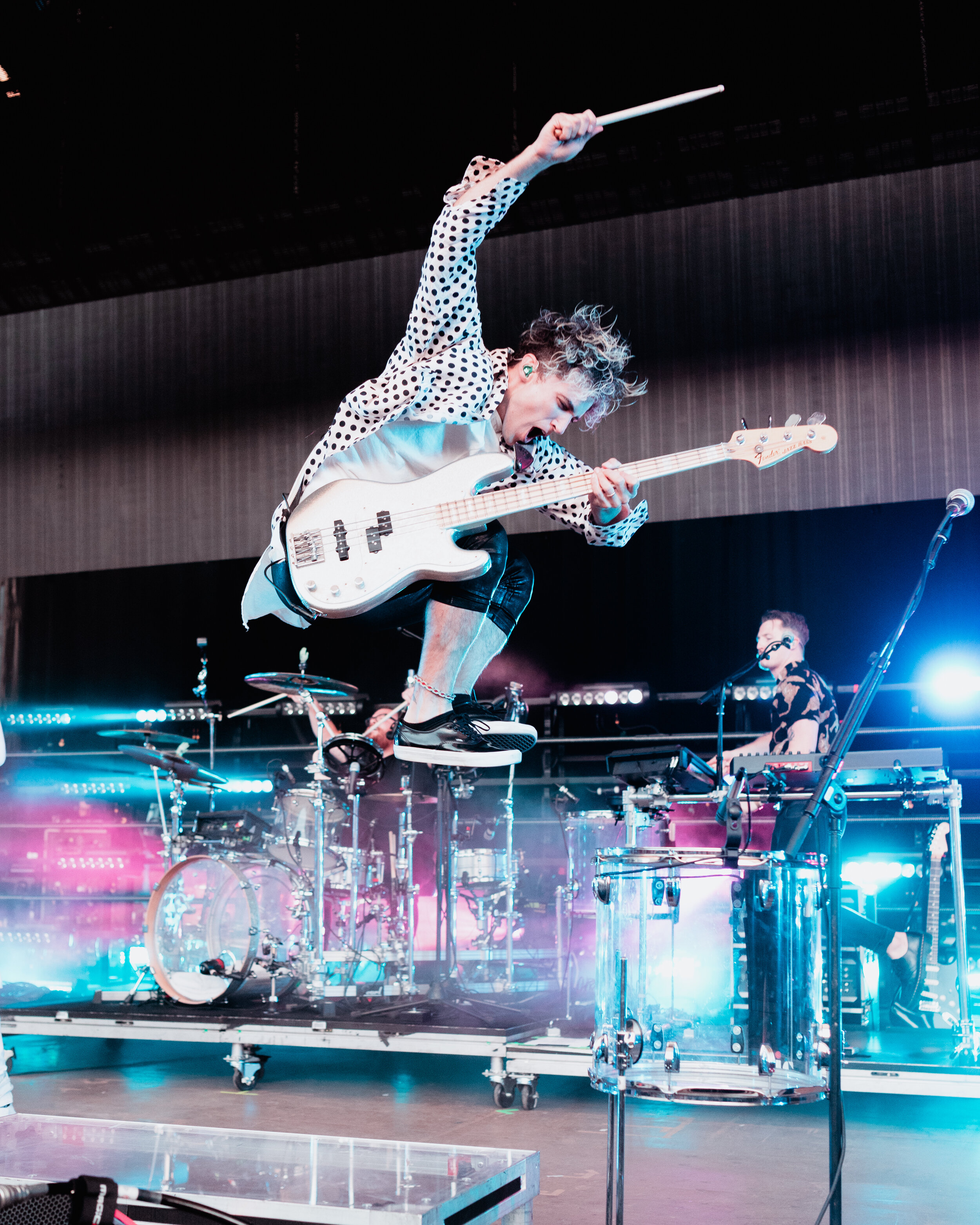
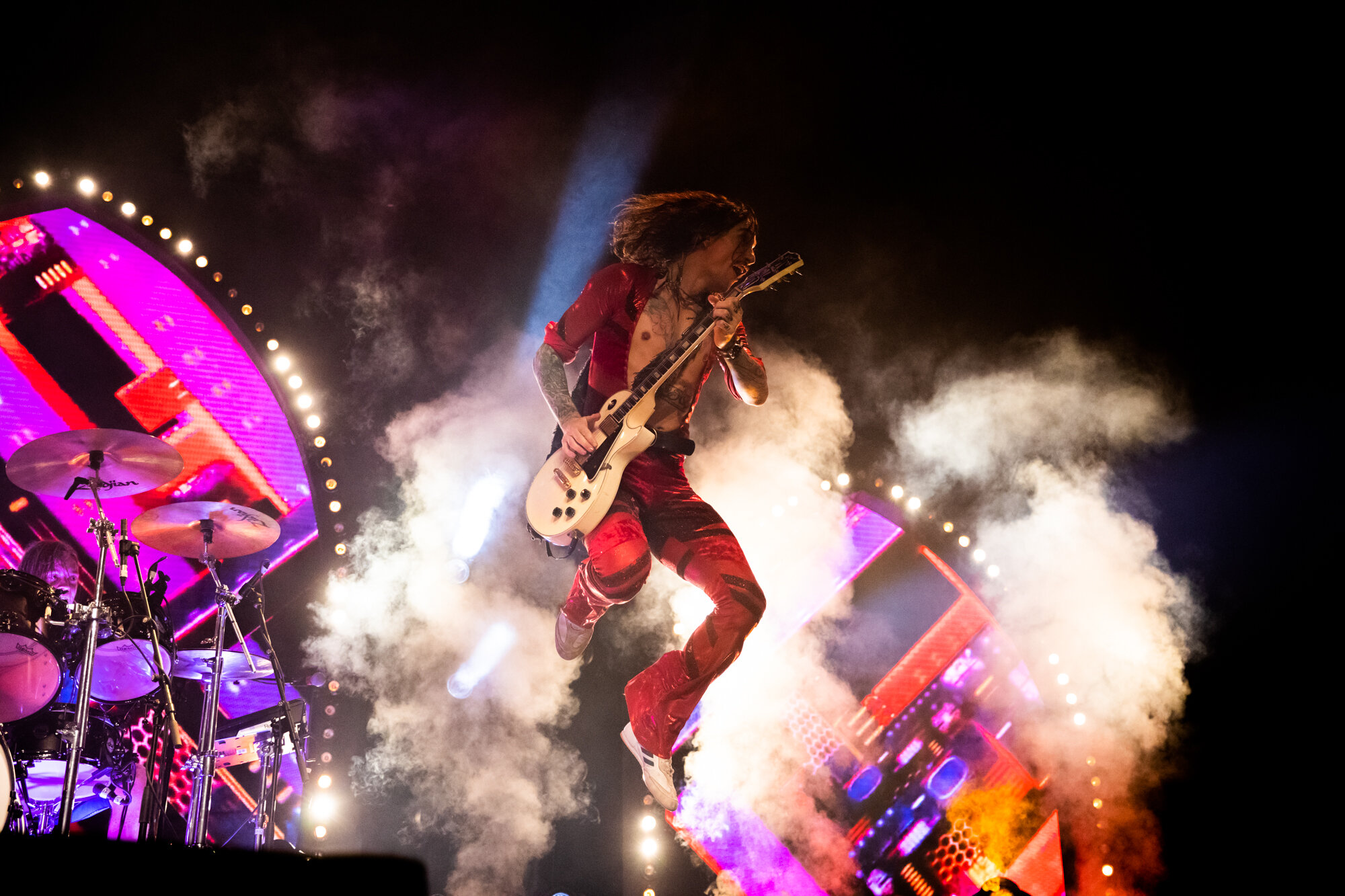
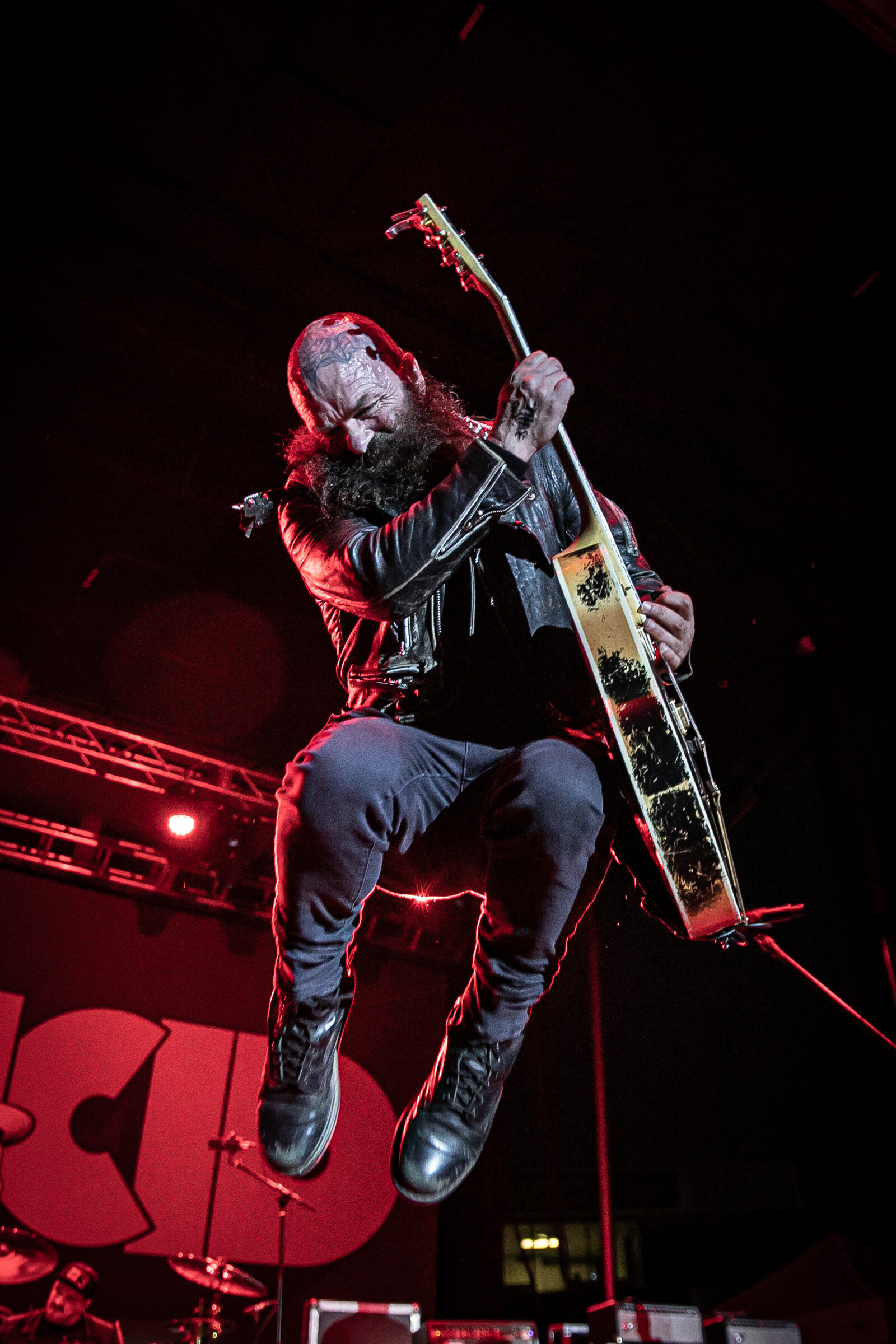
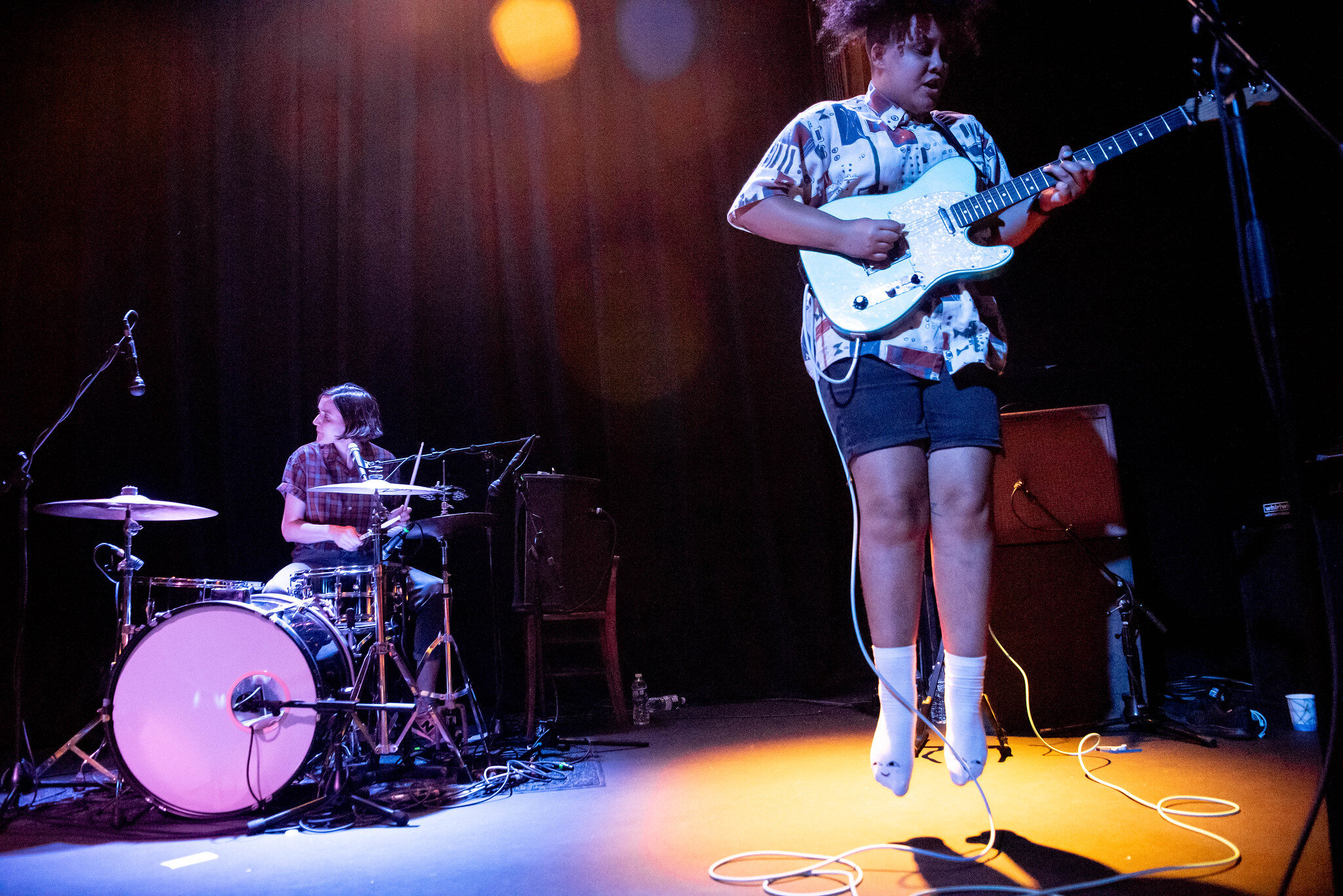
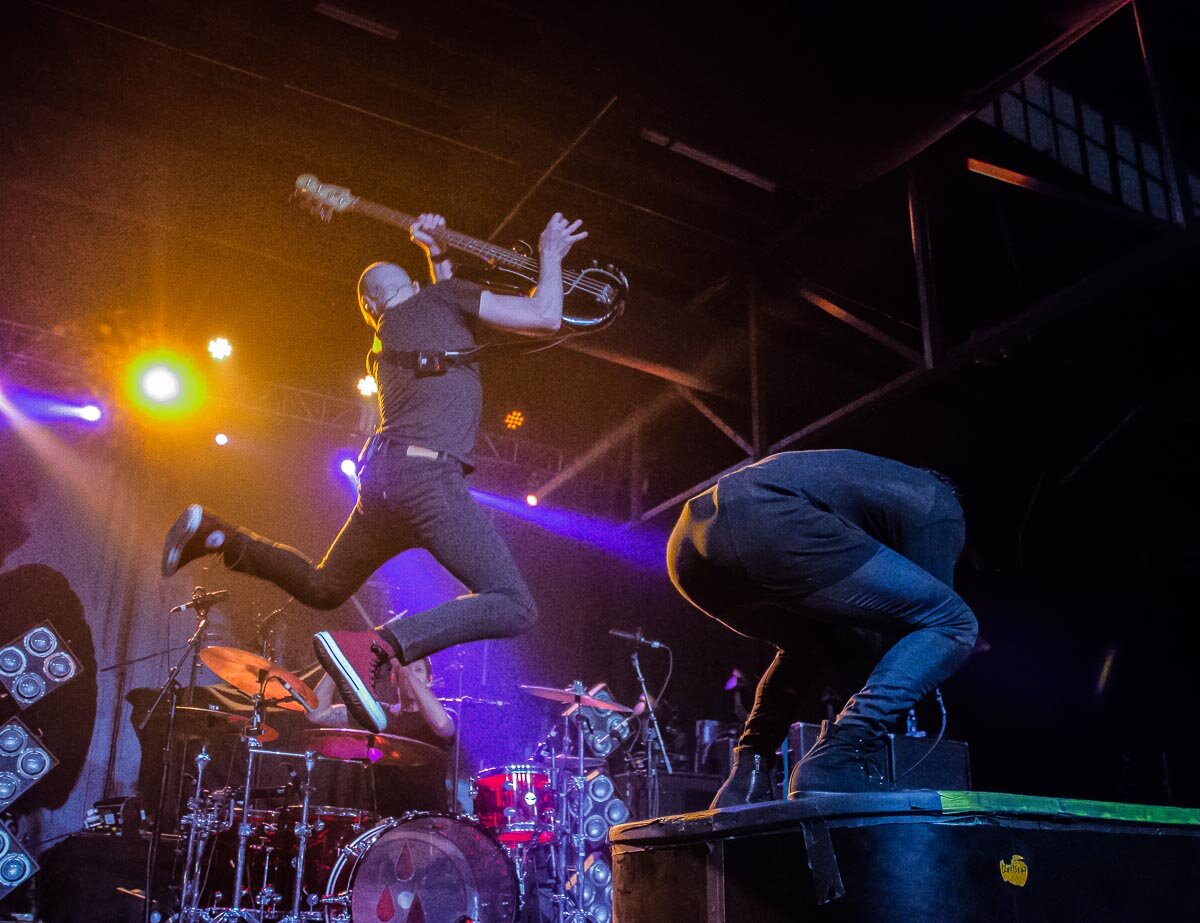
In Focus: Jump Shots
Cover photo by (left to right): Dana Jacobs, Jordan Hefler, Leavitt Wells, Stephanie Augello, Emily May
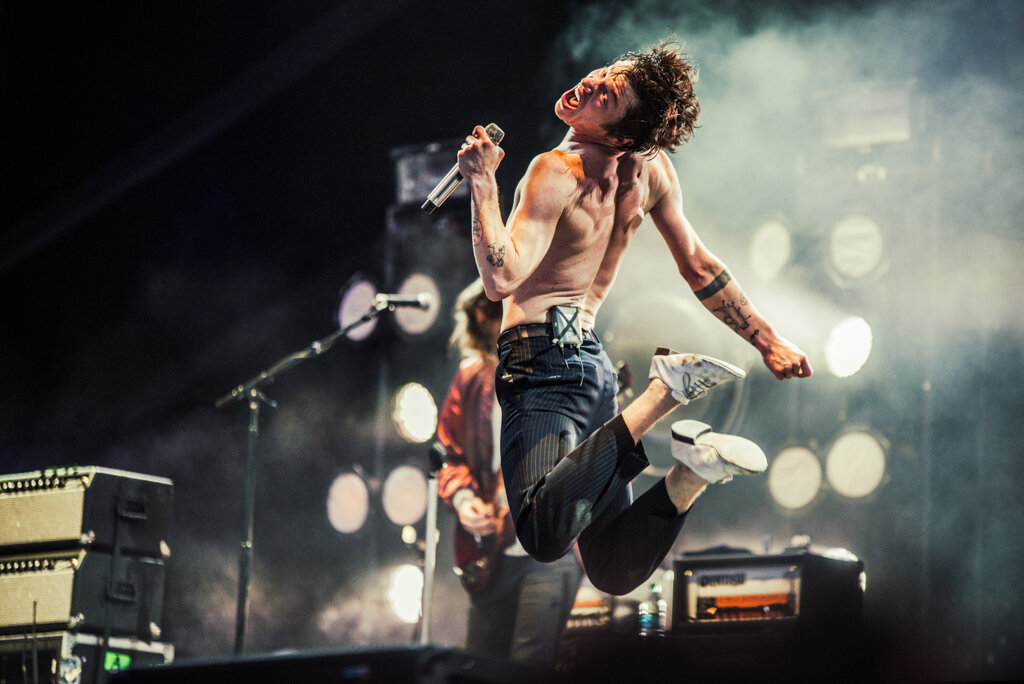
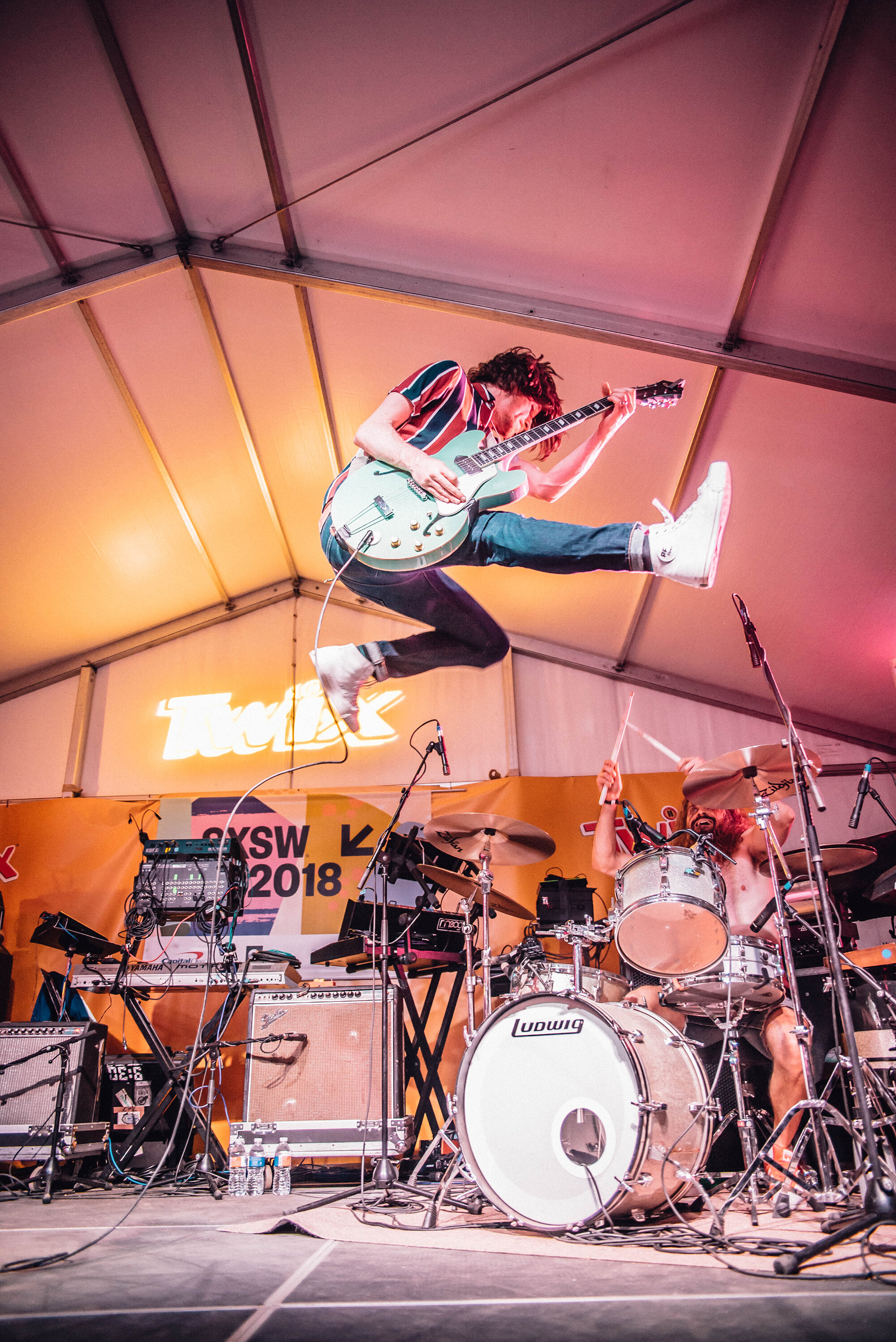
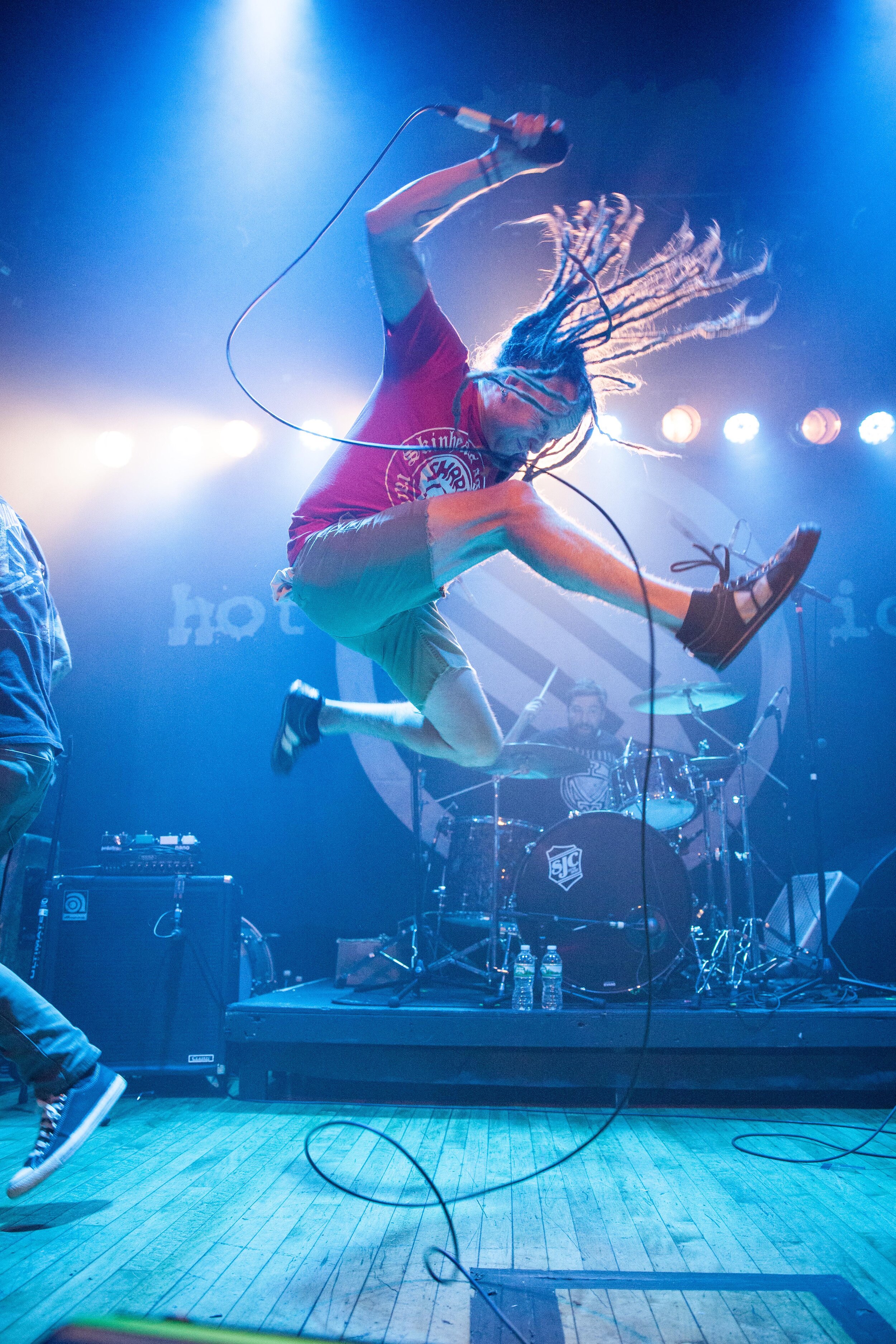
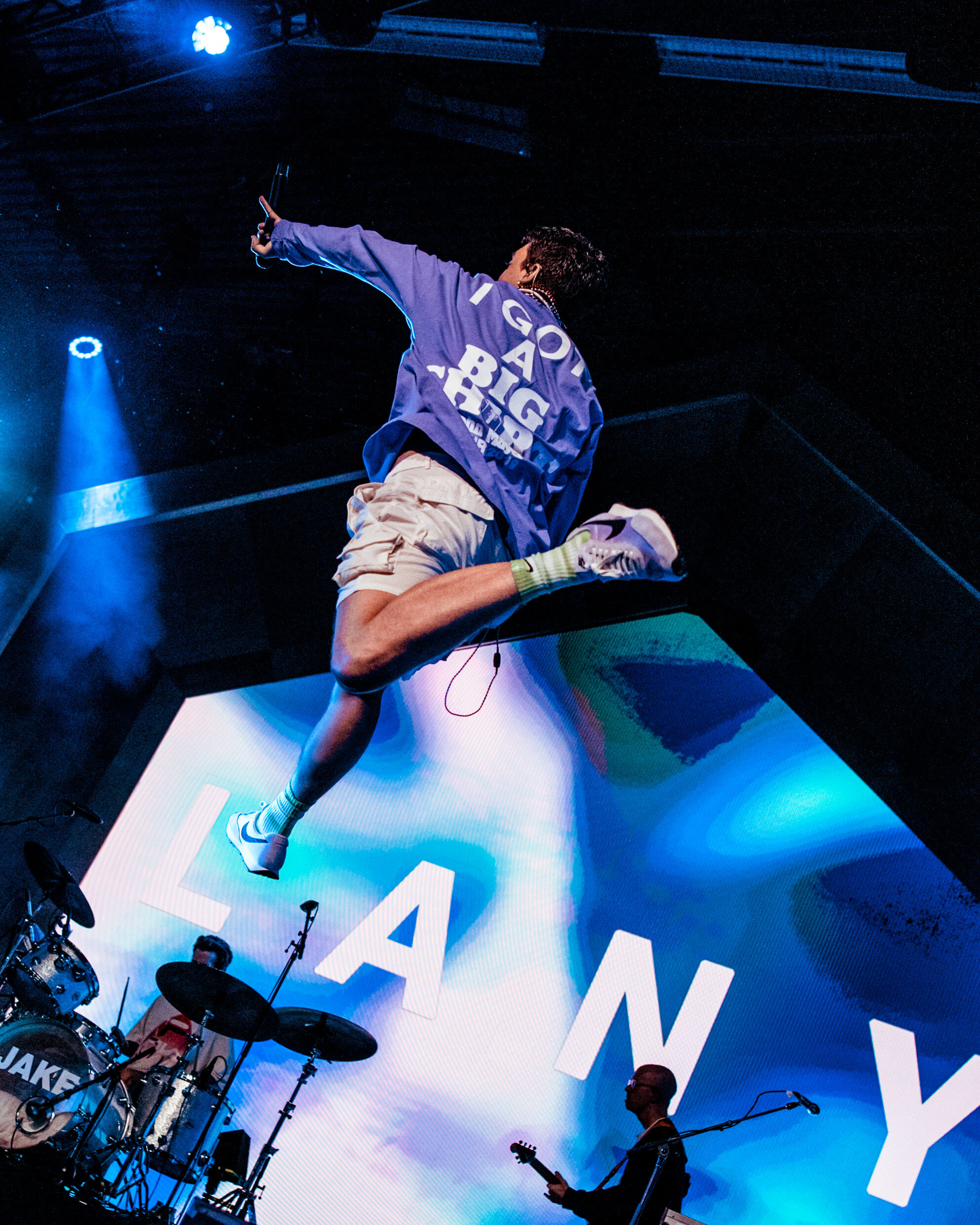
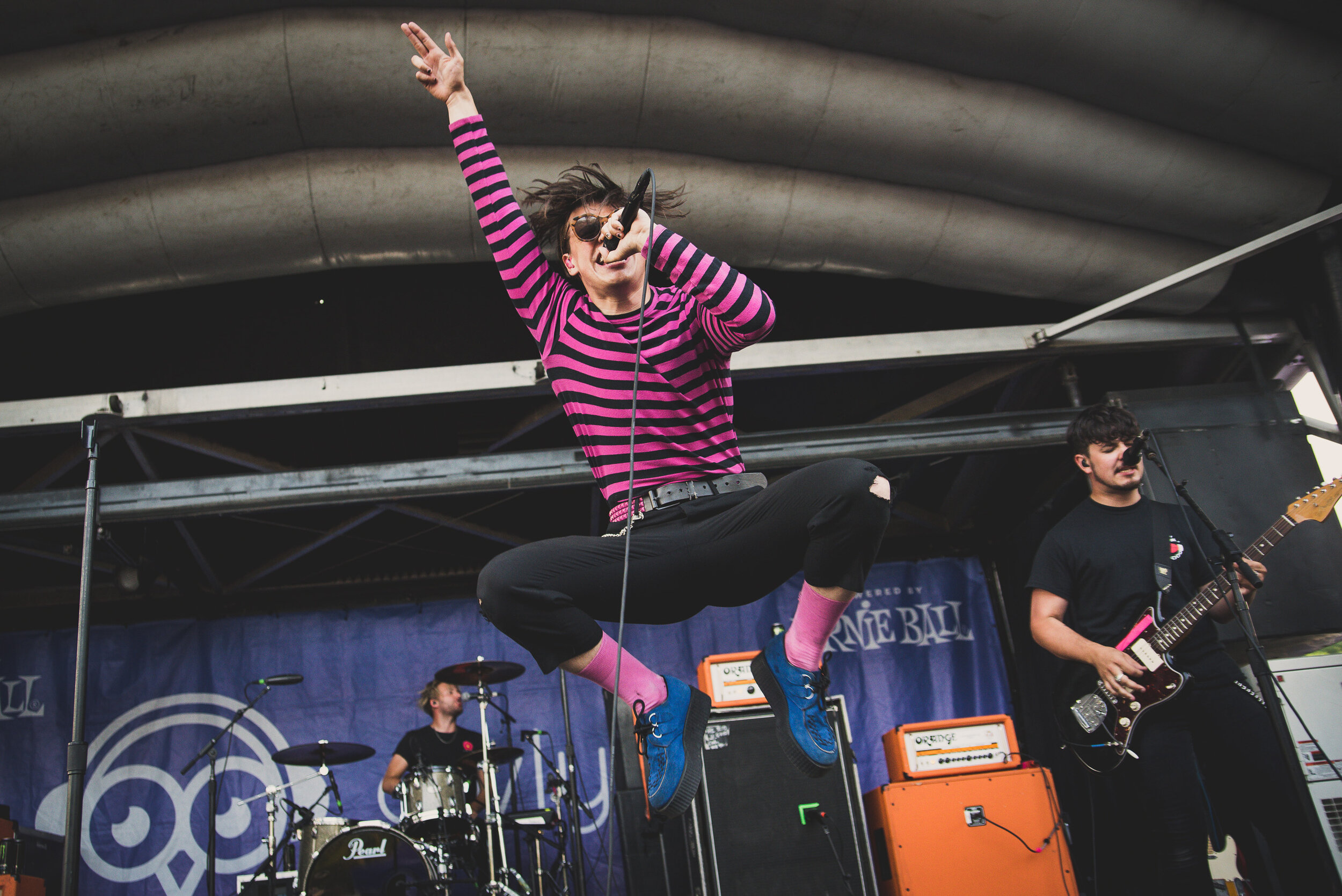
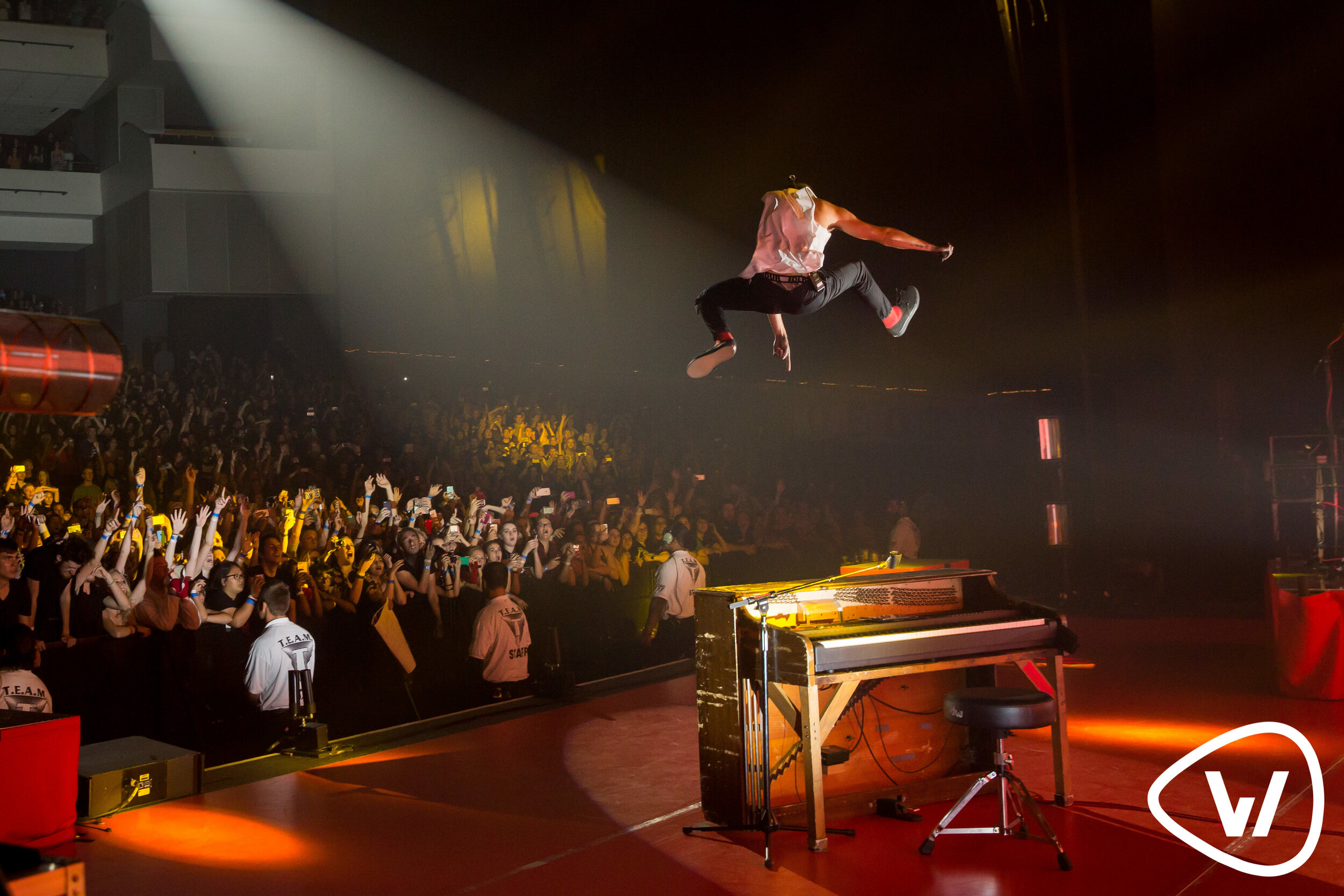
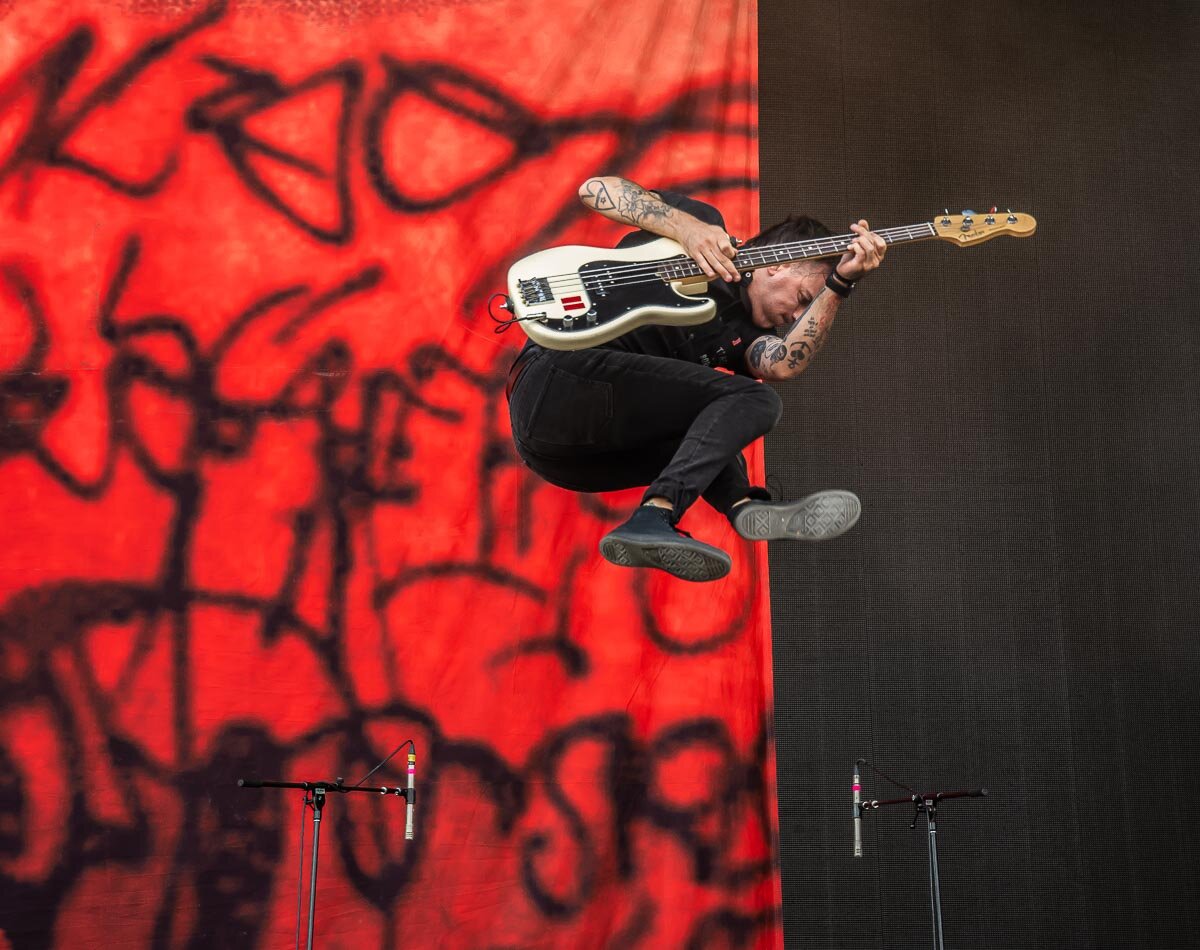
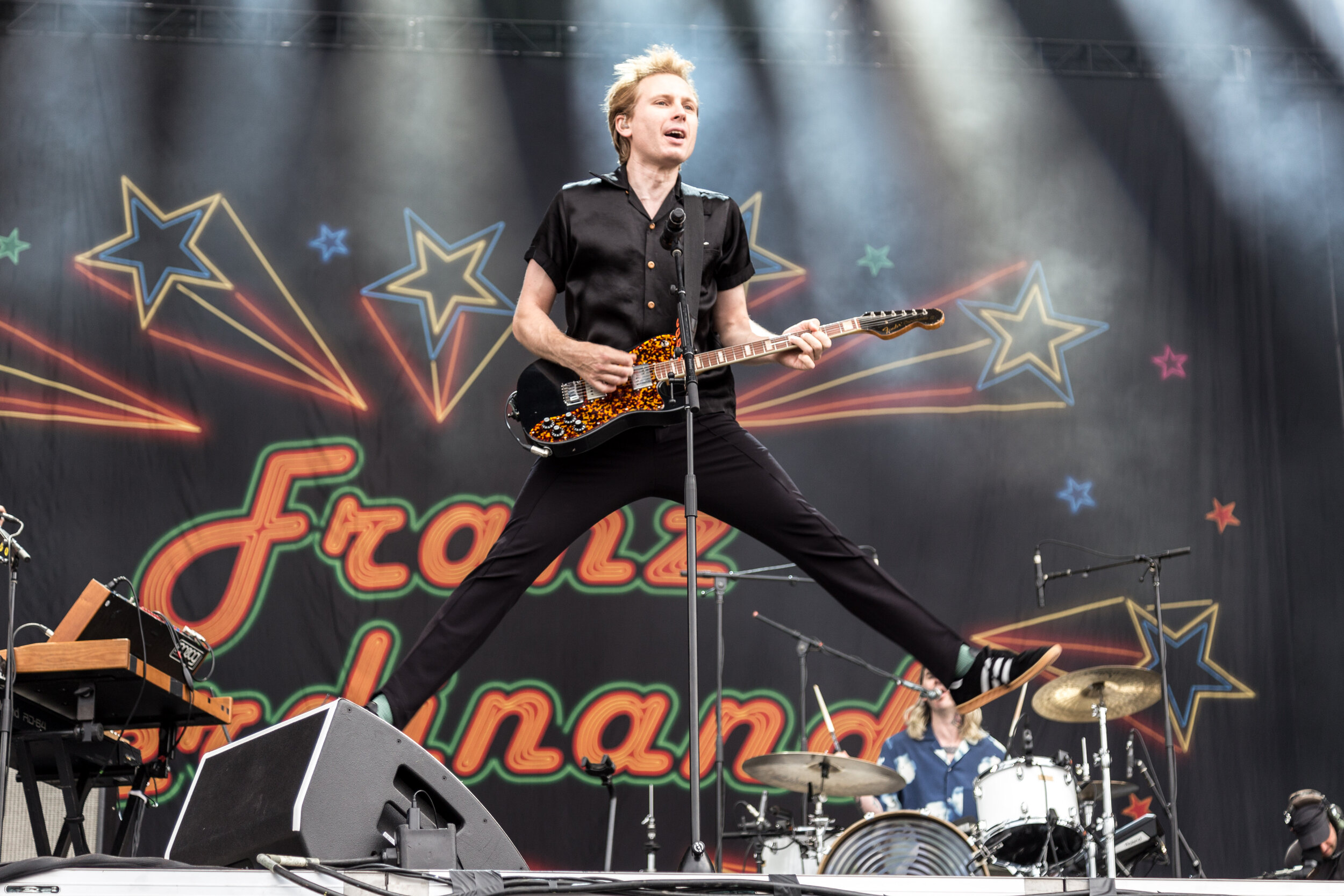
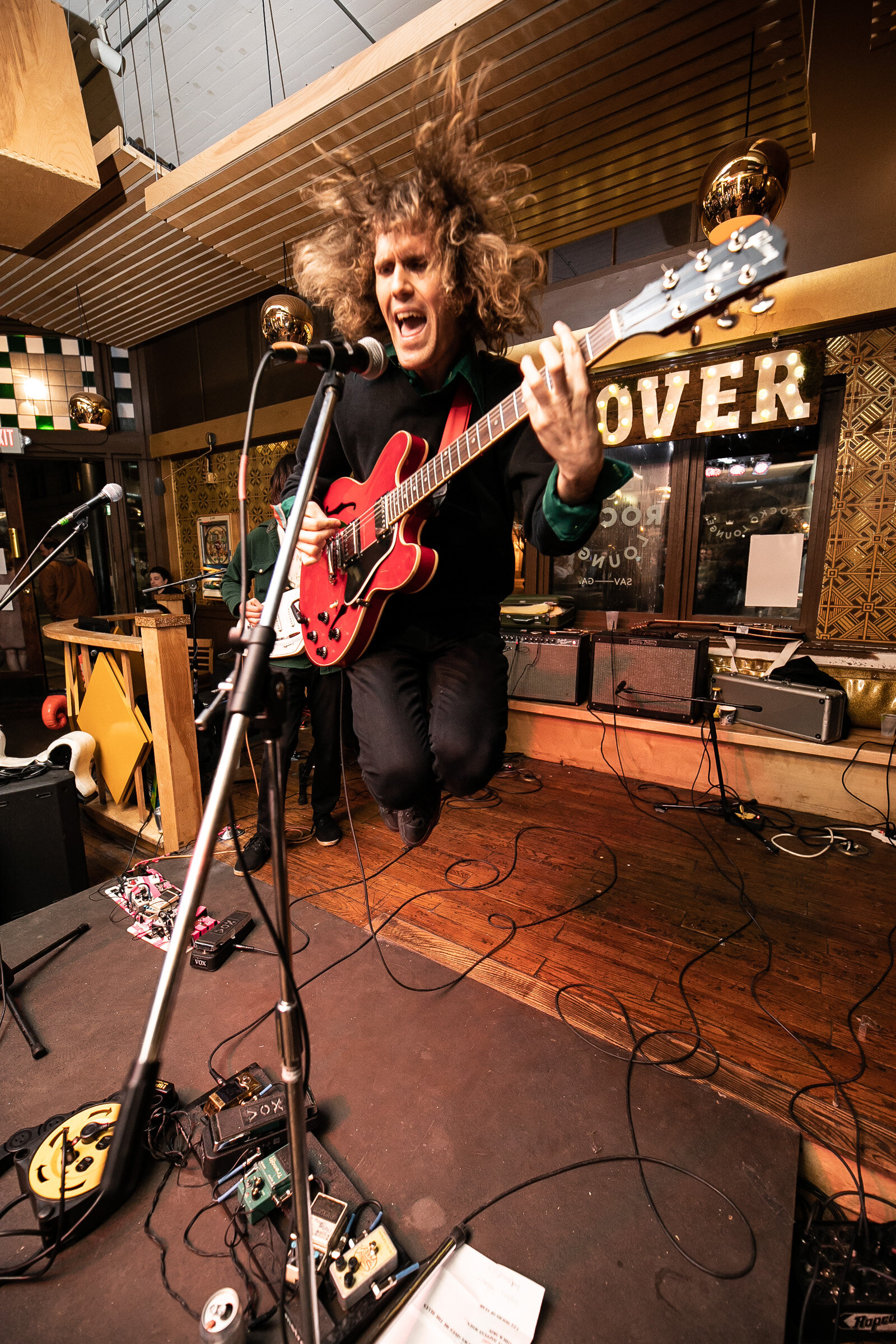
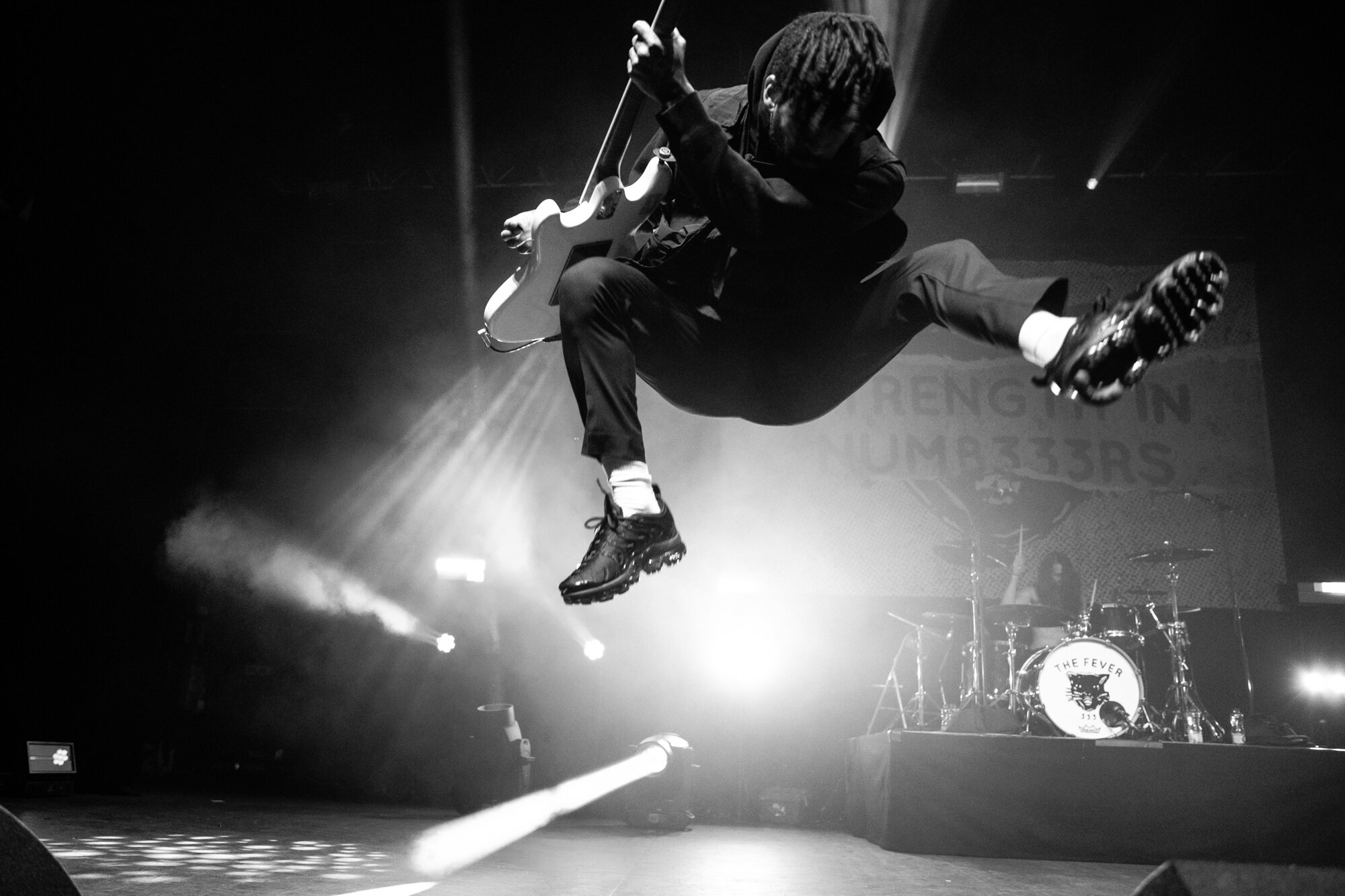
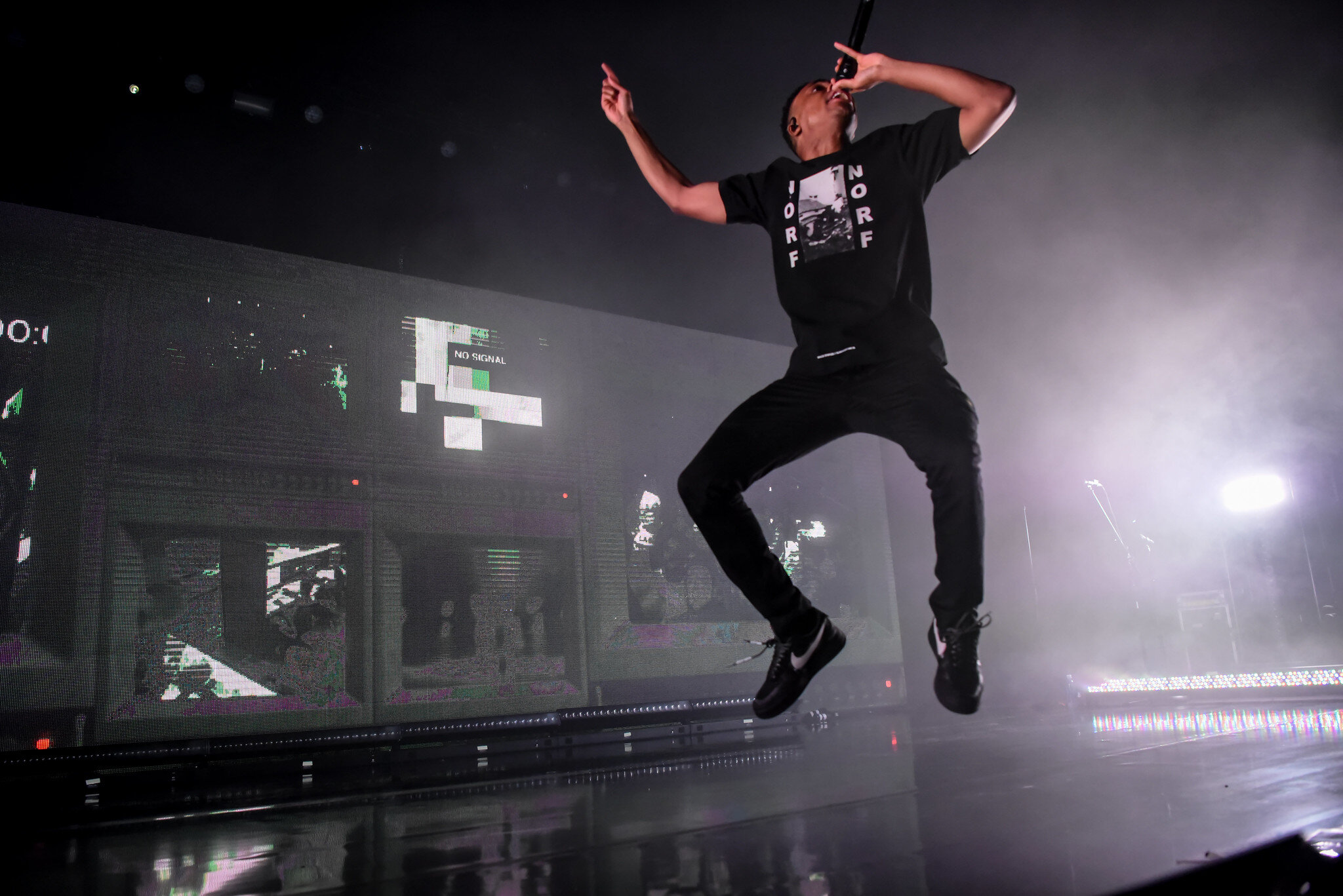
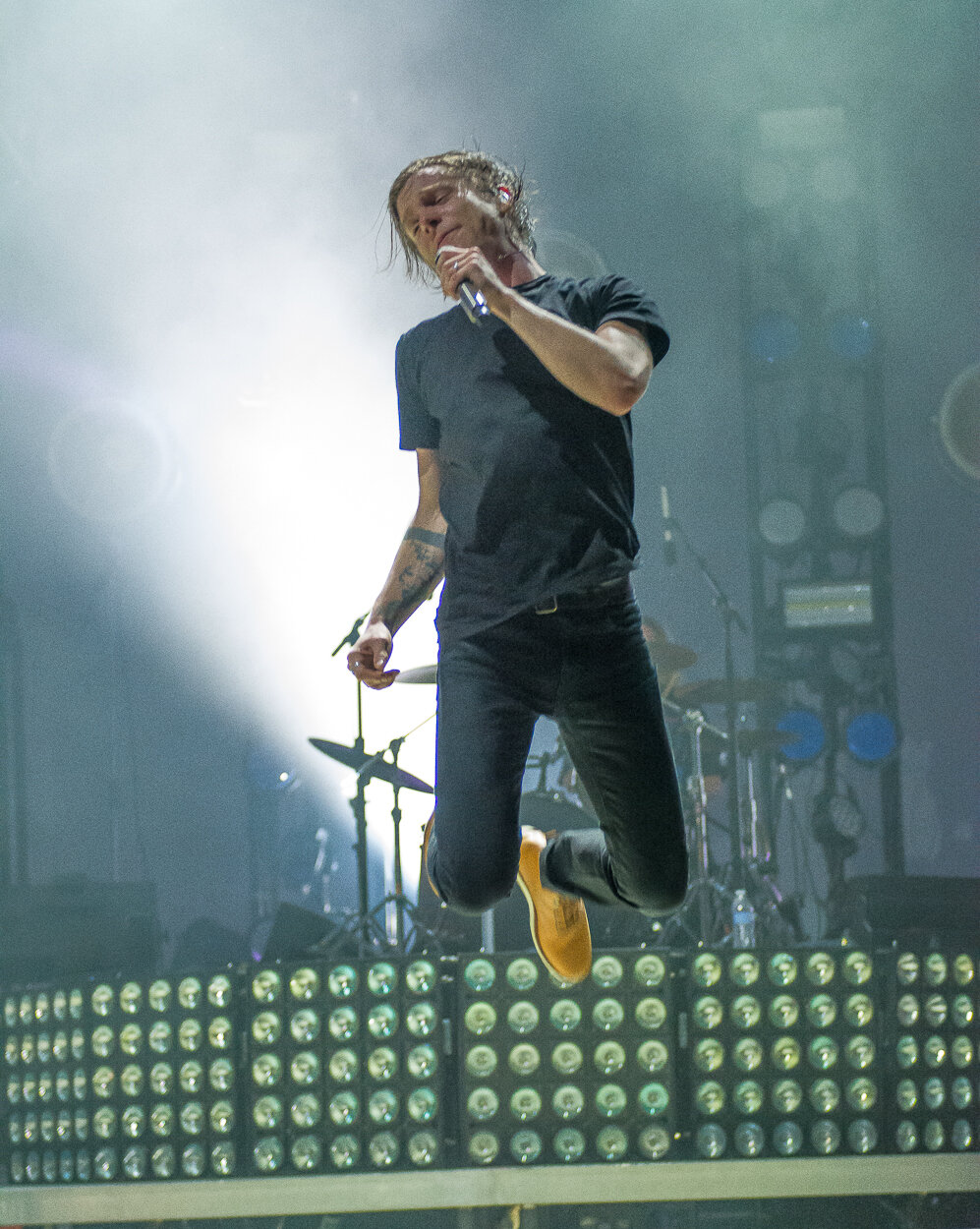
In Focus is a Photo Ladies collaborative photo series that showcases TPL members’ favorite photos, focusing on a different theme each month. After an entire year without shows or festivals due to Covid-19, this month we decided to highlight the raw energy of live concerts with a selection of our favorite JUMP SHOTS.
Check out our previous In Focus galleries here: Drummers | Keyboardists | Bass Players
ⓒ All photos are subject to copyrights and cannot be used without the photographer’s permission
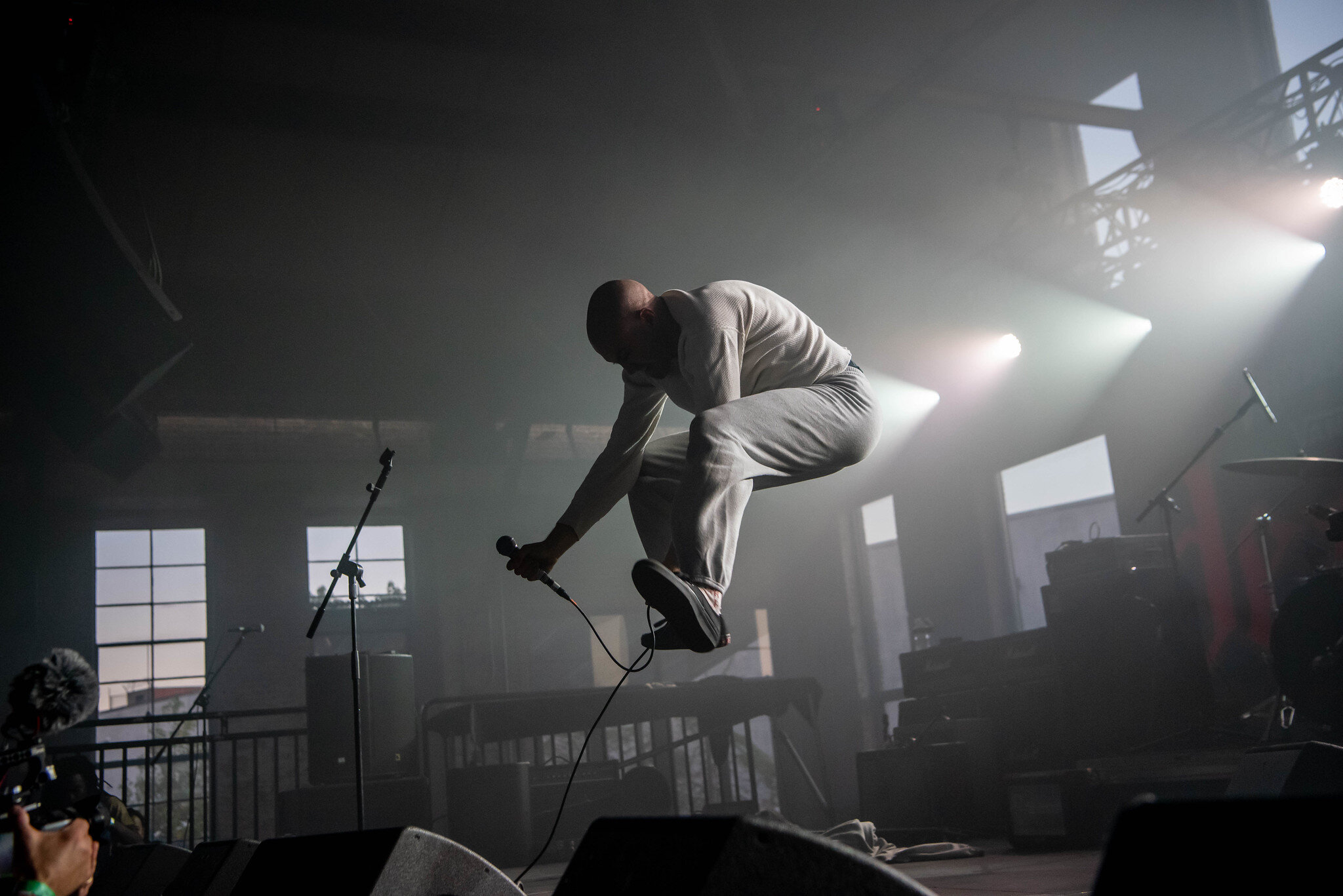
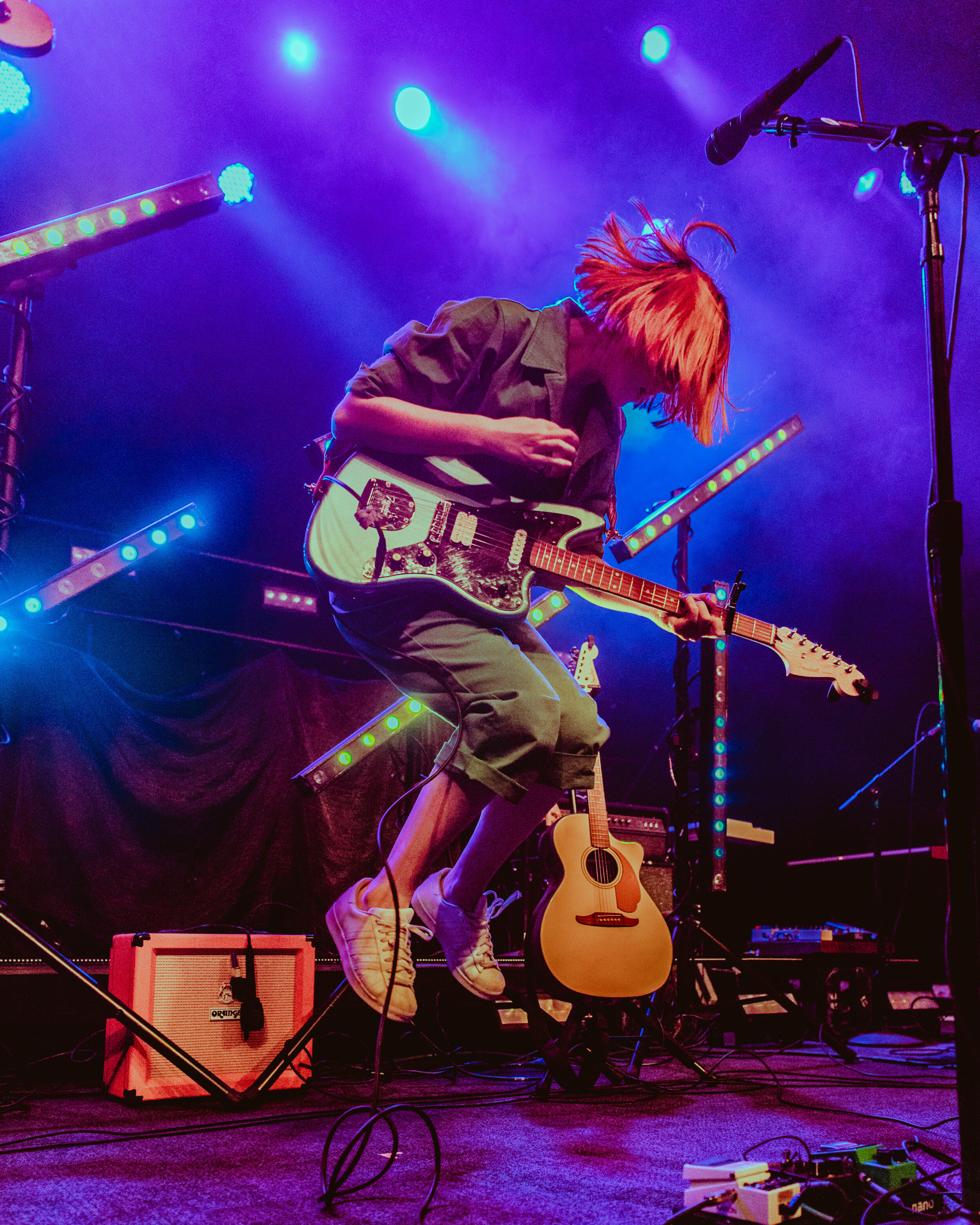
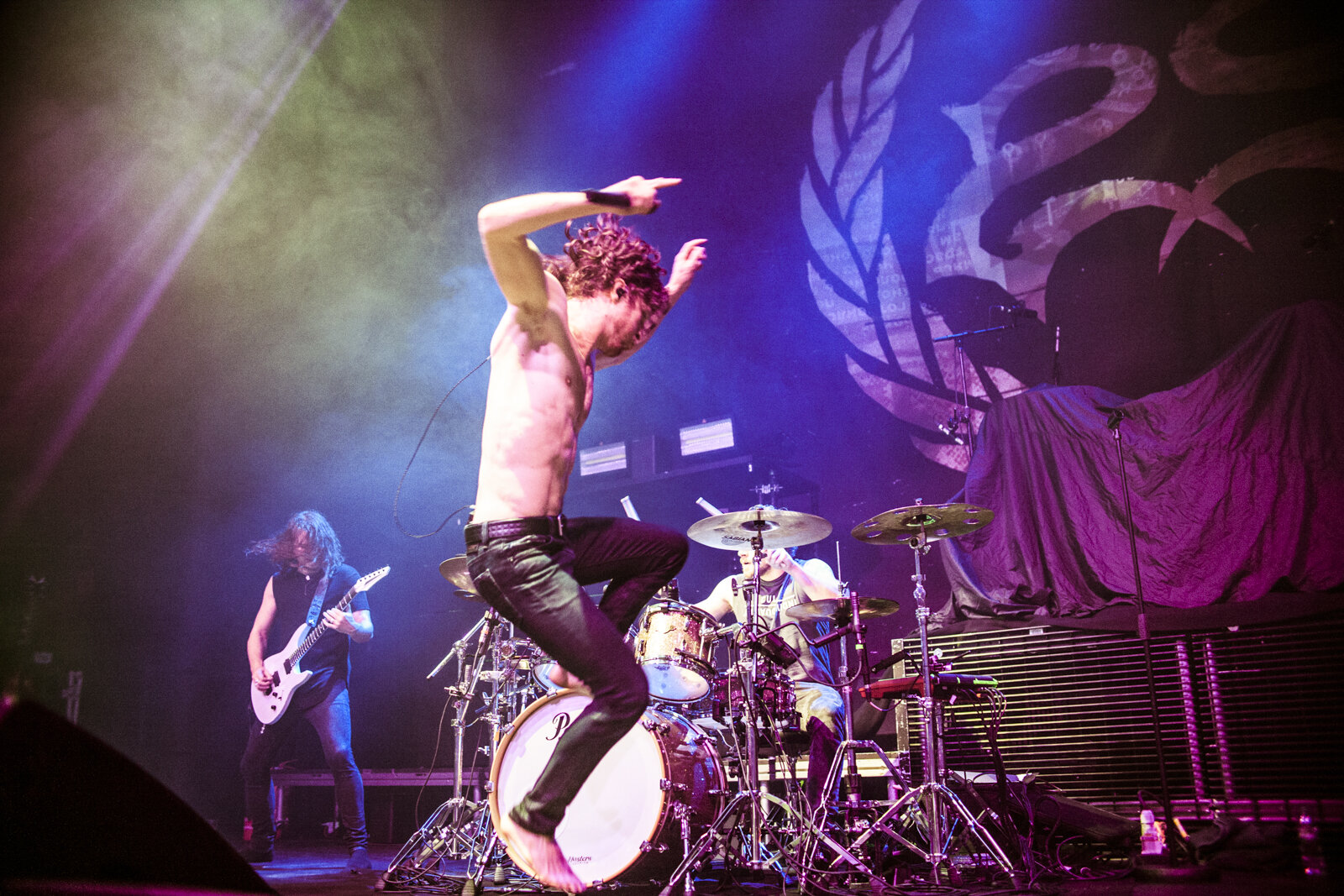
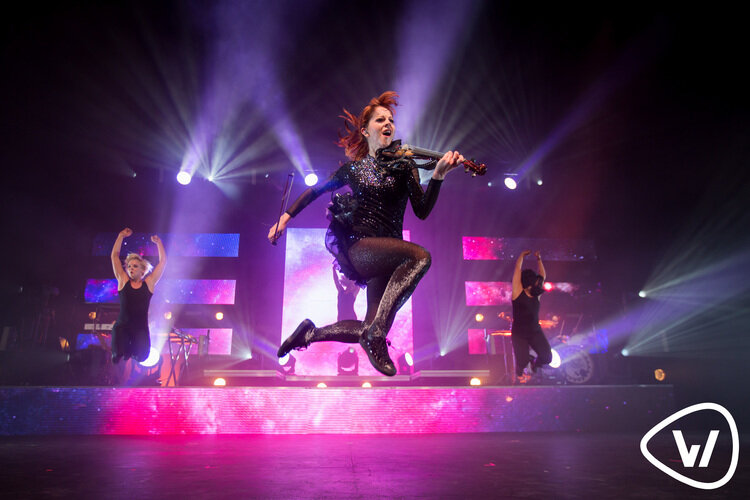
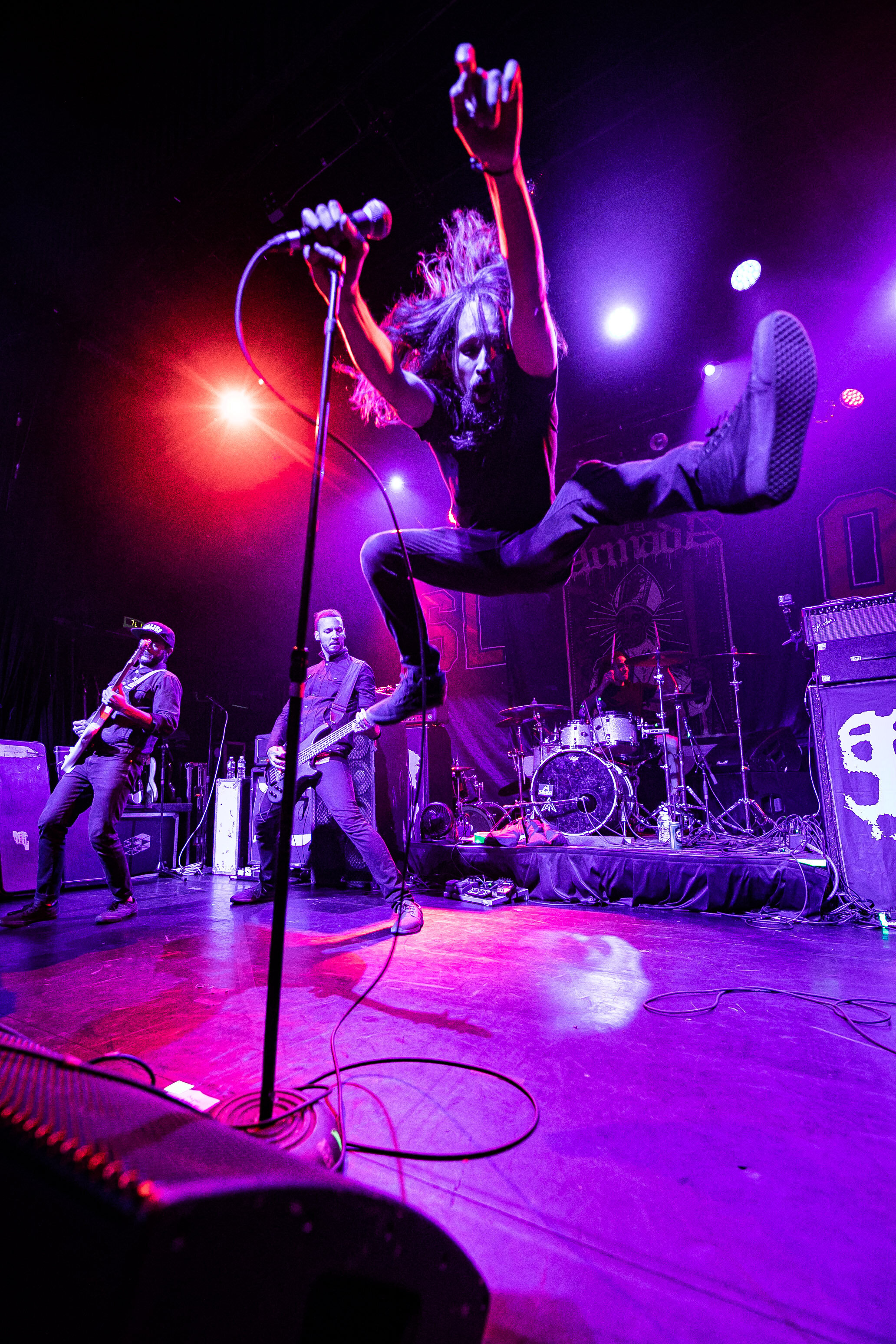
Check out our previous In Focus galleries here: Drummers | Keyboardists | Bass Players
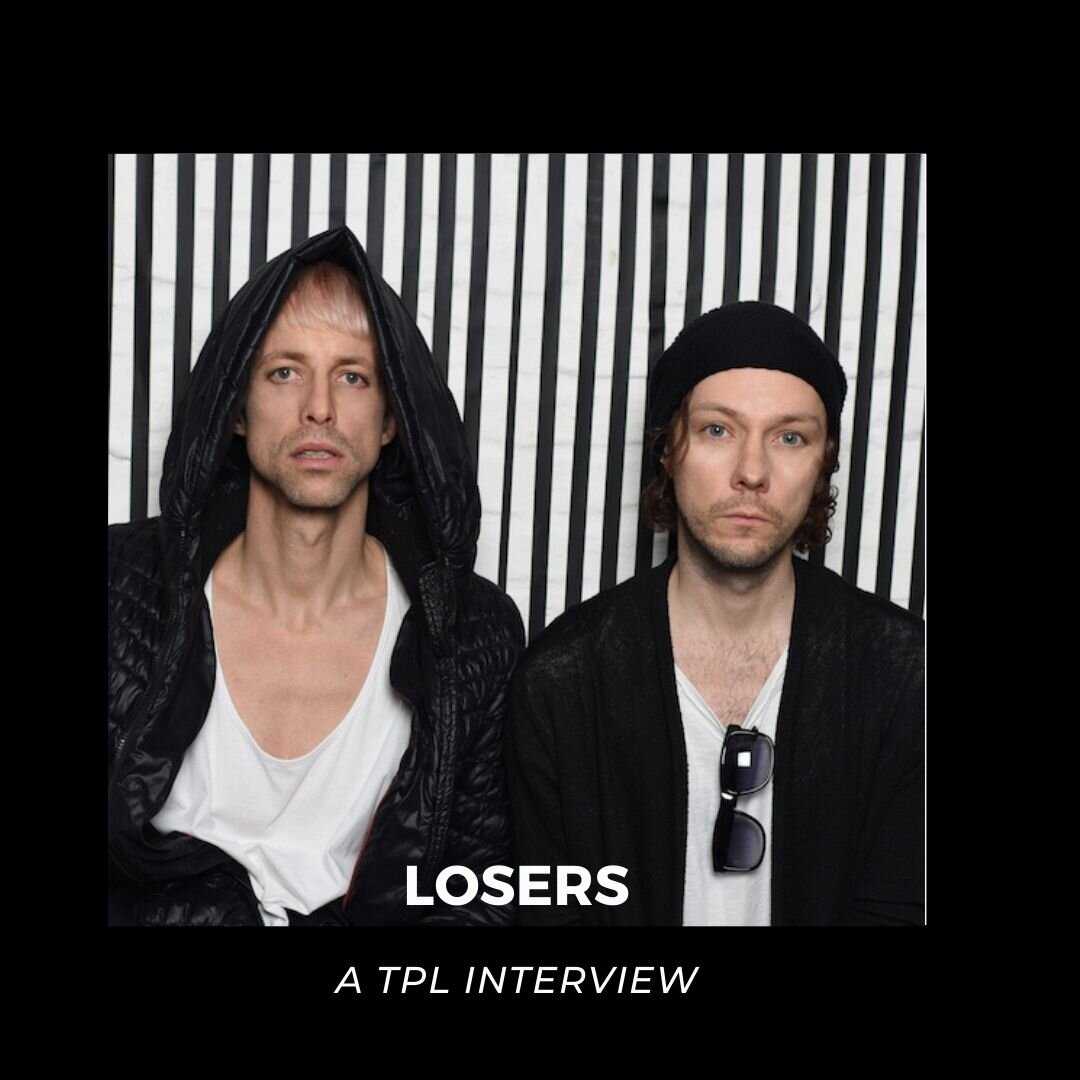
INTERVIEW: Losers

Losers
The Photo Ladies Interview - by Emily May
Photo credit: Ben Madle.
All questions answered by Tom Bellamy.
Sometimes you have to experience the dark to see the light, and for the UK genre-defying band Losers, they have re-emerged from a dark period having found their light. The band was formed in 2007 by Eddie Temple-Morris and Tom Bellamy as a remix project. The addition of guitarist Paul Mullen in 2010 saw the band veer away from dance-oriented music to more guitar-focused rock music and they became hailed by critics for their ability to blend the sounds of indie electronic music and guitar rock. Their music has been used in dozens of TV, film, videogames, and sports placements including Game of Thrones, The Blacklist, Hercules, The Killing, and as the official theme music for BMX Championships London 2012 Olympic Games. Two albums into their career, a desire for inspiration led them to move to Berlin, where they signed a publishing deal with BMG. Although they experienced momentum as a band in their Berlin studio under the production of Bellamy, they found themselves in a downward spiral as a band around the release of their 2016 hit album How To Ruin Other People's Futures. Although the album received critical acclaim, it was a low point for the band. “How To Ruin…was angry and bitter and resentful,” Bellamy explains. “It was a difficult time for us as a band and the music naturally reflected that. After pain comes transformation and so our music transformed with us. We allowed light to come in and the music began to have a completely different energy. If How to Ruin…was pig-headed and enraged in a corner, our new music looks to the world with open arms, embracing the entire spectrum, confident and composed.” In February of this year, the band released their cover of the Tears For Fears hit "Shout", giving it a more somber and dark sound. “All three of us are huge fans of Tears for Fears and "Shout" is just a classic,” says multi-instrumentalist Tom Bellamy. The song was prominently featured in the hit TV show A Discovery of Witches (S2: Ep 4) on Amazon Prime, AMC+, Sundance Now, and Shudder. “After the last album [2016’s critically-acclaimed How To Ruin Other People's Futures], we felt it would be creatively rewarding to deconstruct some of our favourite songs. We found that this was a great way to learn about how other people make music, to absorb some of their ideas and in turn help us to develop our own songwriting. We went back to school!” The darkness and pain that they have experienced as a band have given way to enormous growth and transformation, with their songs sounding more expansive and balanced than in the past. With big plans and new tracks plotted for release throughout the year, Losers are ready to regain their position at the forefront of the alternative rock world. “We grew up a bit, took some time to reflect and we wrote enough songs to realize that we were more eclectic than ever and that was a pleasant challenge for us to have," says Bellamy. “We want to take our fans on an interactive, genre-bending audio-visual expedition via new and innovative platforms which we hope to announce soon. We will be setting up live performances from the studio, ‘behind the music’ studio breakdowns, and giving away remix stems amongst other things to make sure we reward our fans after such a long time away. Very exciting times ahead indeed.” They most recently released their latest single "Lost In Translation", about reconnecting to ourselves and the world around us. “Life can feel so lonely when we see other people and things as separate to ourselves, trying to escape from something that didn’t exist until we created it,” says Bellamy about their new single." "The track is about feeling not at home, no matter where you are or who you’re with, but then realizing that home is within. It’s not until we step back and see ourselves as not separate from the world, but in union with it, in love with it, that we can really see beauty. It’s so important to remember to pause and not to dwell on the negative narratives we all tell ourselves.” With plans to perform their live shows as a 2-piece going forward and work to maintain the new momentum they are building, Losers have shown they are back and ready to dive headfirst into their new music and innovative fan experiences. Losers are DJ Eddy Temple-Morris, multi-instrumentalist Tom Bellamy, and guitarist Paul Mullen. You can connect with Losers via the following links.
Website | Facebook | Instagram | Twitter | Spotify | iTunes/Apple Music | YouTube | Bandcamp
Losers was formed in 2007 and evolved from dance-oriented music to a guitar rock sound when Paul joined in 2010. Having always been fans of bands who "reinvent the wheel" and push the envelope in terms of their sound, what has driven your evolving sound as a band over the years?
What drives us is our passion for music. The joy of experimenting with sounds we’ve never used before and put together different combinations of instruments to create new soundscapes. We still get such a buzz from creating. It’s highly addictive!
After releasing your first 2 albums, you made the decision to move to Berlin to be more inspired and signed with BMG Germany. What can you tell me about that decision to move to and live in Berlin and what inspired you the most about the city? What can you tell me about your Berlin studio?
Living in London simply wasn’t sustainable for us. Berlin was affordable and of course, it was full of new inspiration. The electronic scene definitely had an impact on us. We didn’t go to clubs much but it’s everywhere you go. It just soaks into your veins. Our studio is in a high-rise building on the outskirts. It’s home to probably around 200 studios and rehearsal rooms. It’s incredibly inspiring. There’s never a quiet moment. If you pop your head out the window you get techno mixed with classical mixed with psychedelic rock mixed with opera. It’s amazing.
You experienced a tough couple of years as a band around the time of your third album, How To Ruin Other People's Futures, which led to a metamorphosis for the band. In what ways did the pain and difficulty of that time lead to the transformation of the band and your music? What has it been like for you to let the light in and give new energy to your music?
We live our music. It’s a blessing and a curse. I often say that pain is also another word for growth and we had a lot of growing to do. I personally got too attached to an image of myself that I don't want to let go of. The pain is in the "not wanting to let go". Anyway, we shed some skin and we came out the other side feeling a lot more positive, focused, and energized. It had a huge impact on how we addressed our new songs.
Your music has been featured often in television, film, video games, and sports placements. What has that been like for you as a band and do you have any other opportunities coming up?
We’re incredibly grateful to have had our music synced to visuals so many times. It’s quite unbelievable. The best part was that we never wrote for that purpose, we just wrote for ourselves and music supervisors just liked what they heard. It meant that we could pay for our studio costs and stay afloat during a time when the music industry was crippling for musicians in terms of making money from selling records. There always seem to be opportunities ahead.
In February of this year, you released your cover of Tears For Fears "Shout", with the thought that it would be creatively rewarding to deconstruct some of your favorite songs. You've said it was a great way to learn about how other people make music, absorb some of their ideas, and to help you develop your own songwriting. What did you learn in the process? What inspired your darker take on the song and what can you tell me about having the song featured in the show A Discovery of Witches?
"Shout" is an epic song. It’s full of ideas but when you break it down you realize you can take lots of the elements away and give the essence of the song even more presence. It shows the strength of a great song when you can just take the vocal and put it with a simple piano or guitar part and it still sounds great. That’s essentially what we did. I wouldn’t say our version is dark but it is stirring. I find it very emotional. That just came in the moment from the energy in the room. We were honoured to have it used in A Discovery of Witches.
You most recently released your new single "Lost In Translation", which you've described as a reaction to feeling overwhelmed and disconnected from the world around you. What can you tell me about the song and what it means to you? How did you come to feel a sense of union and connection with the world around you rather than feeling separate from it? What effect do you feel Covid has had on the way in which you, and the world in general, have felt connected to others and the world?
I’ve been reading lots of books about consciousness and spirituality. Listening to people like Ram Dass or Thich Nhat Hanh, they helped me to understand some of the negative thought processes I had been having. As humans, we inherently need to connect, but most importantly we need to connect to ourselves. Covid was a good opportunity to look within when the outside world was so chaotic. I think everyone is yearning for connection and hopefully, there will be an explosion of that soon.
You have said that you usually write the music for your songs first and then the words, but for "Lost In Translation", the words came first. Having tried 3 different versions of the music, what was your process like for finding the right music to accompany the words and what led you to settle on the music you did?
Sometimes everything comes together in a day. You can write, arrange and produce the music and lyrics in a whirlwind and it almost took no thought or energy. Then there are other songs like this that take time to sculpt. That’s just the way it goes. After trying various other styles of music, this version just felt right. Music is a feeling. There’s no right or wrong. It’s all about vibe.
How do you feel that working with long time collaborators such as Damian Taylor and Dan Austin has expanded your sound and given it a new sense of balance?
Those guys are both legends. They do things with our productions that blow our minds. We’re incredibly lucky to have them on board. We know our limits as mixers and these guys just have the skills to take music to an incredibly high level.
You have said you will be releasing new music on a regular basis throughout the year. What inspired your decision to release music as a stream of tracks rather than as an album?
To us, everything about releasing songs individually makes sense to us. From a creative point of view and also from a consumer point of view. We can be more in the moment and we can be more reactive and more adaptable. There’s less downtime and there’s more momentum. It’s a win win for both us and our fans.
Going forward, you have revealed plans to focus on an interactive & genre-bending audio-visual experience via new and innovative platforms. One such experience is your new Behind The Music Series Webinar. What can you tell me about the idea behind the webinar and what fans can expect? What other experiences do you have planned?
The idea for the webinars was to give fans an insight into our world. I used to love listening to producers go through mixes on a desk. I wanted to do the same and maybe inspire someone else. It’s an opportunity to connect on a deeper level with our fans. We will also be releasing a live track every 6 weeks and a playlist of songs that inspired the track.
What led you to decide to make the live band a 2-piece going forward? What can people expect from future live shows?
We wanted something new. We’d done the whole 5-piece band thing but it felt like for the new sound, a stripped-back live setup was the way forward. We’re going to be making complete reworking of our songs in order to make a cohesive live set that will get people dancing. We wanna party :-)
You guys have been rejuvenated by a new perspective after a difficult era as a band and have a busy 2021 planned and a clean slate! What can you tell me about your new perspective and your goals as a band going forward?
We want to spread some joy and positivity. It’s time to connect, even if for now that’s through a computer.
What's next for you?
I’m going to have a cup of tea and then continue chipping away at this mammoth campaign we’ve set out for ourselves.
PLAYLIST: What We're Listening To
We figured it’s about time we showcase some of the unique musical tastes we all have. For our March playlist, we’re highlighting some of our favorite tracks we have on repeat right now.
With 100 founding members, and over 1000 Photo Ladies part of our community, we all have a huge variety of musical tastes, and we plan to showcase them each month through our upcoming playlists. Full playlist below, along with some Photo Lady blurbs behind the choices.
“A female Korean dream pop artist who is also playing in SXSW. She has a unique sound and voice, and psychedelic vibe. ”
“Recently discovered Makoto Kubota & The Sunset Gang's fantastic 19 album "Dixie Fever" and I can't seem to get enough. If you like The Band, you'll like this album.” - @bgallagherphotos | Submission: Makoto Kubota & The Sunset Gang - “ワイルド・アバウト・マイ・ラヴィン”
”I love Hex Girls' new single Electric Eel so much! It's a great fast-paced track in the glam punk vein! The music video is an absolute riot, too.” - Alyssa Leicht @alyssaleicht | Submission: Hex Girls “Electric Eel”
“Jah Phoenix, a queer Latinx trans singer-songwriter, released their debut single ‘Tarot’! With a voice both mysterious and sultry at the same time, you’ll find yourself having this song in constant repeat ”
“L’Imperatrice are a French group with pop and disco influences. Their music is both sensual and lively. Their latest track Peur des Filles (Fear of Girls in English) is the first taste of their upcoming album ‘Tako Tsubo.’ This song is sexy and fun. It is the perfect song to relax and enjoy in any setting. ”
“Kylie Minogue's fifteenth studio album, Disco, was released back in November 2020. Releasing a song like "Where Does the DJ Go?" feels criminal as it seems like a perfect song to play in a packed dance club. But for now, we'll just have to dance to it on our own at home. - Edwina Hay | @arenotphotos | Submission: Kylie Minogue - “Where Does the DJ Go?”
“th1rt3en is the new project from legendary rapper Pharoahe Monch joined by musical visionaries Jack White drummer Daru Jones + renowned guitarist, Marcus Machado. Most will think that this is another venture into "horrorcore" rap, but Monch uses his knack of lyrical wordplay to narrate the story of consumerism, political corruption, police brutality, and murder --dark subjects for the current times but a must needed conversation.” - Victoria Ford | @sneakshotphotography | Submission: th1rt3en - “Goats Head”
“Phil Moore never disappoints me... ”
“Kings of Leon came out with a new album and this song has been on repeat. The KOL brothers have a special place in my heart because they were one of the first rock bands I discovered when I was a teen. Enjoy! ”