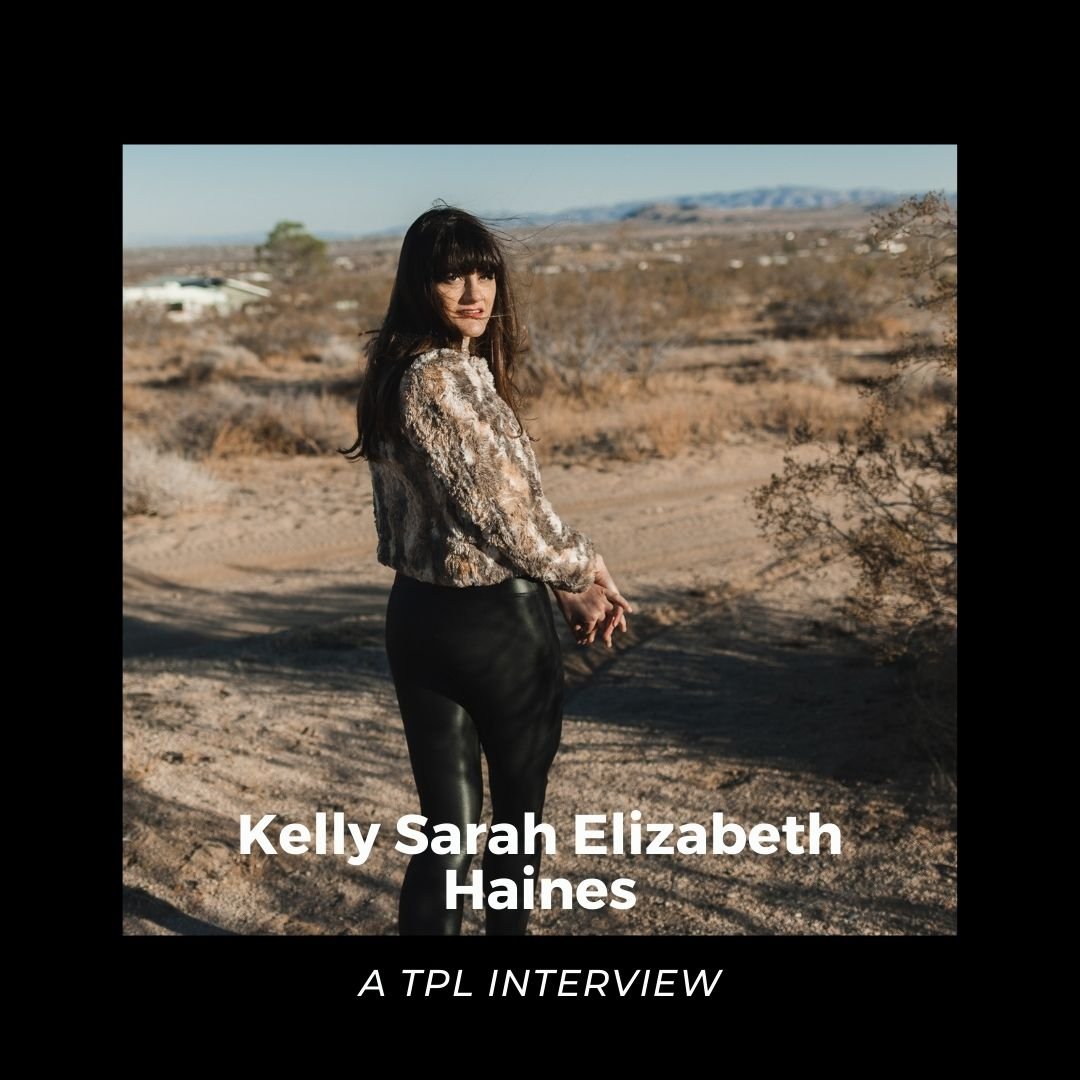
Interview: Sarah Elizabeth Haines

Sarah Elizabeth Haines
Interview: Emily May
Photo credit: John Carluccio
A woman of many talents, NYC-based artist Sarah Elizabeth Haines is a violist, violinist, vocalist, songwriter, guitarist, and performer. Currently, on tour as a violinist/violist with the Tony Award-winning musical Hamilton, music has taken Haines all around the world, from playing chamber music in China, with orchestras and rock bands in South America and Europe, and to most of the continental US with various theatre productions. She has toured with Les Miserables and Todd Almond’s Kansas City Choir Boy with Courtney Love. Other theatre credits include Jagged Little Pill (sub, viola), Natasha, Pierre and the Great Comet of 1812 (sub, viola), Beardo (Violin), Iow@(Viola), and Hadestown (2014 workshop, Fate/viola). She also performs with the NYC-based contemporary classical chamber group Contemporaneous, the Brooklyn-based indie-folk band Bellhouse, and with the Brooklyn-based symphonic rock band Emanuel and the Fear. Realizing that in order to have her own voice, she needed to do her own projects, she released her debut solo album of original music, Pretending to Sleep, in 2018. Her sophomore solo record Castaway is due to be released on February 25th, 2022. Due to the pandemic, she recorded a good chunk of the new album in her Manhattan apartment, with guidance via FaceTime from her co-producer Kevin Salem. Having released the first two singles from the album, “Liar” and “In The Morning”, in September and October respectively, she recently released the latest single “Water”, about being powerfully affected by something and making a choice to move forward despite the knowledge that a part of it will remain with you always. Currently, on the road with Hamilton, Haines plans to be back in NY more permanently in the Spring and release more music and play some solo shows! Make sure to connect with Sarah Elizabeth Haines via the following links to stay up-to-date with all upcoming news, tour dates, and music.
WEBSITE | FACEBOOK | INSTAGRAM | TWITTER | SPOTIFY | SOUNDCLOUD | ITUNES/APPLE MUSIC | YOUTUBE | BANDCAMP | TIK TOK | CONTEMPORANEOUS | BELLHOUSE | EMANUEL AND THE FEAR
You have said that you were drawn to making music from an early age due to it being a universal language and having the ability to connect rooms or stadiums of people in a single moment. What can you tell me about your childhood and early musical memories? Did you grow up in a musical and creative family?
Sarah- There was always music around when I was growing up—my mom plays piano and I sang in church choir with my grandfather, my other grandfather was a huge jazz fan and played the clarinet, my dad and uncle played in a band together for a while—it’s definitely a way we all spent time. I think one of my most formative memories comes from my grandmother on my dad’s side, who was an Organ Performance major at the University of Delaware in the fifties; when I was very young she would take me into New York City to see children’s concerts – things like Peter and the Wolf, and Saint-Saens’ Carnival of the Animals. She went into the city a lot and over the years she had developed a friendship with this violinist who would busk on the subway—James Graysek, I still remember his name. One time when I was with her we saw him and she bought me his CD that he was selling of all these beautiful classical pieces, performed for violin and piano, and I think that’s part of where my obsession with the violin began. I begged and begged my parents to start taking violin lessons until finally I wore them down. They wanted me to play piano since we had one in the house, but I wasn’t having it—which, now I sort of regret not at least trying and building some sort of facility on piano at a young age, but it is what it is now.
Music has taken you around the world, to China, South America, Europe, and most of the continental US, performing chamber music, with orchestras and rock bands, and with various theatre productions. What has been the most rewarding aspect of performing in so many different places and what have you learned about other cultures through music? In what ways have your travels influenced the ways you approach making music?
Sarah- It's been a really interesting way to see different parts of the world, and to see how universal music truly is—different cultures may have slight differences in ways they engage with certain things, and obviously there are also differences between the classical and the rock and the musical theater spheres as well, but it’s amazing just to feel the connection of a roomful of people who might not even speak the same language. I’ve definitely been opened up to new sounds and new inspirations anytime I traveled – even the music you hear in stores and on the radio can be wildly different and find its way into the creative process, and I’ve met some amazing musicians I’ve been able to stay in touch with thanks to the weird but admittedly sometimes useful social media platforms that we all find ourselves on these days.
You tour as a violinist/violist with the Tony Award-winning musical Hamilton. How did that opportunity come about and what has the experience been like? What inspired you to start posting videos on your Tik Tok page of you performing live in the orchestra pit?
Sarah- How it happened is a bit of a roundabout story to be honest but the short version is that I had a chance meeting on the subway with a Broadway violinist years ago, and we sort of kept in touch and would check in every once in a while (we even ran into each other randomly on the subway a few more times, which I always thought was part happenstance and perhaps a little bit of fate) until I had finally gotten my first Broadway subbing opportunity, and we got coffee and he told me he was going to put my name in the pool for the Hamilton tour. It’s been a really interesting experience touring with Hamilton – I’ve played the show almost 900 times at this point, and I’ve gotten to visit cities in almost the whole country—I only have 9 states left I’ve never been to including Hawaii and Alaska. The most striking thing that I’ve discovered about doing the exact same thing so many times is how amazing our bodies are with muscle memory – my brain can sort of take a little vacation in the middle of the show and I’ll wake up a few songs later to discover that it’s all still happening and I’m still playing exactly what I should be. It can actually get sort of meditative.
Honestly I resisted TikTok for a long time cause it made me feel old.. haha. But my 20 year old cousin finally convinced me that I should try it and he said he thought people would be interested in my perspective at Hamilton and he could not have been more right about that. I didn’t realize how many folks are interested in seeing the pit’s perspective, and I’m really glad that I am able to offer a little insight into what’s happening beneath the stage on any given night.
What can you tell me about Contemporaneous, the NYC-based contemporary classical chamber group you are a part of?
Sarah- Contemporaneous honestly changed the way I think about sound and music making. I’ve been playing with them since 2012 when they were a student-run Bard College group and it’s so amazing to see how we’ve all grown together as people and as musicians and as an organization—it’s a non-profit flexible-instrumentation chamber orchestra consisting of ~23 musicians and we perform music almost exclusively by living composers. Without getting too technical, cause I could go down a deep rabbit hole here, there are a lot of things instruments and voices can do that are outside the realms of the traditional school of western music as most of us are trained, and Contemporaneous has opened me up to so much of that over the years. I’ve incorporated it into my writing and arranging a lot – for example in my last single “Water” there’s a moment in the transition to the B section where there are these seagull-like noises -- that’s a more non-traditional technique that I’ve learned to play on the viola but I think it’s a really interesting and beautiful sound and I’m always looking for places to incorporate it. That’s just a tiny micro-example of the sound worlds we’ve explored in that group. We’ve also played shows with some pretty awesome indie/rock folks like David Byrne and Jherek Bischoff over the years—there’s a lot of fun indie crossover with new music, and I was excited to see there was a place where both worlds could exist simultaneously. Contemporaneous does have a show coming up at Carnegie’s Weill Recital Hall on February 28th, which I’m really excited about because I was able to get time off from Hamilton so I could come home and play it.
You have said that in order to have your own voice, you need to be able to do your own projects. What can you tell me about the bands you are in, Bellhouse and Emanuel and the Fear, and what was the catalyst that led you to branch out and do solo music, as well? How would you describe your first solo album, 2019's Pretending To Sleep, and do you feel it allowed you to express yourself in a way that you had not previous been able to?
Sarah- Both Bellehouse and Emanuel and the Fear (who just released a new single “Even If We Don’t Get Along” and we’re putting out a new album over the next few months!) were catalysts for launching into writing music myself – as a classically trained musician you sort of learn that the interpretation of music and the creation of music are separate things – you’re either a composer or a performer. When I started playing more non-classical music, I realized that I wanted to participate in the creation process as well, and I was surrounded by these really great songwriters in these bands—Emanuel Ayvas, Jess Clinton, Mackenzie Shivers—they inspired me to start trying to find my own voice. I wrote a little for Bellehouse and have helped with arrangements for EATFear but I began to discover there was a space that I felt like I wanted to explore that maybe didn’t fit in with the already established sounds of those bands. Since they were in many ways my starting points for writing, I wanted to branch out from there as well.
Pretending to Sleep was sort of my starter album—it was the first time I was brave enough to put myself out there. It’s a collection of songs that I had sort of tinkered with and abandoned and came back to as my confidence as a writer grew over the course of ten years, and as anyone who has a limited number of songs, every one felt sort of precious. I needed to make that album in a lot of ways to know what that process even felt like, to learn what laying myself bare to tell my stories felt like, to learn a little bit about killing my darlings. I still love the songs on that record but the album itself felt like the start of a journey into finding my voice and my sound, which I’m still on and hope to be for a long time.
In 2022, you will be releasing your second full-length solo album Castaway. What was the process like for you in writing and recording the album, as well as how you feel that it compares to Pretending To Sleep?
Sarah- Castaway was very different from Pretending to Sleep in a lot of ways, most notably probably being that I ended up recording a good chunk of it myself in my Manhattan apartment because of the pandemic. Before lockdown I didn’t even have a recording interface and ten months in I’m making a bedroom indie rock record which seems sort of ridiculous in hindsight but needs must. I had a lot of guidance from my co-producer Kevin Salem and he was even on FaceTime with me a lot of the time when I was recording, but doing some of it myself and also having somewhat unlimited access to the sessions definitely changed the game a little bit. I would be at home by myself, maybe have had a glass of wine and I’d open up one of the songs and noodle around on a guitar just to see what might happen—one of those moments actually ended up being the guitar solo on “Young and Pretty,” which I still can’t quite believe that I even took a guitar solo let alone that we ended up keeping it. Also, just practically speaking, Pretending to Sleep was recorded in about a weeks’ time, where Castaway took about three months. The writing part of the album was different because most of these songs were fresher, and I just had more material to draw from – there were songs that I really thought might make that album that ultimately didn’t but I think learning to let go is a really important part of the process. A lot of the songs were half finished when we started or ended up getting rewritten as the process sort of realized itself and Kevin and I honed a vision of what the sound should be, and it was a much more interactive way to create something.
Castaway opens with the spoken word track "Body", which you describe as a fun project in sound design that was used to make the listener a bit uncomfortable. What inspired you to do a spoken word track and how would you describe the message of the song?
Sarah- “Fun” might be the wrong word for that track honestly. It’s really intentionally uncomfortable – it’s about existing in the world in a woman’s body and it doesn’t really mince words and I used weird string sounds and dissonance to highlight that discomfort. For a couple of weeks during lockdown I had Patti Smith’s Horses on repeat; and I love the way she so seamlessly drifts between poetry and music, and I guess I wanted to try my hand at something similar. “Body” was a poem I had written years ago in response to one or another of the legal cases challenging birth control access, and unfortunately it’s still really relevant now, and since the sort of thesis of Castaway is about the multitudes of ways to exist in the world as a woman, it felt like the right time to do it. I went back and forth about starting the album that way but ultimately I think it gives the rest of the tracks a bit of an edge that it might not have without opening with those words.
Castaway explores a range of emotions and experiences, with most of the songs written pre-pandemic. Did the pandemic and ensuing shutdowns end up influencing any of the songs on the album? What is the message you hope the album conveys?
Sarah- I think the pandemic really clarified and helped me to distill a lot of the material that already existed on the record—and I did end up doing a lot of editing and rewriting as the project took shape. As someone who has been a working performer for a while now, the pandemic was utterly wild in so many different ways, but one of the most striking ways was in the amount of stillness and solitude. I really had to sit down and be alone with myself for days and weeks on end and it brought about a lot of unexpected things. The song “Razor Line” , which I completely rewrote the lyrics for over and over again while we were recording (it was originally called “Ash and Stone”), is probably most directly about this feeling – it’s not a still song by any means, but the lyrics speak to that feeling of just barely holding on when you look into a mirror or into a big open empty sky for way too long. It’s about finding the edges of yourself and realizing they’re maybe a little blurrier than you knew.
What led you to want to explore the juxtaposition of strength and softness, and how they can be the same thing, in the closing track of the new album?
Sarah- “Castaway” is definitely the song on the record that was probably closest to my heart when we were recording; it was the last song I wrote before we started making the album and it came from a pretty raw place. There’s still a lot of talk even in today’s social climate of softness and sensitivity as “feminine” or “weak” qualities but I’ve always wanted to challenge that. There’s so much power in empathy and love and forgiveness and when we cut ourselves off from that I think the strength that’s left over is brittle and harsh, and I just can’t believe in a world where that’s the only way. This song is gentle and tender and I wanted it in a way to evoke being in the middle of the ocean by yourself, but it’s that the ocean is holding you, not drowning you. You can choose to let it carry you instead of fighting it.
In March of 2020, you released an ambient string and vocal EP as a Bandcamp Exclusive. What inspired the idea for the EP, as well as having it be an exclusive Bandcamp release, and do you plan to do similar releases in the future?
Sarah- As I mentioned before, I didn’t really know anything about home recording or production before the pandemic. Right in the third week of March when we all thought we’d be on break for six or so weeks, I decided to get myself a recording interface and some microphones that a friend was selling, and just figure it out while I waited to go back to work. I was coming off of a long stretch of touring with Hamilton and I think I just wanted to get very far away from that type of sound. I was inspired a little by Brian Eno’s Music for Airports and I think I just wanted to make something that helped me to quiet my own mind a little in a time when things were so uncertain, and I figured I might as well share it with folks just in case it helped them to put them at ease for a little while as well. I’m actually thinking of releasing it everywhere at some point just for the heck of it, but like I said I really had no idea what I was doing so I definitely want to go back in and clean up some of the mixing and mastering on that. I am definitely playing around with some new ideas for ambient music – drones are often my warm up for my viola practice and I do like the practiced stillness of exploring single notes or intervals, so I have been thinking about trying to blend some of my newer production skills with that initial concept and just see what I come up with.
You just released "Water", the third single from Castaway. What can you tell me about the song and how you view the symbolic nature of water? You released the album's first single "Liar", followed by "In The Morning", prior to "Water". How did you go about deciding which tracks to release as singles ahead of the album?
Sarah- I always wanted this song to feel like its subject matter—sound design in the arrangement came into play in this one more than it ever has for me previously, from the bubbling underlying synth track to the washy reverb and the strings and sound effects. Water is so many different things to humans—it’s life but it’s also an unstoppable force. Our bodies are made up of 70% water but it can wash everything in the blink of an eye, or it can carve rivers over the course of centuries. The song itself is about being powerfully affected by something and making a choice to move forward despite the knowledge that a part of it will remain with you always. Just because it's there doesn't mean you have to drown in it--and water is cyclical. The process may always lead you back to the sea, but you'll become rain again soon enough and you can go anywhere the wind takes you.
I think ultimately the singles we ended up choosing were the ones I had specific visual concepts for, at least at first. There are videos in some capacity for each of the songs released and I’m working on some things for the next ones. We actually went back and forth about potentially releasing the whole album as singles for a while, just because in a streaming world for an artist who’s just beginning to establish herself it’s a potential way to gain some momentum, but ultimately the album is still an album with a through line and I didn’t want to totally diminish that either. As it stands we’ve still got two more singles to release, “Belong” on 1/7 and “Better Friend” on 2/11 before the whole album is out on 2/25
What's next for you?
I’m back on the road with Hamilton for now, and just starting to plan out an album release show in New York in late February. In the spring I’ll be coming back to New York more permanently and trying to figure out the next steps for making a career and life with more of a home base than the traveling life I’ve been living since September 2017, and I'll definitely be recording some new music and playing solo shows when I get back. Thanks so much for having me!
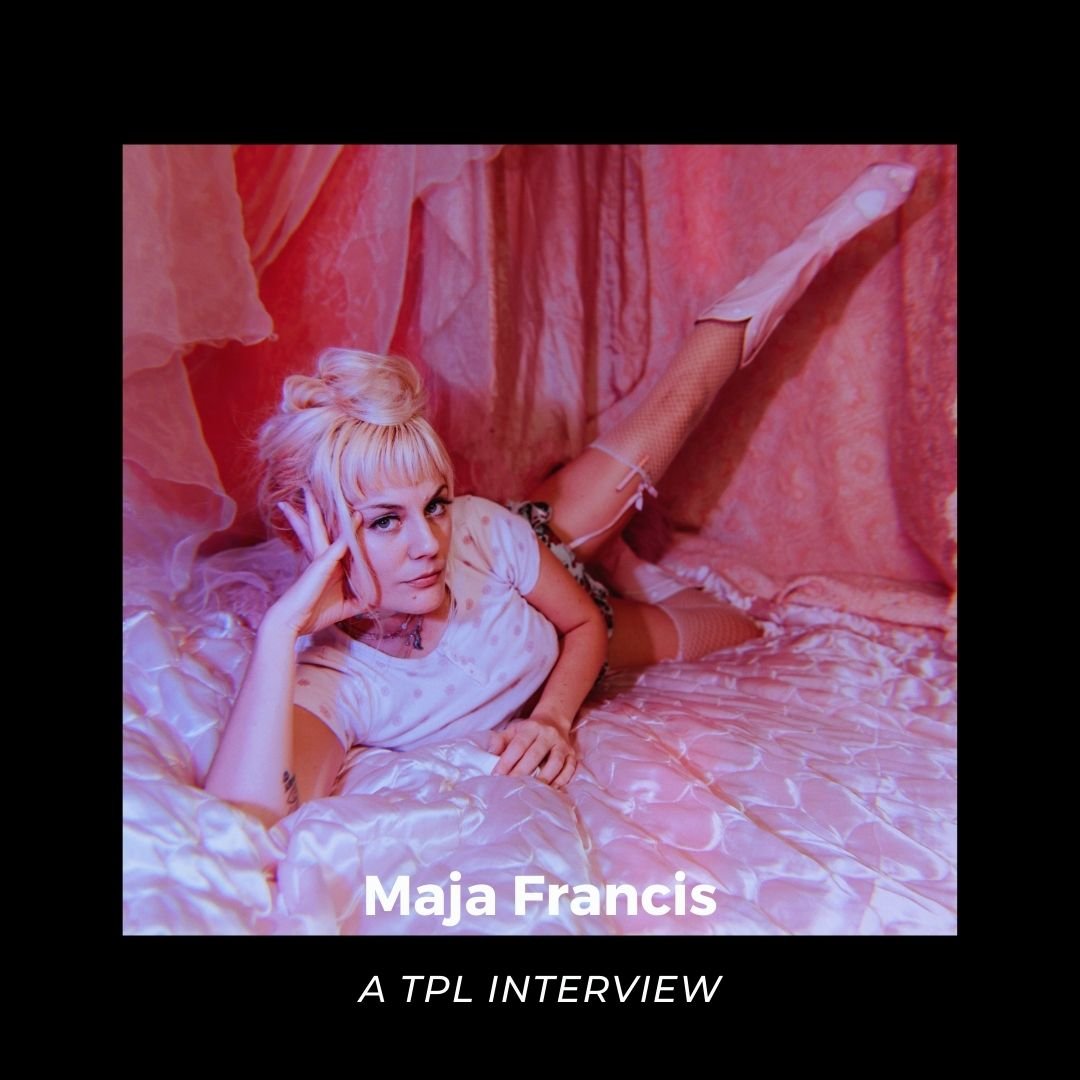
Interview: Maja Francis

Maja Francis
Interview by: Emily May
Photo credit: Milkdrop Studios.
Swedish songstress Maja Francis is belovedly referred to as the “Emo Dolly Parton”, with a sound that is distinctive, emotional, personal, and the result of a variety of strong sources of inspiration, experiences, and collaborations. Growing up in Sweden, her father owned a record store and she spent many days thereafter school, cultivating her love for music. Although she has a love for all kinds of music, she always gravitated towards female artists and counts Dolly Parton, Tori Amos, Joni Mitchell, and Alanis Morissette as musical influences. Starting out as a singer-songwriter, she ventured into the world of pop music, releasing her acclaimed debut EP Come Companion in 2015 and was embraced by both Swedish and international press with major articles in NYLON Magazine, ELLE & Swedish acclaimed magazine DI Weekend. The attention caused her major anxiety, however, and in order to process her feelings and let the fans even closer, Maja’s own struggle with mental illness became the theme for her subsequent releases “Cry Baby pt 1 & 2” in the summer of 2018, where Maja urged to “carry her feelings like a tiara” with the meaning of being proud of vulnerability and strong emotions. “After that, I collapsed in a small pile, dyed my hair blue, and went down to the sea in Skåne where I grew up. I had gotten lost in why I started with music from the beginning, and I stopped feeling things from the inside. It made me sick, and I felt that I needed to stop with the music and with the image I created of myself, to be able to fall in love again.”
She took time out from releasing music in 2018 and went back to her roots and the piano. The resulting songs were more inspired by the childhood idols Dolly Parton and Tori Amos than the modern pop landscape and the desire to write music and how she wanted to write songs came back. 2019 was the year when Maja wrote her recently released debut album, A Pink Soft Mess, without rules and 100% from the heart. “I realized during these years that I had really missed the organic and what I actually started in from the very beginning..... just my voice and at most one instrument and then adorned it instead of the other way around, that my voice had to fight towards a production all the time, or being saved up with an autotune because the melodies did not come completely from me, or because I did not get bogged down in things. A Pink Soft Mess was recorded with and produced by Johannes Runemark and David Wikberg together with Maja Francis and includes the previously released Kate Bush cover “This Woman’s Work”, “Anxious Angel”, known from the final scenes in Netflix’s acclaimed original series “Love & Anarchy” and “Tiny Tornados”-songs that embrace the melancholy and emotional country-pop that. The album also features a collaboration with Johanna and Klara Söderberg of First Aid Kit on the track “Mama”. With plans to celebrate Christmas with her family and then head to the studio to write and record new music, make sure to follow Maja Francis via the following links to stay up-to-date on all new music, news, and live dates!
FACEBOOK | INSTAGRAM | TWITTER | SPOTIFY | SOUNDCLOUD | ITUNES/APPLE MUSIC | YOUTUBE | DEEZER
You grew up in Sweden and count Dolly Parton and Tori Amos amongst your musical idols. What can you tell me about growing up in Sweden and discovering your love for music? In what ways did your father owning a record shop influence you musically?
Maja: I spent many days after school by the counter at my dad's little record store, listening to all sorts of music, but discovered quite early that I had a special love for female voices like Alanis Morisette, Joni Mitchell, Kate Bush, and as mentioned, Tori Amos and Dolly Parton. My dad tried to get me into his favorite bands like TOTO, Eagles and the Beatles, but I wasn’t at all as interested in the dudes as I was with the ladies. He introduced me to a lot of artists that I think I would never have found if he wasn’t such a music lover and nerd. I’m so thankful for that!
You have said you are greatly inspired in your songwriting by nature and by taking walks in the forest. In what ways does being out in nature inspire you? What are some of your favorite places to go in Sweden to be in nature?
Maja: I’m inspired by nature, for sure. I try to go visit the ocean where my parents live as much as I can and it’s such a luxury to be able to do that. I will never take the ocean for granted, but I know she’s always there for me when I need her. Nature gives me the feeling that I’m something tiny in a bigger picture and I really like that. I need quiet and to get out of my ego to be able to make noise and hang out with my ego again, if that makes any sense.
You lived and wrote music in Nashville for a bit. What led you to move there and what was your experience like living there? What brought you back to Sweden?
Maja: Yes! Back in 2009 I met a musician through “myspace”, fell in love, wrote songs and moved into a silver camper with him. We drove to Nashville and lived there for a while and I really loved it! Music, cowgirls, flea markets, and donuts…my dream life haha! Unfortunately the fairy tale ended and I left Nashville and haven’t been back since. But I’m planning on it!
You started out as a singer-songwriter and ventured into the world of pop music before going back to your roots. What can you tell me about finding your sound as an artist?
Maja: I dipped my toes in the pop world for a few years and it was fun to try it out and I did get to experience a lot of beautiful moments, but in the end it just wasn’t for me. I still write pop songs I guess but it’s different. This time it’s about my voice and lyrics, without compromise. It’s as if I’ve finally found somewhere I can rest and not push myself all the time, or having to do things in such a rush. I let my voice lead the way and I think that’s what my sound is about for now, but it took a while to get here and it was a process of being quiet first.
You released your debut EP Come Companion in 2015, but have said that the attention you received left you feeling anxious and questioning if being a singer was what you really wanted. What can you tell me about being vulnerable with your fans about your depression/mental illness with the release of your double EP Crybaby pt 1 & 2 in 2018? Do you feel that the process of writing those songs was cathartic?
Maja: It’s quite natural for me to be open about my mental health issues. I’ve had them since I was a teenager, and after releasing my Cry Baby EPs my body said stop. I had panic attacks every other day and went into a deep depression. It's so interesting how I talked about “wearing my feelings as a tiara” in the cry baby era but I didn’t really live my own truth. I think that “a pink soft mess” is actually more honest about my mental health struggles than anything I’ve ever written. And the process of that has definitely been both cleansing and healing.
You have said that after releasing your double EP, you went down by the sea where you grew up and felt a bit lost. What kind of meaning did singing hold for you in the beginning and in what ways had that changed for you to leave you questioning everything?
Maja: My relationship with music has always been a magical place where I come to rest and to gather energy, but something changed. It got destructive and I started to look at everything too much from the outside. My voice got trapped in this box where I got chopped off with effects and beats and autotune. Also it was something about other people writing my melodies and lyrics, it stopped me from being totally free, even if I was in the room with them. I need to take things slow, and that doesn’t work when you have one day to finish a song surrounded by super talented songwriters but who have a totally different musical language. It’s hard for me not to fall out of my own track and follow someone else's vision.
During your break in 2018, you went back to your roots and the piano and wrote songs that were more inspired by your childhood musical idols than the modern musical landscape. What was it like for you to regain your desire to write music how you wanted to, without rules and 100% from the heart?
Maja: I needed to break up with music totally to understand what it actually meant to me, and how I wanted my relationship with music to look like. I listened to my childhood idols on repeat, and realized how healing music can be. And I was like “I want to make someone else somewhere in the world feel what I’m feeling right now when they listen to my songs”. And eventually that spark to write again came back and it felt amazing.
In 2018, you started writing a diary, which later became a voice memo, and has since become your recently released debut album A Pink Soft Mess. What can you tell me about the process of writing and recording the songs? Was there a particular moment in which you decided to turn your writing into an album?
Maja: When I was done sleeping, I slowly heard melodies and words in my head again. At first I didn’t even want to catch them. But then after more sleeping (and a lot of therapy), I did. And with the help from Johannes they became songs that I thought nobody would ever hear. But then I wanted to play the songs for my friends, and one of them was David. So the three of us went into a bubble for almost a year, putting costumes to the songs and finishing them. And there it was…my pink soft mess!
You have said that your producers, Johannes Runemark and David Wikberg, helped you to feel totally free with your voice. What was it like for you to find your voice again and to enjoy being in the studio?
Maja: David and Johannes gave me time. Time to heal, time to break down, time to find the right key and tempo, time to understand what I wanted a certain sound to hear like. If my voice got stuck in a vocal take, we just stopped for the day and went outside for a walk or a drink. They never pushed me and I think that’s why I found my way back to my voice, and why I could enjoy being in a studio again (or actually maybe for the first time ever).
The song “Mama” features a collaboration with Johanna and Klara Söderberg of First Aid Kit. What can you tell me about the song, as well as the lyric video, and about with performing with the sisters? You performed a Christmas concert with them in 2019 and have said that they were very supportive and helped you to get your voice back. In what ways did they support you and help you get your voice back?
Maja: First time I met Klara and Johanna it was an instant girl crush. It was back in 2015 when we had our first xmas show! Then we became close friends and they invited me to sing with them on all sorts of things during my years of not making my own music. They helped me realize how fun singing can be!! And that I don’t have to be alone in it. When we sing something happens in me that I can’t explain, but it’s an amazing warm fuzzy giggly feeling. Asking them to feature on my debut album felt natural and I’m so happy they said yes! The lyric video for “Mama” was made this summer with our iPhones and our moms. I filmed a lot down by the ocean where I grew up..
What’s next for you?
Maja: I’m currently touring in Sweden but dreaming of doing a tour outside of here too! Besides that I’m gonna go celebrate xmas with my parents and my cat (Pony), drink a lot of Glögg (swedish mulled wine), and then go back in the studio and write new songs.
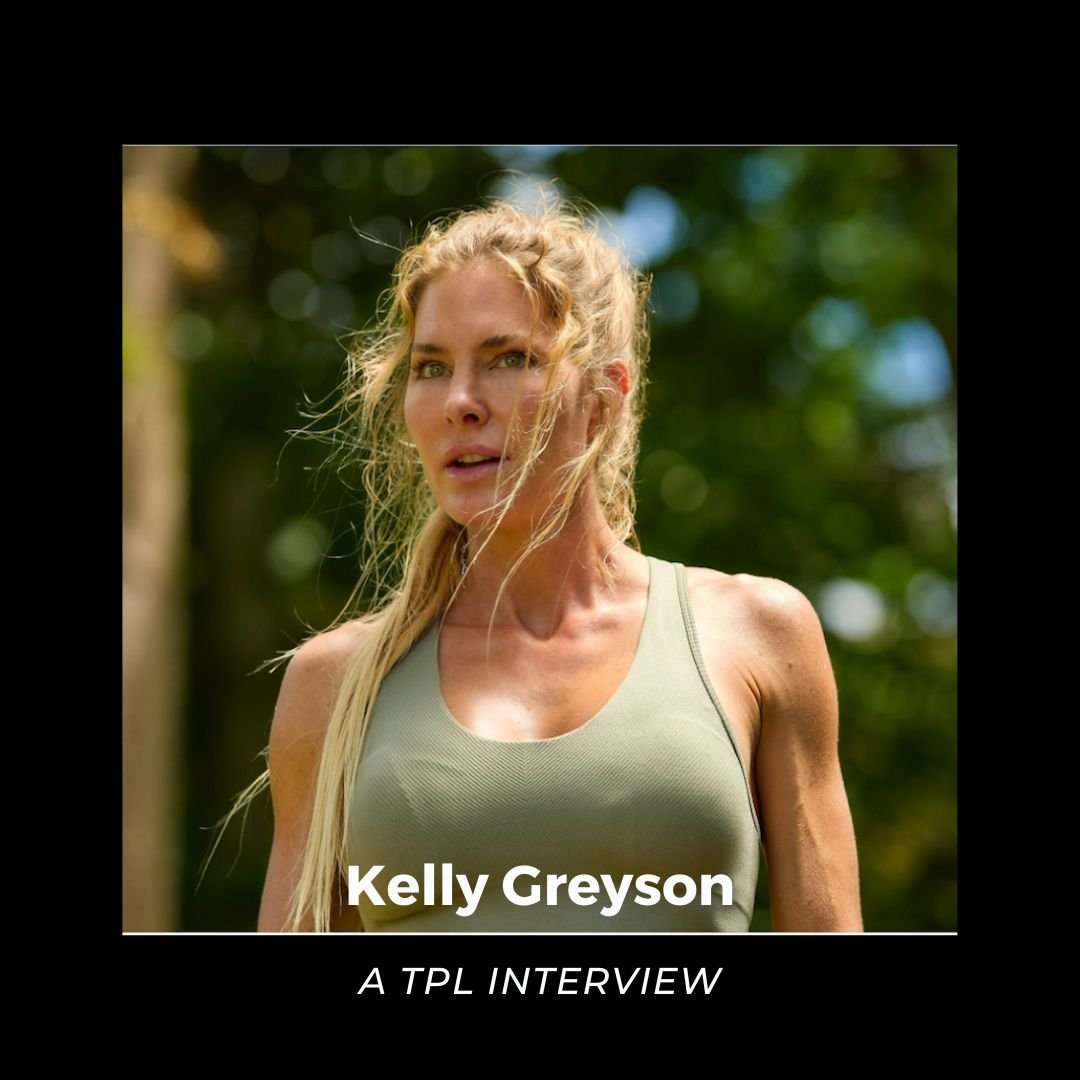
Interview: Kelly Greyson
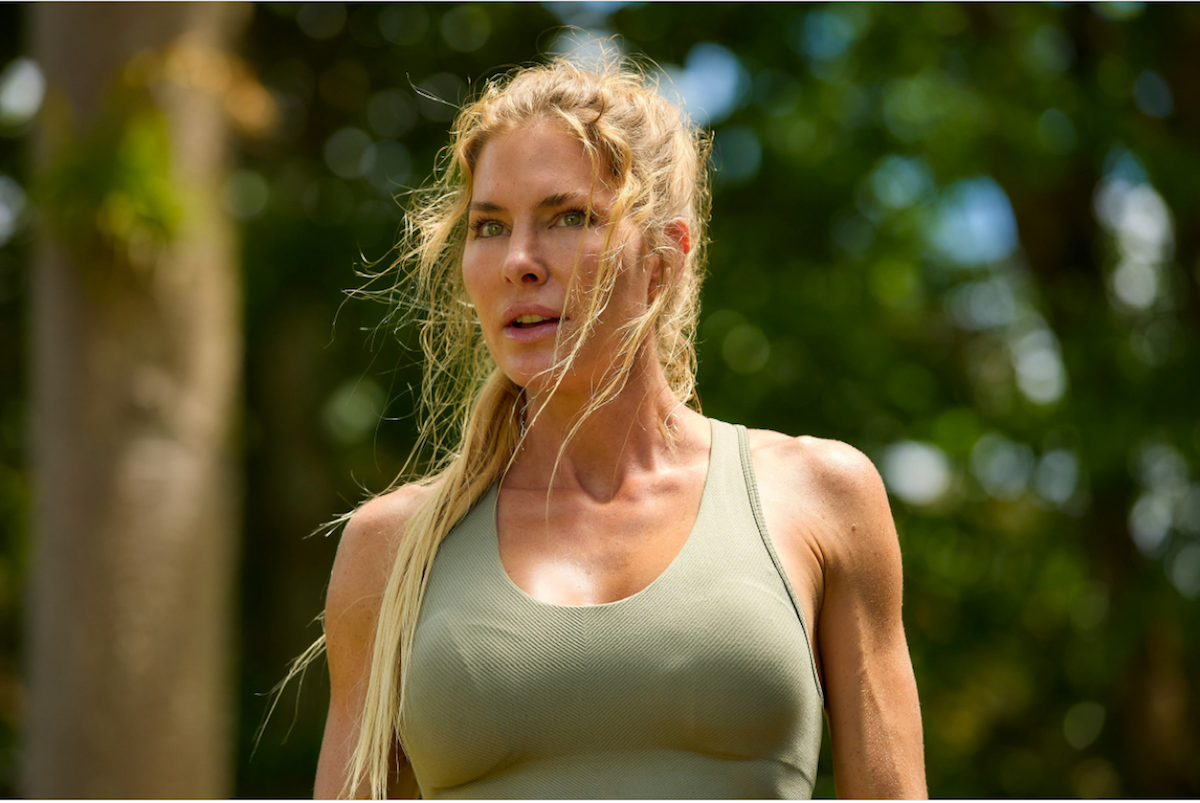
Kelly Greyson
Interview by: Emily May
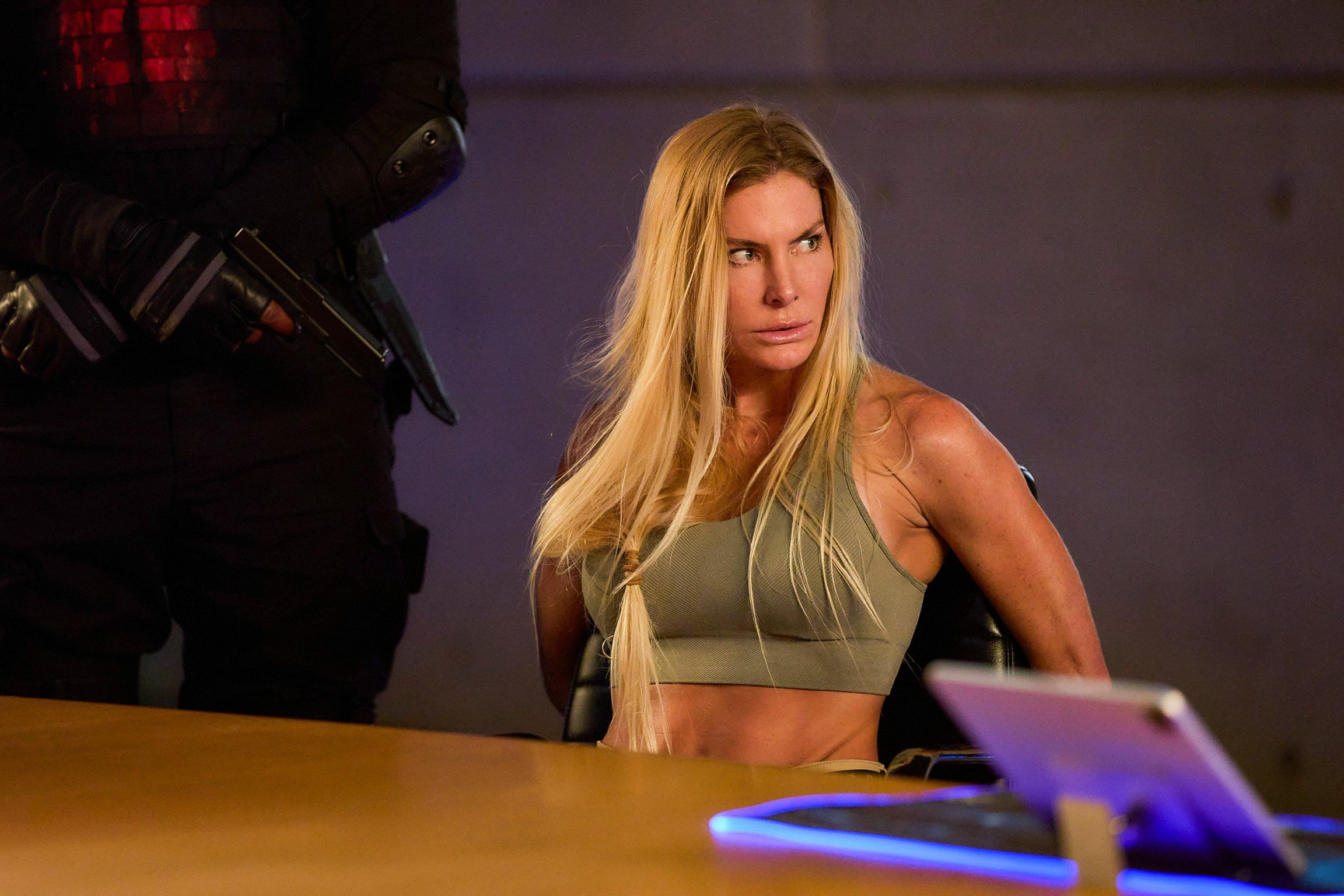
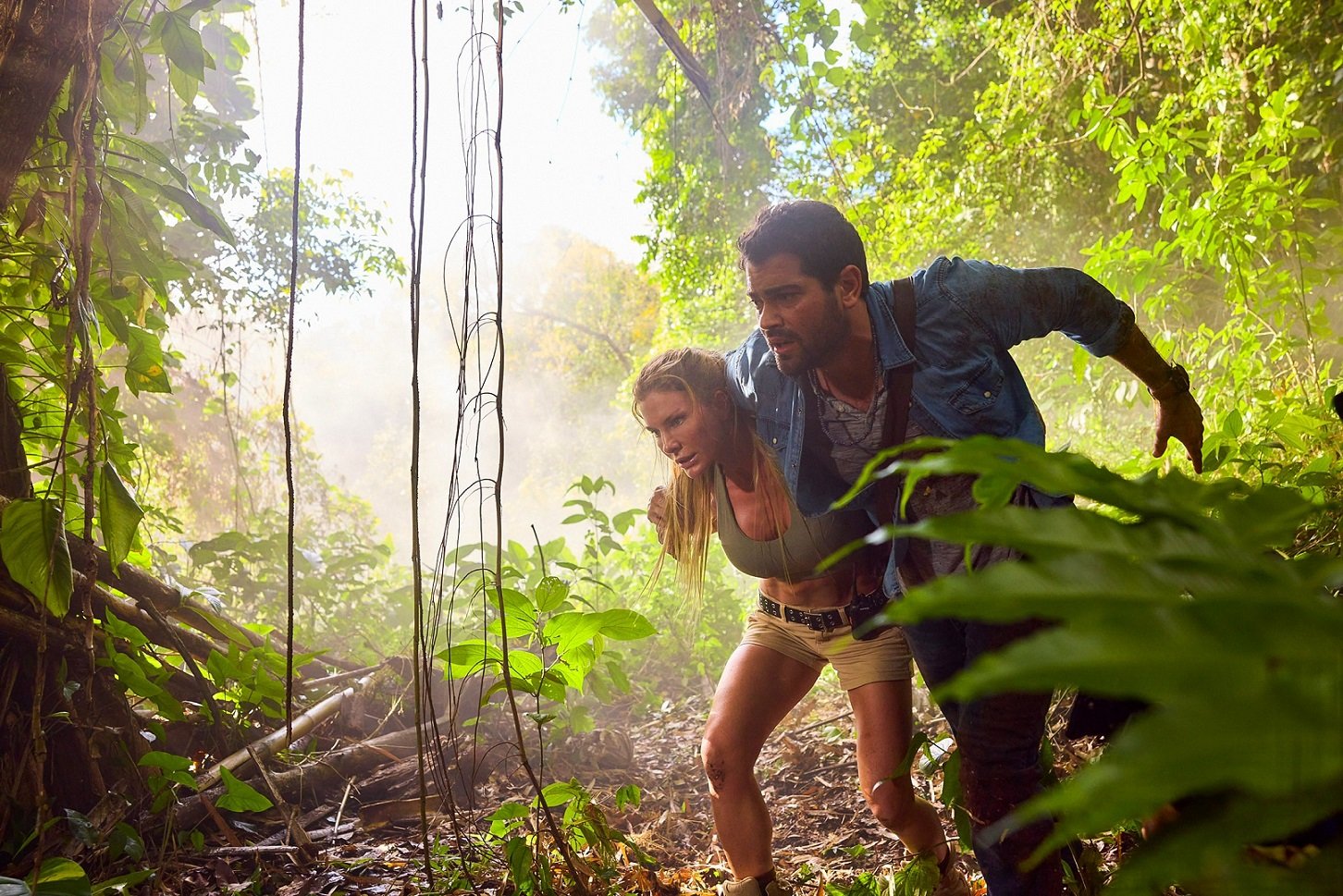
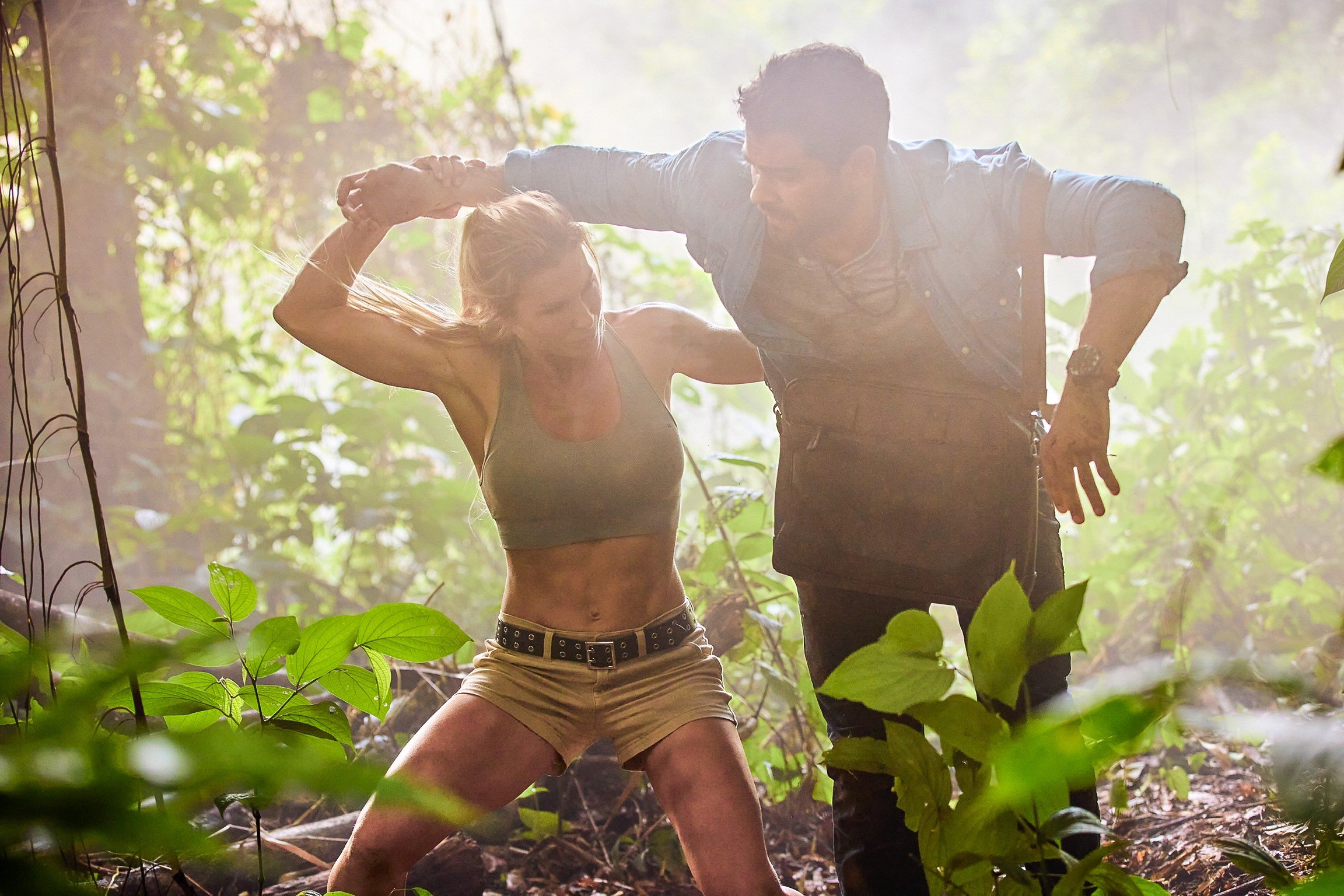
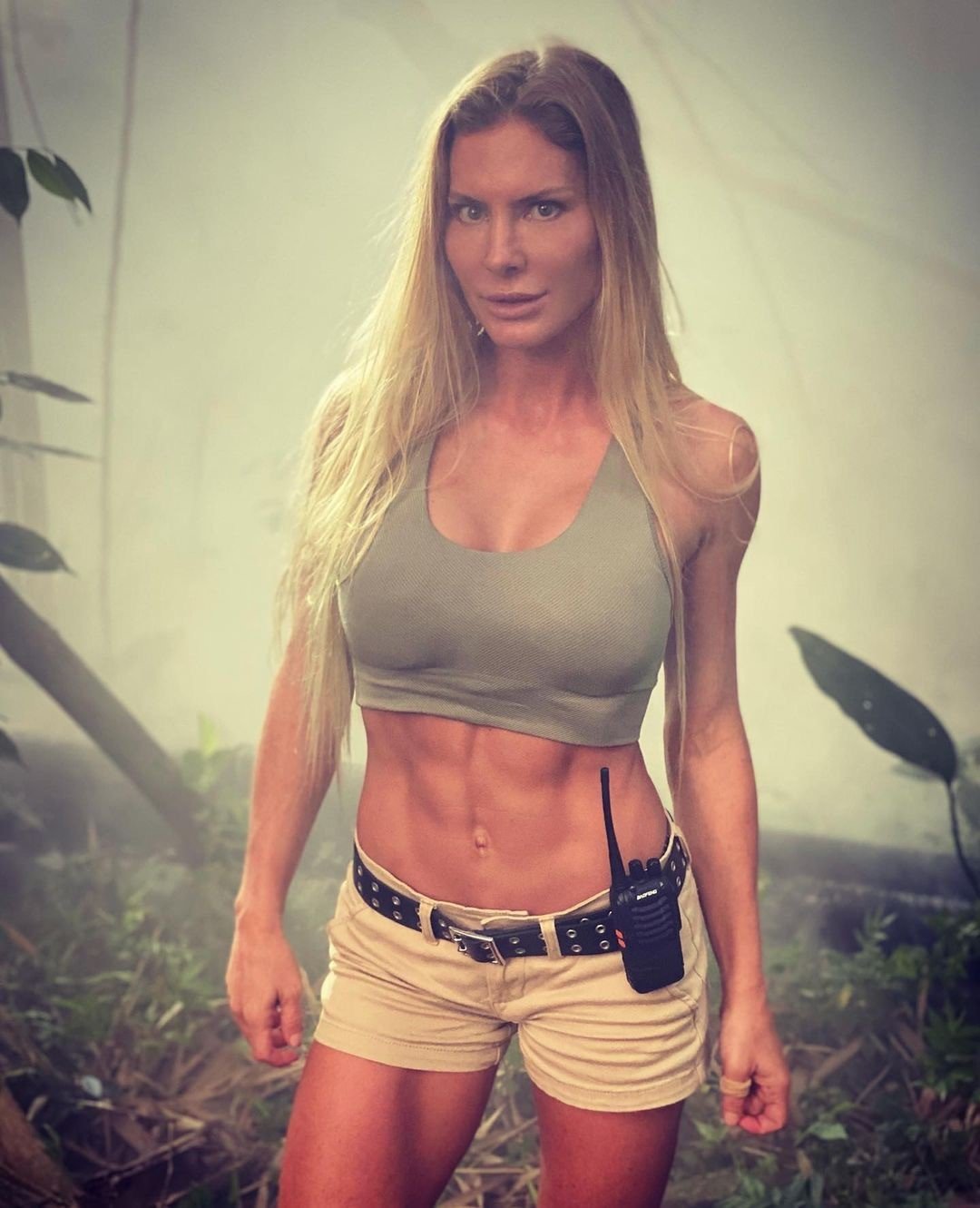
Actress, fitness star, and humanitarian Kelly Greyson grew up with a love for all things athletic and always felt like whatever the boys could do, she could do better, including horseback riding, scuba diving, swordplay, track & field, snow, and water skiing, football, dancing, rock-climbing and any other sport that attracted her ultra-competitive spirit. Shy and anxious as a child, her family never thought she would work as an actress, but with the help of her mom, she overcame her hurdles. With a big, empathetic heart and a lifelong love of helping others, she spends a great deal of her time doing humanitarian work. Greyson is getting ready to launch her non-profit my1Mpact, a multi-tiered global platform designed to inspire the best in people by showcasing the “true heroes” across the world. Her goal is to motivate awareness of others and their needs to create a culture of compassion to uplift other people’s lives. Each episode of the video series will take the viewer on an adventure with Kelly that will not only open their eyes to new perspectives on people and culture but also their appreciation of our world while entertaining them in the process. These amazing stories will unfold as Kelly meets people who go to extraordinary lengths to show compassion in the midst of suffering and difficult situations while highlighting various cultures. Kelly’s charitable work also includes the promotion and preservation of basic human rights, including supporting organizations that fight human trafficking, care for orphans, and, with Gemiini Systems, a program that provides therapy videos, quizzes, and assessments for those with learning disabilities, the vulnerable and innocent who are unable to help themselves.
Kelly began acting in 2011 and has had several acting roles since and also does all of her own stunts, a rarity in Hollywood. She recently appeared in the thriller Out Of Death with Bruce Willis and Jaime King and most recently starred in her biggest role yet in the military thriller The Fortress, starring Bruce Willis, Jesse Metcalfe, and Chad Michael Murray. Set for release on December 17th, the story, the first installment of the forthcoming trilogy, revolves around a top-secret resort for retired U.S. intelligence officers and a group of criminals seeking revenge. Part 2 of the trilogy will be released next year. Aside from acting and humanitarian work, Kelly loves photography-especially wildlife photography, having recently photographed the great migration in The Serengeti during a trip to Africa. She also loves sculpting, having become the muscle study/muse for world-renowned sculptor Richard MacDonald. You can connect with Kelly MacDonald via the following links:
WEBSITE | FACEBOOK | INSTAGRAM | TWITTER
You have said that as a child you had shyness and anxiety and that no one ever saw you as pursuing acting. How did you overcome those anxieties and your shyness, and in what ways have you tried to help others overcome their fears?
Kelly: So actually, this is one of those monumental moments. My mom helped me with this and it was probably one of the most poignant things that we learned together. She said "You know, Kelly. How you feel when you are feeling completely isolated and shy and afraid and all of that, there might be other people who feel that same way." And I've always had the biggest heart for people and am just super empathetic, so I decided "Why don't you try to make sure that nobody ever feels like you do?". From that moment on, and I was, like, 13 at that time, I made it my mission to make sure that nobody ever felt the pain and heartache and shyness and the different things that come along with that. I would look out for other people who were being bullied and all of those kinds of things from that time on, and it's kind of really revolutionized my life. It's been a really good launchpad for the real world because it kind of set my life on the course of every time there's something that's a struggle or heartache or anything like that, you can allow it to make you become bitter or better, and I always pursue better by thinking about what someone else is going through and how can I reach into their world and change their life. When you do that, not only is it healing for the person receiving, but it is also healing for you. It's scientifically and physiologically proven that it heals you when you actually take care of somebody else. It's been something that I have really encouraged a lot of people to do and it's amazingly beautiful when you realize the power in choosing love because it's normal and understandable and all of that to be angry and bitter and hateful, but when you realize that nobody can take away the power of your ability to choose love, it actually changes your life in a way that is hard to explain, unless you've been there. So that's my approach!
You are adept at a wide variety of sports and fitness and while growing up you felt that whatever the boys could do, you could do better. Were sports and athleticism things you were always drawn to from a young age or are those things you developed an interest in a bit later in your childhood?
Kelly: I always loved everything athletic, whether it was organized sports or not. I had a big brother and he was a really amazing athlete, and so I was always trying to keep up with him, which then ultimately makes you so much better. When you are keeping up with the guys, then it is way easier to keep up with the girls, so it was a really great launchpad for that. I always loved adventure. My dad was super adventurous and I was always his adventure buddy. Anytime there was an adventure to be had, he was always like "Hey Kelly!" and I was like "Yes please!" (laughs)!
You started acting in 2011 and perform all of your own stunts. What led you into acting and as an actress in Hollywood who does their own stunts, What has that experience been like for you? Have you found a lot of support in the industry?
Kelly: I had a desire to act and had done different work in classes and coaching and that kind of thing. My first role was amazing and I was so excited about it because it was an inspiring project and something I was really proud to be a part of. It was called Return to the Hiding Place, based on a true story. It was a story that had inspired me as a little girl. It's just an unbelievable story about someone who was rescuing Jews during WWII. It was amazing to be a part of something so inspiring and to be able to realize how impactful film is and how it can really change peoples' lives and impact the world, for the better or worse. I love to be a part of things that make a positive difference. So that was my first film and then as far as stunts, I don't know. I'm just not one who likes to sit on the sidelines (laughs)! If I'm going to be doing the film, I'm going to be doing it all. I'm kind of like a go big or go home type of person. Because I do everything athletic anyway, my physique really fits those kinds of roles in film. There are so many beautiful and talented people in this industry. I think it's important, in this industry, to find something that's sort of a niche that you are specifically designed to be or do. Like, there are a lot of amazing character actors. So just finding that thing that sets you apart. For me, doing stunts...I always tell the crew, "You can't double me. It won't work!" (laughs)! It's been so much fun because I just get in there and do it. Every chance that I have, one of the first things I'll do is get the stunt coordinators contact information if it's an action film, and we'll communicate. Then every second that I get a chance, I'll train and work and they're always super accommodating and willing to work with me in off time and downtime and between takes and all of that. And the stunt community is an amazing community. They are honestly the unsung heroes in film who take all of the hits. I've really enjoyed working with that community. I love it!
Your next film, which will be released on December 17th and is your biggest role yet, is the movie Fortress with Bruce Willis, Chad Michael Murray, and Jesse Metcalfe. What can you tell me about the film and what the filming experience was like?
Kelly: The whole experience was really amazing and really intense and challenging. There were some added challenges with all of last year's extra drama (Covid). Everything was crammed into as little time as possible because there was all this extra testing and these other things, so you just had to be ready and on point the second they said GO. They were trying to cram so much filming into shorter periods of time because of all the protocols and testing and other stuff, so it was a lot. I think as far as just the film itself, the cast and crew and directors were all just so great to work with. I loved all of the super famous and really quality actors, who were so nice and so real and so down to earth. We had a really good time. I think you ultimately always sort of becoming a film family, and when you leave it's sad because you've really bonded with these people in such an amazing way. And then everyone goes on with their separate lives in all different parts of the world or the country, so it's always a sad day. But it was a really amazing experience and I loved filming in Puerto Rico. All of the crews there were really great to work with. It was great!
Aside from acting, you dedicate a great deal of your time to charitable causes and humanitarian work. What drew you to do that kind of work, especially being a voice for children and the voiceless? What are some of your favorite causes that you work for?
Kelly: Oh my goodness! There are so many. I could go on for the next 20 hours. I'm not even joking (laughs)! But yeah. It's always been something I've had the heart for. The first time I gave away everything I owned, like all of my money in my little piggy bank. I was five. I gave everything I could to these starving children in Africa that I had heard about. I've always had that heart for other people. And then I grew up around a lot of volunteers and just having a perspective for other people and what other people may be going through. I've done a lot of traveling and that kind of thing, which I think gives a really good perspective for everyone to have. Actually, I think that everyone in the US should take a trip somewhere to a third-world country and realize how much we have to be grateful for. I think it's literally more important than a college degree sometimes, to get a glimpse of what it is, as far as perspective. It's so eye-opening, to get to go beyond your borders and see what the rest of the world is like, and then how you can help and be a part of it and make an impact. My favorite thing to do is what I like to call "Highlight Heroes". When I can find an Indigenous organization within a particular country, who is doing amazing and incredible work and nobody even knows they exist, but they are laying down their lives on the daily for the invisible and the hurting and the starving or whatever it is, and whether it is in the States or abroad, those people are heroes. True heroes. They are doing the right thing when nobody is watching and it's not about the spotlight or anything else. And when you can partner with those people, and kind of next-level their impact by bringing the spotlight to them and being able to introduce donors or people to volunteer and those kinds of things to these organizations who have been doing these jobs invisibly, how much more of an amazing job could they do if you partner with them. That's been incredibly rewarding to see the impact of giving people the spotlight and promoting what so many incredible people are doing around the world.
You are also involved with an organization called Gemiini Systems that helps children with learning disabilities. How did you come to be involved with them?
Kelly: They are pretty amazing. That is one of the things I have worked with, education and learning disabilities and that sort of thing. Gemiini is actually a pretty amazing story. The woman who founded it...it's a beautiful story of tragedy and triumph...she had twins who were diagnosed with autism and she came up with an entire system because she loved her kids. It's been super effective and they've had some incredible results and I love to be a part of things that are changing lives.
As someone who loves travel and adventure, what are some of your favorite places that you have traveled to and where are some places you have not yet been but would love to go in the future?
Kelly: I wanna go to all the places! If had to categorize, anywhere that's hot and has an ocean or a beach. If I can't wear a bikini, I don't belong. That's kind of how I feel about life (laughs). Definitely, my favorite thing is anything ocean and tropics. I love just the adventure of travel. It's so unreal. And especially in this last year, being able to work remotely and working remotely from another country. The world is so big and so beautiful and is so not what the news says. I mean, pretty much nothing is like the news says. It's so beautiful to get a perspective outside of that and see for yourself and be like "Wow. This is really an amazing place! It's not nearly as scary as it sounded!". I think the whole fear of the unknown thing...I've always just been like "Ok. If I'm scared, I'm doing it." I love the adventure of not knowing where I'm going or where I'm staying. I have this really interesting tendency to literally not have any idea where I'm staying when my place lands and am like "Ok. Here I am in this city. What's around here?". It's a fun adventure.
Do you have a specific place that you call home, or do you just travel so much that it's like the world is your home?
Kelly: That's definitely my goal, to be nowhere as often as possible! But, home has always been California or Texas, if I swing back for a minute to somewhere.
When you were younger, you have talked about having experience as a photographer. Do you still do photography, especially with all of your travels? What's your favorite way to document your travels?
Kelly: Yes! I have, literally on my cellphone, so many photos because cellphones are so amazing now! Actually, I do have my super amazing, huge monster camera that I just hauled all over Africa for 6 weeks. But, I have, I think, like 90,000 photos on my phone, so yeah. I am definitely an avid photographer! And I have an eye for it, which is a blessing and a curse because when I'm in front of the camera, I'm like "I should be at this angle and the light needs to be here" and I'm in my head because I know what it should be on the other side of the camera (laughs)! I have to resist the urge to think about what I look like through the lens. But it is good because it gives you the perspective on lighting and angles and all of those things that other people may not have necessarily, not having seen the other way. Wildlife photography is something that I do a lot, and also when I am doing humanitarian stuff, documenting a tribe, or those sorts of things. It gives you the little picture, and so you have the macro and the micro, and I think when you can capture those little micro-moments, like an expression or a little child doing something, those kinds of things are so poignant. I just think that photography is an amazing medium. So, Africa was this bucket list crazy amazing travel trip, and I have a big 500mm lens for wildlife, so I was in The Serengeti and was there for the great migration. There were thousands and thousands of wildebeests and all of the interactions with them crossing the rivers and there are crocodiles and then the lions are coming, so you are watching the circle of life. It was a crazy experience. And through that big lens, they were up close and personal and it was an UNBELIEVABLE experience that I had dreamt of forever!
What's next for you? What kinds of things do you have coming up?
Kelly: Well, there’s always the next thing but you don't talk about it until it's actually happening because it's the film industry and you never really know. There's always a bunch of things that are possibly coming or in the works. And then I also do a lot of fitness shoots and modeling and also sculpting and underwater modeling, which is also fun. I do a lot of freediving and work with a bunch of photographers in the water. So that's a very interesting niche and it's very challenging. I'm a water chic and part mermaid...pretty sure I'm part mermaid (laughs)! That honestly is more of just a really fun thing of going to a bunch of countries where you have people host you and show you their amazing waters. One thing that I am super excited about, just on another level besides film and all of the other stuff, is sculpting. I have the privilege of working with this one world-renowned sculptor named Richard MacDonald and I am his muscle study/muse for some of his artwork. That's been a really, really fun experience. I think when you spend so much of your life honing your physique and then you have someone who is like "Oh perfect. Flex that muscle. I need that exact muscle. Do it from this angle", it's really fun collaboration. What was even more fun is that while we were working together, we did some collaborative work and he created this one amazing piece. Totally unreal. And he actually donated a bunch of funds as a result of the sale of that to build, I think it was, 10 homes for people that I'd had connections with. So I was able to direct him towards an organization that was doing a really amazing job and then we worked on that together. So that was fun and rewarding. And then the Fortress movie that is coming out in December is part of a trilogy, so the second movie will be coming out in 2022!

Interview: Bella St Clair

Interview: Bella St Clair
Interview By: Emily May
Vancouver based actor, singer, songwriter, dancer and artist Bella St Clair was drawn to music from an early age, with a Casio keyboard gifted to her by her mom at the age of 8 leading her to try to teach herself songs by ear. She later upgraded to a Roland electric piano and after learning the chords to every song on The Killer’s Sam’s Town album, she started writing her own music. She describes her early songs as cringy but has since developed her songwriting skills. Over the past few years, she has come into her own musically and has found her writing style, the process of which has her imagining a conversation. 2020 saw the release of her debut single “Not For Want of Trying” and earlier this year she released the single “Don’t Take My Man”, which she describes as a modern-day “Jolene”. In addition to pursuing a career as a singer, St Clair graduated from the BFA Acting Program in theater from UBC in 2017 and also sings as a part of the Gracenote Vancouver choir. A love for collaborating with other artists on their music led her to star in music videos for the artists Ekke and Mennov, with plans to release music videos of her own. She has most recently released her latest single “High”, the perfect blend of her choral and theatrical backgrounds. She gracefully weaves detailed, evocative, and often heart-wrenching narratives into soulful, fluid melodies. “High” is a sad, psychedelic exploration of cocaine abuse and toxic love,” states Bella. The main character can be found in “euphoric denial, stuck in an endless loop of lust and delirium that feels warm like sunlight.” Later, the analysis shifts into a “frantic, almost paranoid tone, as the production glitches” the character begins to question her decisions, worth and very existence. Bella describes the final tonal shift as feeling like an “intoxicated surrender”. Her character decisively “succumbs to elation and the desperation of her addictions.” She then closes the storyline with a sampled “you get me” and the cycle begins again. She also released a music video for the track, becoming a one-woman show in the visual conception of “High” and easily filled in the roles as director, producer, hair and make-up artist. Bella will be performing with the Gracenote Vancouver Choir next month for the first time since the start of the pandemic and has plenty of exciting things coming up! Bella St Clair is definitely an artist to watch, so make sure to connect with her via the following links to stay up-to-date on all upcoming music, music videos, and tour dates.
FACEBOOK | INSTAGRAM | TWITTER | SPOTIFY | ITUNES/APPLE MUSIC | YOUTUBE
As a singer, songwriter, actress, model, and filmmaker, you draw inspiration from your choral and theatrical backgrounds. What can you tell me about your childhood and discovering your love for music? As a member of Gracenote Vancouver Choir and a 2017 graduate of the BFA Acting Program at UBC, how have those influences shaped your vision and sound as an artist?
Bella: I discovered my love for music when I moved to a small town in BC called Nelson at 8 years old. Before that, spending the first chunk of my life in England and South Africa, I had done dancing lessons, been in musical Christmas Pantomimes, and taken guitar lessons, but nothing had inspired me yet. When I got to Nelson, which is an incredibly artsy town, I was fully immersed in music and performing. Within a couple of years of arriving I had joined summer youth musical theatre productions where I was surrounded by the most talented kids and the directors; I joined Corazon vocal ensemble, a 60-piece mixed youth choir; I started dancing dozens of hours a week, all styles, at a dance school; I joined my school’s concert and jazz bands (playing the alto saxophone) and learned to read music; and, probably most importantly of all, my mum bought me a little Casio keyboard. Being surrounded by all that talent gave me standards to strive for in terms of skill, work ethic, and confidence, and catapulted me into my journey as an artist.
When I moved to Vancouver to refine my craft as an actor further at UBC, I saw music as a tool in my toolbelt, but not something that would ever take center stage. Serendipitously, a bunch of the girls who had sung in Corazon over the years had ended up in Vancouver at the same time, and three of them decided to create their own choir. It started with eleven of us meeting up to sing in a living room, and quickly developed into what you see now as Gracenote. Singing with those women weekly for years has had a direct impact on the music I write. I don’t feel like a piece is complete without harmonies, and my voice is better conditioned for singing with them. They also expose me to different styles of music that I’d never seek out myself but also end up woven into my songs.
UBC is also where I met Sound of Kalima. A classmate of mine in the acting program was a rapper and wanted a female vocalist on one of his songs. He took me to the studio, where I met Sal and Peter and we go along like a house on fire and started meeting up weekly to write music together at their college house in Marpole. And, as they say, the rest is history.
You grew up in Vancouver and have talked about how the Vancouver music scene has a diverse range of styles and that artists support each other regardless of the music they make or where they come from. How have you been influenced by the Vancouver music scene and what kinds of support have you felt as an artist?
Bella: I’ve been in Vancouver for 8 years now. The musicians that I’ve met all have such a collaborative spirit. I’ve written keyboard licks for indie-pop artists like Chris Clute and sung backing vocals for rappers like Pavy and Ekke. Conversely, a drummer from Clute’s band has tracked drums for one of my songs, and a guitarist I know through a producer/engineer is now in my band. Everyone I meet in music wants to support other artists, by putting together shows, sharing information on grants that are opening up or contests happening, and by promoting other artists’ music when it’s released.
The community of artists I know here behaves a lot like the community of artists I knew in Nelson. They push me to work hard, they inspire me to be creative and stretch outside of my comfort zone, and they pump me up as if I’m bigger than Lady Gaga.
You released your debut single "Not For Want Of Trying" in August of last year. What have you learned about yourself as an artist and about your vision over the past year and how do you feel you have grown? What are some goals you have accomplished and what do you hope to achieve going forward?
Bella: Wow, what a journey. I’ve changed so much since then, and so has my music. In many ways that song was timid and right inside my comfort zone. I’d written the song a couple of years prior, had played it to death, and knew I could sing it, and the production is kind of the same. Don’t get me wrong, Sound of Kalima obviously did an amazing job, but it isn’t out of the box in any way. And in truth, that’s just not who I am. But I knew I needed to release something to break that seal, see that it isn’t that scary, and then start to evolve the music into a sound that’s authentically mine.
I really feel my music deserves visuals to heighten the listener’s (viewer’s) experience, so that’s something I committed to doing for high. That video is the first of many and was the next step towards creating both my sound and persona. I’ve also started rehearsing with a band so I can get out there and do live shows, so that’s the next goal: playing in front of a live audience for the first time in years.
You have talked about how over the years you have come into your own musically and have really found your writing style. What can you tell me about your evolution as a songwriter? How would you describe your songwriting style and process today?
Bella: I always have and continue to write from the perspective of a character. I think it allows me to tap into an unencumbered mental space and tell big stories without second-guessing myself or getting too hung up on if something sounds real or cheesy or whatever else. But looking back, it was also a way to protect myself. If the music wasn’t about me, I wasn’t revealing any part of myself to the world and it didn’t matter how people responded. High is the first song that actually taps into inspiration from my life. While the story has been exaggerated and the singer is a caricature of myself, it’s still about me. And that’s something different.
Upon graduating from college, you have said that you have found yourself gravitating more towards film and shooting film projects. What can you tell me about some of the film projects you have done in the past and ones you have planned or hope to do in the future? Do you see yourself combining your love for acting and film with your music videos?
Bella: The most exciting film work I’ve done is with some filmmakers who came out of VFS (Vancouver Film School). I started working with them as film students but we loved working together so much that we’ve continued to do projects over the years. I’ve done everything from short films based on the knights of the round table to educational programs for Chinese ESL students.
My love for acting and the visual arts absolutely combines with my music. The “High” video is the first manifestation of that. I’m so proud of that video, and so grateful I got to work on it with some hometown friends who were part of that Nelson arts community that pushed me into this field to begin with. That video is just the beginning.
You recently released your new single "High", a sad and psychedelic exploration of cocaine abuse and toxic love. What can you tell me about the song and what inspired it?
Bella: I wrote this song coming out of a tumultuous relationship with someone that was an addict - to alcohol, definitely; to cocaine, maybe; and probably to love and short-term gratification and other highs in life as well. I realized that the relationship this man had with drugs was very similar to the relationship we had with each other. And that was interesting - the whole, “I won’t do it again, I’ll be better,” after a big fight or a binge, then the euphoria when it feels like it’s all going great in the relationship or when you let yourself do the drugs or get drunk or feel happy and in love again, the denial when things start to go badly again in either scenario, and finally the rock-bottom feeling of desperation when you realize what a mess you are and you’ve fallen victim to the roller-coaster again.
So I wrote high from his perspective, sort of. This character is the one moving through all those emotions and experiences with love or drugs or anything else we can be addicted to or dependent on.
You also released a music video for "High" for which you self-directed and produced. What was it like to have complete creative control and what did you learn in the process? What was the idea behind the video?
Bella: That was such an amazing creative experience. Having total creative control is incredibly freeing. I’ve worked on a lot of other projects where I was just playing the one part of actor, dancer, whatever, and I’d always envied a director’s ability to shape everything to their vision. Obviously producing my own video was the best way to give myself that opportunity. Working with such talented videographers like Dallas and Phil from Pool Service helped me bring this vision to life so quickly. They built the world I had in my mind and made sure it materialized through the shoot and editing.
The idea was for the video to be a really simple, physical manifestation of the story behind the song. I wanted this song and video to be inextricably intertwined, feeding off each other, influencing one other because is a meta sense that’s what this story is all about. So it starts with a sad, broken version of the main character - kind of at neutral, emotionally, but with dark circles under her eyes that indicate something more sordid is afoot. Slowly, this girl morphs into the pearl character. She represents euphoria, temptation, and being blinded by the glitter in your eyes. She eventually melts into the bloody monster who was really there all along. Telling the main character she’s nothing and trying to consume her. By the end of the video, the main character manages to claw her way back to the forefront, but we realize at the last moment that she’s stuck in an endless loop.
How was your Halloween? What is Halloween in Vancouver like? Do you have any favorite Halloween activities and movies?
Bella: Halloween was wonderful! Not my most creative costume this year, I have to admit (my boyfriend and I wore matching giraffe onesies) but I had a lot of fun. I’ve done it all in Vancouver on Halloween - I’ve done the costume events at different bars, Rocky Horror at The Rio - but nothing beats a good house party. With the COVID situation easing up I was lucky enough to attend a house party for the first time in years for Halloween, and it was a riot. My boyfriend did a drunken keg stand and, as our friend put it, “folded like a lawn chair” and ended up crumpled on a porch in between the wall and the keg. It was hilarious.
As someone who loves to travel, have you been able to travel at all since travel restrictions have been lifted?
Bella: I haven’t been able to travel much internationally, but I’ve made the most of local travel. I’ve been to Kelowna probably dozens of times (my parents live there, so that is very convenient), then to places like Pemberton and Pender Island. But the US/Canada border did open up again recently and so I am very fortunate to say that I am writing the answers to these questions from sunny Paradise Valley, Arizona. I’ll be heading to Kelowna and Calgary over Christmas, hopefully Arizona again in the new year, and then to the UK and Spain in the spring!
You will be performing with the Gracenote Vancouver Choir next month for the first time since the start of the pandemic. What are you most looking forward to and what can people expect from the performance?
Bella: I absolutely will! I’m so excited. It’s been such a treat to get back together with a bunch of my favourite people and make beautiful music again. We have such an incredible repertoire for the show. There are a few pieces we were actually working on pre-pandemic, but the first round of restrictions came just days before our scheduled concert that of course had to be canceled. So I’m very excited to give those pieces a new lease on life. One of them is written by a local artist that a bunch of you would know, and the song itself is about Vancouver. Then we have some really interesting new pieces that have never seen the light of day. A little Lorde, a little Swedish and French choral, a little angsty Romanian folk song, a little Scottish witchy cursing. And we’re going to be performing along with Gracenote’s “sister” mixed voice choir, Kor. We’ll even be performing one mass choir piece together! You don’t want to miss the show.
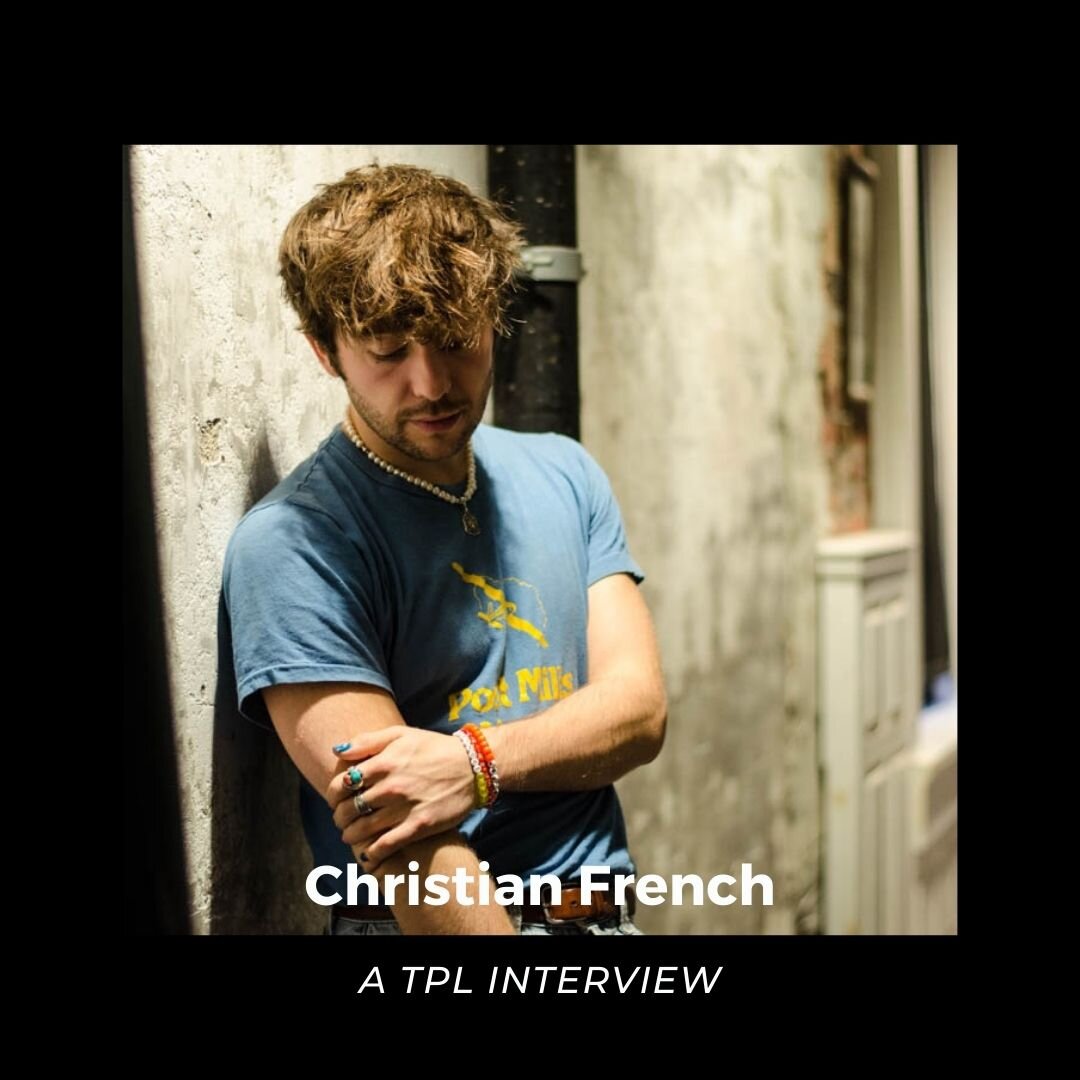
Chat In a Hat: Christian French

The rules are simple...there's a hat, this hat is filled with many questions ranging from the personal to the offbeat. We pass the hat, and artists get a chance to answer the question they choose from said hat. Fun is had by all.
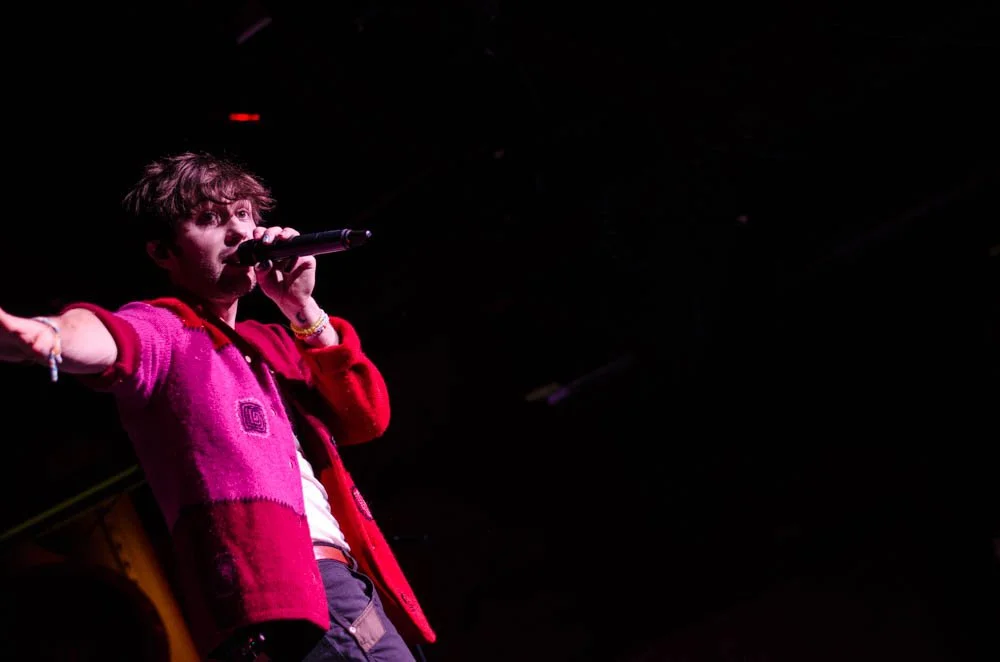
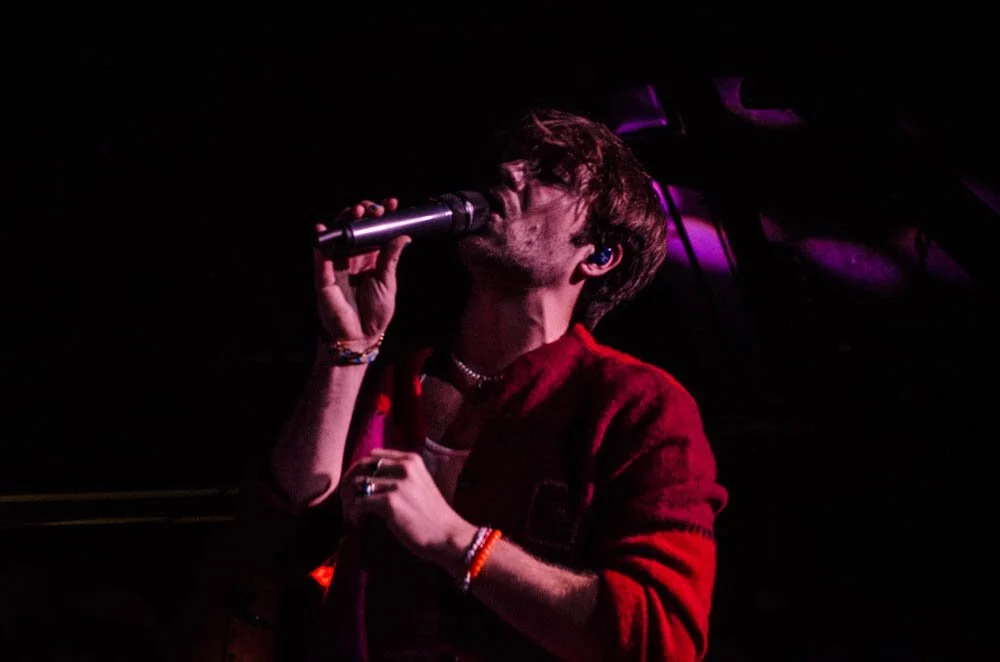
Christian French recently finished up a US tour after having to previously cancel his 2020 tour as COVID lockdown took its hold. He’s released a couple of bops in the meantime such as “Avalanche” and most recently “Oh Well”. We got to catch up with Christian at his Philly show. Read on for our interview, live photo gallery, and the latest music video for “Oh Well”.
Without further ado, here's our Chat in the Hat with Christian French:
Who is your biggest influence?
I think musically John Mayer definitely is my guy. I've been listening to him since I was three years old and my mom's just always had his CDs playing. I've always followed his albums and then a couple of years ago really started to get into his interviews and I was seeing who he was for the first time and I just really respect how well-spoken he is. So he's someone I really look up to a lot both as a person and a musician.
What was the first record you ever bought?
I got really obsessed with Queen when I was little and my sister asked me what I wanted for Christmas and it was that and an iPod touch that I wanted really bad and she's like you have to pick one. I picked the Queen’s Greatest Hits album, so I didn’t buy it, but it was the first cd that I owned. So I was definitely obsessed with Queen and then the Usher’s Confessions album was my next one that I just absolutely loved.
If you can invite two people to a dinner party who would they be?
I mean I hate to repeat John Mayer but I would love to see him there. And then Rick Ruben who is a crazy crazy talented producer that also I think is really well-spoken and really tapped into like kind of the spiritual side of things that I feel like a lot of people mess. So I would learn a lot from those two in even just 20 minutes.
What would your Wild West outlaw gang name be?
Zombie Runaway Gang. We decided last tour cause of COVID we wouldn't go home and just keep playing to zombies since there was an outbreak.
what's the last movie you cried to?
I absolutely bawled at Marley and Me and I recently watched it again and I cried again. The animal ones always get you the hardest.
What is my guilty pleasure song?
“Love Song” by Sara Bareilles. I don't know if a hit counts as a guilty pleasure song, but I love that song.
What is your favorite song on your record / EP?
I got this song called “oh well” coming absolutely loved. I wrote it just in the middle of the pandemic when I was going through a super shitty time and instead of writing this super snippy sad song I tried to have fun with it and that’s what we came up with and I love it. Then a song that’s out I'm really proud of is “Head First”, and I'm really really proud of “Avalanche”.
Would you rather have the superpowers of fly or to become invisible?
I've always wanted to fly and every once in a while you get those dreams where you do fly for a second and it's a blast.
If you could be an animal for the day what would you be?
I mean if it's forever I would be a dog cause they just get to vibe and love you and that’s about it. I don't know I would want to be deep in the jungle but also not be an animal that would get eaten.
Outside of music do you have any hobbies?
I love cooking I'm like the house Chef for my roommates and I love being in nature so we go camping every couple of weeks. I played ice hockey my entire life and I haven't recently because of COVID. I’m in a men’s league playing with some 40/50-year-olds. Then I like to read as well.
What is your favorite song and or album right now?
I am currently in love with the War on Drugs. A Deeper Understanding is just one of the best albums I've listened to in a long time, but I just found it a few months ago. My favorite songs off that are “Pain” and “Thinking of a Place”.
Favorite scary movie:
Insidious.
What is your zombie apocalypse plan?
We're stuck in the Sprinter van. Set up all the gear in the trailer then drive and play at the same time and shoot lasers at the zombies from the guitars. We will fix the zombie apocalypse






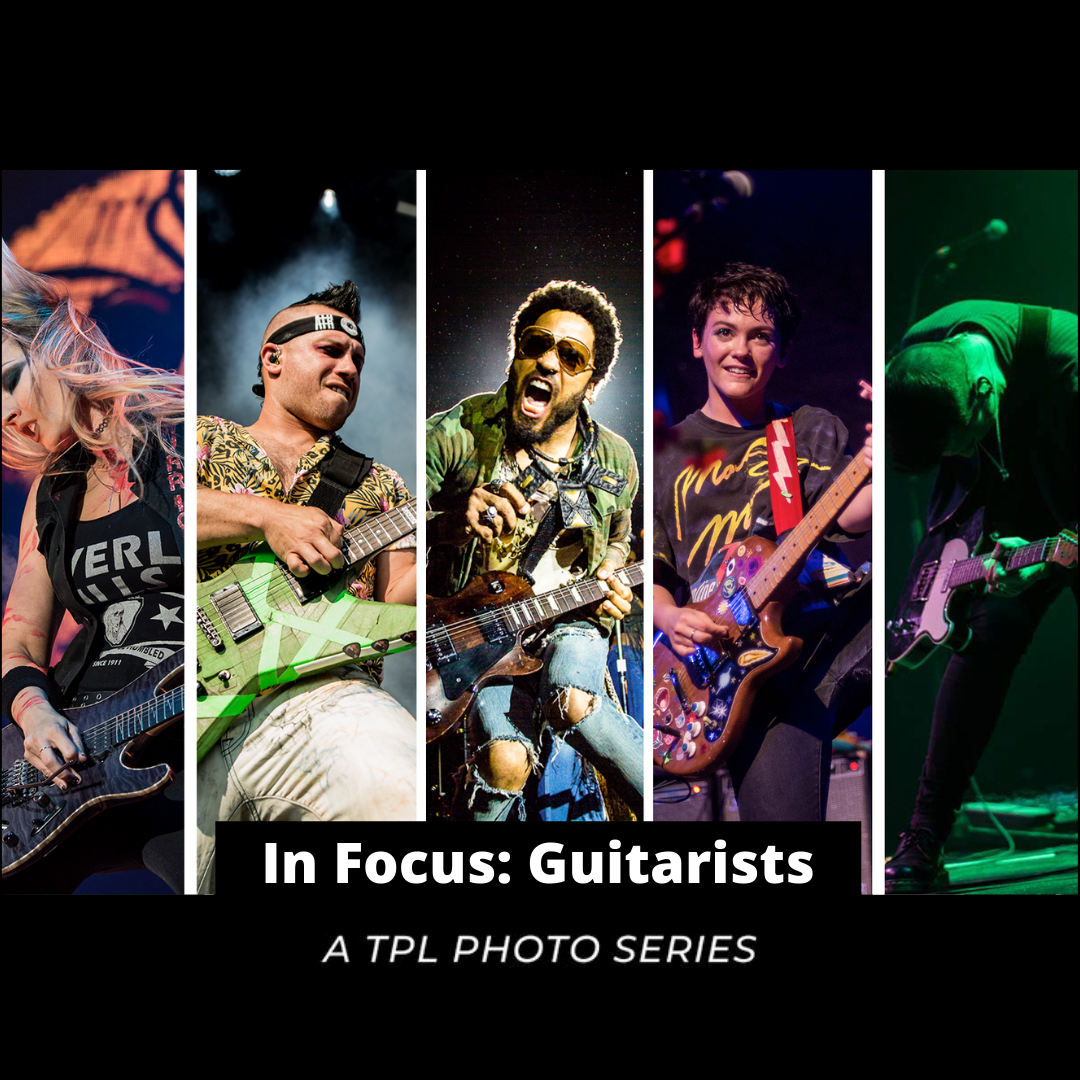
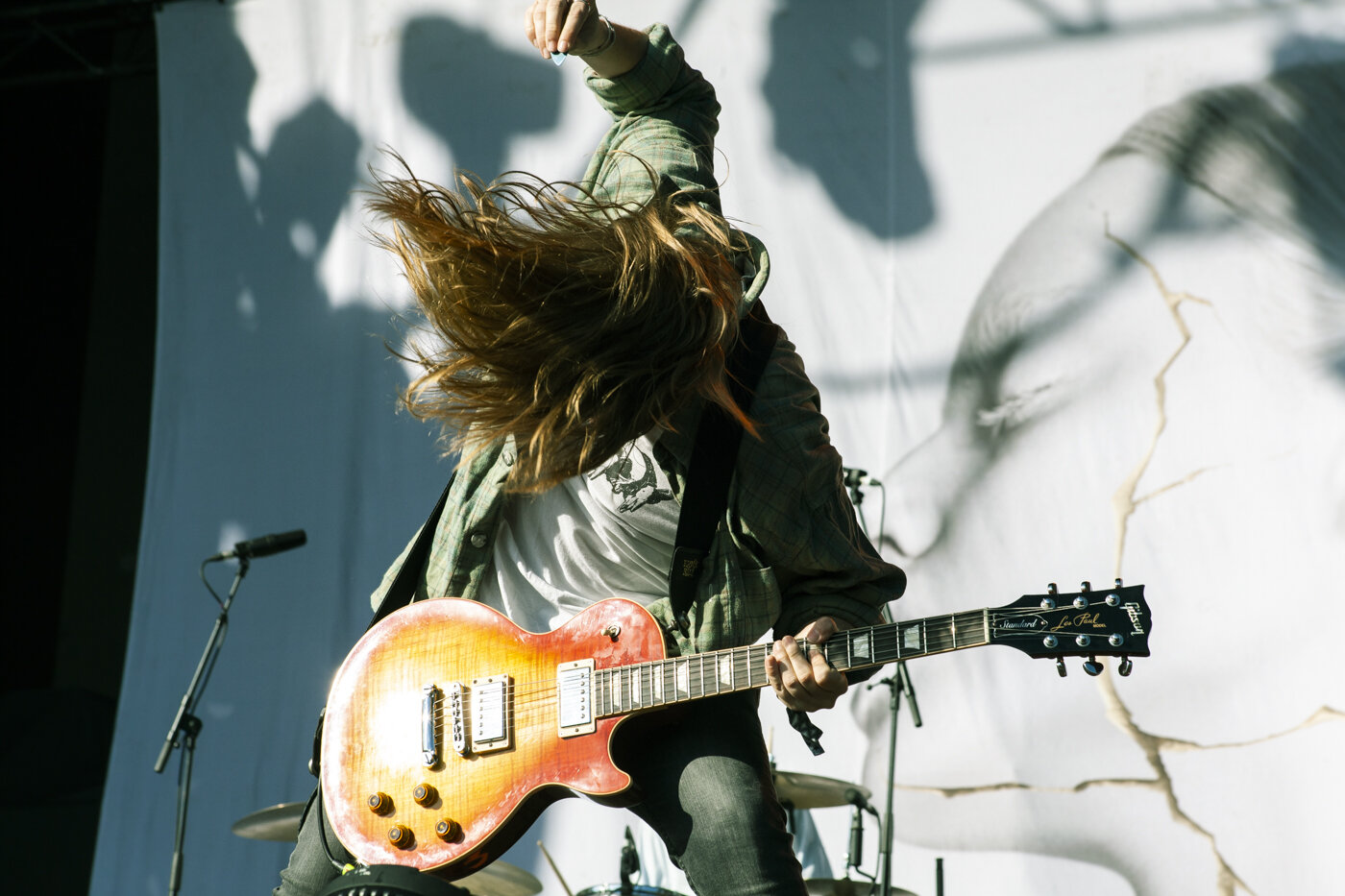
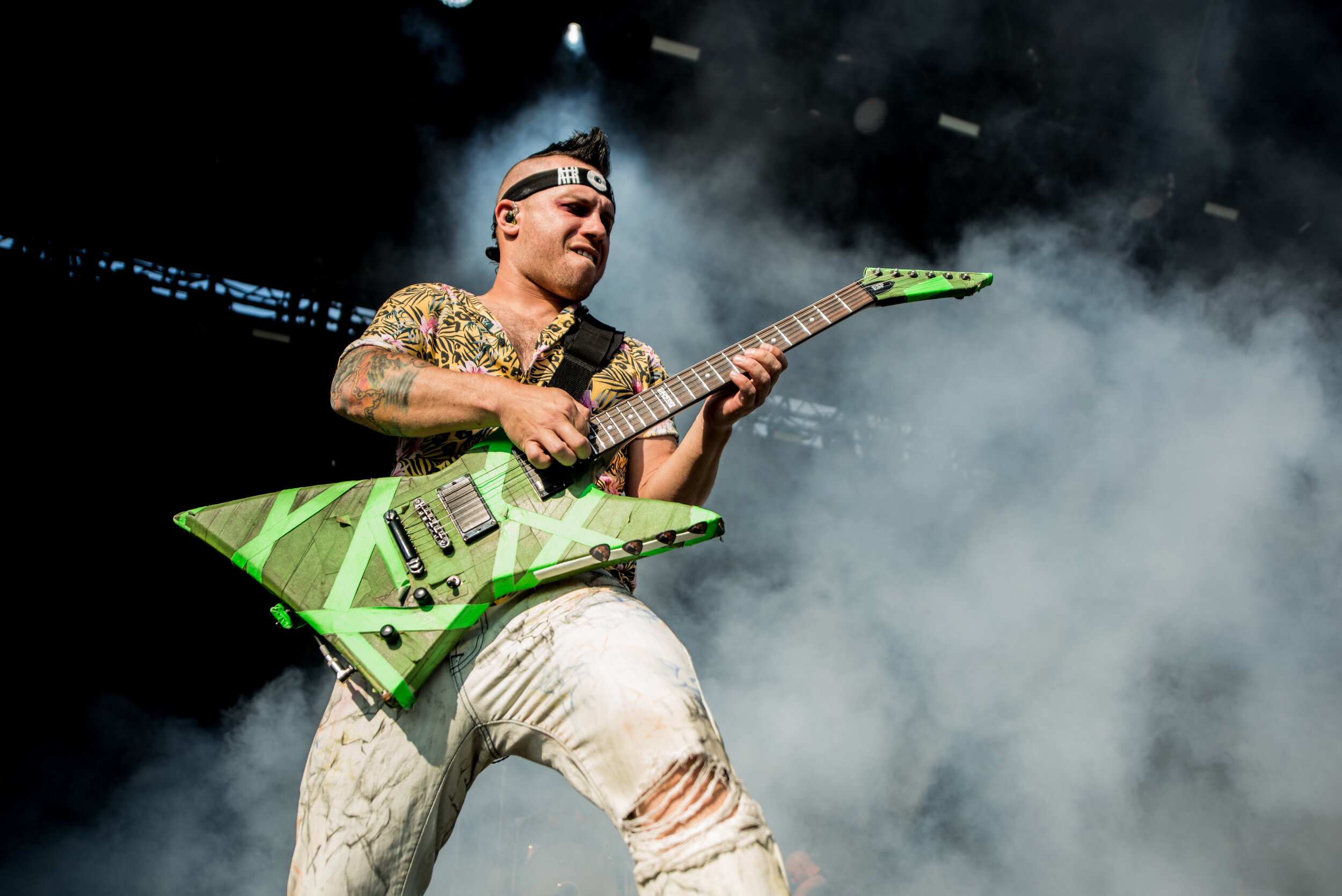
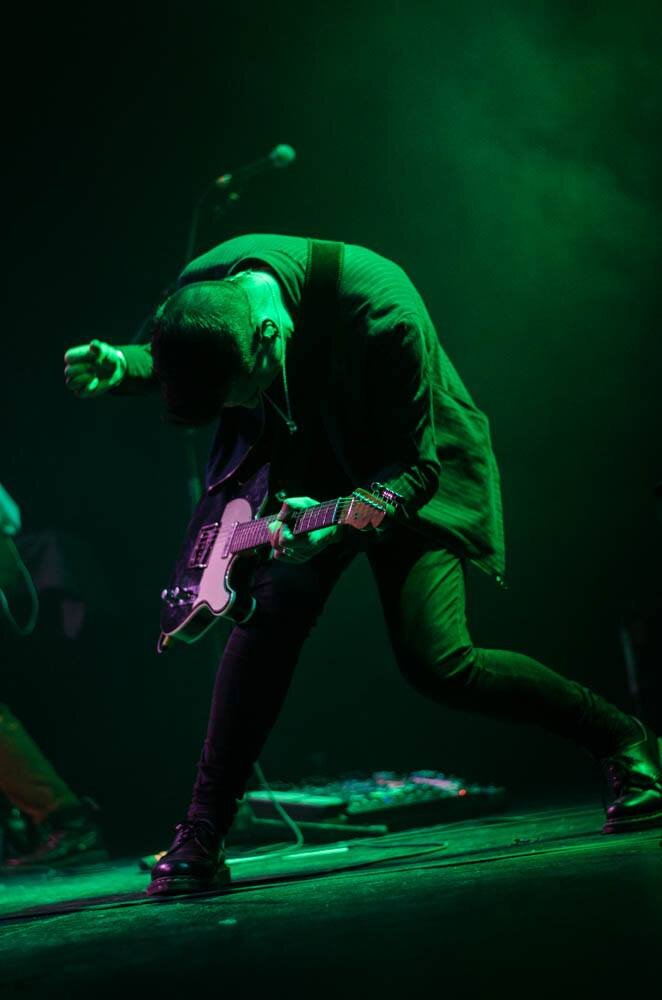
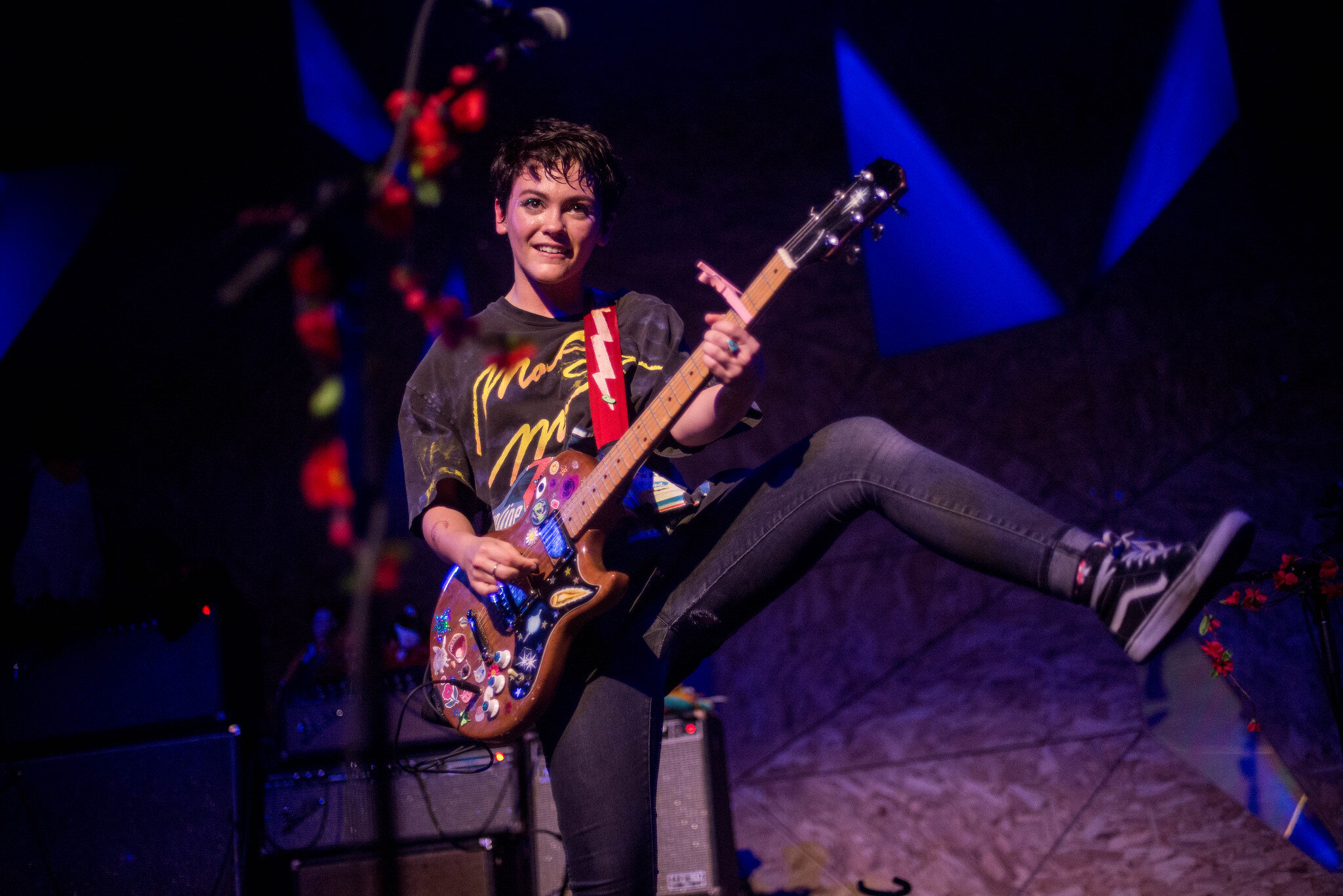
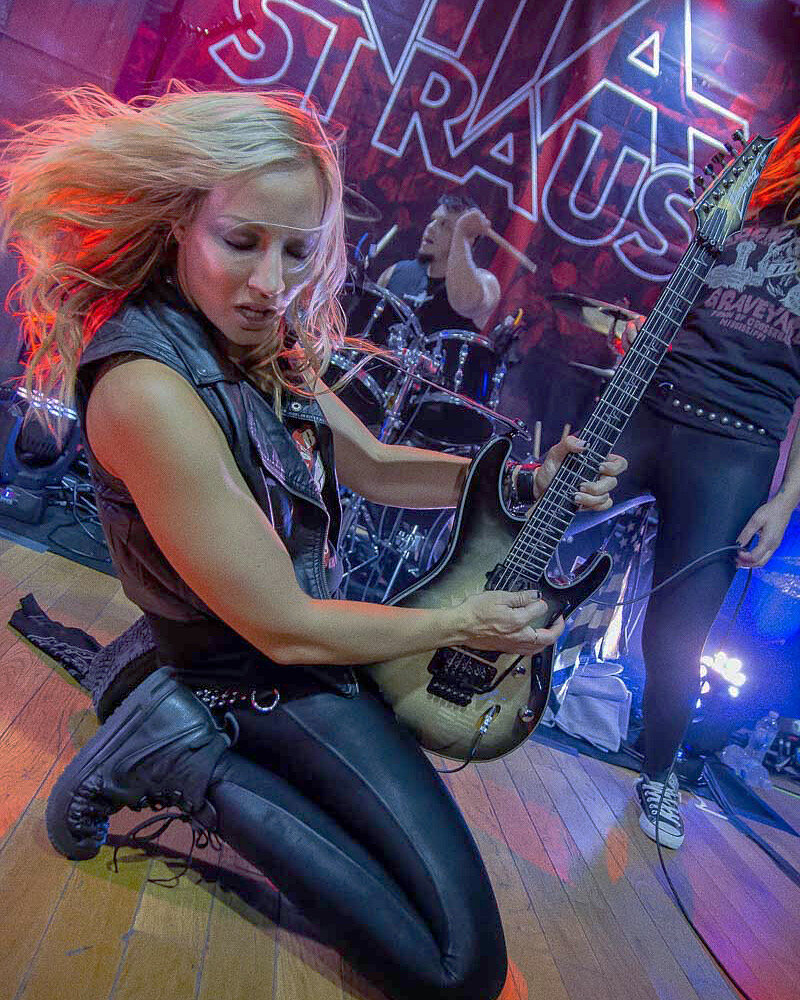
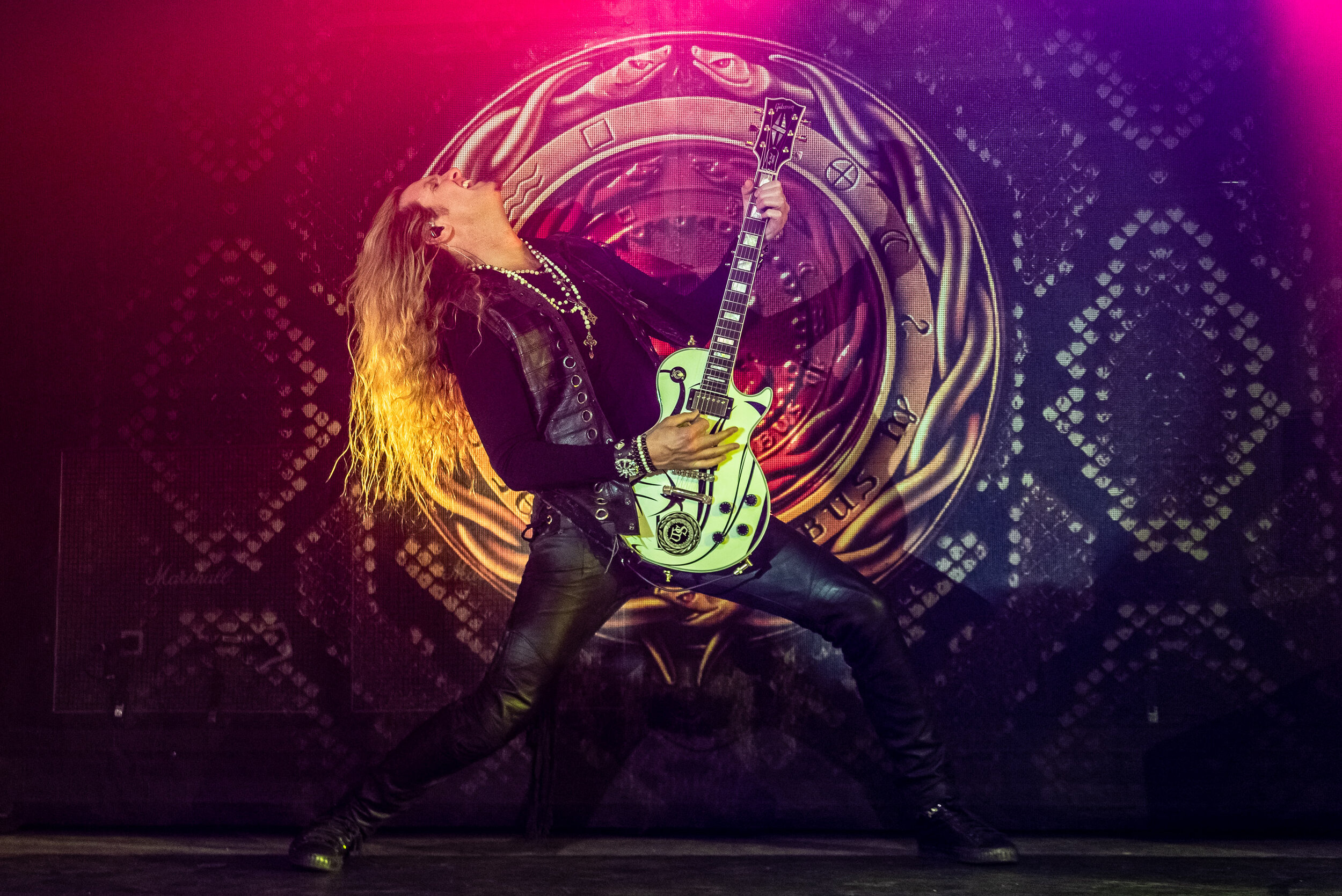
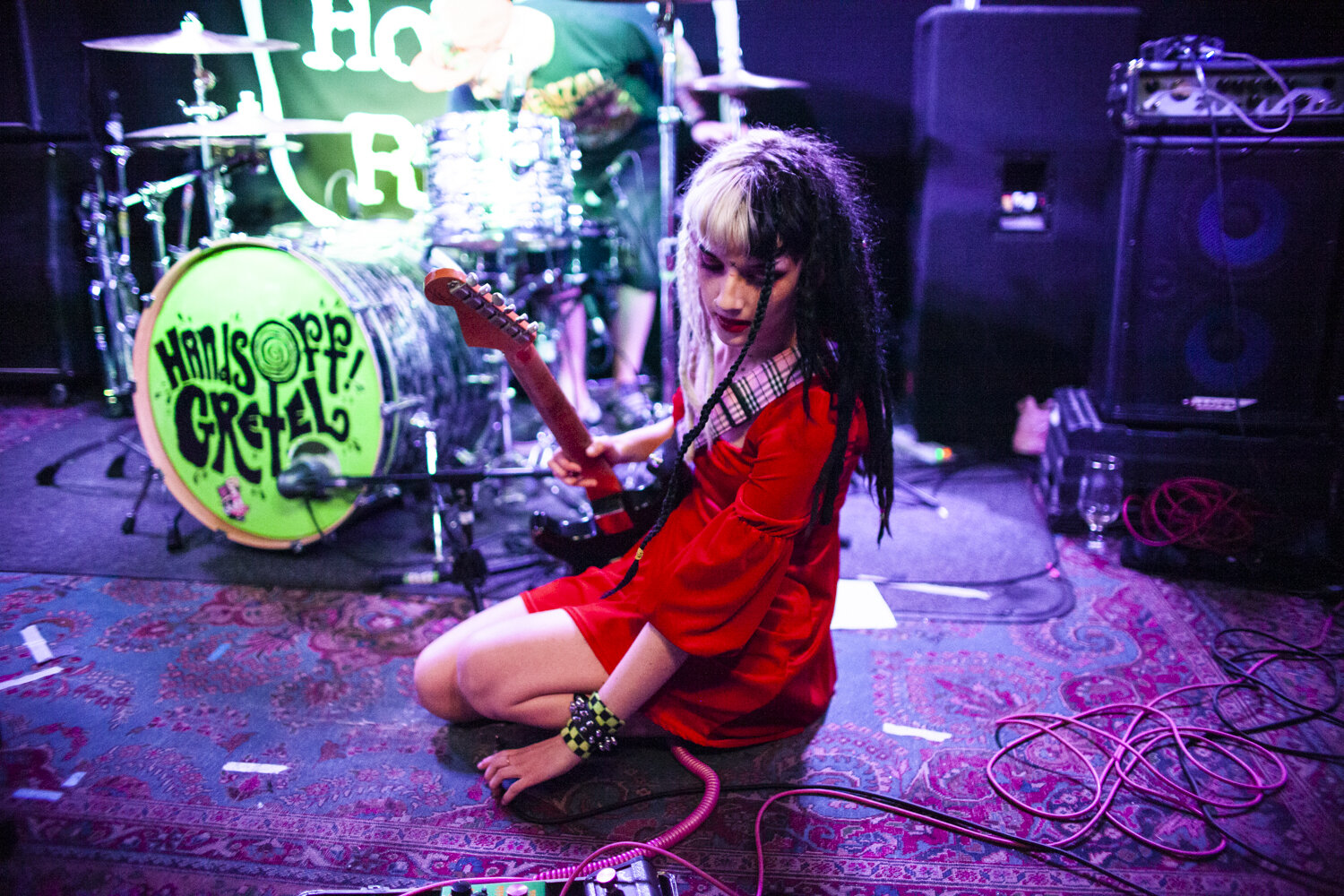
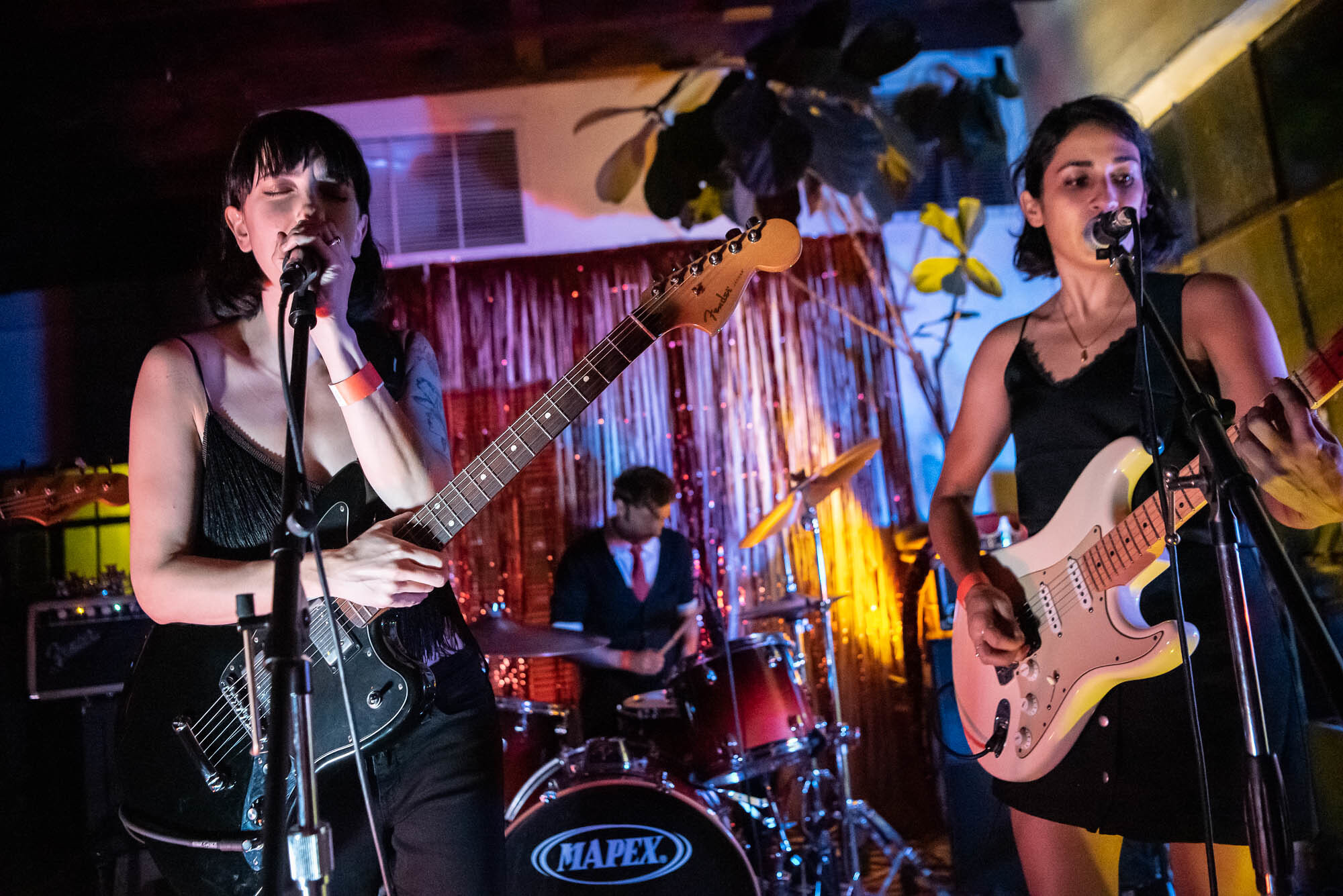
In Focus: Guitarists

Cover photos by (left to right): Ana Santos, Joanna Glezakos, Violeta Alvarez, Edwina Hay, Carolyn Lederach
In Focus is a Photo Ladies collaborative photo series that showcases our members’ favorite photos, focusing on a different theme each month.
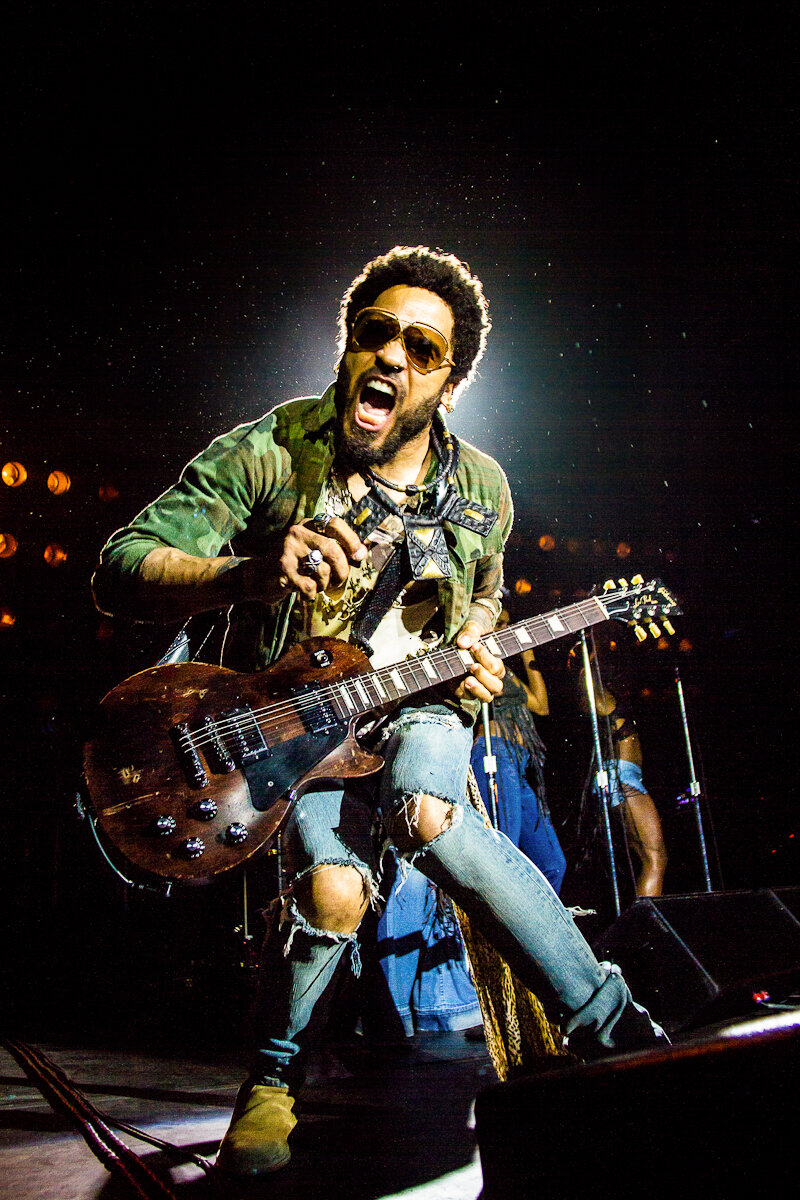
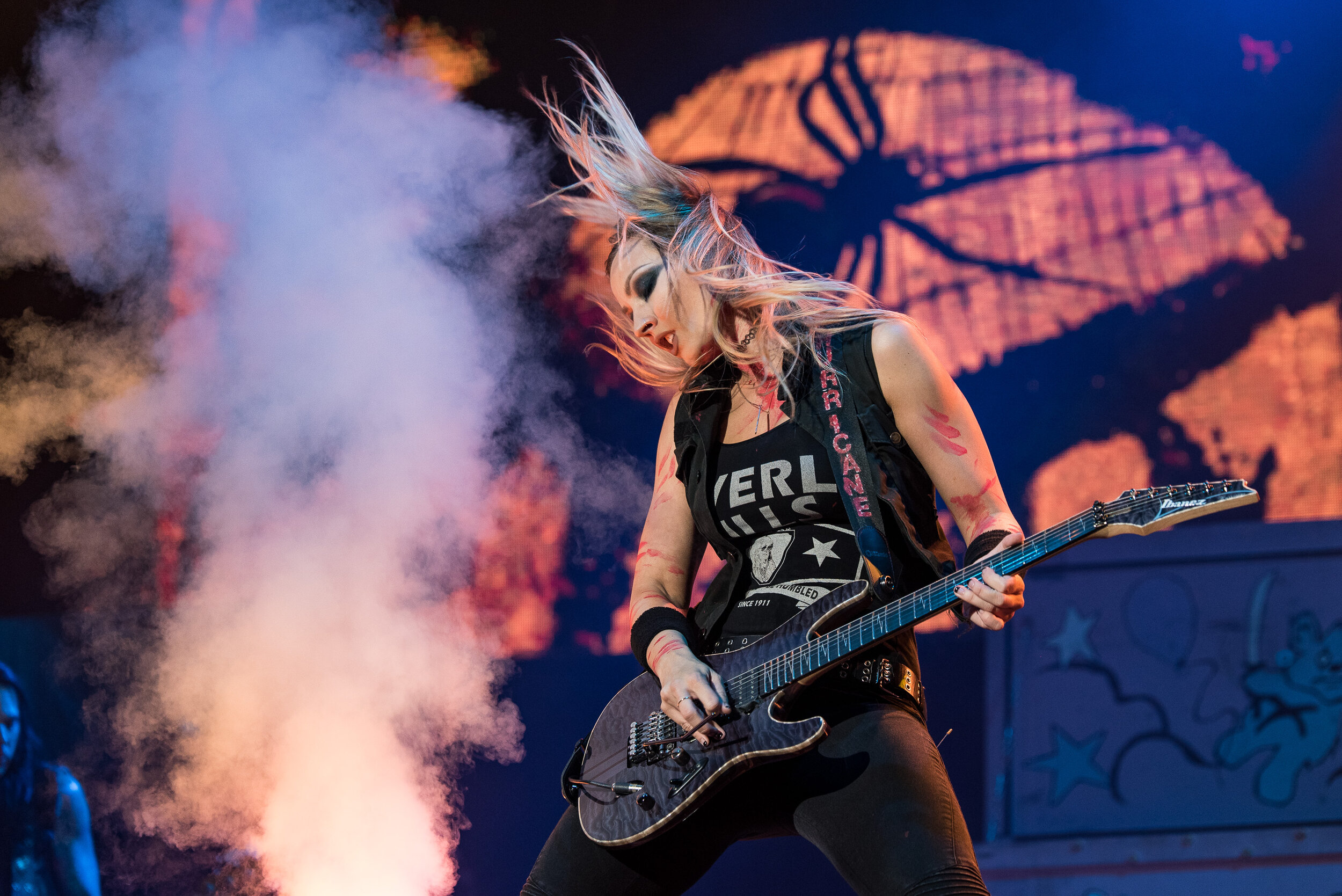
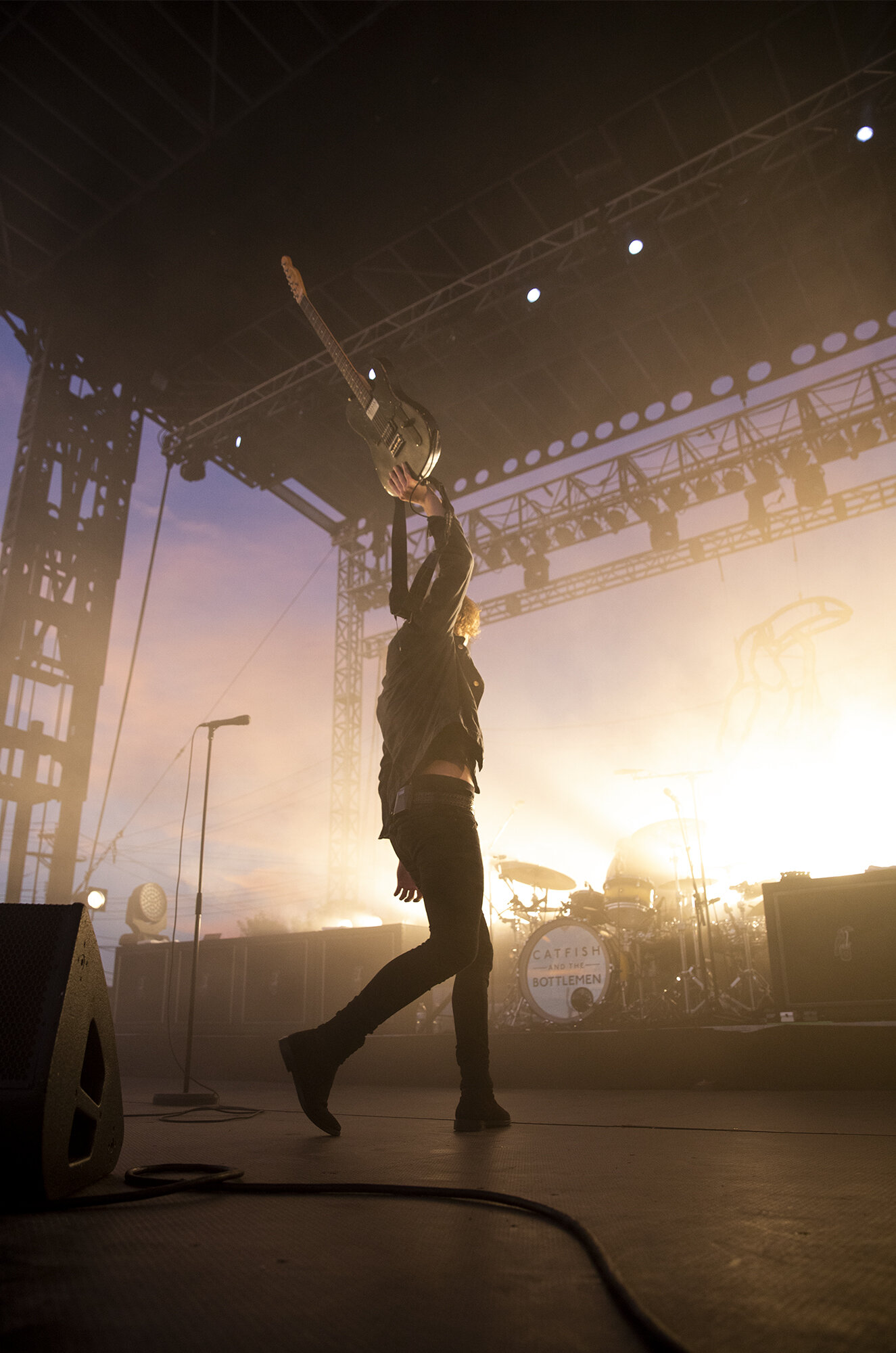
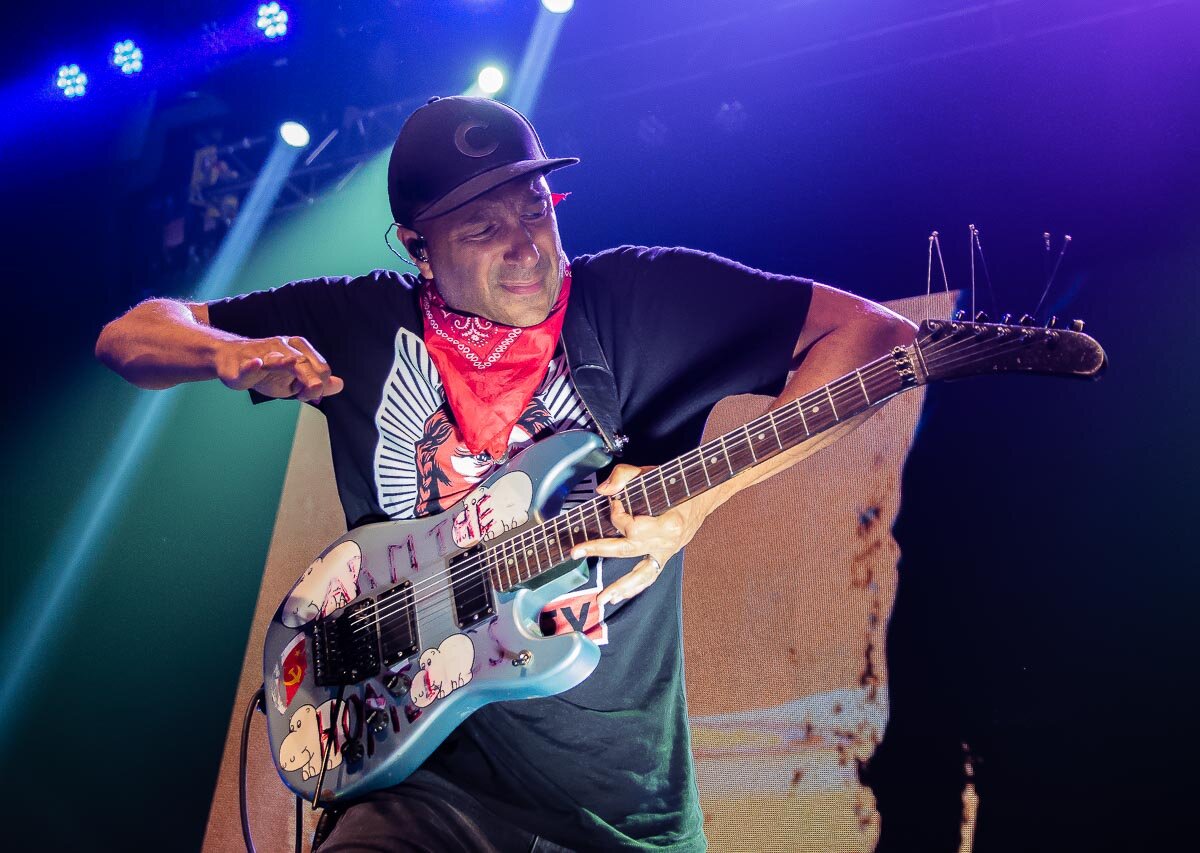
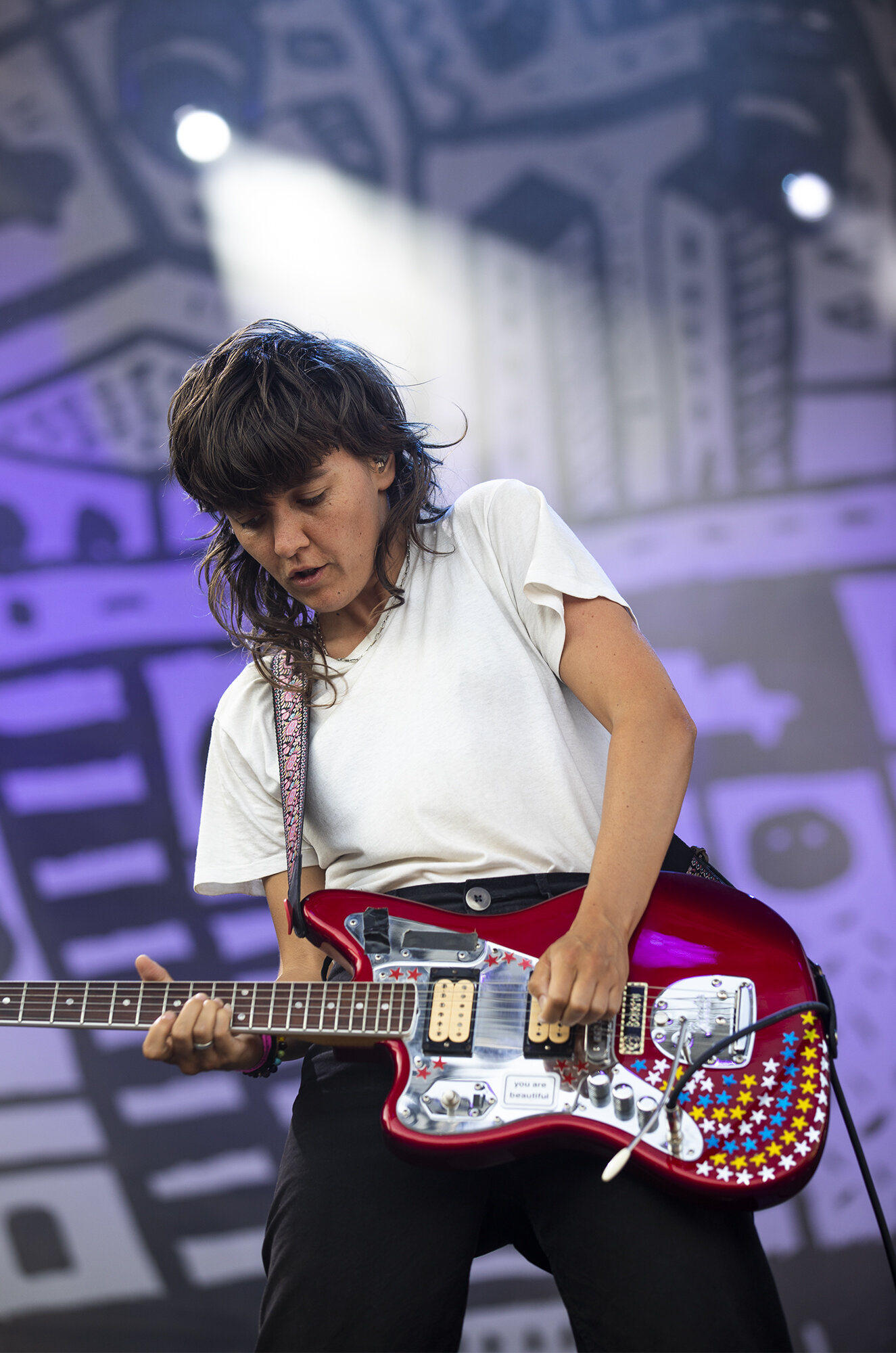
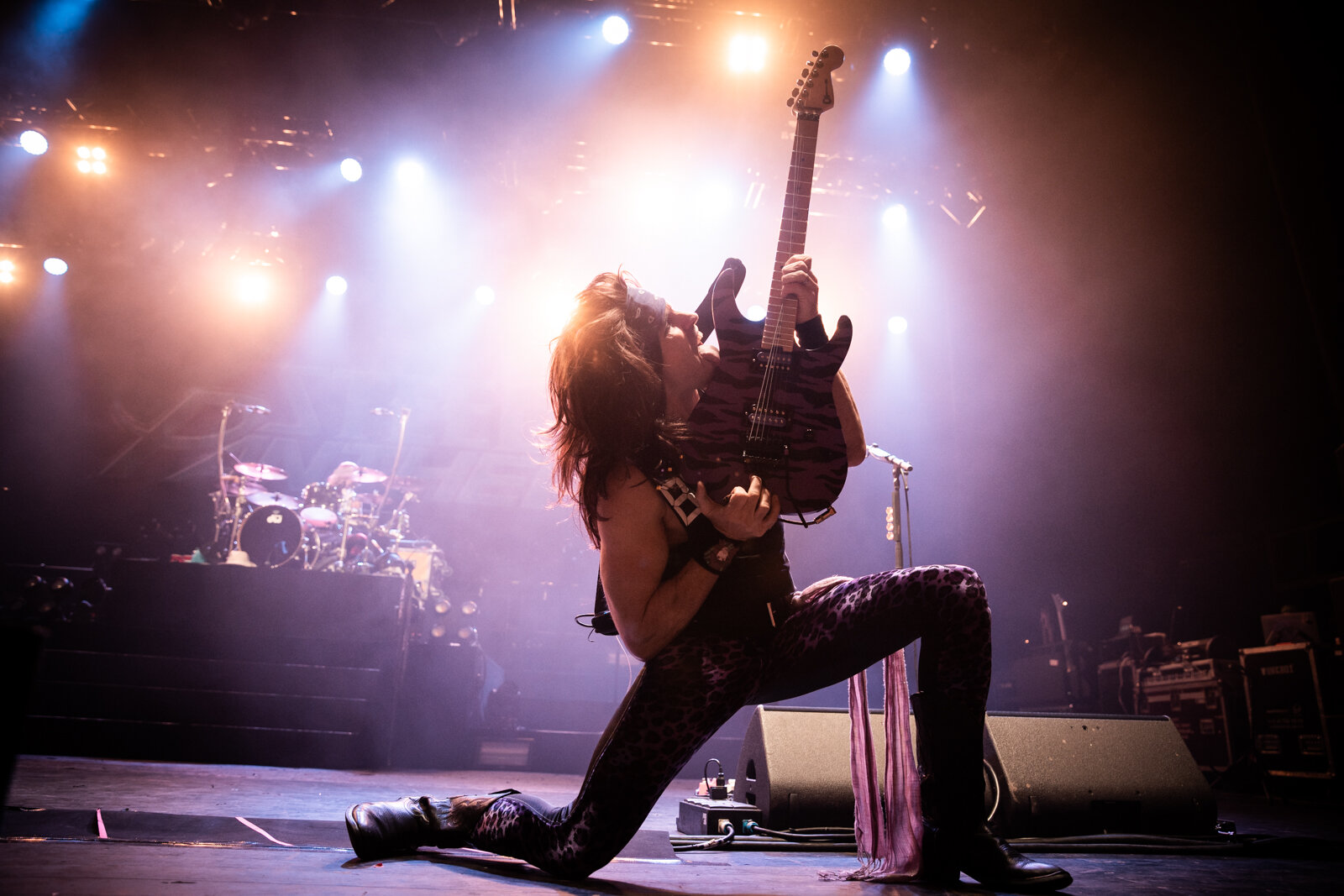
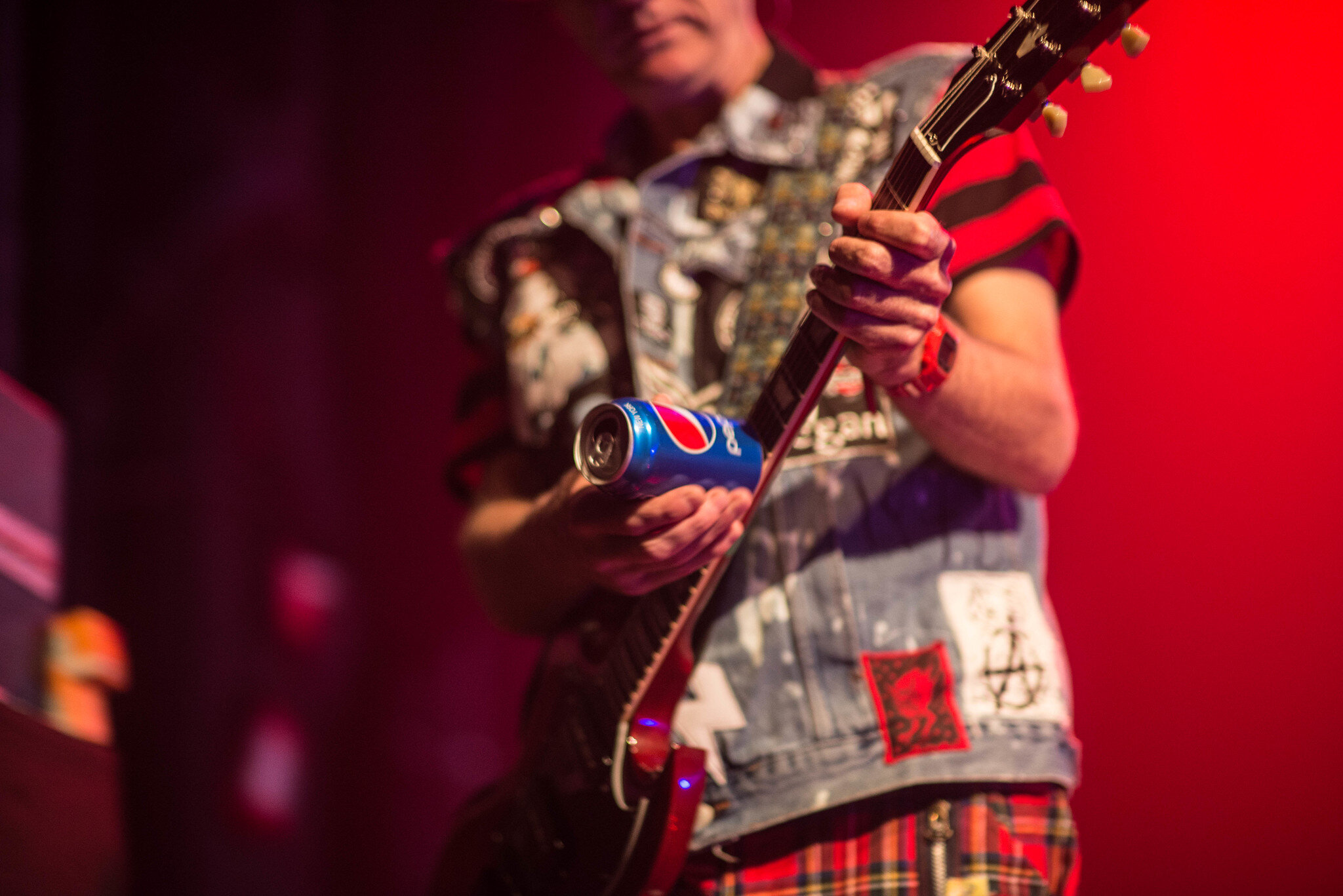
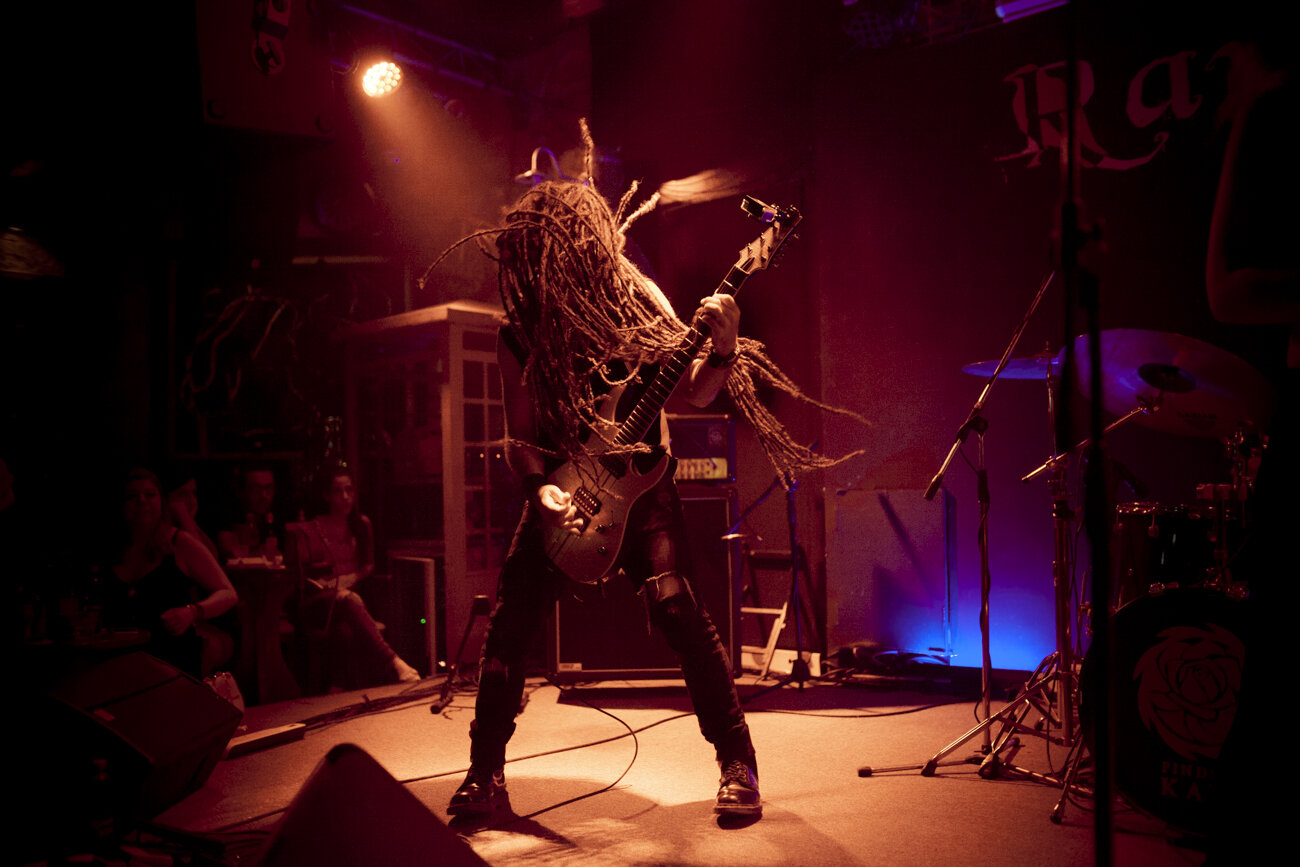
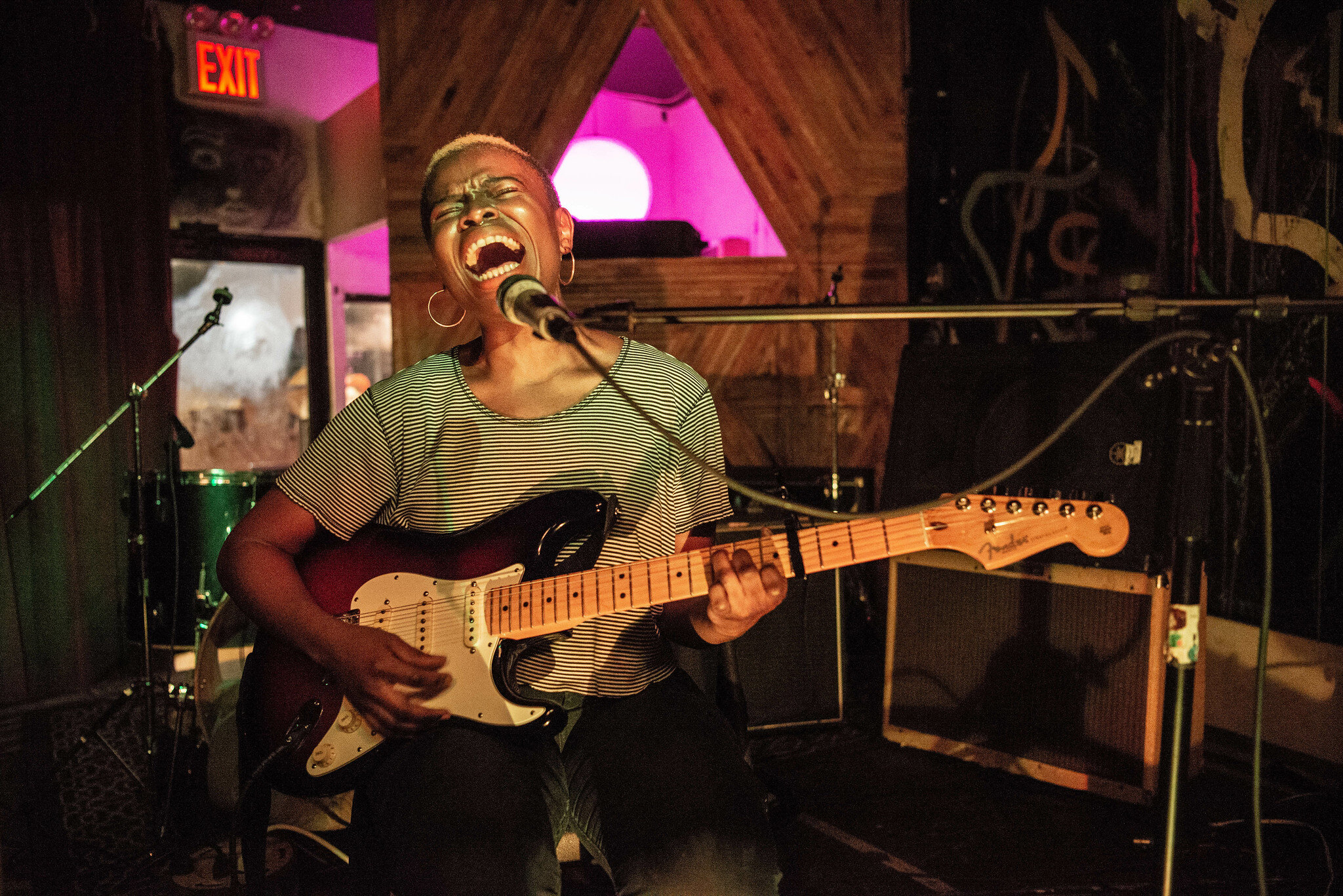
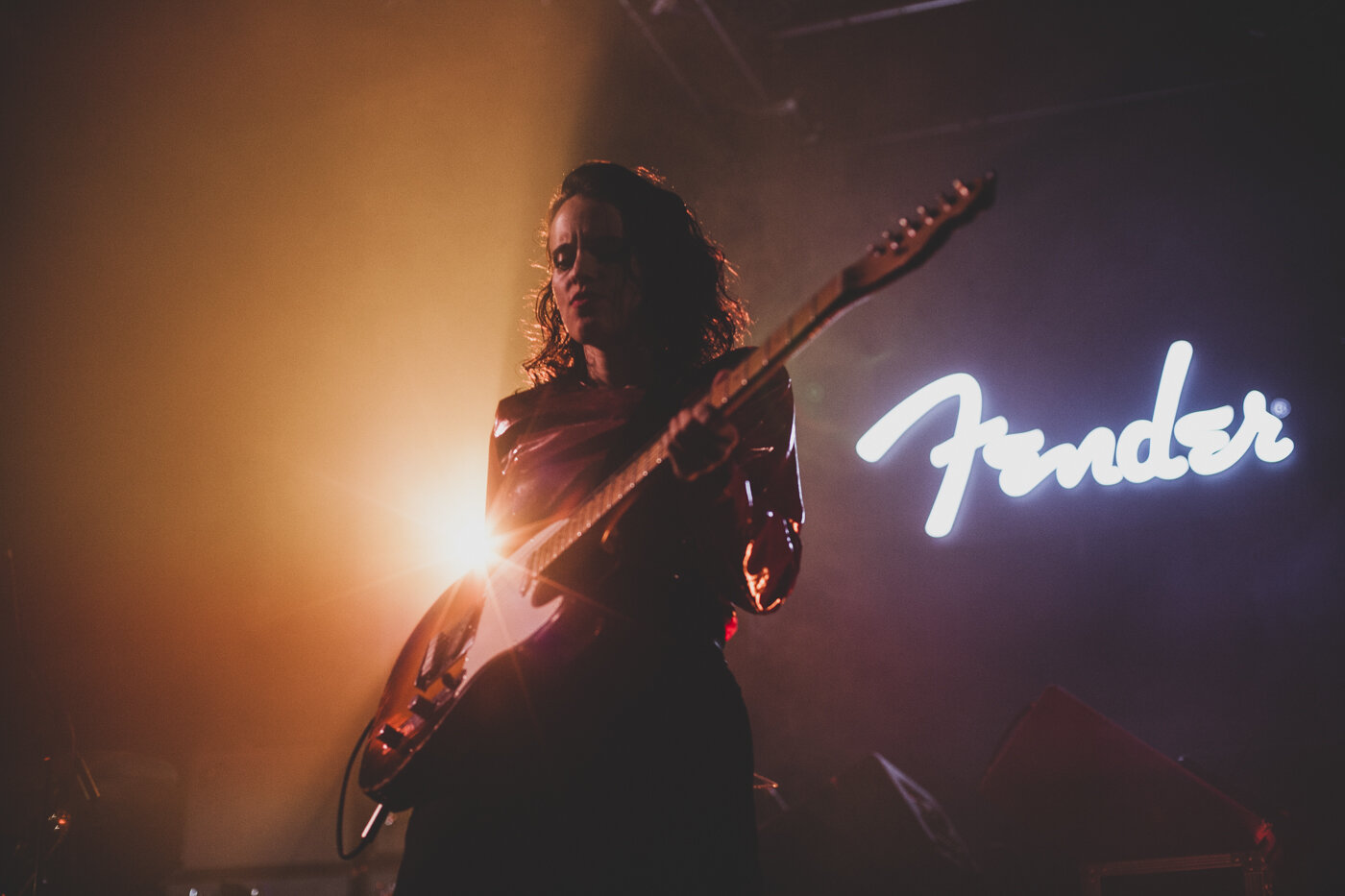
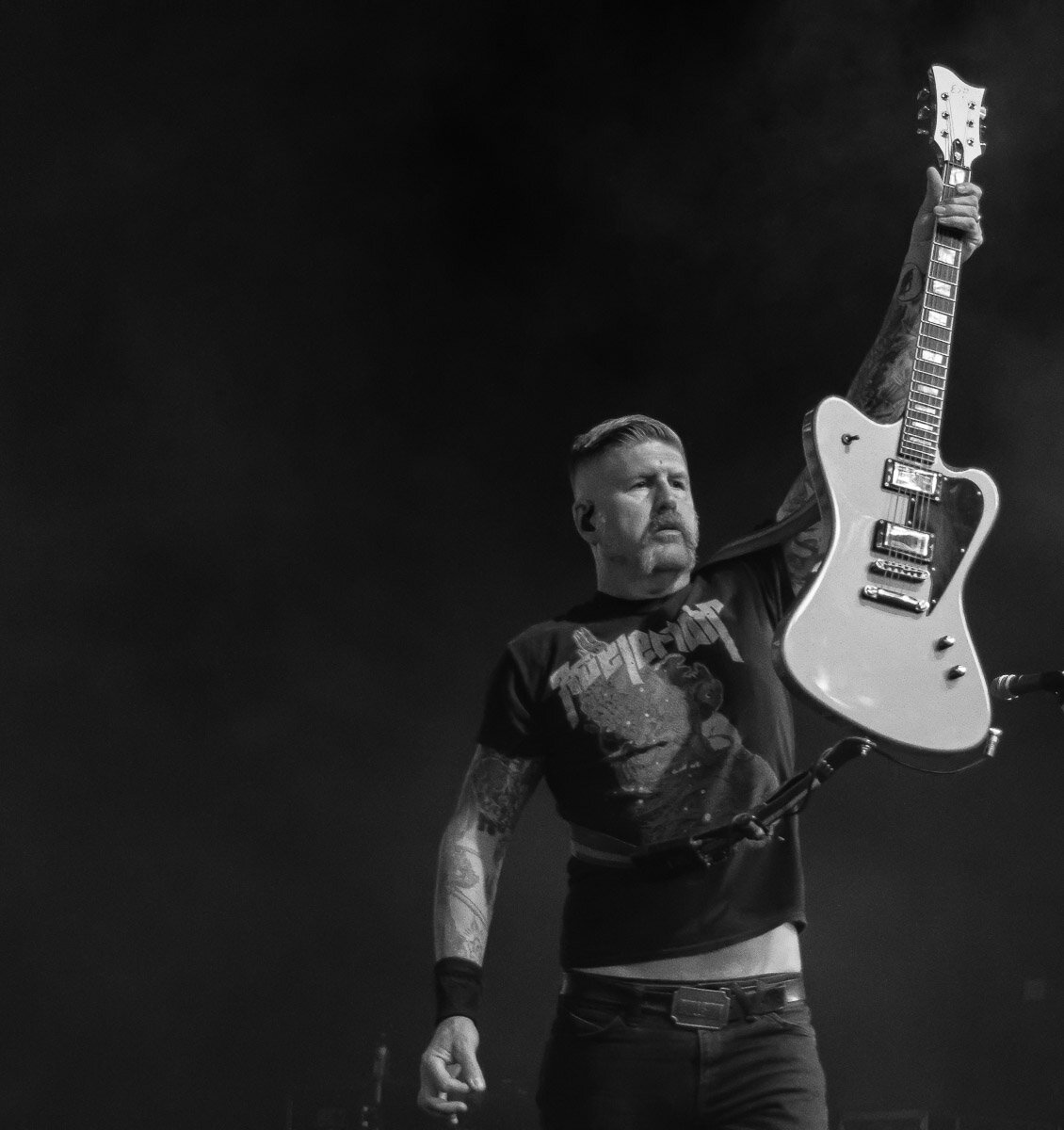
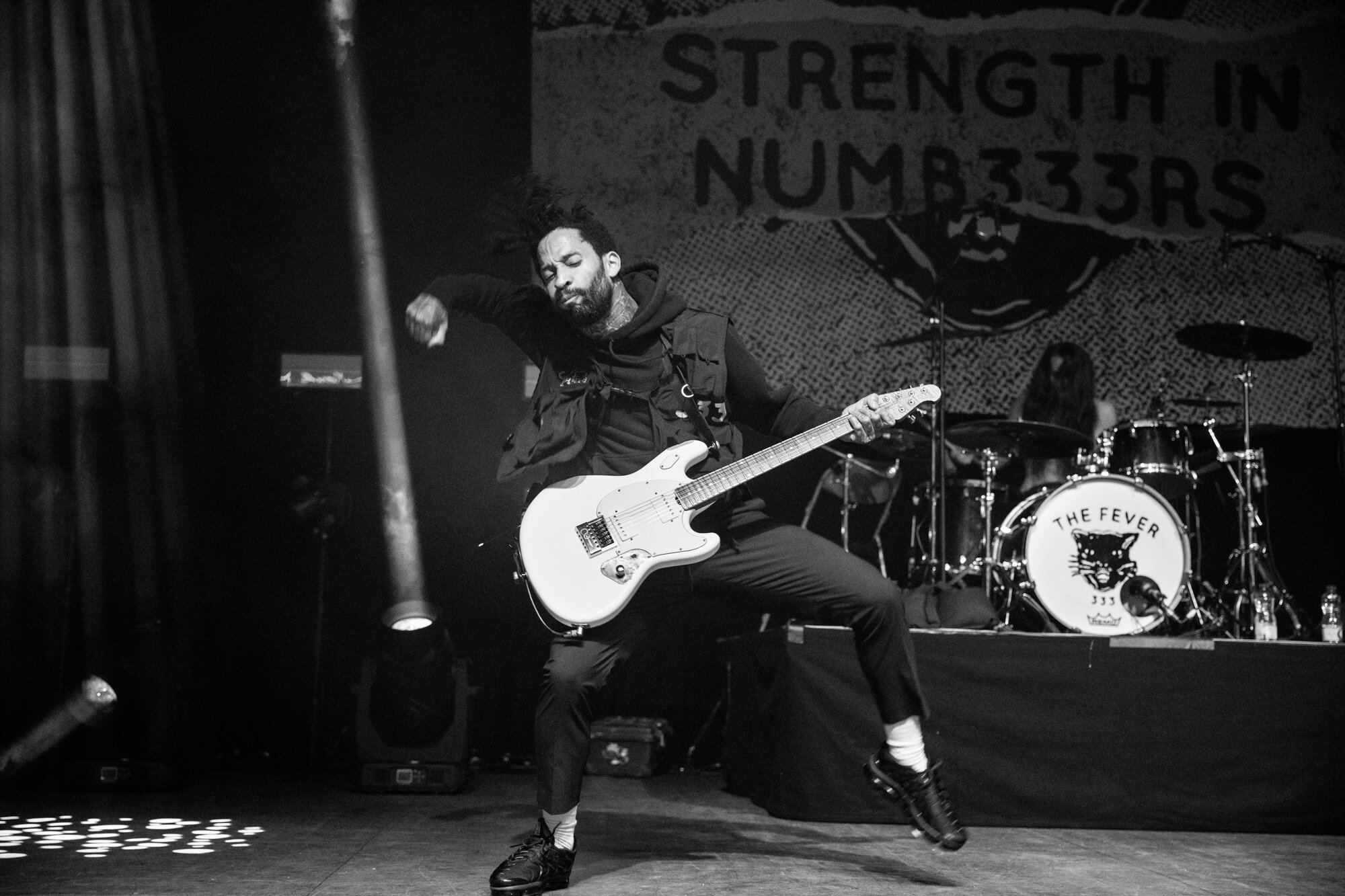
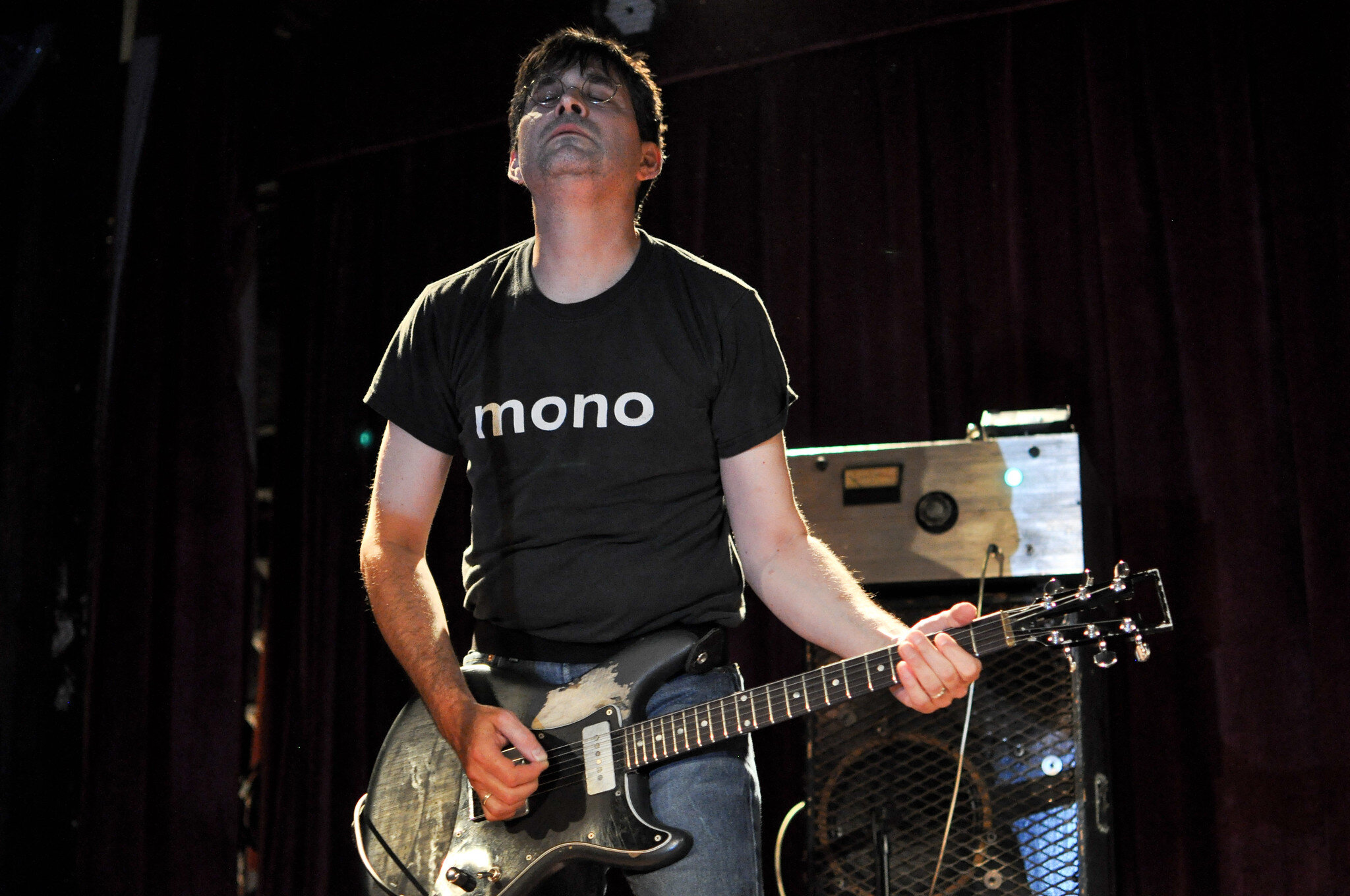
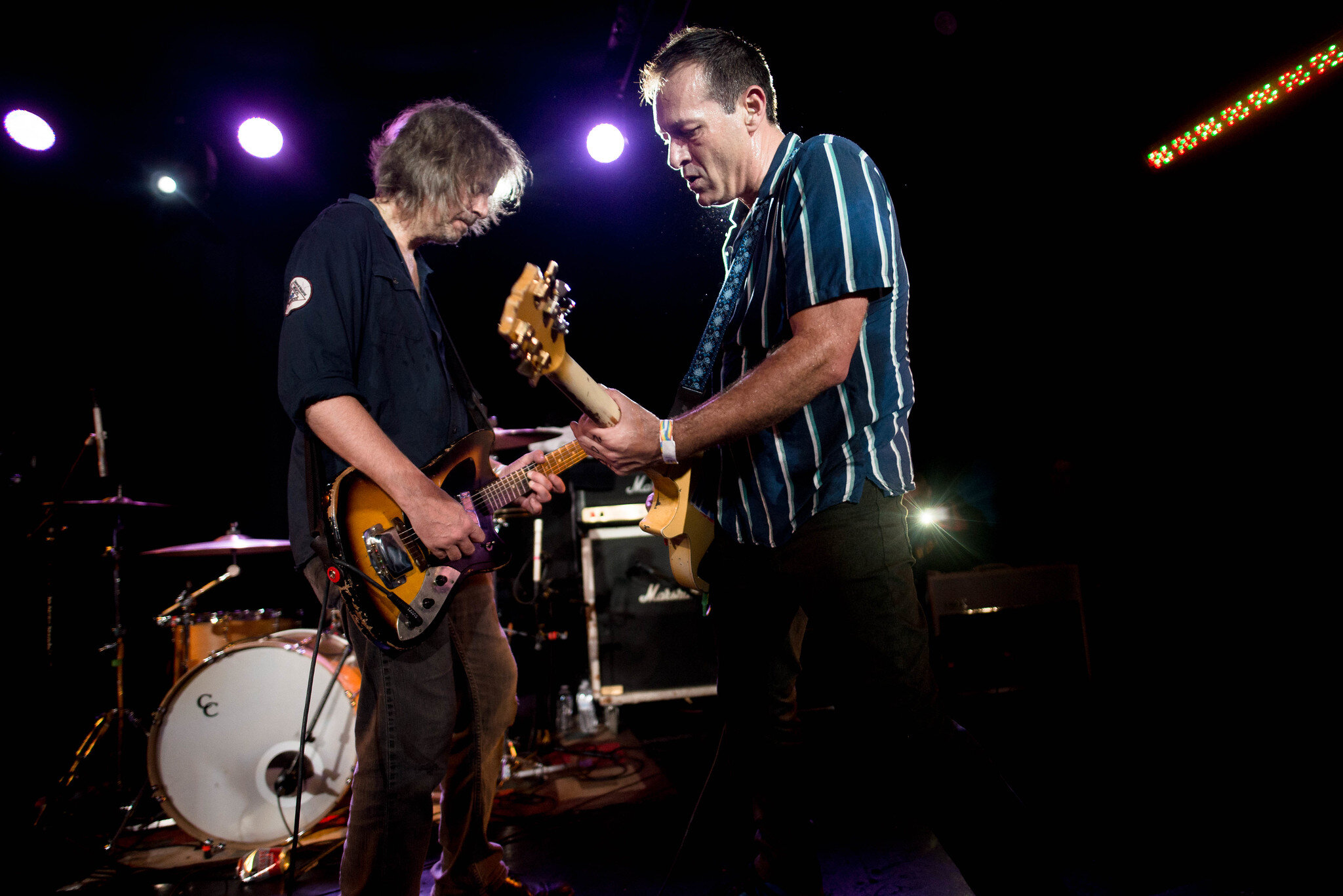
Guitarists will often steal the show with their prominent stage presence, but we decided to dedicate one of our In Focus features to them anyways. From small local venues to large festival stages, from names you’ve probably never heard before to Lenny Kravitz- we’ve got it all in the gallery below.
Check out our previous In Focus galleries here: Drummers | Keyboardists | Bass Players | Jump Shots | Crowd Surfing | Shot on Film | Epic Mic Shots | Festivals
ⓒ All photos are subject to copyrights and cannot be used without the photographer’s permission
Interview: Silver Relics

Silver Relics
Interview By: Emily May | Photo: Gail Thacker
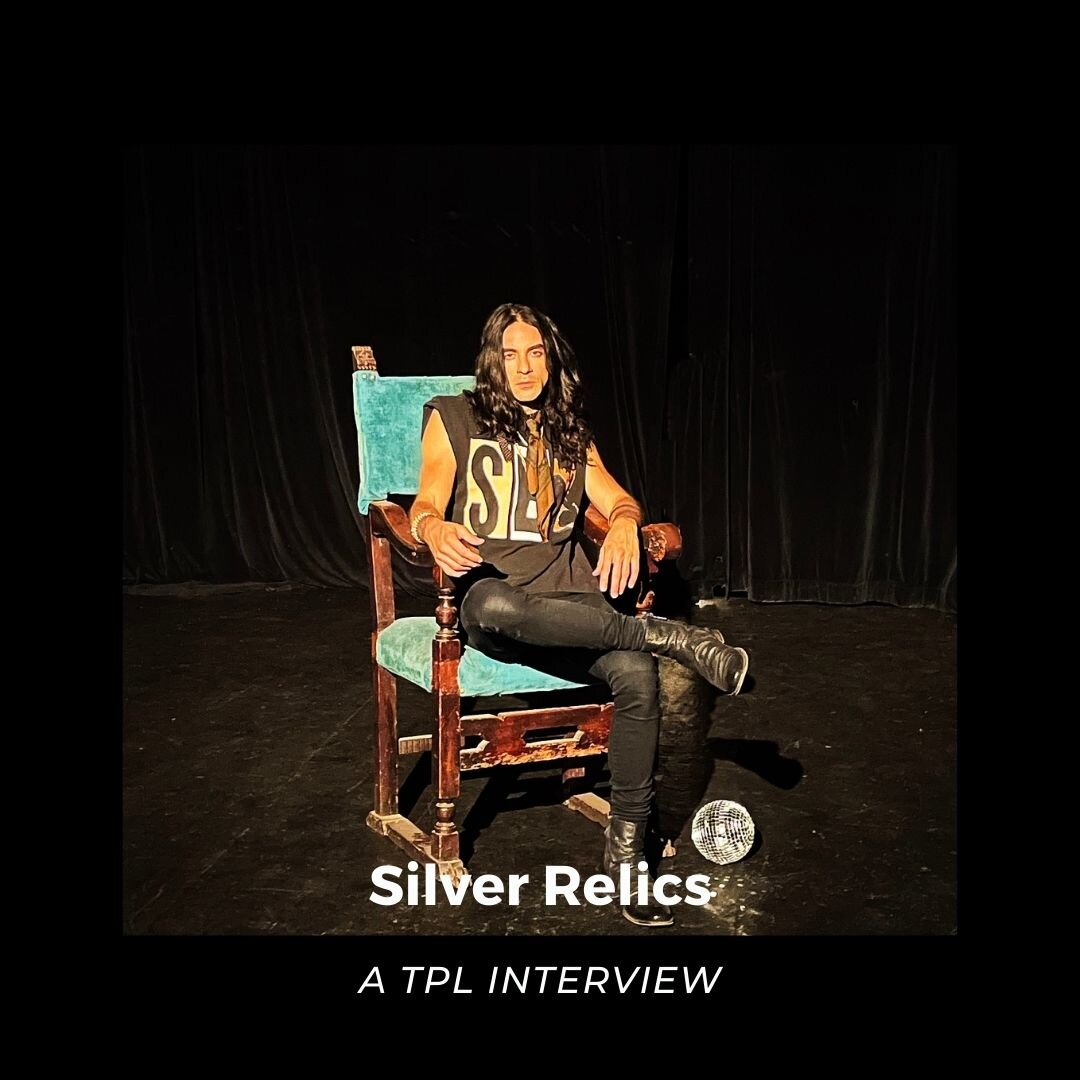
New York-based singer/songwriter/performer Alex Sepassi knew from a young age that he wanted to make music. He honed his raw talent as a vocalist and performer at the age of ten and as a songwriter in his late teens. Heavily influenced by the British songwriters of the 1960s and 1970s, he later discovered psychedelic and brooding 80s indie rock. In late 2017, he and drummer Justin Alvis formed the New York psych-rock band Silver Relics, an art project that centered around the music and which blended classic and modern sounds. They released their first album, generic., in May of 2019. The album was produced by acclaimed producer Howie Beno, whom Sepassi met in 2016, and was well-received in the US and Europe. After a successful tour of Ireland and The UK that summer, Alvis made the decision to depart the band to pursue other things and Sepassi brought on bassist/composer Mark Crozer [The Jesus and Mary Chain], drummer/producer Brian Young [Fountains of Wayne], and drummer Hitomi. In what could be labeled a period of rebirth for Silver Relics, working with the new line up has given Sepassi a fresh perspective and excitement for the new music being written. Silver Relics is currently finishing their sophomore album, mixed and produced by Brian Young, is due to be released in early 2022. The band recently released “Tails”, the first single from the new album, with the concept being based on the union between the human and animalistic traits that exist in all of us. With plans to finish the album by the end of this year, the band is very music looking forward to playing the new songs live and on tour. Make sure to follow Silver Relics via the links below to stay up-to-date on all upcoming album and tour news!
WEBSITE | FACEBOOK | INSTAGRAM | TWITTER | SPOTIFY | SOUNDCLOUD | YOUTUBE | BANDCAMP
You started honing your talent as a vocalist and performer at the age of 10 and as a songwriter by your late teens. What can you tell me about your childhood and discovering your love and talent for music at a young age, as well as developing an interest in your other artistic mediums, such as painting?
Alex: It's been an obsession since I can remember. I naturally gravitate towards artists and the community, so in a lot of ways, not much has changed. My teachers have always been encouraging and have helped me develop an aptitude for writing. I surround myself with music constantly. When it comes to painting and my other areas of interest, I naturally take a much different approach. With music, I know how something should sound, whereas with painting, the process and outcome is more open and undefined. It's all about expression and intention when it comes down to it.
Having started writing songs at a young age, what was that process like for you in the beginning and how has it evolved over the years?
Alex: When I first started writing, I was very particular about how the songs compared to the bands I listened to at the time. That's how I gauged how far along a song was. It's a practice, just like anything else, so over time I refined my sound and mysteriously lost or did away with the idea of comparison towards existing artists. It’s been one big freeing growth experiment.
You have said that songwriting is your expression and interpretation of your conscious and subconscious. I have heard other artists discuss how at times they have had songs write themselves. Have you ever had songs of yours write themselves, almost like being channeled from your subconscious?
Alex: Yes! That happens frequently. I think the key is understanding and managing my relationship with my subconscious. If you're a musician you've probably heard the phrase “don't overthink it.” It's annoying but true. In my experience, songs that write themselves happen when my mind has already made the decision for me not to overthink. It feels like I'm at my most creative in those moments.
You formed Silver Relics in 2017 with drummer Justin Alvis (who has since left the band) and have said that the band operates as an art project centered around the music. What can you tell me about incorporating painting, fashion, photo and film, and poetry, as well as live shows, into the project and how all of those other modes of art inspire and influence you?
Alex: I like to surround myself and my life with art/artists. The art-based concept is meant to express our vision for art and the community. It seems natural to incorporate conceptually for this band. Music outside of the scope of music while incorporating it into the music.
You have said that Silver Relics has a "songs first" approach. How would you describe that approach?
Alex: Yes, I do say that a lot. It's true. When I write a song, it's usually just me and my guitar, so I develop a certain relationship with it from the beginning. It's important to me that we're mindful of the roots of the tune when we're working out parts as a band, so that the integrity remains intact at every stage. I've been told it's a classic rock type of philosophy, and it serves as a guide even if or when the arrangement, key or tempo changes.
You met and started working with renowned producer Howie Beno in 2016 and soon after started recording the material that would comprise the band's first album. What can you tell me about meeting and working with Howie and what you have learned from working with him?
Alex: Working with Howie Beno was brilliant. And it happened to coincide with a pretty large and creative growth spurt for the two of us. Howie's philosophy, focus and work ethic were exactly what I was looking for while writing “generic.” He pushed and challenged me on pretty much every vocal take and was in constant pursuit of growth and perfection. He was a lot of fun to work with behind the booth. One of my favorite things Howie has said is that a song is just an ongoing conversation up until the point of release. The cement doesn't settle until then, as he put it.
Justin recently left the band to pursue other things and you brought on Mark Crozer, Brian Young and Hitomi. What can you tell me about meeting these artists and bringing them into the band? What influences did they bring with them and in what ways have they informed the sound of the band? Have they changed your perspective on how you approach the band and the music you write?
Alex: I love everything about this team. Working with Mark, Brian and Hitomi has brought so much definition to this band. During the pandemic, it took time to reexamine or redefine the concept of team. I feel very lucky that we're collectively working on this album together. It's been an easy adjustment for us to mesh stylistically from the beginning. Right now, Hitomi, Mark and I have been working with our engineer, Brandt Gassman, in his Williamsburg studio. Brian and I worked together in his LA studio last month and have our next sessions scheduled at the end of October. And with that I can say my perspective has grown quite a bit while working on this record with this team.
In August, the band released it's new single "Tails", from your upcoming sophomore album, inspired by the instinctive aspects of humanity and the non-verbal communication we use daily. What sparked the inspiration to write on that topic? What led you all to choose that song as the first single?
Alex: The concept for “Tails” is based on the union between the human and animalistic traits that exist in all of us. I started to observe the way people communicate with each other on a non-verbal level. The lyrics are inspired by this form of communication and observation. All the things we say and don't say to one another but can easily communicate through body language and how those interact with our primal human nature. I brought it to Mark and Brian once I thought it was in a strong place and I think we collectively knew it would be the first single.
You all will be releasing your sophomore album later this year. You have talked about how quickly the first album came together, as well as how the new album took on its own shape based on how the 4 of you play and work together and how navigating the pandemic really made you all think about how you were going to approach the new album. What has the process of writing and recording the new album been like and do you feel as though the timing for this album is more spaced out?
Alex: I love this question. The approach for this record is entirely different from “generic.” in a lot of ways. Of course, the pandemic has had an effect on the process to a degree, so there have been some new challenges. Challenges that have been a really great education in a really bizarre way if that makes any sense. The pace has definitely quickened since July, and the space between sessions with Brian in LA have actually been perfect timing.
The cover of your first album Generic was painted by you and you also did the artwork for "Tails". What influenced those pieces of artwork and do you have any other artwork planned for the new album?
Alex: I'm in museums and galleries often, which inspires me a great deal. I enjoy painting because it pushes me in ways. I gravitated towards abstract when I set out to capture “generic.” and I wanted to keep it simple. With “Tails,” I put the focus on the color and mood. I set out to capture something with obscure imagery and a dividing point to represent the mind while blending/creating separation between both sides.
What's next for Silver Relics?
Alex: We're in the studio right now working on the back half of our sophomore album. It's a mad dash now that we're in October, but we expect to have the record completely by the end of 2021. We're also really looking forward to performing these new songs live and on tour. Thanks so much for having us. We're big fans!

Interview: Audrey DuBois Harris

Audrey DuBois Harris
Interview By: Emily May
Based in Montreal, Canada, opera singer Audrey DuBois Harris has the stunning ability to perform a wide array of musical styles, including jazz, Gospel, folk, Broadway show tunes, popular standards, among others. Born and raised in Miami, Florida in a vibrant and diverse neighborhood, exposure to the sounds of merengue, kompa, salsa, reggae, mariachi, and many others informed her musical growth and journey from an early age. Her mother discovered her talent for singing at a young age and nurtured that talent, enrolling her in classical vocal lessons that helped her voice to naturally grow and flourish. Her mother was a member of an all-female acapella choir called The Agape Choir, an exciting group of women who sang negro spiritual songs in concert. The time that DuBois Harris spent as a child listening with rapt attention had a profound impact on her musical journey, as well. She attended the New World School of The Arts in Miami as a teenager and later received a full scholarship to Julliard, both of which gave her the freedom to explore her artistry and gave her the desire to grow musically and artistically.
Among her many high-profile engagements, she holds the distinction of having performed on several occasions as “The President’s Soloist,” singing the National Anthem, as well as at “Christmas at The White House,” and has performed both the American and Canadian national anthems for The U.S. Consulate General Montreal on many occasions and performed at The White House-hosted Florida Highwaymen exhibit at the Montreal Art Center. As a classically trained vocalist, she has performed internationally and also assayed a number of operatic roles. DuBois Harris has performed on some of the world’s greatest stages, including St. David’s Hall (Cardiff, Wales), Carnegie Halls’ Weill Recital Hall, The Apollo Theater, Merkin Hall, Alice Tully Hall, and Avery Fischer Hall, to name a few. Her recognition as an artist of note was underscored when DuBois Harris joined the Reverend Jesse Jackson for a series of MLK50 events commemorating the 50th anniversary of the assassination of civil rights icon Reverend Dr. Martin Luther King, Jr., in Memphis, Tennessee. She sang an inspirational rendition of “Lift Every Voice and Sing” for the national television broadcast of the events ceremony at the Mason Temple COGIC, where Dr. King delivered his historic “Mountaintop” speech the night before his untimely death. DuBois Harris also participated in “A Day of Remembrance” event at the National Civil Rights Museum. “To listen to Audrey is to hear the soul and science of music,” noted Jackson. “Her singing, interpretation, and presentation is what music looks and sounds like.” Jackson also invited DuBois Harris to perform at the annual Selma Bridge Crossing Jubilee service in remembrance of “Bloody Sunday” on the Edmund Pettus Bridge in Alabama, where Jackson and U.S. Representative John Lewis led the march. DuBois Harris met and was selected by "The Queen of Soul" Aretha Franklin early in her career to take part in Aretha’s 3 'Aretha Franklin Presents' concert events and, in turn, Aretha became a longtime friend and mentor to DuBois Harris.
DuBois Harris has released the 5-song EP God Bless America, that features the title track along with classic and contemporary compositions, and in 2012, she debuted as a recording artist with her release of Testimony, a soaring collection of inspirational music and hope-filled hymns. Testimony not only saw her singing and performing, but with the album she also took on the roles of producer, songwriter, and arranger. Most recently, she has released her latest album Lift Every Voice, a collection of songs that celebrates America's rich cultural heritage and history and uplifts and celebrates our diverse voices. With plans to record more music, including more mainstream music, and videos, as well as schedule more live performances, make sure to follow Audrey DuBois Harris at the links below to stay up date on all upcoming music, news, and performances!
Website | Facebook | Instagram | Twitter | Spotify | SoundCloud | iTunes/Apple Music | YouTube | Deezer
You grew up in Miami, FL and a passion for singing and performance was stoked in you in your preteen years by your mother. In what ways, if any, do you feel that growing up in such a culturally and musically diverse city influenced you and what can you tell me about your journey into music?
Growing up in Miami most certainly played a huge impact on my musical exposure, influence, and development. I didn’t have far to travel to be exposed to different cultures and music from around the world. My neighborhood was vibrant and full of people from across the globe! I was certain to hear merengue, kompa, salsa, reggae, mariachi, and so many other styles of music coming from my neighbors’ homes on any given Saturday morning. I attended a French speaking church that further exposed me to classical music, anthems, hymns, and French gospel singing groups. I was later exposed to American gospel music when I started singing as a soloist at several African American churches throughout Florida. My mother sang in an all-female a cappella choir called The Agape Choir. They were an exciting group of women that sang negro spirituals in concert. I can recall quietly sitting in the pews during rehearsals and taking in their full sound as a little girl. This was my introduction to the negro spirituals. I also played the flute in the orchestra and jazz band. My musical journey and growth as an artist was organic due to my exposure to a wide array of culturally diverse music from such an early age.
You have said that when you started taking vocal lessons, you had hoped to sing pop songs (like Mariah Carey) but were told by your teacher that you didn't have a pop voice, but rather a classical one. What was that like for you, to adjust the hopes you had for the kinds of songs you would sing and do you have any plans to try to incorporate some pop songs at some point into a performance or an album?
When I started taking vocal lessons with my first teacher, I was a young girl at the beginning stage of my studies. As a classical voice teacher, she believed that my voice would naturally grow and flourish through classical training. My mother agreed. Although I wanted to sing pop music, I trusted both of their advice. In my opinion, it was the best direction for me. Classical vocal training gave me a solid foundation to sing classically and have the freedom to sing in various other styles as well. Yes, plans are in the works to release mainstream songs for my future albums.
You were accepted into the New World School of The Arts as a teenager and later into Juilliard. What ways did they shape you as an artist?
Attending both The New World School of The Arts in Miami, FL and The Juilliard School in NYC were amazing experiences! To be surrounded by other gifted artists daily stirred up inspiration and creativity within me. Iron sharpens iron. Both places allowed me the freedom to explore my artistry. My desire to grow musically and artistically were greatly encouraged and supported as a whole within both communities.
You have a rich and diverse repertoire that encompasses opera, jazz, classical, oratorio, sacred songs, gospel songs, and inspirational hymns. What can you tell me about developing your repertoire over the years and what influences have informed your diverse musical tastes?
Great music inspires me! I’ve always believed that my vocal study should free me to explore a wide array of musical styles and genres. I also believe in singing music that moves me. My exposure to so many different types of music and cultures as a young girl naturally broadened my views concerning my diverse musical tastes and perspectives.
You debuted as a recording artist in 2012 with your album Testimony, and in addition to singing and performing, you also took on the roles of producer, songwriter and arranger. What inspired you to transition into a recording artist and what was the transition like for you, as well as taking on the roles of producer, songwriter, and arranger?
Becoming a recording artist was a natural progression for me and my career. I truly enjoy the entire process of recording and working in the studio. I started arranging music as a kid and writing songs as a teenager. These are musical gifts that flow pretty naturally for me. However, taking on the role as an album producer was new territory for me. I took on the challenge because I had a clear idea of what I wanted “Testimony” to sound like.
You recently released your new album Lift Every Voice, a collection of songs that celebrates America's rich cultural heritage and history. What can you tell me about the inspiration behind the album and the message you hope listeners take away from it, as well as what inspired you to include a cover of Mike and The Mechanic's "The Living Years”?
The creation of “LIFT EVERY VOICE” started with my manager Eric Palmquist and I. Coming out of the height of the global pandemic and social unrest that we experienced in 2020, the importance of creating such a project became even more evident to us as we moved further into the recording phase. “LIFT EVERY VOICE” is intended to uplift and celebrate our diverse voices and rich history. Witnessing so much hurt and pain in America and across the globe, I wanted my artistic offering to the issues at hand to be that of peace, unity, and hope for the future. Each song was intentionally selected to highlight our humanity and connectedness as Americans in particular.
My manager recommended I record “The Living Years” by Mike + The Mechanics. It is an amazing song and I immediately thought it was a great idea to record it. The original version explored relationship conflicts with a father from the perspective of a son. However, I wanted to explore the same resistance and communication barriers that occur with a mother from the perspective of a daughter.
You have said that "The Living Years" is vocally and stylistically different from the rest of your album and signals a turning point in the direction of your music. In what ways does this signal a turning point for you?
“The Living Years” and the songs that will follow post- “LIFT EVERY VOICE” are considered mainstream music. Up until this point in my career, I have not publicly released music in this style. I’m currently preparing to release more mainstream music in the very near future and I’m very excited about it!
You met and were selected by "The Queen of Soul" Aretha Franklin early in your career to take part in her 3 'Aretha Franklin Presents' concert events and she, in turn, became a longtime friend and mentor for you and offered encouragement for your new album. What can you tell me about your friendship with Aretha, having her as a mentor, and about singing at her memorial service?
I cherished every moment I spent in Aretha’s presence. As the world knows, she was truly a one-of-a-kind artist and human being. With such an iconic career of her own, I was and am still amazed at how supportive she was of my singing and career. Her encouragement meant the world to me. As our relationship developed, she asked to manage my career. I thought it would be a remarkable, once-in-a-lifetime experience to move forward with her in that capacity. Sometime later, after the contract was drafted and contract negotiations started, she told me of her unfortunate illness. At that point, I was more concerned about her well-being than anything else. We prayed together often over the phone during that time. Her faith was strong and we both believed she would pull through. It was my great honor and privilege to sing at her homegoing service. I will certainly continue to honor her memory and carry her words of wisdom with me always.
Last year, you participated in Black Opera Live: Canada, an online broadcast that explored the experiences of Black artists who work in the classical arts in Canada. What can you tell me about the event?
Black Opera LIVE: Canada was an event created by Black Opera Productions, LLC and hosted by Metropolitan Opera Baritone, Kenneth Overton. The event highlighted three classical/opera sopranos who were either natives or residents of Canada. Some of the discussion’s highlights were our music careers in opera, classical music, and beyond in addition to our roles as working mothers.
You have cited Leontyne Price and Marian Anderson as influences and have said that in their time, not only were Black opera singers not represented, but they were considered less than. In what ways have you strived to be a role model and representation for the younger generation of Black opera singers?
Representation matters! It is important to see oneself represented. Leontyne Price and Marian Anderson set the bar of artistic excellence on the highest level while doing so under the extreme situations of their time. Giving back to the younger generation through masterclasses, panel discussions, fundraisers, and scholarships is of great importance to me. My hope is that my music is an inspiration to past, present, and future vocalists of any genre.
What can you tell me about 'Vital Voices: Conversations with Audrey DuBois Harris and what inspired you to have these conversations? What can you tell me about the kinds of guests you speak with?
VITAL VOICES: Conversations with Audrey DuBois Harris were created out of the need to offer inspiration during the height of the pandemic and social unrest via a LIVE interview/conversation on Facebook. I wanted to connect with artists of various genres as a host to discuss ways that they have remained inspired and hopeful during such a time of great change in our world while highlighting their music and careers. It gave the viewing audience a unique opportunity to hear these wonderful artists share personal life insight and career strategies in an intimate setting and conversation.
What's next for you?
More recordings, videos, and LIVE music!!! Stay connected through my website and social media pages for all ADH updates.