Interview: Hairpin
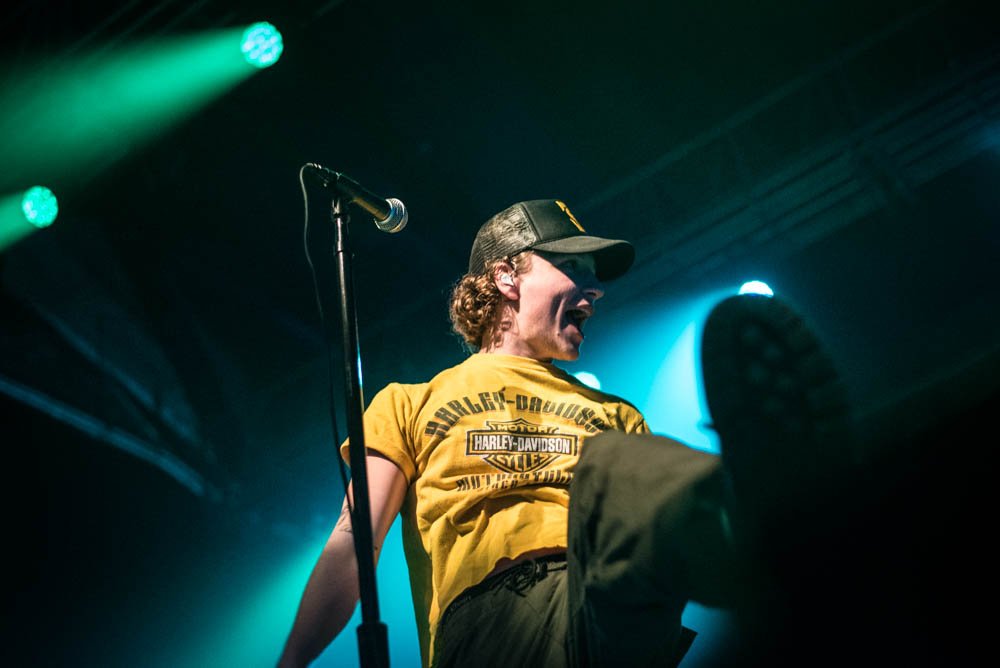
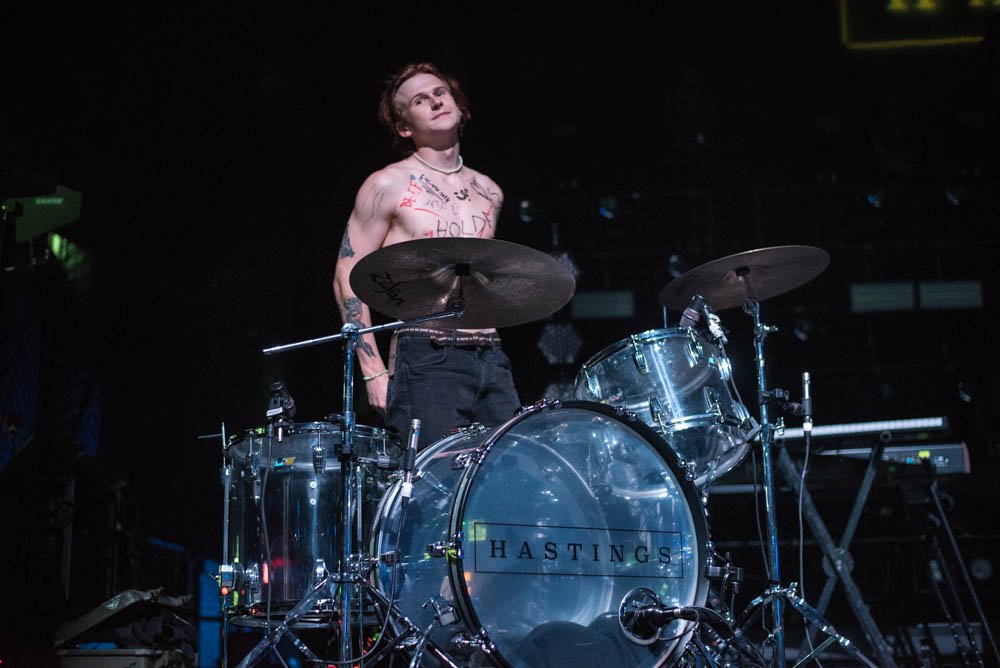
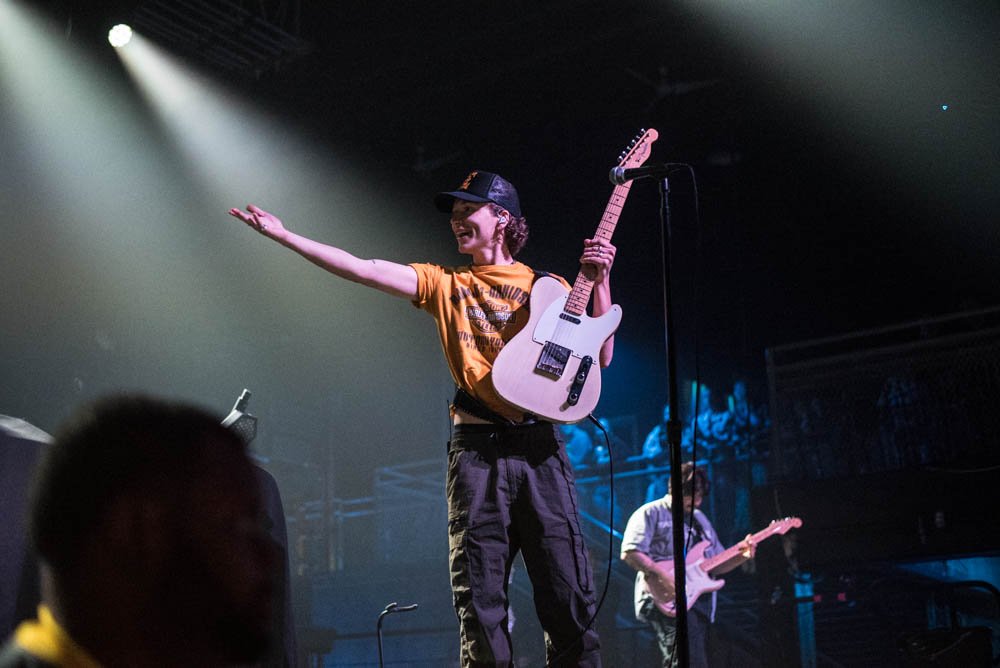
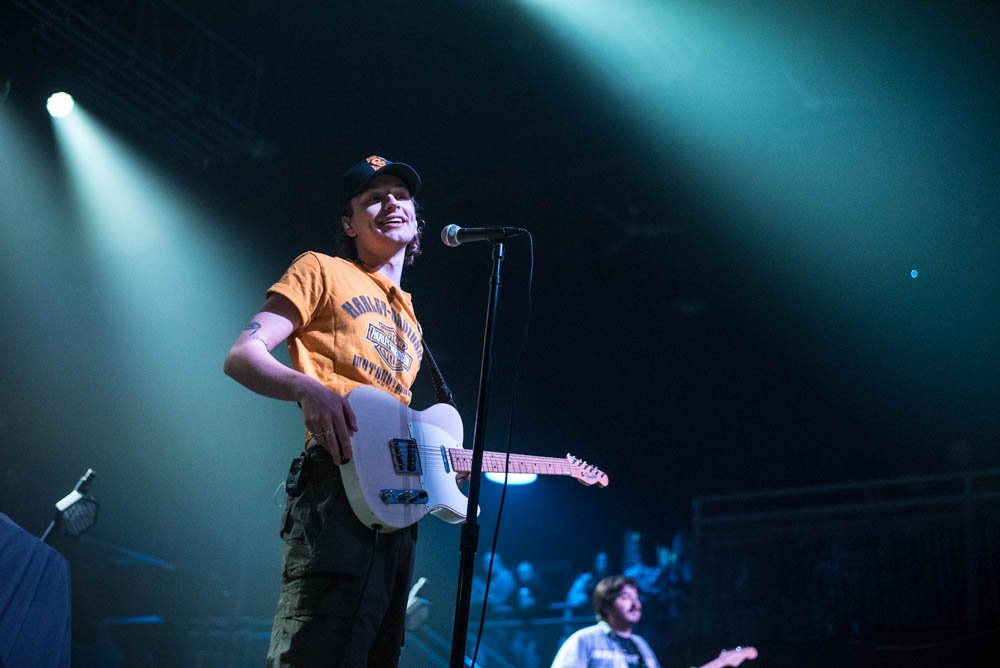
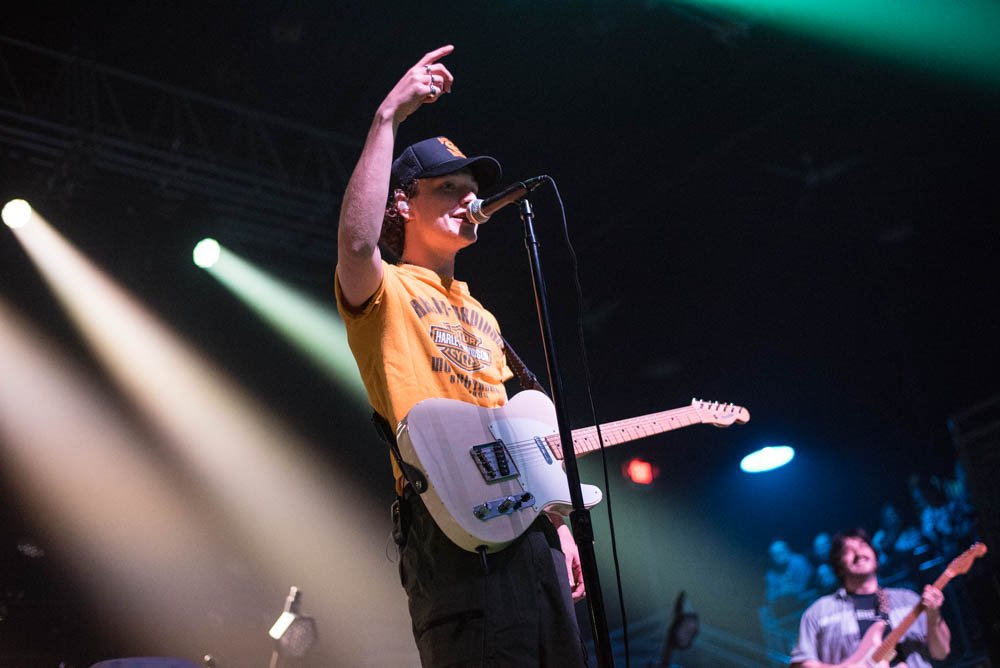
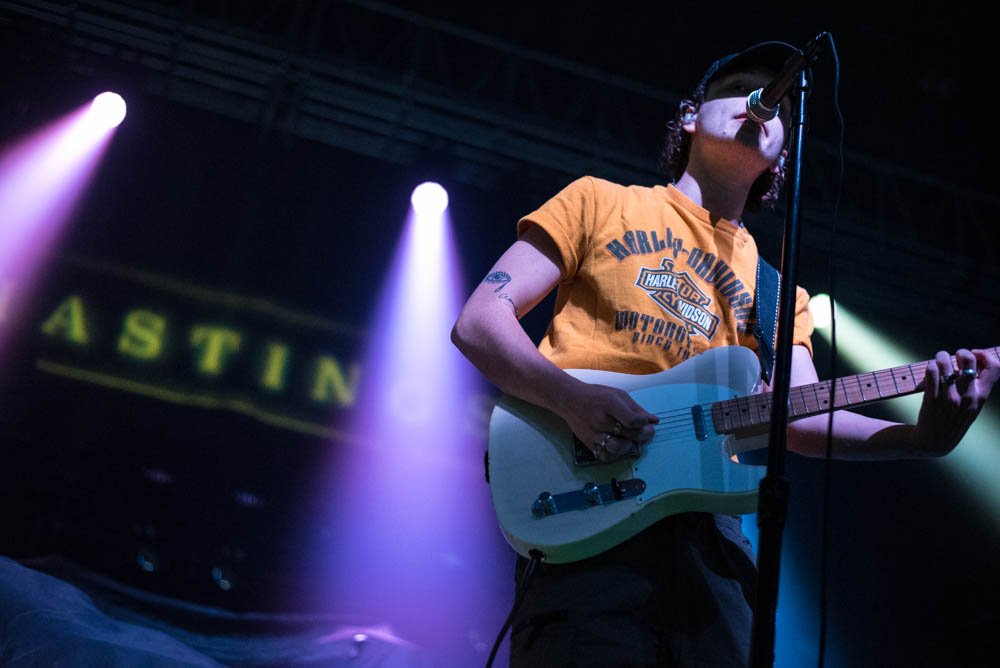
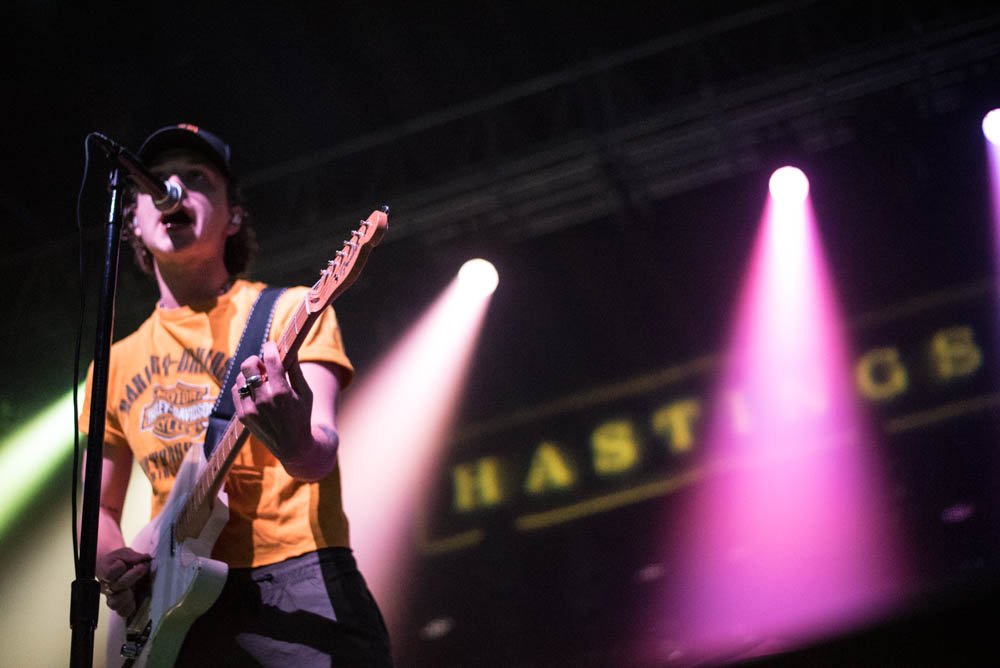
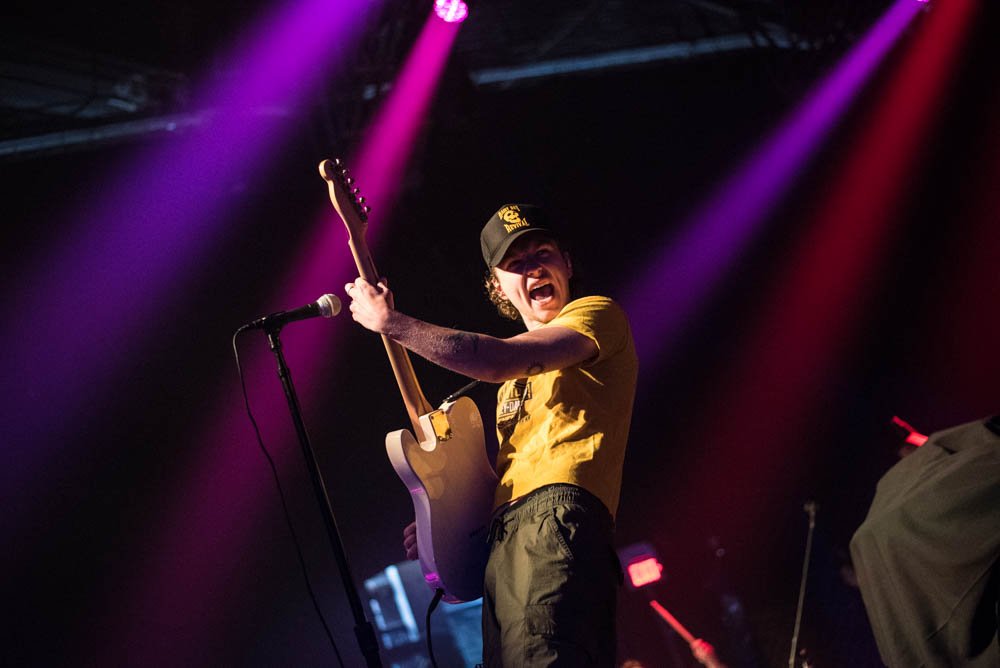
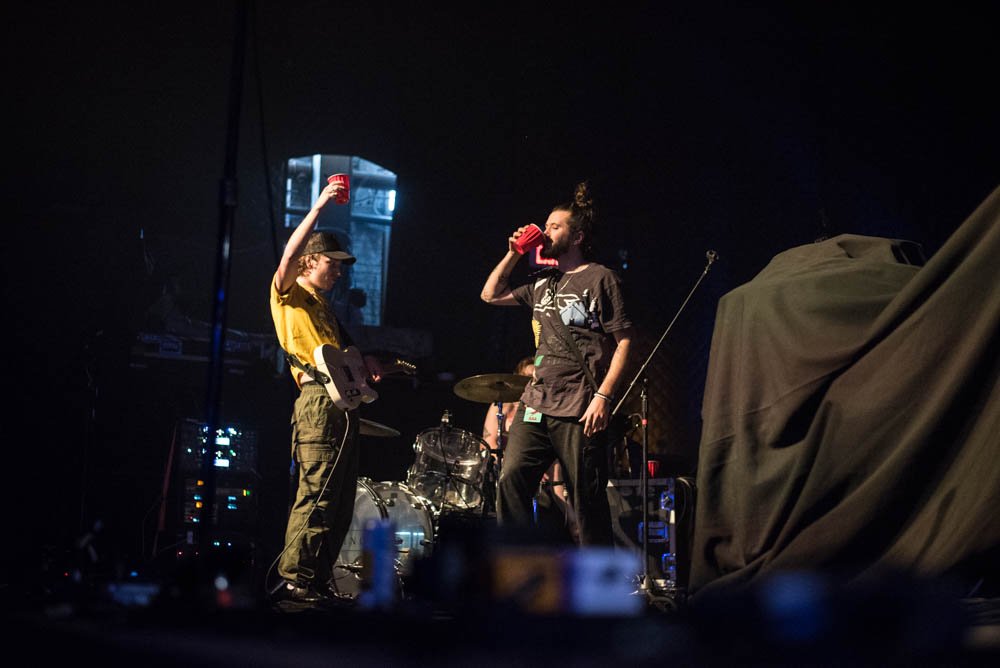
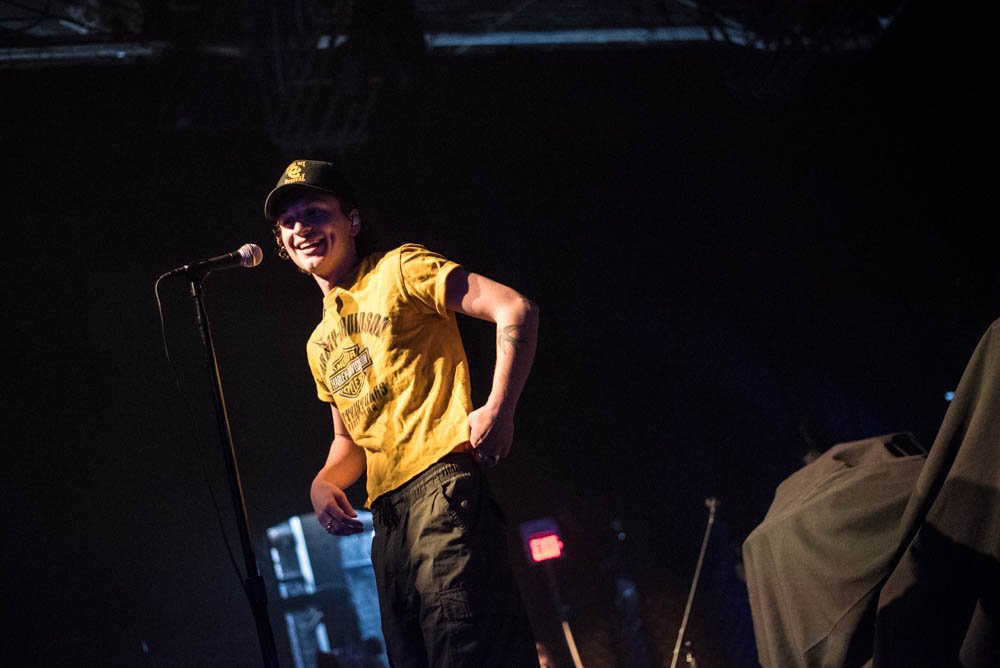
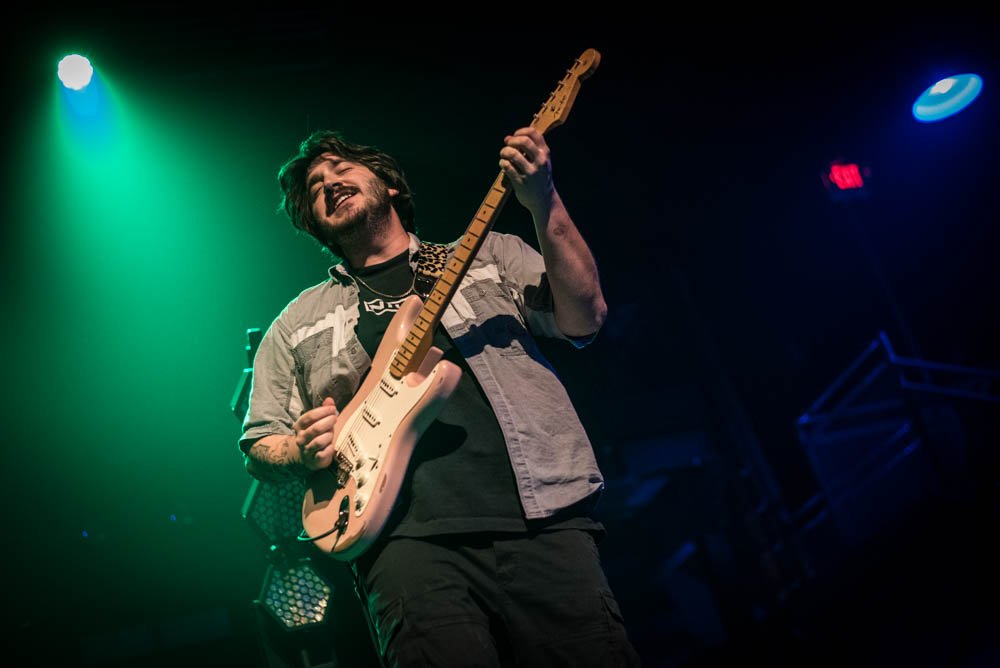
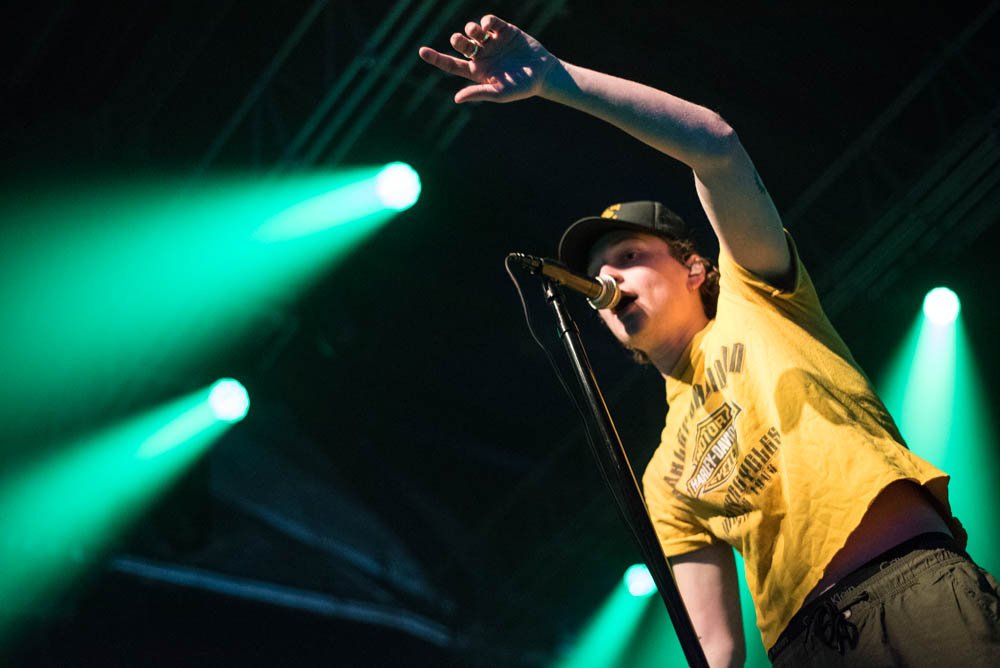
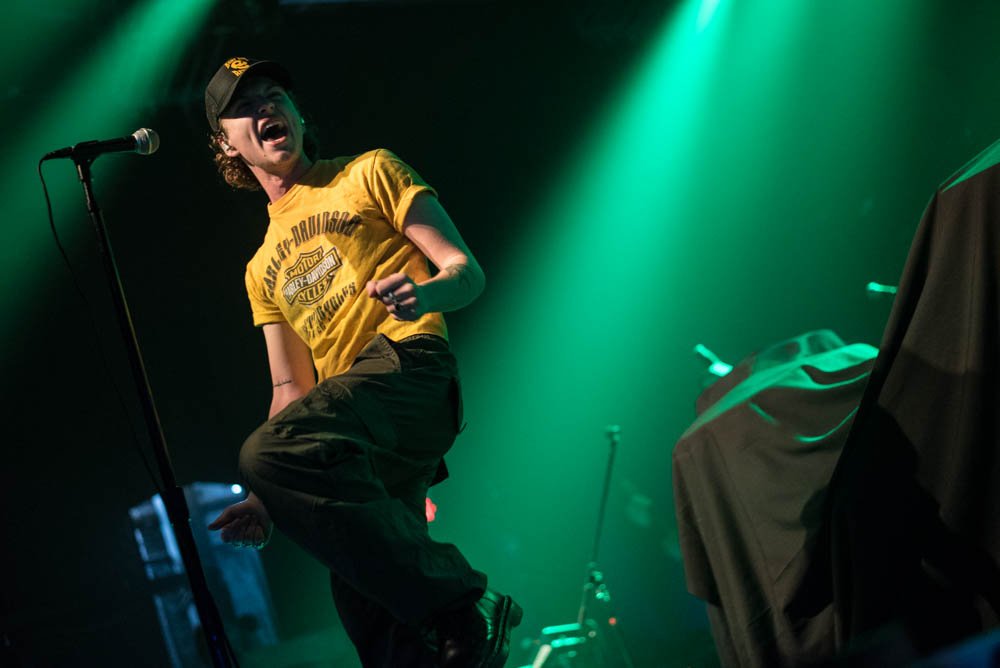
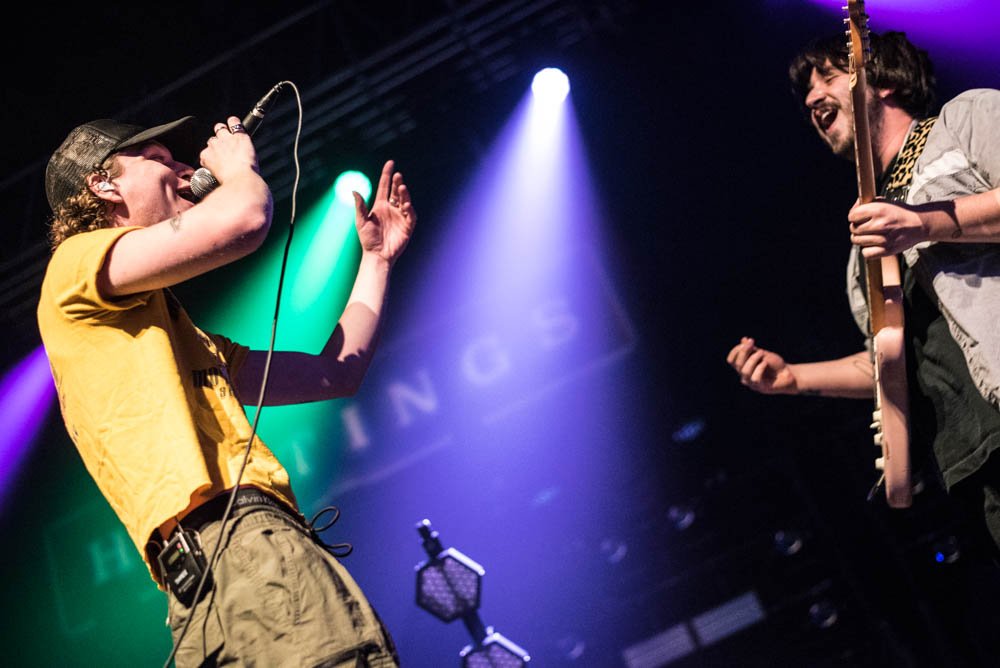
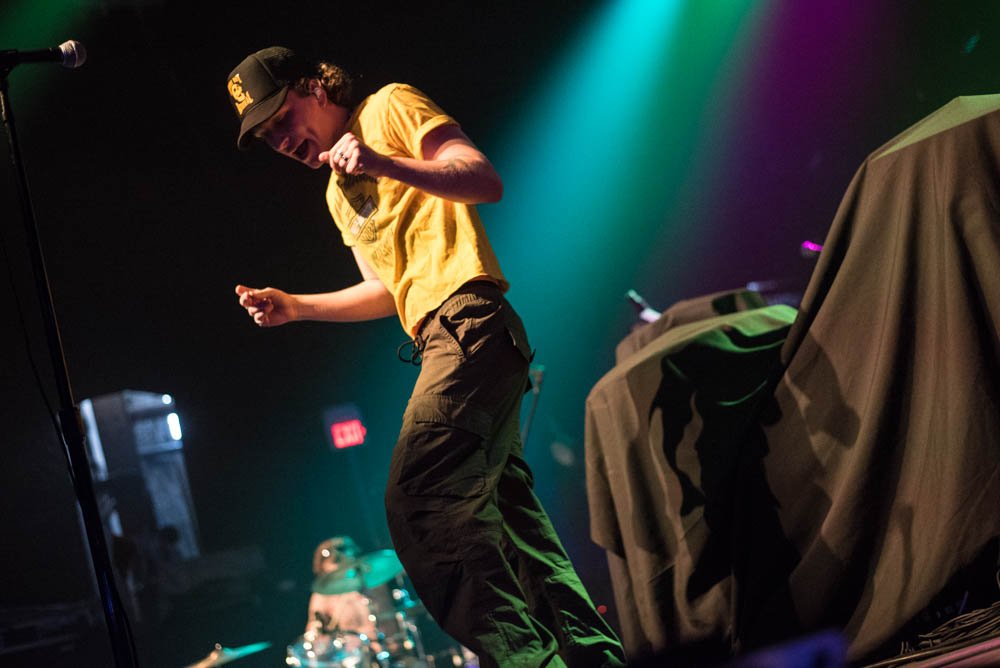
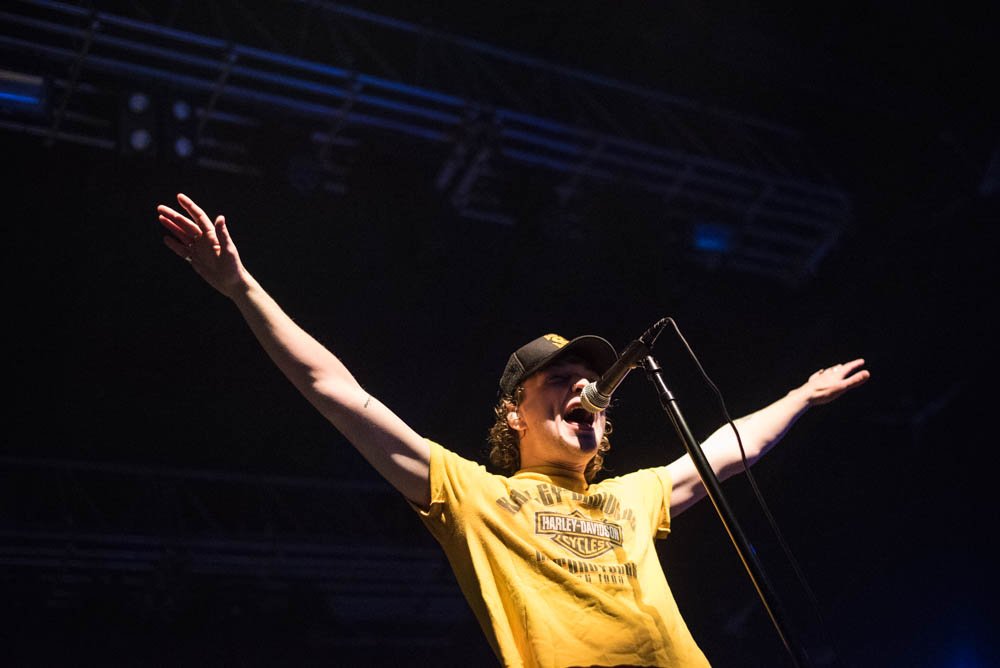
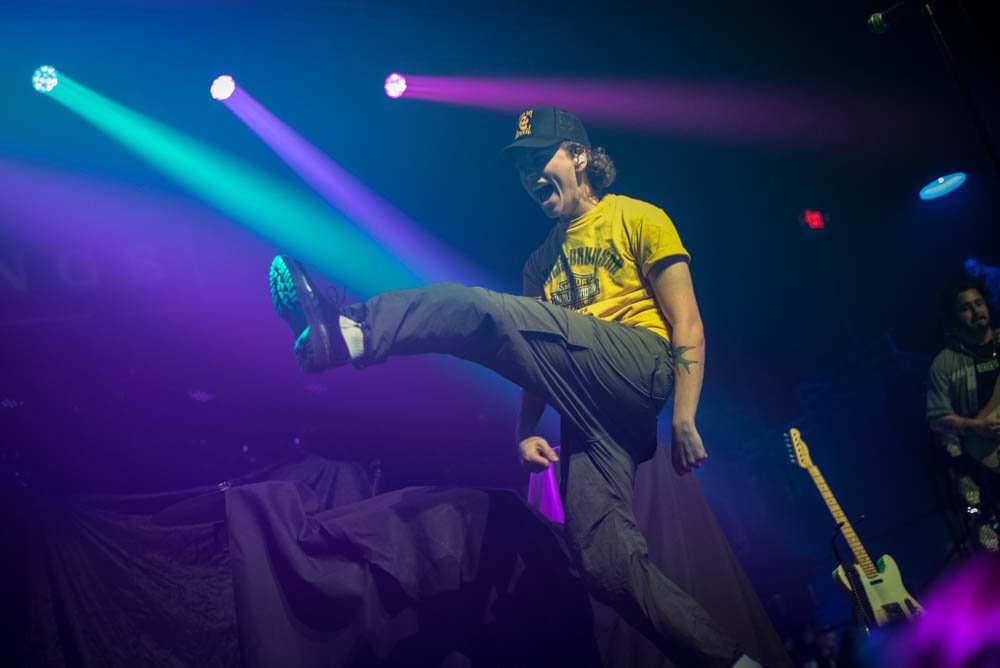
New York indie-rock band Hairpin is forging their path as a band. Comprised of Nate Pozin (vocals), Henry Buckingham (guitar), Ryan Couto (bass), and Alex McGourty (guitar/producer), they all independently followed parallel paths. Growing up in California, they attended UC Berkeley and later moved to NYC, where they formed Hairpin. A DIY ethos lies at the heart of the band, with McGourty producing the band’s material in his home studio, allowing the band to, in his words, “get weird with our sounds and do whatever’s in our heads without being beholden to the sound of the producers or studios we’d work with. We can move fast and we can also take our time, whatever the track needs”. With musical influences that include Radiohead, The Strokes, Soundgarden, Bob Dylan, and Frank Ocean, they feel inspired by the musical legacy of NYC and, says Pozin, are “constantly pulling inspiration from our daily confrontations with (and observations of) people and settings of all kinds. There’s plenty to write about and comment on in this city”.
Having a large group of supportive friends, they have organically grown a fast-growing fan base from which their friends told their friends, who told their friends, and so on, resulting in every show the band has performed in NYC selling out. Considering the band formed in 2021 and didn’t start releasing music until last year, they feel fortunate to have had such an instant positive response. Although the band plans to keep releasing singles for the time being, they hope to release a full-length album, as well as music videos, at some point in the future. With a couple of California shows coming up in San Francisco on 11/9 and Los Angeles on 11/11, these guys have massive ambitions as a band and will no doubt achieve great things! Make sure to follow Hairpin via the following links to stay up-to-date on all news, tour dates, and new music!
You all grew up in California before moving to NYC and forming Hairpin. What can you tell me about growing up in California and cultivating a love for music? What was your journey leading up to this band?
Alex: I always wanted to be in a band but there wasn’t really a scene in the bay growing up that made sense for me. The early 2000s thing in the Bay Area wasn’t a sound that really resonated, and I don’t know what was happening in the 2010s. I think we all moved to NYC in part because music happens there.
Ryan: I started playing bass when I was 12, with the purpose of starting a band with a couple of my friends. I played in a few different bands throughout high school with scattered gigs in Berkeley and Oakland. That really kicked off my love for music, though I’d always been surrounded by it. My mom plays guitar and sings, and that was a constant presence growing up.
Nate: I grew up with music playing in my house most days. My dad plays piano, so I started with that and quickly moved to the drums in fourth grade because no one else I knew was playing them. I grew up playing in bands throughout childhood and into my teen years but always as the drummer. I never really tried writing a song until I asked my girlfriend to prom my junior year of high school. In Orange County where I grew up, I was fortunate to have a tight-knit group of friends that supported my high school band through years of playing tiny Southern California venues. I always knew I wanted to get out of California, though.
Henry: My parents tried to give my older siblings the gift of music but it never really stuck with them…my mom grew up playing classical piano so she figured she’d give it one more go with me and gave me a guitar for my birthday in 4th grade…a blue Ibanez acoustic electric. The first song I learned was “Boulevard of Broken Dreams” haha. I was pretty much hooked immediately and have always had a guitar around me since.
What led you guys to want to move to NYC and form Hairpin? What were your goals for the band and it’s sound going into it?
Alex: Moving to NYC was actually incidental.
Ryan: Yeah, we all moved here after college but completely by chance. We didn’t start playing together until I’d already been in NYC for about 6 years.
Alex: For my part – I think the streaming age is feeding us a lot of ultra-palatable, greatest-common-demoninator-type instrumentals behind some really unoffensive vocals – I just wanted us to pack a bit more interest and influence into every dimension of our tracks. We’re making the stuff that we wish we were hearing more of.
Ryan: Exactly that. The slick, greatest common denominator, most inoffensive Spotify playlist-tailored genre is everywhere these days and something we want to avoid.
Who would you guys consider to be your musical influences?
Alex: Radiohead, Phoenix, James Blake
Henry: Soundgarden, Alice in Chains, Television, The Strokes
Ryan: Nirvana, Khruangbin, Sublime, The Strokes
Nate: Frank Ocean, Bob Dylan, The Strokes, The Hellp
What do you find most inspiring about living and making music in NYC? In what ways do you feel the environment influences you and your music and how do you feel NYC differs from California in that regard?
Henry: For me, it’s the history of this place. I live a few blocks from the studio where Gordon Raphael produced Is This It, and I walk by the bar where James Murphy played his first DJ set every day. Waking up every morning and being surrounded by the ancestry of my favorite music is the best possible inspiration I can think of.
Alex: Seeing James Murphy out on the street all the time is like – damn, this is really the place.
Ryan: They’re both such special places with such different sounds and legacies. I’d like to think we still maintain a fair amount of inspiration from our California roots, which I think comes across in the nostalgic sound of a lot of our songs.
Nate: In California, everything was pretty chill. Indie surf rock made sense. We had big garages to rehearse in, and thankfully our neighbors were cool. It was peaceful. In New York, we’re mashed into tiny spaces… and for some of us, our apartments/studio is a refuge from all the ridiculous stuff happening outside. Of course, the environment is inspiring because of its legacy and all that. We’re also constantly pulling inspiration from our daily confrontations with (and observations of) people and settings of all kinds. There’s plenty to write about and comment on in this city.
In being an independent band that self-produces your material, how do you feel that has helped you in writing music and getting your name out there so quickly?
Alex: It’s super nice to control our destiny like that. It didn’t start that way though!
Henry: Yeah - it took some trial by error to realize that the best producer we know is actually in the band. We’re really lucky to have Alex working the DAW - it means recording is less of a formal X-hour window in a pro studio and we can lay tracks right when the idea strikes us.
Alex: I think being a one-stop shop is a huge advantage for us. We can get weird with our sounds and do whatever’s in our heads without being beholden to the sound of the producers or studios we’d work with. We can move fast and we can also take our time, whatever the track needs.
Ryan: From the super high level choices of tone down to the small details, having a member of the band as the producer has been a huge help in having a unified vision and sound
Nate: We’re just comfortable with each other too… and in Alex’s home studio. It feels like home to me <3
Along those same lines, what are your thoughts on this trend in music, with so many artists having the ability to be so independent and get their music out there on their own?
Alex: It should be an incredible time for music because of how the tools have been democratized, but it doesn’t feel like that because we don’t have good ways to sort the good from the bad anymore. I think what we’re hearing is almost always the stuff that just has significant investment promoting it, and that’s hardly ever the best thing.
Ryan: Very much agree with that sentiment.
Nate: Agreed. I think early on in our careers though it was quite motivating to see bedroom pop explode. It gave us the idea that we could make and release music ourselves. It broke down a huge barrier to entry, for me at least.
Henry: Exactly…its kind of a double-edged sword. Like…we hear the music that is being pushed by labels (those are typically the songs that are getting prime playlisting spots) - which is frustrating, but at the same time it’s empowering to know that we have the ability to make music we’re proud of and music that we feel like can go toe-to-toe with a lot of stuff out there.
Having formed in 2021, what can you tell me about the early days of the band and getting started? What was it like forming on the heels of the early days of COVID-19 and the shutdowns?
Alex: Nate and I started a band in February of 2020 actually. I produced our first song and the demo was called “coronavirus ravages williamsburg.mp3” – literally at the moment when Covid was an abstract thing that wasn’t yet local or able to be taken seriously. It got real days after and then it felt like we had to sit on our hands for a few years before we could really start getting together and recording and playing shows. I’m mad because I felt we were ready to go then, but I’m still grateful that we’re where we’re at now.
Nate: Stimulus checks were lit.
Alex: Covid was a gateway into modular synths and therefore no good songs came out of that first year.
Ryan: it definitely felt like there was an increased hunger and desire for live music as we were getting started. Many people hadn’t been to a show in a year or longer at that point.
Henry: Yeah exactly…people were ready to get back into venues, but at the same time, this also led to a wild up-and-down year for the industry and us (we had to cancel a headline date because 3 of the 4 of us got COVID two days before).
Nate: We had also never played together as a group before COVID-19, so along with the hunger for live music once venues started opening up again, I think people were just down to see what we were doing.
You guys have played several shows in NYC to sold-out crowds! What do you love most about playing live and being on stage?
Alex: We’ve had the pleasure of selling out every single show we’ve played. I think it’s insane – I hadn’t ever been part of any public performance in my life up until Hairpin and in our first show we sold out a 250-person room. A lot of people grind for years before they get there and we just had it right away.
Ryan: I just have such a blast up there. It’s fun as hell to play music for people who want to hear it. I think back to some of my favorite live music moments and how special they are to me, so the opportunity to provide that for someone else is just an awesome gift.
Henry: Yeah…I agree with that sentiment. I have so many core memories from concerts I’ve been to (John Frusciante's Melting Faces on Parallel Universe, Tom Petty’s Learning to Fly encore, etc) - these are moments I’ll think back to when I’m on a plane with no WiFi or no headphones for a movie. I’d love to ONE DAY be able to create a memory for someone else like the ones that I remember so fondly.
Nate: We’re unbelievably fortunate to have a big group of friends that support us at every show. Those friends began bringing their friends to shows, and their friends brought their friends, and so on. Organic - no TikTok or viral moment (yet). My favorite part about playing live is seeing people enjoying themselves. And I love being able to export the magic we create together in the studio to a live setting. Seeing people react to that is special.
What do you like to do outside of music?
Alex: I love tennis, I love soccer, and most of all I love BonBon (is this a hobby enough?)
Ryan: Biking, basketball, also bonbon (pls sponsor us)
Alex: BonBon sponsorship when for real? Collab when? Going to DM BonBon this write-up.
Nate: I basically just look for Margiela's leather jackets online.
Henry: All things outdoors!
You have released a string of singles since last year, the most recent being “Rearrange”. What can you tell me about this latest single?
Alex: It’s been through an incredible transformation.
Nate: We’re proud of it. It started as an acoustic ballad… we actually performed the first verse at one of our first shows a few years ago at Chelsea Music Hall. It then sat in our vault, untouched for years. At some point a few months ago, I finally wrote a second verse and a chorus to it… kept sending it to the band, but no one cared. Classic! Finally, I think Alex listened to it and was like “This is cool, but the second verse should be the chorus”, and that kind of cracked it.
Alex: The part that is now the chorus was at first this like, afterthought tailing verse to the demo on the edge of the mp3. And I was like – we gotta chuck the existing chorus and swap this in – it was so locked in my head after the first listen. I pushed around the parts and sent it back to Nate and then we worked backward from there, rewriting the lyrics to fit. Nate’s best vocal takes are usually when he’s relaxed and alone at home singing in a soft voice so his roommates can’t hear lmao. It’s usually hard to recreate that magic when we develop the demo, and in this case, we just kept the delivery from the demo because it sounded special.
Ryan: We’re really happy with how it turned out. So wild to see the process of how a song can change over time like that.
Do you have plans to release an EP or LP in the near future? Any music videos in the works?
Alex: I think at our stage an LP is bad business. We’re still finding our sound and trying on different approaches. The LP is going to be heavily planned and cohesive.
Ryan: Would love to work on something longer form and other forms of media (eg videos), but for the time being we’re focused on creating and releasing as much great music as we can as quickly as we can.
Henry: Yeah…I love digging into a favorite artist of mine’s new album, but I think the unfortunate fact of the matter of the industry in 2023 is that 90% of consumers don’t have the patience to listen to an entire album’s worth of music, especially for an unknown artist. For us, that means that the single-by-single strategy is our best initial path. That being said, our backlog is kind of getting too big for a single-by-single strategy and might necessitate an EP.
Alex: When we drop an LP no one will have heard a cut off it until it releases. We’ll have singles compilations and we’ll have albums, and the albums will be totally fresh. I miss that experience so much – I still remember my first listen to In Rainbows and Blonde. You couldn’t skip because everything was new.
What’s next for Hairpin? What are your goals for the band going forward?
Alex: We’re touring!
Ryan: Hyped to get to play a couple shows in California!
Henry: Stealing my family’s car to take on tour!
Alex: We have massive ambitions.
Nate: Become the biggest band ever.

Interview: Lyra Star
For ethereal electronic indie-folk/pop artist Lyra Star, music became a part of her life in the third grade when her mother made her try piano lessons. The Nashville-born and raised artist really felt like music became an integral part of her life, however, once she approached adolescence and high school. Attending the University School of Nashville from kindergarten through 12th grade allowed her to be surrounded by many talented musicians and to be introduced to new music. With Nashville being such a mecca for music, she also took advantage of the many opportunities afforded to her to go to concerts and hear live music. Although she played piano, guitar, and clarinet and wrote and composed songs in high school, she moved to the west coast after high school and put music on the back burner for a while to pursue other interests, including yoga and working as an educator in Montessori schools. While living in Santa Rosa, she one day picked up her guitar for the first time in a while and started working on chord progressions, singing, and working on lyrics, with the desire to start creating her own music again.
In 2018, Lyra moved to LA to focus more on pursuing her music and teaching yoga and released her debut album A Thousand Dreams, a collection of celestial songs that comes complete with lush orchestral arrangements. Although she has faced the challenges an indie artist faces navigating the music and entertainment industry, she has found being surrounded by so many creative people deeply inspiring and has had the opportunity to collaborate with many different artists and producers. Aside from pursuing a career in music upon moving to LA, she also became a self-taught contortionist! Having spent three years doing yoga competitions onstage prior to moving to LA, she was encouraged to look into performing, so she looked into the art of contortion. Aside from a couple of classes at the Cirque School, she watched videos and learned certain movements to see what she could do on her own. For Lyra, her movements and music go hand in hand and she loves performing to her music as a backing track at live shows. She also loves the creative outlet of making music videos as a way to blend her movements with her music in a beautiful and unique way.
On May 19th, Lyra released her latest EP entitled Scars. She released the EP’s title track in April of this year, written during the height of the pandemic in 2020 and the CA wildfires, and it reminds us that we do not have to bask in the darkness, but have the capability to find and create beauty in even the most dire circumstances. Her Scars EP is a reflection of the increased time, energy, and focus that she is now able to put into her art and music, with her sound evolving over the years into more of an electronic indie/folk sound. May 26th will see the release of her music video for “Scars”. “People can expect another visual gem that showcases my skills as a movement artist from a variety of angles and also shows the emotion that I feel when I sing,” says Lyra. With plans to take a break and travel after the release of her music video, she plans to start work on her next single and video before the end of the year. You can connect with Lyra Star and stay up-to-date on all upcoming news and music via the following links:
WEBSITE | FACEBOOK | TWITTER | INSTAGRAM | SPOTIFY | ITUNES/APPLE MUSIC | YOUTUBE | TIK TOK | DEEZER | BANDCAMP
You were born and raised in Nashville and were surrounded by music growing up, having played piano, guitar, and clarinet, dabbling in songwriting and composition in high school, as well. What can you tell me about your childhood and growing up in such a musically inspiring city and being surrounded by such musically talented friends?
Lyra: I did not technically grow up in a musical family, although my mom plays piano and made all of us (myself and my two brothers) try taking piano lessons when we were younger. My parents definitely listened to music a lot (my dad is a huge Bob Dylan fan), and I remember my mom listening to a lot of Bonnie Raitt and Joni Mitchell in the car. Essentially, music became a part of my life when I started taking piano lessons in the third grade, but it didn’t really start to feel like it was an integral part of my life until I approached adolescence and high school. I was fortunate to go to the University School of Nashville (I attended from kindergarten through 12th grade), which had a number of really incredible musicians, many of whom continued on that career path and found lots of success… our high school band was really skilled, and one of the reasons I actually picked up the clarinet was so that I could be in the band. I was honestly never super passionate about that instrument, but I loved being a part of such a talented musical ensemble. I ended up becoming friends with some of the guys in the rhythm section, and they were always introducing me to new music. I fell in love with making mix tapes too. Nashville is a music city, so I had many opportunities to go hear live music as well. I remember I used to go to this bar called 3rd and Lindsley to hear the Wooten brothers play for only $5. Bela Fleck also played at one of the events hosted by my school. I was just constantly surrounded by music and also took advantage of many opportunities to go to concerts and live shows. I started taking guitar lessons in high school as well because I found my mom’s old acoustic guitar and wanted to learn how to play. Ultimately, I just feel so fortunate to have grown up in a place with all of these opportunities to be inspired by a wide variety of musical artists.
After high school, you moved to California and worked in education in Montessori schools. While living in Santa Rosa, you one day decided you wanted to start songwriting and composing again. Was there a particular catalyst that led you to decide to pursue music again and why do you feel that your songwriting, composing, and pursuit of music had taken a bit of an absence after high school?
Lyra: Honestly, I don’t know what was the catalyst that day. I just picked up my guitar for the first time in a while and started messing around with a chord progression. I then started singing and working on some lyrics and just knew I wanted to get back into it again. My pursuit of music had been on the back burner because I have always been passionate about many things, and I had been focusing on exploring other interests, such as playing ultimate frisbee, backpacking, working with Americorps, pursuing my grad school program for the Montessori teaching, and also doing a bit of traveling. I was still listening to lots of music and going to shows but hadn’t been creating much of my own.
What can you tell me about moving to LA to focus more on pursuing music and teaching yoga, another love of yours? What has it been like to be an indie music artist and trying to navigate the music and entertainment industry and make connections and what are some important things you've learned along the way?
Lyra: LA has been tough in many ways, but also so rewarding. All of the opportunities and growth that I’ve had as an artist since moving here almost five years ago would not have been possible anywhere else. Even though it’s a difficult city in many ways, there is so much creative energy and incredible people working hard to pursue their dreams. I came down here prepared to hustle, which is absolutely necessary in order to find success, and I’m finally starting to feel like I’m in a good place with all of it. I’ve even made some incredible music connections through my yoga communities. The city is full of creatives, which is my favorite part of living here. I’m constantly meeting new people and getting inspired in new ways. Being an indie artist is difficult for sure, and you have to be careful who you trust. I’ve experienced working with people that perhaps I should not have trusted as much as I did, but it’s all part of the learning process. LA also has a number of independent artists who understand all of this, so there’s a really strong support system too. I’m grateful to the people that I currently work with and know I will always be learning and growing from each project and everything I choose to pursue. It’s a beautiful journey no matter what. I’ve appreciated every moment, including the high points and the low points. The most important thing I’ve learned is never to rush into anything.
What can you tell me about being part of the duo Wisps and Willows before branching out on your own and becoming a solo artist?
Lyra: I met a wonderful violinist when I was in the bay area, and we just clicked. Her musicianship fit so well with my songs, and we started playing a bunch of gigs around the bay area together. The problem was that she wasn’t always available, and I didn’t want to just play under my real name for solo gigs. I decided that I needed to have my own name so that if I performed, it could be just me solo or me plus a band or one other musician. I really just wanted to be my own entity, although I loved playing with her, and our duo was so much fun. We played some really fun gigs together!
Aside from being a musician, you are also a self-taught contortionist! How did your interest in that form of artistic expression come about and how would you describe your love for the art of music and movement and the relationship you see between the two? In what ways would you say your music informs your movements and vice versa and what excites you the most about the visual aspects of combining your two loves through music videos?
Lyra: I came to contortion through my yoga practice. I spent three years doing yoga competitions onstage. I competed at both the regional and national levels, and I worked with a coach during my second year. I learned a lot of drills and skills from that and gained a lot of flexibility through my dedicated yoga practice. When I moved to LA, people encouraged me to look into performing, so I started looking into the art of contortion. I took a couple of classes at the Cirque school, but I couldn’t afford to be doing that on a regular basis, so I started just to watch videos and learn certain movements by testing them in my own body and seeing what shapes I could create and what skills I could learn on my own. I like to go slow, and my music has a mellow, sexy vibe, which I think is perfect for my movements. They essentially go hand in hand, and I love performing my music as a backing track at live shows. The music videos add a whole other element because there are so many more options to create. It’s an incredible way to offer unique angles and add that visual dimension to my lyrics, which are already quite imagery driven.
What has it been like for you to be a part of both the music and performing arts industries and communities and what do you see as parallels between the two?
Lyra: Honestly, it’s hard to navigate through both, especially with my teaching schedule on top of that. When I first moved to LA, I spent a lot more time trying to get involved in the music world than the performing arts world. My name started getting out there through word of mouth for contortion, and I eventually got connected to a few burlesque shows and started my performance career there. Both industries can be tricky and you have to be careful and mindful of all of it, but I’m fortunate to have met some very trustworthy and supportive people in both industries that truly believe in my art and have helped me further my career in many ways.
Upon moving to LA in 2018, you released your debut album A Thousand Dreams, which you said was full of lush instrumental arrangements and the manifestation of putting yourself out there through your music. What can you tell me about the process of making the album and the songs, some of which you reworked on the piano that had originally been written on guitar?
Lyra: I actually moved to LA just after releasing that album. I really felt that this collection of songs was my best work thus far and was a strong musical compilation. I was introduced to the producer, Christopher Krotky, by a friend of mine, and I knew I wanted to put together a full album. I had released an EP under Wisps and Willows, but now I was ready to create as Lyra Star. Julie (the violinist from Wisps and Willows) actually plays on a number of the tracks on this album. When I first met with Chris, he asked me about my musical influences (Tori Amos, Radiohead, Bjork, Azure Ray, and Mazzy Star were some that I remember mentioning), and he had me come in to make scratch tracks for some of the songs I wanted to use. Ultimately, we worked together to choose the final ten songs, and we took it one song at a time. It was a side project over the span of about a year where I would come in and work on each song. We always started with the basic framework of how I had written the song originally, but certain tracks, such as “Paper Moon” and “Wanderlust,” actually ended up being reworked on the piano and came out so beautifully that way. I didn’t want any of my songs to sound to “folk”-y if that makes sense. I wanted to start to create my own sound. Fortunately, I knew a lot of great musicians that played a variety of instruments from my time living in Santa Rosa. I knew someone that played trumpet and upright bass as well as a musician that played trombone and accordion. Chris also knew musicians that he brought in to fill in for certain elements. I was just plugging along at this while I was working 30 hours a week at a Montessori school and teaching yoga twice a week. The album really didn’t get a lot of traction when it was released because I was a brand-new artist and really had no clue what I was doing. I have learned a lot since then and wish the album had gotten more attention, but I think creating music videos will be a great way to bring awareness to these songs.
Your music video for the song "Moonrise" was selected for the LA Independent Women's Film Awards. What was that experience like? What was the inspiration behind the video and what can you tell me about the filming process?
Lyra: This was such an honor. I submitted it through Film Freeway, and people that watched it at the festival (we got a video of live audience feedback) really responded well to it. Pretty much everything was virtual for this festival, but it was still a cool experience. I hope one day to actually be able to attend an in-person festival that is showcasing one of my videos because it would be so rad to see it on a big screen. This was my fourth video with director Tonya Kay, and my main vision was to bring some of the elements from the lyrics to life visually, such as the paper cranes, full moon, and white wolf. Tonya is an incredible director, and she has a knack for visual beauty and creativity, so much of the imagery and the way it was shot and filmed were all her ideas. We actually filmed in a tiny room in DtLA that she made to look like four locations with lighting and set dressing. It was also really hot in the room when we filmed because there was no AC, so it was quite uncomfortable for most of the people on set. I was loving it though because warmth is great for contortion!
With such beautiful and cinematic music, do you see yourself at some point in the future writing and/or scoring music for film?
Lyra: It’s funny that you ask that because I actually wrote a score for a film friend of mine in college for his senior project. I really enjoyed getting to create a soundscape that went along with the visuals of his film. I also used to sound out film scores from movies that I liked a lot, especially if it was a really beautiful piano part. I would say that yes, this could be something I do in the future for sure.
You recently released "Scars", the first single from your upcoming Scars EP, to be released on May 19th. The song was written during the 2020 pandemic and natural disasters in CA and reminds us that we don't have to bask in darkness, but rather can find and create beauty in even the most dire of circumstances. What inspired the song for you and how do you try to stay optimistic and find beauty during dark times?
Lyra: Yes, I wrote the song during the time when all of the fires were happening in CA. It felt pretty bleak, but I also found that we were all united as humanity by being immersed in this experience together, even though most of us were isolated. It got me thinking a lot about human emotions and past experiences that leave scars, but it’s something that we all have. It unites us as humans. I believe we have the power to bring so much beauty into the world and that dark times can be the catalyst for this creation of light. I have a very strong gratitude practice, which keeps me optimistic and hopeful even during difficult times. If I feel myself coming into a place of darkness, I always try to pick at least one thing that I am grateful for in that present moment. Yoga has really given me a strong mind and provided me with the tools and ability to focus on the positive as much as possible.
Your Scars EP is your first full body of work since A Thousand Dreams. What was making this EP like for you in relation to your first album? How do you feel like you have evolved in your songwriting and sound since 2018, and what do you hope listeners take away from the album?
Lyra: My life is in a completely different place than it was in 2017, so I felt like I could put a lot more energy and focus into this body of work. I wanted the music to be a more integral part of my life, and because I’m no longer working with kids as a school teacher, I can put more of my time into my art and my music. I also felt no rush to finish it and gave myself no specific deadline. I didn’t really have a deadline for A Thousand Dreams either, but I really let myself go slow with this one. It was originally supposed to be released at the beginning of the year, but I wanted to be able to focus all of my energy on promotion and sharing this body of work with the world. I’m really glad I waited because it has all been coming together in such a beautiful way. I think spring is a great time to release an album of hope that also plays on the idea of renewal and coming out of darkness into light. My sound has evolved a bit into a more electronic indie/folk vibe, but I think it’s perfect for the music. I just want listeners to be transported through beauty and feel a connection in some way to each song and the experiences that are offered with each track. I hope they will want to listen again and again. It’s definitely an album to experience with headphones on to be completely immersed in the soundscapes in all of its detail.
You will be releasing the music video for "Scars" on May 26th! What can you tell me about the video and what people can expect?
Lyra: It’s my fifth video with director Tonya Kay, and she traveled all the way down from Canada (she is now based in Vancouver) so that we could create this together. My hair/makeup is reminiscent of the album cover, and my costumes are all gold. I also do some contortion in a giant champagne glass, which was my first time experiencing that. People can expect another visual gem that showcases my skills as a movement artist from a variety of angles and also shows the emotion that I feel when I sing. Tonya is always looking for new and exciting ways to capture what I do with my body while also showing that I am a singer. Prepare for another stunner!
You have your EP release show at Molly Malones in LA on May 20th, your first live show since the pandemic and your first time performing in LA with a full band! What are you most excited about for the show and what can people expect?
Lyra: I am most excited to bring everyone an evening of both music and performing arts. It’s going to be a really eclectic and lovely show starting with one of my favorite LA artists, December Fades. I actually attended a music video release show of his at Molly Malone’s when I first moved here, so it’s an honor to have him on board as a part of the evening. I will debut my contortion act to “Scars” and then have two other burlesque dancers that will perform their own acts so that the audience gets a little taste of the other part of my world (besides music). I’m playing with a backing track, guitarist, and drummer, and I’m keeping my set short and sweet… just the four tracks from the EP. It will be my first time just singing and not having to play an instrument, which I’m super excited about. After our set, I will be doing a sneak peek showing of the “Scars” music video on a big screen prior to its release. The audience is in for a real treat.
Aside from your EP release, what's next for you? What are your dreams and goals going forward?
Lyra: Honestly, I need to take a breather after this release. The amount of work and preparation leading up to the show and the release has been all-encompassing. When you do everything yourself, it’s a lot. Once the music video is out, I’m going to take some time to reset. I’m planning to take a big trip towards the end of the summer to southern Europe and northern Africa because I love to travel and want to explore some places I haven’t been to yet. I’ll probably start to think about my next single this summer, and I will of course keep doing contortion performances. I try not to set big goals and expectations for myself because life can instantly change. I know I want to start working on my next song and music video before the end of the year, but I will not be rushing anything and want to enjoy the release of this beautiful EP before heading into my next move as an artist.

Interview: Savannah Conley
Nashville singer/songwriter Savannah Conley grew up outside of Nashville to musical parents and started writing and performing music from an early age. Although it took her a while to find her own relationship with music, one that wasn’t tied to her family or anything else, music has always played a significant role in her life. A confessional and introspective singer that spans different genres with her sound, she compares her songwriting to journaling, putting her feelings into her songs with the hope that others would find comfort in them too. With a quirky and edgy feel, her music utilizes different instruments such as the upright bass and ukulele. She was awarded the John Lennon Songwriting award at just nineteen years old, released her debut EP at twenty-one, and receive acclaim from the likes of Rolling Stone and NPR, saying Conley's music resonates with listeners would be an understatement.
She released her first EP, 18th and Portland, the tracks of which caught the interest of several industry professionals. One such person was producer Dave Cobb, who signed her to his label Low Country Sound, an imprint of Elektra Records. She soon thereafter released her debut major-label EP Twenty-Twenty and has since released two other EPs-2020’s Surprise Surprise and 2022’s Best I Can. She has also toured as support for artists such as Anderson East, Samia, Jade Bird, Briston Maroney, and Brent Cobb and has opened for Willie Nelson, Brandi Carlisle, and Ben Folds. Today sees the release of her debut full-length album Playing The Part of You is Me, a stirring distillation of the pleasures and problems of growing up. With themes of love, doubt, grief, and hope, it aims to provide anthems for a new generation facing these feelings. She has released 3 singles ahead of the release-” More Than Fine”, “Don’t Make Me Reach”, and most recently, “I Love You”. Make sure to connect with Savannah Conley via the following links to receive all album news and tour dates! Photo Credit: Sophia Matinazad.
WEBSITE | FACEBOOK | INSTAGRAM | TWITTER | ITUNES/APPLE MUSIC | SPOTIFY | SOUNDCLOUD | YOUTUBE | DEEZER | TIDAL | TIKTOK
You were born and raised outside of Nashville to musical parents and have been writing and performing from a young age and started recording at the age of 7. What can you tell me about your childhood and your journey into music?
Savannah: All of my earliest memories have to do with music. I don’t know a world where it isn’t the center of everything, to be honest. That being said, it took me a while to find my own relationship with it. One that wasn’t tied to my family or anything else.
You said that as a teen, you were not a fan of country music but loved British indie rock. What was it like to grow up in/around Nashville and not be a big fan of country music? What kinds of changes have you seen Nashville go through over the years, with regard to the ever-expanding genre of artists the city now houses?
Savannah: I have always been a fan of old, classic country. Even some from the ’90s. But, the country stuff that came after that was just not it for me. Honestly, though, there were so many genres around me all the time. I didn’t even really notice how genre-specific Nashville was until I was much older. By the time I was like ten-ish a lot of indie bands had started popping up all over and there was a thriving DIY scene.
You have talked about how having grown up with parents who were professional musicians, you found the need to find your own route to a passion for music and your own way to connect with music as an art form. What was that journey like for you and in what ways did it lead you to a rediscovery of the sheer joy of music?
Savannah: Writing has always been really special to me. That was something that was never exactly fun, but always necessary. Still is. I think when I started going to shows in basements as a teenager I was like oh… it can be like this?! People didn’t care at all what was right or what was wrong. It was amazing.
You went to Belmont University where you studied to be a teacher, while also juggling part-time jobs and music gigs with your coursework. What can you tell me about that time in your life and how your mother was the person who helped you to commit to pursuing your dream?
Savannah: That was a period of time where I was avoiding music altogether. Dumbest rebellion ever. It just felt too vulnerable. But, I had quietly playing shows again and was also working an insane amount at odd jobs. So, my mom called one day and said that I had to pick one, school or music and we both knew what it needed to be.
You have been described as a confessional and introspective singer-songwriter. Have you always been drawn to that style of songwriting, of tying your life experiences to songs? In what ways has music helped you to navigate and endure the highs and lows, the hardships and joys, of life?
Savannah: Yeah, a lot of the time I wish I could write more creatively like about someone else. Maybe someday, but right now it’s pretty much in lieu of journaling.
What can you tell me about the early years of your music career and were there any especially important lessons you learned that you have carried with you over the years?
Savannah: It was a pretty wild start. I signed a major deal when I was 20 and started touring really heavily. The deal came about six months or so after I had decided to quit college, so the transition was crazy. I definitely learned what to take seriously and what to not. Also that sometimes it’s not being a bitch to stick up for yourself or your ideas.
How would you see your evolution, both personally and as an artist, since starting your music career?
Savannah: I slowly got more comfortable committing to my decisions and sticking with what I know to be true about myself and my core.
Since the release of your 2021 EP, Surprise Surprise, you have said you have shifted your perspective with regard to making music. What can you tell me about your experience of being a woman in the music industry and operating from a place of being scared of being deemed "hard to work with" if you were too vocal about direction and decisions? What was the catalyst that made you decide to take off the kid gloves and become more involved in advocating for yourself?
Savannah: I mean I think I just don’t care what people think anymore. I have to trust that I am a caring person when it comes to the big picture/life stuff. I really value having fun, so I like to create a work environment that is fun while still sticking up for who I am. It’s hard but worth it.
You will be releasing your debut full-length album Playing The Part of You Is Me on May 12th. What can you tell me about the album's title, as well as the writing and recording process for the album? Having talked about how each of your releases is a reintroduction of sorts of where you are in your life at that time and where you are headed, in what ways does the new album reflect where you are in your life now? What would you say the theme of the album is?
Savannah: The title is kind of open to interpretation. Make it mean what you want. As far as the recording process and presentation, it was all extremely intimidating and rewarding. Still is. It’s strange to put a diary on display.
Last month you released the first single from your album, "More Than Fine". How would you describe the message of the song and what made you decide to make this the first single? What inspired the idea for the music video, which was filmed in a French chateau?
Savannah: The whole song is based around posturing. Fake it til you make it baby. As far as the visuals go, there is something very darkly romantic to me about the record as it is fleshed out. What is more romantic than a French chateau?
You just released the second single from the album, "Don't Make Me Reach", and have said it is the song you are most proud of and excited about off the record. What can you tell me about the song and what makes it the most exciting for you, as well as the accompanying music video that was shot on a beach in France?
Savannah: It was the rawest writing moment I had had in a long time. The whole song came out in about ten minutes, and it’s always a surprise to me when that happens. There was just something about that one that felt very pure to me. The video is 100% mine and the director Jacqueline’s Coldplay ‘Yellow’ moment.
Along with your upcoming album release, what's next for you?
Savannah: Touring, summer activities, walking my dog, writing, watching vampire diaries, etc, etc.

Interview: Juliana Tucker
Pop singer-songwriter Juliana Tucker grew up in a family with deep musical roots and a passion that was nurtured throughout her childhood. At the age of 16, she appeared on American Idol, where she was told “you have the IT factor” by Steven Tyler. Although she worked closely with labels and recorded a demo CD after the show, she ultimately walked away when the music she was given was not representative of the artist she wished to be. She put music aside for a few years while attending college in Boston and working in NYC, but moved back to LA right before the Covid pandemic hit. Although 2020 was a very challenging time for Juliana, quarantine helped her to tap into her creativity, as well as allowing her to be comfortable in solitude with her thoughts and be happy with herself, rather than relying on external validation and feedback from others. During this time, she also began writing songs for herself, rather than for others, and saw herself gain confidence in herself, saying “The day I started writing music for myself, rather than for other people, was the moment I finally became confident in my songwriting capabilities.”
On March 3rd, Juliana released her debut 6-song EP The Great Indoors, in which she digs deep into raw and honest emotions and what it means to know oneself through the lens of all relationships from romance to friendship. “I’ve been working on The Great Indoors for almost 2 years and to see it finally come to life is truly an out-of-body experience,” shares Juliana. “I wrote this EP at the peak of the pandemic because that’s when I felt myself growing up the most. The Great Indoors is meant to be a self-reflective body of work that explores the difficulties and joys of growing up and learning about ourselves. It shows the good and the ugly moments in my life where I endure growing pains and express true vulnerability. While it’s meant to be deeply emotional in some areas, it’s also lighthearted in others, in the hopes people are reminded to not take life too seriously. We’re always changing and evolving, and we might look back at moments in the past and cringe, but that’s the beauty of growing up. We learn the most about ourselves through every experience and relationship we encounter and that’s what I wanted to explore in this EP.”
Along with the release of her EP, March 3rd also saw the release of her latest single “Fair Warning”, along with the official music video for her new single, directed and produced by STILLVIKA. “I wrote this song about rebounding with a guy after my previous relationship and am essentially warning him to run away because I wasn’t emotionally ready for anything serious. Then guilty feelings start to sink in because I know it was wrong to use him, but I still did anyway. This song is meant to be lighthearted but powerful and remind people that women can have rebounds too! If you’ve ever heard the phrase ‘get over them by getting under someone else,’ then this song is for you.” With plans to get her EP out into the world, write new material and release new singles this year, and perform some live shows, make sure to follow and connect with Juliana Tucker via the following links to stay up-to-date on all upcoming music, news, and show dates!
WEBSITE | FACEBOOK | INSTAGRAM | TWITTER | SPOTIFY | SOUNDCLOUD | ITUNES/APPLE MUSIC | YOUTUBE | TIDAL | TIKTOK
You grew up in LA with deep musical roots. What can you tell me about your childhood and developing a love for music? Who would you consider some of your biggest musical inspirations?
Juliana: I grew up in a very musical household with my dad having been a singer, songwriter, and guitar player so I was immersed in the music culture at a young age. The household favorites were The Beatles, Stevie Wonder, Elton John, Phil Collins, Aerosmith, Michael Jackson, and The Rolling Stones, which are still some of my all-time favorite artists to this day. As I grew up, I would listen religiously to Britney Spears, Vanessa Carlton, JoJo, Spice Girls, Rihanna, and Michelle Branch. Those artists single-handedly got me through junior high/high school and helped shape the artist I am today. My dad taught me how to write songs at the age of 5, but they were awful. In fact, the first song I ever wrote was for my sister called, “You’re My Sister”…. The title says it all.
At the age of 16, you were on American Idol and received praise and great feedback from Steven Tyler, later working closely with labels and recording a demo CD. What was that experience like and being given music that wasn't representative of the artist you wanted to be? In what ways did it help you to learn the kind of artist you wanted to be and have the strength to forge your own artistic path?
Juliana: It was intimidating, to say the least. I was this young kid trying to figure out the industry but I didn’t even know what kind of artist I wanted to be. I was given songs by other songwriters to sing and that’s when it felt off for me. Songwriting is not only my favorite part of music, but it’s the best way for me to express myself in the way I want to. By pausing my career, I was able to experience life and grow up in a way that allowed me to improve my songwriting skills, which in turn, connected me to my music on a deeper level.
You put music aside for a few years while attending college in Boston and working in NYC. What inspired that decision and what were those years like for you? Do you feel like stepping away from music helped you to gain more perspective?
Juliana: I decided to take a break from music for many reasons. The main reason is fear. I had this fear of failing. I didn’t think my songwriting was good enough at the time. I was also turned off from the industry all together because I felt like I was trying to be someone I’m not. That was my age and low self-esteem coming into play. It took lots of self-work and growth to change my perspective. The other main reason I took a break from music was my health. While attending Emerson in Boston, I was constantly getting sick and was unable to sing for over a year. That in itself was extremely discouraging and I took it as a sign to slow down and take time for myself. It all worked out the way it was supposed to though because now I feel like I’m exactly where I’m supposed to be.
You moved back to LA before Covid and the ensuing shutdowns hit and started writing music in your apartment. You have talked about how during that time you started writing music for yourself instead of for others, so how do you feel that helped you to become more confident in your songwriting capabilities?
Juliana: When I was younger, I would write music I thought people wanted to hear, but as I got older I started realizing all the songs I like are songs that feel real to me. I don’t really have a specific taste in music. I enjoy songs that feel unique to each individual artist because it feels as though I’m able to connect with the artist through that song. Once I realized there’s no right or wrong way to write songs, just my way, I started to produce better pieces of work and gain more confidence in them.
You have discussed how 2020 was a very challenging time for you. How do you feel that quarantine helped you to tap into your creativity, as well as allowing you to be comfortable in solitude with your thoughts and be happy with yourself, rather than relying on external validation and feedback from others?
Juliana: As horrible as quarantine was, I do believe we all learned something from it. I can safely say I’m not the same person today as I was before quarantine started and that’s because we were all forced to look within ourselves for happiness. Before quarantine, I relied heavily on the outside world and other people to distract me from my reality, but when Covid hit, we didn’t have that luxury anymore. I live alone so I was in true solitude the entire time with my thoughts. At first, I was losing my mind, but as time progressed, I figured out ways to entertain myself through music and expression. I started finding comfort in my alone time and removing things and people in my life that no longer benefited me. I grew up.
What can you tell me about using your platform and music to instill strength and acceptance in your fans and help them to feel more empowered?
Juliana: I write music based on the experiences I’m currently going through. I know not everyone will feel what I’m feeling, but my hope is that they can connect to the overall themes of growing up and learning about themselves. I think the idea of learning about oneself is freeing and empowering in itself. At the end of the day, the most important relationship we will ever have is with ourselves, so I hope anyone who listens to my music is reminded of that.
On March 3rd, you will be releasing your first EP ‘The Great Indoors’! What can you tell me about the process of writing and recording the EP, as well as the significance for you of the name? Having described it as being all about self-reflection, how have you grown as both a person and an artist with the writing of these songs?
Juliana: I have definitely grown throughout the making of this EP. I took over a year to conceptualize it before actually going into the studio and recording anything because I wanted to make sure I was sharing the most realistic depiction of my life during that time. “The Great Indoors” title came after all my other songs were completed. I had a 5-song EP at the moment that felt unfinished, so I knew I needed one song to really tie everything together and encompass what the entire EP is supposed to mean, which was ‘The Great Indoors’. The title “The Great Indoors” is meant to express my own self work and growth over the years of creating this EP. It’s all about looking within yourself to find your happiness rather than relying on anything else.
You will be releasing the track “Fair Warning” on March 3rd, as your EP release! What can you tell me about the track, as well as the music video that will be accompanying it?
Juliana: Yes! I’m excited to release this one! This was actually one of the first songs written on the EP and will be released as the second track. It’s at the beginning of the EP because it showcases a part of me that I’m currently growing apart from. It’s about rebounding with someone after getting out of a relationship and then feeling guilty about it because you’re emotionally unavailable and not able to commit. “Fair Warning” is actually the only song on the entire EP that I have a music video for at the moment, so I’m eager to release the visual. The majority of the video is set in a room filled with mirrors, which is a direct representation of my self-reflective EP and me looking within myself to make changes and embrace my growth.
Having released a few music videos thus far, what is your creative process like when working on your videos? What do you love about combining visuals with your music? Do you feel like it helps you to convey the message of the song?
Juliana: Visuals are so important. Whether it’s a 15-second TikTok or a highly produced full-length music video, I always love visuals because it brings me one step closer to the artist. As an artist myself, I want to make sure my song is being visually represented in a way that feels true to the story I’m telling in the song. There’s no set process for me in creating a video because I always like to try new things, but that’s what I love most about it. I love doing whatever feels right for that song. I think about colors, textures, movements, and lighting. And it’s always different for each track.
What can people expect from your upcoming acoustic set at Hotel Cafe on March 2nd to kick off your EP release? What are you most excited about? What can you tell me about Writers Block Songwriters and working with them?
Juliana: I’ll be doing a 3-song acoustic set with Writers Block at Hotel Cafe on March 2nd and I’m super excited to kick off my EP alongside such talented musicians! It’ll be my 3rd time performing with Writers Block and I absolutely love working with them. They bring together such incredible artists and you can’t go wrong with the acoustics at The Hotel Cafe. They’re unbelievable. If you’re in LA, definitely come check out the show!! I’ll be singing my 3 favorite songs off my EP. Can you guess which ones?
On a fun note, you have discussed your love for travel and experiencing different cultures! Where is your favorite place to which you have traveled and where have you not yet traveled to that you would love to go? Do you prefer traveling solo or with others (or both) and what do you feel your travels have taught you about the world and yourself?
Juliana: Yes! I LOVE traveling!! That’s when I learn not only about other amazing cultures and lifestyles, but also learn a lot about myself and my desires. One of my all-time favorite places to visit is Cape Town, South Africa. My sister used to work for a nonprofit there and I would go visit her in college all the time. We bungee jumped off a bridge, went on safaris, hiked, and got to really explore nature. I also happen to have an obsession with Madrid. It’s one of my all-time favorite places to visit because everyone is so nice there and the food and music are the best. You can’t go wrong with a Croquette and Sangria. There’s also so much history there, which I love. Whenever I have the opportunity to travel, I take it, because that’s where we learn about the world and gain respect and knowledge for other cultures and lifestyles.
Aside from your EP release, what’s next for you? What are your goals going forward?
Juliana: I’ll be celebrating the release of my EP by going into the studio to write new material :). This year I will mainly focus on getting my EP out into the world, but I will also release some singles this year so get ready!! I’m excited to perform more in LA as well, so follow my socials to get updates about my new shows!

Interview: Maisy Kay
LA-based artist Maisy Kay has had a love for music since before she could speak. Born and raised in the English countryside, she wrote a musical for her primary school at the age of 10. It was featured in the local paper and as a result, a recording studio offered to work with her. It was at this moment that she realized she could make a career out of music and started to take her craft more seriously. At 14, she moved to Los Angeles to pursue her passion and was put into artist development to figure out who she wanted to be as an artist, before thinking about signing a record deal. She was set up in writing and recording sessions and feels as though being in LA, surrounded by so much creativity and great writers, helped her to learn about the industry and afforded her opportunities she would not have received back home. She has worked with industry titans such as Timbaland, Tiesto, Billy Idol, Rodney “Darkchild” Jenkins, and Max Martin protégé Lukas “LULOU” Loules, with whom she has been writing new material that he has infused with an 80s dance vibe. A huge fantasy lover, she became obsessed with and learned the Na’vi language from the James Cameron movie Avatar upon seeing it in theaters, catching the attention of Avatar director James Cameron for singing in Na’vi on the viral hit “The Storm.” Maisy was asked to write an entire album for the film’s sequel – recording 12 songs in Na’vi and 12 in English with a 92-piece orchestra at Abbey Road. Maisy is a lover of video games and has been featured on soundtracks to acclaimed video games like Lorelai and has sung in Latin, French, Spanish, Italian, and Portuguese to relate to as many people from as many different backgrounds as possible. She has also contributed spellbinding vocals and sharply poetic Japanese lyrics to pop artist Anly’s #1 Spotify viral hit “Distance.” She also loves fashion and the way it ties in with the music as a means of expression, and was on the cover of Rollacoaster Magazine’s Spring/Summer Issue.
Most recently, Maisy released her latest EP Psycho. Released just ahead of Halloween, it draws upon her love of horror movies. “Psycho is my favorite release yet, as it truly gave me the opportunity to show off my creative side,” shares Maisy on the EP. “‘Psycho’ and ‘Widowmaker’ are two songs I wrote years ago about an ex-partner, and ‘None Of Your Business’ was written at the height of COVID 2020 on a zoom session! From iPhone-recorded vocals to wedding vows and murderous scenes, this EP is an eclectic and appropriately campy record for the Halloween season.” With a few more releases coming up, Maisy is very much looking forward to the transformation her career will undergo this upcoming year! Make sure to connect with Maisy Kay via the following links! Photo credit: Shervin Lainez.
WEBSITE | FACEBOOK | INSTAGRAM | TWITTER | SPOTIFY | SOUNDCLOUD | ITUNES/APPLE MUSIC | YOUTUBE | YOUTUBE MUSIC | DEEZER | TIKTOK
You recently released Psycho, a 3-song Halloween-inspired EP that draws on your love for horror movies. What can you tell me about the making of and the songs on the EP? Would you count any particular artists or Halloween-inspired songs/albums as inspiration?
The “Psycho” and “Widowmaker” songs were actually written back in 2018. At the time, it wasn’t Halloween-inspired. It was just me venting about a particularly shitty ex. So, there weren’t necessarily any Halloween inspirations per se, but I DID come up with the initial concept of “Widowmaker” when I was riding Haunted Mansion at Disneyland, which I think is so funny.
What do you love about Halloween and horror movies and what are some of your favorite horror movies? Do you have any fun Halloween traditions? What did you do for Halloween this year?
I rarely get scared by them, but I love horror movies and Halloween mazes! With the fun costumes, the haze, and the flashing lights, I think it’s the holiday that leans into fantasy the most, which I’ve always loved. Every year, I do as many Halloween events as I can! This year it’s Universal, Knotts, Six Flags, Disney, the 17th Door, and Delusion! I’m going to need a big nap! Haha.
You were born in England and loved music from a very young age, having realized you could make a career in music after writing a musical for your primary school at the age of 10. What can you tell me about your childhood and coming to that realization?
I’d always known I wanted to sing, but I wasn’t sure what that looked like for me. After I wrote the musical, it went in my local paper, which encouraged a recording studio to offer to work with me. That was when I started seriously writing my own music for myself. Those songs are very embarrassing and cheesy to listen back to now, but they played an integral part in helping me figure out my dream for my career, so I’m grateful for that.
You grew up in the English countryside, immersed in nature, but moved to LA at the age of 14 for a record deal that didn’t end up working out. What was that transition like for you and what were those early days like for you in LA? How did you go about making connections and getting started with your music career once in LA?
We ended up deciding to put me in artist development before accepting a major label deal, so I could figure out who and what I wanted to be without somebody else telling me. We worked with a few people who had worked at Geffen Records prior, and they started setting me up in writing and recording sessions. Career-wise, it was awesome and exciting, but being 14 in Beverly Hills with no friends definitely felt alienating. I played a LOT of video games that year.
In what ways do you feel that living in LA has inspired and influenced you as an artist? Having done a few different collaborations over the years with other artists, what have you taken away from those experiences?
Before LA, I’d only ever seen two live shows, so I think being here definitely helped me get a sense of what a live show could look like for me. I also watched how other artists managed their stage presence and captivated an audience. I also love that there are so many brilliant writers in the same area. I got exposure to so many opportunities I just never would have had back home. I also learned there are many different ways to write a record. There’s no “right” way.
You signed a record deal last year with BMG! How did that opportunity come about and what can you tell me about “Mascara Tears”, your debut single with BMG, which was co-written with Billy Idol?
We’d gone around pitching my new music to a lot of different labels, and BMG offered a very fair partnership where I would still get my master’s and creative say, which was so important to me. I was thrilled to come on board! Billy Idol is also on BMG’s roster, and luckily everyone was super gracious and lovely about having him credited as a co-writer, as his own record had inspired the chorus of “Mascara Tears.”
You also released a music video for “Mascara Tears”, which you worked on with a team of mostly women! How did working with mostly women show you a different side to things? What was the concept/idea behind the video?
I loved it. Every music video I’d worked on prior was mostly male-dominated, so it was awesome to see not just women directors, but women gaffers too! I’d written a concept based on my crying throughout different eras in history, sort of to represent an everlasting loss, and learning to make your peace with it and live life despite the grief. Everyone was so lovely, and it was a wonderful environment to work in.
You are working on new music with BMG with producer Lukas “LuLou” Loules. What has it been like working and writing with him and having him infuse your songs with an 80s dance-pop vibe?
Lukas is awesome. It’s an honor to work with him, and the amount of songs we’ve written together in such a short span of time is a testament to his talent. I LOVE the 80s vibe. Granted, I wasn’t alive for it, but I’ve always had an affinity for the music, the clothing, and the energy. I really love making music that feels nostalgic but also fresh.
You collaborated last year with gaming music don The Fat Rat on “The Storm” and have had other songs featured in video games. What can you tell me about the gaming community and your love for it and having that as an outlet through which to release music?
I have always been obsessed with video games, but I’d never thought I could be featured in them until a few years ago. I auditioned for a game series I adored. I had no voice-acting experience. I just saw a public casting call and decided to try and I booked it. That was Lorelai, something that not only boosted my song “Blood Filled Tears,” which went on to be the title track, but it’s a role people still come up to me and recognize me for (which is maybe the coolest feeling ever). Since then, I’ve basically built my career by reaching out to games I’m interested in and seeing if they’re in need of music, auditions for voice acting, or scouring the internet for possible opportunities. I call it the “being annoying” tactic. Haha. It’s how I built every voice acting and music gig that’s out there right now in the video game world. I just reached out! I’m now signed to a proper agency, so I’m excited to see where that takes me, but I’ll always be proud of how I got into the gaming world professionally, as it’s something I’ve always been super passionate about.
You developed a great passion for the Na’vi language from the James Cameron movie Avatar! What drew you to the language, which you studied and learned as a child? What was it like for you to gain recognition from James Cameron himself and to be invited by him to the set of the sequel?
I’m a huge fantasy lover, so when I saw Avatar in theaters it blew my mind. And that’s putting it lightly. To this day it remains my greatest obsession. I went to online forums, and self-taught myself the language. I would actually print out worksheets in Na’vi and fill them out after my regular English homework. I picked up archery. I would sit in trees and tell everyone I was “becoming one with nature.” I mean, it was INTENSE. One day we decided to write in Na’vi for fun, and it got to James. He was gracious enough to invite me to set and ask me to write more music for him. I never get star-struck, but that day I probably almost fainted 20 times!
You’ve talked about how you are writing your own set of languages for an upcoming project. What can you tell me about the process of writing a language and about the project? What do you love about language and do you see it as a way to connect with people?
I can say it’s unbelievably difficult. I’m writing four new languages (to start with.. eek!) for a fantasy novel series. It’s like the most complex mathematical equation I’ve ever seen in my life. I’ll spend hours poring over vowels and letters and grammar. I feel like a fish out of water, and I’m definitely going to consult some linguists when I’m done to make sure what I’ve done actually works. But I will say, there’s no more rewarding of a feeling than when I figure it out. I have a record where I sing in my own said fictional language. It took me 2 hours to figure it out and translate it from English, but when I got it, I felt like the coolest girl alive. I truly love singing in other languages. It just feels like such a different energy, and I love that it can bring people to my music that might have never understood it otherwise. I’ll never forget singing in Japanese for my song “Distance” in Japan. It was just incredible.
In 2017, you made your film debut by composing and performing the title song for the Wonders Of The Sea 3D documentary. How did that opportunity arise? What was that experience like for you, as well as getting to perform the song at the UN Headquarters in NY, and do you have plans or hopes to work more with making music for film in the future?
The filmmakers had heard my music and had asked if I’d consider writing a song for them. They were very transparent about the fact that they were also considering other artists for the slot, so I took that to mean “time is of the essence.” Two hours after that meeting, I went home and I wrote the track “Heart Of The Ocean” in about 30 minutes. I called my engineer, we recorded it that same day, and sent it off mere hours after our meeting. They loved it and I booked the job. It was amazing talking to Arnold and being shot at the San Sebastián film festival. We’re both very passionate about nature conservation and the importance of the ocean, so it felt wonderful to be connected to supporting that cause. I’d love to make more music for film, and I hope it’s just a matter of time!
You were recently on the cover of Rollacoaster Magazine’s Spring/Summer issue! How would you describe your style? Have you always had a love for fashion and do you plan or hope to do more work in fashion/photo shoots going forward? How do you see the connection between fashion and music?
I would say my style is like my music in that it is diverse. Right now, I’m decked out in Halloween-themed gear for the season, but I really do vary from cottage-core spring dresses to leather jackets and trousers. I try not to put myself in a box, and I loved that we got to explore such a diverse range of fashion with Rollacoaster. I would definitely love to do more fashion work moving forward. Right now, I’m leaning into a bit more of a fantasy/elven look and I think the challenge of combining that with a modern fashion look would be really fun and unique! Fashion and music connect themselves in my opinion by letting you express yourself. There are no concrete rules to either, and it’s all about having fun and trying different things, and seeing what resonates with you.
You recently released your latest single “Emotionally Unavailable”, inspired by experiences dating in the digital world. What can you tell me about the song, as well as the music video that highlights the contrast between the light and dark aspects of the song?
I wrote “Emotionally Unavailable” in a hotel room in Florida after visiting a crocodile sanctuary, funnily enough. I guess I was inspired! I didn’t have any instruments, so I downloaded a piano app on my phone and recorded the melodies on my voice notes app. It came together super-fast, in like 20 minutes. I wanted the music video to represent what I tried to do with the production vs lyrics of the song. The production sounds upbeat and fun, but when you listen to the song, it’s actually quite a sad and bleak message. I thought that playing around with the fun vibrant colors of the sets vs a darker and more sinister storyline in the music video would greatly represent what I was doing musically with the contrast of light vs dark.
What’s next for you?
I have a few more releases coming out, both musically and visually. I’m very excited about how my career is going to transform this upcoming year. I think fans will be pleasantly surprised with where I’ve decided to take things!

Interview: Ali McGuirk
Growing up just outside Boston, McGuirk doesn’t remember a time when she didn’t want to be a singer. In her teenage years, she found inspiration from vocalists like Lauryn Hill and Aretha Franklin, eventually gravitating towards powerhouses like Sarah Vaughan and Abbey Lincoln in college. After a couple decades of absorbing ’90s r&b,’70s singer-songwriters, and classic soul and jazz of every era, McGuirk found her own aesthetic: earthy, pure, propelled by a voice capable of whispering dark truths or belting out big hooks on her originals. She became embraced by the Boston community, with The Boston Globe naming her an artist to watch, and received nominations and wins at the Boston Music Awards and New England Music Awards. She released her first album, Slow Burn, in 2017, and on September 16th of this year, she will be releasing her sophomore album, Til It’s Gone. The tracking of the album saw her travel from her adopted home of Burlington, VT to the Silver Lake neighborhood of LA, on the recommendation of producer Jonah Tolchin. The vibe she envisioned for the album was inspired by the cool fusion of styles that Little Feat achieved in the ’70s—that funky, twangy, jazzy, and thoroughly-authentic feel. She also had the opportunity to feature legendary Little Feat guitarist/mandolinist Fred Tackett on the album, along with an array of amazing session players.
The album contains nine tracks—songs that run from intimate introspection to wider meditations on oppression and justice-and has themes that touch on the layers of generational trauma that the women in your family have survived and on reconciling your feelings towards feminism, to name a few. She released the first single, “All Back”, from the upcoming album in July, and most recently, she released the track “X Boyfriends”.
With regards to “All Back”, “When this hook first came to mind for me, the theme was really open and I wasn't sure what the song would be about. As it developed, it became clear to me that I was writing a song for the end of the pandemic,” remembers McGuirk. “Surviving the pandemic as an artist required some faith and this song felt like a little prayer of hope and resilience,” says McGuirk. “We are faced with pandemics, climate chaos, ever-deepening inequality, and so much ignorance, but we learned a lot in March 2020 about our ability to adapt and I need to believe that it’s going to be alright, but we've got to do something right now.”
She says about “X Boyfriends”: “This song could be interpreted as a song of longing, but I think of it more as a song that looks back on past loves with fondness,” she says. “...appreciating the good things they brought to be and recognizing my life’s own enoughness without them.”
From a young age, it was instilled in Ali a deep desire to be a positive presence in the world and be part of the good fight when she can. Aside from writing and recording music, she also gives back and helps others through her music. In May of 2020, she partnered with artist Pamela McGuire, releasing the extended cut of your tune "What Have We Done?" alongside some of McGuire's prints for sale, with the proceeds distributed to families in Chelsea, East Boston, and adjacent towns via ZUMIX's mutual aid efforts. And last year she released "That's The Way I Feel About You", written by Bobby Womack and covered by Aretha Franklin, with 100% of the proceeds benefiting the Sweet Relief Musicians Fund. With plans for her upcoming tour and to then hibernate for the winter in VT, aside from a yet-to-be-announced gig this winter, make sure to connect with Ali McGuirk via the links below to stay up-to-date on all music and tour news. You can pre-order her new album HERE. Photo credit: Ben Collins.
Catch Ali McGuirk On Tour:
Sept. 16 - Nashville, TN - Five Spot (AMERICANAFEST)
Sept. 17 - Easthampton, MA - Arcadia Music Festival
Oct. 1 - Albany, NY - The Linda
Oct. 2 - Portsmouth, NH - The Press Room
Oct. 5 - Lancaster, PA - Tellus360
Oct. 6 - Brooklyn, NY - The Bell House
Oct. 7 - Somerville, MA - The Crystal Ballroom at the Somerville
Oct. 8 - New Haven, CT - Cafe Nine
Oct. 14 - Burlington, VT - Higher Ground Lounge
Oct. 19 - Syracuse, NY - 443 Listening Room
Oct. 22 - Rochester, NY - The Abilene
Oct. 23 - Buffalo, NY - Sportsmen’s Tavern
Oct. 29 - Portland, ME - One Longfellow Square
All tour dates and ticket information can be found at alimcguirk.com
WEBSITE | FACEBOOK | INSTAGRAM | TIDAL | TWITTER | SPOTIFY | ITUNES/APPLE MUSIC | YOUTUBE | DEEZER | BANDCAMP
When the pandemic hit in 2020, it hit the music industry hard. What was that time like for you and what did March of 2020, and the following months, teach you about your ability to adapt? What lessons did you take away from that time?
Ali: Oh man, when the gigs all went away I really suffered. My whole adult life I’ve turned to music to keep me well. Over the years, songwriting has been my therapy and performance has provided my deepest meditative flows and opportunities for catharsis. If anything was proven in the pandemic it’s that music is meant to be shared. Musicians are fed by each other and their audiences and without that, it’s like… “why?” The silver lining is that I turned to practicing my guitar in new ways and worked a lot on my poetry and writing. I took up watercolor painting. I spent a lot of introspective time by my window, at the typewriter that I share with my brother (pictured on the album cover) and I finished and planned for this album.
In May of 2020, you partnered with artist Pamela McGuire, releasing the extended cut of your tune "What Have We Done?" alongside some of McGuire's prints for sale, with the proceeds distributed to families in Chelsea, East Boston, and adjacent towns via ZUMIX's mutual aid efforts. And last year you released "That's The Way I Feel About You", written by Bobby Womack and covered by Aretha Franklin, with 100% of the proceeds benefiting the Sweet Relief Musicians Fund. Have you always had a passion for using music and your talent as a way to help people who are struggling, whether through mutual aid or different organizations?
Ali: Joni Mitchell said, “When the world becomes a massive mess with nobody at the helm, it’s time for artists to make their mark.” Sometimes I notice my thirst for applause, or likes, or whatever shallow validation a career in the arts can provide and I return to this quote to feel more grounded in my calling. Art is meant to shed light. We use it to lift up ourselves and others, “others” being the key word. I grew up in public housing with teen single parents who instilled in me a deep desire to be a positive presence in the world and be part of the good fight when I can.
You will be releasing your second full-length album, Til It's Gone, on September 16th via Signature Sounds. How did you meet producer Jonah Tolchin and what can you tell me about traveling to the Silver Lake neighborhood in LA, on his recommendation, to track much of the album? Having said that you felt like you were exactly where you were meant to be, what was that process like and what influence did that environment have on the making of the album?
Ali: Jonah and I met through music. We have some similar friends and he reached out to me to put a tour together with his band Dharmasoul. On that tour I met drummer Kevin Clifford and formed a deep friendship with both of them. They are such joyful, sweet guys and super talented and soulful musicians.
Jonah is an incredibly thoughtful and methodical dude and I knew he would be a great ally in creating the album and completing a project of this scope. He has such a special blend of talent and knowledge of the music industry that is not clouded by ego. Sheldon Gomberg has been a mentor to him throughout his career and it was a total gift to be able to go to LA and work in his studio.
Part of taking this step with Jonah was giving myself permission to take me seriously as an artist and to be bold and ambitious in a way I never allowed myself to be before. To admit the scope of my dreams and to play around with reaching higher changed a lot for me. Jonah and Sheldon helped me re-imagine my relationship to my own potential. I went from booking my own local bar gigs in Boston for years to having Sheldon Gomberg send one of my tunes to literally Bonnie Raitt.
When I was in that studio, surrounded by such dedicated and decorated artists and technicians, it was sort of surprising to me that I didn’t feel out of place. I felt confident in my voice and secure in the process. I was able to give feedback and ask for what I wanted and it was just so beautifully fulfilling. It’s like I had been on a long path to get me there and then there I was.
Can you talk a bit about the vibe of the record, which you described to Tolchin as being similar to the fusion styles that Little Feat achieved in the 70s? What was it like to have Little Feat's guitarist/mandolinist Fred Tackett lay down a few parts on the album, and what can you tell me about the other session players on the album?
Ali: I’ve always been so inspired by music from the ’60s and ’70s. Bands like Little Feat, Big Brother and the Holding Company, Sly and the Family Stone: for me, it doesn’t get any better. Bringing any piece of that history onto this record was a dream come true.
I will forever remember when Fred put his electric guitar on “Empty Vase,” right from the intro. “Empty Vase,” like a good few of my songs, came out of me sort of by accident. I remember showing it to Session Americana when I was playing with them, and they were like “this is a country song, Ali.” I was like “It is?!?!” It was funny to me because I don’t have a ton of country references to work from, but there’s a definite twang in some of my favorite music (Neil Young's “Comes a Time”, Patsy Cline, Grateful Dead, Robert Palmer’s “Sneakin Sally Through the Alley”) and I think that stuff got in there somehow. Fred heard the tune and knew exactly what to do. It was exhilarating to hear.
Everyone who came through Sheldon’s studio was an absolute superstar. The title track “Til It’s Gone” before and after Lenny Castro put his percussion on it are two completely different animals. Lenny Castro was literally playing on Toto’s “Africa” and now he’s on my record forever; that sh*t is crazy. You hear his rhythms and your body moves; it’s not a choice.
The camaraderie between everyone was palpable and it was so validating that these musicians were actually excited and invested in the tunes. Winning the favor of the singers Valerie and Carmen was a real crowning achievement. Back-up singers are the absolute queens of the vocal world; they are usually the most talented singers on stage at any given moment. At first, Valerie and Carmen were gonna be in and out really quick, but after a few takes singing together we formed that vocalist bond that was so loving and palpable, and they ended up staying the whole day to see the tunes through. They were so kind and supportive, like everyone. The whole week was electric.
How would you describe the theme of the album, which touches on layers of generational trauma that the women in your family have survived and on reconciling your feelings towards feminism, to name a few? Do you feel there is an overarching theme that ties all of the songs together? What was your process of tracking the album and were there songs that didn't make the cut?
Ali: I definitely sing and write in the tradition of the torch singers (https://en.wikipedia.org/wiki/Torch_song). It’s a funny thing to love old songs so much, but feel conflicted about the antiquated tropes they have in their lyrics. My mom went back to school when I was a kid at the all-women Wellesley College, so feminism and “girl power” was part of my early identity. But I was not free from internalizing the double standards and expectations for women around emotional labor, desirability, and compromise. Without speaking in generalities I think it's still just really hard to be a young woman in the world of love these days, with these historically unequal power dynamics still baked into our subconscious.
Abbey Lincoln says a song is like a prayer, and you get what you put out into the universe. If you sing something over and over, it will come back to you. I have certainly found that to be true in my life.
So many old songs that I love to sing romanticize the pain women have felt through the generations and it reminds me of the way old literature can glorify war. I didn’t want to do that with this album. I knew I wasn’t going to be able to avoid writing songs about relationships, heartache, and longing, but I wanted mine to be “anti-torch” songs. I would not glorify or poeticize a woman’s staying power on this record. My hope is that I was able to write something honest enough to resonate with other women and empower them to stand in their strength.
You have said that every artist has a genre identity crisis because you don't want to get pigeonholed as an artist, which can be so easy to do. What has that journey been like for you? Do you feel like you have avoided being pigeonholed into a specific genre?
Ali: Time will tell! This album speaks to a certain phase of my musical development; one when I invested deeply in my songwriting. In making this record, I found inspiration in artists across the genre spectrum, from John Prine to Smokey Robinson.
People who have followed my career so far won't be surprised by tunes like All Back or X Boyfriends, because my home base is soul, R&B, and jazz music. Songs like Empty Vase or Milk might give a few people pause. I’m not sure people were expecting mandolin from my sound–not even sure I was expecting that–but the songs come out of me for whatever reason, and it’s my job to see them through and honor them for what they are.
For the last few years, I’ve been a regular guest of the Boston band, Session Americana. We love to jam together and play each other's songs. They introduced me to a whole community of folk/americana/country musicians. It was a shock to my system to be exposed to so many amazing hip musicians who talk about things like “fiddle camp” and participate in unironic square dances. This was a scene that traded in dense harmony and extended solo sections for clever wordplay and melodic 4-bar instrumental breaks. My journey in exploring that sensibility was to find which parts of that resonated for me and my music.
To find my niche in this scene and soak in what it had to offer was extremely expansive. I expect my next project to be another departure. I want to explore electric sounds, play with hip hop, to go back to straight-ahead jazz someday; I think maybe I’m greedy, but I want to do it all.
Music is a universal language with many dialects. I’m so interested in finding the good parts of all of it and growing and changing forever.
You will be releasing Til It's Gone in Nashville during Americana Fest! Was that planned on your part and what are you most looking forward to about the release of the album and being a part of the festival?
Ali: That was such a happy coincidence! We had been planning on releasing the record in the fall of 2022 and it’s pretty cool that we will be doing it around so many musicians and music lovers. And I’ve never been to Nashville! I’ve heard a lot of good things, so I think it is going to be a great time. The band will be Allstar: Miss Tess, Mark Raudabaugh, and Sebastion Falvo. Maybe some surprise special guests too!
What do you like to do for fun outside of music and who are some artists you are excited about right now? What does self-care look like for you and in what ways do you look after your mental health?
Ali: Double espresso over ice with a splash of oat milk. Hiking and being outside. I love my therapist. I love doing nothing. Making dinner. Hanging out with my boyfriend and his cat. I work part-time at a drop-in center for homeless/ unstably housed individuals in BTV called COTS. That certainly keeps things interesting. Teaching voice and songwriting lessons to kids through ZUMIX. Mostly I like doing nothing though.
What can fans expect from your upcoming tour? Aside from the new album and tour, what else do you have coming up?
Ali: For this tour, I’m gonna be playing with some amazing musicians and we’ve got some super rad opening bands. After this release season is over, I’m gonna try to hibernate for the winter in Vermont with my boyfriend in his lakeside a-frame and do as little as possible (although I just got an incredible offer for a gig I will certainly take this winter that I can’t announce yet, but I’m really excited for). CC: the Nap Ministry/ Trisha Hersey and Bob’s Burgers.

Interview: Gerardo Maravilla & Stephanie Osuna-Hernandez on their short film Calabaza
Writer Gerardo “Gerry” Maravilla and director Stephanie Osuna-Hernandez recently released their short film Calabaza. The story follows a young Chicano rocker as a last-minute change to a pumpkin carving date sends him into a panic and unexpectedly forces him to confront his broken relationship with his alcoholic immigrant father. The synopsis of Calabaza: On the Friday before Halloween, Martin, a South LA Mexican-American rocker dude, feels like celebrating. He’s getting ready to finally move out and has plans to carve pumpkins with his new love, Lynn, a Filipina rocker girl. At the last minute, Lynn asks to change their date to his place, sending Martin into a panic. Martin is embarrassed to be living at home with his depressed alcoholic dad, Lorenzo, and the evidence of their deteriorating relationship is all around him. Martin scrambles to hide the truth about himself and Lorenzo, but when Lynn arrives, things get out of control and Martin realizes he can’t keep it all a secret anymore. He’s forced to confront his dad and his own insecurities, learning that honest, vulnerable conversations are the only way forward.

"CALABAZA was an important film to make because it is a grounded and authentic Los Angeles Latine story. I was drawn to the rawness of Gerardo's script and could relate to it on multiple levels. From the strayed relationship between an immigrant parent and a first-generation child to the way alcoholism affects our community, to the story's connection to the Los Angeles punk scene, this film is one we need on-screen to let people everywhere know that they are not alone in their personal struggles. Above all, our aim is to provide hope that things can change for the better in their own lives and their families too. This short is extra special to me because we were able to bring together so many LA Latines to make this story come to life. I'm so proud to be a part of such a genuine and thoughtful film." - Director Stephanie Osuna-Hernandez.
Stephanie and Gerry met while both being involved with Film Independent’s Project Involve for 2021, with Stephanie as a directing fellow and Gerry as a writing fellow. Stephanie really connected with the script for Calabaza and ended up helping Gerry develop the script and bringing it to the screen. Says Gerry about the inspiration for him behind Calabaza, “I think what finally got the story there for me was that sense of wanting to communicate a moment in your life when you start to see your parents as more fully-fleshed and complicated human beings and recognizing the humanities, the vulnerabilities, the flaws in the people that raised you and maybe you can take that relationship to a new place or level with a greater sense of emotional understanding.”
You can connect with the film’s IG and watch the film’s trailer HERE.
ABOUT GERARDO MARAVILLA:

Gerardo 'Gerry' Maravilla is a Mexican-American writer and filmmaker based in Los Angeles. Born and raised in the northern San Fernando Valley, he escaped his suburban, Catholic upbringing through punk rock and horror movies. He considers himself the bicultural love child of Tim Burton and Guillermo Del Toro. As a storyteller, he's drawn to the darkness that exists in our everyday life that we choose to ignore. Gerardo writes character-focused drama and horror scripts about underdogs confronting the dark truths in our powerful institutions, as well as the darkness in their most intimate relationships. THE HALLOWEEN CLUB, his horror feature, placed in multiple screenwriting contests including the top 10 horror entries in the Emerging Screenwriters Genre Competition, and his surrealist drama, "Enseñame Como Morir (Show Me How To Die)", landed in the top 25 of the Road map Shorts Competition. He's been a writing fellow in Film Independent's Project Involve and the Stowe Story Labs, as well as a member of the New York Film Festival's Artist Academy.
You can connect with Gerry Maravilla via: WEBSITE | TWITTER | @gerrymaravilla on IG.
ABOUT STEPHANIE OSUNA-HERNANDEZ:

Stephanie Osuna-Hernandez is a writer/director born and raised in Inglewood, CA. She started out in digital, working for We Are Mitú, where she directed viral videos for a Latine audience. She then became the assistant to Marvin Lemus and Linda Y. Chavez for season one of Gentefied and returned as their showrunners’ assistant for season two. She is currently a writer for Netflix's Latine vertical Con Todo. Soon she will be America Ferrera's directors assistant for the Netflix feature I Am Not Your Perfect Mexican Daughter. She wrote and directed her first short, NoAnswer, in 2019, which went viral on Tik Tok. Her second short film, Dreamer, was selected for Outfest 2021. Most recently, she was a directing Fellow for Film Independent’s Project Involve in 2021, where she directed her latest short, Calabaza. You can connect with Stephanie Osuna-Hernandez via: WEBSITE | @its_stephoh on IG.
You were both born and raised in Los Angeles county and so what can you tell me about your background and growing up in LA? What drew you to writing, directing, and filmmaking when you grew up? Did you always have that love as a child?
Gerry- I would say that I always loved storytelling. I would write short stories or make comic books. Even when playing with my action figures I wanted to make sure there was a storyline and some point to what was happening (laughs)! I didn't really consider anything in filmmaking until I actually got to college. I went to Occidental College where I studied...I initially went as a politics major but switched to film, because it just felt right. It felt like the ultimate connection to the stuff that I had been doing and the storytelling I had always been drawn to. Even though growing up in LA people assume the film industry is everywhere, and I guess now that I've worked in it more than it is kind of everywhere, when I was really little, the part of Los Angeles county that I grew up in, it might as well have been a different state or city. Things didn't really connect for me and the possibility of it really being real didn't happen until much later in life. But anytime I have written or thought of a story, it always feels like a movie is the ultimate representation or form of that story.
Stephanie- Yeah. Me too. I have a very similar connection to film making too. I did grow up in LA county, but it felt very far away. Hollywood was like a very far away land for me, even though we were so close. I didn't even think I could be a part of it like that. Like Gerry, it wasn't until I went to college that I ended up taking a Chicano studies film class where I got to see myself both in front of and behind the screen. It was like "Oh wait. I can do this too." After that, I ended up switching up all of my classes so that I could double major in film studies, like not even film production yet. Film production didn't happen until I was hired by a Latino visual media company called We Are Mitu. But before that, when I was growing up, I felt like the only way I could be a part of Hollywood was by being an actress. I didn't realize that I could also be the director, and I feel like that's also because there's a lack of women directors and Latina directors, and not understanding the idea really well of what a director was until I actually got to learn about film making. Then I was like "Oh wait. This is the role that really gravitates towards me." Like Gerry said too, I feel like I've always had a sense of...I've been a director in other forms, but never for film. It just feels so natural to be a director now. I understand now that Hollywood is everywhere in LA, but when you're not really a part of it or don't have family or friends in the industry, it just feels like an untouchable place.
What can you tell me about your experiences in the Latine community, specifically in LA, and how those experiences have shaped your approach to storytelling, writing, directing, and filmmaking in general? Was there always a story you wanted to tell about your community from a young age?
Stephanie- I guess for me, it was about feeling seen. I feel like that's why a lot of filmmakers, at least I think a lot of BIPOC filmmakers, do kind of have the approach of wanting to feel seen and have others feel seen. I feel like I, growing up, did not see myself on screen that much. I think there was, like, Brothers Garcia and things here and there. If there was one brown person, you were like "Oh my god! Is she Latina?". So you were kind of trying to see yourself on screen and I feel like I didn't do that. I wasn't able to see myself. I feel like there's a lot of negative talk about my own culture or there was self-hate a little bit, because i kind of felt like "Oh. I don't belong in this world" a bit. It's kind of sad, but it's true. I don't want other folks to ever feel like that, so my goal is to make a lot of coming-of-age stories, so that way little girls like me never feel like they are not a part of this world, like they are not the majority. There is a lot of Latinos/Latines everywhere, so let's actually show that on-screen too. I feel like we are so very behind on that representation. I just want others to not feel like they are alone because they definitely aren't. I focus on that a lot, and Calabaza is a big part of that too, our short film. It has a lot of family dynamics or a lot of things that surround the Latine community very much is what I want to tell.
Gerry- Yeah. I would say similarly to Steph, as well, that I felt a lot of not seeing myself or my family represented and always looking for that or feeling a connection to what I could in some ways. When I was little, my 2 uncles lived with us, from Mexico, and I remember kind of liking watching reruns of Full House because they had 2 uncles that lived with them. That felt close, in some way, to what my experience was, even though everything else about it was so different. It was just looking for those little pieces and fragments and just hearing the stories my family would tell me of being able to go to Mexico and spend time with family and the communities that they grew up in. We all loved movies and TV shows and summer movies were such a big part of my experience. It was very rare and seldom that you would ever see someone who was Latine/Latino in the story or being on big adventures or just feeling like a closer representation to my friends and my experience. A lot of what I try to write and communicate is to try to tell stories that feel not stereotypical, but are still culturally specific to expand that perspective of what people can see, as far as Latino/Latina in LA. Especially with Calabaza too, it was really important. I grew up loving punk music and horror movies, so that was something I really wanted to put into the main character, as well. I don't feel like I've seen that a lot, even though so many Latinos/Latinas go to see horror movies, or if you go to any swap meet and things like that in certain communities there's always a vendor selling rocker shirts, like Misfits or Black Flag.
You both recently worked on the short film Calabaza. How did you two connect and come to work together on the film?
Stephanie- Yeah. So, for Calabaza, it was a part of Film Independent's Project Involve for the year 2021, and we were a part of that program. That's kind of how we came together, but it all kind of felt meant to be either way. I was a directing fellow and Gerry was a writing fellow and writing fellows typically start developing 2 scripts at a time. I realized that Gerry had a really precious script with Calabaza. He had 2, and I feel like a lot of people were really into his other one, which I was too. But there was something full of heart and very related to the Latine community that I really loved about Calabaza, that felt so specific, that I really wanted that to be the one he moved forward with. And I felt it in Gerry, or I think he said something, where he was like "This one is really special to me." I felt like not a lot of people were really understanding the nuances or details of the script. So, I approached him, even before I was attached at all, and I was like "Gerry. I'll help you develop it and we'll make it possible and this will be a thing." And then Calabaza ended up being the script that got chosen for Gerry and I ended up pitching on it. Everyone had to pitch on 2 short films. I told all of the other directors, "Ok. I'll pitch on this other one, but just know that Calabaza's mine. I really want to do this one." I got chosen and Gerry, you know, was the writer, and I feel like our whole team just naturally came. There was also a cinematographer fellow who really wanted to do this one too, because he felt represented and seen, and our producer also felt the same. It felt like, after I was attached, all of the team just came together. So that's kind of how it came to be and we basically got other Latine's from LA to work on this, so it was really nice to have people who felt like family working on such a special short.
Gerry- What can you tell me about the inspiration behind the story for you and the message you hope the film conveys to people?
I think, as Steph mentioned, that it's a process through development and I was always so grateful for her belief in that story as I was starting to unearth it. I had specific details, like, punk music and the disconnection between an immigrant father and his first-gen son. I think what finally got the story there for me was that sense of wanting to communicate a moment in your life when you start to see your parents as more fully-fleshed and complicated human beings. Because you know, as a little kid, they can be your idols or your heroes because they're your parents and they do everything. At least for me, and I think it's true for a lot of people, that when you become a teenager, it becomes the inverse and your parents can't do anything right and they annoy you and bother you (laughs)! I've noticed this trend that even when you get older like once you're even in your early 20s or beyond that to some degree, you can lock into those adolescent dynamics and relationships again, even though you're older. So it was important to me to communicate how you break out of that, by recognizing the humanities, the vulnerabilities, the flaws in the people that raised you, and maybe you can take that relationship to a new place or level with a greater sense of emotional understanding.
Stephanie- Having said that the story spoke to your heart the moment you read it, how would you describe your directorial approach and dig deep into the father/son relationship in the film to make the story come to life?
Yeah. I feel like it was really easy to understand Martin and Lorenzo's relationship because I feel like it's a relationship that's very prevalent in the whole Latine community, especially between 2 Latino men. There's a lot of Machismo, which is like...ummm...what's that word in English, Gerry?
Gerry- Toxic masculinity.
Stephanie- Toxic Masculinity, yeah! There's a lot of that in our community, and I feel like there are a lot of men in my life that I saw in these 2 characters. And maybe not necessarily my...like I did see elements of my dad...you know, you could always relate some of your experiences to that. But in general, my father doesn't drink because his dad was an alcoholic. So, there is that kind of like second-generation approach, as to like either you are going to become your dad or you're going to stray away from wanting to be your dad. And I feel like a lot of men in my life, like a lot of my uncles, drink a lot, which is a part of the Latine community sadly, but they drink a lot to not deal with their emotions. I feel like I really saw that a lot with Lorenzo in this script. And with Martin, it's just basically, like how Gerry was saying, I feel like, and I'm not a Latino man in my community, but I feel like even as a Latina/daughter, you kind of feel a disconnect from your immigrant parents. It's like, you understand their struggle, but it's also hard to understand totally what they're going through, especially when they don't open up. So, you're like "I'm just going to feel some type of way since you're not opening up", and it's just moving back and forth between 2 generations. Even if I'm not a Latino male, I feel like I understood a lot of the relationship and nuances between both of them. Basically, I don't want this to continue. I want this cycle to break, so I was really adamant about making sure that we have a happy ending for them. I want to make sure that there is a light note and a happy note at the end, that way, hopefully, it feels like there is a light at the end of the tunnel for this and we can change our habits. I mean, not with one short film can we change machismo/toxic masculinity, but at least we can try and shine some light on it!
So for Calabaza, you guys crowdfunded the film in order to get the film made. Gerry- You have talked about how early on, and not necessarily with this film, you were told there was no money in short films or with "casts that look like yours". What was the process like in raising money in that way for this film and do you feel like it is getting easier, through crowdfunding, to get stories like this told?
Gerry- Yeah. That came from when I used to work at Seed & Spark because I used to work in crowdfunding and that was a short film I did. Back in 2015, I did hear that a lot from people. Like, "Oh. There's no money in short films or with casts that look like yours." As I mentioned before, my friends and I would go to the movies and we looked like the people I wanted to tell stories about, so clearly, there's an audience for this, because we all want to see ourselves represented. Crowdfunding became a way to really connect directly with the community that really wants to see their stories told. That's something I saw happen repeatedly as I worked as the head of crowdfunding at Seed & Spark for a few years, so I did something that I believe in. We were also fortunate to get institutional support from Film Independent, so there was a grant there that we also supplemented with crowdfunding. I think that I've come to this place of understanding that our communities are there and we're starving for these stories. We want to see ourselves represented and it is opening new doors and new pathways, but also, for us to take those extra levels and extra steps, we also need to get institutions to change and to pay attention to underrepresented communities. So I'm so grateful to Film Independent and a diversity program like Project Involve to give Steph and me an opportunity to tell these kinds of stories and have the creative freedom to hone in so culturally specific. Sometimes you can get some weird or wild notes about cultural changes that they want you to make that just come from a lack of understanding or familiarity with that culture. Crowdfunding can kind of help circumvents that too, because then if the community is telling you they want a story they are resonating with, then you have more power to not have to change it away from what it is.
You kind of touched on this a bit already, but what can you tell me about the casting process for the film, as well as working with a team/crew of predominately Los Angeles Latines?
Stephanie- For the casting process, I feel like we had very specific people in our head that we wanted to reach out to. We did have a whole casting process and a casting director, Carla Hool, who does a lot of Latine projects in Hollywood, so we were privileged to work with her. And I feel like we did see some bits of these characters in these people auditioning, but then we go back to the casting director and go "Maybe it's out of reach, but we really want this guy Gustavo Gomez", who's done The Walking Dead and Little America and some other things. But he just kind of fit the look, right? And we just put it out there and he agreed to...we were like "You don't even have to audition if you are doing it" and he said he'd audition. So, he ended up auditioning and we'd had other auditions that were great, and then we see him and he was just our ideal person. He read for us and we were like "Oh my god! He's perfect." He ended up being the guy who ended up being Martin, our lead, so it was nice to know we already had someone in our head and someone who was so willing to do this project. And we're still super grateful for him for doing this project. And also, him understood really well the scene details that we talk about and understood that relationship so well. And then for the father, for Lorenzo, we also auditioned different dads, but some of them felt too intense or aggressive and then some of them felt a little too not intense. We were trying to find a middle ground. I had worked with Manuel Uriza, when I was a show runner's assistant on Gentefied. I just DM'd him on Instagram and was like "Hey Manuel. I know you're probably busy and stuff, but are you interested in maybe being a part of this project?". He also read for us, and we didn't need him to read but he did, and he was perfect. It was just great because we already had someone in our head and those people were so willing to be a part of this project and fit the roles right when they read the lines. It was really great and all felt meant to be. That goes for the crew too. I made sure to hire a lot of Latine crew too...our production designer and our hair & make-up and all of that. And it just felt like we were having a family party for 3 days (laughs). Yes, we worked really hard...our gaffer and DP were working really hard and the rest of us crew were, like, dancing salsa and I don't know, just having a good time. It just felt like we knew each other for so many years, so it was really great to have that on-set experience. I feel like the more sets that we have where we feel at home, the more it's going to feel comfortable and like a breeze to do a project like this. So, it felt great to be represented through the script, but also to be represented through the crew.
What do you enjoy about the short film format, as opposed to a longer feature film?
Gerry- I think there's a challenge in short films that's fun to try to do as a writer. You still have to build the characters in a way that they feel fully 3-dimensional and could exist outside of the short film. But you can only really focus on one moment, and so something about the challenge of a short film makes you have to operate completely concisely, and with like almost a level of precision and focus and that you may have a little bit more liberty in a feature film. And yeah, sometimes in today's world it's difficult to get folks to sit down and watch a longer form sometimes. With a short film, you've got 15 minutes to try to build an immersive story and experience for them to have a singular moment of change. That being said, we both still love feature films, and I know from all of that work of developing the story to the relationship that Steph and I have developed...like, we're also developing the film into a feature, as well. I think we both have an attachment now to these characters!
What has it been like for you both to have Calabaza featured in Several film festivals and what have those experiences been like? What kind of feedback have you received from audiences?
Stephanie- Our first in-person premiere was for LALIFF, the Los Angeles Latino International Film Festival, so it was really nice to be there, being Latines from LA. We did a screening and I think, for me, it was more of the reactions after. I feel like every time someone either screens it virtually or this time in person, it was great to see the feedback on social media in real-time. There are a lot of Latines at this film festival, but I feel like our film is very specific to the punk rocker LA Latino. So, I feel like a lot of the people who did come up to me or post on social media were like "Oh my god. My little LA punk heart feels represented". There was someone who came up to me and we talked for, like, 10 minutes and they were like "I've never felt so seen and represented through the LA punk Latino scene as I did in your short. It felt so accurate." It's just showing that the specificity is so important, because I feel like the people who did grow up through that experience really felt represented. Now we're going to go to the Palm Springs ShortFest and I don't know how many LA punk Latinos are going to be there (laughs), but I feel like people are going to learn about that culture. And if some people who are in this culture are saying we're doing it so great, then I feel like they're going to learn the authentic and real take on our culture for that. I feel like, for me, it's a very Latine story, but there are themes and elements and all of that that I feel like non-Latine people can also relate to. That relationship between a parent and child is very complicated and I think we've all experienced it. You don't have to be Latine to experience it. I'm very excited for Palm Springs ShortFest, too, and to experience it and see their feedback and what they take away from it.
What's next for you both? What other projects do you have coming up?
Gerry- Well, as I mentioned, Steph and I have developed Calabaza as a feature, so I'm currently working on writing the script for that. I also write a lot of horror films, too, clearly from the character’s affection for horror. So, I've been working on some additional horror for feature films, and they all have a Latine element and are about Latine underdogs confronting dark truths in our institutions or their personal relationships, which I think is a theme that carries through in Calabaza. With writers, I've heard someone say when you're a writer you're signing up to always have homework, and that's kind of how I feel. There are always stories I'm working on and developing and I really just want to be able to tell longer, larger stories in the horror and drama space with Latine-led casts and teams.
Stephanie- I'm working on a feature too that I'm writing and directing that's also very Latine. I'm also very excited about the Calabaza feature and that it's going to happen and we're going to do it, so I'm very excited about that. So yeah. I'm going to be working on some other short films. And I'm very happy, because like you mentioned before with opportunity and all that, there are a lot of women of color grants and Latine grants and Latina director grants out there, so I'm very fortunate to be applying for them. I'm very happy that they exist. So, I'm applying for them and seeing what's up and if not, then I'm just going to make my feature! I'm very excited about that!

Chat In a Hat: Hastings

Photo & Interview courtesy of: Carolyn Lederach
The rules are simple...there's a hat, the hat is filled with many questions ranging from the personal to the offbeat. We pass the hat, and artists get a chance to answer the question they choose from said hat. Fun is had by all.
If you’ve been on the search for a new songwriter with some super addictive bops, look no further than Hastings. I’ve had “Heart’s Not In It” on repeat since my first listen last year. We sat down with Matt in Philadelphia on the last show of his first tour, opening for The Band Camino. It’s hard not to instantly enjoy his live set, which consisted of his recently released self-titled EP, Hastings. We can’t wait to see where the bright future of Hastings goes from here.
Without further ado, here's our Chat in the Hat with Hastings:
Favorite album?
Vice Verses by Switchfoot or Continuum by John Mayer.
Outside of music, do you have any hobbies?
I like to play basketball. I play basketball like twice a week. It's not competitive at all. I played in high school and quickly fell out of love with it because everybody got taller than me.
If you could create one holiday, what would it be?
You know how you always had those pajama days in school? I feel like that would be cool.
If you could be an animal for the day, what would you be?
Leopard! I would feel like I would want to run super fast or something. I've always loved those.
Do you have any tour souvenirs?
Not so many souvenirs, but I've got some tattoos. I got one in Chicago. It's a crying eye. And then this is our tour tattoo. So, everybody got that one, which is cool. Some of them got the red around them, like the sun, but I didn't really want any color.
So if the apocalypse is tomorrow, what's the last thing you would do?
Skydive. I've never done that. And I've always been afraid of heights. I feel like I just want to knock that fear out.
What is your zombie apocalypse plan?
That's a great follow-up question. I've had so many conversations about this and I would probably have like six or seven of my friends. We would just post up. I feel like during the zombie apocalypse, you just want people you trust.
Favorite, scary movie.
Midsommar
Your guilty pleasure song.
Probably something from Wiz Khalifa.
If you could eat anything right now, what would it be?
Full breakfast meal. I love breakfast. Like biscuits, gravy, bacon, the whole deal. That's my favorite type of food for sure.