Interview: Azam Ali
Azam Ali encapsulates many gifts as an artist. Born in Iran, schooled in India and having lived in Canada, the LA-based singer, songwriter, composer, producer and multi-instrumentalist has been named one of the most versatile and gifted singers and composers on the international stage today. Spending her formative years in India allowed Azam to absorb the country’s rich musical and cultural influences, as well as to focus on her school’s emphasis on the arts and spirituality. She moved to the United States as a teenager with her mother in 1985 and immediately began to study the Santour (Persian Hammered Dulcimer). She later realized that through singing she could fully express herself and it set her on the musical journey that has carried her to where she is now. The start of her music career began in 1996 when she founded the world music duo Vas. After releasing 4 albums, the duo parted ways in 2004. She met her husband Loga Ramin Torkian, a fellow Iranian who had immigrated to the United States following the Iranian Revolution of 1979, in 2005 and together they founded the group Niyaz. By incorporating a blend of acoustic and electronic music into their sound, Niyaz’s lyrics combine Arabian and Persian folk sounds with mystical Sufi poetry that conveys the universal struggles of the human soul and experience. She views her life’s work as creating something that transcends religion and culture and to show people that we are all the same. Niyaz has performed in multiple countries around the world and their music has been featured in film and television scores. Azam has collaborated in the studio and on stage with artists such as Serj Tankian of System of A Down, Peter Murphy of Bauhaus, The Crystal Method and Trey Gunn of King Crimson. She has worked with renowned composers such as Christopher Young, Harry Greyson-Williams, Michael Danna and Graeme Revell and her voice can he heard on film and television scores such as ‘Thor-The Dark World’, ‘Matrix-Revolutions’, ‘300’ and ‘The Fight Club’. She most recently worked with David Buckley on an episode of Season 2 of Sandman.
In 2002, Ali began a solo career outside of Niyaz and released her first solo album, Portals of Grace. She went on to produce 4 more solo albums, 2006’s Elysium for the Brave, which reached #10 that year on Billboard’s World Albums Chart, 2011’s Night to the Edge of Day, a collection of lullabies inspired by her son, 2013’s Lamentation of Swans-A Journey Towards Silence, a joint effort with her husband, and 2019’s Phantoms. Over the course of the past decade, Ali has been learning production side of music and carving out her place in the male dominated field of electronic music production. For her fifth solo album, Phantoms, she was responsible for every facet of the album—she composed every song, programmed all the instrumentation, sang every note, and produced the entire album, a rarity in the male-dominated realm of electronic music. “This album is the castle of my dreams. It has transformed me, and opened me up to a new world of self-expression,” she says. On November 14th of this year, Azam released her latest solo album Synesthesia through her new label COP International. Like Phantoms in 2019, it was was written, performed, and produced by Azam and is her second all-English album. The album is named after the sensory phenomenon of synesthesia in which a person can taste colors, feel sounds, or associate certain words or music with specific colors. She released two singles, along with accompanying videos directed by artist Tas Limur, ahead of the albums release- “Synesthesia” and “To Pieces”. She describes “To Pieces” as “a song of destruction, of fire consuming everything in its path, yet within that annihilation lies the threshold of renewal, and the promise of something new”. With regards to “Synesthesia, she says, “My music is an invitation to step beyond the confines of time, place, and the fragile vessel of flesh, into a universe without borders. I want the listener to feel carried into the vastness of the ethereal, where freedom breathes and every note reveals our part in a greater design. In this realm, we are no longer solitary beings, but shining stars drawn together into galaxies, each one a reminder that we are participants in a cosmic symphony far larger than ourselves.”
Having completed and released this latest solo album, Azam has turned her focus to the new multi-media stage production she is helping to create with her band Niyaz for their new upcoming album. You can follow Azam Ali and stay up-to-date on all music, tours, and band announcements, as well as listen to and purchase Synesthesia, via the links below:
WEBSITE | FACEBOOK | INSTAGRAM | SPOTIFY | APPLE MUSIC | YOUTUBE | SOUNDCLOUD
Your new solo album Synesthesia will be released on November 14th. I read that after Phantoms was released in 2019, and then the ensuing pandemic, you fell into a depression and didn't have plans to release another album. How did Synesthesia come about and what inspired you to decide to make another album?
Well, for me, making albums is never really a conscious decision. It is something that evolved so organically. After Phantoms...I had invested so much financially in that album and it really, in terms of what came back, it showed me that in today's world, it's virtually impossible as an artist to earn a living making records. They've basically become very expensive business cards. It just financially didn't make sense. And I'm a mother and have a son who is about to go to university. So that was kind-of depressing for me, realizing that it doesn't financially make sense anymore to make records. And then also realizing that I'm the kind of artist that I am. I felt like I didn't really belong in today's world of being an Instagram artist, a social media artist. I'm not really that kind of an artist. So, unless you are, it's hard to earn a living. That compounded with the pandemic and all of that, it really threw me into a depression. But, music is my sanctuary and I am always writing. I do it for myself. It's a form of therapy, so I just started writing songs. My friend Christian, who owns COP International, is a good friend and lives in the Bay Area. He used to come to LA for work and it became a bit of a ritual where, before he was driving up to Oakland where he lived, he'd just stop by my house in LA and have coffee with me. We would just end up talking for a couple of hours about politics, life, and everything and then on one of the visits he asked me, "Why aren't you making another record?". I said, "I've written a bunch of songs that's really a whole album in itself and kind-of a follow up to Phantoms but I don't think I'll be releasing it. I don't feel like I belong in this world anymore, my music." So, he said "Can I hear it?". I said sure, so we went upstairs and I played him what I had done and he said, "You know what? If you finish this album, I'll fund it and put it out there”. That was a hard offer not to take, so I said ok, because suddenly I had someone supporting me. Christian played a big part in me finishing the album and putting it out. Otherwise, I'm not really sure I would have. And through the course of it, when I was recording and mixing, I would send him texts late at night just crying and thanking him for pushing me to do it. Once the album really started coming together, I felt like what I had on my hands didn't just belong to me. It belonged to others, as well.
It's really such a beautiful album!
Thank you so much. Art is not meant just for the artist. We start to create it for ourselves, but at the end we ultimately create it for others.
How did you decide which songs to release as singles ahead of the album's release?
I kind-of took a poll among friends and Rey Roldan, my publicist- I trust his taste so much. He has impeccable taste, so he played a big part in helping me to choose the songs. As an artist, it's hard sometimes because you have tunnel vision and become attached to songs and it can be hard to choose. I kind-of knew that "Synsesthesia" and "To Pieces" were two magic tracks on there. But, having others reaffirm that was really the reason why those became the two main singles.
Can you talk a bit about the cover art for the album and working with artist Tas Limur on not only the cover art but the videos for "Synesthesia" and "To Pieces"? What was that experience like?
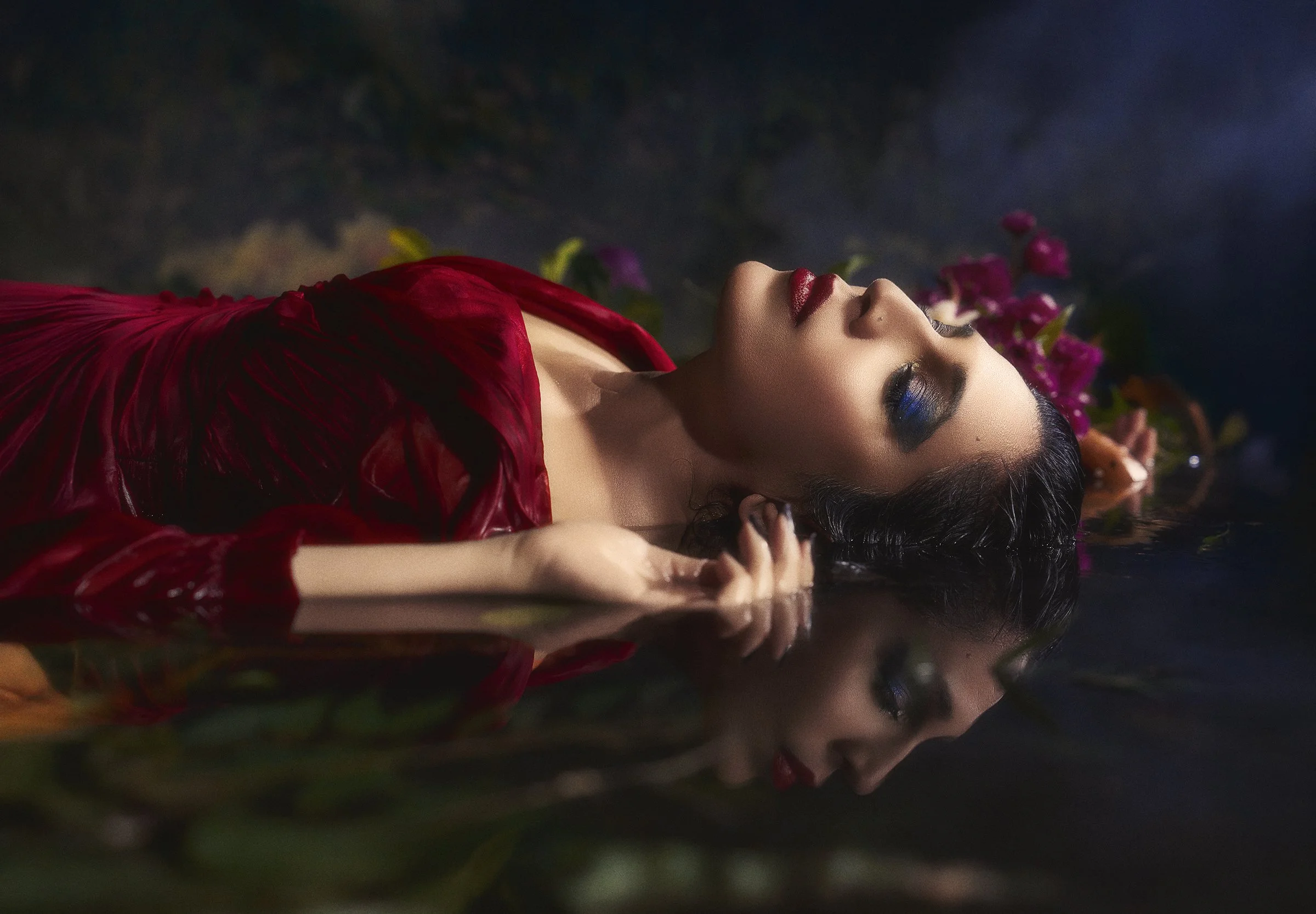
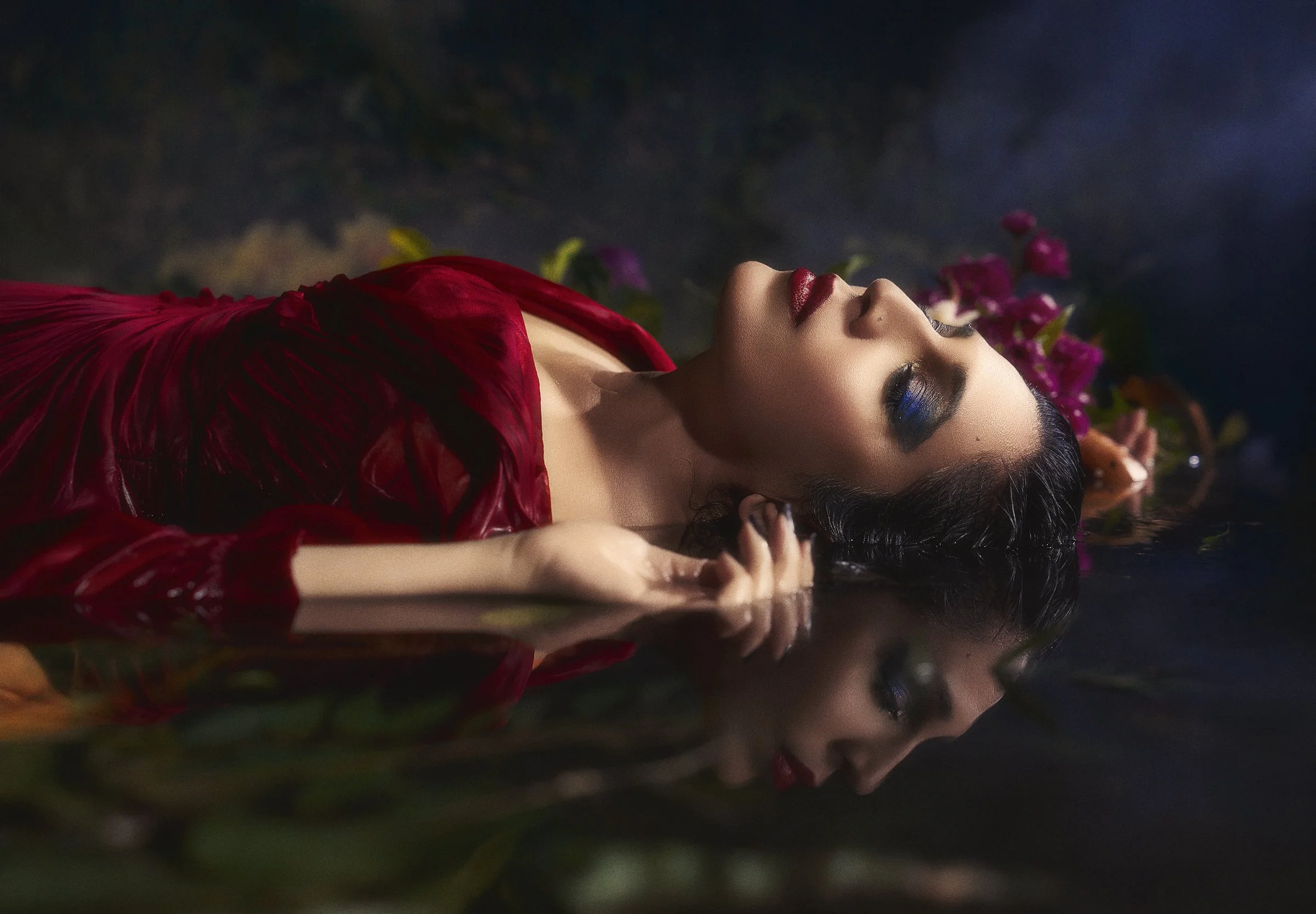
Tas worked with me on Phantoms, as well, and it was an amazing experience. I met Tas through a mutual friend who is an artist, a painter, and I needed to desperately make a video for the title track "Phantoms" on the last record. It was a very last-minute thing and I just reached out to my artist friends and asked if they knew anyone. My friend said, "Yes. This is the guy. His aesthetic and yours are identical, so you need to reach out to him." I sort-of met Tas on a blind date. I hired him and the first time I met him was on set. So that was the music video for "Phantoms", which did really, really well. It was such an easy working experience. So, when I did this album, I reached out to him and said, "Look. I want the entire aesthetic of this album to be your creation." I gave him creative freedom and he asked me what my initial visions were and I just had it constantly in my head, this painting of Ophelia. I thought it would be so amazing that instead of her dying in this painting, what if she lives. I just had this idea for the cover. I wanted everything to be very dreamy and otherworldly, going along with the theme of "Synesthesia". He captured it so perfectly. We worked so hard on that music video and we built the set. It was like old school art creation. We built it with 4 by 4's and a couple of my friends showed up and we built a 10 by 10, like a 6-inch deep pool and flooded it with warm water and hundreds of flowers and leaves. It was the hardest music video I have ever done. Going into that tank was Tas's idea and I'll tell you, I did it and am never doing it again (laughs)! It was so difficult! They make it look so easy, these artists who do these deep water videos. It's such a hard thing to do. The maximum I could float down...I could be down there for 3 seconds, so we had to do a hundred takes of me going down there for 3 seconds. But he did such a phenomenal job. I feel like, aesthetically, the album looks as it sounds and feels. That's what synesthesia is, a coming together of all of the senses.
Could you talk a bit about your own experience with synesthesia?
Mine is actually very mild. I do believe, actually, that everyone has it to a certain degree. I notice it most when people describe and talk about certain songs that mean something to them. It happens to me all of the time. They'll say, "Oh. I listened to this song of yours and I just see this forest." And that's just one example, and that fascinates me, because i feel that something sonic is triggering something visual. So, I think that everybody does have it, to a certain degree, but of course it's an actual medical condition. Some have it very extreme. I have a friend whose son, for example, sees certain numbers, and they give him very intense colors. Certain numbers, when he sees the numbers, it triggers certain colors for him. Mine has to do mostly with velvet. I have a lot of velvet in my closet. Since I was a teenager, I've become obsessed with silk velvet, and I can actually taste it when I touch it and feel it. It crosses into taste. I also have it with scents, where certain scents trigger very visceral memories. I have it more in that sense. Also, sonically, when I create music...music for me isn't just an auditory experience. It's a very spacial experience. I have it more in that sense.
You have a couple of covers on your album- Tim Buckley's "Song To The Siren" and Natalie Merchant's "This House Is On Fire". What is the significance of those particular tracks for you and what led to your decision to include them on the album?
I usually like to do covers, but I'm very careful about which ones I choose. For me, doing a cover does not come from a place of thinking I can perform the song better than the original artist. It really comes from a place of reverence and paying homage to an artist and a song that had a major impact on my own artistic journey. Tim Buckley's "Song To The Siren" has been covered so many times, so I'm not reinventing the wheel by performing it again. I was particularly influenced by Liz Frasier's version of it for This Mortal Coil. I probably, in my late teens, listened to that song maybe dozens of times on repeat. For this album, I really wanted to include a cover of that as a tribute to both Liz Frasier and Tim Buckley. As far as Natalie Merchant's song, that song of hers, when I first heard it, sonically and aesthetically it has gorgeous, gorgeous songwriting and production. She also incorporates Middle Eastern melodies so effortlessly. It's stunning, her version of it. Lyrically, I felt that what she penned, the lyrics she penned, are timeless. It was such a political statement at the time, a social and political statement. Those kinds of honest statements and that kind of truth-telling from artists, for me, are so timeless. I felt that this song of hers, given our current political and social climate, not just in America but globally, is again relevant today. I felt like deserved a new rendition out there to remind people of what I believe to be a very important song.
You have described "To Pieces" as a meditation on betrayal and the wounds we inflict on each other as human beings, as well as nature’s own betrayal and how, within that devastation, lies a threshold where annihilation yields to the promise of something new. Can you talk a bit about that perspective and the ways you feel that humanity is evolving towards something new and is trying to claw our way out of the darkness?
In the last two years, I think we..."To Pieces" was one of the songs I wrote later in the album. The last two years, for me personally, were quite devastating, with the genocide in Gaza and everything happening politically in America. The division. We kind-of, I feel, saw the worst and are still seeing the worst of humanity and the kinds of horrors and cruelty we are capable of inflicting on one another. And not only that, but also ecocide and how are destroying the planet. When I wrote that song, that's really why the video has so much red. I kept seeing red and destruction and fire, and I felt that's kind of the phase we are in. But if we examine nature, when there are wildfires, for example, just within the design of the wildfires, built into it is the design for the renewal and regrowth. That song really became about the destruction all around us, in terms of humanity and also nature, but that within this destruction is also the design for something new. I feel, in terms of politics, seeing what's happening in New York with the election of Zohran Mamdani, and how we brought people of all different religions and ethnicities and identities together, I feel like that gives me tremendous hope. I feel that's a perfect example of how, within the destruction, something new is emerging that is giving us something I think many of us have not had for two years. And that's hope.
It makes you think that maybe things will be ok!
Yes! Absolutely. It's beautiful to see all of the people who are coming together. Mamdani could not have won that election without Jewish supporters. And the fact that everybody came out means that we all recognize that the system that exists, the current system, is not sustainable. Not in terms of humanity or nature. We need to build a new system, and I think just seeing people coming together in NYC has given the entire country, and even beyond that hope. I see messages from all over the world, of people seeing what happened in NY and saying it gives them hope.
You have been very vocal on your platform about everything happening in the world, whether about Gaza, Iran, Afghanistan and beyond, and all of the suffering happening. As someone whose own life has been shaped by war and displacement, and politics, what do you see as your role as an artist in using your music and platform to voice your views and experiences, despite the pushback you have received?
When people tell me, and believe me I hear it a lot, to just shut up and sing and that they don't want to hear about my political and social views and to just "give us your music", I remind them that actually my music is an autobiography of my life. I would not make the kind of music that I am making if it wasn't for the life I have lived. War, displacement, dehumanization, those are all a part of my own lived experiences. And asking me to not talk about that is basically asking me not to express myself as an artist and the full spectrum of who I am. For me, using my platform as an artist to talk about what is happening in the world is part of the exact same truth-telling as the kind of music I write, in which I am being completely, 100% honest in terms of my emotions and the output of what I am expressing. It's the same truth-telling, and I cannot separate the two. And in terms of, especially with the genocide in Gaza, I've felt that how could I possibly just post about mundane things, like what I'm eating or just anything, when there are literally children being killed every single day. And particularly the plight of children is something that is extremely sensitive for me, because I myself was an orphan. I grew up in a boarding school since I was 4, in India. I know what it's like to suffer as a child and to be alone and afraid. So, the plight of children is particularly close to my heart, and if I would not have used my platform, despite all of the push back, I feel that I would have failed as a human being and as an artist.
Do you think that more artists are starting to find their voice, despite the pressure to remain silent, on issues like that?
You know, it's such a personal matter. I do my best not to judge artists when they don't speak out. I'll be honest though-it's hard not to, especially when it's an artist I admire and feel like they are outspoken about some issues but then suddenly become very selective about certain issues. I feel there is a kind-of intersectionality in liberational movements. You can't stand up for LGBTQ rights but then not stand up for other people being oppressed. I feel like we have to apply our morality and our humanity equally across all liberation movements. They are all interconnected. It's hard for me not to be disappointed...maybe that's a better word...in artists I admire, who I feel have a larger platform than I do. I do feel that, perhaps in the last two years, I'm seeing more and more artists speaking out. Perhaps it's because you see others do it and you do find courage in that. I do feel that you find courage. And even if there is a loss, like for me there was a huge loss in the beginning, maybe the first 6-7 months of the genocide, and then suddenly everything just shifted. I found my own people. I found people who cared about what I had to say in terms of that. I remind people, when they say, "Do you feel like it was worth the cost?", that even if you don't feel the cost of it in terms of losing work or money or relationships, there is a cost. It's a cost of the conscience and of the kind of future that we are imagining that we want to build. There is an absolute cost, even if you don't feel it immediately. You have a responsibility as an artist, especially in today's world where media is so biased. We watched an entire genocide live-streamed on social media. This is the future. This is it, you know?
It's pretty staggering for sure.
I know. And the news isn't going to give us the real information. This is how it is from now on, you know?
Blessings to the brave journalists in Gaza, because otherwise we wouldn't really know what's going on.
Exactly. Exactly.
So much of your music is infused with poetry and folktales/folklore, instrumentation, prayers, lullabies, and whatnot from many different cultures...mainly Middle Eastern cultures. Can you talk a bit about using those deep cultural references in your music and your ability to bridge the spiritual, cultural, and musical connections and struggles that you have mentioned feeling intertwined with yourself?
My music, all of it, from the world music I create to my own solo stuff with English, which is a more singer-songwriter approach, is all storytelling. It's a storytelling and an autobiography of my life. I feel, as artists, that we are in a unique position to share with people so many stories. I love the fact that the majority of my audiences are not from any of the cultures whose music I present, but they are all interested and they come. There is something very universal in the overall message, especially when it comes to folk music. I'm particularly interested in folk music of the world, because I feel like folk music is the music of the people. Even in America. When you share that, there is something, even if people don't understand the language. It resonates on a very human level. I'm interested in that and juxtapositioning it against something very modern. Which is kind-of the story of my life, coming from an ancient culture and then finding myself in America and a modern world. And then how do I reconcile these two realities?
Over the years you have done a lot of music for film, television, and video games and were recently a featured vocalist on season 2 of Sandman, having called the experience one of your favorite cues you've ever worked on. What can you tell me about that experience and how it came about, as well as working with David Buckley on the score?
A lot of my work for film and tv, it's not really my vision, and that's why I really like it. It's interesting for me to work with composers and try to capture their vision, because in that process, I feel like I'm going on to become a better artist. My own work is just about expressing myself and my own aesthetic, and sometimes I don't really get what they want, or maybe I'm not enjoying what I'm doing. But every single time I do it, I feel like I come out of it on the other side a better artist. David Buckley is an incredible composer. When he came to me, and once in a while this happens to me, he reached out and said that he had this cue that was, like, three minutes and no dialogue. He said, "I really don't know what to do here. I created this sort of bed of music, but I can't really write the vocal style that you do, and I don't know what to do. So, why don't you take this, and you'll have 100% creative freedom to just sing whatever you want? Just make it multi-layered." He gave me this freedom. He had already created an incredible bed of music, so I wasn't starting from scratch. I had something that was very inspiring already to begin with. And then, I just poured my soul into it, and he loved it, and the producers loved it. It was just one of those rare incidents that happen where you get complete creative freedom, and it becomes a true collaboration. It really was a true collaboration with David.
Can you talk a bit about the collaborative album you are doing with the artist Buckethead, Flowers For The Bees, and how that came about?
Yes. I've known Buckethead for so many years. We met in the early 2000s because we were both on different labels, and Virgin Records bought the labels that we were on. And then they created a small tour for a select group of artists whom they had acquired through their merger. Buckethead was one of them, as well as my last band, Vas. We met on that tour and had four dates in Europe. We travelled together over the course of, I think, ten days or something and immediately bonded. He's such a gentle soul and such a smart, deep-thinking human being, and we just completely bonded. I had no idea who he was before that. We just became friends and then he did a solo album that our mutual friend Serj Tankian produced. Buckethead asked me to sing on that album, so I sang, and then we kind of went our separate ways. Years passed, and then he reached out to me, and he asked if I wanted to do an album together, and I said Sure. It's kind of been evolving, and we have around four songs that are done. It's very slow because I'm very busy and he's very busy. The only way I can describe it is that it's so ethereal, this album. It's mostly just all guitar and voice. I don't think we're really going to have any other instruments. It's very bare bones, with ethereal guitar and voice. In fact, in December, he's performing at The Wiltern in Los Angeles, and he asked me to join him on stage to perform two of the songs, so I am very excited about that. Hopefully, we will finish the album this year and next year we'll get something out there for everyone to enjoy.
You did a run of European shows with Niyaz over the summer. How were the shows?
Those were really great shows. What was interesting is, you know, now we're mostly performing our multi-media project, so when we went to Europe, we went back to sort of our roots of beginning in clubs. It was not the multimedia shows. It was very interesting, after all these years, going back to performing in clubs. It was so much fun, just dancing with people and meeting with people in that very intimate setting, rather than a proper performing arts centre.
What can you tell me about your life outside of music? Are you still making jewellery and doing your fine art prints? And what’s next for you?
Yes. But you know, honestly, my fine art prints...someone just asked me about that the other day. "Why aren't you making any more?". And I thought, what I really loved about that composite work was that it was really hard and would take around ten hours to create an image, taking different photographs and putting them together to create something surreal. Now, with AI art, everything looks like that and it's so hard to...I feel like no matter what I create, it's just going to look as if I created it with AI. So, I've become a little bit jaded, honestly, in terms of visual art. With my jewellery, I'm still making it, but not as much because we are building a brand new multi-media stage production for the new (Niyaz) album. We're actually almost done with the new Niyaz album. We have one more song to record and we're working on a massive stage production, which we are launching in March. All of my energy is right now going into that. It's one of the reasons, also, that I haven't scheduled any shows for Synesthesia, because I really don't have time to tour the album. All of my focus is on this new production. I can't wait to bring that show to the stage, because what we are creating is incredible!
I can't wait to catch a show!

Chat In a Hat: Hastings

Photo & Interview courtesy of: Carolyn Lederach
The rules are simple...there's a hat, the hat is filled with many questions ranging from the personal to the offbeat. We pass the hat, and artists get a chance to answer the question they choose from said hat. Fun is had by all.
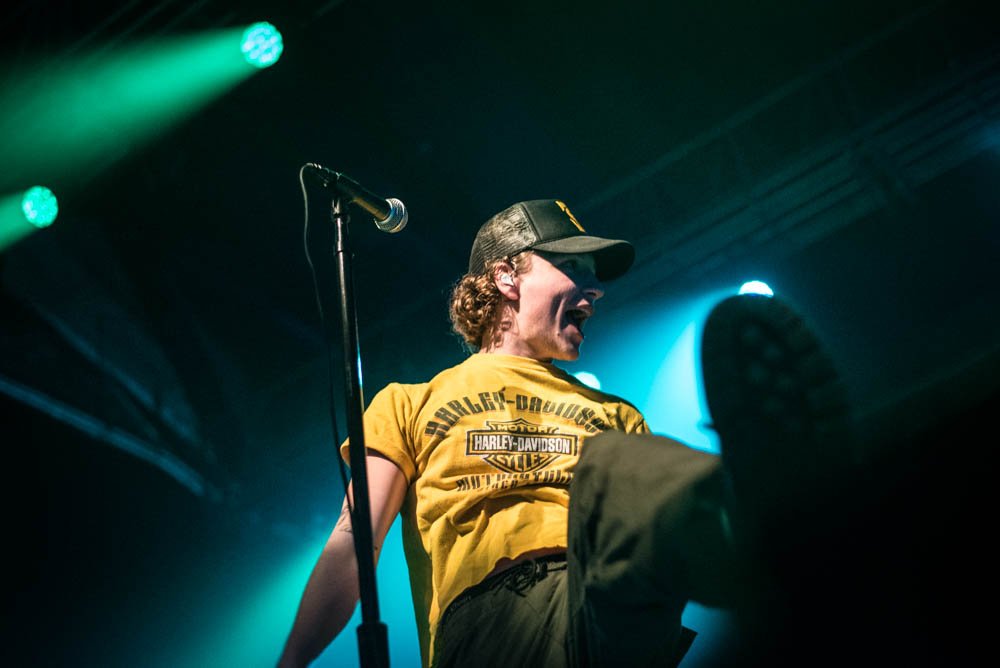
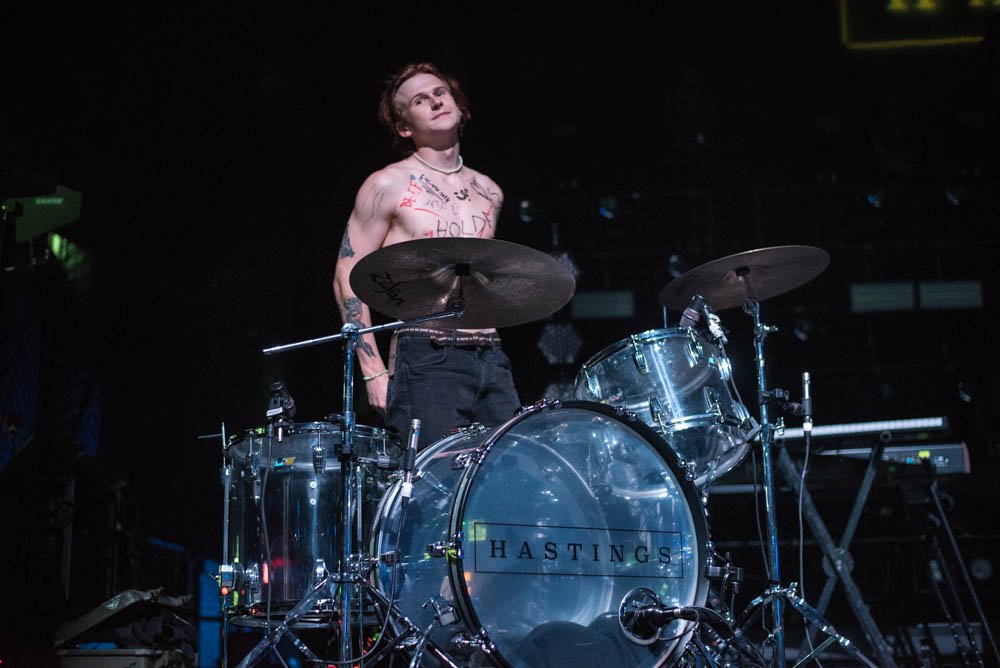
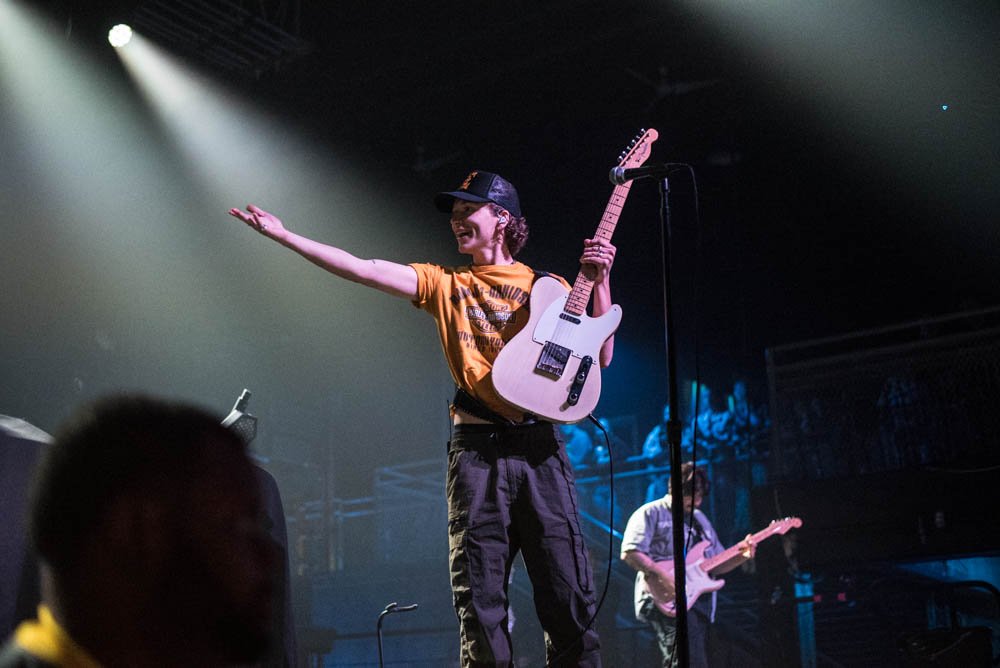
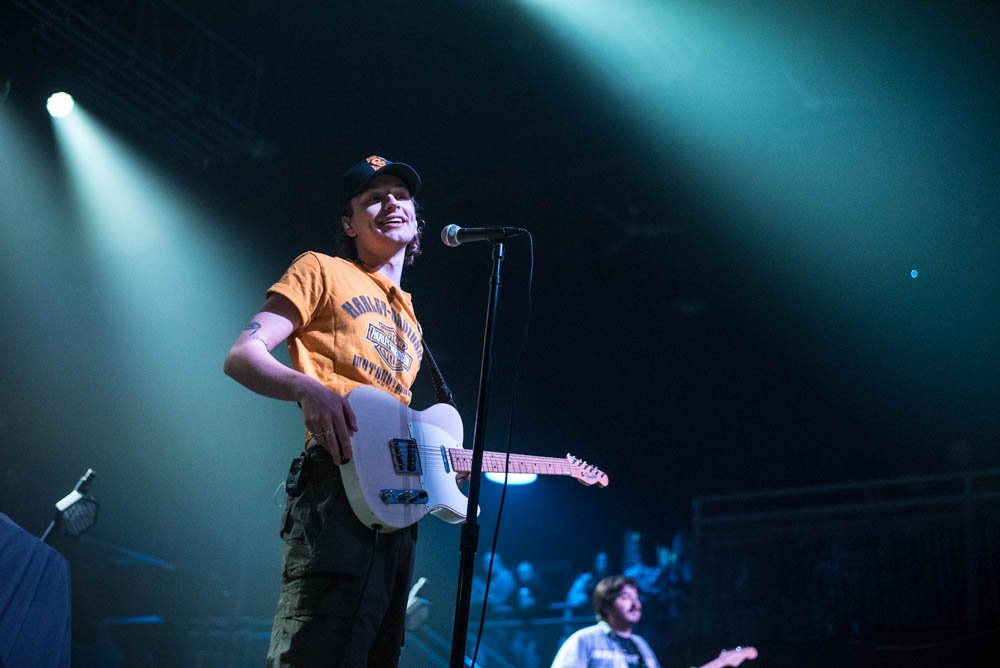
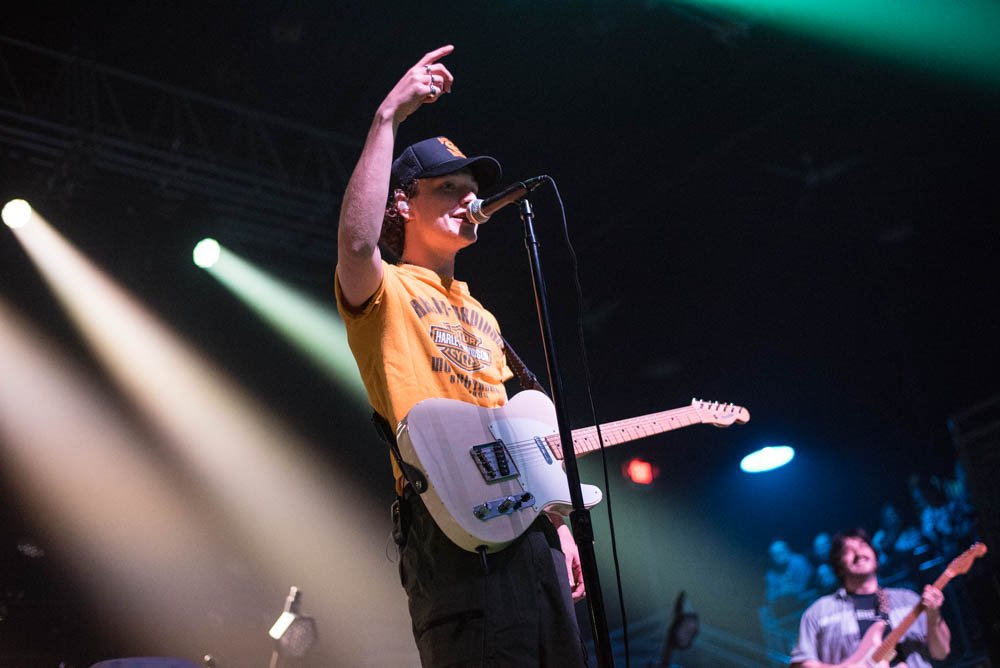
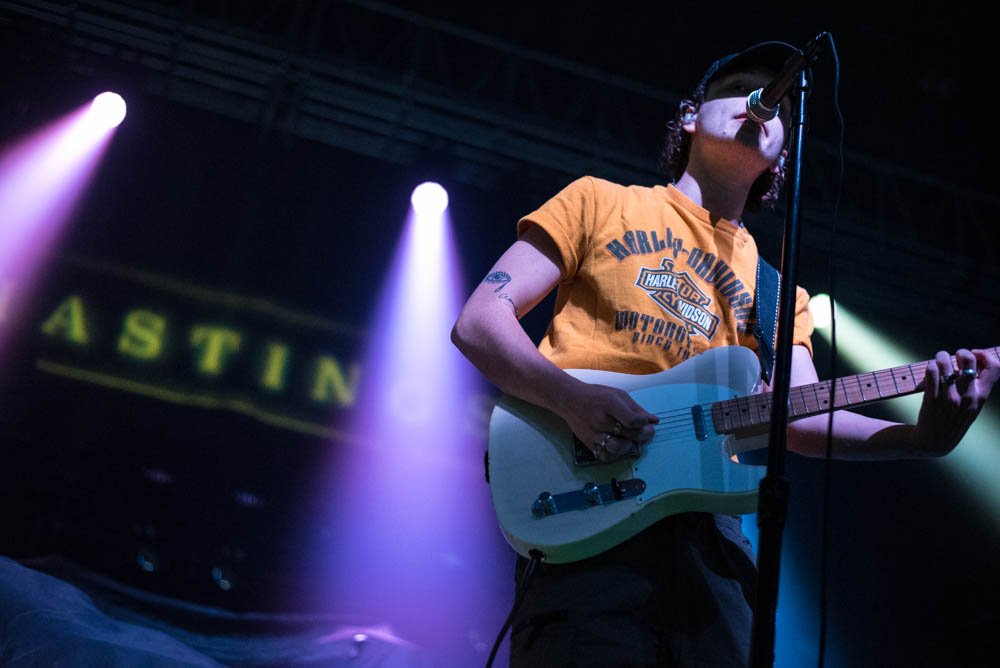
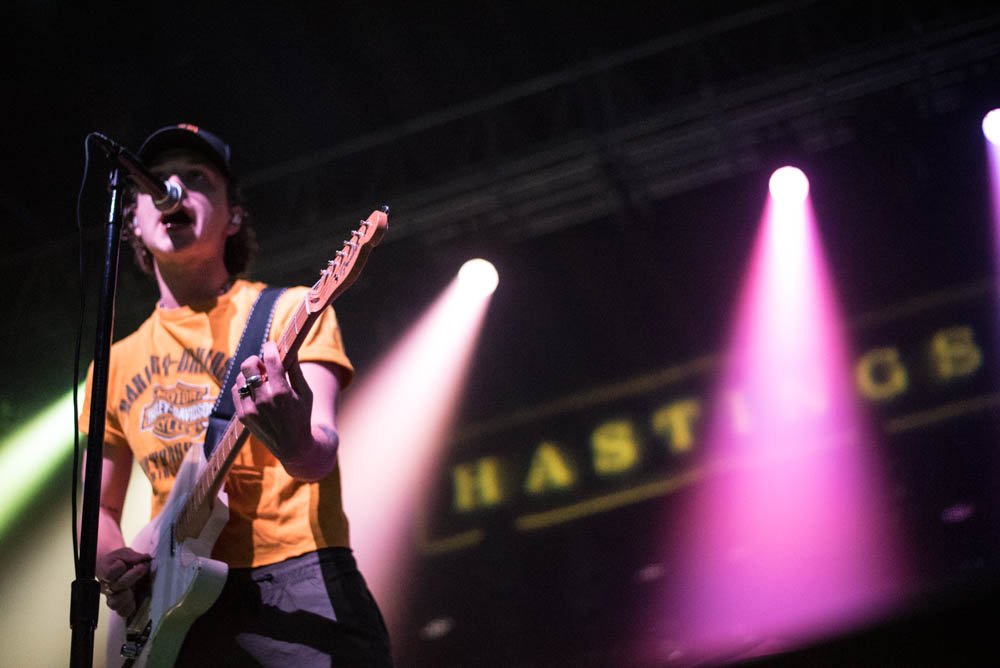
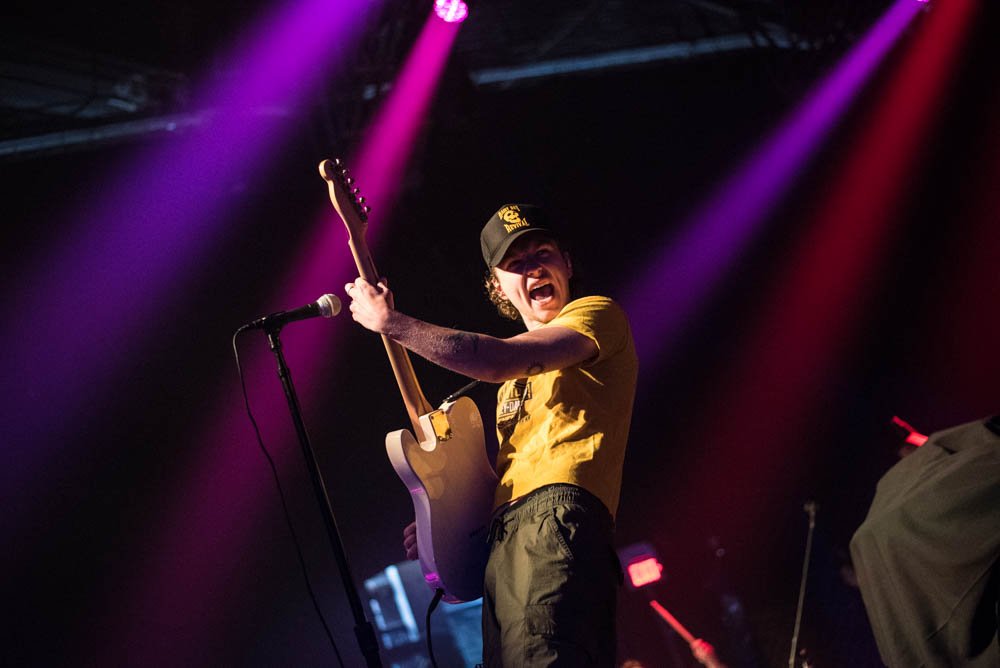
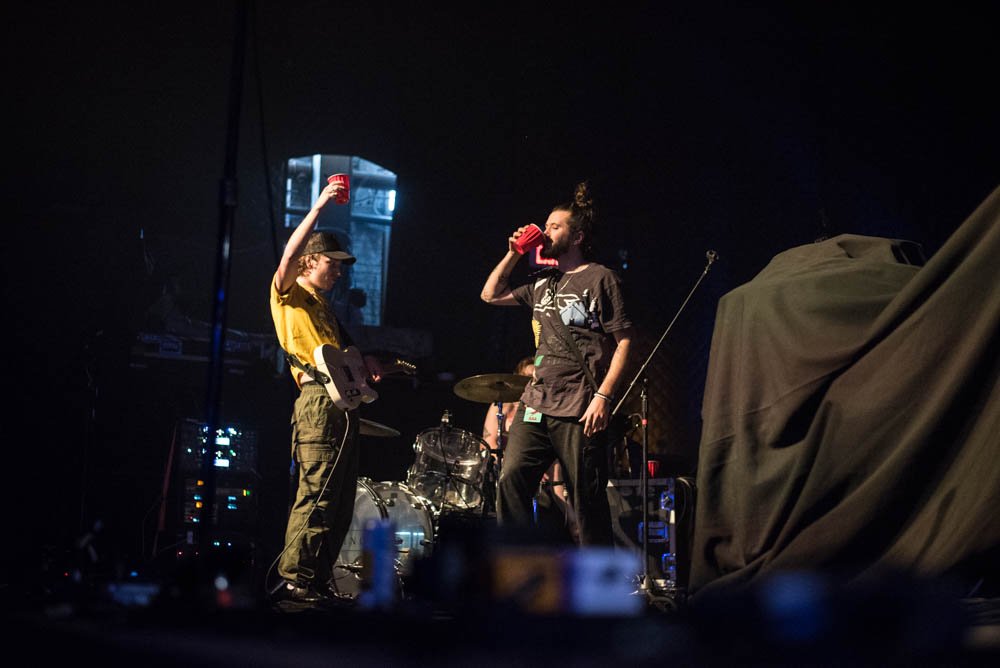
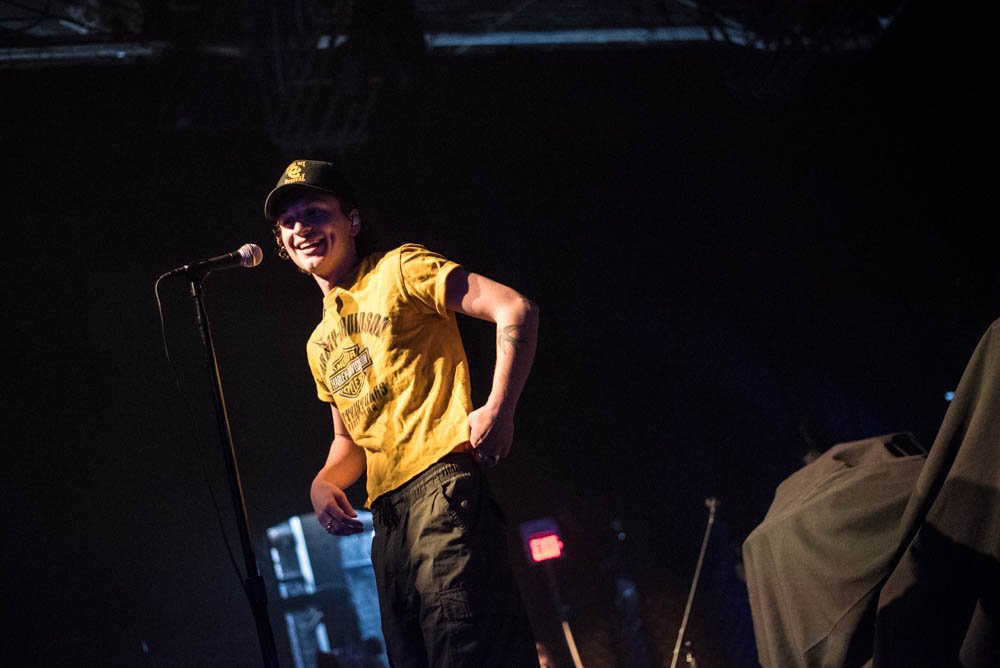
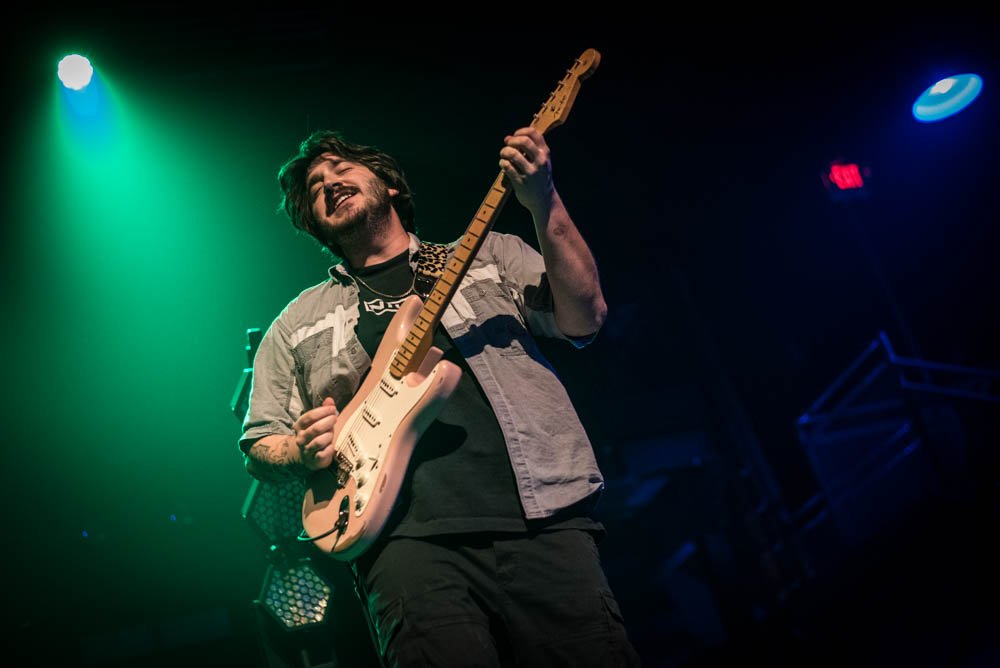
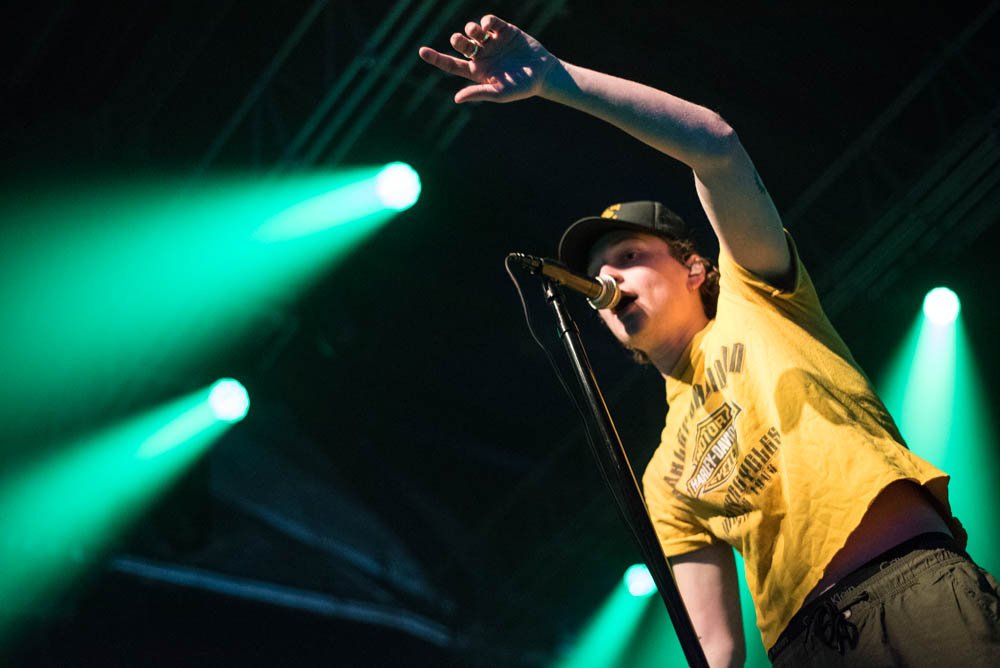
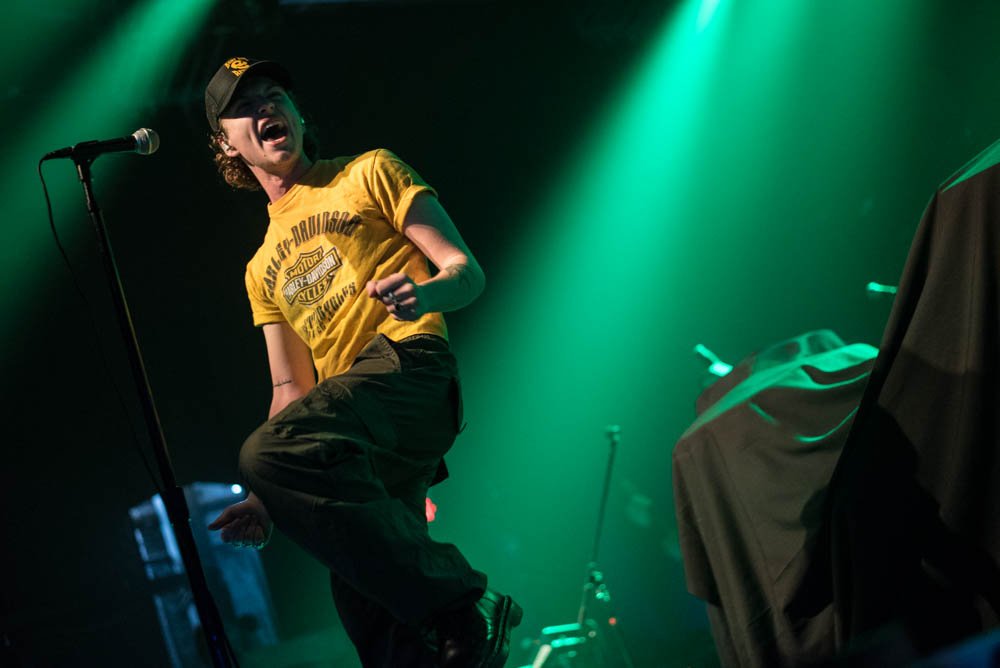
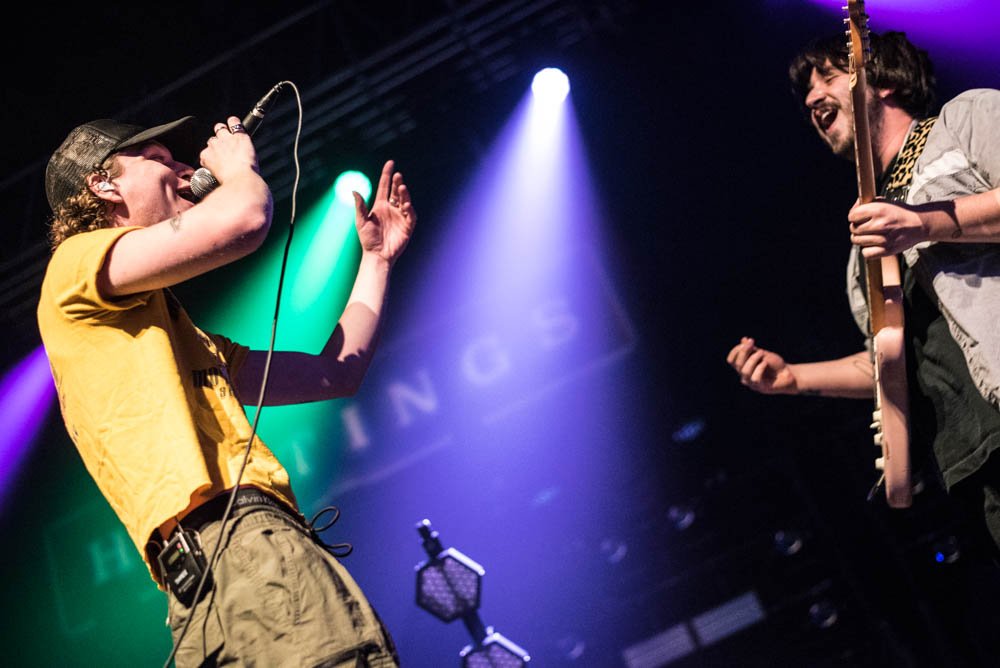
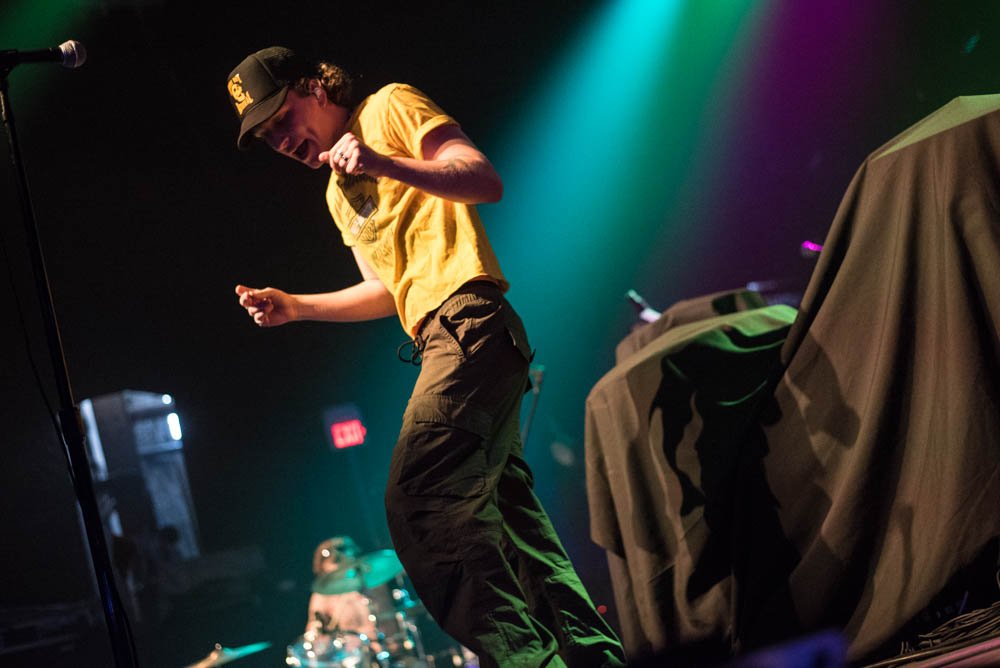
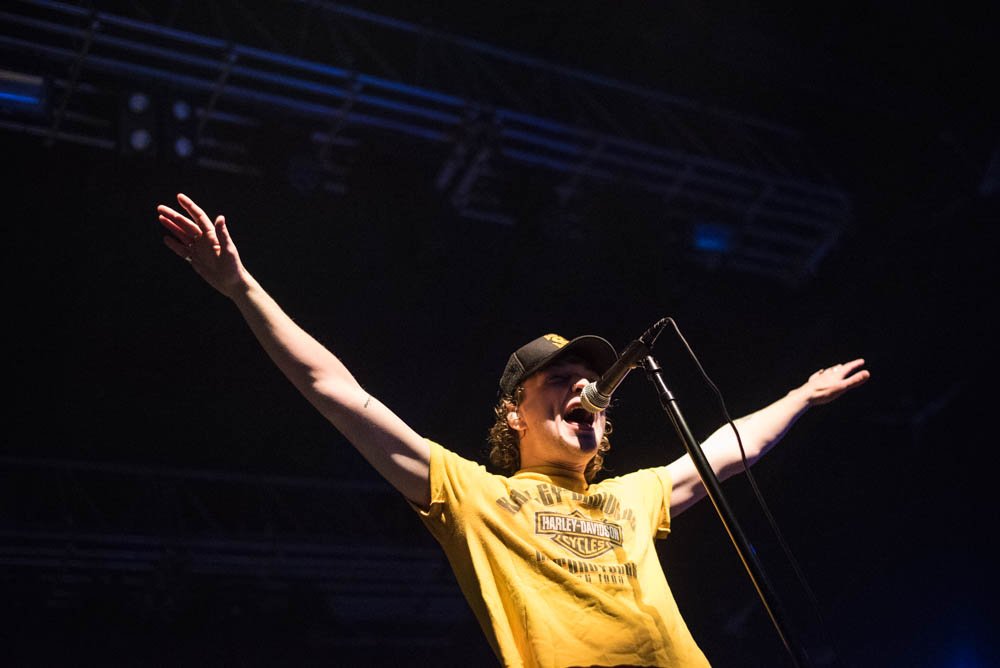
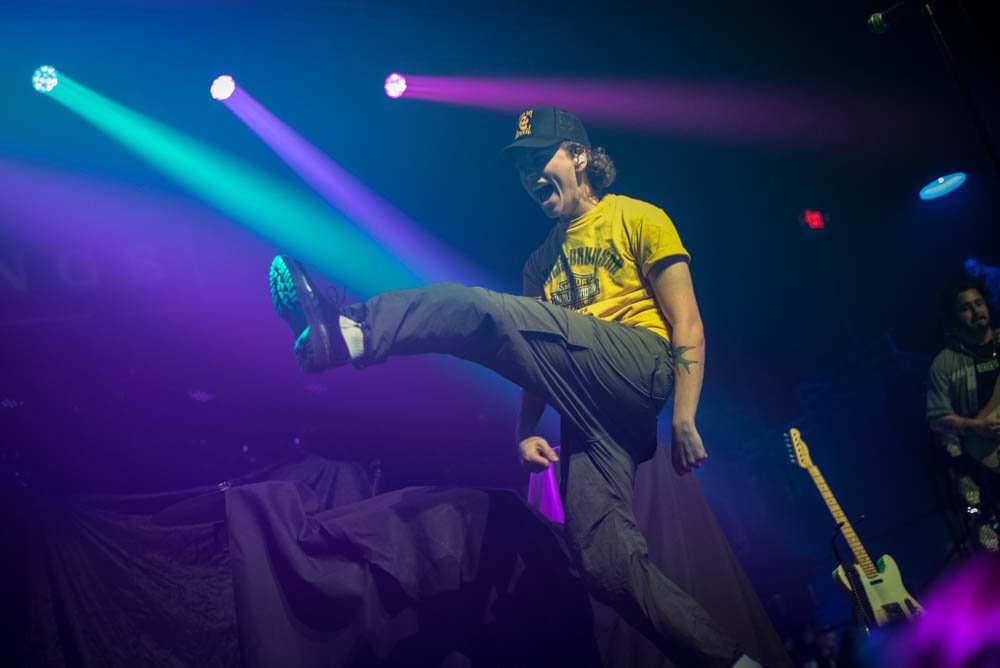
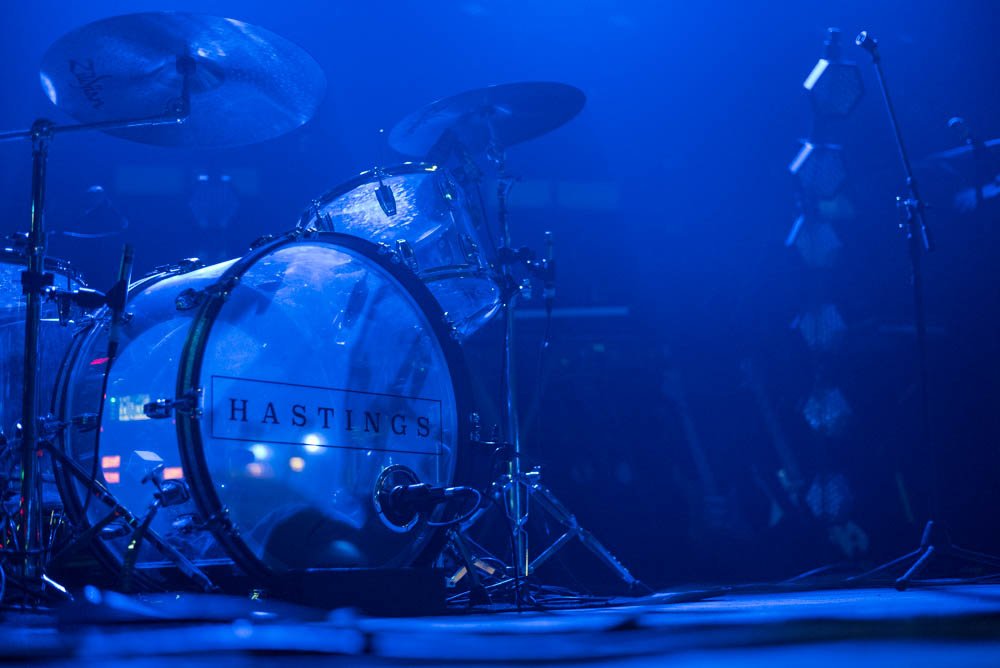
If you’ve been on the search for a new songwriter with some super addictive bops, look no further than Hastings. I’ve had “Heart’s Not In It” on repeat since my first listen last year. We sat down with Matt in Philadelphia on the last show of his first tour, opening for The Band Camino. It’s hard not to instantly enjoy his live set, which consisted of his recently released self-titled EP, Hastings. We can’t wait to see where the bright future of Hastings goes from here.
Without further ado, here's our Chat in the Hat with Hastings:
Favorite album?
Vice Verses by Switchfoot or Continuum by John Mayer.
Outside of music, do you have any hobbies?
I like to play basketball. I play basketball like twice a week. It's not competitive at all. I played in high school and quickly fell out of love with it because everybody got taller than me.
If you could create one holiday, what would it be?
You know how you always had those pajama days in school? I feel like that would be cool.
If you could be an animal for the day, what would you be?
Leopard! I would feel like I would want to run super fast or something. I've always loved those.
Do you have any tour souvenirs?
Not so many souvenirs, but I've got some tattoos. I got one in Chicago. It's a crying eye. And then this is our tour tattoo. So, everybody got that one, which is cool. Some of them got the red around them, like the sun, but I didn't really want any color.
So if the apocalypse is tomorrow, what's the last thing you would do?
Skydive. I've never done that. And I've always been afraid of heights. I feel like I just want to knock that fear out.
What is your zombie apocalypse plan?
That's a great follow-up question. I've had so many conversations about this and I would probably have like six or seven of my friends. We would just post up. I feel like during the zombie apocalypse, you just want people you trust.
Favorite, scary movie.
Midsommar
Your guilty pleasure song.
Probably something from Wiz Khalifa.
If you could eat anything right now, what would it be?
Full breakfast meal. I love breakfast. Like biscuits, gravy, bacon, the whole deal. That's my favorite type of food for sure.
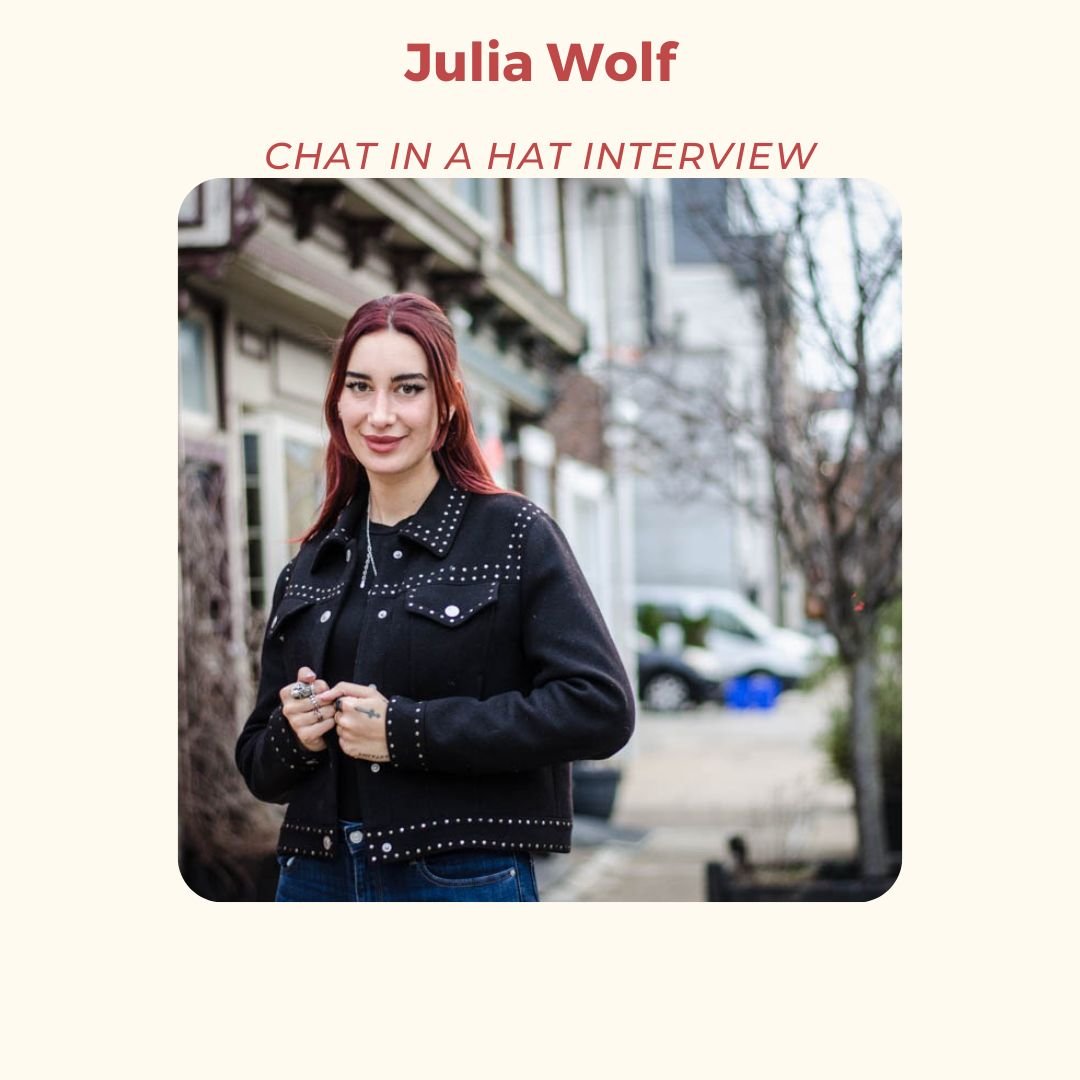
Chat In a Hat: Julia Wolf

The rules are simple...there's a hat, this hat is filled with many questions ranging from the personal to the offbeat. We pass the hat, and artists get a chance to answer the question they choose from said hat. Fun is had by all.
Julia Wolf is currently set out on her first tour opening for the wonderful Fletcher. Not to mention, all the shows are sold out, not a bad start! We got to catch her at her Philly show and do a little catch-up since our Quarantine Profile with Julia back during lockdown times. Since then she’s been busy releasing more new music including her debut album Girls in Purgatory and her latest single “RIP to the Club”. So many exciting things to come, and can’t wait to see where she goes next!
Without further ado, here's our Chat in the Hat with Julia Wolf:
What's the stupidest thing you did in your teens to look cool?
It wasn’t high school, but every day in elementary school, I wore a tie because I was obsessed with Avril Lavigne and, you know, had to represent.
Would you rather change the past or be able to see into the future?
Absolutely see to the future! I wanna know everything. I have no issues with past experiences.
If you could invite two people to a dinner party, who would they be?
Definitely Jack Harlow. Cause he's my favorite of all time. And the second one, I’d have to say Robert, Pattinson, because Twilight forever.
If you could have any superpower, what would you want?
I think I'd want to be invisible.
The apocalypse is tomorrow. What's the last thing you would do?
I would do a whole trip back to my hometown and just do all the cute little things that we used to do on Long Island. We can bring Malfoy, our dog.
The last thing that you've done, that you deserve a Highfive for
Soundcheck!
What is your favorite album?
Jack Harlow That’s What They All Say
If you could eat anything right now, what would it be?
Gnocchi


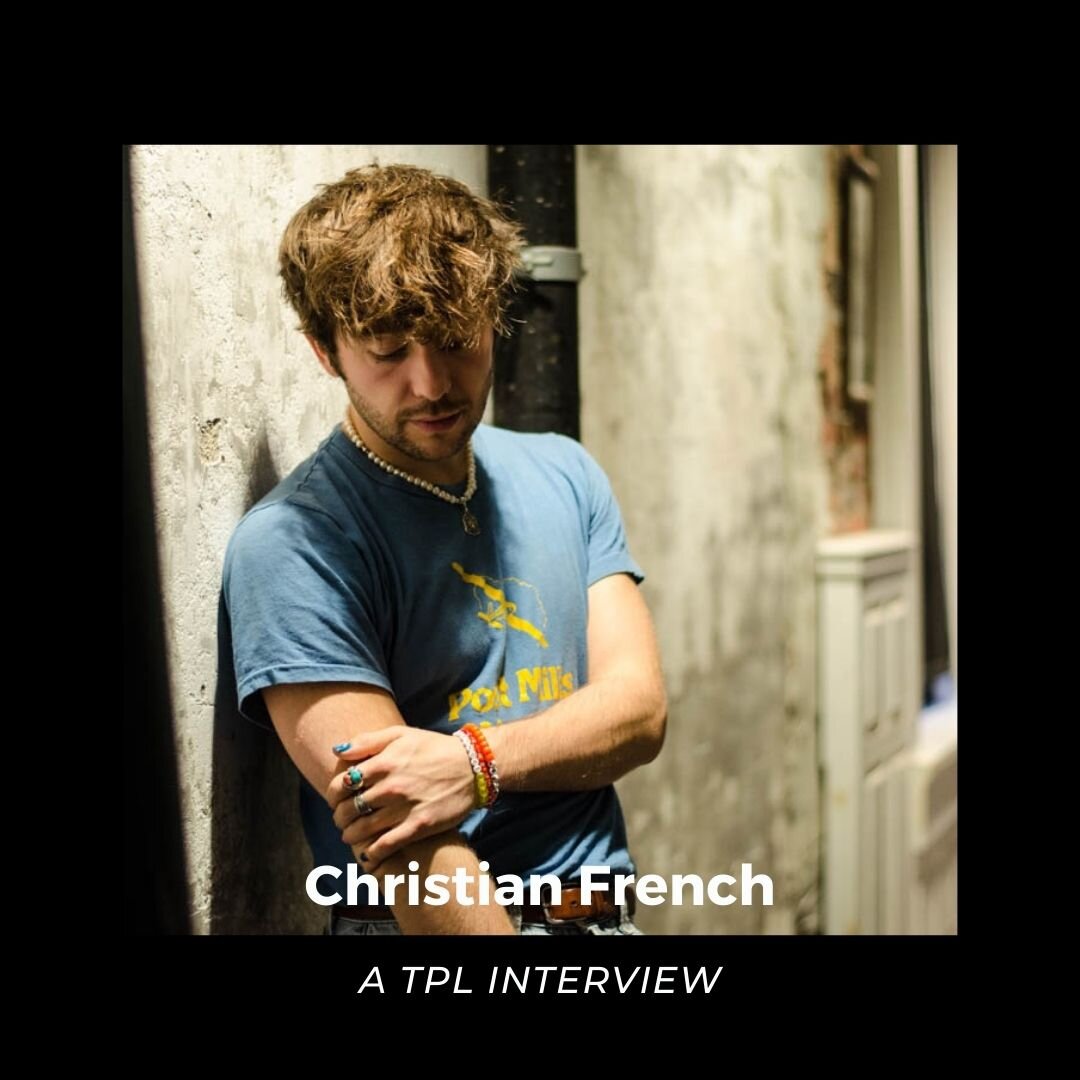
Chat In a Hat: Christian French

The rules are simple...there's a hat, this hat is filled with many questions ranging from the personal to the offbeat. We pass the hat, and artists get a chance to answer the question they choose from said hat. Fun is had by all.
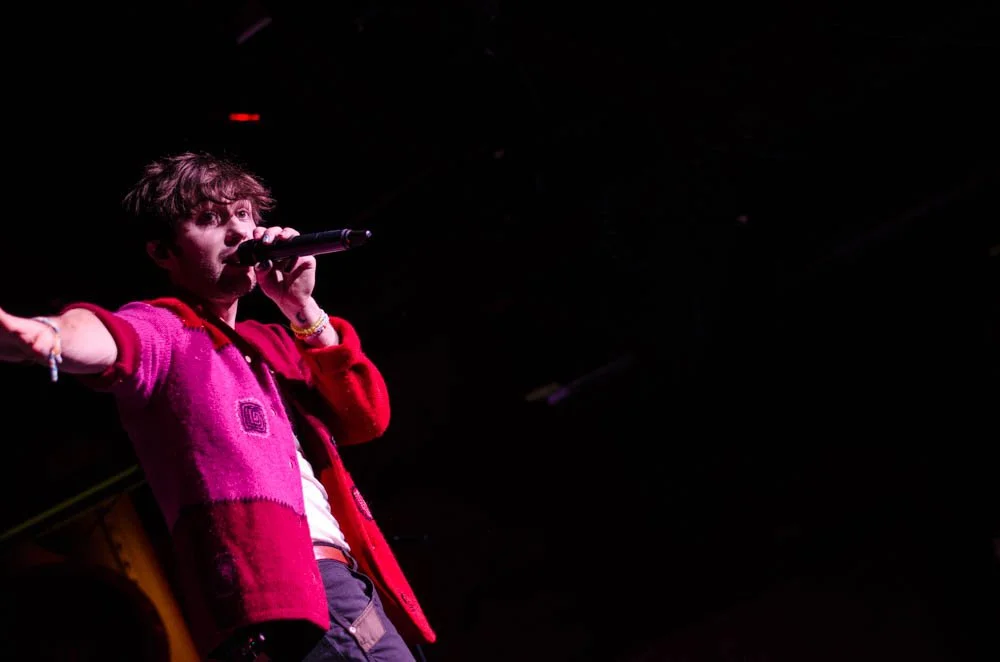
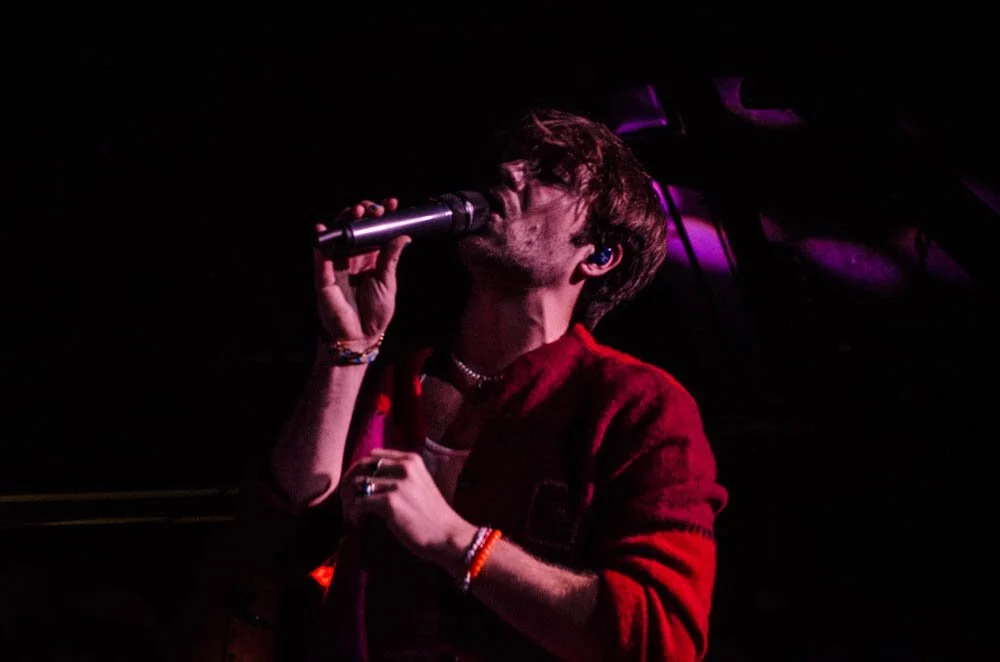
Christian French recently finished up a US tour after having to previously cancel his 2020 tour as COVID lockdown took its hold. He’s released a couple of bops in the meantime such as “Avalanche” and most recently “Oh Well”. We got to catch up with Christian at his Philly show. Read on for our interview, live photo gallery, and the latest music video for “Oh Well”.
Without further ado, here's our Chat in the Hat with Christian French:
Who is your biggest influence?
I think musically John Mayer definitely is my guy. I've been listening to him since I was three years old and my mom's just always had his CDs playing. I've always followed his albums and then a couple of years ago really started to get into his interviews and I was seeing who he was for the first time and I just really respect how well-spoken he is. So he's someone I really look up to a lot both as a person and a musician.
What was the first record you ever bought?
I got really obsessed with Queen when I was little and my sister asked me what I wanted for Christmas and it was that and an iPod touch that I wanted really bad and she's like you have to pick one. I picked the Queen’s Greatest Hits album, so I didn’t buy it, but it was the first cd that I owned. So I was definitely obsessed with Queen and then the Usher’s Confessions album was my next one that I just absolutely loved.
If you can invite two people to a dinner party who would they be?
I mean I hate to repeat John Mayer but I would love to see him there. And then Rick Ruben who is a crazy crazy talented producer that also I think is really well-spoken and really tapped into like kind of the spiritual side of things that I feel like a lot of people mess. So I would learn a lot from those two in even just 20 minutes.
What would your Wild West outlaw gang name be?
Zombie Runaway Gang. We decided last tour cause of COVID we wouldn't go home and just keep playing to zombies since there was an outbreak.
what's the last movie you cried to?
I absolutely bawled at Marley and Me and I recently watched it again and I cried again. The animal ones always get you the hardest.
What is my guilty pleasure song?
“Love Song” by Sara Bareilles. I don't know if a hit counts as a guilty pleasure song, but I love that song.
What is your favorite song on your record / EP?
I got this song called “oh well” coming absolutely loved. I wrote it just in the middle of the pandemic when I was going through a super shitty time and instead of writing this super snippy sad song I tried to have fun with it and that’s what we came up with and I love it. Then a song that’s out I'm really proud of is “Head First”, and I'm really really proud of “Avalanche”.
Would you rather have the superpowers of fly or to become invisible?
I've always wanted to fly and every once in a while you get those dreams where you do fly for a second and it's a blast.
If you could be an animal for the day what would you be?
I mean if it's forever I would be a dog cause they just get to vibe and love you and that’s about it. I don't know I would want to be deep in the jungle but also not be an animal that would get eaten.
Outside of music do you have any hobbies?
I love cooking I'm like the house Chef for my roommates and I love being in nature so we go camping every couple of weeks. I played ice hockey my entire life and I haven't recently because of COVID. I’m in a men’s league playing with some 40/50-year-olds. Then I like to read as well.
What is your favorite song and or album right now?
I am currently in love with the War on Drugs. A Deeper Understanding is just one of the best albums I've listened to in a long time, but I just found it a few months ago. My favorite songs off that are “Pain” and “Thinking of a Place”.
Favorite scary movie:
Insidious.
What is your zombie apocalypse plan?
We're stuck in the Sprinter van. Set up all the gear in the trailer then drive and play at the same time and shoot lasers at the zombies from the guitars. We will fix the zombie apocalypse






Interview: Audrey DuBois Harris

Audrey DuBois Harris
Interview By: Emily May
Based in Montreal, Canada, opera singer Audrey DuBois Harris has the stunning ability to perform a wide array of musical styles, including jazz, Gospel, folk, Broadway show tunes, popular standards, among others. Born and raised in Miami, Florida in a vibrant and diverse neighborhood, exposure to the sounds of merengue, kompa, salsa, reggae, mariachi, and many others informed her musical growth and journey from an early age. Her mother discovered her talent for singing at a young age and nurtured that talent, enrolling her in classical vocal lessons that helped her voice to naturally grow and flourish. Her mother was a member of an all-female acapella choir called The Agape Choir, an exciting group of women who sang negro spiritual songs in concert. The time that DuBois Harris spent as a child listening with rapt attention had a profound impact on her musical journey, as well. She attended the New World School of The Arts in Miami as a teenager and later received a full scholarship to Julliard, both of which gave her the freedom to explore her artistry and gave her the desire to grow musically and artistically.
Among her many high-profile engagements, she holds the distinction of having performed on several occasions as “The President’s Soloist,” singing the National Anthem, as well as at “Christmas at The White House,” and has performed both the American and Canadian national anthems for The U.S. Consulate General Montreal on many occasions and performed at The White House-hosted Florida Highwaymen exhibit at the Montreal Art Center. As a classically trained vocalist, she has performed internationally and also assayed a number of operatic roles. DuBois Harris has performed on some of the world’s greatest stages, including St. David’s Hall (Cardiff, Wales), Carnegie Halls’ Weill Recital Hall, The Apollo Theater, Merkin Hall, Alice Tully Hall, and Avery Fischer Hall, to name a few. Her recognition as an artist of note was underscored when DuBois Harris joined the Reverend Jesse Jackson for a series of MLK50 events commemorating the 50th anniversary of the assassination of civil rights icon Reverend Dr. Martin Luther King, Jr., in Memphis, Tennessee. She sang an inspirational rendition of “Lift Every Voice and Sing” for the national television broadcast of the events ceremony at the Mason Temple COGIC, where Dr. King delivered his historic “Mountaintop” speech the night before his untimely death. DuBois Harris also participated in “A Day of Remembrance” event at the National Civil Rights Museum. “To listen to Audrey is to hear the soul and science of music,” noted Jackson. “Her singing, interpretation, and presentation is what music looks and sounds like.” Jackson also invited DuBois Harris to perform at the annual Selma Bridge Crossing Jubilee service in remembrance of “Bloody Sunday” on the Edmund Pettus Bridge in Alabama, where Jackson and U.S. Representative John Lewis led the march. DuBois Harris met and was selected by "The Queen of Soul" Aretha Franklin early in her career to take part in Aretha’s 3 'Aretha Franklin Presents' concert events and, in turn, Aretha became a longtime friend and mentor to DuBois Harris.
DuBois Harris has released the 5-song EP God Bless America, that features the title track along with classic and contemporary compositions, and in 2012, she debuted as a recording artist with her release of Testimony, a soaring collection of inspirational music and hope-filled hymns. Testimony not only saw her singing and performing, but with the album she also took on the roles of producer, songwriter, and arranger. Most recently, she has released her latest album Lift Every Voice, a collection of songs that celebrates America's rich cultural heritage and history and uplifts and celebrates our diverse voices. With plans to record more music, including more mainstream music, and videos, as well as schedule more live performances, make sure to follow Audrey DuBois Harris at the links below to stay up date on all upcoming music, news, and performances!
Website | Facebook | Instagram | Twitter | Spotify | SoundCloud | iTunes/Apple Music | YouTube | Deezer
You grew up in Miami, FL and a passion for singing and performance was stoked in you in your preteen years by your mother. In what ways, if any, do you feel that growing up in such a culturally and musically diverse city influenced you and what can you tell me about your journey into music?
Growing up in Miami most certainly played a huge impact on my musical exposure, influence, and development. I didn’t have far to travel to be exposed to different cultures and music from around the world. My neighborhood was vibrant and full of people from across the globe! I was certain to hear merengue, kompa, salsa, reggae, mariachi, and so many other styles of music coming from my neighbors’ homes on any given Saturday morning. I attended a French speaking church that further exposed me to classical music, anthems, hymns, and French gospel singing groups. I was later exposed to American gospel music when I started singing as a soloist at several African American churches throughout Florida. My mother sang in an all-female a cappella choir called The Agape Choir. They were an exciting group of women that sang negro spirituals in concert. I can recall quietly sitting in the pews during rehearsals and taking in their full sound as a little girl. This was my introduction to the negro spirituals. I also played the flute in the orchestra and jazz band. My musical journey and growth as an artist was organic due to my exposure to a wide array of culturally diverse music from such an early age.
You have said that when you started taking vocal lessons, you had hoped to sing pop songs (like Mariah Carey) but were told by your teacher that you didn't have a pop voice, but rather a classical one. What was that like for you, to adjust the hopes you had for the kinds of songs you would sing and do you have any plans to try to incorporate some pop songs at some point into a performance or an album?
When I started taking vocal lessons with my first teacher, I was a young girl at the beginning stage of my studies. As a classical voice teacher, she believed that my voice would naturally grow and flourish through classical training. My mother agreed. Although I wanted to sing pop music, I trusted both of their advice. In my opinion, it was the best direction for me. Classical vocal training gave me a solid foundation to sing classically and have the freedom to sing in various other styles as well. Yes, plans are in the works to release mainstream songs for my future albums.
You were accepted into the New World School of The Arts as a teenager and later into Juilliard. What ways did they shape you as an artist?
Attending both The New World School of The Arts in Miami, FL and The Juilliard School in NYC were amazing experiences! To be surrounded by other gifted artists daily stirred up inspiration and creativity within me. Iron sharpens iron. Both places allowed me the freedom to explore my artistry. My desire to grow musically and artistically were greatly encouraged and supported as a whole within both communities.
You have a rich and diverse repertoire that encompasses opera, jazz, classical, oratorio, sacred songs, gospel songs, and inspirational hymns. What can you tell me about developing your repertoire over the years and what influences have informed your diverse musical tastes?
Great music inspires me! I’ve always believed that my vocal study should free me to explore a wide array of musical styles and genres. I also believe in singing music that moves me. My exposure to so many different types of music and cultures as a young girl naturally broadened my views concerning my diverse musical tastes and perspectives.
You debuted as a recording artist in 2012 with your album Testimony, and in addition to singing and performing, you also took on the roles of producer, songwriter and arranger. What inspired you to transition into a recording artist and what was the transition like for you, as well as taking on the roles of producer, songwriter, and arranger?
Becoming a recording artist was a natural progression for me and my career. I truly enjoy the entire process of recording and working in the studio. I started arranging music as a kid and writing songs as a teenager. These are musical gifts that flow pretty naturally for me. However, taking on the role as an album producer was new territory for me. I took on the challenge because I had a clear idea of what I wanted “Testimony” to sound like.
You recently released your new album Lift Every Voice, a collection of songs that celebrates America's rich cultural heritage and history. What can you tell me about the inspiration behind the album and the message you hope listeners take away from it, as well as what inspired you to include a cover of Mike and The Mechanic's "The Living Years”?
The creation of “LIFT EVERY VOICE” started with my manager Eric Palmquist and I. Coming out of the height of the global pandemic and social unrest that we experienced in 2020, the importance of creating such a project became even more evident to us as we moved further into the recording phase. “LIFT EVERY VOICE” is intended to uplift and celebrate our diverse voices and rich history. Witnessing so much hurt and pain in America and across the globe, I wanted my artistic offering to the issues at hand to be that of peace, unity, and hope for the future. Each song was intentionally selected to highlight our humanity and connectedness as Americans in particular.
My manager recommended I record “The Living Years” by Mike + The Mechanics. It is an amazing song and I immediately thought it was a great idea to record it. The original version explored relationship conflicts with a father from the perspective of a son. However, I wanted to explore the same resistance and communication barriers that occur with a mother from the perspective of a daughter.
You have said that "The Living Years" is vocally and stylistically different from the rest of your album and signals a turning point in the direction of your music. In what ways does this signal a turning point for you?
“The Living Years” and the songs that will follow post- “LIFT EVERY VOICE” are considered mainstream music. Up until this point in my career, I have not publicly released music in this style. I’m currently preparing to release more mainstream music in the very near future and I’m very excited about it!
You met and were selected by "The Queen of Soul" Aretha Franklin early in your career to take part in her 3 'Aretha Franklin Presents' concert events and she, in turn, became a longtime friend and mentor for you and offered encouragement for your new album. What can you tell me about your friendship with Aretha, having her as a mentor, and about singing at her memorial service?
I cherished every moment I spent in Aretha’s presence. As the world knows, she was truly a one-of-a-kind artist and human being. With such an iconic career of her own, I was and am still amazed at how supportive she was of my singing and career. Her encouragement meant the world to me. As our relationship developed, she asked to manage my career. I thought it would be a remarkable, once-in-a-lifetime experience to move forward with her in that capacity. Sometime later, after the contract was drafted and contract negotiations started, she told me of her unfortunate illness. At that point, I was more concerned about her well-being than anything else. We prayed together often over the phone during that time. Her faith was strong and we both believed she would pull through. It was my great honor and privilege to sing at her homegoing service. I will certainly continue to honor her memory and carry her words of wisdom with me always.
Last year, you participated in Black Opera Live: Canada, an online broadcast that explored the experiences of Black artists who work in the classical arts in Canada. What can you tell me about the event?
Black Opera LIVE: Canada was an event created by Black Opera Productions, LLC and hosted by Metropolitan Opera Baritone, Kenneth Overton. The event highlighted three classical/opera sopranos who were either natives or residents of Canada. Some of the discussion’s highlights were our music careers in opera, classical music, and beyond in addition to our roles as working mothers.
You have cited Leontyne Price and Marian Anderson as influences and have said that in their time, not only were Black opera singers not represented, but they were considered less than. In what ways have you strived to be a role model and representation for the younger generation of Black opera singers?
Representation matters! It is important to see oneself represented. Leontyne Price and Marian Anderson set the bar of artistic excellence on the highest level while doing so under the extreme situations of their time. Giving back to the younger generation through masterclasses, panel discussions, fundraisers, and scholarships is of great importance to me. My hope is that my music is an inspiration to past, present, and future vocalists of any genre.
What can you tell me about 'Vital Voices: Conversations with Audrey DuBois Harris and what inspired you to have these conversations? What can you tell me about the kinds of guests you speak with?
VITAL VOICES: Conversations with Audrey DuBois Harris were created out of the need to offer inspiration during the height of the pandemic and social unrest via a LIVE interview/conversation on Facebook. I wanted to connect with artists of various genres as a host to discuss ways that they have remained inspired and hopeful during such a time of great change in our world while highlighting their music and careers. It gave the viewing audience a unique opportunity to hear these wonderful artists share personal life insight and career strategies in an intimate setting and conversation.
What's next for you?
More recordings, videos, and LIVE music!!! Stay connected through my website and social media pages for all ADH updates.

INTERVIEW: The Sound of Aja

The Sound of Aja
Interview by: Emily May, Photo credit: Travis Shinn
The Sound of Aja, a collaborative project between married couple Aja and Hugo, was created to celebrate music from the past century. Their upcoming album, 100 Years of Song, was recorded at their apartment in New York and features collaborations with friends from all over the world. What started out as them covering a couple of song requests from friends morphed into such an enjoyable process for them that they decided to expand their list of covers into an album, which explores and interprets 10 classic songs from the past 10 decades. “This is a dream concept for me,” says Aja. “I get to indulge my passion for music and art across what has possibly been the most fascinating century of human culture and development. And I can do it with my family, loved ones, and dear friends, far and near, thanks to today’s tech. I feel ridiculously fortunate and eternally grateful - the project absolutely has gotten me through these dark times.” The 100 Years of Song album features an eclectic array of covers of songs from the likes of Nat King Cole, John Martyn, and Nik Kershaw, going all the way back to a spiritual first recorded in the 1920s. Collaborators across the record include Ben Christophers (Bat for Lashes), Gary Clark (“Sing Street,” Danny Wilson), Hugo Dunn-Vereker (Michael Brook, Wrenne), Christopher Given Harrison (Sonos/Arora), and Gregor Philp (Deacon Blue). The Sound of Aja has released their first single from the album, the Kern/Harbach 1993 classic “Smoke Gets In Your Eyes”, in January and in April, released “Bang Bang”, a reinvention of the Cher hit from 1966. Most recently, The Sound of Aja released their single “Old Cape Cod”, a 1950’s summer song originally by singer Patti Page, honoring the original while taking it into a Bossanova-inspired, electronic and cinematic direction. With plans to release an album of original music in the new year, they have given their listeners plenty to look forward to! You can connect with The Sound of Aja via the following links.
WEBSITE | FACEBOOK | INSTAGRAM | TWITTER | SPOTIFY | ITUNES/APPLE MUSIC | YOUTUBE | DEEZER
Did you both grow up in a creative household? What inspired your interest in pursuing a career in the arts?
Aja- I’m very close to my parents and we spent a good deal of time in my childhood absorbing and relating through film, television, books, and music. My mother managed a bookstore when I was very young and I spent the first 8 years of my life or so in the bookstore just consumed by inspiration. You could find my content in a stack of new discoveries at the end of each day.
Hugo- No. But I was obsessed with music from the age of 3, causing grief until my long-suffering parents would buy me the latest single I was obsessed with. Went to a British boarding school aged 8, and I believe my first ‘band’ performance was aged 9 or 10 at school. It’s all been downhill since then.😃
While living in LA, Aja wrote and created a sitcom, and you have both separately developed tv and film projects as producers. What can you tell me about that aspect of your career and in what ways do you feel that tv and film tie into music? Do you still write for tv?
Aja- I tend to think about creativity in terms of creating and inhabiting other worlds. Exploring these mediums helped me to learn skills that I still infuse into all of my work. We come at this project from a world-building point of view. I can see the characters, the environment, the journey, and the story in every song.
Hugo- Back in the day, I wrote and rewrite some scripts and tbh I salute anyone who can get any movie made! I was lucky enough to have several in development at the LA studios with very interesting names attached. But it was like watching paint dry, though the paint is usually a lot quicker. It was so refreshing to go back into music and produce satisfying work relatively quickly. Forgetful, perhaps, of lessons previously learned, we are sloooowly writing the script for a 1970’s- and UK-set musical comedy; and I’m working on a couple of stage musicals, one with Rolfe Kent and Joanne Harris, both legends. And yes, our musical taste and, hopefully, our work is very cinematic - visual ideas inform the song treatments from the get-go.
You have described art as an expression of hope and belief in humanity. In what ways does that expression manifest itself in your art?
Aja- In every way! It all about sharing the journey, growing, and relating to the human experience that we all share. I want people to see themselves and their own journey through the work that we do so we might all help lift each other up.
Hugo- What she said. Uplifting, cathartic work is what we strive for, and especially because of and over the past 18 months.
You have talked about traveling a great deal before Covid and how connecting with different cultures and glorious humans who are not like you was a transformative experience. What can you tell me about your experiences in traveling and in what ways it has transformed you? Where did you travel and where are you hoping to travel next?
Aja- The first year of our relationship, Hugo and I traveled extensively and it was sort of a way of introducing each other to our various friends and family and getting to know each other’s communities. Then Covid hit and we took all that we collected and focused it into this project. I think the work we’ve done will take us so many more places literally as we share our music, and figuratively as we explore new “worlds.”
Hugo- Luckily and naturally, my long-term, long-distance music colleagues fell in love with Aja on first meetings during our travels; so when things shut down, we opened up the lines of communication and collaboration and have been blessed with their brilliance. When we can, we are also keen to bring the music and ourselves to far-flung places, embracing Asia, Africa & Latin America, for instance, and are actively seeking collaborators in those regions.
What led you to move to New York?
Aja- NY is where it all happens! Every block is jam-packed with new stories and whole worlds unto themselves. It satisfies my lust for life and allows me to connect to people from across the globe simply by walking outside our front door.
Hugo- My younger kids are on the east coast, so it was a no-brainer for me and a relief that Aja wanted to live here. Now they are away at school and college, so they probably would be fine if we lived in Timbuktu, but at least we know we are not too far!
What can you tell me about the concept of your new music project The Sound of Aja? What has it been like working together on the project and how do you feel it helped you to get through 2020?
Aja- I wanted to approach music in a much more complete way than just writing and performing songs and I was looking for a way to do that after leaving Los Angeles and starting the next phase of my life. We were introduced in late 2018 professionally as we had a lot in common in the way we saw music and performance and how it could transport the experience beyond passive listening. We knew instantly that we wanted to share everything and that all-encompassing expression naturally worked its way into our decision to create this project. Words can’t express the fullness I feel in having the opportunity to live and create in every way with my partner. We strive to grow ourselves and have been the missing piece for one another in more ways than I can count. This challenging time of Covid was the alchemical pressure and compression we needed to galvanize what we were creating.
Hugo- She’s really quite nice, isn’t she? It’s been heaven, a delight, to learn music through each other, and each other via the music. It was an absolute godsend that it could happen during the hurting times of the past 18 months.
You are currently finishing your album 100 Years of Song, a reworking of songs from the 1920s to the present day. What inspired you to explore, celebrate and re-evaluate songwriting from the past century, which you have said is possibly the most fascinating century of human culture and development? How did you go about deciding which songs to cover and what was your process of reworking the songs? What can you tell me about the virtual collaborations you did with artists from elsewhere in the US and internationally?
Aja- It was the easiest way for us to travel when we couldn’t do any traveling! In the process of getting to know each other, we shared our favorite music with one another and studied the origins of our favorite artists and songs. We started by covering a couple of various songs as requested by a dear friend and enjoyed the process so much we wanted to expand it. We, like everyone else living through the last year, continued to question how things were done in the world, how society is changing, and wanted to related to people from different eras and see how they used art to express and grow through their respective cultural shifts. Universal themes emerged and we sought to bring our voice to some of those cultural themes. Of course, we missed our friends and family terribly so we found excuses to work with them remotely every chance we found and the result is a project infused with love in all forms.
Hugo- The concept simmered at first and then burst into life: luckily, we were commissioned to create a cover of a Donna Summer deep cut for an outside project. We loved the process (that song will be a digital bonus track on the album) and during the work, I realized that, at heart, Aja is not just a great vocalist… but a natural actor. She loves to interpret, mimic, explore travel through time and place in photographs. She wishes we could live at Downton Abbey 100 years ago, plus in Paris during La Belle Epoque, London in the 60s, New York in the 30s, for instance. We figured it was a no-brainer to have her travel through music, inhabit characters in 10 songs from the last century - and “100 Years” was a nice round number. The song choices were organic - some very well-known, others not so much - but that’s not to say some didn’t take a long while to jump and down and say “Pick Me!” We’ve been so fortunate to produce and arrange the songs with some of our favourite humans, in and out of music, exceptional talents all - especially Gregor Philp (Deacon Blue), Gary Clark ("Sing Street," Amazon/NY Times’ “Modern Love”), Ben Christophers (Bat For Lashes), and Chris Given Harrison (Sonos/Arora) who comprise our “home team.”
You have talked about your love for recording and about how you wish you could spend every day of your life in the studio. What can you tell me about the process of recording the album during Covid, which affected studio recording for many artists?
Aja- I really miss the formal studio environment and working studio engineers. It’s just a really magical and inspiring process. But being able to create quality recordings in our home studio was a tremendous gift during Covid of course and now forever after…
Hugo- I am sh*t with technology. Always have been. I’ve been in studios my whole life and avoided touching any buttons for decades! But music is my lifeblood, so… I love to produce by picking a song and coming up with a vision, a concept; having what Chris (above) calls a “Hugo Fever Dream” where I describe in a way TMI precisely what I hear in my head. Then send countless notes on structure and tone and references to our clever and patient muso colleagues. Then it’s back and forth for weeks or sometimes even months, depending on schedules, developing the mood, story and musical bed, before I’ll record Aja’s vocals in our wee apartment. The latter I can only do thanks to the aforementioned brilliant collaborators having spelled out how to do it right, as if to a small child. Vocally, Aja will try different characters and if we are not feeling it, we have the luxury of leaving it, coming back to try again anytime we want. When we got the “character” right for Smoke Gets In Your Eyes, she literally did it in one take. At first, we were frustrated by the lengthy recording process, but it was COVID! People had an awful lot going on, some very awful. And everyone was trying to reimagine their work and creative lives in the new, distressing context of 2020+. So, we learned a lot, faced some fears and have now fully embraced this way of doing things: we have been working on the last 4 songs on the album concurrently with different members of the team; writing a new The Sound of Aja original; recording jingles; and now music for a game.
You have said that you have been working towards this album in one way or another your entire life. In what ways?
Aja- Because of the way we’re approaching this project, it has no other option but to incorporate all of what we’ve collectively been through. It’s a collective opus and a process of creative romance.
Hugo- Yes, it feels like everything we have ever learned is going into The Sound of Aja. And all the love. No pressure for it to be good, then!
"Smoke Gets In Your Eyes" was the first single you released from the upcoming album. What inspired your take on the song? What can you tell me about the concepts behind your lyric video, which imagined The Sound of Aja as one of the original performers of the song in the 1933 musical 'Roberta', and official music video for the song, as well as the experience of shooting the music video in your apartment during Covid?
Aja- In our approach to researching and exploring the arts in the 1930s we found it helpful to organize around this imaginary character. We could use her to tell the story, and to live the experience through. Every day we had so much fun creating artifacts to tell the story of the love lost as expressed in the classic song, and posted many of them on socials.We used found newspaper clippings and old photographs from the time (or frommytime as a model) and adapted them to our characters. We incorporated each line of the song through new artifacts each day as a way to build anticipation and the lyric video formed itself magically through that process. All we had to do was put them all together et voilà! A historical fiction genre song was born!
Hugo- See above. Aja has basically lived dream lives across time and space, so she is incredibly good at inhabiting other skins. Once we had the concept, we had an absolute blast seeing and representing what our slightly naughty actress was going to do every day.The home video in the apartment, on lockdown, was a different matter. We definitely had to face fears on that one, and we learned a lot; andsorta quiteliked the result. We shot another video the same “day” and, apart from the footage we filmed at 3am, we ended up throwing out the rest and starting yet again. Recently, once things opened up a little and we could travel safely, we had the good fortune to shoot several ‘projects’ over 3 days in LA with an amazing team, led by Travis Shinn. Professionals! Love ‘em! It’s just a wonderful experience, to have one’s own game raised by others’ generous talents. We cannot wait for people to see the results.
You have talked about looking through images of NYC during the 1930s for "Smoke Gets In Your Eyes" and discovering the work of Berenice Abbott. What can you tell me about her 'Changing NY' project and how her photos helped you to so easily step into that time and place?
Aja- I have always loved photojournalism and street photography for its ability to transport you to an entire world in one image. Ms. Abbott was inspired by the artists and the beauty of Paris, and came back to New York to tell the story of this city in pictures. It was a dark time during the depression and the timing allowed her to participate in a government grant program that invested in artists and their valuable contribution to keeping the soul and economic health of the country alive during hard times. Obviously, the relevance for our own times was not lost on us. She documented without flourish, or a need to put her own artistic lens on things and preserved this gorgeous city in striking clarity. The project sits available to us all to access for free on the NYPL digital arts collection. We can travel back and walk the streets of NY as they were in all their stark industrial emergence. It’s like a beautiful time capsule, and I’m so grateful to all the moving parts that needed to happen for that to be preserved for me to discover and enjoy, learn from and incorporate nearly a century later.
Hugo- I’ve learned a lot over the past 18 months from Aja’s fascination for the photographic image. She also takes a great photo, in front of and behind the lens. I do not. Unfortunately, she has persuaded me to lurk in the background in some of our new images, but no doubt I will learn to love it and become a prima donna.
The idea to cover your most recent single, "Bang Bang", was born from your friend Dany Garcia encouraging you to do a modern take on the song and to take it somewhere it's never been? What can you tell me about the track and your take on it?
Aja- It’s such an amazing hook, but a simple song and quite short in most versions. She described it as an “exciting promise that doesn’t ever deliver”. We wanted our version to feel like it takes you on a real journey and delivers on that promise.
Hugo- Yeah, the song is strange, unique, written by Sonny Bono in 1966 for his then wife Cher who had a massive hit with it. The same year saw the release of Nancy Sinatra’s cover, which had a rebirth decades later when Tarantino used it in his Kill Bill Vol. 1.There have been a lot of covers, but what struck me at first was how they all sounded similar, people didn’t really play with the rhythm or structure. There was a relatively recent version by Audio Bullys, a hit in the UK I think, where they at least sampled Sinatra’s version heavily and put a fat dance beat behind it. But we wanted to expand the story a bit- which you’ll also see in the video - and respectfully build on the original, with and for contemporary ears and eyes.
You also released a lyric video for "Bang Bang", the graphics for which were created by Hugo's son Pirate! What was it like working with him on the video? You have said that the video encapsulates how you see NYC-the lights, architecture, buzz of life and swell of music. What can you tell me about your love for NYC and how it inspires you? What can people expect from the official music video that will be released with the full length-version of the song in August?
Hugo- The lyric video is part of our homage to the great master of classic movie title sequences, Saul Bass. We worked with great friends in LA at BLT Communications, who went above and beyond (and then some) during Covid on hugely exciting animated sequences for the full video. And we have finally completed the live action elements (with Travis, again) that help us to dive into the campiness of 60’s classics like Bond or The Pink Panther.
Aja- So Pirate was able to take the beginnings of that animated work and expand on them for a lyric video - a movie trailer, if you will, for this really fun song. He’s so talented and was able to pull it off at lightning speed. My favorite part is when the horn section is visually interpreted through the energy of the lights and movement of the buildings of NYC. It’s a Gatsby dream of lights and jazz horns bringing the personality of Manhattan to life. I can’t wait to see New York like that again!
What's next for you? What are your plans and goals going forward?
Aja- Now that we know each other quite well (!) through this journey, our next step is to release original music written and imagined from the hearts and minds of The Sound of Aja.
Hugo- The first original(s) will be on the album representing the 2020’s. The full album, after lots of singles, will be out in the new year - so we just about squeeze into the 100 years! And next: maybe sleep? Maybe leave the apartment?

QUARANTINE PROFILE: CLOVER
We’ve launched a profile series to highlight how artists are spending their time during the quarantine. Several times a week we’ll highlight a new artist across the globe and see how they’re keeping busy during COVID-19 lockdowns.
A magical fav of ours over the last couple of months is CLOVER! She’s spent her quarantine on a journey from New York to California (or wherever the road takes her). More cool factors include all her eco-dyed merch and clothes, which you can check out more about on her Instagram. She recently released her latest single ”Sunman” (which you can check out the incredible video for below). CLOVER will be doing a Virtual Concert 5/27 @8pm EST (feat. New + Unreleased Songs) - Link to join: https://zoom.us/j/6476304524 **Suggested Donation $10** (venmo: @clovermusic)
CLOVER Online: Instagram | Website | Patreon | Spotify | YouTube
Where have you been spending your quarantine?
My quarantine story is not the norm, as I’ve had many quarantine locations. When the pandemic hit I was living in Brooklyn with my partner, Dani. Both of our jobs went remote so we decided to go live in a tent in Upstate NY on our friend’s property, using the house during the day for work and then heading back into the forest at night. Once it started getting too cold to camp, we took advantage of remote working and started a cross-country road trip. We took our time and busked along the way, bringing live music back to the people in the safest way possible. I am now quarantining in Ojai, CA, and experiencing my first warm winter ever!
How have you been staying busy during quarantine? (or not keeping busy is totally fine too)
I have started a lot of new creative projects including painting journals to sell while busking and botanically dyeing clothes with onion skins and avocado pits and skins. I’ve always felt conflicted about merch because a lot of it is not made sustainably. Painting journals and thrifting/dyeing/screen-printing my own shirts has allowed me to make merch that I feel is sustainable and valuable. The journals can be used for someone’s creative practices and the t-shirts are made without any waste - each one unique and made with so much love and care!
What’s something new you’ve cooked/baked?
Some quarantine food-related experiments have been sushi, oat milk, and microwaved chocolate lava cake.
Go to quarantine snack: Hummus, pita bread, olives, baba, labne - boom

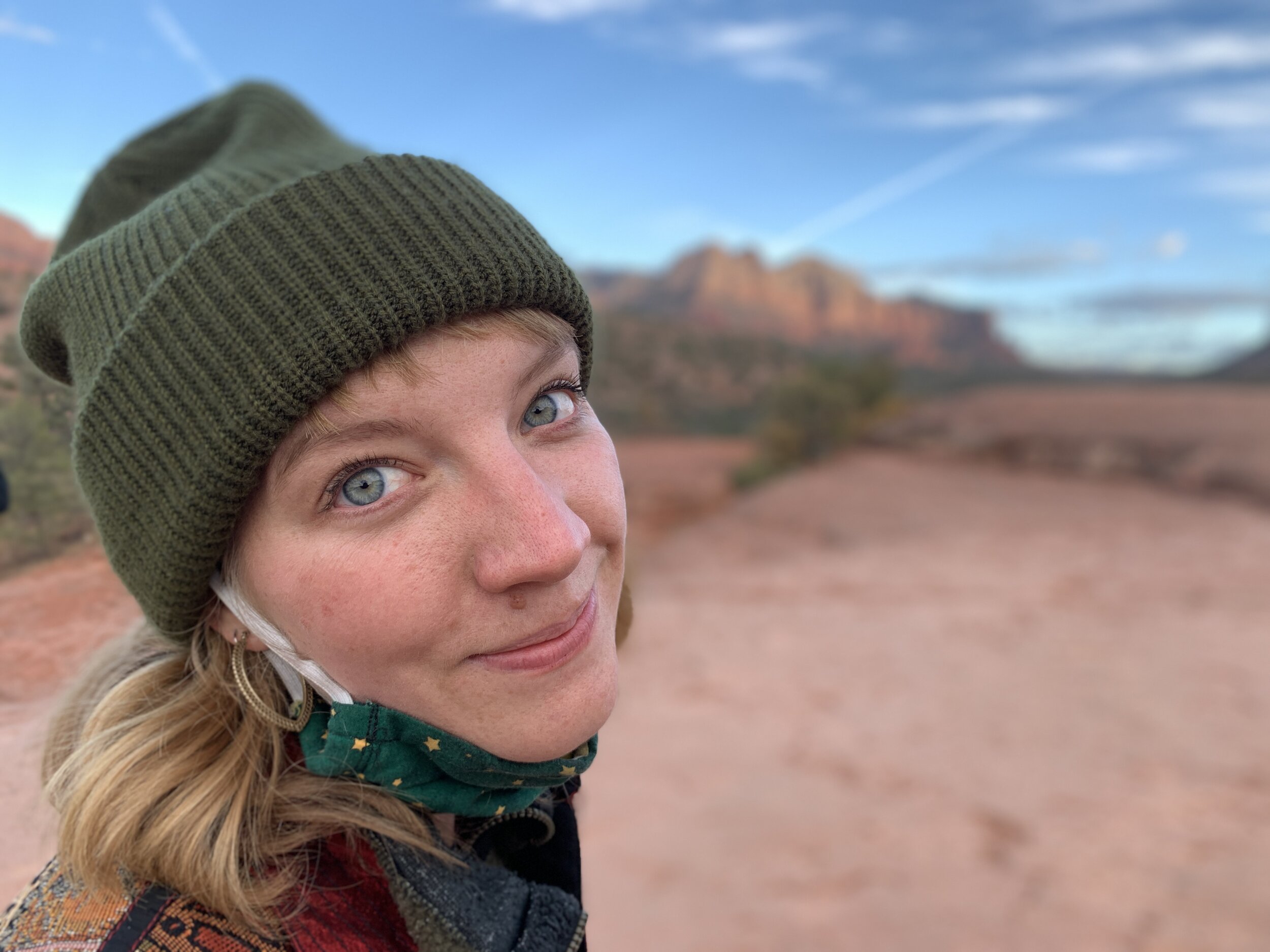
This is a picture of the most beautiful outdoor bball court I've ever had the pleasure of playing on. This is where I spend some of my time after work in Ojai, CA. Most people are surprised when they hear this, but basketball has always been a huge part of my life and continues to be no matter where I travel.
Song (or album) you’ve had on repeat: “Hypotheticals” by Lake Street Dive. It’s on repeat on my Spotify and in my head.
What is keeping you happy?
Sunshine, my partner Dani, my many craft hobbies, baths.
What’s something you miss the most right now?
Hugging people when I meet them. I feel anxiety around meeting new people because of COVID. I feel like I can’t fully be myself or interact with them the way that I would naturally and that’s really complicated. I definitely miss the people that I know and love and haven’t seen in a while, but I also really miss interacting with strangers - especially while traveling. I’m living in a new place and I want to get to know the locals, but there are so many added layers of caution that it’s exhausting.
What do you hope we take away from this?
I hope we have all received clarity on who and what is important to us. The pandemic has provided us with the space and time to re-evaluate the way we live our lives, what we do with our time, and who we spend it with. I hope that we all come out of this with healthy new habits, new self-love practices, creative joys, and hope.
Anything new we should know about that you’re working on?
I have a new song and music video coming out in April that I am SO excited about! I wrote the song “Sunman” for my partner Dani’s birthday. He was born on the summer solstice, the longest day of the year, and also has a super sunny personality. We made the music video while I was quarantining in Upstate NY in the fall. I was lucky enough to be quarantining with a group of artists whose creativity knows no bounds so we were able to make a stunning video in the mystical woods of Hudson. I was quarantining with enough people that I was even able to have some backup dancers - you definitely don’t want to miss this one!

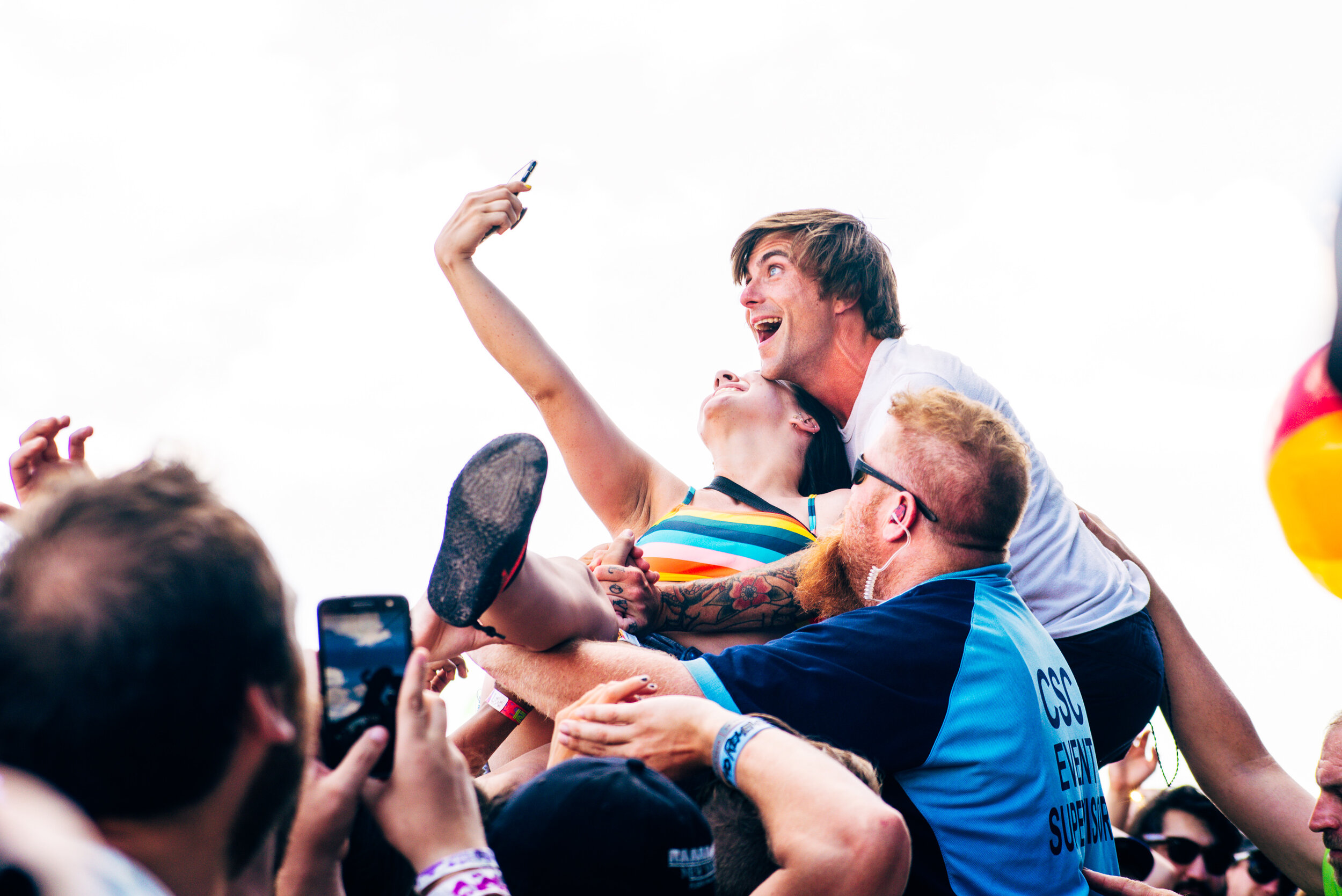
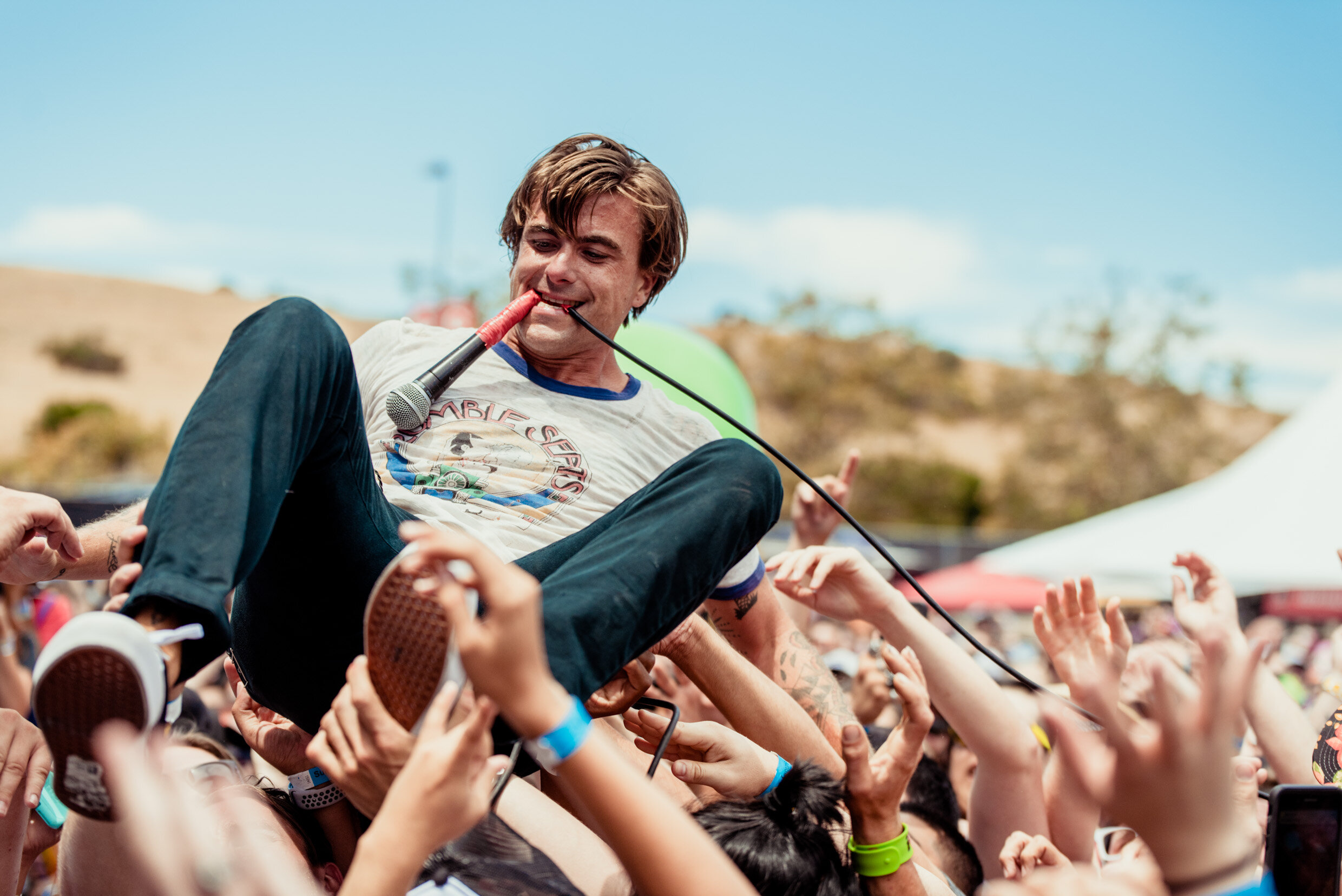
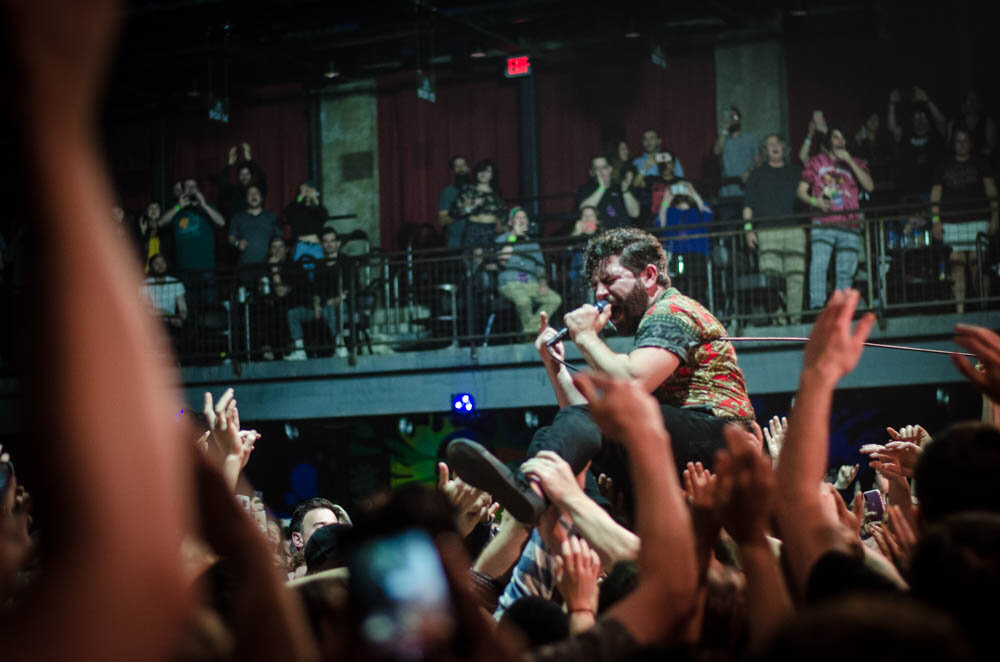
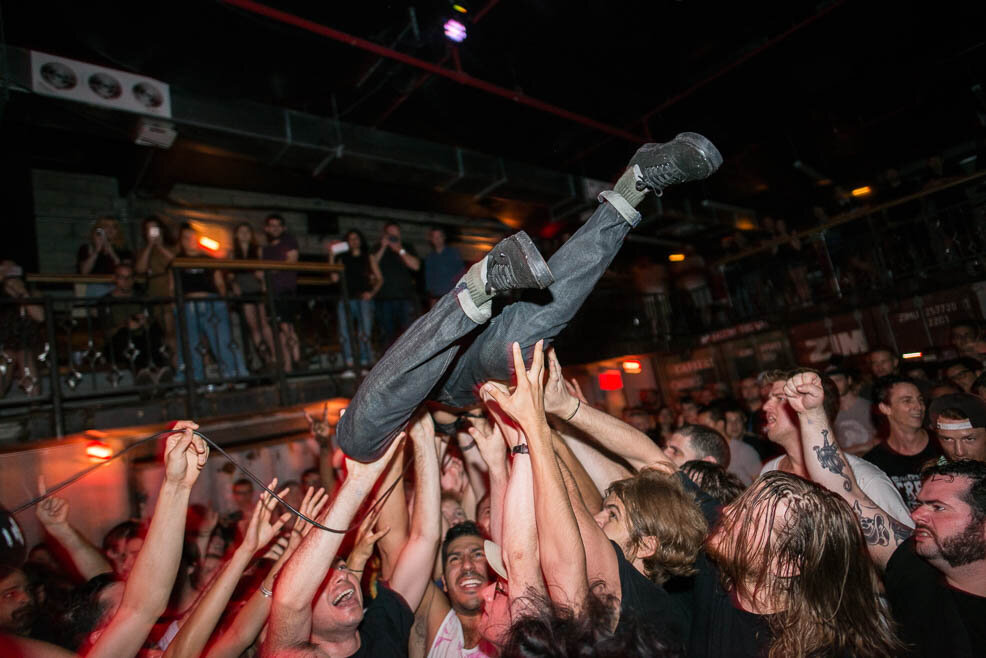
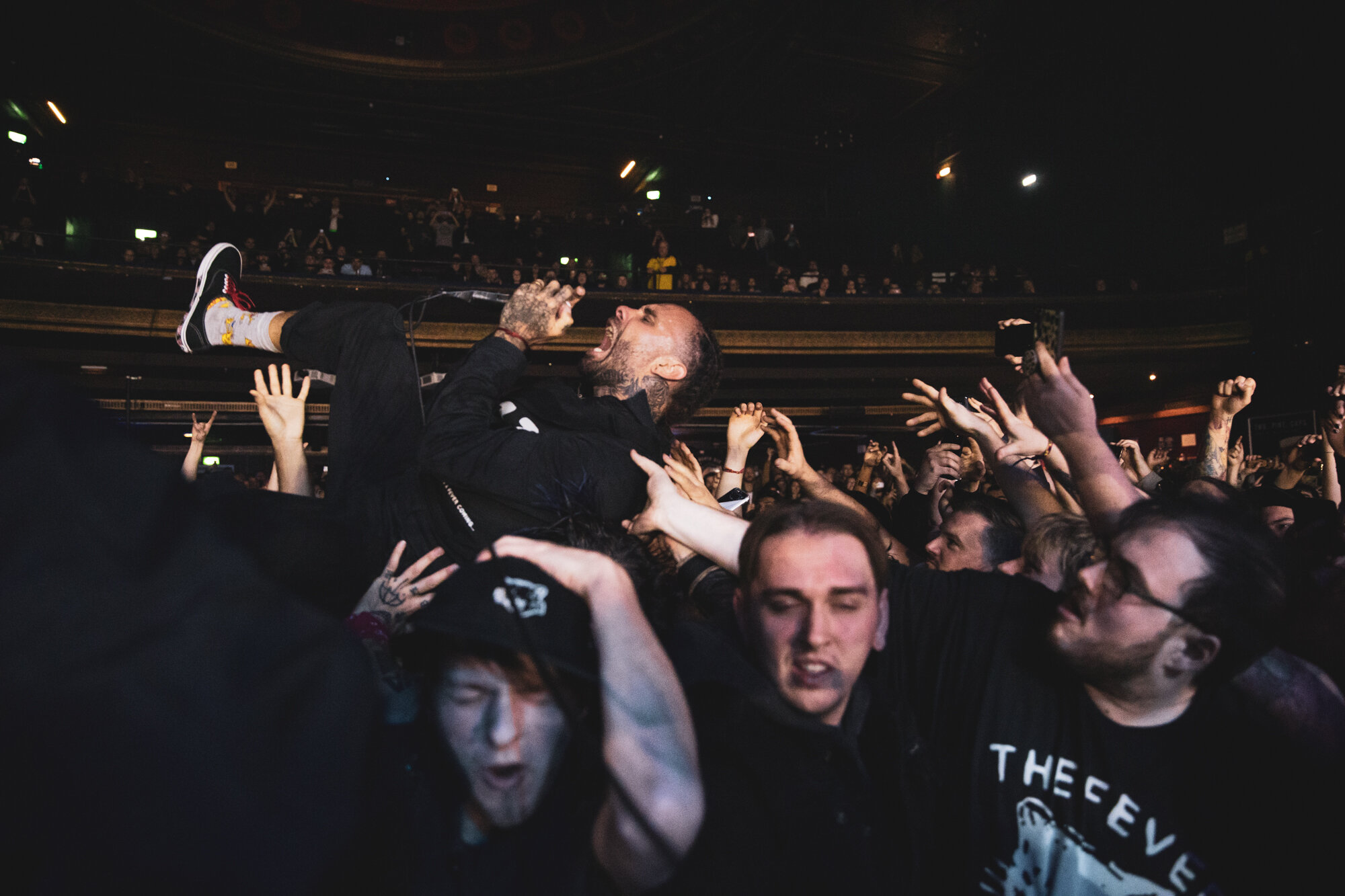
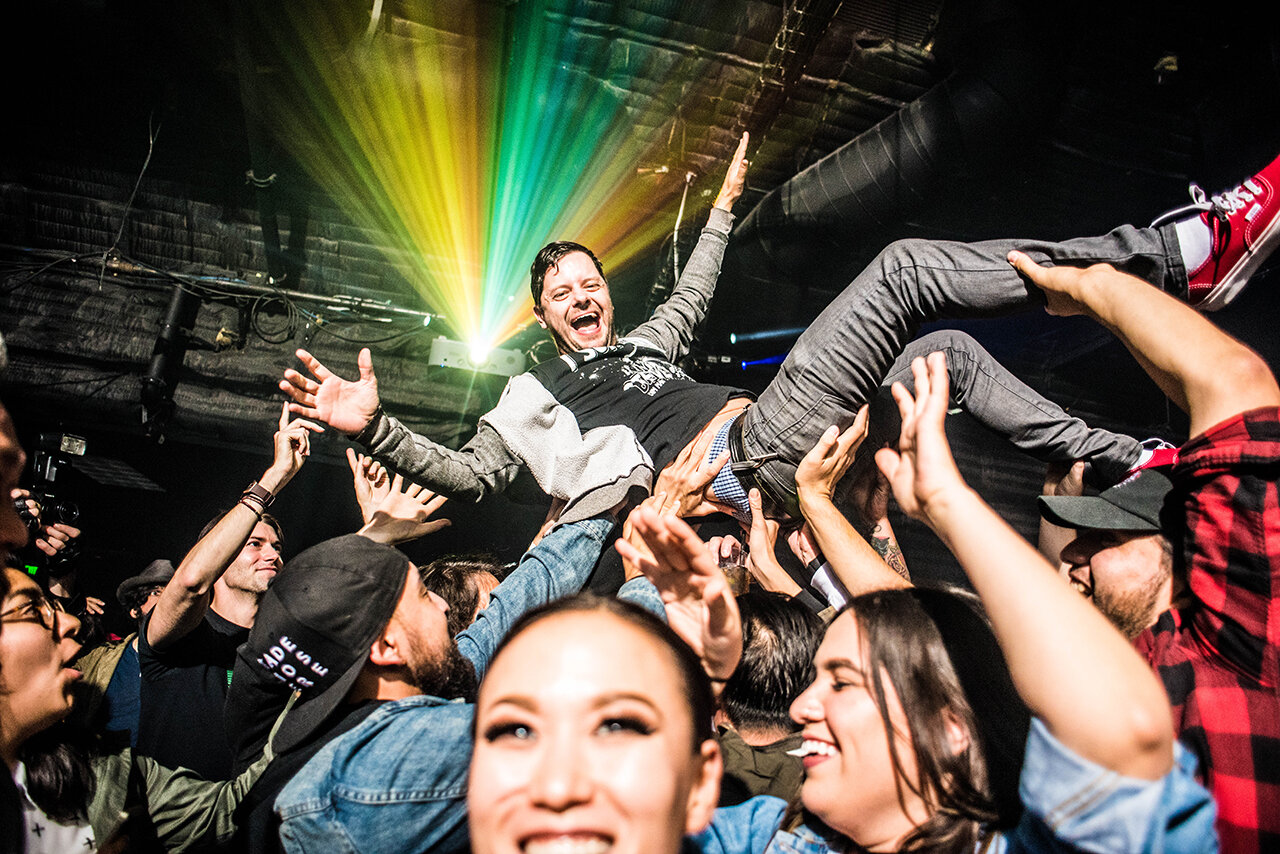
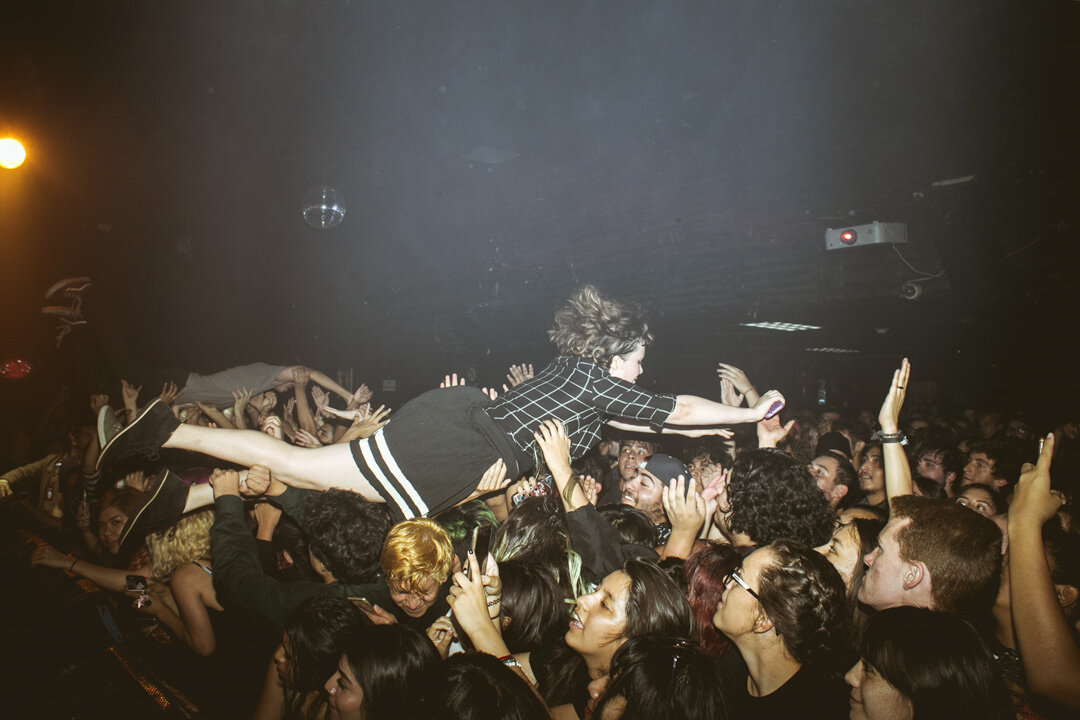
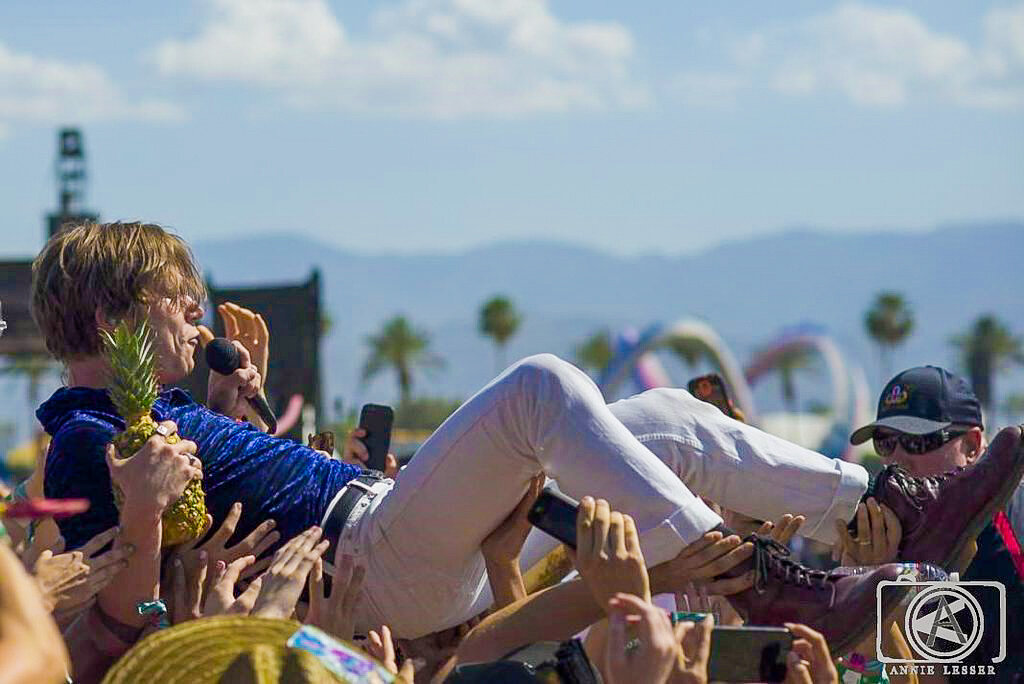
In Focus: Crowd Surfing
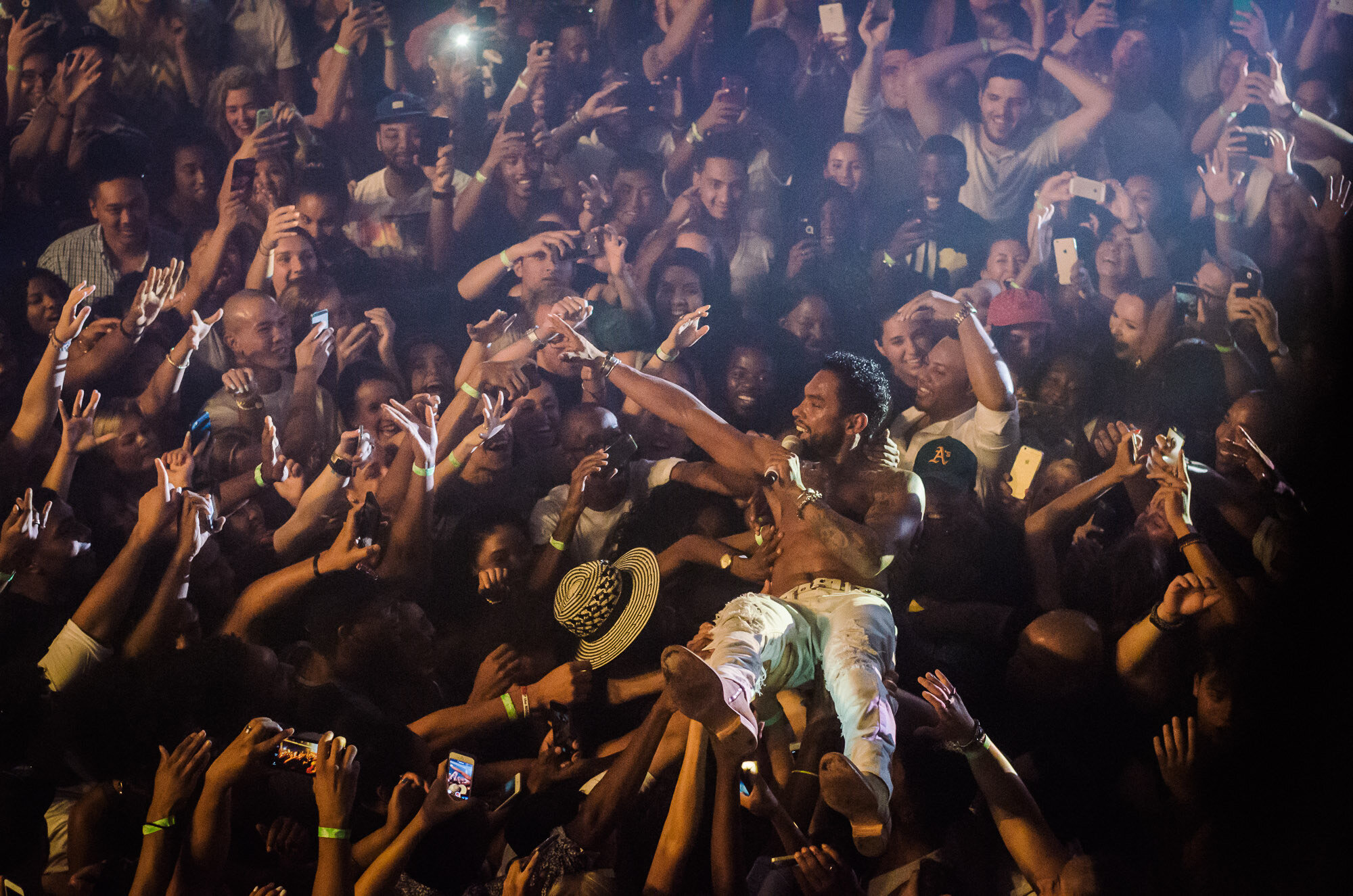
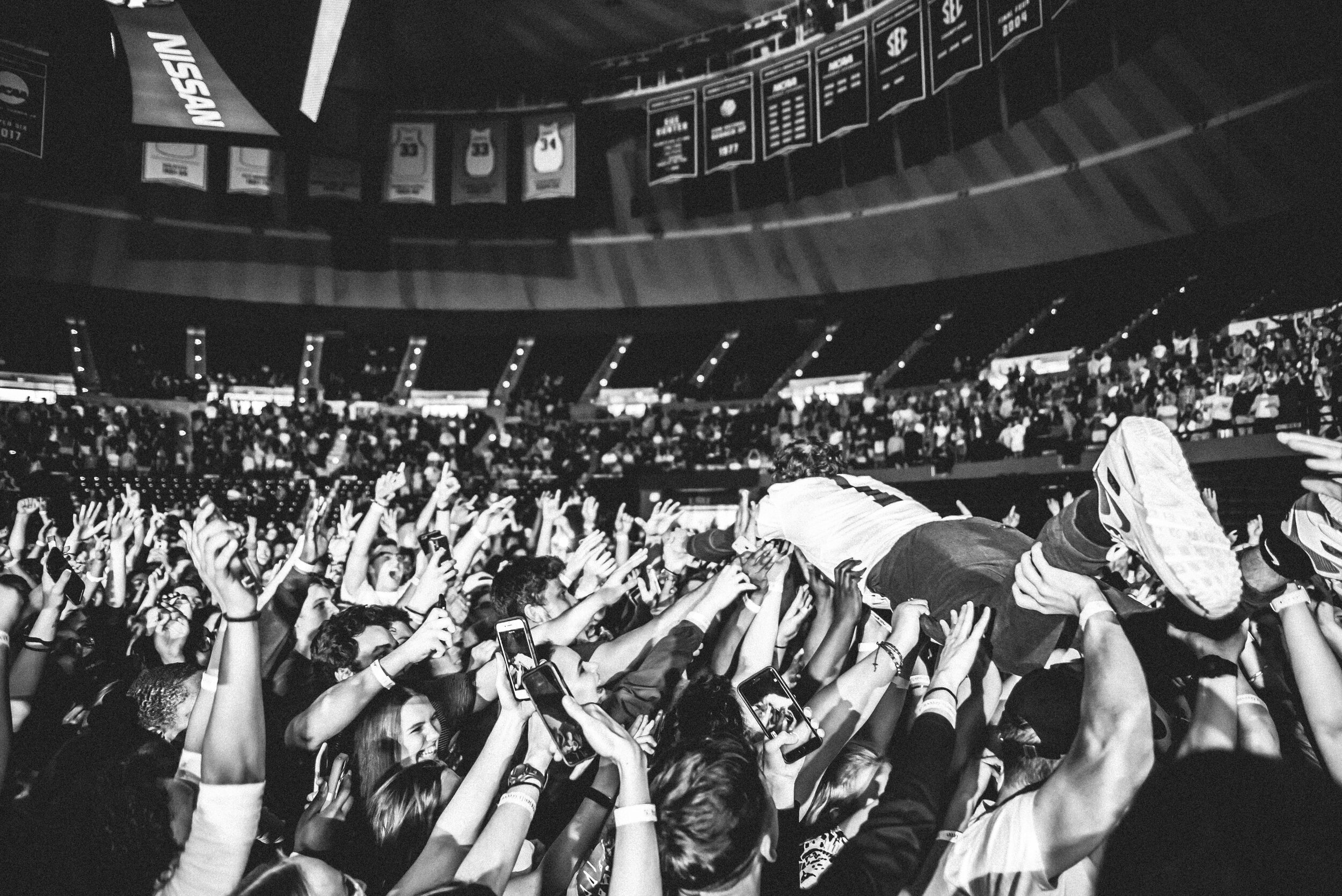
Cover photos by (left to right): Jenny Ramone Photo, Mallory Turner, Annie Lesser, Gili Dailes, Victoria Ford (Sneakshot Photography)
In Focus is a Photo Ladies collaborative photo series that showcases TPL members’ favorite photos, focusing on a different theme each month.
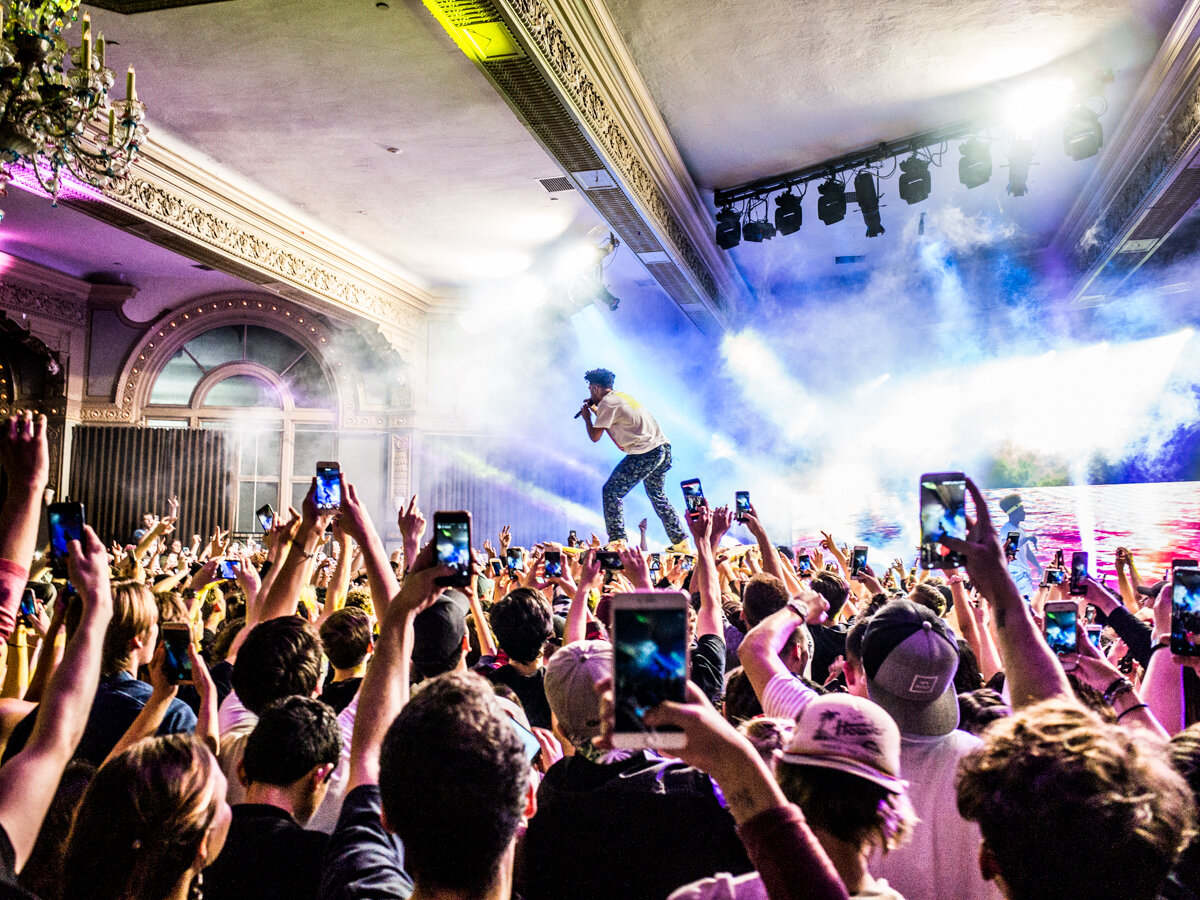
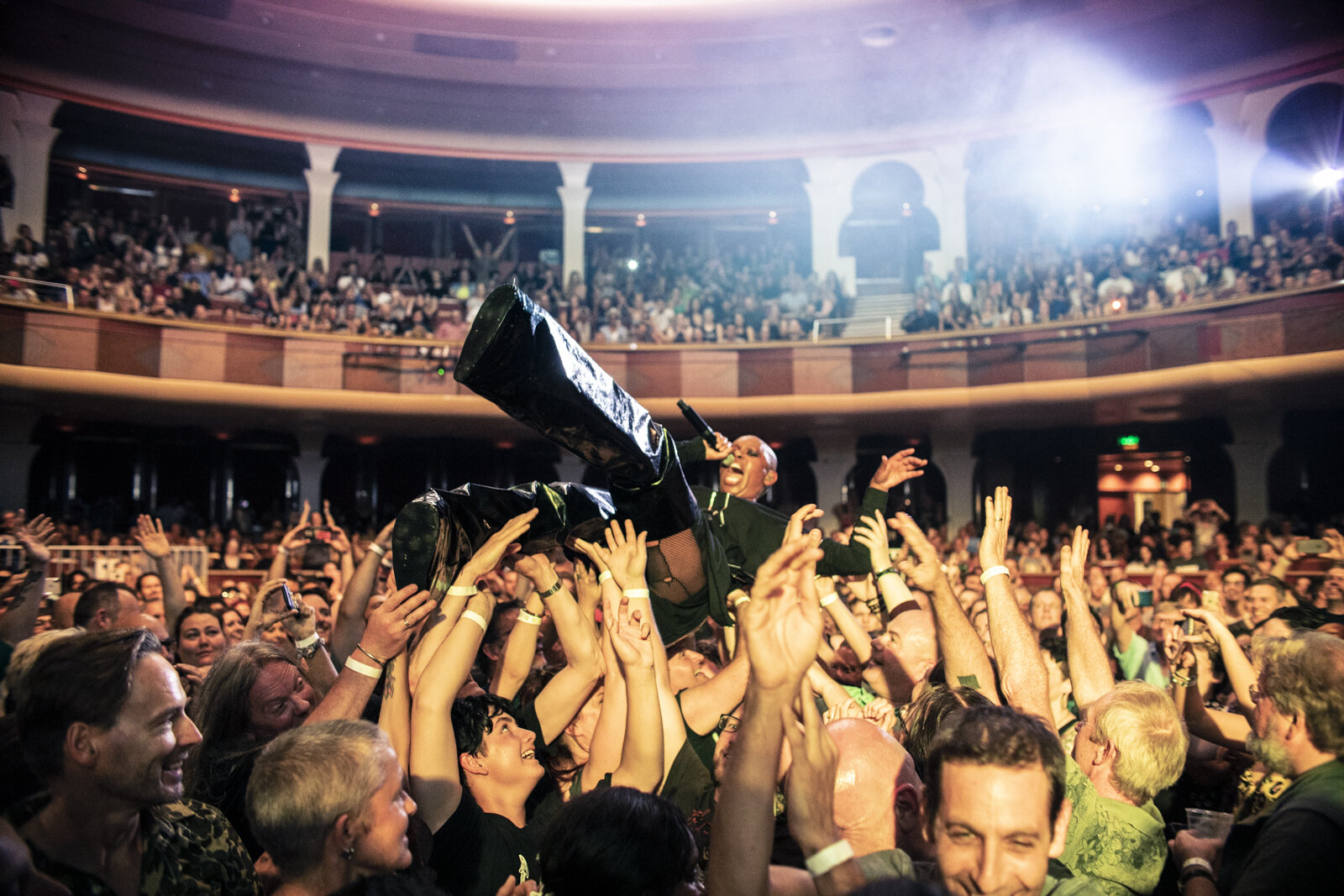
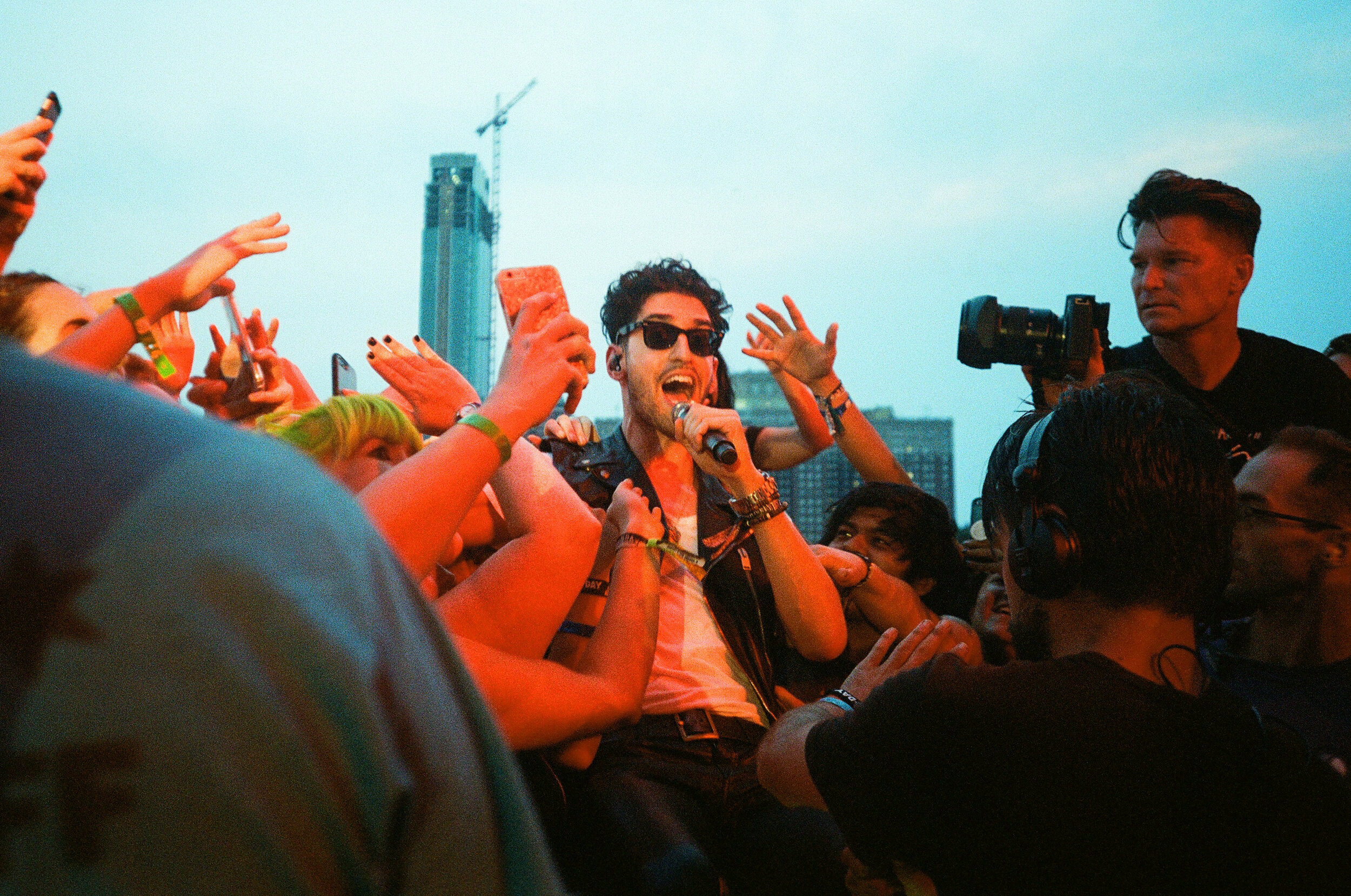
As concert photographers we always wait for an exciting moment to happen on stage so that we can capture it, but sometimes we are treated to an exciting moment off the stage. This month we are giving you our favorite Crowd Surfing photos, with the hope that we can soon return to witnessing such epic moments safely
Check out our previous In Focus galleries here: Drummers | Keyboardists | Bass Players | Jump Shots
ⓒ All photos are subject to copyrights and cannot be used without the photographer’s permission

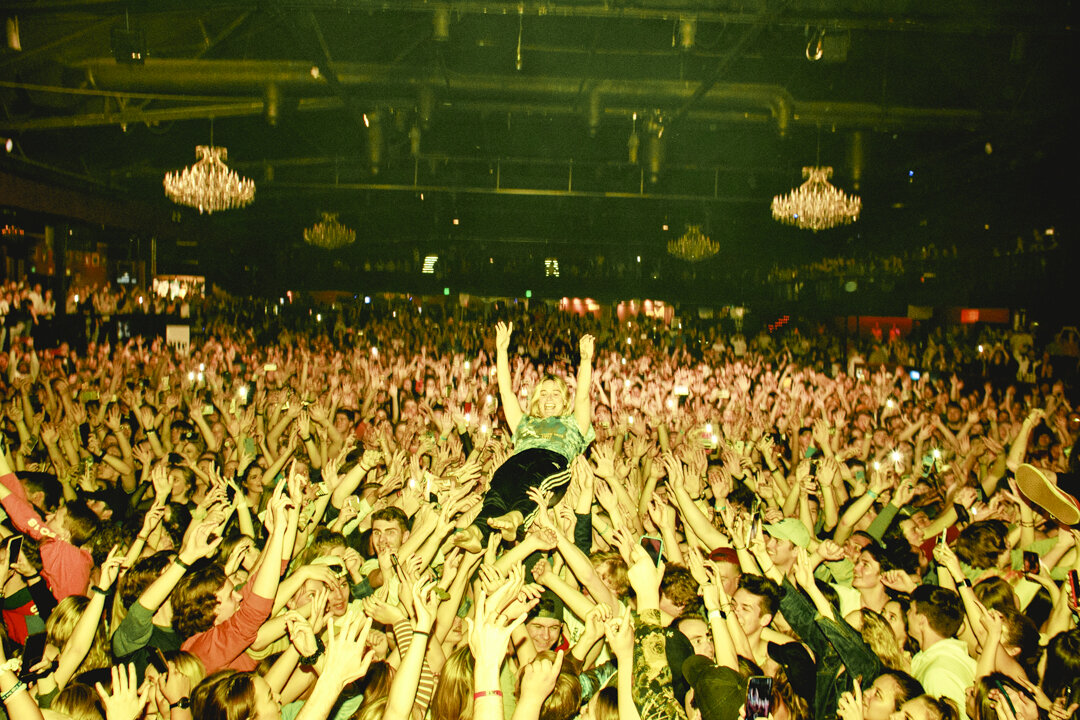
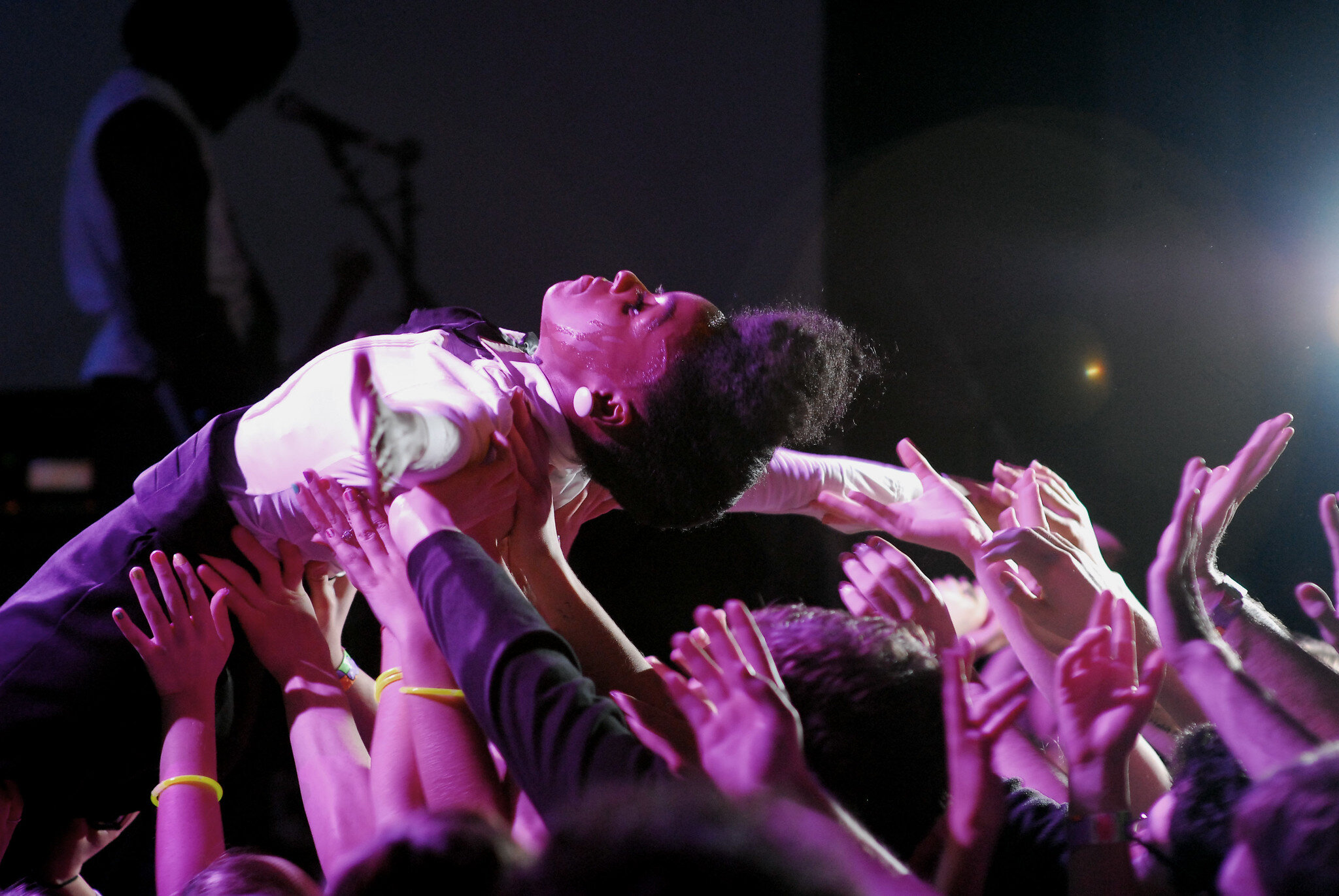


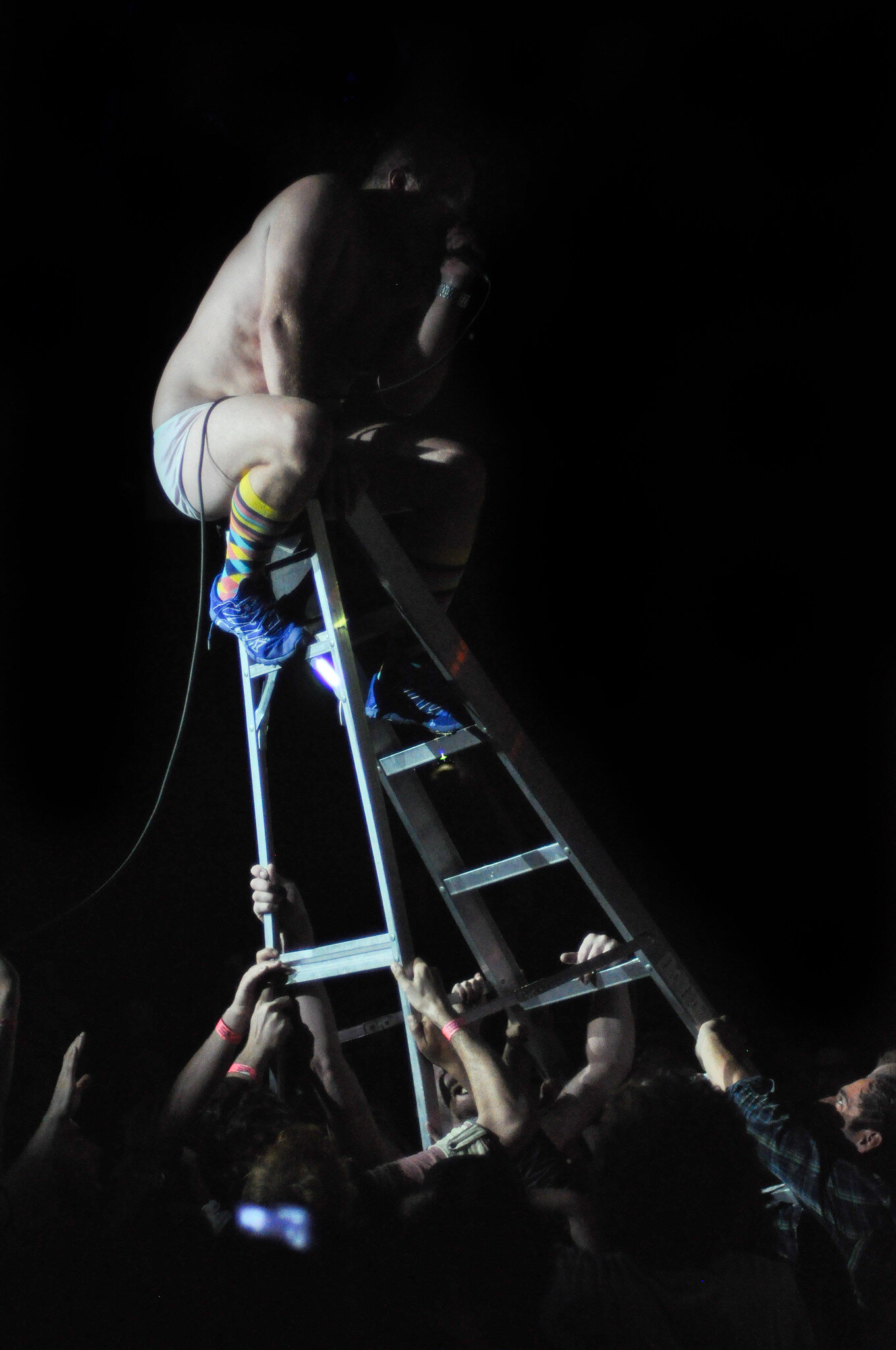

Ashe by Mallory Turner